-
Prof Kancha’s Interview at Institute for South Asia Studies
-
Prof. Kancha Ilaiah to Deliver Keynote Speech at Ambedkar-King Conference in USA – TwoCircles.net

Image source: Hindustan times August 12. Cupertino, California, USA | TCN Staff
Indian political theorist and academic Prof. Kancha Ilaiah has been confirmed as the chief guest and key note speaker for the 2ndAmbedkar King Study Circle Annual Conference 2019 to be held on 7 Sep, Saturday, 2019 in Cupertino, California. The annual conference brings together intellectuals and activists for a discussion on class, caste, race, and socialism and concludes with setting an agenda for the next year.
Other speakers include Dr. Suraj Yengde from Harvard University, Mr. Kunal Shankar, journalist now at Columbia University, Ms. Boona Cheema, Chair of Healthcare for the Homeless, Alameda County California, Ms. Rachel Herzing, Director, Center for Political Education, California, and Mr. Anto Akkara, journalist and author from New Delhi.
Speaking with TCN the conference convener Mr. Karthikeyan explained that the discussions will focus on the nature of capitalism in India, a society where the top 1% holds half of the national wealth and the top 10% holds over 3/4th of the national wealth. He noted that in India this inequality is inextricably coupled with the caste system that manifests in control of bureaucracy and corporate houses by people from Brahmin and Bania caste. Inequality in India breaks down along caste lines with a large disparity observed between these ‘forward castes’ and SC, ST, OBC households. The focus on India will also include a discussion on right wing strategies to attack religious minorities and SCs and STs on religious pretext which diverts attention from overall exploitation of majority of Hindu population especially those from non-‘forward caste’ background.
Mr. Karthikeyan also noted that in USA there has been significant interest in socialist ideas among youth with almost half of people aged 23 – 38 attracted to socialism. The conference will also discuss the issues around race and socialism in the USA.
The theme of the conference is based on a quote by acclaimed educator and philosopher Paulo Freire “The oppressed, having internalized the image of the oppressor and adopted his guidelines, are fearful of freedom. Freedom would require them to eject this image and replace it with autonomy and responsibility. Freedom is acquired by conquest, not by gift.”
This will be the first time Prof. Kancha Ilaiah will be addressing this conference. The conference conveners noted that Dr. Ilaiah is a towering figure for academics interested in political theory as well for as progressive activists around the world. His writing and analysis of Hindutva and Hinduism especially from the vantage point of SC, ST, OBCs, provide critical insight and direction to fighting the right wing and capitalist forces in India today.
The registration information and further information about the organization are available here.
-
Don’t get distracted by love, focus on studies: Ilaiah – The Hindu
Don’t get distracted by love, focus on studies: Ilaiah
He advises students to gain intellectual capabilities
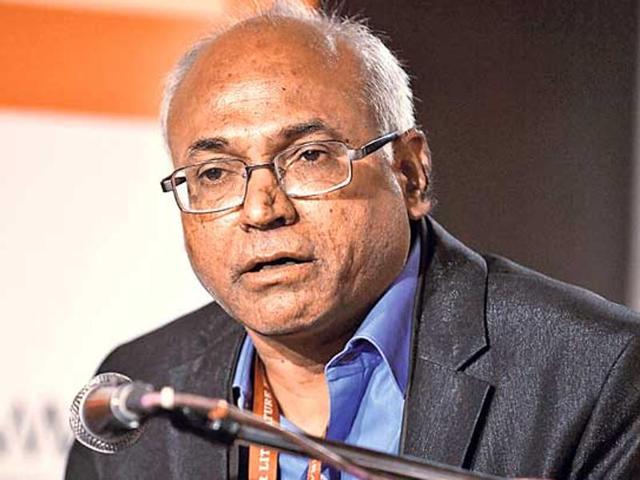
Academic and writer Kancha Ilaiah Shepherd advised university students and scholars to steer clear of unsuccessful love affairs between dominant and oppressed castes and focus on studies instead.
The time is not yet ripe for fruitful relationships between these castes, and getting distracted by love could be disastrous at a stage when one ought to build one’s life, the well-known political and social theorist said during a discussion on his book From a Shepherd Boy To an Intellectual—My Memoirs at University of Hyderabad (UoH) on Monday.
Though there are exemplary women such as Amritha from Miryalaguda and Sakshi Mishra from Uttar Pradesh, who fought all the odds to be with the love of their lives, it should be remembered that they had to suffer immensely. Drawing from his own experience, he said though he had an unsuccessful love story, he did not waste time moping over it.
He advised students to gain intellectual capabilities and write autobiographies from their own respective social perspectives.
Annihilation of caste should be strived for through dignity of labour, spiritual equality and common food culture so that marriages between dominant and Dalit castes become acceptable without parents resorting to honour killings.
The main drive of the discussion, attended by former Chief Secretary of united Andhra Pradesh, Kaki Madhava Rao, senior civil servant Akunuri Murali and academic Bheenaveni Ram Shepherd, was relevance of Prof. Ilaiah’s book to students coming from rural areas and belonging oppressed castes in enhancing their morale.
-
A New Cast | The Indian Express
A Rajya Sabha MP from Tamil Nadu, Raja now becomes the first Dalit leader to be the general Secretary of a mainstream party in India. (File)
Why Congress needs to reach out to Shudra leaders to wrest power from the BJP
Why Congress needs to reach out to Shudra leaders to wrest power from the BJP
The BJP managed to win over the support of the marginalised communities by projecting Modi as an OBC leader. Here’s what the grand old party can do to reverse it.
| 6-minute read | 19-07-2019

During the 2019 election campaign, Congress leader Rahul Gandhi was projected as a Brahmin who wears janeu. Narendra Modi, on the other hand, projected himself as a member of the most backward class (MBC). He started declaring his caste backwardness publicly with apparent pride. To convince the MBCs that he is truly one of them, Modi called himself a chowkidar in addition to calling himself a chaiwala.
Now the world knows who won.
 The Congress projected Rahul Gandhi as a Brahmin who wears janeu in the run-up to the 2019 general elections. (Photo: @INCIndia)
As the discourse remained stuck in the ‘Rahul is Brahmin’ and ‘Modi is MBC’, the regional Shudra leaders remained in oblivion. It is important to remember that they were the leaders who took on the powerful Congress for over decades. They were finally crushed by Narendra Modi and Amit Shah’s strategies.
The duo mobilised castes around the BJP and almost finished the Shudra regional powers along with the Congress. The Congress intellectuals, whether Harvard, Oxford, Cambridge or Indian educated, do not know how to understand, or break, the combined might of the two.
The Shudra regional parties started emerging in the 1960s. The Dravida Munnetra Kazhagam (DMK) emerged and captured political power in Tamil Nadu in 1967. The DMK was born and grew as an anti-Brahmin party.
The same year Chaudhary Charan Singh became the first non-Congress chief minister of Uttar Pradesh after leaving the Congress, which was under the control of the Brahmins from UP.
Both CN Annadurai, the first non-Congress chief minister of Tamil Nadu, and Charan Singh were Shudras who fought against the Brahmin hegemony in Tamil Nadu and Uttar Pradesh, respectively. Subsequently, NT Rama Rao, Sharat Pawar, Mulayam Singh Yadav, Lalu Prasad and Nitish Kumar emerged as Shudra leaders in opposition to the Congress that was generally headed by Brahmins.
In Punjab, the Akali Dal also rose in response to Shudra oppression. In the united Andhra Pradesh, the Telugu Desam, Telangana Rashtra Samithi and YSR Congress are Shudra political formations.
They all came into power in their own respective states with a regional feudal economic power base. All these parties weakened the Indian National Congress step by step in the 1980s and 1990s. Apart from the regional Shudra political forces in Uttar Pradesh, the Dalit political formation, Bahujan Samaj Party (BSP), headed by Kanshi Ram weakened the Congress further.
 The Bahujan Samaj Party weaked the Congress further. (Photo: Reuters)
The Congress was always Brahmin-centric, apart from being Nehru-Gandhi family-centric. While Shudra regional leaders were accommodated in the party since the pre-Independence years, they never really had an ideological grip on the party.
Though Sardar Vallabhai Patel and K Kamaraj, both Shudras, had a major role in the party at the national level, no Shudra could emerge in the Congress as a towering leader with an all-India vote base. The pan-India vote base remained only in the hands of leaders who emerged from the Nehru family. This gave enough scope to the Bharatiya Janata Party (BJP) to attack it as the Nehru dynasty party.
The Congress leadership projected Indira, Rajiv, Sonia and Rahul Gandhi as part of the Gandhi-Nehru dynasty and the Gandhi in their name meant Mahatma Gandhi. The Rashtriya Swayamsevak Sangh (RSS) and its political wing, the Jana Sangh, which later became the BJP, consistently tried to delink the Nehru family from Mahatma Gandhi’s legacy.
The sole purpose of this delinking exercise was to weaken the Congress and gain a political foothold across the country. The RSS-BJP would not have succeeded if the regional Shudra forces wouldn’t have weakened the Congress in several states.
The unsaid opposition to the Mandal Commission report, which sought reservations for the marginalised communities among other welfare measures, both by Indira and Rajiv Gandhi (by not tabling the Mandal report) made the Shudras think that the Congress does not want Brahminism to be weakened in bureaucracy and educational institutions.
The Congress Brahminism was accommodating elite Muslims and some SC/STs, but not Shudra-OBCs in any significant way. Given their numbers in the Indian population, they were feeling the neglect significantly. One former Congress OBC leader once told me that Rajiv Gandhi used to get furious even upon hearing the idea of reservation. He was strongly against any discussion on the caste question. He never studied the caste system as he won that massive 1984 victory because of Indira Gandhi’s assassination.
This apparent anti-OBC reservation stance of Indira and Rajiv convinced the Shudras that they cannot progress under the Congress. So, the Shudras who had an agrarian feudal base, and the lower Shudrasm who saw government jobs as the only means to salvage them, slowly moved away from the Congress.
The BJP, which was by then emerging as the Brahmin-Bania party, was also not in support of reservations. It was the Congress, however, which was the ruling party and when VP Singh was implementing reservations, Rajiv Gandhi was the opposition leader.
 The BJP was initially not supportive of caste-based reservations. (Photo: Reuters)
A section of Shudra/OBCs, meanwhile, made its way into the BJP and that section slowly forced the Sangh to come to terms with the reservation issue. By promising 10% reservation for the Economically Weaker Section (EWS), the BJP neutralised the issue of caste-based reservation and got Congress into its trap.
Post-Mandal, the BJP tried to project Sardar Patel as a better leader than Pandit Jawaharlal Nehru. The strategy was first used by LK Advani, who was later compared with Patel. Advani is a Sindhi Marwadi. The BJP needed a national icon to be pitted against Nehru because they do not have one in their ideological fold.
That Patel, a Gujarati Shudra, contested Nehru on many fronts is well known. Maybe Advani and later Modi and Shah owned Patel becausehe also came from Gujarat and was a pro-RSS Shudra leader. This helped Modi more than anybody else as he claimed that he is a Gujarati OBC.
By deploying Modi at the forefront in the battle against the Congress, the BJP has taken away all OBCs from the fold of the regional Shudra leaders. In UP, Bihar, Maharashtra, Haryana, and to some extent in Karnataka, the Shudra leadership has been weakened now. It still remains somewhat stable in Tamil Nadu, Andhra Pradesh and Telangana. In West Bengal, and Odisha power continues to be in the hands of Brahmins.
The regional Shudra forces weakening the Congress in many states helped the BJP. The revival of the Congress is impossible without this support group coming back in its fold. The only way the Congress can do this is by inviting all regional parties with Shudra leadership into its fold.
But the Congress would need a leader like Mahatma Gandhi to convince all those leaders to come together. Rahul Gandhi can at least try to do it.
Why Kamala Harris for US President: The world must root for this candidate in the US presidential battle
Why Kamala Harris for US President: The world must root for this candidate in the US presidential battle
Kamala Harris has made her racial identity central to her campaign. Like Barack Obama, she shows both audacity and hope. The world has never needed both more.
| 5-minute read | 07-07-2019
Kamala Harris, one of the top four Democratic candidates in the US presidential elections, recently made Indians and Jamaican people proud.
She also made globally discriminated people, including the Indian Shudras, Dalits and Adivasis, who have no recognition worldwide, prouder after her June 27 debate on the NBC news channel.
 Kamala Rising! Joe Biden and Kamala Harris locked in a fierce debate on June 27. (Photo: Reuters)
After the debate, her rating is rising — she seems to be second only to Joe Biden.
Kamala is the daughter of an Indian Dravidian Tamil woman, Shymala Gopalan, a breast cancer scientist, and a Jamaican economist, Donald Harris, a Stanford University professor.
Donald Harris wrote an essay titled Reflections of a Jamaican Father, for Jamaica Global Online, in which he revealed that he descended from Irish slave owner Hamilton Brown, while Shymala’s ancestry is not very widely known.
Shymala’s biographical details tell us that her father, PV Gopalan, was a diplomat from Chennai, Tamil Nadu. Even assuming that Gopalan comes from a Tamil Brahmin background (we do not know his exact caste), his daughter Shyamala chose to represent the black slaves of the world due to her identities of a Dravidian black person and a woman.
All Indian women were/are equivalent to Shudras as per ancient tradition.
It is important to understand how the Indian caste system shares a common cultural trait with that of white racism in America.
What Kamala is today is because of her bold mother — Shyamala chose to marry a Jamaican black person and worked as a civil rights activist for blacks and other people of colour living in America. Hardly any Indian settled in America associated with the black civil rights movement as Shyamala did. She was living through Martin Luther King’s times and she dared to oppose white racism when she was a student at the University of California, Berkeley. Shyamala comes across as an independent woman who believed in the idea that ‘black is beautiful’.
 Bold and Brilliant: Kamala Harris with mother Shyamala Gopalan, a breast cancer scientist. (Photo: AP)
Her daughter inherited the intellectual and ideological heritage of her mother and father. Her father was a Left economist with a serious concern for human equality.
While her mother was a serious scientist, apart from being a civil rights activist, her father was a fine economist who wrote books on comparative economics. One title, The Economic Theory of the Leisure Class, which he published still attracts the attention of any serious student of economics.
Kamala proved to be a true daughter of her mother and father — she has worn her blackness on her sleeve.
She said, “I am black and I am proud of it.” She also claimed that like Barack Obama, she belongs to the American Baptist church which has trained many black activists in American history to be great leaders. We know that Martin Luther King himself was a Church preacher in Alabama.
After the June 27 debate, there is an attempt to attack her by the right-wing black supporters of Donald Trump. They are arguing that she is not an African-American black woman.
This is nonsense.
She is also competing with Joe Biden, Bernie Sanders and Elizebeth Warren, with the same spirit that Obama once fought with.
If she gets the Democratic party’s nomination and incidentally wins the election, defeating a very unstable Donald Trump, the US will have a black woman President from two black immigrant parents — this will have implications for global democracy too as the system would achieve what has so far remained unachievable.
India is proud of Kamala Harris. The first caste liberator, Mahatma Jyotirao Phule, wrote his book Gulamgiri in 1871 and dedicated it to the struggles of the people then called Negroes in the America of his time. In Tamil Nadu, Periyar EV Ramasamy built a Dravidian movement by sporting black Shudra slavery on his sleeve — he always wore a black shirt as a symbol of the Dravidian identity. Though racial discrimination was not accepted by Dr BR Ambedkar, both Phule and Periyar strongly saw the link between caste and race discrimination in India.
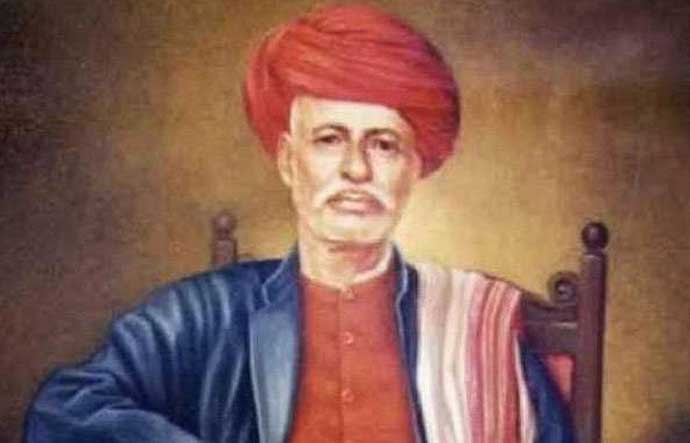 A Visionary: Jyotirao Phule dedicated his book Gulamgiri (1871) to the anti-racism struggles of America of his time. (Photo: PTI)
In 2001, the Indian Dalit-Bahujan activists, including me, took the caste issue to the UN Conference against racism, racial discrimination, xenophobia and related intolerance. At that time, the government of India, headed by Atal Bihari Vajpayee and pro-government intellectuals, argued that race has nothing to do with caste. Many of us felt that both caste discrimination and untouchability came into being because of the Dravidian and Aryan race divisions in India over a period of time. Now, DNA studies have also proved that.
Shyamala and Kamala Harris have proved that whatever their caste origins back in India, racial discrimination is a global phenomenon. Kamala Harris made her race question more central than Barak Obama did before the 2008 Femocratic primary debates.
The way Kamala challenged Joe Biden, the former Vice-President of America, on his position on racism shows that she has decided to win the primaries on her own terms.
The fact that she is a senator already and was always forceful about her black woman identity shows that she will definitely make history in this election.
Her fight in the US will encourage many more world over. From the days of Abraham Lincoln and his murder by a group of white racists, and the murders of John F Kennedy and Martin Luther King to Barak Obama’s election and his safe retirement, America has transformed quite a lot.
Much like Obama’s Audacity of Hope, Kamala is showing her own audacity. American society’s deeply entrenched patriarchy came to the forefront when it did not allow even a white woman to become President. Kamala’s victory won’t just be a victory for the oppressed sections in the US — but those historically discriminated against across the world.
Indians will be the proudest people then.
Gandhi was not a caste abolitionist: Kancha Ilaiah Shepherd – The Week
Gandhi was not a caste abolitionist: Kancha Ilaiah Shepherd
Dalit-bahujan youth see Gandhi as a figure of past; Ambedkar as figure of the future

By Kancha Ilaiah ShepherdJune 22, 2019 15:05 IST
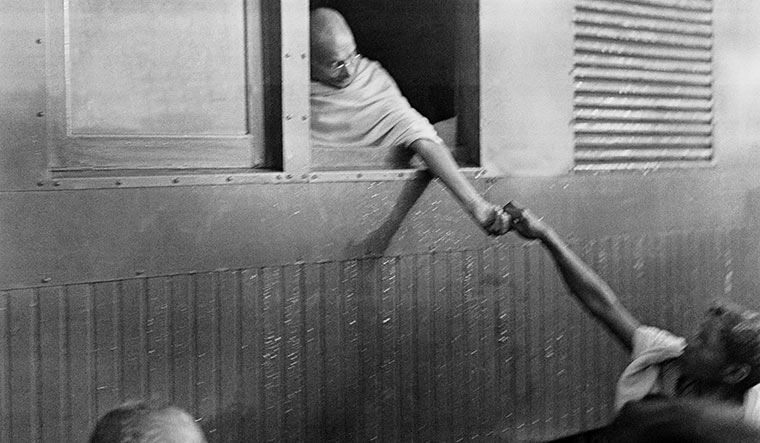 Broken idol: Gandhi collecting donations for harijan fund at a train station in1945 | Dinodia
When I was in school final in 1969, Mahatma Gandhi’s 100th birthday was celebrated with visible propaganda. As school children, we enjoyed that celebration. But at an advanced age of 66 I have to assess his role in our lives now. By ‘our’ I mean in the life of the dalit-bahujan mass, who constitute the majority of Indians.
One visible change I see is that in 1969 there was no competition to Gandhi’s moral and socio-spiritual leadership and his Mahatmagiri. But by 2019, Dr B.R. Ambedkar had challenged him. Ambedkar later acquired the status of ‘Father of the Constitution’ by disturbing Gandhi’s status of the ‘Father of the Nation’, though title is with him.
By 1969 ‘harijan’, the name that Gandhi had given to the untouchables of India, had become both popular and legally and socially accepted name. But the dalit movements over a period of time successfully fought to erase that name from the Indian diction.
While the constitutionally valid name Scheduled Castes is in our diction, the concept dalit has become a new name of identity, and Ambedkar has acquired the status of a prophet, as Navayana Buddhist, whose spiritual and socio-political identity forced even the BJP and the RSS to give him more visible place than Gandhi in day-to-day discourses.
The Congress is in a crisis because for a long time it ignored Ambedkar, and only Gandhi and Nehru were given the highest status. Now they, too, give Ambedkar a respectable position, as the dalits have forced them to.
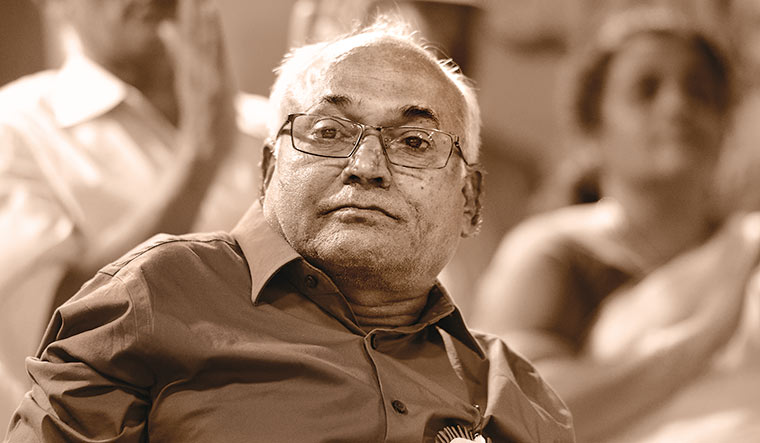 Kancha Ilaiah Shepherd- Political theorist, social activist and author.
Gandhi was not a caste abolitionist. He was an abolitionist of untouchability. Both the Congress and BJP/RSS remain Gandhians even today on the question of caste abolition.
Both the BJP and the Congress are trying to address the untouchability issue, but not the caste hierarchy. Their commitment to SC/ST reservation and the Scheduled Castes and Scheduled Tribes (Prevention of Atrocities) Act tells about their position.
Gandhi was against abolition of caste and varna order because he knew that the caste/varna institution is the soul of Hinduism. The RSS/BJP share this view of Gandhi, hence they try to use their power in Delhi to subtly send that message by giving a bigger celebration to his 150th birth anniversary than what Indira Gandhi’s Congress did in 1969.
ALSO READ
- The unknown Gandhi: The extraordinary journey from Mohandas to Mahatma
- Canonising Gandhi made him a myth more than a man: Mark Tully
- What Gandhi wanted for India
- Gandhian philosophy needs to be practised: Tushar Gandhi
- Gandhi, Savarkar two irreconcilable poles in Indian history
- Sadashiv Sathe: Making Gandhi statues since 1952
- Assassination painting of Gandhi at Rashtrapati Bhavan: An exercise in myth-making?
- Making of the Mahatma
- How couples led sexless lives on Gandhi’s advice
- Gandhi projects my experiments with time: Artist Riyas Komu
But the dalit-bahujan movements have an agenda of abolishing caste, untouchability and varna system. They try to remain indifferent to this celebration as they do every October. In contrast, April 14 (Ambedkar’s birthday) has become a household festival day among the dalits across the country, whereas Gandhi Jayanti celebration is a governmental affair.
The BSP never celebrates Gandhi Jayanti. There are many shudra regional political formations like the Samajwadi Party, Rashtriya Janata Dal, Nationalist Congress Party, Telugu Desam Party and Telangana Rashtra Samithi, which essentially approve Gandhian agenda of nationalism, while accepting Ambedkar as a vote- mobilisation force. They, too, celebrate Ambedkar Jayanti more visibly than Gandhi Jayanti. There is no specific vote bank around Gandhi now.
By his 150th birthday, semi-naked Gandhi is a companion of the rich and ruling elite, but the suited and booted Ambedkar is a prophet of the poorest of the poor. The inspirational Indian dalit-bahujan youth see Gandhi as a figure of the past and Ambedkar as the figure of the future.
Yet Gandhi remains relevant, in my view, because ‘his experiments with his truth’ need to be examined for how untruths can be passed off as truths. He made, if not the whole nation, at least his followers, believe that if one eats the goat meat a goat cries in one’s stomach. But if one drinks the goat milk it does not cry. It gives good health. Millions before his experiment ate goat meat and millions ate after his death. In all their stomachs it just digested and became part of their flesh and blood. That is another truth.
There are many things to learn and unlearn from Gandhi. I see strength in his theory of nonviolence. I hope the ruling party learns from that theory and practises real nonviolence not vegetarianism, which is not an indication of nonviolence.
Dear Indian intellectuals, we are not fools: Faux regional language lovers closed the poor’s access to English for years
Dear Indian intellectuals, we are not fools: Faux regional language lovers closed the poor’s access to English for years
But politicians like Jagan Reddy have sensed the yearning among the masses for English medium instruction and will provide this, despite the intellectuals hissing this is a ‘World Bank agenda’.
| 5-minute read | 23-06-2019
In this school academic year, an important development took place — the Andhra Pradesh Chief Minister YS Jaganmohan Reddy declared that within two years, most of the AP government schools will be converted into English medium with one compulsory Telugu subject being taught all through the school education.
In Telangana, the KCR government gave freedom to school teachers to initiate English medium sections in most government schools. A majority of parents from rural areas are eager to provide English medium education to their children — resulting in poor attendance in Telugu-based sections. However, the general data does not tell us which schools are getting closed — only that regional language schools are shutting down.
Similarly, in Karnataka, after a long struggle by the Dalits/OBCs this year, the government opened English medium section from LKG to class 12 in 1000 schools. Apart from this, the Kumaraswamy government also started 275 Karnataka Public Schools (KPS) with complete English medium from LKG to 12th, on the lines of the Kendriya Vidyalaya. The news reports indicate there is a huge demand for these schools in the villages — and that Kannada medium schools find no takers in areas with KPS.
 Good move: Karnataka CM Kumaraswamy’s English-medium Karnataka Public School caused a stir. (Photo: Facebook/Namma HDK)
The so-called progressive writers of Karnataka, such as UR Anantha Murthy and Girish Karnad, were opposing converting the rural government schools into English medium by instigating Kannada sentiment even among Dalit writers. They apparently threatened Siddaramaiah against initiating this process. In fact, some of the dissenters of the ‘Lohia gang’ in Karnataka opt for a world-class private English medium education for their own children — Girish Karnad’s son, for instance, reportedly studied in London — but opposed English medium education in the government sector.
Kumaraswamy overruled all of them.
The Bharatiya Janata Party leadership is also not in a position to oppose the English medium in government schools because most of their children receive English-based education in missionary schools.
Similarly, even in Andhra Pradesh and Telangana, there are hordes of intellectual ‘Telugu lovers’ who do not hesitate to enrol their own children or grandchildren in the best English medium schools in Hyderabad, Vijayawada and Vishakhapatnam. They resisted YS Rajshekhar Reddy’s initiative to provide English-based education in government schools from class six onwards. But he brushed them aside by pointing out the hypocrisy of the Indian middle-class intellectuals.
Reddy started 6,400 English medium sections from class 6. Then, KCR expanded on that in Telangana and started many English medium gurukuls in a bid to make good on his promise of the 2014 elections under the KG to PG scheme. Jagan, perhaps, understood the educational aspirations in rural areas during his padayatra — he also addressed the issue in his manifesto, saying that all government schools would be converted into English medium and every student’s mother will be given a sum of Rs 15,000 for education expenses.
This is a game-changing programme.
Once again, the alleged Telugu lovers are terming the move as Jagan furthering a ‘World Bank Agenda’. Interestingly, only when English medium education goes into the houses of the poor does it become an agenda. But if the same education reaches their own intellectual, affluent houses, it becomes a nationalist agenda.
What hypocrisy!
 The popular pulse: On his padyatra, Jaganmohan Reddy sensed the common masses’ yearning to educate their kids in English. (Photo: PTI)
This kind of duplicity needs to be opposed at every stage — it reminds me of an excerpt from the Bible when Jesus cured a hunchback woman, angering the priests of the Synagogue. Here’s their discussion:
“Jesus was teaching in a synagogue on the Sabbath. Jesus saw a woman who had been “crippled by a spirit for eighteen years.” She was bent over and could not straighten up at all. He called to the woman, said, “Woman, you are set free from your infirmity”, and then laid his hands on her body, and immediately she straightened up and praised God. The synagogue ruler, the defender of the Sabbath, was indignant because Jesus had healed on the Sabbath. Rather than confront Jesus, he rebuked the woman publicly by saying to the whole congregation, “There are six days for work. So come and be healed on those days, not on the Sabbath.” In response, Jesus said, “You hypocrites! Doesn’t each of you on the Sabbath untie his ox or donkey from the stall and lead it out to give it water? Then should not this woman, a daughter of Abraham, whom Satan has kept bound for eighteen long years, be set free on the Sabbath day from what bound her?”
The masters of anti-English education for the poor are like the Synagogue rulers. They create a false sentimental narrative around the mother tongue and ask, but how the children can learn Telugu or Kannada with one language subject despite being compulsory? Might I remind them that Jagan and his sister, Sharmila, who gave thunderous speeches in Telugu, studied it only as one subject?
By advising Jagan to not to undermine the mother tongue, they play the game Chandrababu Naidu seemed to, who had once reportedly said, “How can I introduce English medium when my party name is itself Telugu Desham” and then apparently promptly put his son in a world-class English medium school. Ironically, the English-educated son is now being groomed to head the same Telugu Desham.
The Andhra masses understood these double standards when it came to education. Jagan won the election hands down because he promised mothers that their children will be given English medium education as he gave to his own children. Intellectuals are wont to think that the common human being is a fool — but the AP elections of 2019 proved them wrong. They know the importance of good education for their children and that regional languages such as Telugu or Kannada can be learnt better once the child confidently learns a global language.
Not just learning for learning’s sake — let children get this confidence.
Let Jagan, KCR and Kumaraswamy not turn their heels by unnecessary hypocrisy.
India and the Indian: My nationalism competes with China, not Pakistan, writes Kancha Ilaiah Shepherd – Firstpost
India and the Indian: My nationalism competes with China, not Pakistan, writes Kancha Ilaiah Shepherd
- Nationalism survives in an environment of livability. It survives around a common national education and the good life in a language that all citizens could speak to each other.
- The Brahminic nationalism, of which the Rastriya Swayamsevak Sangh is also a part, stands exactly opposite my nationalism.
- Both Pakistan and RSS do not bother much about augmenting production and egalitarianising distribution.

Skipping The Biggest Lesson: BJP’s draft National Education Policy tries to compete with madrasas, misses crucial learning
Skipping The Biggest Lesson: BJP’s draft National Education Policy tries to compete with madrasas, misses crucial learning
The policy pays no attention to teaching children the dignity of labour. This lesson is a must though for any society which wants to grow and be developed.
| 5-minute read | 14-06-2019
-
Total Shares
The controversy triggered by the three-language policy proposed under the draft National Education Policy (NEP) seems to have been settled for now.
The earlier three language policy was mired in controversy as it sought that Hindi be taught as the third language in schools along with English in non-Hindi speaking states. Though protests led to the government introducing changes to that policy, the draft has several other problems.
 There are still big gaps: The govt tweaked the three-language formula in the face of protests. But the NEP still has problems. (Photo: Reuters)
The second big thing that the policy intends to do is apparently impose Hindutva’s mono-cultural heritage centered on the Vedic spiritual texts on students with a view, as I see it, to undermine or sideline other religious and spiritual cultural civilisational traditions such as Buddhism and Sikhism that evolved within the Indian subcontinent.
The BJP government seems to want to sweep away Christian and Muslim cultures and traditions by presenting them as ‘foreign’ despite their existence in India for centuries.
Both the new draft and the 1986 policyof the Congress shaped the course content around the secularism versus communalism debate. In my view, both policies suffer from serious flaws.
The BJP policy is apparently trying to compete with the course content of madrasas. Since madrasas teach mainly the Quranic text, the BJP wants a curriculum that teaches only Vedic culture as Indian.
 Since madrasas teach mainly the Quranic text, it seems the BJP wants to teach only Vedic texts. (Photo: Reuters)
Both the Hindutva and Islamic ideologues do not want to teach much about science, technology, global history and Indian history tracing its earliest civilisations. The BJP’s proposed framework is that the Indian culture and civilisation are boxed in the Vedic capsule and Dharma and Adharma-related issues found in Hindu epics. For BJP intellectuals, Indian history starts with the writing of Rig Veda.
In other words, the BJP wants to start teaching our children from the beginning of the pastoral economy, where there was no role of agriculture.
That culture, civilisation and economy centered on the rishi — but not the shepherd and cattle herder, though economy was based on cattle herding. Tillers of land had no respect in that culture.
Both for Brahminism and Islamism, the spiritual text is the beginning and the end of history. For both, production-related science of the present and past is irrelevant. The history of India did not start with the writing of the Rig Veda. Production using human labour has a much older history than religious writing and documenting.
The BJP’s history-writing views history from the prism of a Brahminic viewpoint, which does not recognise the history of the Harappan civilisation for which there is archaeological evidence.
 It all begins here: The Harappan civilisation has many lessons to offer us in terms of how to run an economy. (Photo: Wikipedia Commons)
No nation in the modern world will develop if its young do not learn about the dignity of labour in schools. Caste hierarchies in the country are also institutionalised based on the graded indignity of labour. Any work or technology that is related to leather is seen as most undignified in caste cultural history. But leather processing began during the Harappan civilisation. Leather clothing was the real body protector in those days.
Take the process of brick-making in the Harappan civilisation. The cities that were built in other parts of the world like Mesopotamia before Harappa had no baked brick. They were built only with mud bricks that were unbaked.
Is that not our civilisational achievement? We contributed advanced brick-making technology to the world.
The Harappan civilisation has lessons to offer on the domestication of cattle and maintaining a stock of animals as a food guarantee. The animal economy guaranteed meat and milk and that was a great civilisational achievement of the Indian subcontinent. Wood crafting and stone cutting were arts that had been mastered back then. The construction technology used back then was advanced too. Harappans made advanced bronze tools. Our present tool technology is based on that ancient knowledge. This is called shudra science and technology — but it has not been given value in books that our students read and learn from today.
These progressive sciences and technologies in varied developed forms are being used even now. The village cattle herder, shepherd, brick-maker and wood cutter are carrying on the Harappan culture and civilisation without any break. This is great Indian science and technology — we must be proud of it.
Because of the caste system and Brahminism, however, all production tasks are seen as polluted and unworthy.
How do we change this cultural negativity? Only by teaching the dignity of labour in schools can we overcome this anti-labour attitude.
But Kasturi Rangan’s draft NEP has no recommendations to include labour-related lessons in the course curricula in modern-day schools.
The development of India in agriculture, science and technology is based on the respect the nation accords to labour. Historically, the labour class has been made to feel that it is inferior. Their children should not be allowed to live with that feeling. Those who do not work on land think that they are great. Their children also think they are superior.
These attitudes have to change.
 No, he’s not inferior: We must teach our children that work that involves physical labour is not low or polluting. (Photo: Reuters)
The male population of India is also averse to household tasks like cleaning and washing. If India has to become a clean nation, all male children should be taught in schools that there is no gender-based division of labour. Every work has to be done by everybody, irrespective of gender. Unless such things are taught in schools, children simply do not understand the value of physical work.
All agricultural tasks are seen as unworthy, so only illiterate people should do them. The educated must not do agriculture.
This value system has to be change from schools itself, by teaching dignity of labour.
 Kancha Ilaiah Shepherd
