Kancha Ilaiah Shepherd
27 Apr 2026
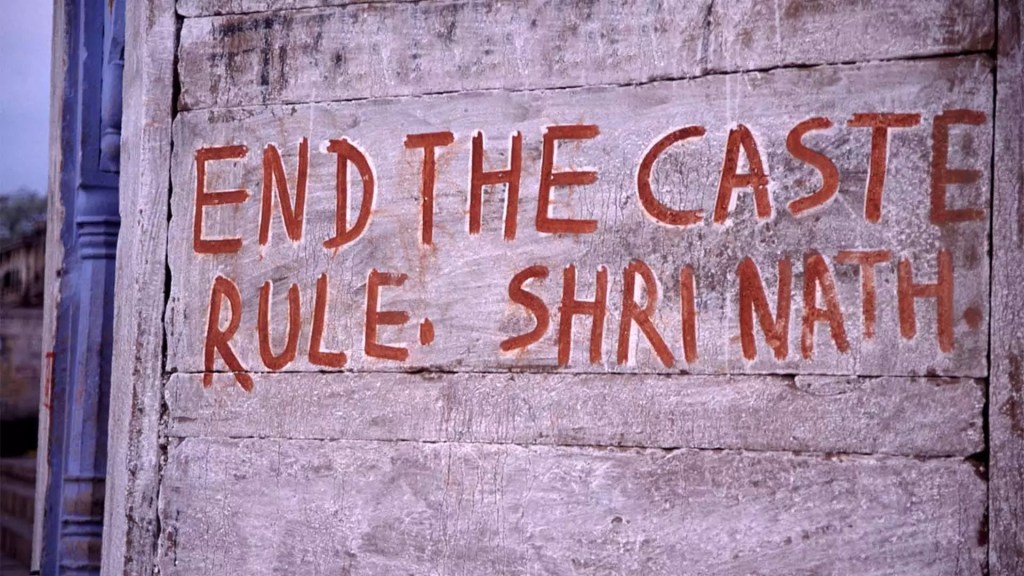
END THE CASTE RULE, SHRINATHE
State’s caste survey had 12 lakh people identifying as ‘no caste’, mostly upper-caste professionals in elite jobs, thus denying caste while enjoying its benefits
In the 1980s, top communist leaders routinely deflected any conversation about caste with a singular ideological assertion: “In India, there is no caste, only class.” Literature produced by the Rashtriya Swayamsevak Sangh (RSS) and writers allied to it echoed what their polar opposite rivals said, that there was no caste in India.
However, as a mark of difference, they remained silent on class. In their words, written and spoken, only the Nation and its enemies, the Muslims, were a reality.
These writers, then and now, are “Dwijas” (twice born) – mainly English-educated Brahmins, some of whom trained in the West.
The communist no-caste theory, on the other hand, came from the same Brahmin and in some cases, Kamma and Reddy intellectuals.
In essence, they all shared the philosophical foundation that one must produce myth out of reality.
Caste as a colonial construct
One believes there is no caste till one reads Mahatma Jyotirao Phule and BR Ambedkar.
On examining the caste situation in real life and going through the literature of anti-caste thinkers from the Dalit and Shudra backgrounds, the mind changes.
During the Mandal movement of1990. Both Hindutva and the Congress’s liberal intellectuals came up with a new theory that caste is a British colonial construct. The communist upper-caste intellectuals did not differ with this, broadly speaking, Hindu theory, either. It was because of the Christian British rulers’ ploy of Divide and Rule.
Those who do not see untouchability of Dalits and graded inequality among Shudras were projected as great intellectuals.
Fast forward to Telangana’s ‘No Caste’ The “no caste” scenario emerged again in April 2026, when the Independent Expert Working Group’s (IEWG) findings on the Telangana Socio-Economic, Educational, Employment, Political and Caste (SEEEPC)
Survey of 2024 were released. The report said, “One of the most significant and unexpected findings of the SEEEPC Survey is the emergence of a large and diverse group of × itizens who identify as having “No caste”.
Nearly 12 lakh individuals-now the 10th largest community in Telangana-chose to not identify in the conventional caste labels, opting instead for a civic identity beyond caste categories”.
“While publicly caste-neutral, 43% of them claim to possess a caste certificate and may have previously accessed reservation benefits (13.5%). Their profile reflects a trajectory of mobility shaped by caste-linked pathways, now navigating institutional and professional spaces where caste neutrality is selectively performed but not structurally absolute.
Also read: How government school mergers hit Dalit, Adivasi, girl students hardest
“The group shows particularly high representation in top-tier government services such as IAS/IPS (22.9%), other Central Government positions (13.2%), and among judges (9.3%). These are not network-driven sectors but gatekept through highly competitive and credential-dependent processes.
“This pattern suggests that many “No Caste” individuals likely emerged from households that invested heavily in education, possibly drawing on historic OC (open category or general caste) privileges or having transitioned through BC/SC/ST categories with upward mobility over generations.”
Small group moved sought tag
The process by which this category came into the enumeration manual is intriguing. A small group went to the Telangana High Court and filed a petition that there should be a “No Caste” category in the enumeration manual.
The court gave an interim order that the state government may consider including this category, while posting the case for final hearing. Without even waiting for the final judgment, the government officials created the abnormal code number 999 in the manual just before it was about to be printed, and the enumeration process kicked off.
The high volume of registrations – predominantly from upper-caste individuals, highly educated and occupying positions of power – points to a well-orchestrated campaign among entrenched elite networks in Hyderabad.
Paradox of caste denial
For decades, organised upper-caste groups – right-wing and left-wing – have conveniently denied caste’s existence, even while firmly controlling the nerve centres of a deeply caste-ridden society.
It is precisely this long-running paradox – rejecting caste publicly while wielding its privileges privately – that likely enabled such coordinated, large-scale entries, cutting across party lines and ideological boundaries.
We know that among the upper castes, surnames such as Sharma, Shastri, Verma, Gupta, Jain, Reddy, Rao, Iyer, Iyengar and others point to their caste location even if they registered themselves under the “No Caste” category. The purpose is not difficult to understand. It is to, perhaps, sabotage the entire process of the caste survey.
Whither caste neutrality?
One moral question pops up here. It is also social and spiritual.
All these “No Caste” people are obviously Hindus. The caste system is Hindu, according to a recent judgment of the Supreme Court. It is not Christian nor Muslim. Have these 12 lakh people out of Telangana’s total population of 3.55 crore people covered under the survey succeeded in annihilating caste among themselves?
To illustrate the contradiction, consider a Brahmin family that declares itself “No Caste”. Suppose one member of the family serves as a priest in a major Hindu temple while another is an IAS officer. Temple priesthood remains exclusively reserved for Brahmin families — no Dalit or Shudra can occupy that sacred position. The AS officer, meanwhile, likely benefited from generations of educational and social privilege rooted in caste. How, then, can such a family credibly claim caste neutrality?
Neutrality will work only when…
Caste neutrality will be real only when all castes in the Hindu religion become equal and have equal rights in all spheres of life.
Suppose an inter-caste married couple registered themselves as “no caste” in the survey. Yet their children can choose one of their parents’ castes. Like the communists, a some families might not believe in God-Hindu or Christian or Muslim. But such an atheist spiritual life does make them caste-neutral in social life. The casteist communist leadership established this truth.
It is socially and spiritually immoral to practise caste in everyday life in one form or another and deny it in the state enumeration.
Organisations and political forces might take up campaigns that do not acknowledge the caste. But that does not make an individual casteless.
Dangerous trend
The caste-based social capital does not automatically disconnect because one individual or one family declared itself caste-neutral. An individual’s abilities do not make what one is in a system of caste. Caste capital works like a safety valve in a caste society’s life. Hence, caste neutrality remains a myth.
The only credible path forward is acknowledging that one’s caste has fundamentally shaped who one is and actively working toward genuine caste equality across all spheres of social, spiritual and political life.
Telangana’s “No Caste” registrations signal that organised, privileged forces may replicate it at the national level during the ongoing caste census. This is a dangerous trend aimed at wrecking the entire exercise.
(The Federal seeks to present views and opinions from all sides of the spectrum. The information, ideas or opinions in the articles are of the author and do not necessarily reflect the views of The Federal.)
About the Author
Kancha llaiah Shepherd
Kancha llaiah Shepherd is a political theorist, social activist and author. His latest book is The Clash of Cultures — Hindutva – Mullah Conflicting Ethics.
https://thefederal.com/category/opinion/telangana-survey-no-caste-registrations-increase-240767

