-
Make Reading Preamble of the Constitution Compulsory

The Government of Maharastra has made reading Preamble of the constitution compulsory in the school assembly meetings every morning. From primary school to high school, students must remind themselves that they live in a democracy under this constitution. This is a great nationalist step. Every state Government in the country must do this needful thing at this juncture of our national crisis.
The Preamble and the portrait of Ambedkar became the symbols in all protest meeting against CAA and NRC. Women, especially Muslim women who never used to come out are on the streets. The university students also came out into streets trying to save the nation from slipping into anarchy. They are also trying to save India from international calumny about Indian democracy and its functioning by making Preamble and Ambedkar, the father of the constitution symbols of this struggle.
The Preamble of the constitution is the oxygen mask at a time of deadly anti-Indian disease that was let loose in the form of CAA and NRC by the Delhi Government. The future survival of this constitution is based on our children’s belief in the constitution and the constitutional morality that our founding fathers gave us as the national spirit and life blood of the democratic state and society. Neither the nation nor Indian democracy will survive if Mahatma Gandhi and Nathuram Godse, who killed him, are seen as equally patriotic. Our children should be able to distinguish between good and evil at an early stage in life. They should learn that a killer and killed can never be equated. They should learn the protagonist of non-violence and a protagonist of brutal violence cannot be respected at the same time and at the same level. The nation is being pushed into that kind of mental disorder where Gandhi and Godse could be equated.
The Preamble declared that “We the people–all of us without looking at what our religion, caste, race gender is—gave this nation to ourselves” on 26 January 1950. From that day the so called parampara of early India which operated with all kinds of inequalities caste, religious, colonial and gender brutalities, was replaced with a principle of what Ambedkar called ‘liberty, equality and fraternity ‘ of every individual. These rights are inalienable rights of every caste, religion, race and gender persona of our nation. It cannot be taken away with NRC. It cannot be not given to new comers, whether born here or migrated, for some reason with CAA.
Those who migrate from other countries for some reason and if we are convinced that they need protection and livelihood India should give citizenship to them without looking at their religion. We should look at their humanness but not religion. That is against the Preamble—what we call the Spirit–of our constitution.
The Preamble declares that India is a secular nation. The children from primary school onwards should know that religion is an individual choice and a private affair. Once the religion becomes a ground for granting citizenship the constitutional guarantee of secularism gets violated. Whoever wants to impose their private religion on the nation should be opposed based on our constitutional morality.
The idea of socialism in the preamble though does not speak of communist socialism, but lays a strong ground for modern democratic welfare system that we are using. The right to education and employment and right to dignity of labour and housing, old age pensions that Governments are giving today flow from this guarantee by the Preamble.
That we are a democratic republic is a foundational principle of the constitution. If our future citizens constantly do not fight and work for protecting democracy and republican form of Government the system can be driven in any direction. Democracy can be abolished and dictatorship could be brought about.
When the rulers are becoming more and more unpredictable the schools, colleges and universities are only the hope of the present democratic and republican system. This is where every young man/woman learns about the importance of the struggle of our freedom fighters, their sacrifices in the fight against the colonial rulers. They should know that hundreds died in the cause of establishing a democratic constitution.
The view that courts will protect the constitution and the people do not have to bother about it is not a correct idea. Judiciary is also headed or run by humans who have their own views and ideologies. People’s alertness makes judiciary also more responsible and functioning protector of the constitution. Educational institutions play a key role in educating people and keeping them informed.
Indians as people historically are not habituated for regular book reading and keeping books at home. Time has come that our children should be taught that every Indian must read constitution as duty. Normally people think that reading of the constitution is a work of lawyers and political science teachers. That is absolutely wrong. Every Indian must read constitution as part of the school education and also later in life.
Books of religion are read by people who belong to that particular religion. But Indian constitution is every Indian’s book–whatever could be ones religion or language. Making the constitution available plays a key role and the State Government must provide the constitution in all languages.
Though there was some debate on constitution during emergency between 1975-77 the number of educated people at that time was very limited. This much schools, colleges and universities were not there at that time in India. Now the situation is different.
When educated people take a selfish view they can participate in the activities of dismantling constitution students should act as a bulwark against this very idea. Education in itself is not a guarantee for sustenance of the principle ‘liberty, equality and fraternity’. Educated people themselves created caste and untouchability in India. They asked others to practice it as our parampara. Our constitution opposes that paramapra. It declares that all Indians are equal. It initiated a new parampara of equality and well being of all. Many oppose this constitutional principle. We should oppose such forces of evil.
Now educated people must think about good of all, equality of all and welfare of all, not just of the rich and powerful. Constitution is meant to make people to live for the good of all. Everyday reading of the Preamble by young children and reading of the constitution by every young man/woman will save India from many dangers.
Kancha Ilaiah Shepherd is a political theorist, social activist and author of many books, the latest being From Shepherd Boy to an Intellectual—My Memoirs
-
CAA-NRC debate: If religion is allowed to colour civil rights, India’s democracy will be imperiled
After the Citizenship Amendment Act became a reality in the middle of December, protests broke out across India. By now, about 25 people have been killed around the country, most of them falling to police bullets. Even in the Jayaprakash Narayan movement against Indira Gandhi in the mid-1970s and the subsequent Emergency, such massive nationwide protests and police killings did not take place.
Despite the government’s claims that the Opposition is behind the protests, they mostly are spontaneous. Again, contrary to the government’s suggestion, it is not just the Muslim community that is demonstrating. People of all religions – especially students – have participated in a big way.
The panicked Bharatiya Janata Party-controlled Central government has let the police loose on protesting students and general public in states ruled by the party. But the police baton-charges, teargas shelling and firing have failed to cow down Indians: to the contrary, they have resurrected the spirit of Indian democracy.
State and society
In Hindutva political theory, there is no discourse about citizenship of human beings in relation to state and society. The concept of citizenship first formulated by Aristotle in Greece. He defines citizen “as a person who has the right to participate in deliberative or judicial offices of the state”. According to him aliens and slaves have no citizenship rights.
This idea was developed by later European thinkers, who broadly defined a citizen as a person who could vote and receive the benefits for continuing life and making the life better in the process of living in a given state. Immigrants were given the right to ask for citizenship based on their contribution to that society and state through their labour power, not based on religion or creed, caste or race.
The Rashtriya Swayamsevak Sangh and Bharitya Janata Party want to rely on ancient Indian literary sources for their understanding of the concept of the citizen. But there is no proper definition of citizenship in moar ancient Indian texts: they all support caste-based karma theory but not a rational theory of citizenship. Even Kautilya’s Arthashastra, a treatise about statecraft, fails to define who a citizen is.
A protest against the Citizenship Amendment Act in Chennai. Credit; PTI The only book that talks about the citizen, known as the nagarika, is Vastyayana’s Kama Sutra. But it offers a rather perverted definition of the role: the nagarika is a householder and enlightened person. What should he do? According to Kama Sutra, “having put his clothes and ornaments, [he] should during the afternoon converse with his friends. In the evening there should be a singing and after that the house holder, along with his friends should await in his room, previously decorated and perfumed, the arrival of a woman who may be attached to him.”
The woman with whom the nagarika is supposed to engage with is a ganika – a courtesan. But there is no discussion about the state and its membership in this text at all.
A theocratic law
No democratic state should give citizenship to either migrants or to refugees based on their religious background. But the Citizenship Amendment Act provides a fast track to citizenship for undocumented migrants from Afghanistan, Pakistan and Bangladesh – if they are not Muslim.
This is a theocratic law, to say the least. According to Hindutva theoreticians like Subramanyan Swamy, no Muslim is persecuted in these Islamic nations so they have no need to seek residence in India. If so, why mention religion in the Act at all and arouse the ire of India’s Muslims? The mention of religion in the Act provides serious grounds for Indian citizens belonging to that religion to be anxious that all of them could be rendered stateless. That suspicion has deepened now.
Even considering that Afghanistan, Pakistan and Bangladesh discriminate against their minorities, why should a mature democracy like India, which has well-acclaimed Constitution, do the same? Our founding fathers would not have wanted this.
A danger to democracy
Assuming that the US decides tomorrow that illegal migrants of all religions will get citizenship, except if they are Hindu. Hindus who are already US citizens will realise that they are being told they are unwanted.Once such a law is enacted, how do they think that non-Hindus will treat them as good citizens? This is the main problem that the Indian Muslims will face with the country’s new citizenship law.
Even though India has functioned as a constitutional democracy for seven decades, our idea of human rights and citizenship remains underdeveloped. We need to evolve in our understanding of several matters, particularly how to negotiate between civil rights and religious faith. If the line between religion and civil rights is erased, our democratic system will collapse.
Though India’s ancient and medieval texts do not provide us a sophisticated theory of citizenship or on how democratic institutions should function, modern Indian thinkers like BR Ambedkar have provided some guidance on these matters. Still, to sustain democracy, we needs to read and re-read the western theories of human and civil rights.
The foundational principle of democracy is that though majority elects government, the minority that voted to the opposition should always feel secure in every institution of the nation. A government should never equate itself with nation, as the BJP-RSS are doing. That is self destructive.
Kancha Ilaiah Shepherd is a political theorist, social activist and author and the Former director, of the Centre for the Study of Social Exclusion and Inclusive Policy at the Maulana Azad National Urdu University in Hyderabad.
-
In Mohan Bhagwat’s India, Everyone Is a Hindu
The RSS head’s recent speech is testament to a vision where the lines between being Indian and being Hindu are blurred haphazardly.
The Sarsanghchalak of the Rashtriya Swayamsevak Sangh, Mohan Bhagwat, gave a speech in Hyderabad in which he defined Hindus and Hinduism totally differently. The speech was delivered on Christmas day, when the world was celebrating the birth of Jesus Christ, an universally recognised prophet of peace and non-violence.
According to him, all Indians i.e. 1.3 billion people, are Hindu. A Hindu is one who lives in this (Indian) land and must worship Bharat Mata and also love the soil and water. That means all Indians, apart from worshipping or praying to the god that they believe in, must also worship Bharat Mata as the goddess that RSS has constructed.
Therefore, all Muslims, Buddhists, Christians, Sikhs, Parsis and so on should worship two forces, one god and another, Bharat Mata.
More in Home While registering their names in the National Register of Citizens or in school or in any other record as against the column ‘Religion’ they must write Muslim-Hindu, Buddhist-Hindu, Christian-Hindu, Sikh-Hindu, Parsi-Hindu and so on. They can then follow their book, their food culture, their marriage system.
This time he has not asked them to worship the cow and give up eating beef. He has also not talked about Uniform Civil Code.
Whosoever now wants to take to Islam anew or Christianity or Buddhism or Sikhism or any other religion must mention Hindu invariably as part of their religion.
Mohan Bhagwat has departed from the earlier definition of Hindutva given by Savarkar, Gedgewar, Golwalkar and so on. Earlier Hinduism and Hindutva appeared in some sense, different.
Bhagwat has taken out the political ideological content from the discourse. This formulation, according to him, sustains the inclusiveness that Muslims, Buddhists, Christians, and Sikhs want. Maybe this will also solve the CAA-NRC problem. Those Muslim migrants or refugees should simply mention against their names, ‘Muslim-Hindu’. They then can pray to their Allah in Arabic but at the end of the prayer they must, perhaps, say ‘Bharat Mata ki jai’.
It appears that Mohan Bhagwat has emerged as greatest theoretician of Hindu philosophy, after Kautilya and Manu. Both Kautilya and Manu provided the basis for the kingdoms of Maurya Chandra Gupta and Pushyamitra Shunga by writing their own theoretical texts, Arthashastra and Manudharma Shastra. As Kautilya and Manu brought Chandra Gupta and Pushyamitra to power with their theories, Mohan Bhagwat has brought Narendra Modi to power. In his living times Amit Shah is likely to become Prime Minister after Narendra Modi. The existing BJP majority in the parliament and two term rule itself is Mohan Bhagwat’s philosophical strategic contribution.
According to Mohan Bhagwat, as he expounded his new theory at the Hyderabad meet, human beings of the world could be divided into three categories. They all desire three kinds of victories. They are:
“Asura, Rajasika and Dharma. People belonging to the Asura category lived in sadness, made others sad, caused violence, yet achieved victory, which would, ultimately cause the destruction of everything. And those belonging to the second category did things that were self centred. They used others to gain riches and pride for themselves. The Sangh and India believed in Dharma victory, where people lived for the happiness and well being of others, and did not want heaven, kingdom or anything for themselves.”
This is a highly creative theory that protects believers from the belief of heaven and kingdom. Mohan Bhagwat has liberated his Hindus from the desire of heaven and also kingdom.
These two desires caused so much violence that genocides took place because of them. As of now whether they are Muslims, Christians or Buddhists or Sikhs living as pure Muslims, or pure Buddhists, or pure Sikhs ‘they want heaven after death and kingdom (political power) in this life.’
According to him such forces also commit violence. For the first time he has told the world that RSS and BJP karyakartas (workers) do ‘not want heaven and kingdom’. Like the RSS karyakartas, people who want to get out of the desire of heaven and kingdom should have a Hindu tag along with any other religious tag that they have. He is not asking them to either convert to Hinduism, nor is he asking those who converted from Hinduism to re-convert.
They should simply add a new tag ‘Hindu’ to their existing religion. If they do not do so, there will be serious consequences, of course only of ‘Dharma’ violence.
The only question is, why did RSS establish the BJP if not for capturing the state power (kingdom) and why does it keep on working for its victory, as against other political parties, which believe in secularism and state power, which, according to him, are sinful activities?
He tells the world that his organisation never participated in Asura and Rajsika activity in its lifetime of 95 years. Does he not consider its rioting period before 2014 as a period of Dharma? Does he mean that Advani’s Rath Yatra and the riots that followed in the 1990s are Asura and Rakshasa activities? Then why does his own BJP government does not send Advani and his team to jail?
Bhagwat’s new Hindu theory gives an interesting twist that Asuras and Rajsikas are not in Bharat, as the ancient Hindu texts told us. They are neither lower castes nor Muslims nor Christians of India but they are outside India. If the Indian Muslims, Buddhists, or Christians do not add Hindu to their religious tag perhaps they would be considered as Asuras and Rajasikas who have migrated from outside.
He has given enough scope for their transformation with a new mode of conversion. If they do not transform, perhaps, his Dharma violence follows its own course.
This is a new Bharat of Mohan Bhagwat. He has a grand design for the future of the children of the nation. The Hyderabad theory will be interpreted and re-interpreted. Media has reported his theory very prominently. The TV channels telecast his speech live.
Let us wait and see how other religious intellectuals, secular intellectuals and the Western scholastic scholars react to this theory. His theory has thrown a serious threat to Indian minorities. Many minority leaders have already expressed serious apprehensions about this kind of one Hindu nation theory.
For the first time in known Indian history, millions of people, and especially minorities, have come out to the streets to oppose the CAA and NRC. Mohan Bhagwat scares them more with this theory.
Earlier he scared the Scheduled Castes, Scheduled Tribes and Other Backward Classes with a theory of ‘no reservation in India’ in the garb of reviewing the reservation system itself. The question is: can India as a nation survive with this kind of dangerous religious theories? What happens to our secular constitution? My fear is that the very idea of India is in serious threat and Mohan Bhagwat has very deliberately posed that very threat from his position.
Social activist and author Kancha Ilaiah Shepherd is a political theorist who taught at Osmania University till 2012.
-
RSS/BJP Ideology Is No Spiritual Citizenship To Shudras And No National Citizenship To Muslims
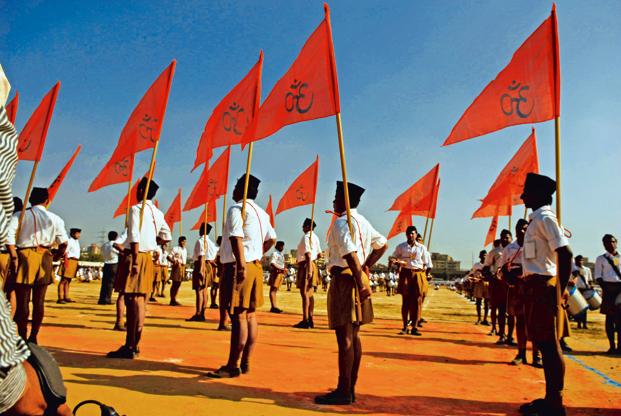
The Hindutva, a political child of the Brahminic Hindu religion, denied spiritual citizenship to Shudras historically. Now it has decided to deny national citizenship to Muslims. The Brahmin/Bania forces want to consolidate their power with an iron grip on all sections of India by denying basic citizenship to different sections of India in different modes. Shudras and Dalits were denied all basic rights for millennia through the Hindu spiritual system. Now through the Hindutva school they are going after Muslims with a nationalist agenda. In this agenda even the Shudras/Dalits/Adivasis do not get anything but their muscle power will be used for fighting Muslims and vote power will be used for Brahmin/Bania/Ksatriya empowerment.
The citizenship Act 2019 bans migration of Muslims from only three countries—Afghanistan, Pakistan and Bangladesh. Why only these three countries, not from other Muslim countries? The reason is that these three countries are part of Hindutva Akhanda Bharat. Hindutva ideology still believes that Islam has taken away the Shudras, Dalits and Adivasis, who would have been under the thumb of the Brahmin/Bania/Ksatriyas of India as a great majority. All of them went into Islam and carved out their own nation states based on the religious ideology and philosophy.
From these three countries over a period of few decades many Brahmin/Banias migrated to India under the rubric of Hindus. They got the best of the resources in North India and most of such migrants got, with the help of the central Government, English medium education and got into bureaucratic positions, politics and so on. L.K.Advani (Sindhi Bania) is one such leader who came from Pakistan. He organized the Banias around the RSS/BJP networks. Now Narendra Modi, a Bania (with OBC certificate) and Amit Shah, a Jain Bania, who are his disciples doing yet another level mobilization of their own forces. Mohan Bhagwat as the head of the RSS and Modi and Amit Shah, as the rulers of the Indian state and while controlling their party, are moving with a design. Though many labouring non-Muslims– who are lower castes– migrated from these three countries they were left in the labour camps.
RSS/BJP never believed in all caste equality with all spiritual, social and political rights for everybody . Till today the Sangh Parivar did not discuss about the question of abolition of caste which was the source of expansion of Islam in the Indian sub-continent. Even now the Shudras/Dalis/Adivasis have no basic spiritual citizenship rights in Hinduism. RSS/BJP forces are trying to build a massive Ram temple with the labour power of the Shudra/OBCs but they cannot become priests in that temple. Even now RSS basically is Brahmin controlled network. BJP is a structure of Brahmin/Bania controlled political formation.
The nation knows how Hegdewar, Golwalkar, Shyama Prasad Mukherjee, Deendayal Upadhyaya to Atal Bihari Vajpayee, the Brahmin saga established its hegemony in the RSS/BJP structures. Now the Brahmin/Bania combination is working with a clear cut direction. But no Shudra/OBC/Dalit/Adivasi was allowed to come to any Brahmin-Bania leader’s status. Yet most Shudras/Dalits/ Adivasis were/are set against Muslims believing that they are their enemies.
For this situation the Muslim elite of India, who are mostly upper caste converts, are also responsible. We all know that Mohammed Ali Jinnah was Gujarati Bania convert and Allama Iqbal was Kashmiri Brahmin convert. Many Muslim leaders working around Congress now are from the brahminic family converts and the masses are from the productive castes background.
The pattern of the Brahmin/Bania migration from Afghanista, Pakistan and Bangladesh as Hindus was the same as what happened in Kashmir in the 1990s. All the pundits migrated in the name of Hindus. Who remained in Afghanistan, Pakistan and Bandladesh as Hindus till date, and what is their social status, apart from minority status, is not known. If the ‘Persecuted Hindus’ as the Act defines once migrate to India if they get citizenship would they get some caste status or not. Suppose all of them claim that they are Brahmins or Banias or Ksatriyas. In which case they would be automatically granted the status spiritual equality but not for those Shudra/OBC/Dalit/Adivasis even if they want to claim that status while living in India from the days building the Harappan civilization they will not get. That is caste and Hinduism.
Shudras within Hinduism do not have spiritual citizenship. Whether they are Jats, Patels, Gujjars, Marathas, Yadavs, Reddys, Kammas, Lingayats, Vakkalingas, Naykars, Nairs who are known as upper Shudras also do not have the spiritual citizenship, leave alone OBCs of India.In West Bengal broadly Shudras who are Bengali agrarian communities also do not have spiritual rights. They cannot aspire for priesthood and a spiritual philosophical position in Hinduism. The RSS/ BJP would not like to discuss this question because that would create a condition of conflict that would result in overthrow of the Brahminic hegemony.
The Muslim citizenship question will have to be clubbed with Shudra/Dalit spiritual citizenship question. Whether Muslim elite would support such broad equal rights within political society, spiritual society is a fundamental question.
The Indian Muslims never understood the caste nature of Indian society and never stood by the untouchables and Shudras in the modern period. Their intellectuals and leaders remained caste blind and also class blind. They were living within the fold of their religious institutionalism. Both Hindutva forces and communal Muslims were locked up in the rioting process for quite long time. Muslims never realized the importance of democratic mobilization, in spite of Ambedkar repeatedly telling them that democratic struggles are more important than communal fights.For the first time they realized.
At least now they have to realize the importance of democratic mobilization against Hindutva brahminism on consistent basis.
If the Shudra/OBC/Adivasi get spiritual equality; if they control every institution, including Hindu structures, that would remove the fear of Hindu conversion to Islam or other religions. But the Brahmin/Bania forces would not like such transformation because their spiritual, social and political hegemony will collapse. Once spiritual democracy gets established and the Shudra/Dalit/Adivasis control Hindu spiritual system there will not be anti-Muslim thinking among Shudras/Dalits/Adivasis as there is food cultural commonality, though they belong to different religions. Indian Brahminism, then, will be put in its proper place.
Kancha Ilaiah Shepherd is a political theorist, social activist and author of many books, the latest being From Shepherd Boy to an Intellectual—My Memoirs
-
The Question That Won A Big Battle
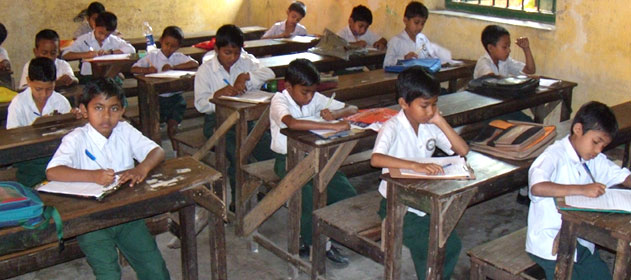
In Andhra Pradesh Assembly the anti-English medium, opposition leader, Nara Chandrababu Naidu, surrendered in a debate on 12 December, 2019. He said “we are not opposing introduction of English medium in Government schools’. With this surrender all his supporting media network, street dharna teams,the forces of pro-private English medium schools will now follow the suit. Thepro-English medium in Government schools forces won the battle with fundamental question: Where are your children studying? Are they studying in Telugu medium or in English medium school?
Where are the anti-English medium media management children studying? Where are the road rolling agitator’s children studying? In two Telugu states they got thoroughly exposed before the rural masses. They lost the battle very badly. But at the national level such forces are still very strong.
So far number of commissions were constituted to study the question of medium of instruction in Indian schools and its viability. Most of the commissions recommended that studying in mother tongue( regional languages) would be better for the children’s learning. But all such commission chairpersons (men and women) and members sent their children and grand children to private English medium schools. In many cases their children studied in schools that do not teach even one subject in that regional language, which is called their mother tongue.
This duplicity of the top elite of India destroyed the school education system in India. We do not stand anywhere near the Chinese school education standards. The reason was China has only one national language—Mandarin. Now they adopted English as second language as a teaching language, across the school education. For the last one decade the Chinese school standards have been said to have achieved superior status to even that of American and European school standards.
The regional language lovers in India know pretty well we do not stand anywhere near the school education standards of China. Yet they do not want to evolve one national language in India. The scope to emerge as Indian national language is possible when English medium becomes the school education medium across the country. However, such language policy cannot destroy regional languages. Instead every child in India will becomes bilingual—English and regional language. That will improve our standards enormously.
In Andhra Pradesh the defeated forces will now knock the doors of AP High Court from there to the Indian Supreme Court. The Supreme Court has already made it clear that about the medium of instruction the courts cannot interfere.
Education in our constitution is in the concurrent list. Both the Central and several State Governments are running English medium schools. The Centre runs Kendriya Vidhyalayas in English medium from LKG to 12th. All the newly started model schools all over India are run in English medium only. Several state Governments including Andhra Pradesh and Telangana run several residential schools in English medium.
Even all the private English medium schools are run with the state and central Governments recognition. That is part of the state policy. If the courts object to the Andhra Pradesh policy of English medium in Government schools all English medium schools in the country need to be closed. The children have a fundamental right to learn school education in the language that they want. Judiciary cannot undo that fundamental right. If the state does not run such language school the child can go to such school wherever it is or the child can establish his/her own school to learn that language.
In fact several private schools won the cases about the right to teach any language without any controls. That is the reason why many rich private schools teach many foreign languages but not a single Indian regional language. A.P is a mother of costly private English medium school chains. If the A.P Government cannot run English medium schools in the villages it should close down all English medium schools in the state. Then the problem also becomes that of the nation.
The constitution is silent about the language of instruction in schools and colleges quite deliberately. Dr.B.R Ambedkar foresaw the Nehruvian strategy of private English medium and state Government regional language school education, as he lost the battle for getting enough votes to recognize English as the national language in the Constituent Assembly . The Shudras/Dalits/Adivasis in his times were meant to be pushed into regional language education whereas the top three communities—Brahmins, Vaisyas and Ksatriyas–were likely to get English medium private education. That is what exactly happened in the last seventy years.
In India as of now the law makers, the law adjudicators like bureaucrats, the judges who over see justice educate their own children in private English medium schools. Of course, that is their own right to do so. But all of them must recognize the right of the poor to get the same medium of education free of cost in the state institutions. Human fundamental rights cannot be in operation based on their wealth.
However, the battle for the English medium education of the poor children of India who cannot be sent by their parents to private English medium schools will finally depend on the policy formulated by the Government of A.P. and that policy passing through all hurdles including the judicial hurdle.
2020-21 will be a revolutionary educational year in India.
Kancha Ilaiah Shepherd is a political theorist, social activist and author of many books, the latest being From Shepherd Boy to an Intellectual—My Memoirs
https://countercurrents.org/2019/12/the-question-that-won-a-big-battle
-
Do English Educated Become Christians?
The Andhra Pradesh Chief Minister Y.S.Jaganmohan Reddy remained firm on the question of introducing English medium in Government schools and issued the orders to start the new education programme from 2020-21 academic year. Since then a new theory has been floated by forces that do not want the children of the poor and lower castes learn English. They do not want the village children to compete with their private sector English educated children. They are not just in one political party or in one political ideology. They are well spread over the right wing party organizations to media industry heads to academics of left wing ideologies. The new theory is shocking. What is that theory? All English educated become Christians. Is this not shocking?
If that is so by now all Amaravathi rich, Banjara Hill bungalow living, Jubili Hill mansion living would have become Christian. If that is so the Greater Kailash Khan Market (New Delhi) Indian intellectuals and business forces, Marine Drive Queen’s Necklace Beach (Mumbai) high rise apartment livers, Chennai Iyer and Iyangar colonies should have been Christian by now. They would be having Bible in one hand Cross on their foreheads.
Our liberal and left comrades who smell colonialism in English, which is also accused to be Christian, but who studied in English medium schools only, conduct their Central Committee and Politburo meetings only in English, would have been Christians with Cross as their election symbol, but not hammer and sickle.
Look at the way when equality of education comes into the villagers who produce our food, who feed our cities, who see that rich in the urban areas live a comfortable life behave. One can understand the right wing hypocrites spreading the venom that English educated become Christians. But the left upper castes and their followers are also behaving like super right. Karl Marx will only pity them and would feel sorry for their sub-Telugu nationalism of the worst order. Now Marx cannot save them. God alone should save them.
Mahatama Gandhi to Jawaharlal Nehru to Indira Gandhi, Jyothi Basu to Nambudripad to Indrajit Guptha to Sitaram Yecuri to Prakash Karat to Brinda Karat studied only in English medium. Not only that in the right wing Lal Krishna Advani to Arun Shourie to Arun Jatley, Nirmala Sitaraman to most intellectuals working in Modi industry of modern market and media are English medium educated and by and large are anti-Christian. The right wing hero Veer Savarkar studied in Ferguson College (Poona)where Gopalakrishna Gokhale and Balgandhar Tilak studied. Remember Ferguson College was the best English medium college in Bombay Province. Shyama Prasad Mukharjee studied in English medium school and later studied in Calcutta Presidency College again the best in that province with English as his major. If English medium education converts people from Hinduism to Christianity most of these above mentioned people would have been pastors, bishops but what they were we all know. What they did and teach the nation we all knows.
Those who already died from among them, their dead bodies were not buried with Cross symbol on their tombs, but their dead bodies were burnt with proper Hindu rituals and recitation of Vedic mantras. Why then all those leaders who follow the above mentioned Hindu leaders who studied in English medium schools, in Andhra Pradesh, think that the children of poor who cannot afford private convent school English education will become Christian? Why they become Christians only when they study in Government English medium schools? Where does this argument come from? It comes from a very deep fear of equality. One can understand the BJP and TDP leaders suffering from that fear but how should we understand the communists suffering from that fear?
The real fear is equality in medium of instruction, syllabus content and serious educational environment. They are afraid that the poor will challenge the rich, the lower castes will challenge the higher castes once educational equality is established.
Human history has shed lot of blood in the fight for equality. It fought for equality before God. It only won half of the battle. It fought for equal rights of land. Only half of the battle is won in that field too. In India the largest number of lives were lost in the struggle for land. The dead only come back on their descendant’s recall to ask “what did we achieve in the tortures we underwent”? What did we achieve in brutal death we faced? How much land our descendants got? .
From Telangana Armed Struggle to Naxalbari to Srikakulam struggles huge number of lives were lost on the land question. But that equality did not come about.
The communist ideology could never predict that liberal capitalism would bring about computer and internet revolution. The Hindutva ideology does not want any technological and linguistic revolution. That is understandable. But how the left who believed in internationalism got into this level of decadence? Why the left has lost all its creativity and got into the realm of hypocrisy that could be easily perceived.
Computer and internet revolutions are not brought about by shedding blood. They were brought from good schools, colleges and universities. This revolution was brought by English language education, not by Telugu, Tamil or Hindi. A language should also have the potential to discover new things. Nobody expects the Hindutva forces to understand the history of new revolutions but every body expects the communists to understand as they believe in the principle of ‘the workers of the world unite’. How do they unite without having a common global language as an instrument of communication among the workers?
Before any other politician thought about educational equality in terms of medium of instruction, syllabus content, school infrastructure the communists should have done that. But what they did was the opposite. Without questioning the two different mediums they sent their children silently to English medium schools. Worst, where they were/ are in power they forced the children of working class, lower castes and the poor into the regional language Government schools. They destroyed West Bengal with the same school education system. Now they are opposing English education in the villages in Andhra Pradesh.
The English medium Government schools in villages and 15000 rupees in mother’s accounts (Amma Vodi) whose children are in school will bring about bloodless revolution. The youth in every village must organize into English education protection squads. The mothers must organize into ‘Amma Rights’ teams to fight against those who oppose English education to their children. Let us not allow this opportunity to slip from our homes in the villages.
Kancha Ilaiah Shepherd is political theorist, social activist and author
https://countercurrents.org/2019/12/do-english-educated-become-christians
-
Why It’s Necessary to Remember George Reddy
Why It’s Necessary to Remember George Reddy
George Reddy, murdered by right wing forces in the 1970s when he was only 25, remains an inspiration for thinking youth even today
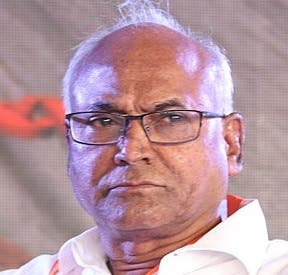
I watched the Telugu film George Reddy with a lot of curiosity.
It was released on November 22, 2019 and is based on the life of the famous Osmania University student leader George Reddy who was murdered by right-wing forces on April 14, 1972. He was a gold medalist in nuclear physics and was doing his PhD at the time of his murder.
A believer in pro-poor socialist ideas, he fought for the rights of the poor and women students, both on campus and outside. Within a short time he became a legendary figure. So much more the reason why pro-feudal right-wing forces got him murdered on the campus itself.
The film, produced by Sudhakar and directed by Jeevan Reddy captures the spirit of the times and his many ideas . The makers have skilfully recreated the Osmania campus of the 1970s.
Somewhat predictably, the Telangana wing of the Bharatiya Janata Party deployed its firebrand leader Raja Singh to oppose the release of the film. They tried various means, including approaching the court, but the release went ahead. It is now running well in both Telugu speaking states.
I was one of those people who were influenced by his serious academic scholarship. I joined my M.A. Political Science course in 1974, just two years after his brutal murder. The Arts College at Osmania University, where I studied, became the main attraction and stood as a symbol of the scholar’s activism, even though he was a student of physics. His college is slightly away from the Arts College building.
However, this Arts College was the centre of political discourses and activism, even though it was a testament to the magnificent Nizam’s feudal architecture.
The ideology of George Reddy endured among students and was unsurpassed by any other figure in the two immediate decades since his death. No teacher or scholar influenced the campus’s intellectual environment as he did.
How could a 25-year-old youth do that even without writing much?
His appeal lies in three things: 1) acquiring knowledge as a weapon, 2) using it for liberation of the oppressed within that short time, and 3) getting martyred by the oppressors’ men.
When very young persons stand for justice and display knowledge of uncommon values and stand for human equality, civil society looks at them with awe and disbelief. The feudal ruling forces around them see them as a danger. This is what happened in the case of Jesus Christ and so many more thinkers. Christ’s contemporary rulers and spiritual authorities got him crucified, though he did not use any violence in his fight for justice for the poor and oppressed.
Several decades later, another student in Hyderabad arose. Rohith Vemula did not use violent methods to fight for justice. He killed himself as Socrates did at a very old age. Bhagat Singh was killed and George Reddy was also killed.
The film has successfully transformed the story of George into a mainstream narrative that has captured the public imagination. It has contemporarised George’s budding socialist-revolutionary ideology into a pro-poor, pro-lower caste and farmer’s suicide campaign, with a heroic smattering of emotional fights with political, anti-social and casteist ideologies.
The anti-serious educational agenda of the state is an issue that plagues many campuses even today.
Mediocre and forces with a lot of muscle power within and outside the student populace thrive–George was a negation of all such forces, both in the realm of scholarship and in physical fights. The film captures that personality of George very well all through.
George Reddy in the 1970s and Rohith Vemula in the 2010s inspired thousands of students on the university campuses across India for similar reasons. George Reddy was murdered when he was just 25. Rohith Vemula hanged himself in protest against similar human oppressors on in 2016, when he was just 26. Both of them have something common in their socio-spiritual and cultural roots — the belief that oppression is unethical, anti-social and that they need to fight for justice.
Both George’s mother Leela and Rohith’s mother Radhika fed them on a deeply spiritual ethic.
Though the film used the ongoing farmers’ suicides to showcase George, in the 1970s, his family’s ethics of sympathising with the oppressed and poor was in tune with the socialist waves that were sweeping the world. The impressive Super Power status of Soviet Union in the Cold War period, the ongoing cultural revolution in China, the Cuban revolution under the leadership of young Castro and Che had a huge impact on him.
The pro-Vietnam and anti-American campus movements all over the world posited themselves as a significant mediator between democratic civil rights and socialist campaigns. Sharp intellectuals were getting drawn into serious classroom and library studies and street activities. George’s unusual energy came from that source. This energy of George inspired many of us. But not a single one after him combined both the spirits. Many of his followers went into the Naxalite movement and some took to serious studies achieving only partial success. No one of us made a great mark after him in any field, though a few of us attempted, in separate spheres.
Because few rare humans do such powerful things at such a young age, they are seen as miraculous beings. There is a spiritual saying that ‘God puts a different seed in exceptional humans’. Science, arts and morality operate through them.
Indian biographic heritage has hardly textualised the life of such exceptional martyrs. Indian cinema also is loathe to grow out of the maya of song and dance. A regional, small budget film took this experimental step.
What is very impressive about the film is that it has concentrated on George’s distinctive childhood. He took everything positive and humanistic from his mother and went beyond her imagination to follow his own instinct. The nurturing of that instinct socially, culturally and spiritually is very important.
From family to school to university, providing encouragement for that creativity, goodwill and intellectual rigour is very important. The Indian civil societal ethos has a tendency to kill such exceptional human combination, either by killing the entire persona or by killing the main spirit in such persons. Once that spirit is killed, one would not make history.
There is an ongoing attempt to see that such sharp minds do not come up on campuses.
Any conservative living environment, be it a family, school, university and so on, will not allow creative experiments. Those young people who want to experiment with new things need to rebel against anything conservative.
Rebellious minds need to be negotiated with, not suppressed. The nation will lose their game changing mental abilities if they are suppressed. Any young George budding in any corner of of the nation should be nurtured. To start with, this film should be dubbed into all languages for all kinds of audiences to see.
Social activist and author Kancha Ilaiah Shepherd is a political theorist who taught at Osmania University till 2012.
-
Nehru’s message is alive, thanks to the BJP, his most ardent critic
Before the election campaign of 2014, Jawaharlal Nehru was in danger of being forgotten by ordinary Indians. Even the Congress was not using his photo in the elections as often as they were using images of Mohandas Gandhi, Indira Gandhi and Rajiv Gandhi. India’s first prime minister had been relegated to a few academic corridors. But thanks to the Bharatiya Janata Party, Nehru has been resurrected in his full blood. From Narendra Modi’s attacks on him during the 2014 campaign to invoking him as a justification for revoking Kashmir’s special status, the BJP has demonstrated an obsession with Nehru.
This is all for the better.
Even people like me who were anti-Nehru were prompted to read the books of the first prime minister with ardent curiosity because of the fact that every BJP member who had not read him or about him was attacking him fervently. It seems clear that if Nehru was still alive, he would have been jailed for being an “urban naxal”.
From reading Nehru, it’s clear that these attacks would have left him unfazed. Nehru loved criticism. If there was no one be around to criticise him, he wrote essays against himself. This is not a characteristic of a politician but that of a thinker. A politician loves choirs of praising acolytes around him. A thinker or writer loves critiques.
The hornets nest
When Nehru was about seven, his father beat him badly for stealing a pen from his table. But Nehru had the intellectual ability to understand his father’s gesture. “I do not remember bearing any ill will toward my father because of this punishment,” he wrote. He would doubtless have attempted comprehend the BJP’s attacks on him.
His humanity was so enormous that when he was in jail, Nehru even made friends with the animals there. He wrote about this at some length. “For over a year after that I lived in that cell surrounded by these wasps and hornets; they never attacked me and we respected each other,” he noted. There were also three or four snakes his cell, but like the insects, these didn’t bother him. “News of them got out and there were headlines in the press,” he wrote. “As a matter of fact I welcomed the diversion.”
It was in this jail that he discovered a creature called udumu in Telugu, which I have eaten in my childhood. It looked like something between a lizard and a crocodile. Nehru did some research on it and after reading FW Champion’s The Jungle in Sunlight and the Shadow realised that it was a scaly mammal called a pangolin .
In jail, Nehru was surprised that the British officers gave him even German illustrated magazines to read, despite their country being at war with Germany. Prisoners today are starved of books to read and paper on which to write, almost in an attempt to kill them of boredom.
A visionary
If Nehru had died in jail, India would no doubt have found another prime minister – perhaps Vallabhbhai Patel. But the world would have lacked Nehru’s three great books: Glimpses of World History, An Autobiography and The Discovery of India. A ruler can be replaced by another ruler but a thinker cannot be replaced.
Few first leaders of any nation have faced the attacks Nehru has borne after his death. George Washington has not been attacked. Lenin faced criticism after Gorbachev’s glasnost but not as vitriolically as Nehru. Mao was criticised by Deng Xiaoping but with dignity. Lenin and Mao’s mausoleums are still monuments of national pride.
One concerted line of attack on Nehru has been related to his handing of Kashmir in the early years of the republic. For contemporary India to understand his actions, it’s essential for us to attempt to recognise Nehru’s situation as a Kashmiri Pundit.
Nehru had Kashmiri roots and, as is clear from his name, was a Pandit. “We were Kashmiris,” he noted in An Autobiography (also known as Toward Freedom), written when he was in Dehradun jail in the early 1930s. “Over two hundred years ago, early in the eighteenth century our ancestors came down from the mountain valley to seek fame and fortune in the rich plains below.”
In Kashmir, they were Kauls. He writes that his ancestor Raj Kaul migrated to Delhi in 1716 but doesn’t tell us why the family chose to move. If they had not, the family’s prospects would have been quite different. Given Kashmir’s location, he would not have been a national leader. In Delhi, they acquired new family name. Since they lived near a nahar or canal, they became Nehrus.
Kashmiri aspirations
Nehru wanted his ancestral land to be part of India. He was not heading a government of today’s strength or living in a world of global peace and stability. In the late 1940s, the world was full of people with hopes for nationhood and Kashmir was among them. It was not like Hyderabad state or Junagadh, within the broad geographical boundaries of India. Kashmir, though small, was a viable nation of its own. To ensure that it was included in India, Nehru agreed to give it a measure of autonomy through Article 370 of the Indian Constitution.
Our younger intellectuals will assess the present Kashmir situation only in a few decades. But even if the BJP closes down all the social science departments in our universities, not only just in Jawaharlal Nehru University, the resurrected Nehru will come back onto our streets and into homes to talk to us, just as he did in Dehradun jail cell with insects, squirrels and snakes.
The Nehru I talked to in his books did not appear to be a man who was power hungry but a man who was knowledge hungry. That was the reason why he was reading not just books, but reading nature – trees, mountains, animals, birds, the people around and writing about them. Power-hungry men and women can never defeat knowledge-hungry men and women. Thanks to the BJP, Nehru is still with us now, not as a vote catcher but to give us knowledge.
Kancha Ilaiah Shepherd is political theorist, social scientist and author.
-
Countering Hypocrisy of Ruling Class on English Medium Education in Government Schools
The Y.S.Jaganmohan Reddy Government recently issued orders for implementation of English medium in Government schools from the academic year 2020-21. It said that from next academic year from class 1 to 6th all Government schools will teach in English medium with one subject compulsory in Telugu. The orders are issued almost seven months in advance before the academic year starts. This is not a hurried step nor is it not known to the people of the state. This was one of the key Navaratnas (nine diamonds) of his election manifesto. If he does not implement his election manifesto that would be a problem and we should find fault with Y.S.Jagan’s Government. The people have voted him to power to make English as the main language of instruction in Government schools.
Why is Chandrababu Naidu, the opposition leader, opposing the educational reform and why is he deploying his pro-private English medium educational squads on to the roads in the name of Matrubhasha Pariraskshana(Protection of mother tongue)? What is the mother tongue of his grandson, whose mother and father studied in private English medium schools that do not even teach one subject in Telugu compulsorily? Devanshu’s mother and father studied in America adopting an American accent as well. Why did not Chandrababu send them to world class Telugu teaching centre in Telugu Desham?
Is mother’s language a fixed entity or is it likely to change as the mother of child learns new languages and speaks to children in different languages? Is language an instrument of sentiment or it is an instrument of development of a person, family, region and nation? If English is anti-national or anti-Indian or anti-Telugu mother why did the founding fathers retain that language and why it survived only among the elite who rule the nation and the states? Why the young generation rulers of India are English medium educated people? Should not the village poor and lower castes join that English educated brand new Indian club of rulers?
If one goes by the editorial of Eanadu on November, 9, 2019 there is a move to instigate an anti-English medium agitations in A.P. If the rural lower caste children of poor study in English medium in their villages the Telugu language dies, why it did not die in all the houses and colonies of the rich whose children studied and studying only in English medium private schools? How could they become the rulers of the states and the nation by studying only in English medium? From Jagan Mohan Reddy to Akhilesh Yadav to Rahul Gnadhi toNirmala Sitaraman to Nara Lokesh to K.T.Rama Rao to Sanchin Pilot to Jyotiraditya Scindia to Aditya Takrey, all are English medium educated leaders. Should not the rural poor and lower caste youth aspire to emerge like them? If not in Government school where could they study English medium? Y.S.Jagan wants the poor children learn English like him. What is wrong with his policy?
The argument that by introducing English medium in Government schools of Andhra Pradesh by the Y.S.Jagan Government is destroying the first linguistic state, namely Andhra Pradesh, is quite ironical. According to Eanadu that even the beneficiaries of English medium education in Government schools, who live in remote villages and Tribal areas should oppose, this decision. This is very emotive and sentimentalist and provocative argument.
Ramojirao’s younger son, Suman, who unfortunately passed away very early in his life, was my student in Nizam college and studied his B.A. He was from English medium school education background. His Telugu was not so good but he was good speaker in English. I used to appreciate his sincere and serious learning approach. He used to come to discuss international relations subject with me personally as I used to teach that subject to his class. A moot question is :why Ramojirao, who was running such a big Telugu media industry has put his son in English medium school? Why did he not put him in a school thought taught him his mother tongue? What is wrong if the rural poor mothers’ children study in English medium in Government schools in their own villages? How does Telugu disappear from poor’s houses when it did not disappear in Banjara Hills, Jubily Hills and Film cities?
Ramojirao is also running an English medium public school in his wife’s name called Rama Devi public school at Abdullapurmet, Hyderabad for several years. How did or does this school serve the first Telugu linguistic united Andhra Pradesh? Can Ramojirao allow a survey to be conducted into the school education background of the main anchors who run his entertainment channels? It is easily perceivable when they slip into English speaking that most of them come from English medium school education background. Let there be a survey in the film industry that Ramojirao is fully associated with. All the young heroes and heroines are English medium educated yet they make Telugu films.
All this shows that there is a conspiracy against the poor Dalit/OBC/Adivasi children learning equal range of English with all these forces that Ramojirao and Chandrababu’s family networks associated with. The language deceptivity as against the lower caste/poor is not just contemporary. This skillful deceptitvity is historical.
In ancient and medieval times before the Persian language became a ruling language Sanskrit was the ruling language of India. The teaching of Sanskrit was in the hands of private Gurukulas. The Shudras and Dalits had no right to study Sanskrit in those Gurukulas or outside. After the Persian became the ruling language in urban areas the Muslim elite and rich upper castes could learn Persian but not the village poor. From mid-nineteenth century English became the ruling language. English as a teaching language started in Calcutta (Kolkata) in 1817 with the initiative of William Carey a British cobbler, who came as a missionary to India.
The first English educated Shudra was Mahatma Jotirao Phule apart from Gopala Krishna Gokhale and Balagangadhara Tilak, in Bombay Province. That is where the lower caste liberation started with English education.
After 1947 in spite of Dr.B.R.Ambedkar’s insistence to recognize English as national language and must be taught in Government schools the Nehru Government relegated English teaching to private school education and the regional languages were adopted as teaching languages in the Government schools. This policy denied equal rights in the education system and language played a key role in that denial of ruling class language to the poor and lower castes.
The A.P. Government initiated a process to bring school education in Government and private sectors to a level playing field. If the opposition leader and the media network around him oppose this, the rural lower caste and poor masses will see through this game. Naidu and his anti-English education supporters to the poor must be aware that if their game ends with this issue of poor’s most decisive empowerment project, they will never be in the play ground again.
Kancha Ilaiah Shepherd is Political theorist, Social Activist and Author
-
Andhra Pradesh’s New Education Policy Could Create Lasting Structural Changes
In a two-pronged approach, the state is providing financial assistance to mothers of school-going children and changing the language of instruction in government schools to English.
Andhra Pradesh chief minister Y.S. Jaganmohan Reddy announced a few days ago that all mothers from poor families who are sending their children to school will get Rs 15,000 into their bank accounts for educational expenses, under a scheme titled ‘Amma Vodi (Mother’s Lap)’.
The scheme applies to mothers of school-going children whose families are living below the poverty line. To identify beneficiaries, having a white ration card is the deciding factor, similar to several other welfare programmes. The state government has allocated Rs 6,455 crore for Amma Vodi.
Prior to this, the chief minister also announced that from the next academic year, all government schools will be converted to English-medium, with Telugu as a compulsory subject. This double-track educational reform for the first time has the potential to abolish educational inequality in the state.
After independence, though the states were given the power to handle the school education sector, the Central government allowed a diabolical school education system to operate. The poor must send their children to poorly funded, regional-language government schools without any financial aid to the parents. The rich, on the other hand, in the urban and semi-urban areas, could send their children to English-medium private schools which also have better infrastructure.
Money decided the future of child born in a democratic nation. In caste/class terms, the lower castes, who are the working masses, are confined to regional-language, ill-equipped school education, and the upper-caste rich send their children to globally connected English-medium schools.
Jagan has also promised to improve the government school infrastructure within three years. The Arvind Kejriwal government in Delhi has done this, but without combining with the other components that Jagan is offering.
All political parties, including communist parties and extreme right-wing nationalist parties like the BJP and Shiv Sena, accepted the old Congress formula of school education wherever they were in power. The same system continues even today. Even the hypocritical liberal intelligentsia, though talking about quality school education, did not challenge the medium of instruction or offer the necessary financial assistance to poor mothers.
Amma Vodi is likely be a nationwide trendsetter in this regard. The scheme will change the basic structure of the school education system, and the market as well.
Quality government English-medium school education connects the remote rural child to global knowledge systems, along with national and regional knowledge systems. Their location also becomes their knowledge centre, communicable in a global language. Thus, local and global knowledges are connected. The fields around school – where their families likely have roots – make the children firmly grounded the different kinds of dignity of labour and knowledge.
Urban children will not be able to see those connections. More imaginative education in villages leads to quicker learning of languages as well. A child learning while living with her parents makes her more experienced than those who live in hostels since an early age.
Amma Vodi, in my view, will change the market in Andhra Pradesh in a positive way. Unlike fathers, mothers are not likely to spend this money on alcohol. Rather, she will likely spend this money on uniforms, good shoes and quality food. This new purchasing capacity in villages and towns will create a market boom. The Rs 6,455 crore will be ploughed back into the markets that cater to children’s needs. There may even be a chain of changes: the school changes the child’s life, and the child changes the parent’s life.
Amma Vodi could also improve child health in poor families in a significant way. A mother will now see her child as earning Rs 15,000 per year. Expenses on the child’s overall well-being are also likely to increase, in that case.
If there is good school in a village, which makes children creative like Western schools, critical thinking skills improve too. A more democratic cultural environment is put in place, and the caste system also weakens. The school is a better institution than the family to annihilate caste hierarchies and untouchability. The school syllabus should include lessons on the dignity of labour.
All theories of purity and pollution should be taken out of school textbooks. The textbooks must tell children about leather work, washing clothes, cutting hair, tilling land, making pots, teaching and being priests – and that all these jobs deserve the same respect. This is where the seeds of human equality are sown in the child’s mind.
Amma Vodi will have serious implications on the state’s health, education and market. If this programme is implemented with the intent that it is declared, Andhra Pradesh will be a different state within 20 years. This education policy will challenge the New Education Policy of the BJP government at the Centre.
Kancha Ilaiah Shepherd is a political theorist, social activist and author.
 Kancha Ilaiah Shepherd
You must be logged in to post a comment.