-
Differently Twice Born
in Book Review — by Kaki Madhava Rao — June 30, 2020FacebookTwitterWhatsAppEmailShare10

Kancha Ilaiaha Shepherd’s first book, Why I am not Hindu, published in 1996′ made waves both in India and abroad.
Having read that book and his subsequent books, Post Hindu India and Turning the Pot and Tilling the Land, I quickly started reading his just released Autobiography, From a Shepherd Boy to an Intellectual–My Memoirs.
Unlike other autobiographies, which normally tend to indulge in self praise, the autobiography of Ilaiah is refreshingly different.
Kancha Ilaiah Shepherd’s memoirs takes us on a journey of Shudra/OBC life from his childhood to his emergence as an intellectual from a small village, Papaiah Pet, in Warangal.
It deals with village life in great detail. Brings out it’s simple rustic pleasures and harsh and irrational practices and self destructive superstitious customs and beliefs.
I never read such detailed description of village life in any Indian autobiography.
These Himalayan externalities crushed Ilaiah. But he bounced back with great determination. That determination shaped him and motivated him to be what he is today.
Ilaiaha’s life story reminds me of the autobiography –Roots — written by the American author, Alex Haley in 1976. This book was adopted by ABC as a Television serial in 1977, which was watched by over 130 million viewers at that time. The book and TV serial have greatly stirred the public awareness about the problems of African Americans. Now the Black Lives Matter movement is shaking the West.
Haley writes about seven generations of his ancestry, starting from the famous slave boy, Kunta Kunte of Gambia, who was sold to a baron of Virginia in USA. Ilaiah writes about three his generations. But it is no small a canvas.
When was real Kancha Ilaiah born? Not on the day he came out of the womb of his mother, Kattamma. But on the day he defied the Brahmin Poojari who commanded him to prostrate and put his head on the latter’s feet. According to the Hindu rites that are to be observed at the time of the cremation of a parent, the son performing the rites, has to prostrate on the feet of the Poojari. Non compliance with that command would carry the inevitable risk of the dead parent not going to heaven. No son would like his parent to go to hell by refusing to prostrate. It is just not the Poojari but all the followers of Hinduism seriously believe in such irrational rite. The Poojari and all the relatives cursed Kancha Ilaiah for that sacrilege of refusing to prostrate at the feet of Poojari. But Kancha Ilaiah stood firm, believing that such an act is totally irrational and inhuman, which destroys human personality. That Kancha Ilaiah spontaneously defied the priest and all his relatives at the young age of 15 when he was studying only class 9, makes it hugely significant. It was on that day Kancha Ilaiah, that we now know of, was re-born. If that priest was re-born with upanayana (sacred thread) cermony Ilaiah was re-born by rejecting his control and authority.
His recollection of all the experiences his childhood from the age of five is admirable. He recounts how he used to walk on dusty along with animals and smell the dung of sheep and buffalos while taking them for grazing in the fields. How he breathed the dust they raised. How he rode on the back of buffalos. How he swam in the rivulets. How he watched his father helping a sheep which was going through a complicated delivery. Obviously, the Shepherd must have been the first veterinary doctor and mid-wife in the world.
Kancha Ilaiah wrote pages and pages about the spontaneous weeping of women among his relatives and of the village when his mother died. This weeping is a rhythmic intonation of the goodness of the departed soul. It goes on all the days on which the death ceremonies take place. This happens at the death of every SC, ST and OBC house in both the Telugu States. Strangely, men don’t weep aloud, much less in musical tones. It also doesn’t happen in Brahmin Bania, Reddy, Kamma, Velama families. Is it not a measure of spontaneity and warmth Vs prudish restraint? Which is culturally and civilizationally more humane?
Ilaiah also describes the pleasures of men drinking toddy every evening and their impatience if they have to forego the drink to attend to a sick wife.He tells how his own father wanted to choose drink, when his mother was on the verge of death.
Ilaiah always accompanied his father to enjoy toddy and tells us children are taught to drink in Indian village cultures.
These simple rustic pleasures and habits were accompanied by deep rooted prejudice against Sudras going to school and the near compulsion for child marriage. It was understandable that Manu and his Brahmin lineage, not wanting all Shudras to be literate. But Shudra elders played worse role in keeping their children away from schools. They believed that Saraswathi, the so called Goddess of education, would punish a Sudra child if he goes to a school. This superstition was obviously instilled in their minds by Brahministic forces for generations for selfish reasons. But it continued upto the 1960s in Telangana region. Fortunately, this resistance to education among Sudras has nearly disappeared now. Saraswathi has now become powerless to punish Sudra children for going to school, thanks to tough nuts like Ilaiah, spread of Phule Ambedkar Ideology, Mandal movement and literacy programmes of the Governments over time.
Child Marriage Restraint Act of 1929 abolished child marriage but Sudra community in Telangana did not wake up to it till 1980s. If a Shudra boy is not married by 13, he became a target of discussion and derision in the whole village. The villagers of Papiah Pet blamed Kancha Ilaiah for his not getting married early and going to school caused the death of his mother. They even ridiculed him saying that he must be impotent. Ilaiah went through this trauma from age 13 till he entered into late 20s.
Glad those days of 1970s do not exist. Glad, Kancha Ilaiah wrote about those horrible days, which the world would not have known otherwise.
The third factor that caused considerable anguish to Kancha Ilaiah was his name. He was given that name by his parents as an adaptation of the local God, Iloni Mallanna
That name is easily identified with Sudra community, as Iloni Mallanna is a Shudra God. Hindu Gods are Siva, Vishnu, Rama, Krishna and so on. Names like Sharma, Shastry, Reddy and Rao sound respectable. The villagers loathed and ridiculed him for going to school and not getting married early. His Sudra name caused severe embarrassment to Ilaiah in the college and University. Many Shudra students, carrying similar names changed their names into non Shudra names to avoid embarrassment. But Kancha Ilaiah is not the one to yield to insults.
Ever since he wrote his path breaking book – Why I am not a Hindu – he converted that very Shudra name into an iconic name. In literary and media circles, in India and in other countries, he is more easily identified and remembered with that name than if he were to carry a name like Sharma or Rao or Reddy.
Moving on from personal aspects of Kancha Ilaiah to philosophy and ideology, a few things stand out. One is his love for English language. Initially, it was meant to be a weapon for his personal empowerment. But after he moved to Osmania University for post-gradutation studies, he converts it into a weapon of a crusader for empowering Dalit and OBC combine and to fight the caste demon.
Starting from the police Patel of his village, who harassed his mother in power struggle, the entire district of Warangal was under the grip feudalism. By and large, the landlords were arrogant, exploitative and merciless. The landless, the bonded labour, the tenants and marginal farmers were at the mercy of landlords. Bonded labour, low wages, grabbing the lands and cruel punishments were their main instruments.
When Ilaiah was grappling with the handicaps of not getting married and going to school and college against the so called command of Goddess Saraswathi, he happens to hear about a Dalit officer becoming the district collector in Warangal. That Collector champions the cause of the poor and the oppressed and checks the atrocities of the landlords.
One day he sees the collector addressing a college function and gets impressed by his good English speech.
Instantly, he imagines that the secret of the power of that Dalit officer over the dreaded land lords, was his command over English.
Following this first break through, Kancha Ilaiah lays his hands on the English version of Communist Manifesto of Karl Marx and Frederick Engels. Initially, it seems that he was struck more by the English in the manifesto than its philosophy. After his revolt against priest in the village at the funeral rites of his mother, these two developments mark a major shift in his life. In his own words, “Madhavarao, a Dalit Collector gave me an ambition and Marx, a German author, gave me a direction”
The third major shift takes place when he finds Brahmanism even in the radical left wing organisations like CPI (ML) Tarimala Nagi Reddy Group and also in the civil liberties organizations that he worked with.
His social background pulls him to the left student organizations in Osmania University.
He actively participates in their debates and field work but was terribly disturbed about the left’s silence and indifference to the problems of caste system. He writes at length about this failure of the leftist groups, who are satisfied with just highlighting the class issues.
Ilaiah says that he was denied the opportunity of being called for interview for a professor post in the Central University of Hyderabad. He mentions some names who might have stood in the way. Only the persons involved in the decision know the facts. But one thing is certain. If Ilaiah joined that University, there would have been more than one Rohi Vemula. And, he would have motivated and emboldened more faculty members to encourage and mentor number of Dalit- Bahujan students and scholars.
A person who is harassed, victimised on multiple grounds has every reason, nay a right, to oppose and revolt against those forces. The degree of revolt reflects the nature of that persona. Those who do not oppose or fight will fall a victim to the oppressors. Those who fight back, serve themselves and the general cause of the oppressed.Ilaiah did the later.
Depending on the degree of anger and revolt, it will result in mild protest to taking a gun and kill oppressors as armed guerrillas and Marxist Leninst Groups did.
Then we have the third category in those who oppose silently and peacefully.
Buddha and Socratese are the earlier models. Later we had Martin Luther King Jr, M.K. Gandhi and Nelson Mandela.
Fortunately, Ilaiah is a born fighter. He chose the leftist path but was not able to find peace and fulfilment in it. His Shudra and village background could not digest the silence of leftists (of all shades) about the victims of caste system. He shifts to Mahatma Phule, Ramasami Naicker, Narayana Guru and Dr.B.R. Ambedkar, who opposed the oppressive and inhuman caste system.
Ilaiah has the advantage of standing on their shoulders and he decided to carry their mantle further to suit his times.
He discovered that Buddhism worked as an anti- caste system. He dug deep into it and found Buddha to be the political philosopher to challenge the caste system of Hinduism and did his Ph.D on that subject.
To do this he must become a scholar, a speaker and a writer. He finds this to be a higher calling and gives up the idea of becoming an IAS officer and a collector, who (in the popular imagination) is so powerful that he can control feudal landlords and “print his own money”!
Kancha Ilaiah was obsessed by the images of Hindu Gods always carrying lethal weapons. You cannot fight such armed Gods with empty hands. So Ilaiah became the Pit Bull of Phule and Ambedkar. And he chose English as his weapon to fight the caste system enforced by the Thrisul and Sanskrit.
Earlier Dalit Panthers too radicalised Phuleism and Ambedkarism.
They burnt Bhagvad Gita while Babasaheb stopped at burning Manusmrithi.
Ilaiah is an angry man. Anger produced by castism, feudalism and disappointment with left party cadres.
He donned the role of an angry Phule, angry Ambedkar and angry Buddha, in carrying on their mantle.
Ambedkar condemned the theory of birth of Brahmins from the head and Sudras from the feet of Hindu God.
Ilaiah wants to rewrite this HIndu folklore. He wants that the Dalit-Bahujans writers to reverse the order – Bahujans are born from the head and Brahmins are born from the feet of their God!
How many ages will it take for Bahujans to believe in the new order that Ilaiah is talking about and when will they start behaving like that?
Ilaiah rightly believes that learning English is the master key to fight casteism and to advance economic and political power. English is his passion and instrument.
Read English, speak English and write in English are his slogans and his mission.
If I may say so, Ilaiah breathes English and lives for English. He takes English along with him, when he goes to sleep. In sleep, he dreams about English.
There is a considerable discussion in the book about Brahminical forces capturing leftist leadership. Many other sources like Mr U.Sambasivarao, Dr Gopinath, late KG Sathyamurthy, G.Ramulu and others give similar feedback. This is unfortunate both for Marxism and Ambedkarism.
The concerted effort of Mr Prakash Ambedkar and Mr G.Ramulu and Ilaiah have helped in Neel (Ambedkarism) – Laal (Marxism) campaign in Telangana.
This effort resulted in the formation of TMASS, an ideological platform and Bahujan Left Front (BLF), a political platform. BLF has fielded candidates in 107 (out of 119) constituencies in Telangana State Assembly elections in December 2018 and secured 2 per cent votes in its maiden effort.
Kancha Ilaiah’s life is an open book. He talks about his failed courtship that lasted for 2 ½ years. He gets more frank by saying that not marrying does not mean foregoing the pleasure of sex. He says that there are other ways to fulfill that natural physical desire. So he chooses to Love for knowledge to serve common good over lust for selfish physical pleasure.
He talks about how the girl students used to be nice to him to get their academic writing was done by him and then keep away after their work was done. Girls also made fun of his looking like an old man at the age of 23.
I have no doubt that this book will be received with great interest by readers in various areas of life, in India and abroad.
It is a great life story of the most known rebel intellectual among the Shudras of India. And, Shudras constitute 60 plus per cent of the Indian population. Their liberation is the books agenda.
⁸Kaki Madhava Rao is the former Chief Secretary of United Andhra Pradesh. He was the first Dalit collector of Warangal district, who weakened the feudal hold on the district with determination and tact. During his term as the Chief Secretary the Dalits benefited a lot
-
Early India, Goats And Brahmins
in Book Review — by Kancha Ilaiah Shepherd — June 26, 2020FacebookTwitterWhatsAppEmailShare19
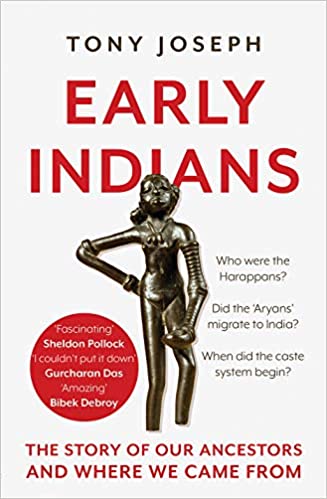
I met Tony Joseph, the author of Early Indians – the History of Our Ancestors and Where We Came From[1], first in Jaipur Literature Festival in 2019 and next at Mathrubhoomi Literature Festival in January, 2020 at Thivanthapuram. I had a lengthy discussion about his understanding of goats, buffalos, cows and so on, caste and race relations in ancient India and where the brahminic understanding of India went wrong and they became anti-animal economy and agrarian production. He gave me several clues which engendered a new curiosity in his understanding and his book. Then I started reading his book very seriously line by line. It threw up many new dimensions that were not done by the writings of any other historian, indologist and writer on ancient India earlier.
His book has opened a new perspective to Indian economic and cultural evolution in the context of many discoveries of the economic and cultural evolution of animal, plant and bird domestication and migration to different parts of the world and India. While reading early Indian agrarian system in the chapter ‘The First Farmers’ a new vision appeared for the first time. He wrote “the first evidence for domestication of goats comes from the settlement of Ganj Dareh in the central Zagros mountain region and is dated to 7900 BCE”[2]. Even now the Indian shepherds have quite a bit of knowledge how goats live well around shrubby hills and mountains. Goat is known as the most adjustable animal to any new environment and selects its plant food from many available plants quite cleverly. Its selection of plants for food later on has thrown up many medicines that humans used to treat diseases. Its milk and meat is known as most human life sustaining and no wonder that this was the first domesticated animal and exported to many foreign lands in pre-historic times. This discovery of goat as earliest domesticated animal economy that brought humans out of hunting and food gathering and also short span of life.
As an animal, goat is highly useful for human stable life as its meat and milk are most suitable for human survival. During the corona pandemic the Kerala Government recommended goat milk as an immunity builder more than buffalo and cow milk. Mahatma Gandhi was said to have given up cow milk and took to drinking goat milk when he was attacked by the 1918 plague pandemic. In many pandemics goat meat and milk were said to have saved many people in South Asia. It is quite natural that this animal became the first source of stable food of humans. Even today both goat-sheep economy plays a critical role in global food, leather and wool economy[3].
Tony Joseph also tells how animals once domesticated at one place were carried along with migrant people all over the continents across the globe, where human habitat became possible. He further says “so the broad picture we see is that between 9500 BCE and 6500 BCE—that is a 3000—year period immediately following the end of the Younger Dryas and the beginning of Holocene—both plant and animal domestication had spread across most of the Fertile Crescent, after progressing in fits and starts during the last glacial period, with littering regions contributing in different times and probably with multiple instances of domestication for the same species”. He further adds:
“As we saw, even as the transition was on, people were taking their plants and animals, perhaps still in the process of being domesticated and perhaps not even that, migrating to newer places. Many places in the Fertile Crescent itself saw plants or animals being imported—an example being goats in the Southern Levant”[4]. The Indian subcontinent certainly comes under this Southern Levant.
Tony Joseph established it with more evidence than any other historian—including Romila Thapar[5], R.S.Sharma[6] – did earlier that Aryan migration took place as part of the third and last ancient wave of human migration, perhaps with horse as a war animal and white cow as food animal. This book established that for Aryan Brahminism horse was more significant and that animal was central to Rigvedic forces. Horse was not known to Harappans, as they were not war lovers like the Vedic Brahmins. Goat, though such a crucial food animal was mentioned just in one Rigvedic hymen.
Tony Joseph says “The Indian ‘pizza’ got made, with the base or the foundation being laid about 65000 years ago, when the Out of Africa migrants reached India. The sauce began to be made when the Zagrosian herders (shepherds) reached Baluchistan after 7000 BCE, mixed with the first Indians and then together went on to build Harappan Civilization….Then came the Aryans after 2000 BCE…”[7]. It is very clear that the Aryans had no role in building the Harappan Civilization of India. In my view the name Harappa itself is Pre-Aryan and nativist. Such names do not appear in Vedic-Sanskrit literature but in South Indian literature and in real life ‘Appa’ and ‘Ayya’ names are very common in Karnataka, Andhra Pradesh, Telangana and other places in South.
Joseph tells the migration to South first reached Karnataka crossing the Western plains. Similar names are also common in the Old Testament — like Messiah, Jeremiah, Isaiah –of the Bible. It appears that Old Testament of the Bible is quite older than Rigveda, constructed around cattle economy and agriculture as it deals with goats and sheep extensively as positive and respectable animals. Horse was not such major animal in the life of Abraham and Moses, as it is in the life of Indra in Rigveda. Once Rigveda constructed animal herders as Shudras and Mlecchas putting Brahminism on the highest spiritual and social pedestal the Brahmins seems to have disassociated themselves with all agrarian productive and animal herding activity, a process that continues till today. Production is pollution is their main spiritual theory even now.
Brahmins as community and Brahminism as ideology got formulated after that Aryan migration from the Central Asia. Brahmins as people and Brahminism as socio-spiritual and cultural ideology never treated the first human settlers (Out of Africa settlers) in the Indian subcontinent as great civilization builders, in spite of the fact they were the first urban civilization builders or what Tony Joseph calls first urbanites–Harappans.
Tony Joseph also disagrees with Ambedkar’s theory of no racial segregation in India. He says “….. Perhaps he (Ambedkar) did not go far enough–he seems to have still considered the tribals to be different from everyone else. We now know that this is not correct—because their genes run through every one, (According Tony they have more OoA genes about 65 per cent) no matter where in the caste hierarchy one is. Ambedkar[8] was also wrong in denying ‘Aryan’ migration altogether, though he cannot be blamed for the mistake since he did not have the genome data that we have today[9]”
The mythology of Indian civilization started with writing of Rigvedic text in Sanskrit and that went to construct anti-civilizational assertions to establish Indian caste system and Brahminic negativism. The Indian pattern of development deviated from the rest of the global pattern of civilizational developments once the Aryan casteism got constructed and indignity of animal economy became spiritually respectable.
By the time of writing of Rigveda the goat, sheep, buffalo and cow economy became fully expanded and that was the pivot of pastoral agrarianism. In entire Brahmin literature the first domesticated goat was not referred to as very prominent animal and people who were involved in the advancement of animal economy were constructed as Shudras and unsuitable to have respectable status in the realm of Brahminic God/Gods. The goat and sheep economy universally acquired high cultural value both spiritually and socially but in India the Brahmin writers projected that civilization builders as mlecchas (at that time untouchables) and all those communities now are known as backward, as they were not allowed to get education. The anti-animal herding Brahmins gradually built a culture of opposing agrarian production by deploying enormous amount of violence by the time of writing Rigveda and thereafter, which must have hindered Indian economic progress by that standard. Shudra resistance to their anti-productionism was suppressed by using horse power, perhaps by consuming Shudra animal wealth itself. That tendency continues till today. After the Rastriaya Swayamsevak Sangh was formed in 1925 cow was adopted as their Gomata and other economic animals like goat, sheep and buffalo were seen as unworthy of any respect as animal Mlecchas. This Brahminism runs through the present Rastriya Swayamsevak Sangh and Bharatiya Janatha Party regime. The Shudras still are only usable muscle power, which became evident in constituting the Ram Temple Trust in 2020, as no Shudra is found suitable to be on the Trust.
What is surprising is how and why the Shudra animal economists became so historically subservient to Brahmins? The answer could be found only in hierachised caste control of spiritual and state power. Brahmins and Ksatriyas, who have strong Aryan blood ownership but not of out of Africa migrant blood, which they attribute to Shudra/Dalit/Adivasis now, though according to Tony Joseph, all races are mixed by now unitedly oppressed the animal economy builders. However, all nationalist Brahmin-Bania (hardly any Ksatriya writers emerged in India) writers owned Aryan heritage whereas the first modern Shudra writer Mahatma Phule proudly asserted his Dravidian (OoA) lineage[10].
This book has come at a time when insecure Brahminism is doing all sorts of negative things as the new common language– English– education is spreading among all sections of India. The Shudra/OBCs of India must realize that they can become equal spiritual, social and economic citizens only when they fight brahminism, wherever it exists–temples, political parties of all ideologies right, left and centre. Tony Joseph’s book must be read by students, scholars in the universities and outside and policy makers in Indian system to gaze what went wrong in building our nation and economy and how to move forward.
Kancha Ilaiah Shepherd is a political theorist, social activist and author of many books, the latest being From Shepherd Boy to an Intellectual—My Memoirs
Notes and References:
[1] Tony Joseph, Early Indians–The Story of Our Ancestors and Where We Came From, Juggernaut, 2018
[2] Ibid. p.78
[3] Goat and sheep economy plays a key role in India even today. The Indian shepherd communities though exist in different names in different states and their ancestral occupation is cattle grazing. Brahmins as people and Brahminism as ideology have no respect for this major community. They suffer various forms of discrimination. Though the author of Bhagvad Gita Sri Krishna is said to have come from the cattle grazing Yadav community Brahminism treats them very dis-respectable and historically denied Sanskrit education to them also. Now they are weakest in English education and globally available soft power knowledge. Tony Joseph’s book gives them a new hope with the discovery that goat was the earliest domesticated animal, which has no respectable place in Brahminic literature earlier and RSS/BJP ideology now like Buffalo. See Kancha Ilaiah Shepherd Buffalo Nationalism–A critique of Spiritual Fascism,Samya-Sage originally published in 2000.
[4] Tony Joseph, Early Indians–The Story of Our Ancestors and Where We Came From, Juggernaut, 2018, p.79
[5] Romila Thapar, The Penguin History of Early India: From the Origins to AD 1300, Penguin India, 2003
[6] Ram Sharan Sharma, Advent of the Aryans in India, Manohar Publications, New Delhi, 1999
[7] Tony Joseph, Early Indians — The Story of Our Ancestors and Where We Came From, Juggernaut, 2018, p. 203
[8] Ambedkar, B.R, Who were the Shudras? How they came to be Fourth Varna in Indo-Aryan Society?, Samyak Prakashan, New Delhi, 2011
[9] Tony Joseph, Early Indians–The Story of Our Ancestors and Where We Came From, Juggernaut, 2018, p. 213
[10] See Aparna Vaidk, My Son’s Inheritance –A Secret History of Lynching and Blood Justice in India, Aleph, 2020. Aparna is a historian and she tells about her grandfather’s Aryan Marwadi background and she looks that the tradition of Aryasamaj and that Mahatma Phule’s Dravidian, Mahabali culture which believed in equality of human beings as against Aryan vegetarian humanly discriminate culture.
https://countercurrents.org/2020/06/early-india-goats-and-brahmins/
-
Why Dalit Lives Do Not Matter?
in Annihilate Caste — by Kancha Ilaiah Shepherd —June 22, 2020FacebookTwitterWhatsAppEmailShare59
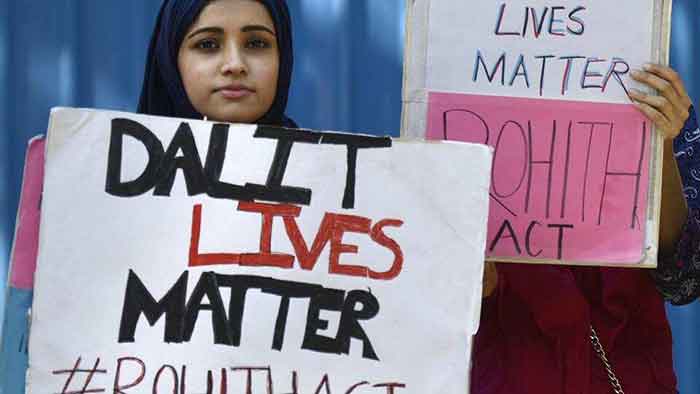
A teenaged Dalit boy was shot dead at his home in Uttar Pradesh’s Domkhera village in Amroha district at a time when the Black Lives Matter movement was shaking the whole world. He was shot dead allegedly by youths from an upper caste community for visiting a temple in the village, according to media reports. Such killing of Dalits in India is very common, more particularly after the Bharatiya Janatha Party came to power at Delhi in 2014.
Vikas Kumar Jatav (17) had visited the local Shiva temple on June 1, 2020, with his father Om Prakash Jatav, a farmer. The Telegraph reported that according to the boy’s father, a scuffle ensued after Vikas ignored the warnings of some upper caste members, including a boy named Horam Chauhan, who tried to stop him from praying at the temple on the ground of his Jatav identity and continued to pray at the temple. A death for praying in Hindu temple. What is Horam Chauhan’s caste background? We do not know. Let us assume that he is a Shudra youth and not a Brahmin or Dwija youth. Mostly Shudra youth live in villages. The Dalit intellectuals have been pointing out this fact that most atrocities on Dalits are being committed by Shudras.
This brutal killing has not become a headline in Indian media, print or electronic. Normally Dalit deaths do not. In America, any killing of a black becomes a headline. In India, it does not. Against such ghastly killing for prayer in a temple, we do not find any protests in India.
No protests like the ‘Black Lives Matter’ take place in India because, in Hindu Rastra, Dalits should not go to a Hindu temple and pray. Because Shudras who have the right to enter the temple and pray, but cannot become a priest in Hindu temple, think that the Brahmin is God and what he says should be done. They indulging in attacking Dalits must be linked to their belief in brahmin god.
A brahmin priest, who recites slokas and mantras in Sanskrit which Shudra does not understand, yet he believes the Brahmin dictum that Dalit entry pollutes the temple. The priest does not want a Dalit inside the temple because he is less than a cow, which occasionally is taken inside the temple. Hence a Brahmin priest directs and a Shudra acts. If they attempt to pray inside the temple, Brahmin god’s body burns.
Generally, Brahmin youth do not participate in such killing because they are not part of the muscle power squads and they would be in colleges and universities, as their male family members keep earning easy money in the temples. Many Shudra youths are around the villages as many do not go to college or university education, as their parents keep tilling the land or grazing the cattle.
When the notion of Hinduism as a religion was not there just before hundreds of years back, the Shudra were worshipping in their Shudra deity temples, without a Brahmin priest around and at that time the Dalit presence was not seen as pollution. A Shudra temple was equally meant for all villagers. It was not a control room of a Brahmin priest who is treated as a god. Their God was their Shudra deity, and the notion of purity and pollution was hardly in operation in Shudra temple. Shudras and Dalits were working in the fields as co-workers. They shared many common cultures. But once Brahminism is designated as Hinduism and the brahmin priest controlled the temple, the idea of God and temple changed. Brahmin actually became God, the deity in the temple is only a symbol. This belief is deep among Shudras now.
Though Mahatma Gandhi, a Bania philosopher called Dalits Harijan (with a sense of children of God) without changing the status of Brahmin, neither the Brahmin priest nor the Shudra accepted that position. Ambedkar, a Dalit philosopher, opposed that children’s status while keeping the status of Brahmin in the same position as God. Neither Nehru, a Brahmin pandit, wrote anything about Dalit status nor Sardar Patel, a Shudra iron man, applied his brain and wrote anything about it. They left in the hands of fate.
The problem of the Dalit is the Shudra, as Shudra is an agent of Brahmin to crush Dalit physically. Unlike the race problem in America and Europe which is a binary problem of black and white, the caste problem is multi-layered problem where the Shudras constitute the mass muscle power that worships Brahmin as a god, and are above the Dalit. No Shudra asks for priesthood rights for himself because brahmins are revered as god themselves
The white in the West is neither God nor does he have control over God. The Black directly negotiates with God, reads and interprets the Bible and organizes the community in the church because God does not accept racism and injustice in a church.
There is no Hinduism without Brahmin, and the Shudra surrenders to Brahmin as there is no spiritual philosophy for Shudra. Hence killing of Dalits even for praying in the temple does not invite a mass response because the Shudras who constitute 55 per cent Indian population stand by the Brahmin and his Dwija social base that constitutes Kshatriyas, Banias, Kayasthas and Khatris, apart from Brahmins, in North India. If the Dalits try to protest, crushing them with the help of the brahminic state that has the support of the Shudras is not a problem.
If only the Shudras stand by Dalits and ask a rational question: why cannot we the Shudras become priests in Hindu temples and why not Dalits who work with us in the productive fields enter the temple, the Dalit Lives will Matter. Till then, Dalit Lives do not Matter.
The other way is that Brahmins, Kshatriyas, Banias, Kayasthas and Khatris in India must think like some of the whites who are actively participating in the protests of Black Lives Matter movement think. But that becomes possible in the West because the Bible that whites and blacks read tells them that God Created All Humans (blacks and whites) equal. In India, Brahmin who is seen as god by Shudras, does not think so and say so, whatever is his ideology–right, left or centre. A Brahmin is a Brahmin.
During the Black Lives Matter movement after the death of George Floyd, the supreme court judges, who are still in service, wrote the following letter:
“Devaluation and degradation of black lives is not a recent event. It is a persistent and systemic injustice that predates this nation’s founding. But recent events have brought to the forefront of our collective conscience a painful fact that is, for too many of our citizens, common knowledge: the injustices faced by black Americans are not relics of the past…. It is the collective product of each of our individual actions – every action, every day. It is only by carefully reflecting on our actions, taking individual responsibility for them, and constantly striving for better than we can address the shameful legacy we inherit. We call on every member of our legal community to reflect on the moment and ask ourselves how we may work together to eradicate racism”.
These are white judges. Will Brahmin judges write such a letter to protect Dalit lives in India?
Some Brahmins who live in America and Europe might think that racism is bad and may participate in Black Lives Matter protest movements. But in India, they will not say Dalit Lives Matter. They also do not ask if Hinduism is a religion and Shudras and Dalits are part of it, why they do not have the right to the priesthood? Neither communist nor secular nor liberal nor Hindutva Brahmin asks this question.
If the Shudras gain access to priesthood, half of the Dalit problem will be solved. There is no such Brahmin intellectualism in India which allows this change. Because no Brahmin thinks that he is a normal human being created by God as an equal with the Dalit and Shudra, that is the inner self of any Brahmin. But no Shudra, a Jat, Patel or Maratha, Lingayath, Vakkalinga, Kamma, Reddy or a Nair understands that inner self of a Brahmin. No Brahmin condemns the brahminness in himself. No Shudra has the intellectual energy to understand that inner self of the Brahmin.
Shudras have another problem. They have not produced an intellectual or moral philosopher of the stature of Martin Luther King Jr or as blacks did or Ambedkar as Dalits did. They mainly remain a muscle power and local ruling force under the guidance of Brahmin priestcraft.
The Dalit became proud because they have a spiritual and social philosopher in Ambedkar, but no Shudra philosopher emerged to remove the Brahmin between a Shudra and God. Even then so long the Shudra remains on the side of the Brahmin the Dalits cannot succeed in their fight. Neither Sardar Vallabai Patel nor Periyar Ramasamy Naikar nor Narayan Guru could fulfil those that task. Mahatma Phule attempted, but he lived slightly earlier than the new spiritual and social enlightenment times. The Shudras now need a spiritual, social reformer to connect God to them by removing the middleman called Brahmin. The Shudras are like the blacks in the Pre-Frederick Douglass times.
Dalit Lives Matter question is also related to Shudra Spiritual Rights Matter, and they need to fight for those rights. The Brahmin god is fully in control of the Shudra mind and muscle power. When Shudras do not have that spiritual enlightenment which is a pre-condition for a change in social relations, Dalit lives continue to be in danger. As some Dalit intellectuals are arguing the problem is not just with Shudras it is with Brahmin god.
The ruling BJP and its mother organization the Rashtriya Swayamsevak Sangh (RSS) define Dalits as Hindus, but they do not recognize their spiritual rights, leave alone social rights. They do not allow the Shudras to get out of the Brahmin control. They know that Dalit social liberation is linked to Shudra getting connected to God directly by removing the Brahmin in between. The Shudra has no temple of his own now because he surrendered to Brahmin god.
Blacks in America are Christians and in the early 20th century, and they had only segregated churches for them. But by the time Martin Luther King Jr started the civil rights movements, the whites have come to accept black pastors as preachers in the combined churches. White racism and white humanism with a sense of guilt and shame moved in a crisscrossed mode to take the race question forward. Many whites wrote books demanding for black liberation. At the same time, many whites were attacking blacks with the racist life process. Hardly any Brahmins wrote books asking for Dalit-Shudra liberation spiritually and socially. This affects the Dalits more.
Blacks have produced Barak Obama who ruled America (and the world) for eight years with greater dignity than two preceding white presidents like Bill Clinton and George. W. Bush and his successor Donald Trump. In talent, culture, character and vision, the first Black president proved to be far ahead of white presidents. Michelle Obama proved to be a more intelligent and respectable first lady than her immediate predecessors and immediate successor first lady. There are many black intellectuals, writers and cultural leaders, philosophers who match white intellectuals, thinkers and philosophers. Where are Shudra intellectuals, thinkers and philosophers who could stand by Dalits and write about them?
Particularly Martin Luther King Jr and Obama made them proud people. Their leaders and their intellectuals boosted the self-respect of blacks that lead to this kind of angry reaction, and the general whites realized that blacks deserve equal respect in every field.
Where is a Shudra thinker, leader and prophetic person to educate the Shudras that Brahmin is no god and Dalit is no slave?
Kancha Ilaiah Shepherd is a political theorist, social activist and author of many books, the latest being From Shepherd Boy to an Intellectual—My Memoirs
https://countercurrents.org/2020/06/why-dalit-lives-do-not-matter/
-
Black Lives Matter must fire up India’s anti-caste movement to fight its central villain
India is yet to see a movement against caste on the scale of Black Lives Matter, even though both racial and caste discrimination share the notion of inferior and superior.
KANCHA ILAIAH SHEPHERD21 June, 2020 10:42 am ISThttps://www.facebook.com/plugins/like.php?href=https://theprint.in/opinion/black-lives-matter-india-anti-caste-movement-fight-villain-manu/445727/&layout=button_count&show_faces=false&width=105&action=like&colorscheme=light&height=21

Members of Dalit community display a portrait of Bhim Rao Ambedkar during ‘Bharat Bandh’ in New Delhi | PTIText Size: A- A+
The Covid-19 affected world is undergoing what can be called a “colour revolution”. The Black Lives Matter movement, which reached a new level after the brutal murder of 46-year-old African-American George Floyd by a White police officer, Derek Chauvin, is shaping this revolution. Blacks across the world are joined by Asians and White democrats and, in the process of rewriting history, are bringing down statues of slave traders and racist people eulogised by the colonialists.
Today’s India is yet to see a full-fledged movement against caste on the scale of Black Lives Matter, even though both racial and caste discrimination have a common aspect linking their past, present and perhaps future too — the notion of inferior and superior.null
Similar to how the Whites subjugated Blacks based on notions of superiority for free or cheap labour, the so-called upper castes in India exploited the Shudras and Dalits by holding themselves as superior to achieve and sustain dominance in the hierarchical construct of the Hindu society.
Moreover, just like the current generation of White Americans and Europeans are not responsible for slave trade and colonialism but reaping their benefits, the ‘twice-born’ (dwijas), particularly the Brahmins in India, hugely benefitted from their ancestors’ oppression of the Shudras and Dalits. Now, as the ‘colour revolution’ begins attacking all symbols of exploitation, India needs a revolution against caste too.
Also read: Bristol brought down slave trader’s statue. This is what India should do with Manu statue

https://imasdk.googleapis.com/js/core/bridge3.391.0_en.html#goog_1867209420
Down with racist, casteist statues
The lives of slave traders and historical figures such as Christopher Columbus, Vasco Da Gama — all those popularised for their geographical discoveries but in effect paved the way for White colonialism — are being re-examined. Not only are their statues and busts being taken down but suggestions are being made to create museums that depict human exploitation, oppression and violence, and put them there. Future generations must know that they have caused human pain, suffering and loss of life.
In India, too, there is some awakening now about the historically eulogised casteist figure, Manu, whose statue stands on the premises of the Rajasthan High Court in Jaipur. In December 2018, two Dalit women, Kantabai Ahire and Sheela Pawar, had blackened Manu’s statue, for which they were arrested. They are out on bail but the case against them is still on.
But it is through Manu’s statue that an anti-caste revolution can be initiated in India. A national-level peaceful movement is the need of the hour, and it must take inspiration from the ‘colour revolution’ to change caste relations and recognise Manu as the central villain.
Also read: Why Jyotiba Phule would have cheered White Americans out on street over George Floyd murder
Casteist Manu
Manu is anyway the most prolific symbol of India’s caste system because he wrote what is known as Manusmriti.
A glimpse into some of his casteist views about Shudras, Dalits, and women reveals a character who is just inhuman.null
But a Shudra, whether bought or unbought, he may compel to do servile work; for he was created by the Self-existent (Svayambhu) to be the slave of a Brahmana. [v.8.413.]
A once-born man (a Shudra), who insults a twice-born man with gross invective, shall have his tongue cut out; for he is of low origin. [v.8.270.]
By approaching Chandalas, one becomes degraded [22.4.3.4.3]
A Brahmana who unintentionally approaches a woman of the Chandala or of (any other) very low caste, who eats (the food of such persons) and accepts (presents from them) becomes an outcast; but (if he does it) intentionally, he becomes their equal. [v.11.176.]
By a girl, by a young woman, or even by an aged one, nothing must be done independently, even in her own house. [v.5.147.]
B.R Ambedkar had burnt Manu’s book as a protest during the freedom struggle. But instead of publicly kneeling down before a statue of Ambedkar and repent for centuries of caste oppression and untouchability — practices that continue to this day — the dwijas installed a statue of the purveyor of segregation, in a court complex of all places.
Also read: Annihilation of caste in Indian corporate possible. But firms must say Dalit lives matter
The anti-caste movement
Manu and his believers give Shudras, Dalits and women a slavish position and this understanding spreads caste hierarchies, women’s inequality and societal oppression. The Gujjars of Rajasthan, Jats of Uttar Pradesh and Haryana, Patels of Gujarat, Marathas of Maharashtra, and Yadavs constitute Shudra agriculturists. All of them need to think about the presence of Manu’s statues in a constitutional democracy like ours.
In Manu’s worldview, agricultural production — in fact, the very philosophy of production — has a negative place, which transcends to common Indian lives, too. Agrarian development in India is stagnated because of this so-called ‘polluted’ status because of its association with the Shudras. The systemic indifference to labour — both in villages and through migrants in cities, as witnessed during the Covid-19 lockdown — is because of this anti-production mindset that Manu has given to Indians.
Dividing the society into dwija and non-dwija and touchable and untouchable played a destructive role. It is time to change these caste-based social divisions. Removal of Manu’s statue from the Rajasthan High Court complex and placing it in a museum of the caste system of India will elevate India’s stature as a republican democracy.
Let us come clean from our unequal past and move towards total equality.
Kancha Ilaiah Shepherd is a political theorist, social activist and author. Views are personal.
https://theprint.in/opinion/black-lives-matter-india-anti-caste-movement-fight-villain-manu/445727/
-
The Old Deal: BJP’s Answer to COVID-19 Is More Privatisation
The irony is that at a time when globalisation is dying, the emphasis is not on statisation.

The idea behind the stimulus package is to shore up the time-honoured parampara of varnadharma economy and also wealth distribution. Photo: Arun Geetha Viswanathan/Unsplash, (CC BY-SA)
Kancha Ilaiah ShepherdPolitical EconomyPolitics16 hours ago
The programmes initiated by Franklin D. Roosevelt’s New Deal in the US, between 1933-39, during the Great Depression, enabled the US to recover.
The New Deal programmes brought a statisation of institutions. The aim was to rebuild people’s lives by providing them with jobs and putting money into their hands, through public work programmes as well as financial reform.
The theme was ‘relief, reform and recovery’.
Owing to the COVID-19 pandemic, the Indian economy is in a situation similar to the US during the Great Depression. However, what the Narendra Modi government-RSS combine has initiated as a reform to tackle the staggering economic impact of the COVID-19 crisis can be called the Old Deal at best. It is the complete opposite of Roosevelt’s New Deal.
This deal seems to have been written at the RSS headquarters in Nagpur. The idea seems to be to create a grandiose model of an empire (based on the so-called golden age of the Guptas).
Finance minister Nirmala Sitharaman is being asked to play the role of Goddess Lakshmi, who is expected to put more and more money into the private sector, led by heavyweights like the Ambanis and Adanis. The way the Rs 20 lakh crore economic stimulus was announced by her, signalling the de-statisation of defence and other key sectors, tells the real story of the COVID-19 stimulus package.
The finance minister seems to be asking the tillers of land, harvesters, cattle-rearers, artisans and millions of migrant workers who walked hundreds of kilometres to reach their villages, to serve the new industrial lords. The idea behind the stimulus package is to shore up the time-honoured parampara (tradition) of varnadharma economy and also wealth distribution – those who toil with their hands should serve the varnadharma samaj as their duty; they are not to look at the work they do as a job with a dignified wage. Those who walked, starved, and died in lockdown did so in the service of the nation. This is part of the parampara.
A present-day ‘golden age’ is being sought to be established by shifting state properties to the private realm – just as the ‘golden age’ of the Guptas in ancient India heralded the decline of the productive society of the Indian shudra. In the Gupta’s ‘golden age’ the shudra was pushed back to the iron age. That is the scenario which is going to be replicated in post-COVID-19 India as ‘Atmanirbhar Bharat‘.
Why did Modi give just a four-hour notice for the lockdown to a nation of 1.3 billion people, of which at least 200-250 million people are migrant workers from remote corners of India working, not living, in cities like Mumbai, Delhi, Kolkata, Ahmedabad, Bengaluru, Chennai, Hyderabad, Surat, and so on? If an advance notice of four or five days had been given to the nation, employers and employees could have come to an agreement and the workers would have reached their remote villages with some food in their stomach and without the coronavirus in their lungs.
Trains, buses and taxis were still in operation. The way the prime minister announced the lockdown on May 24 struck fear among the people that death by the coronavirus would visit the people much like an earthquake. There was no employer-employee relationship after March 24 because that bond was snapped at midnight. Construction workers could not speak to their contractors; workers in small factories or grocery and cloth shops had no way of meeting their employers and asking for their wages for the days they had worked until then.
Millions of migrant workers did not know where to stay, how to live and what to eat. They came out on to the roads – men, women and children – and started walking on the national highways hoping to reach their villages, without water, food and sometimes even footwear. By the evening of March 25, there were incidents of workers falling unconscious on the roads. Children dying of starvation, of heat and of exhaustion became the ‘new normal’.
There was no sign that members of the Modi government were getting disturbed by these heart-rending scenes and tragedies. Media networks fell over themselves to praise Modi’s announcement of a nationwide lockdown as a ‘bold’ decision, declaring to the world that independent India had a strong leader like at no other time in 70-odd years.
What a bold decision by a bold leader – to make millions walk in the burning sun, starve, parents pulling suitcases on which children had laid down their heads to sleep. It is this labour that is expected to take on China under the Old Deal Programme.
Why was such a decision taken in such a manner, using the pandemic crisis? It is a fact that the struggles, sorrows and deaths of labourers have never pained the BJP government and RSS combine, industrialists and rich sections that support them. They are the other – the Dalit/Shudra/OBC/Adivasi. Their life is not valuable; only their labour is valuable, and it should be available either cheap or for free.
Why is it that the Centre has not put money in their hands? One view is that after reaching their villages in a half-dead state, they should face enough starvation to be propelled back to the urban centres to sell their labour cheaper than before. Indian industrialists seem to have dictated this agenda to the BJP government – there’s the financing of the 2024 elections to think of, after all.
If money is put in the hands of labourers to live in the village, they will not go back to cities, which are seen by the labour forces as estranged places. That is the reason why every minister is worried about workers going back to cities from their villages. Had the workers been given five days’ notice to reach their villages, they would not have carried the virus with them as it spread in cities like Mumbai, Ahmedabad, Chennai and Hyderabad only later. But now many of them have carried the virus to their homes and villages – the chain has not been broken; it has connected with the human chain of labourers.
The RSS and the BJP have a dream that it is this unorganised, cheap migrant labour, which will compete with China and take over their share of the global market, a dream peddled by ‘nationalist’ media networks. It’s a joke, to say the least. But the mainstream media does not think so. It believes that once the lockdown is lifted Indian goods will flood the global market, the Chinese dragon will slink away only to see the lotus bloom in foreign markets.
The mainstream media is all too ready to believe that with the announcement of the Old Deal, the arrival of a golden age, anchored by monopoly capitalists, is inevitable.
A fundamental question is could the Chinese government, with one-party rule under the leadership of a man like Xi Jinping, have declared a nationwide lockdown at a four hours’ notice? Their labour is not in miserable bondage to contractors as ours, and they would not have needed to starve and walk home even if a lockdown had been imposed at such short notice. Even then if Xi had tried it, that would have been the end of him. But look at the way the Indian media protected the BJP government, with the opposition reduced to the status of mere spectators.
This Old Deal is going to destroy India’s entire rural economy. Post-coronavirus India will face conditions worse than the Great Depression. The only way to get out of that economic crisis would have been by statising many institutions and sectors that were de-statised post-1991, in the flush of globalisation and liberalisation.
The irony is that at a time when globalisation is dying, the emphasis is not on statisation. Quite the contrary – the Old Deal is going ahead with more privatisation. It will not bring about relief, reform and recovery for those who are most affected by the COVID-19 crisis. It will destroy them.
The regional political parties, apart from farmers and labour, must understand that once everything is privatised, India will go back to the golden age of the Guptas. There will be no place for them in that empire. The Old Deal is the whole deal.
Kancha Ilaih Shepherd is political theorist, social activist and author.
-
Post-Covid Privatisation Will Push Labour Into a Deathtrap
KANCHA ILAIAH SHEPHERD | 27 MAY, 2020
Post-Covid Privatisation Will Push Labour Into a Deathtrap
Craving for more money at the expense of dying labour
Metaphorically the heart (hruday) represents human goodwill and helping nature toward the helpless and needy, whereas atma (soul) represents the non physical self which is disconnected from physical suffering. One can only take care of one’s own atma and never the atma of others.
Prime Minister Narendra Modi declared in midst of the coronavirus crisis an economic agenda called Atmanirbhar Bharat: Self Reliant India. He linked his Atmanirbhar agenda to a 20 lakh crore stimulus package so called. Subsequently Union Finance Minister Nirmala Sitharaman announced in five consecutive press conferences how the Centre will implement this package.
The whole exercise of the RSS/BJP government’s Atmanirbhar programme turns out to be privatising the economy more and more. The private sector — the rich industrialists and big business owners of India and other countries, who either have a share in ownership or run companies of their own — do so with the motive of profit, not of the nation’s welfare or people’s well being.
The major question is: how does Indian monopoly capital save the lives of massive numbers of the labour force who walked thousands of miles fearing that life management was impossible in the urban centres?
When at 8 pm on March 24 Modi declared a lockdown of the country without thinking about the 200 million labourers — who are mostly from SC/ST/OBC families — left without a house, water or food once the worksites were closed down from midnight.
Just four-five days’ warning from the Centre before the lockdown would have saved more people than the lockdown has saved from coronavirus.
The labour misery has shown the rulers’ heartlessness rather than a genuine concern and love for all people, including those most at risk of dying from the infection. The starved and walking children and women died on the roads, in the forests, on railway tracks on street corners and in shelters. Children’s faces wrenched the hearts, of those who have human hearts, not just atma.
The world’s biggest organisation, the RSS and the biggest political party the BJP, were completely busy saving their own lives in securely locked up homes. Other political parties, including Congress and the Communists, did not deploy their leaders and cadres to save people from walking, starving and dying.
The whole world was locked down during the same period but no other country’s roads were bleeding as India’s roads when the most self-righteous nationalist party is ruling India.
The workers thought that villages would have some human environment unlike the jobless and heartless urban centres. The urban centres would kill them morally and physically in lockdown. If there was Any hope of living safe in the cities they would have not pushed themselves on to the national high ways in such a hot sun, walking with children and old and pregnant women.
The political system has shown its heartlessness to food producers, mansion builders across the country. Its nationalism left them to be victims of corona on the way. Now many of them are also dying of the cruel virus. Neither Gods nor ‘nationalists’ were kind to them.
In 95 years of existence the RSS/BJP (earlier Jan Sangh) networks in India, ideologically and practically, never were trained to think about improving the lives of India’s labour forces. Their main discourse — in organising people, writing programmatic resolutions, and speaking in the process of propaganda — was about religious nationalism.
The centrality of that nationalism was opposition to Muslims and Christians. Even their much debated cultural nationalism was to weaken the Muslim and Christian presence in India. But never to strengthen the poor producers of food and builders of the nation.
Why? They all belong to Dalit/Shudra/OBC/Adivasi families. They do not figure in the nationalism as equals with industrialists or pompous religious gurus.
They never developed a concrete economic nationalist agenda. In the early 20th century when the RSS was started, economic nationalism would have meant mainly agriculture, the land question, the artisanal economy and also the tackling of caste divisions. The Indian National Congress and the Communist Party of India were discussing many of these questions, though with their weaknesses. Ambedkar and Periyar Ramasamy Nayakar and their associates raised the abolition of the caste question along with reducing human inequalities. But the RSS nationalists treated them as enemies.
The RSS ideologues never wrote anything against landlordism or against the usury capital that was in the hands of Indian Bania capitalists. Muslims and Christians never controlled business or big landed estates. For example, the Desai and Sirdesai landlords in Maharashtra were Brahmins and they controlled a lot of land before the Shudra Marathas became landlords.
But the whole labour of India was constituted by Shudra and Dalit masses. Brahmins and Banias were never in the labour market of India. Only Shudra/Dalits were. Their problems were never seen as national problems. The government’s indifference to millions of migrant labourers walking, starving and dying on the way to their home villages is part of this anti-labour nationalism, their historical baggage.
Does Modi, who is an OBC prime minister, have the goodwill to help the labour force that has suffered more from the lockdown than corona, more in India than in any other country?
We have not seen a tortuously walking labour force because of lockdown in China or Indonesia or other countries so impacted by the virus.
This nation is what it is because of their labour power. They never said they were not Hindu. They are not religion conscious; they are conscious of their children and old parents and how to feed food to them every day. They are as much voters as the Ambani, Adani families are. They are Indian citizens as much as Sri Sri Ravisankar or Jaggi Vasudev or any other sadhu or sanyasi the leaders revere so much every day.
How can political parties or organisations that do not love labour, love a nation?
A nation as land is important, but without people to work on it what does that land give?
Any spiritual culture should first love labour and see God in the labour of masses. God would not represent wars, or lynching somebody, but would represent labour. This God’s essence lies killed on the roads during the lockdown but we have not killed the virus.
A number of media reports have suggested that this Atmanirbhar programme is a Rastriya Swayamsevak Sangh swadeshi agenda put forth by its so-called economic theoretician Dattopant Thengadi (of the Swadeshi Jagaran Munch) and the Hindu economist Dr M.G.Bokare who wrote the book Hindu Economics: Eternal Economic Order, published in 1993.
A very fundamental question is: Do the RSS and BJP have their theory of production and distribution in different sectors in the Indian economy over a period of time? The organisation that worked for 95 years in India and the political party that has been in existence in two avatars as Jan Sangh and BJP have no record of having a positive theory of production and distribution. Any serious survey of their literature shows they have hardly evolved a theory of their own grounded in an Indian economic thought.
The post-Covid privatisation will push more labour force into a deathtrap.
Their public discourse always has been around religion and culture but not the economy. They vaguely talk of Swadeshi, a concept Mahatma Gandhi used in his Hind Swaraj (with a sense of the freedom of India). Gandhi was opposed to industrialising India and was for cottage industries in a decentralised village economic model. His Charka was a symbol of that economic model. The Nehruvians and Communists were for industrialisation and urbanisation.
But Dattopant’s ‘Third Way’ does not seem to be a way at all.
Thus in the absence of the RSS/BJP’s long drawn out ‘Economic Way’, what does it seem the RSS/BJP’s self-reliant India would be? So far their rule of eleven years has followed the Congress model of development. The Congress has a history of anti-feudal land reform agenda; the RSS/BJP were opposed to any discourse on land reform. Now feudalism is dead.
The RSS/BJP has favoured urban capitalism in control of the Indian economy. Now Indian monopoly capital is in league with North American-European capital and the present BJP government is completely pro-American.. What self reliance is possible in that Big Brother–small brother relationship?
The nation is saved by agrarian production and agrarian labour in the lockdown crisis. The public sector health system is weak and the private sector health system is more or less shut down. India’s labour force can access only government hospitals. But no meaningful share of the 20 lakh stimulus money has been allocated to the government health sector.
All this only shows Hindutva’s heartless atma craving for more money at the expense of dying labour.
Kancha Ilaiah Shepherd is a political theorist, social activist and author -
Why India Won’t Be Able to Compete With China in the Post-COVID-19 World
Why India Won’t Be Able to Compete With China in the Post-COVID-19 World
The RSS/BJP ideologues must unlearn their ‘cultural nationalism’ and re-learn ‘productive nationalism’ with a massive focus on the dignity of labour.
Kancha Ilaiah Shepherd
COVID-19 has created a cold war kind of situation between the United States and China. India is siding with the US, and adding to the tension. As of now, America and China have competing economic and military power. The US is a democracy seeking to exercise global imperial control even though China and Russia keep it in check with their military and economic strength. By the time the coronavirus crisis shook the world, China was trying to catch up with the US on many fronts, particularly with the massive skilled labour power at its command. With its deft handling of the globalisation process, China out played the US in reaching out to global markets and engulfed even America’s home markets with its goods and commodities. China has practiced ‘labour power socialism’ which the former Soviet Union could not do.
China has become the most powerful market controller in Asia. In certain sectors, it has penetrated deep in to Euro-American markets by creating its own brand of consumerism in those countries. Perhaps Marx may think otherwise but China has made his dream of combining labour, skill and science and created a new world order which has made better human life possible.
The capitalist West started consuming more than it required, creating a natural imbalance. Now, the coronavirus pandemic has created a new crisis in its consumerism. Though its contours are still not clear, a post-corona world order is likely to emerge.
Despite their strong anti-China sentiment, successive Indian governments could not stop the expansion of Chinese market influence with its cheap goods. As democracy with a population of 1.3 billion consumers, India was compelled to set aside its fears about Chinese territorial expansion after the 1962 war. The country could not afford to keep China out of its markets as Chinese products helped low income groups improve their standard of living. China bazars are available in every Indian city and people, particularly those on low incomes, throng these to buy cheap goods.
The Bharatiya Janata Party governments of Atal Bihari Vajpayee (1999-2004) and Narendra Modi from 2014 onwards may have treated communism-Maoism-China as Enemy Number One but dared not stop Chinese goods from flooding Indian markets. The reason is that Chinese labour knows how to produce goods that are not just cheap and durable but are well aligned with each country’s needs and tastes. This formula of Chinese production experts has taken over even the Euro-American markets. With a careful study of global society’s multi-cultural needs – some of the cheapest saris, Diwali firecrackers and god idols in India come from China – the Chinese have made inroads everywhere. Along with many affordable items of consumption, China has now become the birth place of the coronavirus, which is uniting its enemies like the US, Japan, India and Australia. But can they stop Chinese goods going all over the world, including their own countries, in the post-corona world?
The cold war between US President Donald Trump and Chinese President Xi Jinping will not resemble the cold war between the US and the erstwhile USSR in the 1950s, 60s and 70s. The USSR had no household and kitchen market control over any nation of that time. The only market it excelled in was that for weapons. The Soviet Union never acquired labour skills of mass consumption productivity. In contrast, China has used ‘socialist’ organisational skills to harness the quantity and quality of its labour power – 1.4 billion hard working people, with a good agricultural base and skills. As a result, it has improved the life of people all over the world, particularly in Asian and African countries Affordable Chinese products have changed the lifestyle of vast masses.
BJP ideologues are now saying that in post-COVID times, the India of their Hindutva will take the place of China in global markets. But has India prepared its labour force to challenge the Chinese skilled labour force? Can India produce goods and commodities as cheap and durable as they do?
The Rashtriya Swayamsevak Sangh survived for 95 years with a cultural nationalism fuelled by its anti-Muslim agenda. The RSS-BJP never thought of improving the skills of India’s labour force as they come from the so-called lower castes. While Chinese Confucianism, Buddhism and Marxism believe in human equality and dignity of labour, the RSS’s ideology is rooted in Kautilya, Manu and Golwalkar’s thought and it never campaigned for human equality and dignity of labour. How can it challenge the Chinese labour force, which lives labour as life? Can the slogan of “Jai Sri Ram” challenge the Chinese slogan, “Let a hundred flowers bloom and a thousand schools of thought contend”? This slogan may never have been implemented in the political sphere but who can deny the phenomenal growth of China’s economy is the result of a thousand natural science and social science thoughts expanding and contending?
The RSS/BJP ideologues must unlearn their ‘cultural nationalism’ which thinks nothing of exploiting and humiliating labour and re-learn ‘productive nationalism’ with a massive focus on the dignity of labour. They must learn how to de-casteise the labour market.
China and India shared borders but they never shared cultures. They live in distinctly different cultures. China’s rural industry is capable of producing goods for all sorts of cultural and commercial markets. Where is the rural industry in India? While announcing his stimulus for post-corona economic activity, Narendra Modi talked about establishing cottage industries. But where is the skilled labour in rural India to produce goods and commodities for the global market’s tastes? Modi wants our local products to become global brands. How?
What the BJP, like the Congress in the past, does not realise is that China’s school education from 1970 onwards taught theory and practice as a combined curricula. What is BJP government’s education agenda? Mythology is taught as as modern science but taking students to the countryside to learn and apply their knowledge is not seen as part of the Indian ethos. The Chinese have no such hesitation, and have benefited as a result.
Challenging China means unlearning many things and re-learning many new things which are not seen as nationalist now. Conducting a cold war with China with an ideology of ‘Namaste Trump’ will not help India develop its rural industry. Trump is a businessman with an election at hand. If he gets re-elected, he is likely to share steak with Xi, not dal-roti with Modi.
https://m.thewire.in/article/trade/can-india-compete-with-china-in-the-post-covid-19-world
https://m.thewire.in/article/trade/can-india-compete-with-china-in-the-post-covid-19-world
-
Shall We Change The Status Of Safai Sainiks Now?
in Annihilate Caste — by Kancha Ilaiah Shepherd— April 29, 2020

Corona attack on India seems to have suddenly changed our understanding of Safai karmacharis of India. They are now seen as desh bhakts even by those who never recognized their desh bhakti. When the life of rich who treated them lowly and unworthy of respect and dignity are in danger as never before, they are recognizing what I call the Safai Soldiers along with doctors, nurses as praise worthy. Doctors always have been respected in modern times. Nurses too have status even earlier, though basically seen as female profession.
But the recognition of safai soldiers is the first ever in Indian history. This is a contribution of corona mahammari. Their work of cleaning and bleaching the roads that are seen as harbours of deadly virus day and night with hardly any protective gears, unlike doctors and nurses, is a valueless work.
Now the nation knows that theirs is a work of courage and sacrifice like the soldiers on the borders. But what is their life at home when life after work needs to be at least comfortable?. Did our nationalism recognize them as the saviors of nation like soldiers, politicians, teachers and saints and provide them a good life?
What is their place in our written texts of social, spiritual, political and economic life? Did any religious text give them at least ‘half status’ that the priests, mullahs and bishops and monks got?
How many divine men are on the roads to save the life of the nation at a time when the Satanic (in Christin and Muslim language) or rakshas (in Hindu language) corona is taking the life of rich and poor without discrimination quite brutally? With whom is Easwar, God, Allah live now? The priests, saints, bishops, mullahs, monks all are home ridden as all laymen, and the temples, churches and masjids, viharas are locked down. Easwar, God, Allah are virtually with the safai sainiks. Is that realization on us now in the world and in our nation?
No doubt religion will not die after corona, but if the worker on the roads are seen as more godly than the priests, bishops, Mullahs and monks and that will be a miraculous change.
They are the cleanest and neatest people ( particularly Indians) now because of which corona is afraid of them. Hereafter in the post corona world they should be most respected, having come from the former untouchable background (most of them in India).
In times of social isolation maintaining disease distance even from wife and children why and how these safai sainiks are working to save life? What value the nation should give them in the post-corona nation of nationalism?
Prime Minster, Narendra Modi, along with lock down of the nation announced that all top bracketed salaried people’s salaries from President of India downwards are reduced 30 percent. The State Governments have introduced their own salary cuts. But is it not nationalistic step to increase 30 per cent of salaries of all safai soldiers? Why does not PM think of such a positive nationalist step?
For years Bejawada Wilson was fighting for changing the status and life of the nation’s safai sainiks. PM has done a tokenist job by washing four -five safai kamacharis’ feet at Kumbhamela some time back, but never thought of changing their real living conditions.
A real nationalist idea is that the most basic servants of nation should get a salary by which their children should be able to study in the same schools that the children of top politicians, bureaucrats, doctors, engineers and teachers of universities could study and change their occupation easily. Should not the rich of the nation psychologically prepare that their own children also be ready to do the sacred job of safai soldier in future?
It is not just enough to praise that they are doing great nationalist work with courage and commitment. It is not morally right to decorate them with a ten rupee note garland by the rich when they themselves are dead scared of life with a devilish virus. How many of them are ready to say ‘cut our salaries, tax us more and pay them much better salaries’ across the nation? Where are the lovers of matrubhoomi to ask for equal status to them with saints and sadhus as they are giving this matrubhoomi life in the face of major threat to life ?
The nation and nationalists know that their salaries always have been meager. Their earnings as of now do not allow them to eat well, shelter well and educate their children to change their parental occupation, which in normal times is disrespected and maltreated.
It needed a modern globalized virus which made the rich and arrogant humble. Till Covid-19 convinced that the more you air travel, the more you are vulnerable for attack of this satan. The best of the world hospitals cannot cure you. The safai sainiks working in airports could never think of traveling in those flights. Now all the flying rich are afraid of flights because of corona rakshasi.
Why are the safai soldiers not so afraid of this mahammari? They are born out of soil, live on soil and eat food the rich despised (including beef) and yet they are facing devil on the roads even without masks on the face. How?
The more you are on the soil, soiling your hands the more courage, confidence and immunity you have to fight this mahammari. Where from the courage, confidence and immunity came for this poor, despised mass, who live in slums, not in spacious bungalows? It comes from the poor’s common sense that they came from the soil and go to the soil if this mahammari attacks them. They know that it cannot kill all of them. They have lived through many such mahammaris, which did not touch the rich travelling in air conditioned plane or train or bus, lived in air conditioned houses. But corona told them that they are less safe if they live unequal life like this. It told them that not hospitals would save them but the very poor whom they hated can save them.
Safai soldiers are doing that with equal commitment that the soldiers stand on our borders.
Imagine if the safai sainiks go on strike for one day asking for good pay and equal respect as human beings in these times of corona crisis. We all would die out of fear of corona everywhere on the roads. If we are nationalists let us resolve that we shall start reducing inequalities by upgrading the soldiers that are saving us in every street, all over the country, from this deadly virus.
Kancha Ilaiah Shepherd is Political Theorist, Social Activist and Author
-
Making Money Out of Money: The World After Corona
KANCHA ILAIAH SHEPHERD | 21 APRIL, 2020
Making Money Out of Money: The World After Corona
Whatever it is, you are born from my stomach
In the Telugu film ‘George Reddy’ the hero’s mother sings:
Ninnaite Kanna nenu
Neeratalu Kanugonalenu
Ye theeram nee katha cherenu
Garvanga unna gani
Kanna naa bhayam naadi
Yentaina kanna kadupu idi
(I gave birth to you. But I cannot foresee your future. I do not know which shore your story would reach. Though I am proud of you, as a mother my fear is mine. Whatever it is, you are born from my stomach)
There are many mothers whose daughters and sons are living in America and Europe. Their agony is that of George Reddy’s mother just before his fateful death in an attack by his enemies. To them coronavirus appears likewise to be a deadly enemy of their children living in those countries.
Theirs is kanna kadupu, the stomach of their children’s birth, hence every minute’s agony for their safety haunts them.
In one family I know very well, a mother’s daughter with her two children and husband lives in America, and her two sons and their families live in England. She lives with same fears. She is in her sixties, living with her 70 plus year old chronic heart ailment ridden husband in Hyderabad.
She glues herself to Telugu TV channels when news of America and England keeps flashing. She is more scared of the American situation than of England. Whenever Trump is seen on TV she shouts, ‘This fellow cannot save people, he only knows how to make dabbu nunchi dabbu (money out of money)! People would have been safer if Obama were president.’
Her statement, that he ‘who makes money out of money’cannot save people from coronavirus, is a statement about the Trump type of capitalists and businessmen and their intention and capacity to fight Covid-19.
It is not the America of Trump but the whole capitalist healthcare system which is facing the crisis of a lifetime.
Corona is a virus born in a capitalist wet animal market inside semi-socialist China. But it was carried to every part of the world by capitalists travelling in aircrafts within a very short time. Although socialist countries have fought the virus with an organised state and socialised health and medical care, the most privatised capitalist countries are collapsing in the face of this invisible enemy’s attack.
America, Italy and Spain have the most privatised healthcare systems in the world and they are suffering the most.
Trump tore down ‘Obamacare’ which itself lacked public provision, and he pushed the insurance market into the hands of private companies that do not cover the corona type of disease.
Private hospitals the world over ran out of individual patient demand as this mass murderous corona landed in the world.
Only Britain seems to have a better public healthcare system, and its government has promised 80 per cent of the salaries to those who were dismissed from their jobs because of the lockdown. No other capitalist country did that.
But the British prime minister Boris Johnson, who himself contracted the virus, seems to have mismanaged his corona containment policy.
India which has a big chain of private hospitals, with a very weak public health system, is struggling with the pandemic. India now needs to think about nationalising all private hospitals like Spain did.
Capitalist medical care survives on profits from individual patients’ money, by treating those who suffer from slow killer diseases. They are not welfarists, but cure-and-profit healthcare capitalists.
Their expertise and technological abilities are doubtless. They are mostly out of business now as corona shakes up the health system of all countries.
All states, whether capitalist or socialist or dictatorial, must take up the responsibility of testing, and treating the victims of corona. But barring a few countries the state system of healthcare is either weak or does not exist at all.
In India except in Kerala government provided healthcare is very weak. They are not in a position to keep corona patients, at least not in neatly maintained rooms.
For the first time the Indian rich, who otherwise get treated in well maintained private hospitals, are forced to live in the government’s not so well maintained hospitals as corona patients, and some of them are, it is reported, running away.
Corona made them taste what a government hospital is, like the poorest of the poor. Corona has come as a leveller in a highly unequal world, more so in India.
In a country like the US where the best medical equipment and good doctors are available they are all in the private sector. Obamacare was an effort to make a healthcare system available to the poor, also in this private sector, at the expense of the state. But Trump dismantled it, the largest state insurance programme in the world.
India with 1.3 billion people is going through a trauma. Its Nehruvian state health system was slowly allowed to shift into private hands.
The post-1990 drive of disinvestment in every sector, and the rise of private hospitals with a dream of the Euro-American model of private healthcare, in an India of 55 per cent poor and unorganised labouring masses, finds itself oxygenless now. What is needed now in the times of corona is oxygen to every Indian, poor or rich.
Though the very poorly maintained state system with a net of All India Medical Institutes is struggling to cope with the present crisis, almost all commercial hospitals remain shut during the lockdown.
This should not have been allowed.
Except in Kerala, which has its own model of a democratic socialist state-run health care system connecting villages to towns to cities, nowhere is a proper chain available.
Doctors are like soldiers in wartime, in times of a pandemic like corona. But the private-sector doctors and nurses became like ordinary citizens sitting at home, having made their money during normal times.
The need for declaring doctors’ work as a national essential service by calling all of them into this emergency duty is a must. They did not become doctors only for themselves, while the poorly paid state doctors and nurses are struggling.
When the nation claps for doctors it claps for those who are serving their patients, not for those sitting at home.
Like the Indian army and police, no doctor can say I am not bound by national duty. Capitalist medicare, at least, has to become nationalist medicare in such times, leave alone socialist medicare of the Cuba type.
Capitalism gives profit and riches to rich. Money makes money in capitalism. If hospitals which save life become money-makers, a corona (crown) comes along to teach a different lesson.
For many parents whose children were sent to America for studies, jobs and settlement, corona told them that dream is now dreadful. And if it strikes in such homes, though one hopes it will not, on both sides the death becomes horrible. They cannot even cry around each other.
It is now global wartime. The Second World War was no match for this one.
In the post-corona world, many will have to think that the whole vision of life on this planet must change.
Consume in a socialist way, like Karl Marx told us, and live together without dividing rich and poor.
Every country has to rethink about life in the future, starting with common health care, where every human being can get oxygen when they need it. -
“State Is The March Of God On Earth”: Re-examining Hegel In Times Of Corona Crisis

Famous German philosopher G.W.F. Hegel was the first philosopher who linked social science and natural science by applying the principle of Thesis, Anti-Thesis and Synthesis. He effectively separated State and Religion while allowing them to function in their separate spheres and advanced the scientific thinking of modern world. In these times of coronavirus war on humanity we must understand his game changing statement that “State is the March of God on Earth”. Three major religions of the world–Christianity, Islam and Hinduism, are still struggling to accept State, Science and Medicine as the saviors of the humanity and religion should move into the private sphere. Religions must leave the public domain to the State in a situation when a pandemic like corona erupted and shaken the foundations of human life. State, according Hegel, is a rational institution as an agent of rational God. He transformed God from a superstitious element into a rational element and from subjective being to objective reality.
Modern state is much more developed than what it was during Hegel’s time in early nineteenth century. In India, for example, with the Bharatiya Janatha Party coming to power in 1999 and 2014, state is seen as an irrational faith based institution. Yogi Adityanath, who was supposed to be a non-political sanyasi, became the Chief Minister of biggest state in India and is handling it as if it is a Mutt like religious institution, risking the nation itself. A global Islamic body, Tablighi Jamaat, by organizing an international conference at Delhi at a time when corona was attacking the world put whole of India in great risk. In America a pastor of major church in Florida was arrested for refusing to lock down a church and still holding mass services 1
Hegel died of Cholera in 1831 at the age of 61. Religion in those days was very dominant and conflict between medical science and faith based religion was very intense. Cholera was not a pandemic like Corona which we are struggling with. But it was a major epidemic in Germany of his time. Large number of people were dying in Germany as they were dying world over in 2020. Hegel went out of Berlin for fear of cholera but after his university was re-opened he came back and was said to have died having contracted cholera.
Hegel was an intense reader of Bible and a serious follower of Jesus Christ and wrote a book on Him– Life of Jesus. In fact Hegel was trained to be a pastor but he left that course and became a philosopher.
At that time also the religious masses perhaps were not caring the state controls to save themselves. In those trying times Hegel declared that ‘State Is the March of God on Earth’. He conjoined State with God which no religious person or preacher would accept. It was a blasphemic statement. But Hegel wanted them to understand the role of strong state in difficult situations. He thought that his German rulers were not strong enough hence he wanted Napoleon to take over Germany.
But we are living in times that democracy is a dominant political system where discussion, consultation and policy formulation even to tackle pandemic situations would play a better role than dictatorship. People must be sensitive enough to understand the importance of public health than that of individual pleasure or right in times of pandemics. Very organised religion is far more well spread now than in Hegel’s times. Hegel’s was post crusades and post Martin Luther period and the Islamic and the Hindu religions were not so well organised at that time. Buddhism always remained a different entity without pushing itself into fundamentalism at any time in its existential history. Its only fundamentalist tendency was maintaining all male Sangha system in the modern times. But by and large the states where Buddhism is dominant religion, there the religion functions under the guidance of state laws as religious congregations were never critical to that religion. Socialism and semi-socialism are the main socio-political structure in these Far Eastern Buddhist nations, except Japan. The notion of God in those countries is focused in the image of Buddha or on their ancestors.
At a time when Coronavirus is waging a war on global humanity, there are billions who still believe that God, Allah or Eswar will save people from coronavirus in Hindu, Muslims and Christian religious nations and they do not have to care for the state, doctors and medicine. Many of them do not want to practice Disease Distancing ( I am against using the phrase Social Distancing) in the markets and at home. Particularly some religious communities like Muslims believe in herded prayer life. They normally organize religious congregations with huge number of people at the religious spaces. Many Muslim countries have not adopted democracy where debate and expert opinion does not play any role in decision making on health issues. They use Quoranic injunctions to pass decrees. In many Muslim countries monarchies or dictatorships are handling power at the time of coronoa pandemic attack. Social science and medical science discourses have not acquired much place in those countries. India which was a secular democracy from 1947 began to change the course after the Bharatiya Janatha Party/Rastriya Swayamsevak Sangh came to power in 1999 and 2014. The social science, natural science and medical science developmental discourse in the country came under cloud. Investment in the sciences–social, natural and medical–got reduced drastically. The State is not seen as the ‘March of God on the Earth’but began to be seen ‘Mythology is the State’. The RSS/BJP forces have no understanding of European thought of materialism and science and religion negotiated with each other. They started treating the ancient texts as ready made answer books like the Quoran in the Muslim world even on medical issues.
Corona pandemic suddenly intervened into this process of change from democratic to theocratic state in India. Science, particularly medical science had to come to central stage as the corona pandemic threatened everybody’s life like a nuclear war on a particular zone. No nuclear war can shake the whole world at once like the coronavirus could do.
Globally the contemporary state–whether of democratic or of one party or of one man dictatorship–is far more powerful and organized than what it was in Hegel’s time. The virus has attacked the word in the thick of the right wing spiritual forces took control of many nation states. Hence there is a confused handling of virus.
The Muslim world has been depending more on Allah than on state, doctor and medicine even in times of corona attack. Many Muslim countries have not focused on medical infrastructure at all. The Hindutva forces in India are spreading superstition and myth as source of state power and kept the morale of Indian scientists and doctors at low by the time the virus attacked in March 2020. Babas and yogis became Chief Ministers and most Hindutvawadis are more baba worshipers than God worshipers. The Indian secular State was transformed into baba state and the Prime Minister Narendra Modi is hanging between astrology and science. He declares at 9 AM on 3rd March that people should lit lamps on 5th March at 9 PM for 9 Minutes. Some astrologer must have told him that number 9 works like an anti-corona vaccine. The Indian PM while ruling 1.3 billion people believed in that kind of astrology. He is known as more sensible among the BJP/RSS leaders who are ruling the nation yet his regime never gave reason, science and medicine priority over belief and faith. An individual can rely on belief and faith and face the consequence as an individual but the state must be a an embodiment of Reason as Hegel wanted it to be.
Modi and his team have been attacking Jawaharlal Nehru, the first Prime Minister of India, who believed in reason and science as the foundation of modern Indian democratic secular state. If only that beginning was not made in the 1940s India would have been a hot bed of superstition and ignorance. Though BJP/RSS combine praises Dr..B.R.Ambedkar it does not believe in the rational state that he advocated for.
Even the Christian world where secularism and rationality gained ground over a period of time went back into more fundamentalist beliefs where Pentecostal spirits not Jesus started dominating by the time corona landed in the West from China. America had to arrest pastors who refused to lock down churches. The case of a Muslim Mullah international conference organized at Delhi from 13 January to 16, which spread the virus across India that was contracted by the native Muslims from the air traveled foreign Mullahs is case in point. At Ayodhya on Sriramnavami (marriage celebration Sriram with Sita) massive gathering on 2nd April was planned by Yogi Adityanath but that had to be forcefully stopped by Modi Government.
There is an international guiding body called the United Nations Organization and its health wing, World Health Organization, to guide people on protection of health through modern medical science practices now. The guide lines are coming from there. But each state has to implement those guidelines with a scientific temper. Religious fundamentalists do not bother about the medical science and many of them are ready to die in the name of God, Allah or Eswar. But a virus like corona does not kill just one individual even s/he wants to die for the sake of their belief. It kills many people who want to live and depend on reason and medicine. The modern state has to ensure the life of those who want live more seriously than those who want to die without any concern for others. Death in a pandemic situation does not remain and individual affair. An individual death becomes a community or nation’s death.
Like the Chinese doctor Li Weliang who warned the Chinese state about the deadly virus and became victim of that virus but saved millions from the virus the modern state must save every life with the help of science, medicine and doctors . There are many science believers who would want to live long and preserve many lives would die if the state does not take timely steps. The solution to the problem of contradiction between science and faith lies in Hegelian formulation that ‘State is the March of God on Earth’.
India is a country of 1.3 billion people. If the pandemic is not handled by the Indian state based on science, medicine and doctor and para medical strength , the nation will stand to lose millions of people.
Hegelian state was an embodiment of Reason and God but not of superstitious faith. In a crisis like this that state needs to operate on rational grounds. Any rational state deploys science as the driving force of disease cure. Doctor and nurse with the help of medicine and technology play a key role in saving human beings but not superstition or astrology or prayer. Every religious institution has to surrender to modern rational state so that human life could be saved first. Hegel understood the relationship between God, State and Science. His famous statement that State is the March of God on Earth is more relevant now than any other time before. Let that God function with full powers but not as dictator but as democracy.
Hegel was not a socialist like Marx. But he laid the foundation for socialist thought, state and society. The socialist state emerged and has undergone ups and downs. But during coronacrisis of the world it seems to re-emerge as the best alternative for human survival. Hence Hegel becomes more relevant now than ever before.
Kancha Ilaiah Shepherd is Political Theorist, Social Activist and Author
 Kancha Ilaiah Shepherd
You must be logged in to post a comment.