-
When The PM’s Rama Is Different From That Of RSS/BJP | Countercurrents
in India — by Kancha Ilaiah Shepherd

Prime Minister Narendra Modi, not just in his personal capacity, but in his capacity as the Prime Minister of 130 crore Indians quite unexpectedly re-defined Rama totally in a different way than how the RSS/BJP have shown him to us for the last thirty years since 1989. He did that at Ayodhya and at the Ramajanma Bhoomi temple Bhoomi poojan on 5 October 2020. Hence it has great historical significance .
I will first reproduce certain parts of his speech as it is very important to fully grasp what he has said in Bhoomi poojan speech.
“just as the dalits, downtrodden, tribals and all walks of society assisted Gandhi ji in the fight for independence, in a similar manner, the pious task of the construction of Ram Temple began today with the support of the people of India.
Rama had equal love for his people but he had a special attention towards the poor and the oppressed.
You will find Rama in different forms, in the different Ramayanas, but Ram is present everywhere, Rama is for all. That is why, Rama is the connecting link in India’s ‘unity in diversity’.
Lord Rama teaches – “no one should be sad, no one should remain poor”.
Lord Rama gives social message that all the people, both men & women should be equally happy. Lord Rama gives message “Farmers, Cowherds should always remain happy”. Lord Rama orders “the old, the children and the doctors should always be protected”
Lord Rama calls for protecting the one who seeks refuge is the responsibility of all.
That is “Rama speaks, thinks and acts according to time, place and circumstances”.
Lord Rama teaches us how to grow and move with time.
Lord Rama is the advocate of change and modernity.
He also taught us how to face challenges and how to seek and attain knowledge.
We need to respect the sentiments of all. We need to be together,progress together & trust one another”.
Rama in the PM’s speech is a modernist. He stands for abolition of poverty and all inequalities– man-woman, caste, poverty that results our human exploitation and stands for diversity. Rama here talks about the safety of the doctor who treats many patients not that he himself cures diseases.
Rama does believe that this nation should be better than heaven. This is a very seriously different interpretation of Rama who came through the RSS/BJP discourse that was let loose on the nation mainly L.K.Advani during the whole of Radhayatra and subsequently till the Bhoomi Poojan by massively displaying an image of Rama with a powerful bow and sharp arrow at the enemy.
Now Rama is for all and every one. The PM says “Lord Rama teaches – no one should be sad, no one should remain poor”.
The old story and understanding of Rama was different. This interpretation of the PM of Rama from Ayodha from the podium after he has done bhoomi poojan, no doubt, after violating the Governmental dictum that Pandit Jwaharlal Nehru laid down, that no Prime Minister can break the constitutional mandate of secularism by involving in such religious functions. However, he tried to portray that Rama himself is secular.
The secular intellectuals in India would have a problem with this kind of examination of Modi’s Rama instead of opposing the Bhoomi Poojan and temple construction in a secular constitutional democracy by the Prime Minister. What they do not understand is that the Shudra/OBC/Dalit understanding of religion and their future. The secular intellectuals, most of them having come from the Dwija (Brahmin, Bania, Ksatriya, Kayastha and Khatri communities) with English medium education and international connections do not bother about the consciousness levels of Shudra/OBC/Dalits Modi’s redefinition of Rama can bring forth another demand from these sections: what will be their status in that Rama temple which will be built by all means. As of now they do not have priesthood right in such temples. Their children do not get admission in Brahmin theological Sanskrit schools. Their labour will be critical to build the temple. Even Jats, Yadavs and Kurmis of UP are Shudra modern slaves around such temples.
The discourse around Rama Mandir is in relation to Muslim minorities and their future in India hereafter. But there is a more fundamental issue than that. That is caste and women’s oppression right from the days of writing of Ramayana by Valmiki. Ramayana was no text that did not subscribe to caste and women’s inequality. Various modes of caste and women’s oppressive process, as part of varnadharma and brahminic patriarchy, are inscribed into the text.
The PM has referred to many versions of Ramayanas of not just within India but in many other countries. Ramanujan’s essay “Three Hundred Ramayanas” was forcefully removed from Delhi University syllabus by pro-Hindutva teachers few years back. But the PM’s speech only affirms his thesis.
Since the PM as the head of the Indian Government has defined Rama in modernist way hence this definition cannot be abrogated from anywhere from intellectual discourse. Those who agree with it and disagree with it have to engage with it.
I do not want to reproduce how Advani and many RSS/BJP leaders earlier adopted Rama for their agenda to brow beat the Muslim minority and constructed a Hindu monolith. That is known very well.
I will leave the Rama Vs Muslim question to Muslim scholars to debate whether PM’s speech has postive or negative impact on their lives here after after the grand temple is built.
Further as many RSS/BJP leaders said earlier that this temple is going to be more significant than the Vatican of Rome and the Mecca of Saudi Arabia will have to be taken up by Christian and Muslims scholars who are more well versed on issues of comparative religion.
What I am concerned here is with abolition of caste agenda. The women’s question would have to be taken up by women writers and thinkers from all caste background.
The PM’s speech at Ayodhya provides a strong basis for abolition of caste and untouchability with a proper law by the Indian parliament, notwithstanding the reservation laws. This law has to resolve the conflict between the modern spiritual equality of all those who are said to belong to Hinduism as the RSS/BJP are constructing and spiritually discriminatory laws inscribed into Agamashastras. This is a major issue in order to make the Hinduism to be treated as a religion like Christianity, Islam and Buddhism, not just a way of life, by the rest of the world.
The Indian parliament has to firmly resolve to abolish caste in India and it should be taken up by Modi to affirm his understanding of modern Rama. Let us not forget that he has projected himself as an Other Backward Class Prime Minister both in 2014 and 2019 elections. The Shudras and OBCs, leave alone Dalits, as of now have no right to become the priest in this Rama temple, who stands for social justice of all, as Rama is an advocate of change; he himself changes according to times and facilitates modernism, according to the PM in his Bhoomi poojan speech.
Kancha Ilaiah Shepherd is Political Theorist, Social Activist and Author
https://countercurrents.org/2020/08/when-the-pms-rama-is-different-from-that-of-rss-bjp/
-
What about Dalit priest at Ayodhya Ram Mandir? Even Communist intellectuals won’t demand it
It is being said that the Ram Mandir will be more significant than the Vatican of Rome and the Mecca of Saudi Arabia. But will it change the status of Dalits and Shudras?
KANCHA ILAIAH SHEPHERD7 August, 2020 8:35 am ISThttps://www.facebook.com/plugins/like.php?href=https://theprint.in/opinion/what-about-dalit-priest-at-ayodhya-ram-mandir-even-communist-intellectuals-wont-demand-it/476475/&layout=button_count&show_faces=false&width=105&action=like&colorscheme=light&height=21
The Ram Mandir bhoomi pujan in Ayodhya Wednesday was attended by Prime Minister Narendra Modi, RSS chief Mohan Bhagwat, Uttar Pradesh Chief Minister Yogi Adityanath, and governor Anandiben Patel. Besides being the only woman on the stage, Patel was also the only Shudra present at the ceremony. Among the priests who performed the bhoomi pujan ritual, there was not a single Shudra — not even from Yadav, Jat, or Kurmi communities of UP, let alone from one of the Other Backward Classes and Dalits.
We can only predict this, since we do not know the name of all the priests who participated in the ritual — but Shudras, historically and even now, have not been given a spiritual right to Hinduism or trained in Hindu theological schools and colleges.
The construction of this upcoming Ram Mandir in Ayodhya would not have been possible, and the RSS-BJP would not have achieved their goal, if not for the participation of Shudras in Babri-Masjid demolition in 1992 and the subsequent BJP government formation in 1999, 2014 and 2019. It is Shudras and Dalits who are engaged in food production work in these hard Covid-19 times for the survival of all, including the temple system, but their work is not accepted as spiritually respectful and hence they do not get the right priesthood, even though they are considered as Hindus. This discrimination is purely due to caste. Around Ayodhya and elsewhere in UP, even the temple maintenance, food and resources come from the labour of Shudras and Dalits. The RSS-BJP defines all of them as Hindus. But they do not have the spiritual right to become a priest at the Ram Mandir and study in Sanskrit gurukuls even in the 21st century.
Ramayana, too, mentions the Varna dharma theory and lists the four caste categories — Brahmin, Kshatriya, Vaishya and Shudra. Ram himself is known as a Kshatriya king; his guru Vasishtha as a Brahmin.
We do not know what the status of the Vaishyas was during the time of Ramayana. Most probably, they would have been cattle owners and grazers, while Shudras were ‘slaves’ assigned different tasks of production and were in service of the Dwija castes. At the time, there was no notion of one religion called Hinduism under which all four caste groups were clubbed together.
Even if we leave aside all other historical issues and opinions of modern writers, the RSS-BJP consider Hinduism as one religion, which includes all Shudras and Dalits. But what about their spiritual rights? If Ram belongs to all and if we have to fulfil, as PM Modi said, the dream of Mohandas Gandhi to bring about a so-called “Ram Rajya” in India, the inclusion of Shudras and Dalits is a must. When they were defined as Hindu and mobilised into what they called the ‘Ram temple movement’, caste-based assignment of duties in temples should have been abolished too, at least theoretically.
Denial of spiritual inclusion
Did the Rashtriya Swayamsevak Sangh (RSS) ask for this spiritual inclusiveness? PM Modi, in his bhoomi pujan speech, said Ram was a believer in total equality and can be a source of modern development. His re-interpretation of Ram as a divine force and developmentalist is positive. In fact, Modi said Ram accepts both man and woman as equal. This argument goes against the theory of respecting parampara (tradition) that RSS ideologues have been propounding ever since the organisation was founded in 1925. The RSS has never talked about gender and caste equality.
But the RSS-BJP aren’t the only ones to be blamed. The Congress intellectuals, too, never allowed a discourse around equal spiritual rights on the pretext that they believe in secularism and hence do not go into religious affairs and that such issues must be left to the religious organisations. They, therefore, did not do anything to abolish caste in Hinduism and also in civil society when they were in power.
The Communist intellectuals also do not raise such questions under a false theory that they do not believe in religion, and believe in atheism. This again is a false argument to wash hands off the issues of caste and religious inequality since both West Bengal and Kerala, where they were in power for a long time, saw many of their leaders and cadres actively participate in Hindu religious activities. They have shut their eyes to the two major issues of India — caste and religion.
Denial of English education
These questions are passed off in the intellectual and party organisations because the national-level discourse is conducted by people largely belonging to five communities — Brahmin, Bania, Kshatriya, Kayastha and Khatri.
Earlier, there was a strong Sanskrit-educated force among these five communities but now there is a far more English-educated intellectual force among them. The vernacular voice in national and mainstream media on the topic of religion is largely invisible. Unless the debate is intensified at the national level, every ruling party, including the BJP, can take the Shudras and Dalits for granted.
Another problem is the absence of English-speaking intellectuals from Shudra communities, including Jats, Yadavs, Gujjars, Patels, even though there are a number of regional political leaders who want to manage votes and rule their states. They do not have a transformative philosophical and ideological agenda. This is a major deterrent because they are unable to impress or cater to the urban, English-speaking audience.
The RSS-BJP raise the issue of inequalities within Muslim society, particularly gender inequality, on all platforms. But Muslim intellectuals lack this courage to raise caste and other inequalities inherent in Hinduism.
Shudras today do not have the intellectual power because they have been historically denied education, which Brahmins and other Dwija castes held as their prerogative. They also did not acquire literary status when Persian and Urdu were dominant languages. They were kept engaged in production and services, and continue to be a resigned force when it comes to becoming modern intellectuals. They obeyed the priestly Brahmins earlier and now follow whatever RSS-BJP tell them today without asking for equal rights. This is a tragic status of a major productive community, which feeds the nation with its labour power.
Ram Mandir and equality
Ram Mandir is different from other Hindu temples. It is a temple that is being projected as historical and there is talk that it will become more significant than the Vatican of Rome and the Mecca of Saudi Arabia. According to Home Minister Amit Shah, the bhoomi pujan in Ayodhya is the start of “a new yuga (era)” in 2020.
PM Modi has said that the figure of Ram at the upcoming Mandir will reflect justice more than any other divine figure in the world. If that is what this temple stands for, what about abolishing caste and gender inequalities in the spiritual and religious system that Ram represents? Why is there a total silence on caste inequality, particularly the representation of Shudra in the core team of priests who work at temples? It is the priests who decide what shloka should be recited and what etiquette should be followed inside the temple premises. Priesthood is an important position within religion and for attaining the status of spiritual command.
Will the RSS-BJP assure Shudras and Dalits that there will be Hindu theological school and college in Ayodhya where admission will not be based on caste but religious background alone?
The problem is that the mainstream media in India won’t allow this debate. The fact that most media organisations are run by members of mainly Dwija castes makes it all the more difficult for such a debate. They are also confident that there will not be a movement in India like #Shudra/DalitLivesMatter along the lines of #BlackLivesMatter.
To conduct a major movement peacefully at the national level, the Shudra/Dalit communities need a large number of highly modern, English-educated intellectuals who can take their space in today’s media. But where will they come from?
The author is a political theorist, social activist and author. Views are personal.
-
Usaa, The Greatest Revolutionary Barber After Upali, Died of COVID-19

Usaa Barber (Uppumavuluri Sambashivarao) (1951-2020)- a well-known social reformer, anti-caste ideologue and anti-brahminism fighter succumbed to COVID-19 on 25th July 2020. He died because of the Indian medical system that could not reach to a stage where it could meet the challenge posed by the new coronavirus. After Savitribai Phule and her son Dr.Yashwantharao died of Bubonic Plague in 1898, Usaa Barber (whom I named so), as committed as Savitribai and Mahatma Phule for abolition of caste and untouchability, died of the brutal COVID-19 pandemic
Usaa was a legend in many ways. From his student days, he has been a staunch atheist and used to compose songs and poems to motivate the masses. For a boy who came from a poor barber family from a village, Brahminkoduru near Tenali, which was known as centre for cunning brahminism in Andhra Pradesh this was surprisingly a bold step by a barber boy. Such a beginning of his was unexpected. A barber has to lead a slaves life by going from house to house to shave the heads of those rich unproductive castes, who keep insulting them. They were supposed to behave like skilled slaves and eat the meagre food that they offer and survive.
In the 1960s, a barber going to school in that region was rarest of rare thing. Usaa was put in the school and later in the college by his elder brother. His school teacher seems to have given a date of birth – 19th February, 1951.
But unusually this barber boy, instead of shaving the heads of brahmin poojaris who needed to have a clean shaven head with a scalp like that of Mahatma Gandhi’s at the apex of the head to perform pooja, archana, and offering pure vegetarian food items to brahmanized Hindu Gods, revolted against their God itself. The poojari’s life and pooja was ultimately to make money to lead the life without doing any productive work either in the family or at community level. A barber had no right to enter the temple along with Dalits. Ages together, Poojaris habituated to live as parasites and justify this sort of life as holy and worthy by their so-called spiritual fascism.
God for them is free a food and good life provider. This deception was understood by this atheist barbar quite early in his life. The barbers of that area in those days were designating themselves as Nayi Brahmins to get some respect but that respect was never to be given by brahmins. They treated them as spiritual and social slaves meant to shave their body on a daily basis for priests and their women who became widows so that they must have to lose their beauty, dignity and human life and live like a brahmin female slave within the four walls of the house.
Brahminism of Andhra was brutal. Brahmin reformers like Gurijada Apparao and Kandukuri Veereshalinam Panthulu initiated some reform for better life of their own brahmin women but a barber’s life remained unreformed and unupgraded. Leaders, writers and thinkers were not supposed to come from that community even in the freedom movement. They were supposed to shave the leaders’ heads and give them beautiful and clean shape for their elegant public appearance. That was considered to be their contribution to nationalism, without any respect and livelihood.
If any barber aspired for the role of a leader, he would be snubbed and pushed back into his shaving job. The Indian freedom struggle was not anti-caste or struggle for change of the millennial occupational stagnation and indignity of labour. Nobody had a right to change their oppressive caste occupation. The lower caste occupations – in fact all productive occupations – were treated as undignified, unequal to the most unproductive occupation like pooja and purohityam. No brahmin god was pro-production and the Shudra productive god images were pushed into what they cunningly called the ‘little tradition’ by the brahmin intellectuals of the freedom movement. The communist intellectuals having come from the same cultural roots did not think of changing it, rather they reinforced it with loud silence.
Usaa Barber joined the radical left movement once it began. He was in jail during the emergency. Later worked in the Tribal areas to conduct an armed struggle. In plain areas he mobilised farmers and labour for irrigation and drinking water resources. He contested elections and challenged the so-called conservative communists of CPI in Nalgonda district of Telangana. Worked with me to expand the notion of human rights to starving masses, caste atrocities and women’s rights in the 1980s. He was a tireless mass lover and lived with them. He got expelled from his party for his stand on Ambedkar and anti-casteism.
Usaa compared and understood the civilized barbarism with brahmanised radical left and started writing and speaking against their loud-silence on caste culture in Telugu quite eloquently. All communist intellectuals were upset, angry with him. If only he was to come out of a radical Maoist party he would have been, perhaps, attacked physically as there was a bad culture of accusing every dissenter as a police agent. But he was from moderate Tarimela Nagireddy (a Shudra Reddy) and Devulapally Venkateswar Rao (a Brahmin) group. Democratic centralism destroyed the sense of democratic dissent in the communist structures of India. That was most unmarxist culture but well developed in those structures. Once brahminism operates as democratic centralism it uses only Vishnuchakra to resolve differences.
Ussa was the first full-time worker rebellion in Telugu region and oppressive caste leader who, within no time, was identified as leader, writer, thinker, poet and song composer, of course, singer. Singing in the revolution was always left to Dalits/Shudras, as Gaddar and many others did all their life without having a stature of leaders. Though they were popular among the masses, they were never given a leader’s stature.
This boy started questioning the very existence of their God in the temples. Afterwards this man challenged Brahminism in communism. This was what the first barber Upali did by joining Gauthama Buddha’s system as his close confident during 6th Century BCE. After that, in the known history, only Usaa Barber did that at a very young age. He never turned back.
He was in a haste to fight the exploitation and oppressive system, hence joined the most militant Naxalite (Moist) movement to kill the enemies as soon as possible with a barrel of gun. He mobilized the poor Dalits and Shudra (Other Backward Class) labouring masses to rebel against landlords and oppressors. Meanwhile in 1975 the emergency came in. He was arrested and kept in Rajahmundry jail for two years.
Then he went into a deep tribal area called Kondamodulu and organised tribals to fight for their lands with bows and arrows. He was a tribal among tribals eating everything from root to raisin and rat to rabbit. After that he shifted to Nalgonda to organise farmers to fight for irrigational and drinking water and became a famous peasant leader. He contested from Motkuru constituency in 1984 against a Communist Party of India landlord leader and lost the election. He was not sparing anybody.
He realised that even in the revolutionary movement brahminism was playing a key role. There was a Brahmin (pure vegetarian) leader called Devulapally Venkateswar Rao (DVR) who was claiming all theoretical authority on Marx, Lenin and Mao as if they were like Vedavyasa, who wrote Mahabharat, Kautilya, who wrote most dangerous Brahmin-State craft boo – Arthashastra and Manu who wrote Manudharmashastra that was burnt by Ambedkar. Their’s was a culture of read and recite among their families hence they would pick up quotations from Marx, Lenin and Mao’s writings and write funny documents and ask the Shudra/Dalit/Adivasi cadre to apply to them to the concrete conditions of India’s class system, as if there was no caste in India of their mind. What an understanding of concrete conditions of India!
Usaa sensed DVR’s brahminism in the revolutionary movement. DVR was treating a much better revolutionary leader, Tarimela Nagireddy, who is a Shudra and the author of a famous economic theory book ‘India Mortgaged’ as an unworthy leader. Usaa stood by Nagireddy to finish DVR’s revolutionary Brahminism. But Nagireddy never saw brahminism in communism and died unsuccessful.
Usaa was married to a Brahmin woman within the party. The DVR’s camp tried to set his wife (Padma) against him. But he could take her with him. She finally became a State Government officer with a Mangali (barber) caste certificate. He was the first man to successfully navigate an extreme inter-caste married life between a barber and a brahmin by converting Padma into his caste and she became the bread winner to support his full-time socio-political work and educated their only daughter Hima Bindu. Both of them lived all along with an unfriendly kitchen at home.
The caste-blind communist brahminism did not realise a barber whose home preferred food was/is mostly meat and fish across the Telugu society and country and that was/is their pride food culture. Padma comes from a family that could not even tolerate the smell of meat and fish. Her family, caste, even her ‘out eating’ system was always confined to pure vegetarianism as their God was believed to be a vegetarian at home and also in the brahmin society. All Shudra gods are considered to be meatarians. Usaa’s childhood food was his god’s food who he rejected even that gods too in later life and turned to Buddha.
Her food culture was not a choice based but was a caste trained food culture. Communists should have understood caste is in the blood and class is on the body. Both of them had to struggle a great deal to navigate with two opposite food and work cultures as wife and husband. Like Gandhi, DVR also thought that all Indians should become vegetarian only to die after his communism comes to go to Hindu swarga. But they managed with great difficulty to be under one roof till their death as Padma died in 2015 in his lap. Thereafter, Usaa became a Buddhist and carried his work.
In the process of fight against DVR’s so-called Braminic-Marxist theory, Usaa mastered Marxist-Leninst theory quite seriously. Later he developed differences with Nagireddy group leaders on understanding Mahatma Phule and Ambedkar and integrating it into caste-class revolutionary movement, in the context of Karemchedu Dalit massacre in 1985.
Though the main leaders in Telugu states were Shudras (Kammas and Reddys), their intellectual rigour was very weak and could never perceive the role of Brahminism in the communism. That was a green snake in the green grass. A barber who knows how to identify snake of any colour anywhere and kill it, he located this green snake in the green grass. None of the leaders who hailed from Shudra upper caste background studied the history of Hinduism and Buddhism as rival schools to the Brahminism. And, none of them read what Ambedkar wrote on Indian history.
In the life of the Indian communist movement only Brahmins wrote theory who never had an agrarian or artisanal productive mind. And, they only became intellectual leaders — a tragedy at that. This was a paradox. Dange, Ranadive, Charu Mazumdar, EMS Namboodripad, DVR, Vinod Mishra and so on became leaders and dreamt of becoming like Lenin or Mao. Hence Marxism became Vedamantra but not scientific theory that could adopt to caste cultural conditions. Usaa challenged that communist brahmin heritage. No Kamma, Reddy, Jat, Yadav, Nair, Patel, Maratha could become well-known theoretician from the communist ranks. This barber changed that hallow Shudra house into an intellectual Saloon.
No Shudra leader could acquire an intellectual and philosophical stature even from the communist school exactly on the lines that happened in the Rastriya Swayamsevak Sangh (RSS) school. Usaa even with his limited English could perceive this. The RSS Brahmin intellectuals construct a consent system among the Shudra/Dalit/Adivasi activists about the Hindu spiritual system, which is completely under the grip of Brahmins as priests, philosophers as part of necessary parampara. Productive Shudras have to live as spiritual slaves.
The communist Brahmin intellectuals never allow a serious discourse on Hindu spiritual system quite consciously as that would overthrow their hegemony in the communist structures, under the rubric that they believe in atheism not in religion. They refused to realise that no Shudra could become a priest in a temple like Tirupati or Jagannath, while being treated as Hindu. Usaa has opened this shell of silence in the communist ranks. The bogus theory of base structure and superstructure are separate guarded the Hindu brahminical system in the communist parties. Usaa told them that ‘these two structures are interdependent and you are operating on hypocritical humanism’.
He was expelled from the Nagireddy group, few others along with me in 1986 on the same question of caste and Ambedkarism. He worked with me in human rights protection and feeding the poor people dying of drought conditions in Mahabubnagar district. In 1987, I wrote a small book ‘Annihilation of Caste – A Marxist Approach’ in Telugu he helped in that project. The communist brahmins mainly tried to make State as the agent of attack leaving the oppression that the Dalits/Tribals/Shudra faced related to caste atrocities as a myth. Caste according to them was/is a myth; class was/is material reality. They decided to see only the human body not the soul.
This theory came from Bengali and Marathi brahmin intellectuals into the communist revolution exactly on the line as it came into the RSS from Maharashtra Brahmins. This barber realised that this deceptive ideological framework certainly does not allow even social reform, leave alone revolution.
The Shudra/Dalits who worked in leftist structures believed as Marxism was given divine truth, as such brahmin nationalism is God-given truth in RSS. In both mainstream communist parties also Shudra/Dalits could not become intellectual leaders as they could not in RSS till today. In the CPM’s Politburo, there is not a single Dalit/Adivasi member even now. This is where caste disease destroyed human creativity.
To sustain such brahmin intellectual hegemony many wings — literary, cultural, student and so on were started in communist parties. The Brahmin youth were trained to read and write. Others were made to do the mass work, as if it was like tilling land again in the revolution, which no brahmin does. And they became poojaris of Marxism. Usaa became an all-rounder in this struggle. He became a poojari of his own gods –Phule and Ambedkar, and started shavings the head of brahminism, rather clean.
They abused him as renegade, reactionary and lackey of imperialism. Usaa said ‘my foot — get lost’. His tongue and pen became sharper and shaper. He travelled into the nook and corner of two Telugu states prepared youth for a leaderless #Black Lives Matter# like leaderless #Shudra/Dalit Lives Matters# movement any time in future.
Usaa Barber a college drop-out leaving after his II year B.Sc perceived this quite well. So far no communist leader in Bengal or Kerala or Maharashtra did that. We do not even know even a single Shudra/Dalit intellectual leader from these two states even though the communists ruled them for decades.
In the literary and cultural field in Telugu states P.Varavara Rao led that strategy of Brahmin control. In organizations, a Brahmin is given the hold to control the written word. Even if others–Shudras/Dalits/Adivasis come into that field marginalizing their written word or making it invisible has been a historical strategy. Varavara Rao with his friends did that quite consistently.
Since the communist movement gives more weightage to written word–the theory–they made Marx as a Brahmin in India and others could never counter it with a strong autonomous strategy of written word. Usaa hence started his own journal, a small youtube studio in his house at the time of his sudden death. Corona took him away from his busy work. However, he made it difficult for the communists to continue their long-time caste-blind approach and continue the brahminism in future–a life that never rested till he breathed his last.
Kancha Ilaiah Shepherd, a long-time associate of Usaa Barber, Political Theorist and Author
-
Macaulay Is Very Relevant Today and Helps Dalits, OBCs Join the Global Economy
The new education policy’s proposal to reduce the importance of English in schools will hinder progress.
Kancha Ilaiah Shepherd
Thomas Babington Macaulay (1800-1859) lived in India just for four years, from 1834 to 1838. Yet he left unerasable footprints on Indian soil. During his time in India, he decided to introduce English into the education of Indians by deploying government resources in schools and colleges. He argued that Sanskrit and Persian, which were the medium of instruction under the East India Company before the British Crown took over the Indian administration, should be done away with from schools.
Today, many English-educated Indians deride Macaulay, perhaps for giving that language to them and what they also call the ‘un-Indian’ English culture. Only very few who are also English-educated admire him occasionally. Those who criticise Macaulay come from all schools of thought: extreme right, extreme left and centrist liberals.
But vast numbers of Indians who are outside the English-speaking milieu – food producers, such as the Shudra, Dalits and Adivasis, who work in the fields – do not think about Macaulay. For them, their local languages – Hindi, Tamil, Telugu, Malayalam, Bengali, Marathi, Gujarathi or tribal languages and so on – are the medium of instruction in schools and colleges. The English language, with its global accessibility, is too far away from them. Yet, Macaulay also has admirers among Dalits and OBCs who feel that English is a language of liberation and have taken to it as a way of progressing in life and in their careers.
Now, with the new National Education Policy somewhat demoting the status of English by giving a priority to Indian languages for the first few years of school education, the issue becomes pertinent. Are Macaulay and his ideas irrelevant and un-Indian? Is Macaulay’s presence fine in private English medium schools but not good for government-run schools, where the poor children study?
The Fight is Not Between Youngsters and Seniors But of Three Gandhis Against the Congress
Sushant Singh Rajput Death: ED Files PMLA Case Against Rhea, Family; Probe Takes Political Turn
Before Telecasting Movie on Army, Advise Production Houses to Get NOC: Defence Ministry to CBFC
Here’s Why You Can Rejoice Over the New NEP. And Why You Cannot
Quite consciously, from the days of Jawaharlal Nehru, the so-called ‘anti-national Macaulay’ English education has been confined to expensive private schools, where only very rich Dwijas could afford to educate their children. Even rich Shudra landed gentry did not send their children to good English medium schools. Many Dwijas, in fact, preferred to send their children to Christian missionary schools.
Both Macaulay’s detractors and admirers are able to speak and write in the English language; they were educated either in Indian English medium schools, colleges, universities or institutions like IITs and IIMs or foreign universities.
What was the state of education before Macaulay?
There was hardly any modern college that used Sanskrit and Persian as the medium of education until 1834. Anyway, education in Sanskrit and Persian was meant for the Hindu Dwijas (Brahmin, Bania, Ksatriya, Kayastha and Khatris) and Muslim feudal lords, who perhaps were either Pathans or Arabs or Dwijas who converted.
Unlike the Christians, Muslims never allowed the non-Muslim Shudras and Dalits into their schools. Some Dwijas – mainly Brahmins – managed the system of education in Persian, in collaboration with rich Muslims. But that did not help them with employment, even when it was the official language, because the bureaucracy and legal systems were dominated by Brahmins.
School education in these languages was not available to Shudras, Dalits and Adivasis of India, who were the main food producers then, as they are now.
Actually the earliest missionary teaching of the English language to Dwija children was started in 1817, as a private affair, by William Carey (1761-1834) in association with Rajarammohan Roy in Culcutta. He came to India in 1793 and died here in 1834, the year in which Macaulay arrived. Carey established the Serampore College in 1818, the region’s first degree college in the English language. Which caste and class of youth were able to access this college? Would it have been Bengali Shudras and Namashudras? No way.
Also Read: Language Policy: Education in English Must Not Be the Prerogative of Only the Elites
What Macaulay proposed to the British administration was to make English part of the state education policy to replace Sanskrit and Persian. While Indian Muslim feudal lords refused to send their children to English medium schools at the cost of their Persian and Urdu education, the Brahmins of Bengal and Kerala had no such inhibitions. They were among the earliest to do so, setting aside Sanskrit education.
Dwija Hindus wanted to become pleaders, officials and clerks in the government offices as ‘middlemen’ (not many women were allowed to hold these positions then) between the British colonial rulers and the Indian Shudra-Atishudra masses.
The term Shudra-Atishudra was first used by Mahatma Jotirao Phule, the first Shudra person to be educated in the English language. In the Bengal region, whether any Shudra or Namashudra was allowed to go to school – leave alone one with English as the medium – is not known. In Maharastra, where Phule and Dr B.R. Ambedkar came from Marathi and English education, which was accessible to some Shudra and Dalit social forces in subsequent years. But in Bengal, it still remains a Bhadralok preserve. From Rajarammohan Roy to Jyothi Basu to Mamata Banerjee, English and thus power, are in their hands only.
Busts of Mahatma and Jyotiba Phule.
Why is Macaulay important?
Why is Macaulay dear to the Shudras, Dalits and Adivasis now? The Indian state and civil society have to move towards a mode of education that imparts global and Indian knowledge – even within the framework of competing nationalisms – to all children in the English language.
It is also important to remember that the ideological attack on Macaulay did not lead to a total divorce from the English language. Among the ruling classes, whatever is their ideological and political position, their children are educated in English medium schools.
But quite consciously, this language has been kept away from the rural agrarian, productive masses. This has led to the creation of two nations—English-speaking India and mother tongue-speaking Bharat. A small number of English-educated Indians, in this globalised world, have taken the lead in every sphere of life. The rural masses cannot catch up with the globalised, English-educated Indian ruling and business classes unless they too acquire that language, right from their time in school.
From tribal areas to our metropolitan urban centres, Indian school and college education has to be in one common language, with the same content and course levels. Unless all children do not read and write one national and international language – English – the creation of a national, advanced intellectual discourse will not be possible. Even the production of new scientific knowledge is linked to a globally communicable language. Teaching children science in their mother tongue is not going to help.
‘Will alienate people from Indian culture’
The common argument that English medium education will alienate people from Indian culture has proved to be deceptive propaganda. The Shudras, Dalits and Adivasis have had a very bad experience with the ‘divine distancing’ of Sanskrit, which was the ‘national language’ in ancient and medieval times, from their lives. The agrarian masses have been deceived on the issue of language for quite a long time. Now these same forces are trying to deceive these productive masses by keeping their children away from English, by labelling it Macaulay’s “colonial conspiracy”.
Andhra Pradesh chief minister Y.S. Jagan Mohan Reddy has broken the myth that Macaulay’s English is anti-national or un-Indian. He has decided to introduce English as the medium of instruction in all government schools. When the same Macaulayputras tried to oppose it, the rural productive masses responded by saying, “You hypocrites, send your children to Sanskrit medium schools, but our children need to study in English.”
The diabolical nature of Hindutva is all around us. A time has come to abolish the two-language nation – one English speaking and the other in their mother tongue – and see that all Indians speak and write only in English. Regional languages can be used for local purposes. Macaulay and his ideas have to be re-evaluated in light of the modern world.
Kancha Ilaiah Shepherd is a political theorist, social activist and author.
https://m.thewire.in/article/education/macaulay-english-medium-new-education-policy
-
How anti-caste activist Usaa left strong footprints on the soil of Telugu states
U Sambasiva Rao’s legacy as a revolutionary, a human rights defender, and an anti-caste ideologue will live on, Kancha Ilaiah writes.

NEWS OBITUARY SUNDAY, JULY 26, 2020 – 13:46Kancha Ilaiah Shepherd
U Sambasiva Rao (1950-2020) — popularly known as Usaa, passed away in the early hours of July 25, 2020 in a private hospital in Hyderabad while undergoing treatment for the coronavirus. The COVID-19 pandemic has taken him away suddenly, without notice to his thousands of admirers and followers. This definitely is shocking news to Dalit-Bahujan communities and his admirers from general society.null
Having been born in a small village in a barber family near Tenali in Andhra Pradesh, his life as a young student in college in Tenali in the late 1960s started as a rationalist. He was from a lower middle class family which was supported by his elder brother. His writing started quite early in his college days. As a believer in rationalism, science and Buddhism, he was dead against superstition and ignorance.
He turned to Communist revolutionary ideology after the Naxalbari movement broke out and joined the well-known Tarimala Nagireddy faction.https://b6b1fdf18f24c978837fa477c03beaf2.safeframe.googlesyndication.com/safeframe/1-0-37/html/container.html
He evolved as a theoretician, writer and singer with multiple talents. As he believed in armed struggle, he took up the cause of tribals in East Godavari’s Kondamodalu area and lived among them till the early 1980s.
As there was a major drought in Telangana, particularly in erstwhile Nalgonda district from 1981, he was assigned the work of organising Motkuru farmers and ensuring they got irrigation and drinking water facilities. He lived in Motkuru for close to five years and contested the MLA (Member of Legislative Assembly) election in 1984. Though he got a good number of votes, he still lost the election. By this time, he had mobilised thousands of people over agrarian problems in the entire district.AdvertisementAdvertisement
Meanwhile in 1985, the Karamchedu massacre took place and on that issue, he stood with Dalit Mahasabha and the Dalit movement all along. The Unity Centre of Communist Revolutionaries of India (Marxist–Leninist) differed with him and he was later expelled from the party. But he was unshaken, and along with his activist wife, took to social reform and anti-caste struggles. When the Lakshmipet Dalit atrocity took place in Srikakulam district, he had camped there along with senior Communist leader KG Satyamurthy.
Afterwards, he worked with me to help the starving masses of Mahabubnagar district between 1987 and 1989, particularly along villages that dotted the banks of the Krishna river. We started food centres to feed starving people and Usaa lived in those villages along with two other activists — Nagarjuna and Motkuru Ilaiah, for almost two-and-a-half years. He was loved by several locals in Kollapur area.
By this time, the Mandal movement had begun in the country. Ussa was among the most active mobilisers of people in support of OBC (Other Backward Classes) reservation across united Andhra Pradesh. After KG Satyamurthy came out of the Maoist party, he joined hands with Usaa and started Edureetha, a revolutionary magazine which wrote a lot on Marxism and Ambedkarism. Usaa was a major theoretician in both Marxism and Ambedkarism and was a great orator. His writings and speeches influenced revolutionary activists like Maroju Veeranna to re-position the whole ideology of Marxism in the Indian context.
He was the first man in the communist revolutionary movement to understand that the caste-blind approach in the name of class struggles was not allowing the movement to spread in villages. Though the Naxalite movement in united Andhra Pradesh was headed by leaders from the Shudra community like Nagireddy and Kondapally Seetharamaiah, they were basically under a ‘Brahmin communist’ spell, and had no theoretical grip on Indian history.
Even leaders like Puchalapally Sundarayya (Reddy) and Chandra Rajeswar Rao (Kamma) were not accepted as theoreticians by Brahmin leaders at the national level as they were not good writers in English.
In UCCRI (ML), Devulapally Venkateswar Rao (DVR) who had no great theoretical grip used to treat Nagi Reddy as just a follower and not a theoretician. Despite this, Nagi Reddy alone wrote an outstanding theoretical book — India Mortgaged — not DVR.
Usaa understood this role of Brahminism in the revolutionary and communist movement. When Usaa and I were working on a booklet in 1987 — Kula Nirmulana – Oka Marxist Drukpadham (Annihilation of Caste – a Marxist view), he could tell how casteism and brahminism functioned in the communist movement from his experience. Usaa thus, became a thorn in the caste-blind political ranks of the communists.
He also contributed to the second phase of Telangana movement and was a huge supporter of the cause. He organised meetings even in Andhra region in support of Telangana movement. If only he were to die in normal times, thousands would have flocked his dead body.
By conviction, he was Buddhist and desired that his body should be buried.
Usaa became part of the T-MASS and Bahujan Left Front, which came into existence a few months before the last Assembly elections held in 2018, which were started with the support of the CPI(M).
Wherever there was an ideological struggle involving Marxism and Ambedkarism, Usaa was always at the forefront.
Usaa was a great supporter of inter-caste marriages as he himself married a Brahmin party worker and friend (Padma) and also performed several inter caste marriages. Padma worked as a Sales Tax officer after they came out of the revolutionary party. She too died a few years ago. Both of them lived in complete harmony and educated their only daughter very well. Padma and Usaa divided their roles after they came out of the revolutionary party.
Padma started working and supporting her husband and finally she retired as an officer in the state government, which gave him the financial resources to continue doing his political work. He started a Bahujan cultural organisation along with prominent activist and professor, Surepalli Sujatha, and also started Desi-Disa — a YouTube channel for ideological campaigns.
Wherever there was a caste atrocity, he was the first to reach. His commitment to women’s rights and gender equality as a man who suffered caste oppression and discrimination was remarkable. He wrote many articles detailing how women should be liberated from patriarchy.
In about 50 years of his activism, he fought many battles in life. Whether in tribal areas, or in villages like Motkuru and Kollapur, he was always among people who were suffering.
He wrote many books and articles on Phule and Ambedkar. He composed the Rela–Rela ballad during the Kondamodalu struggle, in which hundreds of tribal boys and girls learnt singing and dancing as part of that ballad. Several of them became leaders later to fight for tribal rights.
Usaa was a great human being. He lived in many houses as a leader and a worker in the process of his political and ideological activism and never allowed anybody to feel that his presence was a burden. That is the reason why farmers from Motkur wanted to take his body and bury it in their own fields, even amidst the pandemic, though the situation did not allow for this to happen.null
His legacy as revolutionary, as a human rights defender, as an anti-caste ideologue and as a follower of Marx, Mahatma Phule and Ambedkar is unmatching in a way.
A man who wanted to build an egalitarian and scientific society became a victim of underdeveloped medical science that is unable to stop this new virus from killing several lakh people in the world. At the end of the day, Usaa leaves strong footprints on the soil of the two Telugu states, as one who fought for human equality.
Kancha Ilaiah Shepherd is a well-known writer, academician and long-time associate of U Sambashiva Rao. A part of this article appeared in Sakshi on July 26, 2020. Views expressed are the author’s own.
-
Agriculturalism And Hindutva
in Life/Philosophy — by Kancha Ilaiah Shepherd — July 24, 2020FacebookTwitterWhatsAppEmailShare0
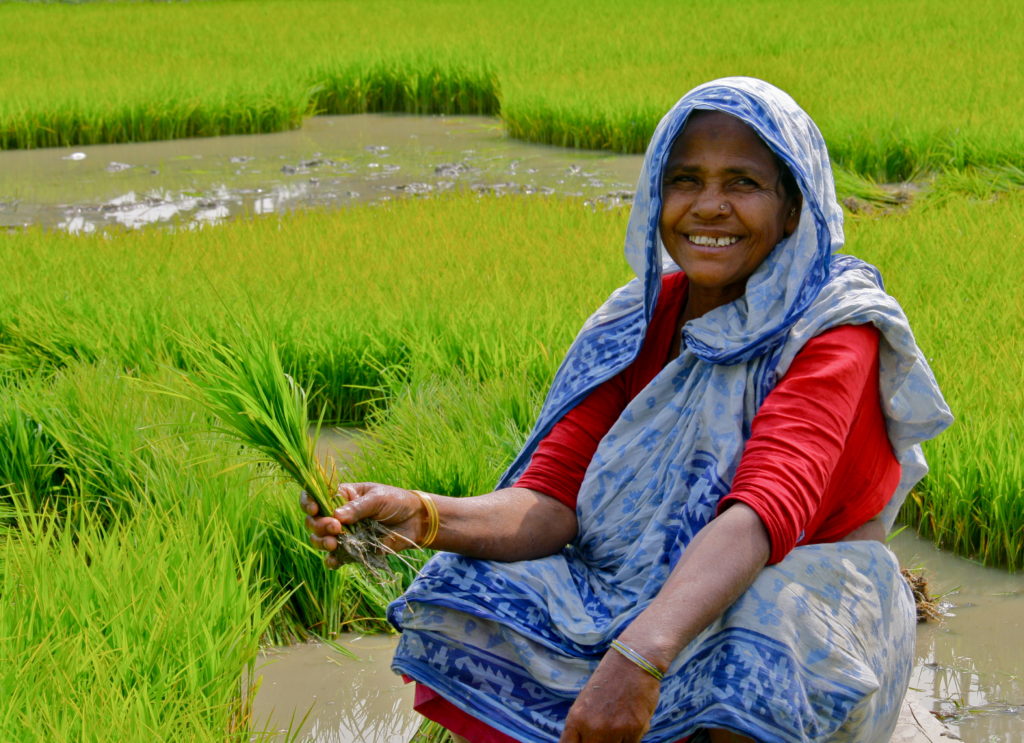
In China there was a philosophical school called Agriculturism between 770 BCE and 221 BCE. The main philosopher, who represented this school with a sophisticated exposition of that philosophy, was Xu Xing (372-289 BCE). His main philosophy was that people’s propensity is based on farming than to any other thing. By the third and the fourth century BCE the Chinese society had come out of pastoralism and firmly moved into agrarian production with a back up of strong philosophy of agriculturism. In Xu Xing’s philosophical domain agriculturist was known as ‘divine farmer’. The divine farmer was treated with higher esteem than the religious preacher.
In India farmer never got such a stature. A Brahmin saint who does not know what is agriculturism was given greater place in agrarian society also. The agriculturists were designated as Shudras by Brahmin saints and they were never allowed to acquire philosophical and respectful divine status. The Shudras had evolved their own agrarian spiritual deities but those deities were shown as unworthy in the brahmin literature. Thus production itself was rendered unworthy and it was not allowed to acquire philosophical significance.
Agriculturism as a philosophical school opposed division of labour and it proposed an idea, in China, called Shennong which in essence means that people should live by an ‘agrarian, communal and egalitarian’ system.
Confucianism opposed this school and proposed for division of labour and establishment of society of classes based on functional specialization. The agriculturist school was not a dogmatic school. It promoted ‘hundreds of schools of thought’ for spreading agrarian ideas. Free debate among farmers about seasons, seeds, crop patterns, methods of sowing, weeding and harvesting to improve the productivity was part of these hundred schools of thought. It also promoted debates around human society, God and their relationship. All agrarian societies built divine deities to represent God and relate to their abstract ideas of divinity. The Chinese society for a long time believed in worshipping nature as part of its deep agriculturist civilizational growth.
It was this Chinese agriculturist philosophy that engendered positive schools of thought like Confucianism, Taoism and Legalism later and accommodated Buddhism. But it never allowed Indian type of Brahminism (Hinduism) to take root in that country. We can now see how Indian Brahminism, that emerged after the third wave of migration of Aryans to the subcontinent (Tony Joseph, 20018) destroyed the very roots of agriculturist philosophy that had its existence in Harappan civilization. My assumption is that without agriculturism during Harappan times agriculture would not have developed to a level where surplus generation could take place and city civilization could have been built.
However, the Qin Dynasty that ruled China in the second century BCE opposed the agriculturalist philosophical school of thought as it believed in Legalism and burnt many of its books. Legalism itself was more progressive than Indian Brahminism which did not believe in any law that respects human being as a human being.
Unlike the Indian ancient Shudras who were agriculturalists but did not leave any written philosophical discourse, the Chinese agriculturists were great writers and philosophers. Since there was no varna-caste system in China every one had a right to read and write from ancient days and hence writings of all occupational forces were preserved in China by rulers after the Qin dynasty was overthrown. This is where the roots of Chinese agrarian development and Indian under- development lies.
Though Qin rulers burnt many books on agriculturist philosophy, yet the literature that survived influenced the Chinese civilization forever. Unfortunately, there is no such philosophical influence of Indian Shudra agriculturists as they were not allowed to emerge as thinkers and writers by Brahmins in ancient and medieval times. Once the Brahminism constructed Shudras as slaves and forced them to remain illiterate their philosophical growth was arrested. The Brahminic Vedas, Upanishads, Ramayana, Mahabharata, Kautilya’s Arthashastra and Manu’s Dharmashastra have no discourse on agriculturism and every writer in India treated these books as a source of Indian civilization and culture. All these books have nothing to do with agriculturism.
The Chinese agriculturism influenced many other schools of China, including Confucianism, though it opposed some aspects of agriculturism, Taoism, Legalism. It also influenced Buddhism of China once Buddhism reached there from India. Since the Qin Dynasty promoted Legalism that school also took strong roots in China from the second century BC onwards.
Wikipedia mentions:
“Due to its Legalist focus, the Qin Dynasty was thorough in its purging of rival philosophical schools, including Agriculturalism. However, Agriculturalism in its heyday heavily influenced the agrarian policies of Confucianism, Legalism, and other contemporary Chinese philosophical schools, and so subsequently many concepts originally associated with the Agriculturalists continued to exist in Chinese philosophy.
The transmission and translation of Chinese philosophical texts in Europe during the 18th century had a heavy influence on the development of Agrarianism in Europe. French agrarianist philosophy, a predecessor to modern Agrarianism, of François Quesnay and the Physiocrats, are said to have been modeled after the agrarian policies of Chinese philosophy”.
One of the main problems of India is that at no stage of Indian philosophical evolution agriculturism was allowed to take root as a philosophical school.
In 18th and 19th centuries when Europe was borrowing agriculturist philosophy the Indian thinking was still under the grip of brahminism.. The Shudra farmers were not allowed to develop their own alternative thought. The first Shudra thinker who asserted the importance of agriculture and farmer was Mahatma Jotirao Phule in the late 19th century. Phule realised that the Shudras were denied of a philosophical status and were reduced to the status of gulam (slave). No slave could construct a philosophical school of his own, so long as s/he remains slave. Hence he wrote Gulamgiri putting the Shudra farmer in the central. However, his thought did not develop into full-fledged agriculturism like the Chinese school of thought because he had no historical heritage of building up a school of thought with a series of writings. Without a systematic writing no school of thought would develop.
A full-fledged philosophical school emerges only when multiple thinkers write on the same subject. The Chinese agriculturists rightly believed that ‘ hundred schools must contend’ to build a proper mature philosophical school. Based on the Chinese agriculturist school Mao Zedong who came from an agriculturist farming family developed a slogan ‘Let hundred flowers bloom and thousand thoughts contend’. His idea of peasant revolution was also based on the Chinese history of agriculturism.
In India there was an anti-agrarian brahminism in power all through its written history. The Shudra varna was the only varna which was engaged in agrarian productivity and it was not allowed to read and was denied the basic human dignity and spiritually validated existence. Though agricultural development is based on the science of cultivation it naturally evolves its own philosophy. That philosophy transits from generation to generation and age to age only when it is codified into a text. This was not allowed by Brahmin writers and ruling Ksatriyas. The Vaisyas were in between the Shudra agriculturists and Brahmins in ancient India. Only Gupta rule from 3rd to 5th century AD the Vaisyas became Dwijas with full business rights and right to education. Subsequently they too opposed the Shudra agriculturism. Though Mohandas Karamchand Gandhi wrote their nationalist philosophy but that philosophy has nothing about agriculturism. Because the Indian Banias, who became a totally business community, lost touch with agriculture, he never studied the Chinese history as he studied the European history. Later a famous Dalit (former untouchable) thinker and philosopher,Dr B.R. Ambedkar critiqued brahminism but not from agriculturism point of view but from religious morality and caste-cultural exploitation view point.
Ever since Vedic texts were written the pre-Vedic agriculturism was set aside because agriculturism esentially survives as Xi Xing emphasises on farm production, communitarianism and egalitarianism. Indian Brahminism inherantly opposed communitarianism, as communitarianism plays a key role in the advancement of agriculturism. Communitarianism would not allow the caste culture to operate in any field of life. Since Vedism brought in four fold varna (caste-class) division which is not even based on division of labour but based on spiritual and social authority over the Shudras who were the mainstay of agriculturism, that division negated progress of agriculturalism.
Brahminism from the beginning disarmed the Shudra agriculturalists by not allowing them to write their discourses into textuality. The Brahminic war centric vedisim and epic ideology and Ksatriya heroism did not allow agriculturism to develop as a philosophical school of thought because that school would have been lead by the Shudra thinkers. Not that there were no Shudra agriculturist thinkers at a time when agriculturism developed as a strong philosophical school in China. But they were crushed with an iron hand from the days of Kautilaya writing Arthashastra and more so from the days of Manu writing of Dharmashastra.
From 3rd century BC to 1st century AD when agriculturism would have developed with some kind of agrarian production Kautilya’s Arthashastra and Manu’s Dharmashastra were written by devaluing agrarian production. Farmers in India were never allowed to become divine farmer. Brahminism promoted anti-social saints and sanyasis as the ultimate model of Indian society, who have no role in production and agriculturism.
The parampara of Kautilya and Manu were continued by Savarkar and Golwalkar through their writings in modern times. The Hindutva school with an overt ideology of enmity to religions like Chritisianity, Islam and Buddhism covertly its structural ideology is anti-agricutlturism. Though constructed their ideology in terms of nationalism advancing agrarian production was never part of their discourse.
Agriculture scientifically was found based on two process– photosynthesis and decomposition. Because of this twin process renewability becomes possible. There is a spiritual view that God commanded humans to labour on the land, to which they belong to and produce from it and live a long life. This is a scientific spiritual dictum. Building agriculture science is long engaged by forming community with a philosophical discourse that land and labour re-generate similar species by multiplying themselves, which became a useful thing for human survival.
The Shudra producers of India were capable of advancing the philosophy of agriculturism with constant interaction with land, plant and animal. Still this philosophy is in oral form as the Shudra producers did not write that philosophy in detail into texts. Our agricultural universities are not structurally suitable for advancing agriculturism as a philosophy. Because they are full of brahminism.
Agriculturism is based on reason and scientific engagement with soil, seed and animal with an out of the box thinking. The Hindutva parampara is either anti-agriculturist or does not understand its fundamentals as it needs a productive mind but not destructive mind; a positive mind not a negative mind.
This is what Manu told the Shudras to do. Their work in agriculture was never seen as work.
- 123. The service of the Brahmanas alone is declared to be an excellent occupation for a Shudra; for whatever else besides this he may perform will bear no fruit.
- 129. No collection of wealth must be made by a Shudra, even though he be able to do it; for a Shudra who has acquired wealth gives pain to Brahman.
No Shudra wrote anything worthy against this barbaric statement of Manu till a Dalit law maker and philosopher, Ambedkar, came and wrote the present constitution and repudiated Manu. After the Bharatiya Janatha Party, which still follows Manu’s Dharmashastra as part of the parampara, came to power in 2014, agriculture remains most neglected area of administration, as it is not part of their philosophy.
Kancha Ilaiah Shepherd is a Political Theorist, Social Activist and Thinker
https://countercurrents.org/2020/07/agriculturalism-and-hindutva/
-
Only if they Learn English can OBCs Take Advantage of Reservation | NewsClick
Only if they Learn English can OBCs Take Advantage of ReservationReservation is a crutch but English-medium education could have been their leg.Pragya Singh15 Jul 2020

On the 30th anniversary of reservations for backward classes, the well-known social scientist, writer and activist, Prof Kancha Ilaiah Shepherd says Mandal has not fulfilled what it set out to do. He says that without English education there is no way the backward classes, whom he identifies as the historically Shudra communities, can progress. According to Ilaiah, reservation is a crutch but English-medium education could have been their leg. The next 25 years can be dedicated to this. Excerpts from an interview.
THIRTY YEARS AFTER THE MANDAL COMMISSION REPORT WAS ACCEPTED, WHERE ARE THE OTHER BACKWARD CLASSES? ARE THEY EMPOWERED SOCIALLY AND EDUCATIONALLY?
Now first of all, ever since the BJP has come to power, regional parties are being destroyed in the North. Regional parties were basically Sudra-run parties. They had fought the Congress and Brahmanism from the days of Indira Gandhi. They had slowly emerged from [former prime minister] Chaudhary Charan Singh’s time to create regional leaders like Mulayam [Singh Yadav], Lalu [Prasad Yadav], Devi Lal and so on. But the BJP came and finished them. The RSS-BJP are still using the OBC, which includes the historical category of Sudra, as muscle power against Muslims, but did not allow a single one of them to become the head of the RSS.
FOR HOW LONG WILL THEY REMAIN MUSCLE POWER? IN OTHER WORDS, ARE THEY STILL A SALIENT FORCE POLITICALLY?
When, in 1989, the “other backward classes” or OBC category was created, which included the historical Sudra communities, for the purpose of reservation, some advanced agrarian communities—such as the Jats, Gujjars, Patels, Marathas, Kammas, Reddys and Nairs—were excluded. Although in Tamil Nadu all groups except the “untouchables”, the Brahmins and Chettiars, were included in the Sudra classification and therefore the OBC category, and Karnataka included the Lingayats, and so on. So yes, the Mandal phase is a demarcating period exactly 30 years before now. But the actual implementation of the commission’s recommendation started in 1995. Therefore, the OBC category has been operative in the central services for 25, not 30, years.
WHAT HAS IT DONE?
It has done, in my assessment, two things. One, it has given an idea of education to the historical agrarian Sudras and artisanal communities such as potters, carpenters, goldsmiths, land tillers and even to some rich farming communities like the Yadavs in Uttar Pradesh. The OBCs did not take their 27% share in education, but reservation sowed the seeds of education in their families.
Some were already educated, but Sudra youth were not educated in foreign universities during the eighties, not even those who were in Delhi, Mumbai, Kolkata. Meanwhile, the Brahmin, Baniya, Kayashta families were already hugely invested in foreign education for their children, apart from being in central universities, IITs and IIMs, etc. The upper castes were sympathetic to SC/ST reservation, because they accepted that there was untouchability and some concession [was needed] on that account, but they argued against reservation for OBCs. This is because of how OBCs—in other words, all Sudra castes—had been defined. They were seen as “dominant castes” by the foreign social science education. Native sociologists and historians also said that these dominant castes are “provincial rulers” who control the rural economy. Therefore, they conceptualised the idea of creamy layer to scuttle reservation for OBCs.
WHY DO YOU HAVE AN ISSUE WITH THE CREAMY LAYER?
The creamy layer excluded the educated OBCs whose parents were already in the middle class. They could have secured jobs in the reservation pool. Any job requires qualification—engineering, medicine, a Master’s degree in social science or natural sciences—and it requires a certain level of English language skills, which the Sudra communities were lacking then. They are even now absolutely indifferent to learning English.
Even feudal landlords did not send their children to private Christian English medium schools but preferred their children to get some village-level intermediate education in Hindi or Telugu or Marathi medium. They thought they have land, so their children did not need jobs. But this disabled their children from competing in the urban industrial or educational sectors. As a result, in thirty years, they have not taken the 27% reserved jobs in any sector. Nor could they force the private sector to implement a quantum of reservation.
WHY DO YOU THINK THIS HAPPENED?
Because these caste groups are not organised as much as America’s Blacks are.
OR EVEN THE DALITS IN INDIA?
Yes, Dalits are more organised than OBCs. You see, the urban Brahmins who rejected reservation used the Sudras against Dalits and Muslims in villages. That is, the RSS-BJP used them in villages. So, after 70 years of Independence, the Sudras remain the least educated and unrepresented in central government services. In state governments where they were in power the reservation rule was followed, so some state structures are still under their control. But the top Sudra community who were kept out of reservation are the ones who side with the Brahmin and the Baniya, and the result is that everybody remained backward.
See it another way: the [non-reserved] “upper castes” category we have made in India includes the Jats, Patels, Brahmins, Baniyas and so on. But culturally, these social groups are not similar, right? Do Brahmins and Jats get along with each other? Not at all. So, the lack of English education, the lack of effective bureaucratic forces and top-class academicians among the Sudras led to the situation where there was never even a debate on reservation and creamy layer. When there is no debate, you cannot get your share, can you?
BUT NOW INDIA HAS 10% RESERVATION FOR THE ECONOMICALLY WEAKER SECTIONS OR EWS, SO WILL THE DOMINANT AGRARIAN LANDLORD CLASSES WHICH WERE EXCLUDED FROM THE OBC CATEGORY GET TO COMPETE FOR RESERVED JOBS?
No. All historically agrarian people who were enslaved from the time the Rigveda was written must come together to establish a Sudra identity for themselves—and demand reservation.
BUT THIS IS NOT POSSIBLE GIVEN THAT THE SUDRA IDENTITY HAD BEEN FRACTURING POLITICALLY AND SOCIALLY.
The Dalits are divided into many castes, but they still have an identity called Dalit, which has worldwide recognition. Also, now, there has been a big change. In the past say, the Jats, they would think they can get a Kshatriya status. But now they know they cannot. Neither did the OBCs get the janeu nor did they became Kshatriya proper. The RSS refused to grant them either of these. Therefore, my point is that they must first establish with pride the ancient identity of Sudras. Two, they should send their children only to English-medium schools to be able to compete with elite castes. Wherever they are in power, they should immediately shift government school education to English medium. Andhra Pradesh has done this already, because that alone can produce intellectuals who can compete with the Brahmin, Baniya, Kayastha or Khatri students. This will enable more people from the OBC category to come up in the next 25 years. See, the Dalits are doing the intellectual work for themselves. For instance, they consider themselves Buddhist, religion wise, and they are also Christian, but the sudras are worshipping not god but the Brahmins.
WHY DO YOU SAY THAT?
Because the Sudra listens to whatever the Brahmin says. See—god does not require a go-between, interpreter or guide. For example, in North India, every marriage is solemnised by a Brahmin priest who recites mantras which nobody understands. Is he asking the gods for a long life for the bride and bridegroom or a divorce tomorrow? Is he telling the god please don’t develop their brain? Or is he saying that they should become intellectuals? How do you know? Still, whenever he says “samarpayami” [I am offering], you give everything, including lakhs of rupees. Why not have a non-Brahmin priest?
THERE WERE SEVERAL COMMUNITIES WITH NO TRADITION OF CALLING A BRAHMIN TO SOLEMNISE WEDDINGS, BUT THAT IS CHANGING NOW. NON-BRAHMINS ARE MORE INCLINED TO CALL A PRIEST…
Yes, that is because the RSS has driven this agenda into every family now. The OBCs don’t understand the RSS, which is a political spiritual network of Hinduism. They made Sudras vegetarian. Earlier, Dayanand Saraswati [did this] in one state, Gandhi in another state, but now it is the RSS which is the real force [driving such changes]. Because they realised if these people remain meat-arian, their physical strength will become overpowering. So they converted them into vegetarian, but without giving them any religious rights.
I asked a Yadav from Uttar Pradesh why the Krishna Temple has been handed over to a Brahmin priest and not led by a Yadav priest. The man said, ‘We don’t know Sanskrit.’ Arey, do you think Krishna is a god who knows only Sanskrit? The Brahmin has destroyed their brain, their power of reasoning, to become their god. My point is that they will have to produce their own priests. If you say you are Hindu, fine, remain Hindu, but become a priest, an English-educated priest. That is what Brahmin priests are doing everywhere, people like Sri Sri Ravi Shankar, they are English-educated and control the entire middle class. The Sudras become their bhakts and send women to go and sit around them where they often get exploited and trapped by some baba.
BUT WE HAVE SADHVIS—RITAMBHARA, UMA BHARTI, PRACHI—WHO ARE OBCS.
But what is their power? Can they run Tirupati temple? Can they run even Vaishno Devi temple? These are like, you know, small goddesses in village temples. This is why Mohan Bhagwat [RSS chief] can remove them from anywhere. Now Uma Bharti was showing some independence, she was removed—that was it.
JUST LIKE SITA WAS REMOVED FROM JAI SIYA RAM?
Yeah, that’s what… Now, Sudra population according to my most conservative estimation in or my recent book, [Buffalo Nationalism: A Critique of Spiritual Fascism], is 55%. The second major issue is that out of the total capital production in India, hardware, software, export, 46% is in the hands of Banias, 42% is in the hands of Brahmins, 3.8% with Sudras, including Jat, Gujjar, Patel, Reddy, Kamma, 3.2% is in the hands of the Dalits and the remaining in the hands of Muslims and other minorities. So 55% of the population has control over only 3. 8% of the capital resources. There are Maratha and Kamma industrialists, but none has an Ambani, Adani, or a Vedanta-style company. So, Sudras are buyers, but they never ask for a share in production. To demand a share they need to be highly English-educated, right? They should be foreign educated, but as of now they are not.
WHEN YOU TALK ABOUT A SHARED IDENTITY, THEN IS IT GOING TO INCLUDE THE DALITS ALSO?
No, but we will have a close community-class alliance with them, stop atrocities against them and share resources based on percentages. But Dalits and OBCs are not one and the same. The day Sudras realise that they should not treat Dalits as untouchable, untouchability will disappear. Brahmins cannot continue the practice [alone] because we have a majority in the villages. Take Sardar Patel, who is identified with nationalism, Gandhi and Hinduism. He never turned the Sudras into a [united] force but Ambedkarites, Dalits did.
MANY SUDRAS WOULD GET ANGRY IF YOU CALL THEM SUDRAS, BECAUSE THEY CLAIM TO HAVE BECOME WHAT YOU HAVE CALLED NEO-KSHATRIYA.
I was the one who said they are neo-Kshatriyas, but once you have allowed the RSS-BJP, that is the Brahmin-Bania, to come to power, you are not allowed the neo-Kshatriya status. Since 1999, in other words with the beginning of the 21st century, you have been pushed back into the classical Sudra status because you have cut the branch of a tree on which you were sitting by allowing the RSS-BJP into power. Particularly now, with their very clever deployment of a Baniya as an OBC, nobody gets that neo-Kshatriya status. [Prime Minister Narendra Modi belongs to the Modh Ghanchi caste, which was added to the OBC list before he became chief minister in 2001. But this caste is not most backward as Modi had once claimed.]
ARE YOU SAYING THAT THE OBCS ARE BEING DIVIDED AND RULED?
The OBC has been divided and taken into the Brahminical fold by the RSS and BJP, and their votes, their muscle power, keeps the Muslims and Dalits oppressed while we get ruled by the Brahmins and Banias from Delhi. See how many Sudras are there in the embassies abroad, in the foreign services. See among the top IAS officials who are running the secretariats. Even the OBC Prime Minister’s Office today does not have a senior Sudra IAS officer. One or two are there in a few areas to help out in the foreign affairs, but only one or two. So the point is that without taking over universities, the IITs, JNU, HCU, DU, you cannot rule in Delhi. Because how else do you get into IAS, IFS? How do you manage diplomacy? My take is that reservation is a crutch because we were crippled, as we did not opt for English-medium education, which should have been our leg.
AFTER THIRTY YEARS CAN YOU SEE A TIME WHEN OBC RESERVATION IS NO LONGER NEEDED?
As Martin Luther King said, people tell us [Prof Ilaiah identifies as a Sudra] to wait for our time, that our time is coming, but unless we act now that time will never come. So unless their children are in English medium starting from nursery school, that time will never come. It has not come since 1,500 BC when they wrote the Rigveda. Even now when the RSS-BJP are saying that all of us are Hindu, the interpreter of the Rigveda is not a Sudra.
Once at a conference in Delhi where I was representing the Sudras, (because I said I would not represent OBCs) I said, name one Sudra intellectual. There were 12 judges, and all started looking at each other. I said what happened? Am I the only one? You can name ten Dalit intellectuals, 100 women intellectuals and thousands of others, but no Sudra intellectual. Why? There have been figures, like Periyar, but he wrote and spoke only Tamil. [Periyar also wrote in English, but as Prof Ilaiah points out, Sudras were not familiar with English, particularly in his time]. That reservation cannot save us has been proved over the last thirty years because in spite of reservation, there are no Sudra intellectuals among us.
BUT THE OBCS MIGRATE TO THE BJP ONCE THEY JOIN THE ELITES.
They should understand that when a Sudra cannot become the head of a temple, or head of the RSS or Vice Chancellor of JNU or DU or IIT director, then even if they go to the RSS-BJP, all that they will end up doing is to attack Muslims and, thereafter, sit in jail. But all the Brahmins go to universities, IITs, IIMs.
I went to a private university in Haryana, where there was no Jat representation among the teachers. I said, look, this university is constructed on Jat land. If all these communities are still in agrarian fields, tilling or smoking their hookahs, that means there is no change. Any movement, big or small, starts with intellectuals. Without them there can never be a movement. So, in the 30th year of reservation, they should realise that we must start from scratch, go back to the drawing board. This creamy layer is a false business, land ownership has no meaning today, clerical employment cannot produce IAS or IFS officers or IIT graduates. We should start English medium schools in those states where the OBCs are in power and evolve an agenda for them.
WHEN ELITE OBCS SHIFT TO RSS-BJP, DOES IT NOT APPEAR THAT RESERVATIONS FOR THEM WERE A MISTAKE? IT HAS FRACTURED THE COUNTRY ALONG CASTE AND RELIGION, AND CREATED NEW PROBLEMS? SHOULD INDIA FIND ANOTHER WAY?
The country is divided in many ways, on the linguistic front and on caste… One national language was not allowed to emerge. See the difference between China and India. China has a national language, and an overlay of another national language, which is English. China is running a global TV network and a global newspaper, but we are not in a position to do so.
Second, the RSS was doing the job of dividing us, whether they were in power or outside. They sent OBC teams to demolish the Babri Masjid. Village temples are in the hands of Brahmin priests who tell Sudra youth not to allow Dalits in. The Sudra youth go and beat up Dalits and then go to jail. The RSS is doing the job of dividing people far worse than the British. We should understand the historical networking of Brahminism and align ourselves with Dalit and agrarian labour.
WHY ARE MANDAL FORCES WEAKENING?
From where does unity come? If Sardar Patel as a Sudra leader had left us a lot of literary sources, like Ambedkar did, [things may have been different]. But he did not write anything, not even his autobiography. He is called “Iron man”. That means he has no soft power, he is not a pandit like Nehru or mahatma like Gandhi. If the entire Sudra is educated in English medium like Blacks in America, from LKG to college, then these forces cannot divide them. Because people must become aware of their rights individually as well, otherwise they will be like sheep, and any kumbh mela can take them into the river, right?
HOW ARE OBCS IN THE SOUTH DIFFERENT?
Satya Nadella is an OBC. Do you have an equally educated person like him from the North? Andhra Pradesh chief minister Jagan Mohan Reddy is an OBC. Telangana chief minister KCR [K Chandrashekar Rao] is an OBC. You know, KCR recently finished the BJP agenda in one stroke. The BJP was campaigning to boycott chicken, mutton, when the Covid-19 epidemic started. KCR held a press conference and said this is absolute nonsense, eat a lot of chicken and mutton and fish and only then you will survive. On the next day, the meat shops were full. BJP’s agenda was finished. No chief minister in the North can say openly what KCR said. That means their brainwashing is [complete]. The OBCs in the North have not had English education.
IN FACT, THEY ARE PROUD OF IT. THEY WANT ALL OTHERS TO SPEAK HINDI…
What is it that Mao [Zedong] had said—let a hundred schools of thought contend. Now in North India, to produce intellectuals, they should join hands with the South Indian Sudras. If there are Sudra intellectuals, use their power, meet them, see how they survive inside [the system] with Brahmin power around them. They need a backup from outside to bring the community forward and the intellectuals among them have to do that work…
https://www.newsclick.in/Only-Learn-English-OBC-Advantage-Reservation-Mandal-Commission
-
India and the Indian: My nationalism competes with China, not Pakistan, writes Kancha Ilaiah Shepherd – India News , Firstpost
India and the Indian: My nationalism competes with China, not Pakistan, writes Kancha Ilaiah Shepherd
Our political life, lived around only village panchayats before 1950, is now connected to a larger constitutional democracy. In the future, this nationalist view will gain more prominence. The RSS nationalism will slowly but surely wither away.Kancha Ilaiah Shepherd June 18, 2019 10:51:08 IST

- Nationalism survives in an environment of livability. It survives around a common national education and the good life in a language that all citizens could speak to each other.
- The Brahminic nationalism, of which the Rastriya Swayamsevak Sangh is also a part, stands exactly opposite my nationalism.
- Both Pakistan and RSS do not bother much about augmenting production and egalitarianising distribution.
This essay is part of Firstpost’s ‘India and the Indian’ series, which examines the renewed idea of nationalism in vogue today, and what it means.
***
I was born in a small village called Papaiah Pet in Telangana state. No doubt it is in India. During my childhood, I did not know anything about Telangana even as a region; worse, I did not know anything about India as nation. Not just me, all the villagers’ nation and universe was our village itself (or at best, the surrounding villages). My love for my mother, father, sisters and brothers moved out of the family only to reach out to the villagers.
If the village was not good to me, I might gradually think of migrating to some other village that could offer a better life and comfort. So also my state and country.
Nationalism survives in an environment of livability. It survives around a common national education and the good life in a language that all citizens could speak to each other.
The Brahminic nationalism, of which the Rastriya Swayamsevak Sangh is also a part, stands exactly opposite my nationalism.
My nationalism starts with love for my village if it is providing me enough to live, even with the hard work required in grazing cattle, tilling fields, building water bodies and so on. For the whole of the Shudra/OBC/Dalit/Adivasi communities who built our villages and cities, nationalism and patriotism were unknown concepts till perhaps Mahatma Phule was born and was educated in a modern school in the mid-19th century in a language that he could use to converse with the rulers (of course, colonial) and also outsiders – English.
The village builders, whom we now know as the real nation builders, never knew, till the colonial English language landed in India, any other national languages like Sanskrit, Persian which were both ruling and scholarly languages at the pan-India level.
Sanskrit was a Sanathan (Hindu) divine language which was not accessible to the whole of the Shudra/Dalit/Adivasi masses. The village economy builders’ languages were tribal, local and regional. The nation, as it came to be constructed during the early nationalist period by Sanskrit, Persian and Urdu writers, was outside of the realm of Shudras, Dalits and Adivasis’ vocabulary. (Urdu also became a national language by the time the Two Nation Theory was constructed by Allama Iqbal, later on the Muslim nationalist leader Mulana Abul Kalam Azad wrote mostly in Urdu.)
Neither the Brahmin nor the Muslim pundits were engaged with them. There were no intellectuals among the Shudra/Dalit/Adivasi masses to connect their socio-spiritual and cultural life with the Brahminic-Islamic nationalist discourse.
The most important question is: without knowing at least one national language, how do people become nationalist?
Therefore it can be safely said that till Mahatma Phule, and more importantly Dr BR Ambedkar, came onto the scene with a nationally communicable language and also knowledge (in English) there was no national connectivity to the Shudras/Dalits/Adivasis of different regions.
Sardar Vallabai Patel came from the Shudra background with good reading and writing ability in English, but he never educated Shudras/Dalits/Adivasis with their identity and advancement in view. He lived as Gandhian or as an RSS-type Hindu without infusing a sense of identity and advancement of Shudras as a whole. That was why he never became a national leader/thinker of all India Shudra/Dalit/Adivasis. Hence, they do not own him as they own Phule and Ambedkar as their icons.
Narayana Guru and Periyar EV Ramsamy emerged from Malayalam and Tamil linguistic regions but they could not speak and write in any pan-national language (English, Sanskrit or Urdu); thus, their impact was confined to Tamil and Malayalam nationalist enlightenment. Though Kanshiram tried to introduce them to the rest of India, they could not become pan-Indian Shudra/Dalit/Adivasi nationalist icons as Phule and Ambedkar did.
The nationalism of the RSS is a pure Brahmin Sanskrit-centered communitarian ideology which never connected with the productive communities that built our village economy, culture and civilisation. The RSS nationalism draws heavily from Sanskrit texts like the Vedas, Upanishads, Ramayan and Mahabharata but not from our regional language discourses and their production ethos and their spiritual cultures. The Sanskrit texts focused on war and violence but never focused on cattle economy, crop system, irrigations systems and so on.
Only after the English language became Indian are these productive sub-national cultures getting connected. Hence, Mahatma Phule who wrote Gulamgiri with an English introduction and universally known human equality and Ambedkar who wrote Annihilation of Caste and Who Were The Shudras? connected the Shudra/Dalit/Adivasi to nationalist discourse.
The cultural nationalism of the Shudra/Dalit/Adivasis and that of RSS is not one and the same. When a Shudra/Dalit/Adivasi cannot even become a priest in a Hindu temple that the RSS believes in as source of its nationalism, how do they get fused into that Brahminic nationalist culture? Spiritually fused oneness is a critical component of cultural nationalism.
The Shudra/Dalit/Adivasi cultural nationalism does not see the cow or any other animal as goddess as they graze them as economic animals as god-given to them for economic use but not for spiritual worship. The RSS, which does not train its shakha karyakathas to graze cattle in the fields, rather trains them to be around urban centers to work on religious issues and raising slogans of Gorakshan but not doing the Gopalan (which is seen as Shudra job). Their nationalism is essentially of Sanskritic Brahminism, which has nothing to do with production and distribution – key egalitarian nationalist concerns. Without having concern for all humans — men and women — equally, nationalism becomes a negative weapon for vote mobilisation.
My nationalism — that is Shudra/Dalit/Adivasi nationalism — competes with China but not so much with Pakistan. The Chinese nationalism debates more and more about augmenting production and egalitarianising distribution. Both Pakistan and RSS do not bother much about augmenting production and egalitarianising distribution.
Further, RSS wants the nation to be vegetarian, but the Shudra/Dalit/Adivasi food cultural nationalism is multi-cuisine, like the Chinese one. In our historical heritage, from the Harappa civilisation (of production and construction of villages and cities) days to the present, neither pork nor beef are untouchable to our nationalism. For a Harappan man/woman, for Gautama Buddha, for king Ashoka ( the builder of first welfare state) cattle rearing, vegetable production are integrated food-related activities.
Production and consumption are interrelated, always leaving something for the future. In the process of production, greater production and lesser consumption in order to maintain the ecological balance and futurism, remains an essential condition. The RSS does not believe in production but believes in consumption. That is where ecological destruction is.
For food producers, Gaay (Cow) is an animal, like the buffalo, and the Ganga is a river, like the Krishna or Godavari. They never saw God in an animal or in water and they never saw their nation as an isolated entity from the universe. Their problem, till recently, was lack of language and education to communicate with people who live like them in all other regions and states.
The Brahminic nationalism, by controlling Sanskrit as its national and divine language, made them disconnected. Phule and Ambedkar have shown us a way — English, dignity of labour and multi-cuisine food consumption — as the real, productive Indian nationalism. It does not believe in war and violence vis-à-vis other religions or other nations.
Our political life, lived around only village panchayats before 1950, is now connected to a larger constitutional democracy. In the future, this nationalist view will gain more prominence. The RSS nationalism will slowly but surely wither away.
Kancha Ilaiah Shepherd is a political theorist, social activist and author
-
India Needs High Jump, Not Yoga To Win War With China
in India — by Kancha Ilaiah Shepherd — July 13, 2020FacebookTwitterWhatsAppEmailShare48

War between India and China is on the cards. Though there is a retreat on both sides for the time being there is every possibility that war would break out any time in future. Unlike a war between India and Pakistan or with any other neighbouring country war with China will have to be fought on two fronts. One, the straight army to army front–in three spheres – land, water and air and two, the trade war. The trade war on the economic front is a long drawn out one. The Hinduva ruling class unlike the earlier ruling class that fought a war with China in 1962 is in two minds whether to fight or not to fight. Given its Hindutva nationalist build up constructed mainly aiming Pakistan and the internal Muslim population is a bit shaky about the war with China. Why?
Its diplomatic engagement with China was not matched with rational assessment expected of modern Government that could see through the Chinese diplomatic game. The Rashtriya Swayamsevak and the Bharatiya Janatha Party never developed a team of thinkers from their ranks. They have mostly inward-looking communal intellectuals. They cannot match the Chinese intellectuals in any field. Nor did the earlier Congress regimes produced outstanding non-casteist and non-communal great social science thinkers from Indian universities. Nor did the communist school. Caste communalism lived through all our university education without allowing thinkers from Shudra/OBC/Dalit background to come to the centre stage of the intellectual discourse. Scholars that emerged from productive families would have different creativity from that of scholars emerging from parasite anti-production families. This is where India and China’s educational systems differ. China produced thinkers from working-class families–in Indian context from Dalit/OBC/Shudra kind of families–as there is no caste system there. Here the intellectuals came from Brahmin/Bania/Kayastha/Khatri communities who have no productive class roots. They came from recitation book culture but not from the culture of struggle with nature and every day creative thinking.
According to available information, the Prime Minister Narenda Modi is the first Prime Minister who visited China more times than any other Prime Minister did in the past. The RSS/BJP intellectuals have also visited China on what is known as study tours more than any other political study teams earlier. They must have studied the Chinese food and physical exercise culture. They must have also studied their school, college and university education methods. The food that they eat and the physical exercise and the interaction of students right from early stage with their production fields and factories is totally opposed to Hindutva saint and yogi culture. Dignity of labour,multi- cuisine food habit, karate, high jump, running and high speed body motion games for youth are very normal in China. Their production energies and military power are based on their youth energy.
What did the PM and RSS/BJP ruling elite promote in India ever since they came to power? They have not promoted dignity of labour as they have a strong belief that working the fields and production in general as pollution, as that work is not part of Hindutva literature and parampara. As a result our per capita production and per capita income are far less than average per capita production and income and protein consumption of a Chinese. To get rid of Chinese goods and commodities we need to improve our per capita production and consumption. For that teaching dignity of labour to every school child with fieldwork practice is a must.
To improve production in India the ruling class needs to have a theory of improving production forces and changing production relations. But the Hindutva ruling class has no such theory. They are pre-occupied with the history of Muslim rulers of India who hardly thought about improving production but well trained in building monuments like Tajmahal and forts like the Red Fort of Delhi. The Muslim rulers also never built strong agrarian economy and also strong technology backed army. The kisan and jawan were very primitive by the time the East India company landed in India. The Hindutva strategy is to build counter monuments to the Muslim kingly monuments without bothering to improving the forces of production and scientifically advanced modern army in 21 century.
Their promotion of pure vegetarianism and yoga among young population will not make our army match the Chinese army. Our young students are not meant to become sanayasis or only the white colour employees but meant to become educated kisans and and well built jawans. That is the first condition for building a Aatmanirbhar India.
To make India Aatmanirbhar we must compete with China on production front not with Pakistan. We must spend more money on building world class universities not monuments–spiritual or secular. No doubt the Hindutva leaders and scholars were studying Pakistan more seriously but were visiting China for pleasure trips.
Unfortunately the BJP/RSS Governments and leaders have been propagating and giving directions to schools,colleges and universities only to give pure vegetarian food to our children and youth. Historically the Indian food culture has been caste based and now RSS is planning that it should be religion based . This we have seen during cow protection debate. Ideally food habits need to change based on age and energy levels of the individual.Both pure vegetarianism and yoga are meant for old people and may be for diabetic patients but not for young kisans and jawans who need to fight with nature and enemy with swiftly moving bodies but not in a sitting position like in yoga.
The RSS with their sanyasi food culture adopted a generalised definition that vegetarianism is Indian food culture. It actually was/is only Jain heritage. Their opposition to Islamic food culture and civilization pushed them to promote anti-energy food culture and yoga exercise for people of all ages based on the guidance of some yogis living in mountain regions who never involved in physical hard work of production and protection of borders. Some of them live in Himalayas only to do thapasya. That cannot protect the nation.
The kisan in the field and the jawan on the border must follow healthy food habit and body exercise but not yogis like Patanjali of ancient times or Ramdev of our times. If we follow them we cannot win a war with China in both the sectors—on the Himalayan borders and also in trade war inside. Without a strong productive labour force the production domain does not strengthen the nation. We could see how dangerous a business model Ramdev played in the corona pandemic context. We know that kisan and jawan would never do such dangerous business.
The Hindutva leaders focussed on promotion of yoga which involves sitting and still body exercise even in the schools and colleges which would have a negative impact. Patanjali in ancient times and Baba Ramdev or Jaggi Vasudev or Sri Sri Ravishankar who guide the Hindutva forces are not masters of production of food and hard physical work in the fields. All of them are leisure based saint/sanyasis. Our youth and army should do high jump, long jump, running and more body swift movement exercise than karate to defeat Chinese. Certainly not yoga and pure vegetarian food be their priority till they retire and become old. All our political schools and parties and intellectuals should work for globally competitive scientific methods in every aspect of life to challenge China in every field of life.
China is not like Pakistan or Bangladesh. War with China is not going to divide the population on religious lines within the country. The nation stands as one, including the Muslims and Christians. They will fully support the Government. They will do it with more enthusiasm than the Hindutva nationalists themselves. Because they have more disapproving ideological issues with China than the Hindutva forces have. No Muslim or Christian industrialist has investments in China. But there are a number of BJP/RSS supporting industrialists who have investments in China.
If war becomes a reality India will get trapped in American and European weapon market. America and Europe may turn India into a war terrain to sell their outdated weapons and sweep the Indian treasures to fill their emptied coffers because of Covid-19 losses. Particularly America under Trump administration will make India-China war an election winning agenda.
The Aatmanirbhar agenda will go for a toss as Modi’s Government will become a tail of American imperialism. For some of the Euro-American countries, weapon market has been very dull as there was no war in the post cold war world. India will open a new weapon market
Yes we should not leave an inch of land to China. At the same time, we should not become a weapon buying poorest Asian country leaving China a giant of Asia after the war.
The Indian land is made with sweat blood of our kisans. I have been saying this for quite some time now. But ever since the BJP came to power in 2014 they have taken many decisions that weakened the nation’s ability to fight China. With their obsession with cow protection and pure vegetarianism and yoga the health of the youth stands weakened. Their emphasis was on yoga, not on high jump, long jump, running and tilling the land.
They tried to link Chinese Corona deaths to their food culture and attacked China that because of its multi meat eating culture and went on to say that the Hindutva pure vegetarianism will save India from Covid-19. But their ‘ pure vegetarian culture has not proved to be better resistant than Chinese food culture.
They never thought about strengthening the Indian agriculture which still is the main source of Indian economy. The Chinese economy developed because of their strong philosophy of agriculturalism.
For 95 years the RSS built nationalist ideology only around anti-Islam sentimentalism. The Congress survived with secularism that no Dalit/OBC/Shudra tiller or labourer understood. The RSS/BJP’s main enemy was Pakistan and the Islamic civilization. It never studied China from the forces of production and distributive relations of production. Suddenly the Prime Minister was talking about five trillion dollar economy when we are still just 2.5 trillion GDP.
Will they re-think about their ideology as they must lead the war with China now. If we lose the war we cannot blame Nehru, who according them, is in the hell now.
Kancha Ilaiah Shepherd is a political theorist, social activist and author of many books, the latest being From Shepherd Boy to an Intellectual—My Memoirs
https://countercurrents.org/2020/07/india-needs-high-jump-not-yoga-to-win-war-with-china/
-
Why Telangana Must Start Trend for Decentralised Capitals | NewsClick
Why Telangana Must Start Trend for Decentralised Capitals
A post-Covid world needs a futuristic vision of decentralised institutions, administrative structures and industries.
kancha Ilaiah Shepherd
09 Jul 2020
Telangana old secretariat building being demolished. | Image Courtesy: The Hindu
The KCR government in Telangana has demolished the long-standing secretariat buildings and a new model for a secretariat has been put out in the public domain. Some sections are trying to find fault with the architectural design of the proposed secretariat, but in fact it looks good with its multi-cultural architecture style. In any case, a new secretariat is bound to come up, whatever its design.
The historic Assembly building cannot be demolished as its structures are heritage monuments. That whole area, being part of public gardens, is also bound to be kept up, as it can become a well-developed tourism spot. At this juncture, it is important to consider that a new Assembly building must be built in Warangal, which would make the small but classical city the legislative capital of the state.
A debate is going on in the country whether the state capitals and even the national capital should be set up at more than one place after Andhra Pradesh Chief Minister YS Jagan Mohan Reddy’s government proposed three locations for a capital—a legislative capital at Amaravati, an administrative one at Visakhapatnam and the judicial capital at Kurnool.
I am convinced after seeing millions of people go through the torturous course of Covid-19 in big metropolitan cities including Mumbai, Chennai, Delhi, Ahmedabad, Hyderabad, Kolkata and Bengaluru, that our capitals should be instituted at more than one place. All our big cities have developed as places where a massive concentrated population lives. This density of population is a result of the “one capital” concept, due to which industrial and institutional developments also cluster in and around concentrated zones. Among advanced democracies, American states avoided this mistake and hence averted the pandemic trap that a very big city like New York could not avert. Since Washington DC is just a federal capital, not an industrial or institutional centre as well, it is also relatively safe from the Covid-19 pandemic.
Be that as it may, a post-Covid India and world will be forced to rethink city development models. That is a must if our children are to get a chance to live with clean air and without the unwanted concrete jungles and high population-density slums. To get there, thinking about decentralised capitals is one significant step. Already, because of the rapid spread of the Novel Coronavirus, people have started moving out of big cities to rebuild new lives in smaller towns and villages. To decentralise administrations and other operations of states would do a great service to epidemic containment in future. We now know what can happen in heavily-populated cities such as Hyderabad when a pandemic strikes. With one major epidemic, the metro rail systems and the mass bus infrastructure are proving to be a big waste. In smaller decentralised cities such as Warangal, even cycles and motorcycles could be used as personal transport.
Why Warangal as legislative capital at this point in time? That the new secretariat will be built in Hyderabad is a foregone conclusion. The judicial capital cannot be shifted from Hyderabad either, because the classic heritage High Court building of Telangana is a link between the Nizam’s past and the newly carved out state. The only choice is to shift the construction of legislative infrastructure to Warangal, which symbolises Telangana Sammakka and Kakatiya heritage.
What happens if Warangal is made Telangana’s legislative capital? When the legislative proceedings go on for at least three or four times a year, the Chief Minister, Cabinet ministers, MLAs and MLCs will have to camp at the legislative capital. Along with a good legislative building, a chief minister’s makeshift camp office and Cabinet’s makeshift offices will have to work from Warangal too. If the whole executive lives in a city even for a part of the year, it can become a source of massive investment and boost development. When the executive and politicians stay there, Indian and foreign investors and political and cultural dignitaries will visit them. That could become a booster shot for the regional economy.
Warangal is already connected by air, though the connections need to improve. Fast trains and bus connectivity can be improved. Ramappa, Lakdavaram, Pakal, Warangal Fort and the Sammakka forest area would likely become tourist places and tourism would also help develop these areas.
Keeping all these factors in mind, if the Telangana government decides to decentralise its capitals, the debate on this issue will intensify across the country. This is especially important in the context of the pandemic crisis, under which all large and metropolitan Indian cities are reeling.
De-metropolitanization of cities is definitely going to be a trend all over the world in the post-Covid order. The Novel Coronavirus could spread within no time from Wuhan, a metropolitan city with more than 10 million residents and globally-connected air travel. There have been other pandemics, but none globalised as rapidly as Covid-19 because of the intensely metropolitan nature of world cities today.
In Telangana there is a proverb, Chetulu kalinanka akulu pattukunte eimi labham—what is the use of holding protective leaves after the hands are burnt? The solution to the death traps that cities have become lies in depopulating them, but without compromising on their industrial growth and development.
To have all administrative, legislative, judicial, industrial and educational developments cluster in and around one big city draws massive numbers of migrant labourers, which is why Indian cities have gigantic slums. Once the harsh face of urban slums was mirrored in the Oscar-winning film, Slumdog Millionaire. Now, during the lockdown announced to control Covid-19, India’s massive migration to cities, where people come for survival, showed the ugly face of metropolises. Millions of migrant labourers walked to their villages from these cities enduring countless hardships. This can be changed only with a futuristic vision of decentralised institutions, administrative structures and industries.
If the Telangana government decides to establish Warangal as the legislative capital of Telangana, there would certainly be no opposition, as the city is now in Andhra Pradesh. The Opposition Congress party, Communist parties and even the BJP of Telangana will have to support such a decision on a very rational ground. In fact, at the national level, over the last several decades, the Congress party did not give any serious thought to what kinds of cities have come up in our state capitals.
As the construction of a secretariat continues on, preparations can also develop the legislative infrastructure in Warangal. Once ready, the legislative proceedings can start there and until then the legislative works can continue at Hyderabad. The key here is for the KCR government to set a trend, which will not just be in the interest of the state but the whole nation.
Kancha Ilaiah Shepherd is a political theorist, social activist and author of several books including From Shepherd Boy to an Intellectual—My Memoirs. The views are personal.https://www.newsclick.in/Telangana-Secretariat-Building-Demolished-Decentralise-Capitals

 Kancha Ilaiah Shepherd

You must be logged in to post a comment.