-
Response to Hathras rape case suggests ‘varna’ values are being upheld by state
A Dalit woman’s body and sexuality are of no worth. A Dalit woman is treated as Dalit by the state, even after rape and murder.
The rape and the subsequent death of a 19-year-old Dalit woman in Hathras has created a political and ideological struggle in India. Congress leaders Rahul Gandhi and Priyanka Gandhi Vadra have made it a political issue. Both the Supreme Court and Allahabad High Court have also taken the matter seriously. However, the governments in Uttar Pradesh and at the Centre have shown their caste bias. How does the caste background of a women who gets raped and murdered by men from different caste backgrounds, decide the response of the state? The answer to this question reveals much about the nature of the Indian state.
The Hathras victim is not only a Dalit but also from a very poor background. The alleged rapists are Kshatriya (Rajput or Thakur) village youth. Since Yogi Adityanath also belongs to the same caste, and has much power concentrated in his hands, the state machinery was quickly galvanised to defend the accused. The entire effort of the state machinery from top to bottom was to appease Yogi and his community. The machinery played a proactive role to cover up the crime and wash away the evidence. The police, civil administration and medical system tried to show that the Dalit woman’s rape was no rape, her murder was no murder.ADVERTISEMENTnull
Burning the victim’s corpse at 2.30 am without informing her parents or community leaders is to wipe out the evidence of rape and murder. Burning the body would burn the evidence forever. The so-called Hindu tradition of burning the dead body was used to wipe out any future risk to the state and the accused in this case.
Look at the other case in Telangana. The woman, who was allegedly raped and murdered, was a Reddy (landed Shudra caste) and a veterinary doctor with a strong base in the local community. The community responded and moved the state apparatus to punish the alleged rapists with great alacrity. The Reddys of Telangana have significant power — the state is headed by a Velama leader, K Chandrasekhar Rao. The police (the system was not involved here as the alleged rapists burnt the dead body themselves) immediately after the gang rape and murder took an unbelievable step. What did they do? They just killed the accused in a so-called “encounter”, exactly at the same place where the accused killed her and burnt her body.
The third major gang rape was the Delhi December 2012 case. The Hathras case took place in a small UP village and the other rape happened in Hyderabad city, but the 2012 rape took place in Delhi, the country’s capital. She was from a Bhumihar (upper caste) family, with an educational background in physiotherapy. The entire middle-class youth shook up the UPA government after that incident. She was rushed to Singapore for treatment by the state, yet she died. The Nirbhaya Act was passed and the rapists were hanged, though after a long time. The state fought her case without much hassle.ADVERTISEMENThttps://9899d91e710519bd8d2db6f552a26618.safeframe.googlesyndication.com/safeframe/1-0-37/html/container.html
These three cases illustrate that the Indian state still operates on the fundamental principle of varna dharma. A Dalit woman’s body and sexuality are of no worth. A Dalit woman is treated as Dalit by the state, even after rape and murder.
After 70 years of a modern, secular and democratic constitutional government, the character of the responses by the Yogi Adityanath government, the Chandrashekhar Rao government and the Delhi government paint a picture of brazen caste-cultural differences. The judiciary, police and the medical systems, too, seem to follow the state in this regard.
Prime Minister Narendra Modi and Yogi Adityanath are core leaders of the larger “family” of the RSS and BJP. The PM did not make any policy statement after the series of rapes in the country. CM Adityanath seems to have commanded the state to operate on varna dharmic lines. Where does the nation go from here?
For the last 95 years (it was founded in 1925), the RSS has been propagating that all castes are part of the larger Hindu fold (which means all castes and cultures are of the same family). But if we examine the literature and activities of the RSS for the last 95 years, their focus on the protection of women, even what they call Hindu women (all castes), finds much less priority than cow protection. They have not produced any literature to tell people how they would abolish caste and untouchability.
Mohan Bhagwat, the sarsanghchalak of the RSS, who makes important policy statements that the BJP’s central and state governments must follow, has not made a single statement on the Hathras incident and did not tell the country how the Sangh organisations will make Dalits equal partners and how their lives will be equally safe.
How does the RSS want to change this culture? Bhagwat said he wants an honest and open debate on the reservation system, which has improved the lives of thousands of Dalit families, with a view to negating the reservation policy. He has never made a statement that there should be an open and frank debate on the abolition of caste and untouchability and man-woman equality.
India is being watched by the world on the cultural front as well. If cultural nationalism is the RSS/BJP’s main agenda, how does the nation get out of the rape culture and how will the RSS bring about human equality is a critical cultural question.
This article first appeared in the print edition on November 5, 2020 under the title ‘Caste of crime’. The writer is a political theorist, social activist and author
-
Why Haven’t the Shudras Got a Nobel Prize So Far?
Questions of caste and race
In the run up to the American 2020 presidential elections a debate is on about White supremacism. The media there have been grilling President Donald Trump about his position on White supremacism. In India there has been Brahmin supremacism for centuries. It is fully operational even after a democratic constitution was adopted in 1950.
This Brahmin-Bania supremacism is now on full public display. But the Indian media does not bother about it, nor is there any serious challenge to this supremacism from the Shudra forces who constitute more than 55% of Indians.
So long as the Shudras do not contest Brahmin supremacism India will not change.
Speaking at the ‘Mega Brahmin Business Summit’ in January last, the Speaker of the Gujarat Assembly Rajendra Trivedi claimed that “eight of nine Indian Nobel Prize winners are Brahmins”. He asked the Brahmin business audience in the hall, “Do you know a ninth Indian recently received Nobel? Yes, he is Abhijit Banerjee, a Brahmin,” (January 4, Hindustan Times).
Trivedi did not count Mother Teresa, as according to him she is not Indian.
After the BJP came to power in 2014 discussions about Brahmin, Bania greatness are staged more frequently than when the Congress and the other parties were in power. Amit Shah’s famous saying that Mahatma Gandhi was a ‘chatur (intelligent) Bania’ is already very popular.
Actually in all there are 10 Nobel prize winners, either Indians who lived all along in this country or those with Indian roots living in America.
In the present atmosphere Brahmin supremacism is an acceptable ideological syndrome. Rahul Gandhi who is the son of mixed parents declared before the last general election that he is a Brahmin, that too, a jenevudhari (threadbaring) Brahmin.
White supremacism is facing a big challenge, in a country like the USA where Whites are the majority and the other “races” are a minority. Although Brahmins are a small minority in “caste” terms, Brahmin supremacism is being paraded quite boldly under the present Brahmin-Bania rule as there is no challenge from Shudras.
There is hardly any Shudra/Dalit intellectual force that could oppose them and challenge them. The Indian media, unlike the US media, is not willing to debate Brahmin supremacism even in the 21st century. The Brahmin supremacism and Bania chatur business continues unchallenged, unlike the challenge posed by Blacks and other minorities to White supremacism.
The majority of Shudras, including Jats, Gujjars, Yadavs, Patels, Marathas, Reddys, Kammas, Lingayats, Vakkalingas, Nairs, Naikars and so on treat the Brahmins as gods, superior pandits, unmatched modern intellectuals, great politicians, musicians, artists, juridical personae – in other words all in one.
The more they flaunt their supremacy the happier are the Shudras. When the Shudras do not challenge it then no other challenge – like Dalit challenge – can shake that supramacism.
The Other Backward Classes, who are mostly agrarian artisans, also think that if the (twice-born) Dwijas have allowed some reservations, even with all possible humiliations in every place of work, and regional language education to their children in Government schools, that is good enough, while Brahmin-Bania children keep studying in world class English medium private schools.
Shudras seem to be very happy with this unequal existence. The satisfaction of the slave with limited thinking and good and hard working physic is the best condition for the survival of one section’s supremacism and the slavery of another.
Shudra slavery is spiritual, social, economic, and more so intellectual. The problem is not just with Rajendra Trivedi or Amit Shah, or with just the Rastriya Swayamsevak Sangh ideology. Brahmin supremacist forces of this kind are in the Congress, in the Communist parties and elsewhere, though they may not speak out.
Brahmin supremacism is all pervasive and it has now reached the Euro-American countries. The Cisco caste discrimination case is a standing example.
Brahmins are not like Jews, who suffered persecution, concentration camps, hard productive labour outside their first nation. Ever since Brahmins migrated to the Indian subcontinent around 1500 BCE, Shudra slavery provided them honey, milk and sura (an ancient name for toddy) even though they denied Shudras the right to study the Vedas they wrote as divine books.
Till today the situation has not changed. The RSS/BJP want it to be like that forever.
The Shudras accept their theory of ancient glory, golden age because even now they treat them as bhoodevatas capable of winning the Nobel prize, becoming Bharat Ratnas, running political party affairs, controlling the gods in the temples, doing software business worldwide, running Government offices.
They run the Jawaharlal Nehru University, Delhi University, all the IITs and IIMs like Adi Shankara runs all the peethas. Shudras working in the RSS/BJP celebrate their supremacy. There is hardly any change in Brahmin supremacism in the Hindu nationalist regime.
The Shudras seem to have no ability to perceive what is before their eyes. One praises Nehru, another praises Deendayal Upadhyaya, Atal Bihari Vajpayee, Shyama Prasad Mukherjee, V.D Savarkar. Another praises P.C Joshi or Rabindranath Tagore, Bankim Chandra Chatterjee. Books are written by them, for them and about them.
No Shudra exists in a written word, not even as much as the Blacks of America exist. Human slaves can challenge slavery only when they realise that they are slaves and the Other are masters.
Brahmins have been masters of Shudras for 3500 years. Now also they want to be like that. The very same Brahmins are showing the Shudras as masters to the Dalits. They present history as if they are in no way responsible for Dalits’ untouchable status. They write books about Shudras’ agrarian castes being the real dominant ones.
Brahminism does not exist as an ideological anchor in Shudra life. All atrocities against Dalits are attributed to Shudras. Some Dalit intellectuals accept this Brahminic theory, not bothering to consider what Ambedkar said in his book, Who Were the Shudras?
No doubt physically the Shudras commit atrocities, but where does that atrocious mind come from?
There are no intellectuals among the Shudras to write books about them and for them. They still think they are not meant to write books, study in the same English medium schools, colleges and universities as Brahmin, Bania, Kayastha and Khatri students.
Shudra-cemented sentiment about regional language, landed property, control over village power, not over national power, has become an asset of Brahmin supremacism in India.
So far only four persons who got the Nobel Prize actually lived in India: Rabindhranath Tagore, C.V Raman, Mother Theresa and Kailash Satyarthi (Kailash Sharma). All others are migrant settlers in America working in their institutions and laboratories. Most of them studied in English medium schools, colleges and universities in India and abroad.
By accident if any intellectual can write in English from the Shudra background, like Shashi Tharoor, they behave as if they were more Brahmin supremacist than Brahmins themselves. They do not challenge Brahmin supremacism but feed it, by describing even an economy class in a flight as cattle class. They become self deniers, and serve the purpose of Brahmin supremacy by writing books as if caste does not exist.
If Shashi Tharoor were to live in America he would have joined the chorus of Donald Trump to say that there is nothing like White Supremacism. That is what Nikki Haley, a Punjabi Sikh did. Tharoor would have hated his own colour if he were in the Americas, while Blacks are doing the opposite. They are saying black is beautiful, and race is in the skin and caste is in the bone.
But the Tharoor kind of Shudra intellectuals do not see the caste that exists in Indian bones.
If we ask, is there no Brahmin supremacism in India? Any Brahmin intellectual, media person, judge, scientist, priest, Prime Minister, RSS Sarsanchalak, artist, singer, actor would say this is the most horrible question to ask. But in America Trump is being grilled in every meeting by White reporters and intellectuals about his position on White supremacism. That is the difference between Indian democracy and American democracy.
A democrat must say a slave is a slave and a master master, and bring about change to make them equal. But the Indian Brahmins denied slavery, casteism and even untouchablility for a long time. Since Brahmins are the main storytellers from India in the English language, the White world also believed them.
Now in that very same America Black writers like Isabel Wilkerson are telling the truth and the Oprah Winfrey kind of unbelievers are believing.
Of the ten Nobel Prize winners who lived or were born in India, seven are Brahmins, one is Khatri (Har Govind Khurana), one is Kayastha (Amartya Sen) and one is Christian (Mother Teresa). But the Gujarat Speaker claims all of them as Brahmin.
The question then is: why is there no Shudra or Dalit Nobel Prize winner when there are several Black Nobel Prize winners, who got liberated from the cluches of classical and colonial slavery only in the recent past?
Mahatma Gandhi was considered for the prize five times but somehow it was not given to him. The question of Ambedkar figuring in that list did not arise, as he was not put on the global map by the Indian or global media.
In Brahmin sociology books, Shudra agrarian castes are the dominant castes in India. But there is not a single intellectual among them who got a Nobel Prize. Why? What happened to their dominance? Where are they dominant?
They are dominant over Dalits in the villages. Marathas are very dominant in Maharashtra, Jats are very dominant in Uttar Pradesh, Haryana, Gujjars are dominant in Rajasthan, Kammas and Raddys are dominant in Andhra and Telangana, Nairs are very very dominant in Kerala, Lingayats and Vokkaligas are dominant in Karnataka, Naykars and Mudaliyars are very dominant in Tamil Nadu.
Why is there no Nobel Prize winner from among these dominant castes?
As of now this question sounds unimportant, not only to Brahmin, Bania, Kayastha, Khatri intellectuals, as it will disturb the still waters. However, the role of an intellectual is to disturb the stilled waters.
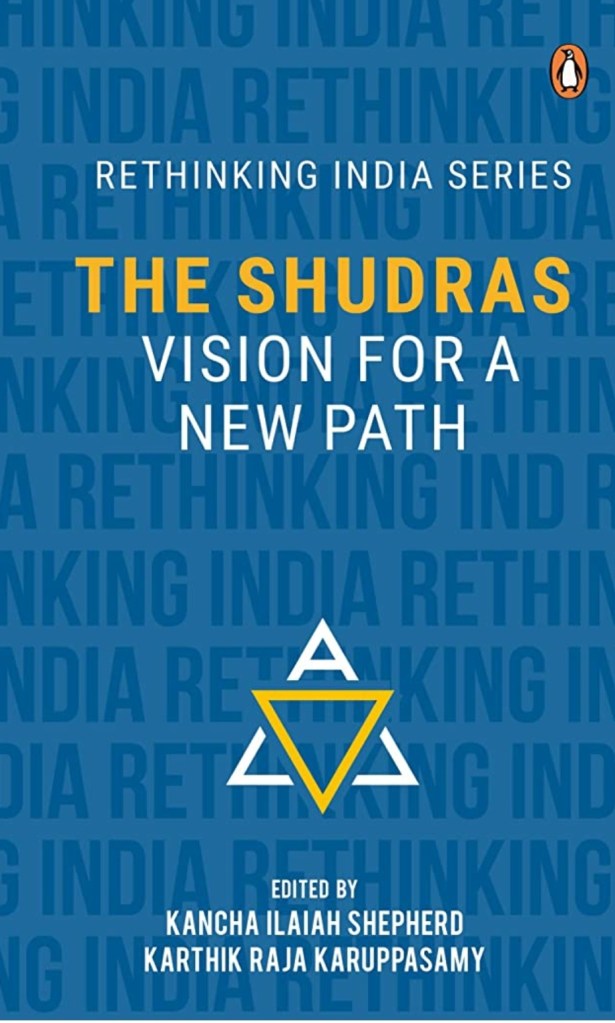
Kancha Ilaiah Shepherd’s new book, co-edited with a Shudra scholar Karthik Raja Kuruppusamy, called The Shudras–Vision for a New Path, will be published soon by Penguin -
Caste In Heaven: Can Shudras And Dalits Find Moksha In Brahminism? | Countercurrents
Caste
Kancha Ilaiah Shepherd
I kept watching the funerals of people killed by the brutal coronavirus in the global pandemic of Covid-19 on TV channels and read about them in newspapers. Those dead bodies who are described as Hindu are being quickly burnt without anybody around. The usual presence of the Brahmin priest to recite slokas are nowhere to be seen. Only the rich upper castes seem to have the wherewithal to have Brahmin priests, but that was also not seen in the times of pandemic.
The Christians and Muslims dead are being buried at the same time with prayers offered by the normal religious priests and by practising physical safe disease distance, at least. Christians are not being taken to church during the pandemic due to the fear of Corona infection.
Covid has drastically changed the way the religious rituals around death are carried out. When a husband dies while the wife is alive a huge process of the wife getting transformed into a widow is a torturous course. The process involves a public activity in Hindu system. Even such such activity is forced to confine to just family with a fear of spreading the coronavirus.
But what comes out very clear is that the Brahmin priest is more careful about his long life here than other religious priests who are willing to risk life for the sake of dead person’s moksha. The death from Covid is not because of an individual’s crime, and that disease itself is believed to be allowed by god by other religious priests.
A Brahmin priest lives only for himself and not even for his caste people when pandemics like Covid-19 threaten his own life. His divine role disappears into thin air when his own life is in risk.
A friend of mine called Usaa Barber who declared himself Buddhist died of coronavirus suddenly on July 15, 2020. About two dozen of his young activist friends followed his body to a crematorium and electrocuted in the oven, after a brief condolence meeting by all those present. I could not attend his funeral as I am a 67-year old declared to the most at-risk age category. Series of condolence online meetings made his memory better publicized than would be the case of his normal death and some public meetings. Of course, if not for corona, he would have lived a longer life.
Buddhism did not define whether the human body should be buried or burnt. Dr BR Ambedkar who embraced Buddhism in 1956 in a gathering along with half a million Dalits, was burnt after his death, while Buddhist monks offered prayers in Pali language in Mumbai. The Dalit Buddhists around his Mahaparinirvana (funeral) body yatra might not have understood what they said in those prayers. However, Gautham Buddha said that human body consists of four elements –soil, water, heat and air– and after the death only when buried each part of human body mixes with the larger natural part of the soil, water, heat and air by enriching the nature. Its essence is that the human body should be buried but not burnt. Unfortunately, Ambedkar’s funeral left a legacy that is very near to Brahminism and hence the claim of the Rashtriya Swayamsevak Sangh and the Brahmin pantheon that Buddhism is part of Brahminism.
The communists and atheists, the world over, think that the human body is material as much as any other material of nature. In death, human-machine becomes dysfunctional. Hence so long as it is functioning it should be happy with all necessary material comforts and be free from exploitation from another human. However, even when a communist in the particular religious family dies, they dispose off the body according to the family’s religious roots. If one’s family has Hindu roots, burning of the body is done, if it is Christian or Muslim, then burial is preferred. For them, it makes no difference whether it is buried or burnt, as that is the end of it. In my view, their materialist view of the human body is less scientific than that of Buddha. Buddhism thought that human body that comes from the soil should go back to soil in natural form, but communists have not offered any explanation about what happens to the human body after death.
However, Buddha and Marx had a similar understanding when it comes to materiality. Both did not believe in the existence of God. There is no notion of moksha or heaven or hell in their belief system.
However, The notion of heaven and hell after death were found to be a part of universal belief systems. The communist or rationalist ideologies had little inroads in challenging those masses who still believe in these notions of hell and heaven across religions. Majority of Shudras and Dalits believe in heaven and hell concepts without even realizing that the Brahmin who created a caste system did it to deny them equality in this life and entry into heaven permanently.
Once he denied them the right to directly engage with god as a priest, it is clear proof that their entry into swarga (the Brahminical notion of heaven) is also blocked permanently. The direct engagement with god in a language that one understands is a door to the philosophical realization of god. Without such a philosophical realization of human’s achievement of satisfaction of life here and fulfilment of the idea of attainment of moksha hereafter is not possible.
The right to priesthood is a core philosophical principle of any religion. Everybody should have a right to directly engage with God and to become a priest if one chooses within a given religion. Hinduism, which is a ruse for Brahminism, does not allow that. Due to the hierarchical world view of Brahminism, Hinduism still remains as a primitive cult without evolving into a religion.
The Brahmin denied the right to swarga to all Shudras and Dalits irrespective of their wealth and political power here on this earth, which has serious implication to the life hereafter. This is the final philosophical stroke that a Brahmin used against all food producers, housebuilders, cattle grazers and other artisans or total ecosystem makers, which even ensured the very Brahmin’s survival, who prospered without ever involving in production. It is a cruel, merciless spiritual ideology that the Brahmin evolved. But think of Christian or Muslim and Buddhist or Sikh or Jew or Confucian. They are not bound by a Brahmin spiritual fascist rule and control both on earth and heaven or equivalent of it in those spiritual structures as they are made available to all of their co-religionists
The individuals in those religions live their respective life here on this material world based on their individual actions, and that would decide whether they are going to heaven or hell. One destined for heaven or hell is based on their individual actions and ‘God’ in these religions directly deals with them. It is this belief system that sustained religions in the world.
But only Shudras and Dalits of the world do not have that choice. The communist, secular and rationalist ideologies refuse to engage with this huge philosophical problem because the same Brahmins captured both the older spiritual and newer secular domains. All over India, we can see how Brahmins remained head of these ideological schools also. The Shudras and Dalits missed the bus to wellbeing in this material world and heaven in the afterlife for four thousand years. What a human tragedy!
For the first time, caste and rituals disappeared in Indian funeral process in the Covid times. But in any death in normal times caste plays a critical role in India. Under the grip of Brahminism, caste decides who should go to heaven and who should go to hell. According to their spiritual theory only Brahmins and in certain degrees the other Dwija castes, are always sin-free. But the Shudras, Dalits and Adivasis are sinners whatever they do. They produce food for all; they make cloth for all; they build houses for all, yet they cannot get out of the Brahmin’s idea of sin. The theory of caste-based sin has become a permanent trap for Shudras/Dalits/Adivasis. The worst part is that very few are even aware of this spiritual trap.
For human beings who live as part of a religion the idea of Ihaloka (this world) good life and Paraloka (Heaven), permanent seat and sukha (pleasures) in heaven play a critical role. That heavenly pleasures are believed to be permanent. For the Shudra/Dalit/Adivasis neither there is sukha of equality and spiritual attainment with a right to become a priest in the temple in this life, nor there is a hope of permanent sukha in the heaven.
Caste and Swarga
What happens to those who died in the corona, and what happens to those who died for millennia within caste cultural discrimination in the afterlife? This question is critical as the Shudra/Dalit/Adivasis who are non-Muslim, non-Christian, non-Buddhist and non-Sikh, as they are defined as Hindu?
Shudras and Dalits are considered to be Hindus in general parlance, but in real terms, they cannot become a priest in the temple or attain full spiritual citizenship within the Hindu religion. If they cannot attain priesthood, they have no legitimate avenue to negotiate with the god who controls both this worldly life and the life after death. In this context, the question arises whether the Shudras and Dalits, could attain swarga (heaven) at all?
After I spoke about this truth in one of the Telugu TV (ABN) channel interviews that Shudras leave alone Dalits will not be allowed by the same Brahmin priest into heaven after death, there was a flutter. Particularly among the Shudra upper layer who has some political clout. But not so from the rulers in Delhi as they control both political and religious systems. Why?
In the two Telugu states Reddys, Kammas Velamas, and as they were/are not only agrarian communities but also regional rulers and have some regional political control. They have their own regional parties. Even then their control on civil society is limited and their control Hindu spiritual system is very partial because the whole Hindu (actually Brahmin) spiritual system that actually rules in day to day basis is not in their control. Similarly, Yadavs in Uttar Pradesh and Bihar, Jats in Utter Pradesh, in Haryana, Marathas in Maharashtra, Shudra/OBCs in Tamilnadu, Vokkaliga in Karnataka (Deve Gowda family) control regional parties. Though in Kerala the Communist Party of India Marxist is like a regional party with main Shudra leadership but its central leadership is Brahminic. But all of them have not realized that they cannot rule Indian state as a whole nor can they control the civil society that they politically rule within a state unless they have spiritual equality in a religion that they belong to. One of the strong factors for regionalization of the Shudra power is due to the slavish life that Shudra leaders lead in the Hindu spiritual system.
They are not a national force as they did not learn Sanskrit in the past and English now. Only the Dwija castes rule them at the national level.The Dwija castes that consist Brahmin, Bania, Kayastha, Khatri and Ksatriya castes have aquired full control over the national political system, Hindu religious system and international networks-state and non-state. The Shudras remain only village, local and regional political rulers and productive force with an ability speak, read and write in regional languages.
The Shudras Status
How to understand the Shudra question in the spiritual domain is never discussed or written about? Even the Shudras all over India will have to engage with their own moksha question because 75 years of democratic constitution did not dismantle caste subordination to Brahmins in all fields of life and the Shudra hierarchies did not resolve the sub-subordinations.
The root cause of these caste hegemonies and controls for millennia are located in the Brahmin spiritual system that needs to be dug up. If this question is left to Brahmin intellectuals, the roots will never be dug up, and the spiritual fascism can never be challenged. Unfortunately, after independence the Shudra intellectuals because of their regional power base and land centred economic ambitions did not seriously study why at all India and global level they could not match Brahmin English educated intellectuality? Even in North India Jats, Yadavs, Gujjars, Kurmis, Patels, Marathas and so on have not produced serious intellectual minds that could examine every sphere of life. They even treat Brahmin as god. On their own they never established authority over Sanskrit which was is being claimed to be the only spiritual language by Brahmins ever since Rig Veda was written around 1500 BCE. Three thousand five hundred years spiritual of slavery of vast human beings without even having the right to know the spiritual language is a major loss for human knowledge system.
Secularism and the Issue of Moksha
The left and Congress Brahmin intellectuals under the roof of secularism have hidden where actually their Sanskrit and English educational power, that controlled all other forms of power–money and muscle, came from. They have not allowed any serious discourse on religious philosophy in civil society. They have not allowed any serious discussion on what caste has done not only to Hindu Brahminism but even to Islam, Christianity, Parsi religions in India, in which Dr.B.R.Ambedkar faced casteism and untouchability as he told us in his autobiography Waiting for a Visa. A Parsi throws him out of the hotel, rather violently as he was a Dalit. A Christian friend also refuses to give shelter him in Baroda as his wife was a Brahmin convert. Muslims tried to attack Dalit tourist party, which he was part of at Daulatabad fort for washing themselves in a water tank. The caste system that Brahmin created destroyed all religions in India. Even now the communist Dwijas have not come out of the caste controls.
The discourse of secularism diverted the Shudra intellectual and mass consciousness in a manner that they cannot locate the disease in the social body and in the spiritual inequality that led to all other complex inequalities. Secularism has become a shield inadvertently to hide spiritual inequalities and oppression under the rug.
The Shudra and Dalit masses who suffer mental and physical agonies in this life could never engage with spiritual and philosophical questions of multiple issues of human life and death, in ihaloka and paroloka. They could never think about their place in heaven under the present form of Brahmin religion. Secularism buried serious philosophy in its debris, and the loss is that of Shudras and Dalits.
Even brilliant Shudra communist intellectuals like Tarimela Nagi Reddy (See Can Brahmins Bring Revolution: An Assessment Through the Prism of Tarimela Nagi Reddy, Countercurrents.org) and popular mass leader like Puchalapally Sundarayya having worked among poor masses of Shudra/Dalit/Adivasis, did not see the control of Brahmins in all fields of life.
By the time they were working for the so called liberation of exploited masses their discourse never used the question of caste oppression as a tool of exploitation which continues to be a more brutal form of oppression than in other class societies in the world. But what the left-liberal intellectuals has inadvertently made possible is that the modern Brahmin spiritual system remain under the control of Bania, Kayastha, Kshatriya and Khatris at a larger level. This may be because of their false consciousness that they do not belong to any religion and caste, as they believe in atheism and materialism.
At this stage of human history, materialism cannot operate outside the control of spiritualism, as they both are very deeply interconnected. The Indian reality and social relations have shown this factor more concretely than that of other societies in the world.
Religion as the Soul of Society
The Shudra intellectuals never examined that human life by the end of the nineteenth century, despite the emergence of schools of Rationalism and Marxism, whether they were spiritually conditioned by religion. They did not examine the question of religion whether of idol worship or of book based prayer engagement controlled human mind much more strongly than legal system that the states made.
Religion has become the soul of Indian masses in the freedom struggle headed by M.K Gandhi, a Jain Bania without a janeu (sacred thread) on his body, but systematically projected himself as Vaishya Hindu with a theory of Rama Rajya. He wrote a book with the title Hind Swaraj. He strongly injected Brahminism in a Bania package (as he knows how to pack things and sell) as Hinduism into the Shudra psyche. By his 58th year he put together his autobiography (it was originally published in 1927) with a strategic title My Experiment with Truth, with Brahmin -Bania vegetarian religious values. Both these books with a backup of Birlas and Goenkas, the topmost business families of his time, exactly like Ambani and Adani’s support to Narendra Modi now, were taken into masses in all languages. They launched a publishing house itself to do that. It was a massive Bania capitalist project to widen Brahmin-Bania control with some accommodations under the new name–Hinduism. The Shudras believed that Gandhi is their leader and Gandhi has insisted ‘the Brahmin is the finest flower of Hinduism and humanity.’. Unfortunately, Shudras never realized that their inferiority and spiritual loss of the scope for moksha after death and eternal humiliation in this life could not be changed by Gandhian nationalism. The Gandhian nationalism was packed with Brahmin (Hindu) spiritualism and Banias were sure to reap enormous harvest by funding the sowing of Brahminical spiritualism amongst masses.
They systematically camouflaged the spiritual and social supremacy of Brahmins and other Dwijas and allowed a systemic cover-up of the Shudra slavery in this life and hereafter. Modern educational institutions in the English language that could have opened their eyes were kept out of their reach. The communist Shudras also did not realize that the Brahmins were learning English in private schools and were not allowing that language to reach rural Government schools, where the Shudra/Dalit children could learn that language.
Because of the anti-colonial wave in the Post-World War I and II, the Shudra masses including landlords who had serious antagonism with Brahminism went with Gandhi, as if they too were Hindus and supporters of Brahminism. All new spiritual controls on Shudras, with a layer under them-Dalits was passed off as Hinduism by Gandhi and RSS networks. They have a common spiritual ideology among them. Gandhi, as a clever strategist, avoided an open alliance with the RSS and worked with Motilal Nehru, who tactfully promoted his son within the Congress.
The Nehrus of Kashmiri Brahmin background, who had strong roots of Sanskrit, Persian and English education in each generation, saw the situation. They understood how Gandhi became the mass leader with Hindu brand and accepted Gandhi as the father of the nation once Motilal Nehru realized with a vision to promote his son as the first Prime Minister. This Brahmin-Bania combine which had its grip over Brahmin spiritual system and Bania emerging modern post-colonial capitalist economy started ruling India. The communist Brahmins not could also actualize the Marxist revolution due to their celebrated caste blindness, so they ended up giving further lease to Brahminical domination. In a complex caste and religious society, they covered everything under the class, which could not construct a grounded philosophical discourse that could uncover all forms of Brahmin domination and exploitation.
Jawaharlal Nehru at a young age wrote three books– The Discovery of India, Glimpses of World History and Autobiography (he published it when he was 47, as published it in 1936) with a deliberate move that he should be next to Gandhi with a written word on the record. Writing of an autobiography was not a Brahmin- Bania tradition by that time, but they moved out of that tradition with a view to capture the power and make history.
Nehru’s writing camouflaged Brahminism in the language of civilization, drawing heavily from written texts by Brahmins. He did not write about the production, cattle grazing house building and artisanal science through the Indian civilization that was built by Shudras, Dalits and Adivasis.
The Indian Shudras have built the civilization from the days of constructing Harappan civilization. They built villages; they built cities; they made animal economies to advance to a parallel level by the time the Aryan migration happened. In Nehru’s civilization Shudras and Dalits have never figured. And it worked. Gandhi became Mahatma and the father of nation and Nehru became the first Prime Minister, leaving his family stamp on the nation as a pandit. His family continues to be in the limelight of the national polity, though it evolved as multi-cultural and English educated.
As the Gandhi – Nehru campaign was going on Subhas Chandra Bose, a Kayastha from Bengal, who also came from Vivekananda’s (who owned Hinduism with his new definition) community, started Azad Hind Fauz, an army with a religious name with militancy weaved around it. The Brahmin, Bania and Kayastha combination evolved as modern Bhadralok with Katris and Ksatriyas joining them in due course. These five castes with Ksatriyas and Khatris evolved as a national bhadralok and now are allied force as against divided Shudras. Rajendra Prasad, another Kayastha was part of Gandhi, Nehru team. Only Shudra who got educated in London was Sardar Vallabai Patel. He too without betraying any Shudra consciousness became part of Gandhi team to advance Brahmin-Bania Hindu campaign with some peasant orientation but never had an agenda of spiritual liberation or material equality of his community. He was content to work as subordinate to Gandhi and Nehru, with an iron man tag.
The communist Brahmins and Kayasthas (mainly from Bengal), who were part of the early Congress socialist team were comfortable with Brahmin, Bania, Kayastha, (not many Ksatriya, Khatris in the communist movement) leaders using Brahminism in the name of generalized Hinduism. The only Shudra young leader who joined the communist ranks at that early age was Puchalapally Sundara Ramreddy (who later dropped his caste title Reddy adopted general Shudra name Sundarayya), who could not have grasped the spiritual trap in that whole period. Sundarayya was a school dropout from a Shudra landlord family from Nellore, near to the then Madras city. He was passionate enough to organize the poor for their rights and liberation. As against the Western-educated communist Brahmins, Sundarayya must have lived as an inferior activist, with his mass work, as the Brahmin leaders showing their text quotation based Marxism as real knowledge. Sundarayya always lived as inferior beings in the communist structures (there were many splits among the communists because of Brahminism and its divisive culture). Even though he was the general secretary of the Communist Party of India (Marxist) for some time, the highly English educated Brahmins with their spiritual, cultural hegemonic roots were driving the party structures. As a result at no point of time in the history of Indian communist movement a Shudra or Dalit leader could emerge who could challenge Brahminism of the communist variety.
Shudra Autonomy and Brahminism
The Shudras in the pre-Independence days mostly had their own Shudra deities. The interaction of the Brahmin priest with them was very minimal. The farmers, artisans and labour had no contact with Brahmin even in marriage and death ceremonies. Only landlords began to have a Brahmin priest at home on some occasions to acquire enhanced spiritual status to counter the British Christian identity. The Brahmins during the Gandhian mobilization of people into the freedom movement started reaching every Shudra house. They began to bring them under their spiritual control by performing rituals at their home. But they were maintaining their Brahmin untouchability even with the Shudra landlord families. They were never touching cooked food in the Shudra houses. Since the Shudras are meat eaters, the Brahmins were cooking their own vegetarian food wherever they go and show that vegetarian food was the mark of purity. Gandhi was also presenting pure vegetarianism as not only pure Hindu food but Indian nationalist food.
The Shudra landlords also started believing in this vegetarian superior narrative of Hindu-nationalism by treating their historical and more energetic multi-cuisine food culture as impure and even anti-national. Very few Shudras like Periyar Ramasamy in Tamilnadu and Tripuraneni Ramasamy Chowdary in Andhra grasped the danger of this renewed cultural hegemony of Brahminism. They started Shudra protest movements and anti-Brahmin struggles. Unfortunately, they did not connect the Shudra cultural superiority over Brahmin culture to the agrarian and artisanal production. They did not raise the question of moksha issue of Shudras in this unequal spiritual system.
Though within no time it was in Tamilnadu that the mass movement took Dravidian Shudra turn it moved in atheist direction. But the Tamil masses did not become atheist. The Shudra and brahminic spiritual systems continued to contest.In Nellore and other coastal regions, the anti-Brahmin movement, as an extension of Periyar’s Dravida Khazagam movement also started along with anti-Brahmin justice party. Only Kamma, Reddy and Kapu landed forces could start the anti-Brahmin movement in coastal Andhra. In north India there was no anti-Brahmin movement with any clear direction. The north Indian Shudra landlords embraced Brahminism without any semblance of protest even converted to vegetarianism not realizing that from the days of Harappan civilization their food culture was multi-cuisine. Pure vegetarianism was a Jain-Brahmin cultural issue that has no relationship to agrarian production. No Jain or Brahmin nation with pure vegetarianism can survive in the world. The pure vegetarian Jains and Brahmins survived with Shudra labour that could only survive with multi-cuisine food culture. When such clashing cultural difference how Hindu Brahmin-Bania vegetarians and Hindu Shudra/Dalit/Adivasis live one heaven, when they cannot sit one dining hall and eat? Does heaven have different dining halls? Impossible. The Shudra/Dalit/Adivasis have no place in Brahmin Hindu heaven.
Communist Shudra leaders like Sundarayya and Nagireddy got into communist party that has class ideology with caste blindness. They could not even understand a massive vegetarian nationalist campaign by Banias and Brahmins under Gandhi’s leadership. What has been proved with the example of Sundarayya and Nagi Reddy is that if the Shudra intellectuals do not understand the Brahmanical scheme in every field– spiritual, political, social and economic structures- they would be kept as inferior under the grip of Brahmin cunningness. When the Indian communist school remained indifferent to the Brahminic spiritual system the Shudra cultural heritage got weakened abd brahminism got strengthened. The Shudra/Dalit/Adivasi communist activists did not get English educational sophistication to understand this process and build a counter narrative.
As recently as 2018 Sitaram Yechury, (General Secratery of CPM) a completely English educated Telugu Brahmin, played an interesting game in Telangana. I was part of the Bahujan Left Front (BLF) and heading a mass organization called T-MASS (Telangana mass organizations collective), which came into existence with the support of the Communist Party of India (Marxist). Both BLF and T-MASS had an agenda of combining Marxism-Ambedkarism with English medium school education in Government schools as one of the key programmatic agendas. Yechury pretended to work with us. He gave Neel-Laal (Blue and Red) Zindabad slogan and also Jai Bheem Lal Salam slogan along with many Telangana people.
At the same time as head of that CPM Politburo, he conspired from Delhi along with Bengali Brahmins and Kayasthas, who denied English medium school education in Government schools to Shudras and Namashudras of that state,when they ruled the state for 34 years, broke the BLF structure from above. After that, T-MASS was unceremoniously closed down. Sitaram Yechuri, like Ram Madhav and GVL Narsimha Rao (both Brahmins like Yechuri from the same Andhra Pradesh) in the RSS/BJP, planned to stop the development of Shudra/Dalits in all fields in Telugu states. Three of them manage Rajya Sabha seats without winning election anywhere in the country. But they control their own party and other people’s parties and organization structures with their Brahminic nexus all over the country. Caste links are far deeper than political links. Three of them are known as English speaking intellectuals in their parties. There is spiritual connectivity between all Brahmins, in whichever party they work. They know that their philosophy of swarga and naraka and they have a common understanding about the attainment of heaven. The Shudras never understood that interconnectedness in the philosophical domain. All Dwija leaders are brought up with a childhood education in their shastras, puranas and epics. The Shudra upbringing is around tilling the land, harvesting crops, grazing cattle and so on. There was no struggle for education in the history of Shudras.
Some Brahmin English speaking intellectuals control right-wing parties, some control communist parties and many have controlled the Congress for a long time. Only PV Narsimha Rao, again an English speaking Telugu Brahmin managed to become the Prime Minister of the country in 1991, ruled for five years, apart from the Nehru family members. Now he has become their property in two Telugu states. If the Shudras, including Reddys, Kammas, Velamas, Kapus, Yadavs and so on do not understand this strategy their spiritual and social slavery will continue at all India level in all structures and they will not even attain moksha after their death, leave alone liberation here.
Failed Shudra Efforts
However, amongst Kammas Tripuraneni Ramaswamy Chowdary started an autonomous anti-Brahmin movement by writing anti-Brahmin books and organizing Kammas against Brahminism. He also trained Shudra priest to perform rituals and poojas. For some reason, Kammas later forgot him after NT Rama Rao became the Chief Minister in 1983. They surrendered to Brahminism. They hardly understood that political power in smaller regions does not allow change at the national level in any field of life. The Shudras have never aimed reforms at the national level and particularly in the spiritual structures which are completely under the control of Brahmins. Control on the spiritual system and control on national power structure is interrelated. The Kammas have not achieved both. They are visible in the Telugu region, but at Delhi they are under the grip of the five Dwija communities who control not only national structures but also international relations both in the domains of politics, economy and culture.
During the freedom movement theo Gandhi-Nehru -Subhash Chandra Bose was to project political Hinduism with a secualar language. The Hindu Mahasabha and Rashtriya Swayamsevak Sangh headed by Brahmins themselves started organizing the whole Brahmins community to reposition from Sanathandharma classical understanding under the new name Hinduism. No Shudra ledership assrted its autnomy from the larger Hindu Brahmin-Bania project.
The Gandhi-Nehru strean constructed secular Hindu national India. The RSS/Hindu Mahasbha constructed an anti-Muslim and Chrisitan image and organized the Shudras under Dwija leadership. Menawhile the Shudra productive egalitarian Indian culture and civilization were completely undermined.
Actually the name Hinduism was not acceptable to many Brahmins in those days. These two stream made it acceptable to all Brahmins as that alone gives them spiritually organized power in all fields after independence across the country. Certain Brahmin sections were even averse to learning English along with Sanskrit. However, already there was a section of Brahmins who learnt Persian and got into Mughal bureaucracy. They have already tasted the power of bureaucracy from Mughal days. Hence they consciously moved into English education while retaining their grip on Sanskrit in Brahmin spiritual domain. The Shudras kept in the traditional agrarian sector by allowing regional language education so that they cannot produce intellectuals who aspire for national leadership with a grip on English language. Even the Shudra feudal forces did not understand the role of English language in future India and now they are far behind the Brahmin, Bania, Kayastha, Khatris not only in India in global markets.
However, those Brahmin sections that have already got exposed to British English education carefully guarding their sanathanness and vegetarianism entered into British administration. The Tamil and Kerala Brahmins led this anti-Shudra network from the south, apart from Bengali and Marathi Brahmins.
But many Brahmins in different regions have already adjusted with Muslim administration and Persian language education while retaining their divinity around Sanskrit. The Muslims rulers, Mullahs behaved like Brahmins with Shudras and Dalits because their prayer language was Arabic whereas people’s language was Urdu and administrative language was Persian. Both Brahmins and Muslim rulers and Mullahs were anti-Shudra and Dalit in the same manner. Ambedkar also testified about this aspect about the Muslim opposition to Dalits touching water tanks. The Brahmin convert Christians fully co-operated with Brahmins in every sphere. They gave high quality English education in private schools. It was an all-round conspiracy against Shudras, Dalits and Adivasis in India. Their equality and wellbeing here and their attainment of heaven after death was never discussed in any religion in India.
As all this was happening, the Shudras remained within regional languages without much exposure to Persian or English within their Shudra spiritual domain. Hardly any all India Shudra leadership with an ability to communicate with all castes/religions across the nation emerged. Gandhi and Nehru were only two leaders with such all India communication abilities with a following across the country in the political domain. Priests and peetadhipatis were in a position to communicate and connect to the all India Brahmin networks to continue their hegemony. The all-India Brahmin networks with Sanskrit as their communication language were established during Adi Shankara times. That continues even today.
As per the communist stream, CPI was constituted mainly by Brahmins with as the central committee and Politburo leadership only leaving provincial-level posts for Shudras and almost no power for Dalits within their organizational structure. Only in Andhra more visible Shudra leadership emerged, apart from some in Kerala (A.K.Gopalan for example) in the communist ranks. But they were never given equal position in the leadership because of lack of English speaking abilities among them. Tarimela Nagi Reddy, a brilliant economist and the author of India Mortgaged was always kept from central leadership, though he was a very good writer and speaker in English. The communist atheist ideology became a shield for protection of Brahminism in all fields, particularly in the spiritual field. Their theory of landlordism being more dangerous than Brahminism mainly attacked the Shudra landlords across the country.
Locked up Shudra Brains
The Brahmins and Gandhi locked up the Shudra brains and consciousness. They were made to accept Brahmins as their god or the representatives of god even now. A Brahmin in temple, in ritual activity at home, as head of a political party or head of Pittaa or Ashram is respected by Shudra leaders unquestioningly. Even after some Shudras came into English education, their inferiority remained. The relationship between Brahmin spiritualism, graded caste/class oppression, exploitation and inequalities, women’s oppression and control continue to have a huge bearing on economic control of small communities over larger communities while characterizing all of them as Hindu. The non-productive castes controlled all productive castes with the help of spiritual authority over them. The burden of food production, sustaining the cattle economy and performing industrial and urban labour work still completely rests on the shoulders of Shudras, Dalits and Adivasis. Bania, Brahmin Kshatriyas, Kayasthas and Khatris are still earning and living outside the production fields and slowly became the richest and most English educated castes in India. They seem to think that god loves them and blesses them. This is a deluded and destructive spiritual belief. But the Brahmin as the head of the temple makes all Shudras and Dalits whatever they do, they cannot become a priest in the temple and cannot enter heaven under his guidance. They wrote this theory in their own books, on the before heads of Shudras, which the Shudras themselves cannot read.
Over seventy years of political democracy, the so-called Hindu spiritual system, including temple system even though under the Government control–Endowments–the Shudras did not get the right to priesthood. Even in the states, the Shudras rule they could not challenge that spiritual law. They never demanded that position as their spiritual knowledge is very stunted. The notion of Ihaloka (this world) and Paraloka (the other world, swarga or heaven) are equally important in Shudra life. But they were never engaged in philosophical discourse as they live in an inferior status that they were condemned to be lead by Brahmin-Bania forces. Within in the religious life, one needs to be under the control of Brahmin here, and can never attain moksha as the Brahmin priest blocs it there in the heaven.
Shudra Status at Top Temples
For example, in Andhra Pradesh and Telangana Tirupati temple is known as the prime spiritual center around which the idea of moksha in heaven and wellbeing on this earth is the key belief systems. The Reddys, Kammas, Velamas and Kapus are the main high-end Shudra castes who contribute to the wealth of the temple, apart from other Shudra communities, who are part of the reservation system. From Karanataka, Lingayats and Vokkaligas and other OBCs contribute more than Brahmins and Banias. They give crores of rupees, tons of gold to Venkateswara. They appeal to god in their own languages from a distance, which is known as mokku. But when they come to temple the Brahmin priests recite slokas only in Sanskrit which they do not understand. They cannot become priests in the temple, and the god is understood to be knowing only Sanskrit, which Reddys, Kammas, Velamas and Kapus were not supposed to learn and lead the temples. Even now there are no such Shudra scholars who could get into the profession of the priesthood. Shudras including Reddys, Kammas, Velamas and Kapus and so on who have reasonably good financial resources are made to fear that they cannot engage with god in the temple.
Why a Sanskrit scholar and a priest in a Reddy, Kamma, Velama, Kapu–in other words Shudra– family is not needed in the profession of the priest which is considered to be a very noble occupation? Why can’t a Dalit or Shudra take up that noble profession? Why could Brahmin youth not take up other productive tasks? When nowhere in the world god assigned priestly duties only to a particular community which hates food production but wants to do all other tasks which give them intellectual leadership roles? They jump into leadership roles in all structures. Why? They become leaders of communist parties, Congress party, Bharatiya Janata Party, Rashtriya Swayamsevak Sangh, Vishwa Hindu Parshad, Hindu Maha Sabha and so on. They control and lead all writers’ organizations in the country. They also control industries, communications and so on. There is not a structure that a Brahmin cannot enter. But there are many structures that a Shudras cannot enter, leave alone Dalit.
In Kerala, all temples are spiritually run by Brahmin priestly intellectuals and the managements are done by Nairs and other Shudra castes. Management is not a spiritually critical job. A Shudra has to work as guided by Brahmin intellectuals. Otherwise, they condemn and curse. The fear of brahmin curse shakes a Shudra to the core. For various historical reasons, Nairs and other Shudras surrendered to Brahmins in all fields in Kerala state, and the educated Nairs defend Brahminism quite militantly.
The roots of intellectual superiority lie with the priesthood position in all religions. The Shudras suffered intellectual inferiority for three thousand and five hundred years in that front. The Brahmins derived their superiority from the very same position. The Shudras have not yet shed their inferiority complex and began the battle for spiritual equality.
What the Shudras and Dalits suffer in Brahminism is not an individual disqualification. They do not have the right to the priesthood because a Shudra or a Dalit is, by default, meritless or immoral being in the Brahminical common sense. Because once all the productive communities were denied access to priesthood, they lost historical control, authority as communities. They suffered because they belong to Shudra/Dalit social communities who were/are treated as spiritual slaves. Does spiritual slavery allow any space in Paraloka or heaven under the spiritual guidance of Brahmins? This question is never debated in Hindu spirituality that operates on caste lines.
The priestly Brahmins never touch Dalits and Shudras neither in the temple nor in the civil society in any public life. They never eat food cooked in any Shudra and Dalit house, nor do they allow any Dalit and Shudras to come to their house. This is not an ideal relationship between human beings who are said to be belonging to the same religion.
In what is now known as the Hindu religion there is no one god to talk about god’s equal creation. The main Rigvedic God Brahma is said to have created Shudras to be the slaves of Brahmins. This is a fixed position, but there is no dynamism involved in it. A Brahmin by birth is a Brahmin, whether one claims secular or communist or Hindu ideological position or social location. A Shudra remains a Shudra and a Dalit remains a Dalit. A secular or communist Brahmin should not be allowed to fool the Shudras and Dalits of this sociospiritual fact that governs our caste-oppressed lives even in the 21st century.
God’s Caste
In Hinduism God and Goddess have their castes known to people. Parashurama and Vamana are known as Brahmin. Rama is known as Ksatriya only Srikrishna is known as Yadav but even in his temple also a Yadav cannot become a priest. But Yadavs never fought for such a spiritual position. Only Brahmin priests handle Srikrishna temple of Madhura, Uttar Pradesh, where Yadav leaders like Mulayam Singh Yadav and his son Akhilesh Yadav ruled that state politically for a long time. Yet the inferiority of Yadavs as Shudra is not diminished. Yadavs claim that Krishna himself is a Yadav and a cattle herder. Yet they cannot lead their own god’s temple. This is the irony of Hinduism.
Quite surprisingly, it is uncommon for the Shudra community demand for equal spiritual rights within the religion that they are said to belong to. Krishna’s portrait is shown with cattle around him yet a Brahmin condemns the community of cattle herders as spiritual untouchables. Even in contemporary times, most Yadavs are cattle herders, and they are treated as spiritual untouchable. This has implications for their life here and also life hereafter.
In the whole world, there is no human mass as massive as that of the Shudras who are denied of the basic human right of spiritual engagement with god directly. What surprises one is that how do they silently suffer such humiliation for millennia? Even in the post-Independence India the modern Shudras also remained scared of Brahmin treating him as god himself. The question is in such a spiritual system do the Shudras attain moksha or heaven in such a discriminated regime of Brahmin?
All religions centre around life here and more importantly, life hereafter. The question is without a direct relationship to Hindu God, how do Shudras get into Hindu heaven? How do all unequal Hindus live together in swarga? Brahmins made vegetarian, meatarian and beeferian “Hindus” as untouchables to each other? Do clashes regarding food cultures not occur in swarga? The Brahmin in the temple works as a gatekeeper in the swarga also. How does he allow any Shudra/Dalit/Adivasi into Swarga where he too lives? If Agamashastras come in the way of Shudras becoming priests, wouldn’t the same Agama Shastra come in shudra’s entry into swarga?
Brahmin decided that he should have initiation into Hindu religion through Upanayana or sacred thread ceremony. As per Brahmin dictum only Brahmins, Banias, Kshatriyas, Kayasthas and Khatris do have that right. No Shudra including Reddy, Kamma, Velama, Kapu, Nair, Jat, Gujjar, Patel, Maratha, Yadav and so on get spiritual equality and hence no right to Upanayana also. Any Shudra or Other Backward Caste, that thinks that caste system should not be abolished, as they cannot take caste certificate to get a reserved seat in a college/university or a job in Government office do not have any right to enter swargaloka after death. Even if they go round several number of temples offer huge amounts of money they cannot get moksha in such unequal spiritual system. These expenditures will only make their life less comfortable on this earth because they cannot spend that money for their family or personal advancement and comfort. Caste equality or abolition of caste is only the solution.
Spiritual Individualism
In this caste-centred religion which is being promoted as all caste-religion, how does divine power operate? An individual’s good deed or bad deed should be the qualification for priesthood and swarga seat in any normative religion. It is the birth of a person in a caste that decides one’s status here and also in heaven in Hinduism. As the Brahmin caste is constructed and accepted by all Shudra castes as only divine caste, it has caused massive harm to Shudra and Dalit life for millennia. Brahminism did not allow individualism to develop in India in any field.
Unless better off Shudra castes like Reddys, Kammas, Velamas, Kapus, Nairs, Nayaks, Lingayat, Vakkalinga, Maratha, Patel, Jat, Gujjar, Yadav and so on fight for spiritual equality and priesthood rights and change Brahminism into proper religion things will not change. God must judge the merits of a person based on one’s deeds and not based on the fixed scale of caste. So long as the upper Shudras worship Brahmin as god the other agrarian and artisanal castes will not gain the courage to challenge their subordinate status. They also keep worshipping Brahmin as god. Shudras should take inspiration from the spiritually, socially and politically dynamic Ambedkarite movement in order to shed off the slavish mentality to institutionalise individualism in a religion that they claim is theirs.
(Kancha Ilaiah Shepherd’s new book co-edited with an young Shudra scholar Karthik Raja Kuruppusamy The Shudras–Vision for a New Path, being published by Penguin will be out soon) -
Bharat Ratna used to be for Congress’ secular Brahmins. Today it’s for BJP’s Hindutva Brahmins
While it’s debatable who deserves India’s highest civilian award, what seems to be working in favour of P.V. Narasimha Rao and S.P. Balasubrahmanyam is their caste.

Bharat Ratna, the country’s highest civilian award, was instituted to recognise contributions to politics, science, education, and other areas | Video grabText Size: A- A+null
There is now a loud chorus demanding Bharat Ratna, India’s highest civilian award, for former Prime Minister P.V. Narasimha Rao and musician-singer S.P. Balasubrahmanyam. While it’s a matter of debate who deserves the Bharat Ratna, what seems to work in favour of both Rao and SPB is something else: caste. Both were Brahmins.
It tells us something that the list of recipients of the State award, so far given to 46 Indians and two foreigners (Abdul Ghaffar Khan and Nelson Mandela), largely includes Dwijas, or more specifically, Brahmins. No Bharat Ratna has yet emerged from the groups engaged in foundational tasks such as farming and labour, which made this productive nation what it is today.null
Earlier, the Telugu Desam Party had tried to raise the pitch for Bharat Ratna for TDP founder and former Andhra Pradesh chief minister N.T. Rama Rao, a Kamma leader, but the demand never could gather pace because he didn’t get the kind of attention from the national media that his contemporaries did.
Caste, aside
Of the 46 Indian Bharat Ratnas, 29 are Brahmins, five Muslims, four Kayasthas, three Shudras, and one from each of the following groups — Dalit, Bania, Khatri, Parsi, Christian. The caste of Bhupen Hazarika, the last recipient, could not be located from any source. Of the four women Bharat Ratna awardees,three are Brahmins and one Christian. It goes to suggest that without Brahmins, who comprise about 4 per cent of India’s population, perhaps this country would not have had enough people worthy to be awarded the Bharat Ratna.
Does the list of recipients tell us that the Indian State has practised an unbiased, honest, caste-free selection of Ratnas from the dust of India? The dust of the nation mainly consists of Shudras, Dalits and Adivasis. With more than half of Indian population comprising Shudras, only three could be found worthy of Bharat Ratna in more than 66 years of the award’s history; of the 18 per cent Dalits, just one — Dr B.R. Ambedkar; and of the 7 per cent Adivasis, none.
Vallabhai Patel was recognised as a Ratna only in 1991, along with Rajiv Gandhi. Before Patel, only two Shudras were awarded Bharat Ratna — K. Kamaraj and M.G. Ramachandran (both former chief ministers of Tamil Nadu).
Political choices
The Bharat Ratna started being awarded in 1954. That year, three living Brahmins — C. Rajagopalachari, Sarvepalli Radhakrishnan and C.V. Raman — were recognised. All three of them, in their sixties, were still relatively young. And hailed from Tamil Nadu.
The federal government never established any principles based on which a Bharat Ratna could be selected or recognised from across the country. Some were given the award when they were in a position to influence the selection. Jawaharlal Nehru and Indira Gandhi got the Bharat Ratna when they were prime ministers. Some were awarded a long time after their death (Ambedkar in 1990 and Patel in 1991).
A semi-literate K. Kamaraj, from the Nadar community; C.V. Raman, a physicist; Amartya Sen with a PhD from a foreign university; and non-resident Indians — Bharat Ratna winners’ list looks like the power in Delhi adopting a pick and choose method. Literary talents are not so significant. Many Bharat Ratna awardees have not written anything in their life. Who is selected for Bharat Ratna depends on the power in Delhi and not in the states. One could be a chief minister of a state for 34 years (Jyoti Basu) and not be considered as a Ratna of Bharat. And so, what makes someone eligible for India’s highest civilian award remains unknown https://tpc.googlesyndication.com/safeframe/1-0-37/html/container.html
At all times, though, it has been clear that the awardees are selected by the ruling political class depending on the person’s caste and on the political benefits the selection could reap for the government. Patel was recognised as a Bharat Ratna 41 years after his death; Ambedkar was recognised 34 four years after his death, when the government of V.P. Singh — one that believed in social justice — came to power in Delhi, in 1990. Chaudhary Charan Singh, an Uttar Pradesh Jat, despite all his peasant leadership and former prime minister status, could never get it.
In fact, both Ambedkar and Nelson Mandela, a leader of global stature who fought against apartheid and the liberation of Blacks in South Africa, were given the Bharat Ratna by the V.P. Singh government. But in all likelihood, V.P. Singh himself may never get the award, at least not until a pro-Mandal prime minister takes charge at the Centre. And this does not seem to be happening in the near future.
RSS-BJP exploiting flaws
Successive Congress governments played Brahminical politics in the name of secularism, pluralism and diversity. Now, the Rashtriya Swayamsevak Sangh (RSS) and the Bharatiya Janata Party (BJP) are brazenly playing casteist politics because they believe in the varna dharma (hierarchical system) and parampara (tradition). Just what happened to social diversity and plurality that is often talked about in the context of Hindutva communalism?
If we look at the list of Bharat Ratna awardees after the RSS-mentored BJP gained control of the federal government in 1999 and then again since 2014, except Bismillah Khan and Bhupen Hazarika (both musicians), Bharat discovered only Brahmin Ratnas — from Gopinath Bordoloi to Nanaji Deshmukh. The shift from the Congress party’s ‘secular’ Brahmin Ratna picks to the RSS/BJP’s Hindutva Brahmin Ratna picks has some ideological dimension. Caste and ideology both are convergent and contending factors when it comes to picking Bharat Ratna. What remains constant is the Brahmin Ratna.
So far, no Communist, whether Brahmin, Muslim or Christian, has been awarded the Bharat Ratna. During the entire Congress rule, Indian Communists held a strong secular umbrella over the party’s head but none from that camp was considered worthy of the prize. Even Ram Manohar Lohia, despite being a prominent national leader hailing from the powerful Bania community, was never considered for the award.
Of course, we cannot imagine this will change in the RSS-BJP era.
The long list of denials
Brahminisation of the Bharat Ratna started with the first selection in 1954. If modern Indians who contributed to the Indian Renaissance and socio-educational reform of the country were considered eligible, then Raja Ram Mohan Roy, Jyotirao Phule and Narayana Guru should have got the award. M.K. Gandhi’s name was avoided after it was held that he was above the award. To this day, no Adivasi has received the Bharat Ratna. Why? We do not know. Birsa Munda and Komaram Bheem were never seen as worthies, just as no OBC has so far been. BP Mandal, who wrote the Mandal Commission Report, is never seen as a Bharatiya worthy of the award.
The Congress alienated the most powerful Shudras, who subsequently launched regional parties and became anti-Congress in so many ways. The list of Bharat Ratna is one indicator of their alienation. The RSS-BJP today are doing the same thing and justifying it using the same logic.
This brings us to the argument of the Dwija intellectuals that caste should not be the basis for any selection in a democratic, secular republic. But the Dwijas never saw caste when 29 Brahmins, four Kayasthas, one Bania and one Khatri got the Bharat Ratna award. Most names are picked from the freedom movement, as if it was a Dwija movement.
No nation can progress with this kind of high-end casteism. The Bharat Ratna awardee list does not show any social inclusiveness or diversity at all. The Congress’ inclusiveness was confined to only accommodating Muslims. The party grossly neglected Shudras/OBCs/Dalits and Adivasis.
The tendency to promote high-class politicians but not regional and local forces created a huge caste and community gap. The second channel of promotion in the awarding of Bharat Ratna — cinema and music — are also Dwija-dominated areas. But today, caste consciousness has reached a different level in India. Everything is being watched. New interpretations of caste are underway not only in India but globally too. Will things change in the future? We can only hope.
Kancha Ilaiah Shepherd is a political theorist, social activist and author. Views are personal.
-
Why The Farmers Need English Education? Indian English Day Diary

Every October 5 is being celebrated as Indian English day by several equal medium education lovers in India. This is 203rd year of the birth of English medium school education in India. The first English medium school in Calcutta was started by William Carey a British missionary, who came from a cobbler family background. He came to India in 1793 and settled down in famous Serampore and began his educational agenda. In 1817 in association with Raja Rammohan Roy he started the first English medium school on October 5th. That is also International teachers Day.
During these 203 years English medium school education in India who learnt English? Who lost out by being out of it? This history of school education needs to be examined. This is very important now because the New Education Policy of the Narendra Modi’s central Government talks about teaching in regional language in the disguise of mother tongue from class one to eighth only in state Government schools but not in all schools.
All the central Government run schools remain only in English medium. All the private schools run by small, medium and big educational entrepreneurs continue to run their schools in English medium. Some schools run by the monopoly industrial houses are modelled on British and American school education model. They do not have even one regional language subject in their entire teaching and learning process till 12th grade.
In historical terms the largest number of people in India are Shudras, who roughly constitute about 56 per cent of Indian population. This includes Jats, Gujjars, Patels, Yadavs, Reddys, Kammas, Kapus, Velamas, Naikers, Nairs, Marathas, Lingayats, Vakkalingas and so on who are competing in the general pool. Apart from these castes all OBCs who come under the reservation category are part of the Shudras. Followed by these communities there are 18 per cent Dalits and 7.5 per cent Adivasis.
From all these communities if you see the writers in English in any field of life the Shudras are absent. Those who write theory( political, social and spiritual), fiction, poetry, journalistic, art critique and so on in English are from Dwija communities. At all India level the castes that constitute Dwijas are Brahmins, Banias, Kshatriyas, Kayasthas and Khatris.
How did they acquire command over English but not the Shudras who constitute such a massive population? All of them are also not very poor. The reason lies in the history of language and education in India. Before Sanskrit landed in India in 1500 BCE people who spoke Pali and other regional tribal languages that built the Harappan civilization including cities like Harappa Mohenjo Daro and Dholavira had their own languages. Without advanced language among people building urban civilization is impossible.
Rigveda was the first Sanskrit text written India. In the Vedic period the Shudras were declared the fourth varna- that was equivalent to slaves. Sanskrit was a banned language for them. Huge punishments were imposed if they learnt reading and writing in that language.
From the 13th century, the Turkic and Afghan rulers came in and Persian was slowly made the ruling and textual language in India. Instead of opposing Persian the Dwija castes learnt Persian and became adiminitrators and interpreters to the Muslim rulers. In the whole of Mughal rule, the Persian language spread all over India. Mostly Brahmins and Kayasthas, apart from Muslims, learnt that language and migrated to all parts of India to get Government jobs. The migration of Brahmins and Kayasthas to Hyderabad state and Mumbai province (Bal Thakere family for example, who are Kayasthas) is a standing example. The Muslim rulers also did not think of educating tillers, artisans and improve the skills of agrarian masses in Persian language. Their illiteracy also caused low production in the agrarian sector.
Gradually Hindi and Urdu emerged from Persian. These were also called Hindustani languages. Hindi adopted Sanskrit letters whereas Urdu adopted Arabic and Persian letters. But communicability between these two languages even now is structural. All those North Indian languages that use Sanskrit script like Bengali, Marathi, Gujrathi have mutual understanding and exchanges between Hindi and those languages. That is the reason why people from those states understand and speak Hindi very easily.
The Shudras who were spread in the rural areas as cultivators and artisnal instrument producers were never taught Persian because the same culture that they are meant to do manual labour but not meant for intellectual work was continued by the Muslim administrations. In 1839 Persian was abolished by the East India company and English was made the administrative language. The Dwijas, mainly Brahmin and other Dwija youth who started learning English from 1817 entered the English administration. No Shudra could get into a Government job even in the British period after English was adopted as teaching and administrative language.
The first known person who learnt English in personal friendship with British officials was Raja Ram Mohan Roy, a Brahmin jagirdar. Mahatma Phule was the first Shudra to join an English medium school in 1841. Dadabai Nauroji, a Parsee studied in English and went to England for business and became a politician. Mahatma Gandhi seems to be the first Bania to study in English both at home and in England. Later the only Shudra, having come from a landed family, to study in England was Sardar Vallabai Patel. But he did not write much in English.
However, quite surprisingly hardly Shudra landlords sent their children to study in English to England. In Telugu states for example Kattamanchi Ramalinga Reddy seems to have been a well English educated Shudra, within India. But the Shudra landlords also did not continue his heritage. They were happy with their landed power in the villages. They did not aspire for national status by learning a common national language. Now they are realising the importance of English medium education.
What caused the underdevelopment of whole Shudras, apart from Dalit and Adivasis, was that they have not learnt a national language that could connect people living in different parts of India. They did not learn Sanskrit, Persian, and later English which were national and international languages.
Now the only way out is that the Shudras/Dalits and Adivasis have to learn English along with a regional language in which they do their production-related tasks. English will become their national and international language and the regional language will be their day to day production and functional language. Once those who know English do involve in agrarian production the quality of Indian agriculture will radically change.
It is important that India as a nation recognises that English is a national language and celebrates October 5th as Indian English day. Any language that survived for more than two hundred years is a national language. Every language in India has a language day. English was born as school education language in 1817 and lived as only Dwija language. This situation should change. English is also our language now so that every food producer can learn that language without thinking that it is not our language. In a globalised world, every farmer should have command over a global language, which is only English. Let there be no global conspiracy to stop English medium education to the poor and food producers of Indian villages.
Kancha Ilaiah Shepherd is well known writer in English and Telugu and a social activist
https://countercurrents.org/2020/10/why-the-farmers-need-english-education-indian-english-day-diary/
-
The Caste Dimensions of Kangana Ranaut’s Onslaught on Bollywood
Kshatriyas, who never took to modernity, are now beginning to assert themselves politically and in the film industry.
Sep 22, 2020 | Kancha Ilaiah Shepherd
Sushant Singh Rajput’s suicide, Kangana Ranaut’s rebellion against the Shiva Sena government and also the so-called drug culture of Bollywood is not mere politicking – it has deep caste dimensions as well. The Indian media, particularly the English media, is trying to avoid this question or perhaps they are ignorant of it.
Sushant and Kangana are emerging actors in Bollywood from the Kshatriya community. Bollywood, unlike other regional language film industries, is controlled by Brahmins, Banias, Kayasthas, Khatris and a few Muslims who got out of the conservative controls of Mullahs.
Kshatriyas, as a historical ruling varna after independence, did not emerge as a modern, English-speaking and westernised community. It remained more conservative until the very recent past. Bollywood gradually emerged as a modern industry of English educated, bilingual – Hindi and English – speaking and writing operators with a westernised capitalist culture.
Right from the beginning, the Hindi film industry was imitating Hollywood in several entertainment and film production forms. It is quite regressive at its core, even if had pretensions of modernity, which was a good marketability factor. Most top actors and directors are well exposed to the west, though the producers may come from various backgrounds. It has been open to foreign-born men and women as actors and technicians from the very beginning. All these factors gave it a cosmopolitan dimension.
Brahmins, Banias, Kayasthas and Khatris took to the film industry swiftly, as they got reformed during and after the nationalist movement. With the RSS/BJP coming to power in 2014, there is a cultural conflict in the industry and quite a few of them took a strong pro-Hindutva stand as they saw the writing on the wall. Otherwise Bollywood culture was always in conflict with Hindutva culture policing. However, still many are uncomfortable with communalism, religious conservatism and culture policing.
The Kshatriyas remained outside this industry, as they were confined to their feudal Hindu culture. Their women are still today more male-controlled than the women of any other dwija community.
Kshatriyas fell from their social pedestal when they were reluctant to pursue English-medium education unlike the other dwija castes such as Brahmin, Bania, Kayastha and Khatri. This affected their political chances too.
Brahmins took to English-medium education and benefited – from Raja Rammohan Roy to Pandit Jawaharlal Nehru to Atal Bihari Vajpayee (and in between, Indira Gandhi, Rajiv Gandhi, Morarji Desai and P.V. Narasimha Rao) – the Brahmin domination was very visible in Delhi. From Banias emerged Mohandas Karamchand Gandhi to Rammanohar Lohia to Narendra Modi (with an OBC certificate). They have their roots in English education and their industrial capital accumulation (though Modi is not English educated, his support base of monopoly Bania capital is unparalleled). And from Kayasthas came Subhas Chandra Bose to Rajendra Prasad to Jayaprakash Narayan to Lal Bahudur Shatry to Jyoti Basu. Inder Kumar Gujral and Manmohan Singh, who became the prime ministers of the nation because of certain political circumstances that favoured them are from a Khatri background.
The most visible Kshatriya politicians were V.P. Singh and Chandra Shekhar who became prime ministers and both of them were not liked by media at all. Chaudhari Charan Singh (Jat) and H.D. Deve Gowda (Vokkaliga) were Shudra prime ministers who also did not have that sophistication and good English education. From that position, they represented the rural peasant economy and culture. On its part, Bollywood has not had too many Shudras and Dalits in high end operations of the industry.
What is interesting is that both V.P. Singh and Chandra Shekhar were pro-poor and Singh’s pro-OBC/SC/ST position is well-known. They were not leaders of Kshatriyas as such.
Till Yogi Adityanath emerged from a Kshatriya background by using the Ram mandir issue as his trump card, there was no strong leader among them. Yogi, with his in Hindutva robes as a saint (exactly like Vishwamitra, whom Brahmins opposed), reached the level of a commander of Hindutva forces. An example of the conflict between Kshatriya and Brahmin in UP was seen in the recent killing of gangster Vikas Dubey in an ‘encounter’.
Kshatriyas as a community are now organising themselves, moving away from a position of victimhood. They have formed a Sri Rajput Karni Sena, which protested en masse against the film Padmavat in which Deepika Padukone (a Saraswat Brahmin) acted. Now the Karni Sena has reached Mumbai to ‘protect’ Kangana, apart from the central police protection that she is provided, with Yogi has backed. Kangana Ranaut found taking a pro-BJP stand useful in standing up to the Shiv Sena. (Though Uddhav Thackeray’s family is a Chandriasena Kayastha Prabhu, but the regional party has a lot of support of the Marathas and also OBCs.)
Kangana, in her initial years, had said that she would not survive in Bollywood because of lack of fluency in English and her small-town roots. But she has, and now she has reached a stage where she can fight Rhea Chakraborty, who is part Bengali Brahmi,n and also attack a stalwarts like Jaya Bachchan (by birth a Brahmin, married to a Kayastha).
Kangana has taken an anti-Congress posture with a strong nationalist Hindutva image. She described Shiv Sena as a ‘Sonia Sena’.
In her 2019 film Manikarnika, Ranaut dons the role of Rani Lakshmibai of Jhansi. As a co-director, Kangana was able to distort the historical Lakshmibai into a reformist and feminist ideal of Kshatriya women. Though Lakshmibai was born in a Brahmin family, she became Kshatriya by marriage and Kangana cleverly used that in her portrayal.
Her foray into modelling and cinema was opposed by her family, unlike the families of Deepika Padukone and Priyanka Chopra (a Khatri) who encouraged their daughters to take up any career they liked. Kangana’s family is not exposed to western life-styles like those of Padukone or Chopra or Aishwarya Rai and Shilpa Shetty (both the well-educated community of Bunts).
Kangana Ranaut comes from a community which has a history of being ruling classes with great antipathy towards anything modern. The Kshatriyas have no large investments in Bollywood, unlike other dwijas and Muslims. Her boldness comes from her present political location. Yogi Adityanath is now planning a film city in UP to undercut Mumbai’s importance. Ranaut too wants to undercut Bollywood’s monopoly as the national (Hindi) film industry. This is not a new road map for the whole film industry with a monolith, Hindutva-nationalist idea. This is part of their ‘One Nation One Cultural Nationalism’ project. Kangana fits the bill perfectly.
Kangana is an emerging heroine and producer with the backing of an entire community. The entire Kshatriya community is upset with Sushant Singh Rajput’s death, and it forced the Central government to investigate the death by sucking in Rhea Chakraborty. Again, Chakraborty was supported by Congress leader Adhir Ranjan Chowdhury in parliament by his open statement that she is a Brahmin from Bengal and hence being harassed. With Kangana also attacking Jaya Bachchan, things are becoming more and more murky.
Kshatriyas are strong supporters of the RSS because the only non-Brahmin head it had was Rajendra Singh (Raju Bhaiya), a Kshatriya, and it was during his tenure that the Ram Janmabhoomi temple issue was re-opened. The RSS cannot afford to ignore Kshatriyas in the organisational structure. They are beginning to make their presence felt. Kangana is a person to be watched, not just in cinema but in politics too.
However, as of now they are the weak link in the dwija social force in terms of exposure to modernity and English-medium education. Though historically they are big meat-eaters, some of them are turning to vegetarianism to fit into the RSS’s food culture. Interestingly, Kangana is said to have turned vegetarian in a filmy culture where Brahmins and Banias have become meat-eaters.
Sushant Rajput’s untimely suicide and Kangana Ranaut as a fighting heroine have made the right-wing media give more attention to the community. In Uttar Pradesh, Brahmins tried to promote Parushurama with the support of Samajwadi and Bahujan Samaj parties after Vikas Dubey’s encounter. Now it is Kangana all over.
Yogi Adityanath has organised the Kshatriya community like no other community in the past. Kangana’s surge can be seen as Kshatriya challenge to the Bollywood industry and the old hegemonic communities within the dwija camp in other fields as well.
Kancha Ilaiah Shepherd is a political theorist, social activist and author.
https://m.thewire.in/article/film/kangana-ranaut-kshatriya-bollywood https://m.thewire.in/article/film/kangana-ranaut-kshatriya-bollywood
-
How anti-caste activist Kancha Ilaiah’s mother was an inspiration for his rebellion
In this extract from ‘Rebels with a cause: Famous dissenters and why they are not being heard,’ TT Ram Mohan explores anti-caste activist Kancha Ilaiah’s formative years.

KANCHA ILAIAH/ FACEBOOKNEWS BOOK EXCERPT WEDNESDAY, SEPTEMBER 16, 2020 – 10:52TT Ram Mohan
Ilaiah is one of the foremost intellectuals of the Sudra caste, traditionally regarded as the lowest of four castes in the Hindu religion. He is a familiar figure on television. He appears frequently on issues related to Dalits: violence against them, affirmative action, Ambedkar, Gandhi. He also appears in discussions on Indian politics, especially where these relate to Hindutva and the activities of the Sangh Parivar. In his now familiar, high-pitched voice, he makes his points forcefully. He uses strong words to characterize those whose politics he loathes—‘fascist’, for instance.
Ilaiah champions the cause of the lower Sudra castes (there is hierarchy even within the Sudra caste) and the Dalits, formerly called the Untouchables, who were regarded as beyond the pale of the caste system. Dalit is an expression that Ambedkar used towards the end of his career to refer to Scheduled Castes. It means ‘suppressed and exploited people’. Kanshi Ram, founder of the Bahujan Samaj Party (BSP), now led by Mayawati, used the expression Bahujan, which means ‘majority’, to refer to Scheduled Castes, Scheduled Tribes and Other Backward Classes (OBCs), all categories that exist in the Indian Constitution.
Kanshi Ram preferred not to refer to Dalits alone as he did not want to separate them from the other two categories who shared their plight. Ilaiah groups the Scheduled Castes and OBCs together in the expression ‘Dalitbahujan’ to connote the majority that is suppressed and exploited by the upper castes who constitute a minority. (He grants that Scheduled Tribes may also be included in the expression. Ilaiah believes that the Dalitbahujans have nothing in common with the other Hindu castes. They cannot be called Hindu at all. He finds the very idea of a homogeneous Hindu order, implied by Hindutva, revolting. null
Ilaiah has been called a modern-day Ambedkar. He echoes the rage of Ambedkar against an order that has kept millions in backwardness for centuries. Like Ambedkar, he has strong academic credentials and an appetite for digging out unpleasant facts obscured by the mainstream narrative on Hinduism.
Ilaiah, who has taken to calling himself Kancha Ilaiah Shepherd to affirm his origins, was born in a small village in Warangal district in what is today the state of Telangana. His family belonged to the Kurumaa sheep-grazing caste. His father, he told me, was ‘an innocent man’ who was mostly away from home grazing the herd. The dominant figure in the family was his mother who also happened to be the head of the community of about twenty-five shepherd families, each with about a hundred sheep and goats.
Having a woman as head was something of a necessity. The men were away most of the time. A head was required for settlement of disputes that arose within the shepherd community or between the community and others. Besides, the sheep were an important source of income through the manure they produced when they rested at night on agricultural land. The owners of the land were willing to pay significant amounts of money for the herd to spend the night on their land. The leader of the shepherd community would negotiate the sums with the landlords.
An individual of the same caste had migrated from another village and had become the police ‘patel’ or head in the village. He coveted the leadership of the community and was looking for an opportunity to grab it from Ilaiah’s mother. He colluded with another leader of the shepherd community to dislodge Ilaiah’s mother.
It was common during festive occasions for people to get drunk and get into minor fights. On one such occasion, a fight erupted between Ilaiah’s mother’s team and the police patel’s team of about fifteen persons. Ilaiah’s mother rushed to intercede. The police patel and his team, who were on the spot, beat her up badly and she sustained serious internal injuries. A quack administered some medicine. It resulted in tetanus. Ilaiah’s mother passed away. Ilaiah was in the ninth standard at school at the time. Ilaiah regards his mother as an inspiration for his own rebellion.
Ilaiah was part of the first generation in Dalitbahujan history to go to school. His school was housed in a thatched hut and had one teacher. There were seven students in his class. Ilaiah studied up to the fifth class. Thereafter, he moved to a school 8 km from his village. A local landlord rented him a small room and Ilaiah cooked for himself. For high school, he moved to the taluka town of Narsampet where he studied up to the eleventh class, followed by one year of pre-university studies. He topped his school in the eleventh class. He did his BA in English literature in this college. He then moved to Osmania University, Hyderabad, where he did his master’s in political science, MPhil and doctorate.
Ilaiah became acutely aware of caste while at school. Everything about the upper-caste children was different, although they had all been born in the same village. Their food habits, the stories they were familiar with, their religious practices and symbols (including the sacred thread they wore) were all alien to Ilaiah and to his companions from the lower castes. The gods and goddesses that Ilaiah encountered—Brahma, Vishnu, Shiva—were all unknown to him. The gods and goddesses that he was familiar with found no mention in the textbooks. null
The Brahmin teachers resented having to teach Sudra children. They saw the Sudra children as coming from families that did lowly farm work. The heroes of the upper-caste children, the names that Ilaiah encountered in textbooks, belonged to a different world. This early experience at school led to his overwhelming conviction that Dalitbahujan culture and the culture of the upper castes were poles apart.
Entering university, Ilaiah found his teachers silent on caste discrimination, however radical their views on other matters. Like the teachers he had encountered at school, they did not approve of lower-caste people in their classrooms. They considered them undeserving. They felt that the lower-caste people would only cause standards in higher education to fall. Of course, they wanted better wages and living conditions for the lower castes. But this should happen in their own villages and within the agrarian economy.
Excerpted from ‘Rebels with a cause: Famous dissenters and why they are not being heard’ by TT Ram Mohan, published by Penguin Random House. The book is available on Amazon here.
-
A Black Sister Came, Saw the Older House and Told Us to Pull it Down
An earth shaking book
When I was reading Isabel Wilkerson’s Caste: The Origins of Our Discontents, even before completing the book I realised that a Black sister had come to our older house of 3,500 years from an old house of 400 years.
She told us that you have to pull it down and build a new one. She told us the story of the oldest house (Germany the original home of Aryans) where caste actually was born. I realised that with the Second World War it was pulled down and rebuilt. In the USA they are on the way to pulling down their old house. Their caste practitioners, the Whites, are on the way to reconciliation.
Isabel Wilkerson tells a remarkable truth: Caste is in the bones of Indians and Americans whereas race is in the skin of humans. Aryans are the creators of the caste virus, which has been eating away the bones of Indians for longer than any other humans on the planet.
The bones of us Indians are full of caste smell that no English educated Brahmin sister in American or European universities realised with tool in hands should be checked, or at least a discussion should be begun on the condition of this house. Our Brahmin brothers who had an education of millennia in Sanskrit, in Persian and now in high class English at Oxford, Cambridge, Harvard never wanted anybody to allow the house to be understood.
Our Brahminic sisters from Bengal, Kerala, Maharashtra, Tamil Nadu, Punjab and so on achieved many things in the old house. Kamala Harris, Nikki Haley, Indira Nooyi and so on are doing so well in the old house, but they never wanted the Americans know about the rotting bones in the older house to which they belonged.
Having settled in the USA many Brahmin women wrote many books and got awards from the global power house. But nobody wrote about the older house, about the disease that struck our bones, not just skin. And it has been there for 3,500 years making us stink.
The pandits who returned to the older house after learning high-end engineering skills at American universities to manage the IITs and IIMs and other high-end universities sold a story for dollars around the world about Indian democracy just like old house democracy. They said that the freedoms given here reveal the truth.
However, they said it is better than the system in the oldest house, near which Hitler was born and where he grew up to become a dictator, using the symbol of the bone disease – Swasthik – to make the world, and wanted to see the oldest house of racism and casteism spread the world over. Luckily he was defeated by Russians.
There are many dictators in the older house in the garb of constitutional democracy but we do not know how to fight them.
Our Brahmin-Bania brothers and sisters told stories about their problems with their names or married life there and here (by writing novels like The Namesake or Life Is What You Make It) after migrating to the old house. Jumpa Lahiri and Anita Desai kind of writers from the old house make more money from the Indian book market than any writer living in the older house.
Our Dwija men talked about their marriages and older house customs within their Aryan homes. They talked about A Suitable Boy and The Glass Palace and so on. Vikram Set and Amitav Ghosh kind of writers occupy the high tables of all literature festivals and win awards. But they never wrote about the disease that came from the Aryan race as far back as 3500 BCE to this older house.
Tony Joseph writes in Early Indians that this disease called caste which is eating the Indian bones came here in the third wave of migration of Aryans to Sindhustan around 1500 BCE.
But a sister of ours with roots from the same Africa as the first settlers’ colour (of Ando-Africans) thousands of years before the Harappan rural and urban civilisation was built, without any problem of racism and casteism, comes to see our plight and tells us the truth opposite to M.K Gandhi’s truth. In Harappan times we all were as black and as beautiful as our Isabel is. We later got mixed up after the Aryan migration.
We were not sure our Brahmin-Bania sisters were original Aryans. Brahma, Indra, Agni, Vayu and so on (all Rigvedic gods, and Avestan demons) who did seem to have migrated from the oldest house, never seem to have brought women with them.
The Brahmin, Bania and Ksatriya women who suffered Sati, child marriage and permanent widowhood were, perhaps, our Ando-African sisters taken over by the early migrants from what is now Germany, which Isabel calls the oldest house, and over millennia got their present colour, complexion, texture.
But now they do not like to marry the blacks in the old house–with Kamala’s mother Shyamala being an exception.
In the 1970s and 80s there was a feminist wave in the older house. The Brahmin-Bania women were very active only to make themselves better educated but not to see our plight of 3,500 years. There were communists, liberals and secularists among them. They saw only our outward poverty but not the disease in the bones.
Since their skin was far lighter than ours, its beauty found all the place in Bollywood, though in the old house Hollywood accommodated many black brothers and sisters. Our men and women are unfortunate not because of their skin problem but because of their bone problem.
As our Euro-American Dwija male and female pandits wanted to hide the collapsing beams, leaking roofs stinking walls of this older house from the Western world of opportunities, our Black sister now broke open the doors of the actual living older house.
She called America old house where there is ‘infrared light’.
She called Germany the oldest house of racism and caste giving us a new clue of analysis.
India is inbetween the two, suffering the worst although Buddhism, Chritianity and Islam exist here. The Swasthic and Trishul rule the roost from the Nagpur headquarters.
But our sisters, leave alone brothers, did not want any light in the older house so that there could be all round darkness, and no outsider could light a torch to check what lies inside. Many Whites from the East India Empire days came here. They believed what our Aryan Brahmins told them.
Dear sister Isabela, we thank you for your visit to our older house. We thank you for carrying our doctor’s (B.R Ambedkar) portrait in the folds of your clothes through the thoroughly checking airports, as it was your beloved gift. When even the black brother-officials did not know who he was, and when you told them he is the Martin Luther King of India, we felt so excited that our Brahmin-Bania brothers and sisters cannot hide their Caste under their skin now. It will reach their bones too.
Kancha Ilaiah Shepherd is an Indian activist and author
Caste: The Origins of Our Discontents is published by Penguin, 2020 -
‘Mirror image’ textbooks in Andhra will make students realise English is easier than Telugu
Till the end of the 14th century, English was primarily a farmer’s language in England, unlike Telugu, which evolved in the opposite direction.
KANCHA ILAIAH SHEPHERD31 August, 2020 9:36 am ISThttps://www.facebook.com/plugins/like.php?href=https://theprint.in/opinion/mirror-image-textbooks-in-andhra-will-make-students-realise-english-is-easier-than-telugu/491729/&layout=button_count&show_faces=false&width=105&action=like&colorscheme=light&height=21
The Andhra Pradesh government has come out with a revolutionary education plan for students from Class I to VI. It has decided to publish what are known as ‘mirror image’ school textbooks in two languages—English and Telugu. Each book will have the lessons printed in both languages, side by side. This will go a long way in solving the problems faced by students and teachers in government schools where the medium of instruction is English. The experience will make them realise how learning in English is easier compared to Telugu. It is easier to learn English alphabets and sentence formation, too, than any other Indian language.
Those who believed in the saying ‘Desa bhashalandu Telugu Lessa (among the nation’s languages, Telugu is the best)’ never cared to develop the Telugu script to suit the tongue of a child who came from an agrarian family. Most of the written text in Telugu is very different from the Telugu that the masses communicate in while working in the fields. Engaged in their productive activities of life—tilling the land, harvesting the crop, and preserving food items at home and outside—people speak what is known as praja bhasha (people’s language), whereas book writing takes place in pandita bhasha (language of the pandits). The pandita bhasha is nothing but Sanskrit, which never was a field and kitchen language. Even in Brahmin households—where only men are known as pandits—Sanskrit was not allowed to be the home and kitchen language of women. Once that language was dubbed in Telugu letters and imposed on the working class, the mismatch became real. This led to the stunting of children’s creative learning.null
English over Telugu
English, on the other hand, evolved in the opposite direction. Till the end of the 14th century, English was primarily a farmer’s language in England, and was not used in church because Greek and Latin were the accepted divine languages, even in the Anglican Church. English evolved and developed in the farm fields before it became a ‘book language’.
It was only after the peasant’s language was adopted as God’s prayer language that English became richer in print and spoken forms. Even German and French prospered after they were accepted as prayer languages. This can easily be called the greatest revolution among Europe’s peasantry. Once a language is accepted as divine, its growth would entirely be different. In Hinduism, Telugu or any other Indian language such as Hindi, Marati, Gujarati, Bengali and so on, is not considered divine even now in big temples. This is yet another reason for the stunted growth of Telugu.
Another major issue that hinders language development is the reluctance of the canon to adopt a new vocabulary. Unless the alphabet is simplified and words from farm fields and tribal areas enter the written text, Telugu or Hindi or Tamil or Bengali will not get enriched. The Andhra government’s plan to introduce ‘mirror image’ textbooks will go a long way in enriching the legacy of the Telugu language.
Semester, a new experiment
The Andhra government is also adopting the semester system in school education from this delayed academic year—another first. It should prove productive in the long run because two assessments in one academic year will ease the burden of performing in a heavy syllabus from students’ shoulders. This is, in fact, a non-European-American model in school education and is worth trying. Unlike the Euro-American model, India never developed a system that could use technology to reduce the weight of heavy school bags. The new system would mean students will have to carry books relevant only to that particular semester.null
Teachers need to do a lot more to constantly improve learning abilities and creative thinking among children. The Indian school education system, so far, has stressed on rote learning, which does not encourage creative thinking. For students who would become part of this new experiment in Andhra Pradesh, the process of creative thinking should begin and must grow by the time they finish sixth grade. The ‘mirror image’ books along with individual effort on their part will improve the English of the teachers. That will, in turn, help students. Teachers must realise that there is a teacher in every child.
Also read: The mother tongue fanatics are keeping India a poor, backward country
Teaching ‘dignity of labour’ creatively
The New Education Policy (NEP) proposes to teach students about different vocations from Class VI onwards, in a bid to help them make informed career choices in future. Taking the cue from NEP’s spirit, schools in Andhra need to gradually move to a 5+3+3+4 system, away from the 10+2 model by abolishing Intermediate. The present model provides high school education in a village only up to Class X. But underprivileged students drop out because they cannot go to intermediate colleges—both government and private—in far off cities. The new system allows every student to complete school without leaving the village. Even a small village, which has 50 children, can have a high school up to Class XII. The new system, if implemented across the country, will change the very nature of school education in India.https://6cba2acc36a20a8b613238b99792d017.safeframe.googlesyndication.com/safeframe/1-0-37/html/container.html
Children who struggle to focus on studies while living in residential schools in urban centres, away from their families, can better manage the load of high school syllabus. The NEP also extends the duration of all under-graduate courses to 4 years. This is to ensure that every graduating student confidently enters the job market.
Euro-American systems mandate post-schooling of adults taking place away from the family set up. Students should live on their own, irrespective of their family’s economic status. This is one reason why higher education is not affordable to all in many Western countries. In India, this system may not work because of huge economic disparities. Here, we should learn from China — a country that has the same school-going population like ours, but a society and a State that values ‘dignity of labour’, thereby providing equal opportunity.
In India, teaching ‘dignity of labour’ must start by making children kitchen-friendly. Books from Class VI onwards must include theory lessons on cooking, making students realise the importance of the daily chore. Parents must train their children to cook and perform basic household duties, irrespective of the child’s gender. The Andhra government is giving money (Rs 15,000 per year) to mothers as part of the ‘Amma Vodi’ scheme. Such state support would ensure mothers play a positive role in the child’s education.
Schools, during parent-teacher meets, must ask the guardians to teach their children the ‘dignity of labour’ by assigning them various household duties. That’s nothing less than creating a cultural asset and a lesson children will never forget—no work is small and no work is undignified. It should also be the responsibility of teachers to track the students’ progress in learning household work.
Schools should also arrange sessions on imparting basic agrarian knowledge through which students could learn about cultivation. Chinese students learn to soil their hands from the fourth grade onwards. States can adopt their own methods and models to teach and make students practice the ‘dignity of labour’ through such activities. Andhra Pradesh has made a good start. If the state builds upon this and continues to tread this path, it will emerge as the most creatively positive investor and giver of scientific education to its citizens of tomorrow, of whom the country will be proud.
The author is the former director, Centre for the Study of Social Exclusion and Inclusive Policy, Maulana Azad National Urdu University, Hyderabad and a well-known author. Views are personal.
-
Can Brahmins Bring Revolution: An Assessment Through The Prism Of Tarimela Nagi Reddy | Countercurrents
in India — by Kancha Ilaiah Shepherd
Share:
WhatsAppFacebookTwitterTelegramRedditEmail

What is known as Devulapally Venkateswar Rao (DVR) defenders team, attacked my recent article on Usaa Barber. One of their objects was to assert that DVR, a vegetarian conservative Brahmin, who pretended to be a revolutionary is intellectually superior to the Shudra communist intellectual Tarimela Nagi (TN) Reddy. I take this attack as the appropriate occasion to compare and contrast the role of Shudra leaders and Brahmins in Indian communist movement.
T Nagi Reddy was a student of M.A. Economics and the most brilliant of all the communist leaders of India of his times right from student days. He was the author of India Mortgaged and also held the positon of students’ union president of Banaras Hindu University in his college days.
DVR claimed that he was a great revolutionary intellectual and Nagireddy was his follower. This is a joke to say the least. Nagi Reddy as student Union President has shaken the British administration and wrote a brilliant monograph for his M.A course on economic ideas of Muhammad Bin Tughluq, who was being portrayed as a mad man by the whole range of nationalist leaders, including the communist Brahmins like P.C.Joshi, Dange, Ranadive and so on.
So far none of these so-called Nagi Reddy followers published that monograph. Nagi Reddy’s argument, as I remember from reading it in the 1980s, was that Tughluq printing currency by using copper and leather by avoiding using silver and gold was the most advanced economic thought in India and even the world of his times. He laid the transitory road map to printing paper currency from leather and calling him mad for that betrays the ignorance of Indian economists and historians of his times. Even later, the Brahminical economists did not change their mad Tughluq narrative. Let us not forget the fact that when Nagi Reddy was studying in the Banaras Hindu university most conservative Brahmin Vedantic philosopher Sarveppally Radhakrishnan who converted the Rastrapathi Bhavan into a vegetarian Tamil Brahmin Bhojanashala, was the Vice-Chancellor and he must have been doubly opposed to him as he was brilliant and a Shudra from Andhra (Rayalaseema). He knew very well what varna/caste was the Reddy-Kapu community of Andhra belongs to. Subsequently, Nagi Reddy was expelled from the university for his militant activism.
Two groups which are claiming the Nagi Reddy ideological tradition must be having his early writings, particularly his write up on economic ideas of Tughluq must be released to Countercurrents.org so it should be available in public domain. The DVR group, in the 1980s, was headed by Bhaskar Iyer and the Nagireddy group was headed by Simhadri Subbareddy. The Iyers were anti-Periyar brahmin force that spread all over India to oppose social change. The Nehruvian state gave all sorts of central jobs to them with contempt against Periyar, the greatest Shudra revolutionary after Mahatma Phule.
The DVR defenders must release all of Nagireddy’s early writings and also of DVR’s if any as student intellectual. Then a comparison of their contributions would be easy. Both of them were of the same age–exactly born in 1917. Let the readers decide who is of greater intellectual calibre and why that communist Shudra intellectual thrown to the corner history at the all India level? For instance, look at what Wikipedia in its very small bio on Nagireddy says about his early education and the commitment that he had to socio-economic change. It says “Tarimela Nagi Reddy (1917-75) often called “TN”, was a communist politician from Andhra Pradesh, India. He was born in a wealthy family in Anantapur district of Andhra Pradesh. He completed his schooling from the Rishi Valley School India (English medium), Andhra. He would later study at Loyola College in Chennai and at Banaras Hindu University in Varanasi. During his student days, he got involved with nationalism and Marxism. His political activities got him jailed in 1940, 1941 and 1946. He revolted against his father who was a landlord and donated his land of over 1000 acres to landless labourers.”
Andhra, unlike Bengal and Kerala, produced many outstanding Shudra communist leaders, including Puchalapally Sundarayya (a Reddy), Chandra Rajeswar Rao (a Kamma), Kondapally Seetharamaiah (a Reddy) Chandra Pulla Reddy, apart from Nagireddy. There was only one outstanding Dalit communist revolutionary in that whole team, and that was KG Satyamurthy an underappreciated young colleague of them, a brilliant poet and slogan generator. For a long time, he was seen as a Brahmin due to his Brahmin-sounding name Satyamurthy. His caste background came into the public domain only after he came out of the Maoist party and worked with Usaa Barber. Now his full story is available in a book Ants Among Elephants written by his sister’s daughter Sujatha Gidla from America.
The communist movements of India of all streams have, so far, not produced a Nagreddy level intellectual and Satyamurthy level poet and Sundarayya level organiser and a mass leader.
Look at the list of Brahmin leaders in the communist stream at the national level. M.N.Roy, P.C. Joshi, Dange, B.T.Ranadive, E.M.S.Namboodripad, D.V.Rao, Charu Majumadar, Vinod Mishra, Sitaram Yechuri and the list would be too long. All of them were projected as great intellectual leaders without producing any original text. Namboodripad has become the communist Adi shankara of Kerala with his not so original books being in every village library. The Kerala Nairs–leave alone other Shudra caste leaders, never contested his theoretical authority on communism. S.A. Dange wrote a book discovering socialism in Vedas and no Shudra leader in the country challenged him.
All other Brahmin leaders, writers and poets and did not reflect the agrarian and industrial productive masses because Brahmin childhood life always even today is anti-production and anti-labour. They never soiled their hands. As Gaddar says their hands never became ‘Matti-Chetulu’ (soiled hands) but they always lived with “Vatti Chetulu” (empty hands) with a mischievous pen in the hands. They were in every stream of Indian thought as leaders–nay, as the priests.
They produced vedic and puranic minds but not production-oriented and creative minds. Simply because dialectically Indian Brahmins are always outside production without understanding the relationship between land, nature and labour as a Shudra/Dalits could understand they are bound to fail every revolution. That is the reason why though communist streams lead by Brahmin intellectuals failed to cause any revolution in India whereas the same Brahmin leadership in Congress and RSS/BJP succeeded, because they operated in the Vedic, Kautilya and Manu structures and successfully fooled and enslaved the Shudra/Dalits and continue to rule. Communism as an ideology of releasing massive production forces and was supposed to establish egalitarian distribution and never could have been led by Brahmins. Having led by them, it failed as expected. Their caste/varna cultural roots negate all their efforts. As Marx rightly said, their consciousness is conditioned by Brahmin anti-production and anti-egalitarian living process and communism is opposite of that. From the communist camp, they handed over India to Congress and RSS/BJP Brahmins quite successively. They did not even succeed as much as the Nepali Brahmins succeeded in bringing the communist party to power by seriously attacking the Kshatriya monarchy and Brahmin liberal party of Nepal. We can see them in power today. But where are the Indian communist Brahmin intellectuals today?
DV Rao (only known Brahmin in Telugu region) was promoted to the Communist Party of India central committee, with a Brahmin support at the Politburo and central committee level at a very young age. He was projected as intellectual in a usual brahminic channel of promotion through rumors and not through worth and work. That fact that Sitharam Yechri was also promoted like that in our generation is well-known straight from Jawaharlal Nehru University to the central committee and Politburo and till today that party does not find a single SC/ST leader suitable to become Politburo member. Isn’t it a classical example of Brahminic manipulation of highest order? Does that party have any sense of shame? Absence of shame and guilt is one of the fundamental characteristics of a Brahmin. If the communist Brahmins have a basic sense of accountability and shame they would have assembled at some Ambedkar statue and kneeled before him and asked for forgiveness for their ancestors cooking up caste and untouchability. But they never do that. They behave as if they were the real productive force of India. They talk of rubbish secularism in a country of such brutal caste and untouchability.
None of the above leaders’ credentials matches that of Nagi Reddy. The only leader who could be said to be above him with long term mass work was Sundarayya. But Sundarayya lacked Nagireddy’s originality and linguistic skills in thought and ideology. D.V.Rao an intellectual Vaman before a giant intellectual Mahabali was said to have been always intellectually, ideologically and morally above him. See how this brahminic, as dull as a communist document kind of write up, in this website, says about Nagireddy and D.V “TN was an illustrious comrade-in-arms of DV Rao for decades, and died in 1976, while DV Rao died in 1984 (both were born in 1917, both died while leading UG lives). TN was always in the central leadership, and both are always and inseparably referred to as founder leaders of APCCR and later UCCRI-ML”
Since DVR was from the central leadership even before the days 1964 split, TN was always treated as his follower. However, DVR could not match the intellectual talents and mass mobilization abilities of T Nagireddy. He was never allowed to get into the CPI central committee. Unfortunately, the Shudra leaders in the communist stream thought that they should hold gun or shout slogans on the roads and get beaten up by the police and go to jail but never sit and read and write like Marx, Lenin and Mao. That job was left to uncreative Brahmins.
The problem in the communist parties was deep-rooted, Brahmin leaders whose intellectual capacity about a new thought was dogmatic and they should have realised that. The Shudra civil society all over India along with the Dalits should have given rise to more leaders and Brahmins should have gone into the cadre system as they were not suitable to do any creative thought production. They should have worked in the productive fields learning from them. But from the days of S.A Dange, P.C Joshi to Sitaram Yechuri, DV Rao included, they claimed great intellectual leadership. They did not change their privileged historical path of reading and writing uncreatively. One of the main reasons for they continuing that was many Shudra leaders like Sundarayya, Chandra Rajeswarao were weak in the English language, but Nagireddy did not have that handicap. His English and intellectual capabilities were far ahead of P.C Joshi, Dange, B.T.Randive, Namboodripad, DV Rao and others.
The second problem of Brahminism in communism was that the Shudra leaders at all India level always remained inferior with the historical baggage of Shudraness, which they never identified and fought like Ambedkar in the general nationalist movement. Brahmins were everywhere in those days and also even now. They control temples with the power of priesthood; they control political parties with all India English medium education and the social and financial capital that came from all kinds of sources. Media was in the hands of Brahmin intellectuals which would promote if a leader belongs to the Brahmin caste. International connections were in the hands of Brahmins. Even Shudra landlords were regional language educated without many outside connections. Their village, region or their state was their operational domain. Even feudal Shudras behaved like backward peasant mind as Lenin opined.
But most tragic part of Indian communist movement was that the Brahmin leaders were most uncreative and most manipulative. It was in this atmosphere till 1964 and later a brilliant communist intellectual leader was limited to Telugu region. He was not allowed to write much because the party channels closed all creative writing possibilities for the party members. Even today except for Nagireddy’s book India Mortgaged, there is no other book that engages general readers on economic issues. He could have written many original books but he could not. P.C. Joshi, Dange, Ranadive, or D.V Rao has not written a single book with a title that attracts readers’ eye like India Mortgaged. After Dadabai Naoroji’s Poverty and Un-British Rule in India with a theory of Brain Drain, this is one of the classic books that could be read with interest.
Let me narrate a personal experience in the Andhra Pradesh Civil Liberties Committee where I worked with K.Balagopal (General Secretary, K.G Kannabiran (President), G.Haragopal (Vice-President) and I was one of the joint Secretaries. All three come from Brahmin background, which they have not chosen as I did not choose my Kuruma (Shepherd) background. Our birth in families and castes was accidental. My self and Balagopal were writing in English on many issues. A campaign to project Balagopal as a great intellectual even from the very dais where I was invited to speak was a regular thing. Haragopal would say if only if he were to continue in his profession of mathematics, he would have brought a Nobel Prize to India. But now he is like Bertrand Russell –a great philosopher and civil rights thinker. Balagopal would be right there on the dais to speak at the end as mastermind of all-generation civil rights thinker. He would not say a word against Haragopal, who does praise business if someone is Brahmin. They would never take my name as a worthy intellectual anywhere. It was this Haragopal who stopped me from becoming a professor in the Hyderabad Central University in the 1990s with all the pyravi (network) resources at his command.
We should not be deceived by the superficial ideological lables such Left, Liberal or Right. Rather, a few consolidated castes such as Brahmins, Banias, Kshatriyas, Kayasthas and Khatirs (The Dwija Bhadralok of India) form a gang who, all over the country, saw to it that no Shudra/Dalit/Adivasi joins central universities, IITs, IIMS and so on as faculty with a bogus theory that they were/are not suitable even in the reserved posts, keeping all the backlogs. Only when their relatives or Dwija youth came to the interviews, they were found eligible and were made faculty members. This is also the case in media. Even Reddy, Kamma, Jat, Gujjar, Yadav, Patel, Maratha youth were also denied jobs quite deliberately and they talk of secularism. They never allowed the reservation system to be implemented in the private sector.
When I was part of them, my book Why I am Not a Hindu was published in 1996. It received all kind of reviews ranging from praising to attacking the book that was published widely in English media. It has gone into the brains of university students all over India. It underwent many reprints. But they never refer to the book; never discuss it either appreciatively or critically. Total silence was the rule. Balagopal would write reviews on all kinds of books but never wrote anything on Why I am Not a Hindu, even after it was translated into Telugu and was influencing people all over.
Whenever there would be a discussion on great poets only Varavara Rao and Kaloji Narayana Rao (another liberal Brahmin, who was given Padma Bhushan award by friend P.V. Narsimha Rao as Prime Minister) get mentioned. They would never talk or discuss the great poetry of Shivasagar (KG Satyamurthy) or great lyrical writing of Gaddar.
D.V.Rao was great intellectual but Nagireddy never figures, K Balagopal was a great civil rights philosopher, Kancha Ilaiah never figures and Varavara Rao was great poet, never Shivasagar and Gaddar figure. This is Brahminism in its worst form as it came through the communist channels that destroyed creativity of others–Shudras/Dalits/Adivasis. The road then was smooth to Congress Brahmins to rule and now the BJP/BJP Brahmins to come to power. The communist Brahmin intellectuals now are shifting the base to US/Europe and private universities, schools, colleges within India.
To fight this massive inbuilt Brahminism in Indian communism, we need audacity, tenacity and far more intellectual rigour than them. Usaa Barber joined me in this fight and remained in the fight till his death. The tragedy like many Shudra/Dalit communists faced, he too did not acquire grip over English, which was and is communist Sanskrit. I managed it, as I said in my memoirs by reading and re-reading Marx and Engel’s Communist Manifesto itself.
Nagireddy though came from a feudal Shudra family, knows what agriculture was, what tilling of land was, what labour was. Luckily unlike other feudal Reddys, Kammas, Velamas, Jats, Yadavs, Gujjars and so on he got an opportunity to study in one of the best schools, college and university in India itself, unlike the Dwija intellectuals of his time. Most Dwija intellectuals of his time have studied in England. If he were to ask one simple question when all caste people are being described as Hindu why only Brahmins were heading all the temples as priests, why only Brahmins and Banias (as there was Bania Gandhi as leader of the Congress) were heading all political parties, including the communist party–CPI? Why are only Brahmins in the media? Why are only Brahmins literary figures? Why were only Brahmins peetadhipathis? Why only Brahmins were journalists? And most importantly, why Brahmins were not in the production fields, at tilling the land, at planting, at cutting the crops and grazing the cattle? Why as a community were they eating better food all over the country and living in better houses and wearing better clothes?
No doubt he was in a better intellectual train than that of Kattamanchi Ramalinga Reddy, once the Vice-Chancellor of Andhra University. If only he read Ambedkar’s Annihilation of Caste and understood he would have raised a question: why all these Brahmins put together did not produce one Voltaire, leave alone Marx, at any stage of Indian intellectual history. He would have realized the role of Varna/Caste in Indian history. From that intellectual train, he would have got into an intellectual flight. He missed that flight and died at an early age when he was just 58.
Kancha Ilaiah Shepherd is political theorist, social activist and author
You must be logged in to post a comment.