-
Chowkidars are those who protect the rich – The Hindu
Chowkidars are those who protect the rich?
Why the BJP campaign is on the mark
Prime Minister Narendra Modi calls himself a chowkidar. What he has done is tell the nation and the world the truth. Chowkidars exist mostly in Asian countries where poor men work as protectors of the rich. In India, only about 0.5% of the population have watchmen, who are called chowkidars. Only poor, lower caste people — Dalits, Other Backward Classes and Adivasis — take up this job, and that too when no other work for survival is available. That the job is tied to caste was evident in Rajya Sabha MP Subramanian Swamy’s statement. Mr. Swamy recently said that he cannot join the BJP’s ‘Main Bhi Chowkidar (I am also a watchman)’ campaign as he is a Brahmin. Being a chowkidar is a low-paying job with little job satisfaction — after all, a chowkidar has to stand at the gate of a rich man or woman’s house all day and protect it. No chowkidar serves the poor. The poor do not have anything that needs protection.
Protecting the rich
When I say Mr. Modi is speaking the truth, I refer to the people he has been protecting as Prime Minister — the rich, the top industrialists. Those who are trying to establish a Hindutva state and economy are doing so for the rich. The BJP/RSS Ministers and cadres have no hesitation in joining the ‘Main Bhi Chowkidar’ campaign. The BJP and the RSS have never believed in socio-economic equality. While it is true that BJP-RSS activists have always worked to help people during natural calamities, they have never worked for the upliftment of the poor. They have never organised the agrarian poor or the urban poor in order to increase their daily wages. Whenever there have been strikes by workers, they have sided with the management, never with the workers. Their student wing, the Akhil Bharatiya Vidyarthi Parishad, has never organised seminars or conferences on how to improve the living conditions of the marginalised. Nor has it organised meetings for social and economic justice. It has, in fact, opposed progressive meets on campuses.
When the Indian economy was feudal, these activists mobilised support for the feudal lords. After it became mainly capitalist following the globalisation and liberalisation phase, they stood by the growing crony capitalists. Their only concern was that these crony capitalists should back the Hindutva ideology.
This is not to say that the Congress has not supported monopoly capital. But during the freedom struggle and till the 1970s, the Congress had some serious ideological relationship with the socialist welfare agenda. It wanted to build state capital. From Nehruvian democratic socialism to Indira Gandhi’s abolition of Privy Purses and bank nationalisation, the Congress engaged with the idea of some sort of social and economic equality. However, after Emergency, its credibility began to erode. When Rajiv Gandhi became Prime Minister, a slow pace of privatisation started. Once the P.V. Narasimha Rao government was ushered in, the privatisation process picked up, without giving up the idea of a mixed economy.
Through all these phases, the RSS and Jan Sangh opposed state capital; they opposed a mixed economy. It was only after Indira Gandhi imposed Emergency that they gained some credibility among the poor, and this was because they joined hands with the socialist leader Jayaprakash Narayan. Otherwise they never moved away from the rich. They never moved away from serving capitalist and feudal interests.
Disintegration of feudalism
Luckily for them, by the 2014 Lok Sabha election, feudalism got disintegrated. The crony capitalists were impatient with the Congress culture of slow privatisation. They found in the BJP those who could protect them.
Of course, some pro-poor policies are taken by the government too — for poor farmers and labourers. This is only because if this is not done, a revolution could break out. And if a revolution does occur, leave alone the chowkidars, even the police cannot protect their economy.
The 2019 elections will decide what the masters do. If the chowkidars come to power with their full backing, more decisions will be taken to increase the gap between the masses and the rich.
Kancha Ilaiah Shepherd is a political theorist, social activist and author
-
Kancha Ilaiah Shepherd on his new memoir, the importance of Dalits sharing their own stories, and ‘productive castes’
By Yogesh Maitreya, Mar 29, 2019 10:51:41 IST
- His autobiography, From a Shepherd Boy to an Intellectual: My Memoirs, provides the reader with a blueprint of his arguments and how they came into being.
- ‘The autobiography of a person from a caste/community in India becomes an autobiography of the caste/community itself,’ says Ilaiah.
- ‘The Indian educated society does not know the cultural differences between Dalit-bahujans/Shudras and Brahmin-Banias.’
If one has to talk about a breakthrough in non-fictional narratives on caste-system after Dr Ambedkar, then it must be agreed that Kancha Ilaiah Shepherd is an exceptional writer in that domain. His Why I Am Not a Hindu? fell on the literary world like a nuclear weapon. It changed the way Dalit bahujans perceived themselves. His autobiography From a Shepherd Boy to an Intellectual: My Memoirs, published by SAGE Samya Select in 2019, provides the reader with a blueprint of his arguments and how they came into being. In a conversation with Firstpost, Shepherd discusses the two books and the themes and subjects explored in them. Here are the edited excerpts from the same —Q. In the preface of the book, you have indicated the significance of the link between Dalitbahujan intellectuals and their stories written by ‘themselves’. How important do you think it is for Dalitbahujan intellectuals to tell their stories by themselves, especially when in the recent time we have witnessed appropriation of Dr Babasaheb Ambedkar’s Annihilation of Caste by Arundhati Roy?
It is very important to tell the story by the Dalitbahujan and by the larger Shudra writers in their own words because nobody has written even their biographies in an authentic way. There is a huge gap between Brahmin/Bania intellectual knowledge and perception and the Dalitbahujan and Shudra knowledge and perception of what to write and what not to write. Since the caste system separated the life experience of productive communities and non-productive communities, a writer’s life shapes up his/her knowledge base.

Kancha Ilaiah. Image courtesy: Facebook page/KanchaIlaiah
The autobiography of a person from a caste/community in India becomes an autobiography of the caste/community itself. An autobiography alone captures the cultural nuances, what they eat, how they lead a life within the family as wife and husband, children and so on. The Indian educated society does not know the cultural differences between Dalit-bahujans/Shudras and Brahmin-Banias. It is not just the sensitivity of the writer alone that matters. It is a question of knowing the life of the different community itself. Arundhati Roy wrote a commentary on Ambedkar’s theoretical book — Annihilation of Caste. Since that is not a biography, there is no appropriation involved there. I do not know why Ambedkar did not write his autobiography. If he were to write one, Gandhi’s autobiography and Nehru’s autobiography would not have dominated the literary market. His life story would have been more fascinating.
Q. In the book, you have mentioned ‘If the OBCs, move away from Hinduism, like Dalits are doing now in many areas, the very structure of Indian society will change.’ So do you think that conversion of OBCs to other religions would bring change in the social psyche, especially in the context of atrocities against Dalits?
Religion is a very important component of community and individual life. As I said in Why I am Not a Hindu the Shudras of India (including the OBCs) have no properly organised religious life with a book to read, interpret, based on their experience. Only Brahmins have that right in Hinduism. The Banias and Kshatriyas go with Brahmins because they too have non-productive good life. Hence Hinduism is a very good religion for them. But to Dalits and Shudras, Hinduism never gave the right to priesthood and the right to interpret the scripture. Dalits understood this and they are going into Buddhism and Christianity. There they are getting spiritual rights and interpretative rights. This definitely changes their life over a period of time. But the Shudras are not challenging the Brahminism the way Dalits challenged it. This stagnated the Shudra/OBC life for centuries.
Q. You have mentioned shaping up your methodology in a fresh and creative way by using your ‘experience’ as a framework. Can you briefly tell us what made you realise that for a Dalitbahujan his own experiences, which are essentially different from Brahmanical academicians, be the framework of research or to understand the subject in the discourse of the nation?
The Dalitbahujan/Shudra writing brings out their experience with productive fields, water bodies, animal grazing, fighting with nature on an everyday basis and so on. The Brahmin-Bania life experience does not have that. When the methodology of writing shifts to ‘Experience as Framework’ a world view that never been written so far will come into reality. You can see in this autobiography of mine, how I lived a totally animal-friendly life in the fields with cattle in my childhood. The cattle’s sexual life, their problems with deliveries, how the young ones are cared and nurtured for is part of the Dalitbahujan/Shudra life. No Brahmin/Bania child knows anything about that life.
When you read the last chapter of the book ‘What I ate, how I wrote and how I lived’, it tells the story of different food culture, the story of cooking methods of different meats, fish and so on. Since my family was not cooking beef at home, I learnt eating beef at the Vellore Medical College Hospital, when my brother got operated in 1979. I then realised that the Shudras have lost or missed a great source of protein, beef, which is a cheap food item. The Brahmin-Bania life mostly revolves around vegetarianism. Their children naturally think that Indian food culture is only vegetarian. As of now, 60 percent of the food consumed in India is meatarian.
The way RSS/BJP adopted the Brahmin/Bania food culture as Indian nationalist food culture will result only in starving of the nation. Even then the Brahmin/Bania intellectuals go with it because they think that that is Indian nationalist food culture. Normally in writing of autobiography, the Brahmin/ Bania methodology is that they praise the vegetarian food as divine and pure food. But in all Shudra/Dalitbahujan families, meat food is considered to be pure and ‘ritually correct’. Unless we reject the Brahminic methodology of writing, we cannot write our autobiography with self-respect. Before my autobiography came out, Shudras/Dalitbahujans were ashamed of talking about their food culture as great and universal. The Brahmin/Bania/Jain food culture is not only non-universal, it is isolationist too. From Harappa days (the first city of the world) to present, meat, fish and beef were main food items of Indians. Since Jainism started as a vegetarian religion, much later the Brahmin/Banias adopted that food culture and called it pure food. That is ridiculous. Universally in all religions, all food items, including meat and fruit, are treated as pure. The Shudras/Dalitbahujans have that universal food culture. That is where my methodology of ‘Experience as Framework’ changed the social science and literary discourse in India.
Q. You seemed to have differentiated between ‘productive castes’ and ‘non-productive castes’. Could you briefly tell us, citing an example, that who are these ‘unproductive castes’ and are they or are they not capable of producing what is understood as ‘knowledge’?
In India, all Shudra (including all OBC), Dalits, Adivasis who are involved in agrarian and artisanal tasks are productive castes. They are known as Matti Manushulu (people of soil) in Telugu. The Brahmins, Banias and Kshatriyas are non-productive castes. The productive caste lives a life of ‘Labour as Life’ the non-productive castes live a life of ‘Leisure as Life’. The tasks they are claiming are reading and writing, business or so-called running of the state could also be done by the productive castes. But the work of productive castes they refuse to do. This is what exactly Subramanian Swamy said, “I am Brahmin I cannot take up Chowkidar job.” But if you ask him to take up the land tilling job, he will say the same. He is right; they do not want to do any productive work but share the wealth with authority. That is the caste system. They think that God has given them that life.
Q. You have mentioned the philosophical connection between the consumption of food and the way the writer writes. Can you elaborate this in brief, especially in the context of literature produced by beef consuming population, and the population which stigmatise it?
As I said above, it is the childhood food culture that shapes our future food philosophy. Why all Shudras/Dalitbahujan are basically meat, fish eaters and all Brahmins/Banias/Jains are vegetarians (particularly in South India and Western India)? From childhood onwards, their children are fed with only that food. It gradually becomes their food philosophy. It is this philosophy of food that characterised vegetarianism as spiritually valid pure food among the Brahmin/Bania forces. But the Shudra/Dalitbahujan ritual philosophy is such that it accepts meat, fish and vegetables as spiritually pure and valid. This system of differentiated food philosophy has been there on caste lines in India. This makes inter-caste marriages also difficult. It makes cooking systems different. If at a very fundamental level of food culture we differ so much, then how can we say we all belong to the same religion. Any religion should have common food and bed culture. This is the key point I made in my autobiography.
Those who insult my food history that has been existed from the days of Harappa civilisation cannot claim we belong one religion and one nation. My nation, its productive culture, it’s civilisational systems came 1,500 years before the Rigvedaevolved. That is the reason why the Shudra/Dalitbahujan culture and civilisation are authentic Indian culture and civilisation. Brahminism has no authentic Indian civilisational roots.
From Shepherd Boy to an Intellectual — My Memoirs established that point very authentically.
-
2019 Lok Sabha Polls: Why Rahul and Priyanka Gandhi must promise English-medium school education in the Congress manifesto
2019 Lok Sabha Polls: Why Rahul and Priyanka Gandhi must promise English-medium school education in the Congress manifesto
By Kancha Ilaiah Shepherd Both the BJP and Congress differ very little on the kind of education they envision for India’s young. Here’s where the two Gandhis could make a real difference.
In less than a month, voting to elect members of the 17th Lok Sabha would start. A new government will be in office by the first week of June. Political parties would start releasing their election manifestos soon, promising everything from the moon to the sun.
 Political parties will soon start rolling out their election manifestos — but education won’t be on their agenda. (Source: Reuters)
The issues that seem to be at centrestage this election season apparently are — agrarian distress, joblessness, national security and allegations of corruption vis-a-vis the Rafale deal.
The one issue, however, that no politician or political party seems to be bothered about is the state of India’s school education.
No national party is likely to include school education reforms in its manifesto.
In my opinion, this is the most urgent issue that needs national discussion.
Unfortunately, after over 71 years of India’s independence, no government has spoken about the need to establish a Uniform School Education (USE) system in India.
What does USE mean in the Indian context?
Such a policy must aim to ensure equal access of ‘same language and same content’ education to all schoolchildren across India.
This means one language which gives equal opportunity in the national and international job market to all the young people must be taught to every child from right from elementary school. This language must be English, given its market relevance in India and abroad.
 The only way to end the rich-poor divide in India is to teach every child English in school. (Source: Reuters)
Any opposition to teaching English for all children — poor and rich — is only a gross violation of our ethical and moral codes. Currently, English education is a privilege enjoyed only by the rich — this is exactly like the Sanskrit-medium Gurukul education system provided only to people of one caste.
It goes without saying that school education must ensure children learn two languages.
However, children in some states are forced to study three languages, which adds to the burden of their educational curriculum. While they are supposed to learn the language spoken in the state, they are also supposed to study Hindi and English. Children in Hindi-speaking states are thus at an advantage because they have to learn only two languages.
Students should also be educated about the ‘dignity of labour’ — our social discriminative culture is repugnant towards labour. An anti-labour psyche is the prime component of Indian anti-nationalism. The present anti-social and anti-national being could be transformed into an effective social integrative nationalist person only by teaching about the dignity of labour.
Our children should learn that nationalism means respecting the production process, with a sense of dignity of work, not just respecting one religion or fighting the ‘nation’s enemy’.
The problems of caste and gender discrimination can be effectively addressed by sensitising students towards these right from school.
In my opinion, all schools must ask children to do this prayer every morning:
God, you created all of us equal,
God, you created male and female equal,
God, you created no caste among us,
God, you allowed no untouchability among us,
God, you created all of us equal,
God, you told us to work and live,
God, you told us to respect our parents,
God, we pray to you as proud Indians,
God, you created all Indians equal.
(From my book, From a Shepherd Boy to an Intellectual: My Memoirs)
Once the basic structural gap between our rural-urban school education is reduced, many problems of our higher education system will begin to get resolved.
The strength of our college and university education lies in the competence of our school education. A radical change in our school education becomes possible only when at least one national political party makes changing school education the focal issue in its election manifesto.
Here, both the BJP and the Congress are treating the school education more or less in the same way. They differ only on how much religious content and of what religion should be taught. But they have no fundamental differences on the class bias in education system — one that deprives poor children of English education.

This education system is against the very spirit of equal opportunity for all enshrined in the Constitution.
The present education system took shape under the Congress government and the BJP wants to take away even the few good characteristics it has. In my view, they do not want the system to be uniform. All that the party apparently wants is to make it more Hindutva-oriented.
The BJP’s obsession with Hindi and religion is anti-development.
If the Congress wants to reclaim its nationalist image — as it was born as the Indian National Congress party in 1885 — it must rethink the school education policy of India.
Only a uniform school education that can abolish structural differences will help build an equitable and just India.
People voting must bear this in mind because this is what will shape the future of their children.
If both Rahul and Priyanka Gandhi, as young people themselves educated in English-medium schools, promise the nation in their manifesto that children in India would get uniform education, they can make a huge difference to the country — and to young lives.
-
With global forces watching India-Pakistan ties, BJP-RSS can’t solve Kashmir problem unless they shed anti-Muslim image

An oped published in The New York Times warned about possible nuclear war between India and Pakistan had a picture of India and Pakistan warheads clashing. The Indian bomb has a three-colour flag with an Ashok Chakra. The Pakistan flag has a green flag with crescent moon and a star.
While the Indian flag does not reflect any religious symbolism, the Pakistan flag shows its theocratic character. Since the founding fathers of India were very careful to not to adopt a flag with Hindu symbolism, the Pakistan founding fathers adopted Islamic symbolism, as it was made a theocratic state.
But, imagine if the Indian flag was in saffron colour with a Swastik, and the two bombs were to represent Hinduism and Islam, but not two states. If that were so, any war between these two nations would have always been a religious war. Our founding fathers, with a great vision, avoided that disaster.
India and Pakistan so far have fought three wars — 1965, 1971 and 1999. In all these wars, Pakistan wished that instead of India and Pakistan, the war would be between Islam versus Hindu. But the Indian State did not allow that. It struck to its secular three colour multi-culturalism and Ashok Chakra of peace.
India and Pakistan so far have fought three wars — 1965, 1971 and 1999. In all these wars, Pakistan wished that instead of India and Pakistan, the war would be between Islam versus Hindu. But the Indian State did not allow that. Reuters
From the Indian side, the wars were fought with a belief in peace and the rulers were conscious and disallowed the religious jingoism to creep into the decision-making process and into the fighting forces. The Rashtriya Swayamsevak Sangh (RSS) and the Bharatiya Janata Party (BJP), sitting in the Opposition, were craving for their turn while, treating the Congress, which was in power at the time of two wars (1965 and 1971), as the ‘Muslim appeasement party of weak nerve’.
Now, Narendra Modi and Mohan Bhagwat are in control of the system and they believe in theory of ‘teach a lesson to Muslims’. They have an ideology that is both understood and misunderstood by Muslims.
Earlier, Pakistan fought every war with a religious fervor. India did not allow any war to turn into a religious one. The Kargil war would have turned into, but the coalitional character of the Atal Bihari Vajpayee government did not allow that.
If the present tension (after 14 February Pulwama attack) was escalated into a full war, the nuclear capabilities of both, India and Pakistan, would have been one of the major threats. On both sides, the ruling elite being of religious jingoism is another threat to both the countries. If the war is perceived to be a religious war, it would be worse than clash of the two neighbouring nations in the East.
Pakistan harbours terrorism. It uses Kashmir as a convenient ploy of creating a crisis to dislocate India’s economic advancement. The BJP-RSS, on the other hand, have got enough anti-Muslim ideology with lynch politics, cow nationalism and food cultural jingoism. This approach of the ruling forces alienated Kashmiris even more.
Hindutva cultural training of its cadre is meant to be anti-Muslim. When one dislikes their dress code, food habits, prayer timings, governing such people with empathy becomes impossible. This is going to be a serious problem in handling Kashmir problem by any Hindutva leader. When the rulers do not like the people based on their religious moorings there is no give and take attitude left between them.
The global forces, as The New York Timesarticle says, now see Kashmir issue as a more contentious one. The human rights issue of both sides needs to be carefully weighed. Hindutva forces treat terrorist violation of jawan human rights and state violation of civilian human rights one and the same. But UN covenants and international understanding of state violation of human rights is treated at different level.
The NYT editorial pleads for the intervention of America into the Kashmir issue more seriously. This is not acceptable to us, anyway. Violation of human rights in the Valley has drawn more global attention now than ever before because of the social media.
The Organisation of Islamic Co-operation in spite of External Affairs Minister Sushma Swaraj’s appeal passed a resolution treating Kashmir as ‘India-Occupied-Kashmir’. It was not an organisation of “Islamic-Hindu Co-operation”. Even to go by the Hindutva advice.
If BJP and the RSS want to organise an ‘Organisation of Hindu Cooperation’ against the OIC, the only Hindu Nepal declared itself a secular nation after it became communist democratic state. It has better relations with China than India which is ruled by a Hindutva party. The BJP-RSS did not expect this kind of change in a Hindu theocratic state.
Though terrorism is serious problem since the 9/11 attacks, the global forces have been attacking India repeatedly. India handled terrorism with lot of caution all these years. After the 9/11 attack, the American response to Iraq created more problems for the US than solving them. Hence, George W Bush does not have very respectable status in the US, let alone the world.
Modi and RSS have a track record of being anti-Muslim and not just anti-Pakistan. The NYT article refers to Modi’s aggressive Hindu nationalist campaign to win the 2019 election, a perception that has already been noticed by the world.
Even if the BJP wins this election, the Hindutva approach will gradually distance Kashmir from India. The OIC will also see the Kashmir issue as part of the Islamic world issue. What does it mean to the economic development of India? What kind of impact would that have on the educational and health improvement of India? The India masses do not fully know these implications.
If a war breaks between India and Pakistan, it certainly may not end like earlier wars. Both countries will risk the life of those are born and living and also those who are yet to be born.
The author is a political theorist and social activist
Firstpost is now on WhatsApp. For the latest analysis, commentary and news updates, sign up for our WhatsApp services. Just go to Firstpost.com/Whatsapp and hit the Subscribe button.
-
RSS’ vegetarian army, in times of conflict with Pakistan and China
Which army is currently protecting India’s borders — the vegetarian RSS army or the multi-cuisine, multicultural Indian army? And who can do a better job?
India has two armies, as I see it. One, the regular force which protects the country’s borders and pitches in when there is a natural disaster or internal conflict. The other is the army of the Rashtriya Swayamsevak Sangh (RSS) and Bharatiya Janata Party (BJP).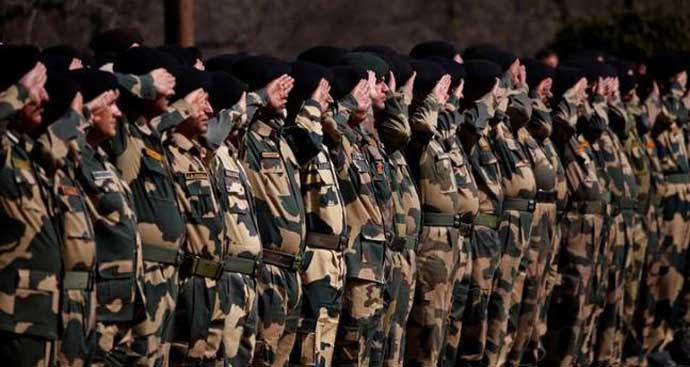
 Which army is currently protecting India against Pakistan? (Source: Reuters/India Today)
The state-recruited army is trained in a way that it is mindful of multiculturalism. In terms of physical preparedness, it follows global standards. It stands for the whole nation — not one section of the country.
Its diet, as apt for an army anywhere, consists of meat, fish and vegetables, based on the weather conditions in which the battalion is serving.
This army is trained to face the Chinese and the Pakistan military forces in very difficult terrains where chilling cold, high altitude, snowfall, heavy rains and rapid river flows are normal. Hundreds of army men have died on the India-Pakistan border guarding India.
The religion, food habits and cultural practices of the people the army is protecting do not matter because the institution is apolitical.
Who remains in power doesn’t matter to the institution as long as the person or party gets power following the people’s mandate.
The other army operational in the country is recruited by the ‘sarsanghchalak’ (head of the RSS) and his team. The men trained by the RSS are then deputed to the various wings of the outfit. This army follows the Hindutva ideology and is meant to protect Hindus and the Varna system — Brahmins, Kshatriyas, Vaishyas, Shudras, Chadals and Vanavas.
This army recruits men with a strict condition — that they would follow vegetarianism and worship cows, no matter whether the local culture prescribes it or not. Those who join this army must believe that all beef-eaters should be treated as ‘non-Indian’.
No Muslim, no Christian, unless one gives up that religion, is eligible to join this army. It admits Jains and Buddhists if they adhere to the Hindutva ideology.
Amit Shah is one such representative, now heading the BJP, the political wing of the RSS. He has reportedly at times supported those who have called for beef-eaters to be sent to Pakistan.
This RSS army’s chief, Mohan Bhagwat once said: “Preparing an Army takes six to seven months but we (RSS cadres) will be battle ready in two-three days… this is our capability and discipline that marks us apart.”
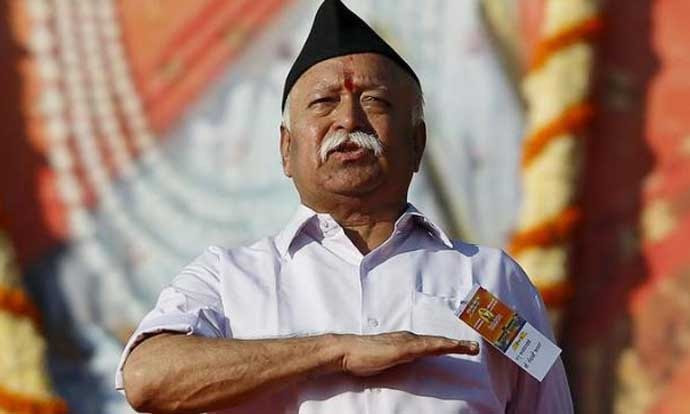 RSS chief Mohan Bhagwat once said the RSS army could train quicker to take on Pakistan than the Indian army. Where are they now? (Source: Reuters)
Now that there is a war-like situation with Pakistan, which army is protecting India’s borders? Is it the vegetarian RSS army — or the multi-cuisine, multicultural Indian army?
The nation knows that the RSS army has not yet reached the India-Pakistan border.
Why?
As a south Indian, I agree with this army’s leadership that Pakistan should be taught a stern lesson for letting terrorists use its soil to launch attacks on India. We should also not allow China to occupy an inch of Indian land.
Can the vegetarian army fight the Pakistan and Chinese army?
Is there any other country where a ruling party imposes food restrictions on its own people? Their sole defence is that Muslim countries do not allow pork in their countries, so we will not allow beef. Yes, they do not — but India, from the time of the Harappan civilisation till today, has respected people’s food choices.
By enacting cow protection laws, by attacking meat eaters (with a suspicion that they were eating beef), the RSS army has seriously weakened the nation. Schools, colleges and universities were served with notices that they should serve vegetarian food. Former Madhya Pradesh chief minister Shivraj Singh Chouhan even banned eggs from being served in midday meals.
Air India, which is under the government of India, stopped serving non-vegetarian food on its domestic economy flights. Was this also done to prepare the country for a war with enemies who have a great deal of energy?
Is it the RSS army’s understanding that from the days of Harappan civilisation, India was a vegetarian nation? Was there vegetable production in Vedic times? Yes, milk products have existed ever since the domestication of animals in India began. Our food economy was known as ‘meat and milk economy’. There is no need to change it now.
The RSS also says that its cadre works in the Indian villages and tribal areas for their ‘kalyan’ — do they not know that our tribals cannot survive without eating meat, fish and beef?
 Food fascism: Those who don’t agree with the RSS ‘menu’ don’t have much of a choice. (Source: Reuters)
Did they not see all Shudras, Dalits, Adivasis and others, who built this nation through their labour in all productive fields, could not have worked so hard without eating meat?
What will happen to our hard labour-centered productive activity if pure vegetarianism is imposed on the nation, as they are doing on schools colleges and university campuses?
They put sadhus and sanyasis, who flocked the Kumbh Mela at a time when the Indian was faced with a war-like situation, on top of the nation’s chart of priority and respect. These sadhus and sanayasis not only support the vegetarian nationalism of the RSS but also provide the ‘spiritual justification’ for a beef and meet ban.
The RSS army led cow nationalism in the 1960s. They succeeded in bringing many north Indian states under the ideological influence of cow nationalism even as southern India defied their influence.
They treat meat and beef as ‘Muslim food’, not human food — they thus do not care for the malnutrition that the children and youth of this country must suffer.
The RSS army’s second agenda is to empower the nation through Yoga — but not running, high jumping, long jumping and so on. If Wing Commander Abhinandan Varthman were to sit in the cockpit in a yogic posture and not eject, would he have survived?
Unfortunately, now the Congress is competing in this cow and-vegetarian politics — which is a real danger.
It is time to rethink this food fascism in theory — so that we stay strong to fight our enemies.
-
First Dalit Collector Who Changed A Feudal District In The 1970s
by Kancha Ilaiah Shepherd— March 5, 2019
The young man standing in bush shirt
Next to Hyderabad, Warangal is the second biggest city of the Telangana state. Most of the present Telangana state’s heritage symbols, Kakatiya Gate, and its tank based irrigation system go back to the history of Warangal, which, in the medieval and pre-medieval Telugu, was known as Orugallu. After this town became the capital of the famous Kakatiya dynasty in the thirteenth century, that area seems to have undergone a big change.
The Kakatiyas built several tanks including the two biggest ones of the present Telangana state called Ramappa and Pakal that irrigate thousands of acres. That irrigation system gradually tuned Warangal into a feudal land lord bastion.
In 1972, the first Dalit collector, Kaki Madhava Rao, took charge as Collector of Warangal dist. I was in my under graduation at Warangal Arts and Science college, that was in between the collector’s majestic residence and the old Nizam model office in Subedari.
He was almost an everyday news maker. That he was a Naxalite collector and that he was sleeping in the hearts of land lords (in Telugu, bhoosamula Gundello Niduristunna collector) .
The Reddys were the main landlords of the area who controlled most of the land , except one big Kalleda Velama landlord family. The Janna Reddys, Nookala Reddys, Pingili Reddys, Yepuri Reddys and so on, were well known landlord families. All elected posts were in their hands—MP, MLA, MLC Panchayat raj bodies and so on. My village was under the Dwaraka Pet Mahaboob Reddy family, which almost was losing its feudal control by then.
Those were times of transition for the landlords as the 1973 Land Ceiling Act of Andhra Pradesh came during Madhava Rao’s stay there. The Reddy landlord were dead against P.V.Narimha Rao, the then Chief Minister ,who got that Act passed and also posted Madhava Rao in the most powerful feudal district as collector around that time.
When I first saw Madhava Rao in a public meeting in the Arts and Science college auditorium, I was surprised that he was very young, tall, thin, with an impressive face cut, and well combed thick hair. His looks had never shown his Dalitness.
He did not wear an impressive dress, as he was wearing plain white trousers and bush shirt. He spoke in flawless English with measured sentences. He looked so soft I could not believe that he could create terror among the landlords. Not only me but many in the audience who saw him in that meeting got that feeling ; “where did he get those guts?”
I thought this collector post is mightiest of all I know, because he was shaking many mighty landlords, who could kill anybody and get away with. All the villagers used to shiver the movement any land lord’s name came up for discussion in the village adda meetings under the trees or at racha banda (dispute resolution place). The final word was that of the landlord.
The Dalits I know in that area and in my village were Madigas, who had no property and starved in summer days. They would have good feast only when a dead bull/cow/buffalo is given by the farmers. All castes above them, including my caste people, not only treated them as untouchable but did not even call them by name. Are-Ture (most demeaning way of addressing human beings) abusive language against them was very common cultural norm. Even the children are taught to address them like that.
This collector came from that background and was making the richest landlords of the district shiver in their dhotis (not many were wearing trousers among them then).
His English and mode of communication was much better than that our of college principle, Prof.Janardhan Reddy, who himself came from a landlord family of that area.
Education and good English made him collector and that position made a Dalit the ruler of the landlords. This was something unbelievable for many. It was a miracle constructed by democracy and reservation.
What did he actually do?
He consciously gave every single policy and scheme of the Government, a poor man’s orientation. The limited supply of fertilizers were made available to poor SC,ST, and OBC farmers. The limited draught funds were spent in digging irrigation wells in Government land assigned to landless SC,ST people through Cooperatvie farming societies. Restored the lands of small farmers which were forcibly held by the landlords.
Several such measures made the landlords angry and dubbed him as the Naxalite collector in their everyday language.
But it is the formation of Toddy Tappers’ Co-Operative Societies and giving them toddy tapping rights that shook the feudal power.
Excise rules of the Government empower the excise dept to auction tapping rights of all trees located in both Government and private lands.
Land owners can seek exemption from tapping trees located in their Patta lands if their needs were genuine. But in most cases they deceived the tappers. Madhava Rao used the Government rules and the exercise auction procedures to change situation.
The Government rules provide for giving tapping rights on nomination basis if the tappers form a cooperative society. Madhavarao advised Inuguti (Gandu) Ilaiah, who was known for his activisim among the tappers, to organise cooperative societies in all the villages in the district. Sensing the danger, the landlords intimidated the tappers not to form cooperative societies and even went to the High Court. The collector fought all their machinations by using the Government rules and the tappers’ rights. The tappers formed societies.
Not willing to forego their illegitimate fight, the dogged landlords threatened tappers of their respective villages that they will shoot down the toddy pots.
The collector personally went to the most troublesome villages with the District Superintendent of Police and jeeps full of armed constables. The troublesome landlords were lined up, shown the armed police and were told that the pots of tappers are as valuable as heads of Doras ( landlords). The landlords gave up.
The collector applied the ‘land to the tiller’ concept to the given situation and defined “tree to the tapper”.
The result of this struggle was that the tappers in the district are still enjoying their tapping rights on nomination basis.
For the first time a collector’s office created a movement and also produced a great leader in the community from among the very oppressed communities. Many years later Ilaiah was killed by the landlords in a train when he was travelling to Hyderabad.
Toddy was a most popular drink among the poor and rich in Telangana.
The occupation was very hazardous with a moku-mutthadu technology of climbing tree to tap the kallu (toddy) with feet and palms getting pressed to the tree. Several men would fall from the top of the tree and die or become disabled without any source of livelihood to his family. The Formation of the societies improved their life.
Once the the Agriculture Land Ceiling Act, got enacted the landlords of the state were to lose their surplus land. Bowing to landlord pressure the Congress made PVNR to resign. President’s rule was imposed.
The Warangal landlords used this opportunity and submitted a written complaint to the President of India that their collector is a Naxalite. An IB enquiry was ordered against Madhavarao. He survived because of the massive support of poor people.
Yet another major project of Madhavarao was the formation of more than ten large scale Agriculture land Co-Operative Societies.
The Jalli Society near my village, was one of them. The collector allotted large patches of several hundreds acres of Government land to Dalits, tribals and BCs in the surrounding villages. Land was not parceled to individuals but all families should cultivate collectively and take equal share from the produce. That was the first experiment, that too by all lower castes.
Seen in the light of the Soviet and Chinese co-operative agrarian operations, and the 1973 Land Reforms Act of Andhra Pradesh, the landlords of the district were fear stricken.
This collector gave an instruction both in the office and residence, that the poor will have unhindered darshanam. For the rich , appointment was a must! There was poignant joke about the collector, “if one wants meet the collector without appointment, one must go in rags”.
In those days, poor people falling on the feet of landlords and officers was very common. Madhava Rao would order the poor not to touch his feet. If anybody did so, he would slap him.
He would insist on the poor sitting on the chair before giving his petition.
These policies of the dalit collector turned the administration by 180 degrees. If this is not a Naxal…who else is Naxal? The Naxal collector’s style was talk of every household.
After this mighty administrative jerk the feudalism in that district was never the same again, though other struggles and administrative reforms followed.
PVNR refused transfer him but Jalagam Vengal Rao , who succeeded him hounded out him within weeks of his becoming CM. He was known as Emergency CM.
In due course PVNR moved on to become the Prime Minister of India and and Madhavarao moved on to become the first Dalit Chief Secretary of the united Andhra Pradesh.
What made this young Dalit officer shake the feudal system of a district, where he was the ruler? What he did was a job of meritorious man or not? Is there no relationship between his labouring childhood life, back home in a Dalit family ( as he was from a first generation laboring Dalit family of Krishna district) and his understanding of changes coming in Soviet Union and China?
Was he right or wrong in doing so?
What lesson should the young IAS trainees of today’s India take from this experiment of a young officer, way back in the 1970s?
Kancha Ilaiah Shepherd is a political theorist, author and social activist
-
Book extract: From a Shepherd Boy to an Intellectual
Kancha Ilaiah Sheperd’s memoirs is riveting and takes us into truly uncharted territories that has been traversed by the versatile scholar. The book is unputdownable

Brahminic learning was practising letter and number writing, whereas our learning was practical and theoretical simultaneously. It was a school of life generation, combined with medicinal value. If Amartya Sen’s grandfather, Kshitimohan, had the title of Acharya my grandfather was known for teaching his son (my father was his only son and he had a daughter) midwifery of sheep and goat and had no respectable title. What I was learning was the base knowledge, which alone guaranteed the things for survival of human society. Writing of any human experience was/is important, but what is unwritten because of those who had the base work knowledge of the society do not know writing or they were not allowed to learn to write does not mean they can be treated as worthless people. They live without any titles that have values in the schools and colleges.
On one mid-June day when I was about seven the tilling of land and planting the seedling of the dry-rain fed crop was going on. In those days my family also started agricultural operations. It already had acquired some cultivable land. There were two ploughs tilling and they keep tilling one by one in a line. It used to be thrilling to watch the process. My adopted brother Komuraiah was driving the back plough and the front one being driven by a Dalit,Yakaiah, a wage labourer. My mother was seeding the furrow of the back plough; another woman was doing that for the front furrow. As the bullocks (one plough had only male buffaloes) were walking slowly and very systematically, my brother was holding the threads and a cudgel to discipline them as my mother was leaving the seeds one by one in the furrow.
As the plough was moving red-insects (arudra purugu) were coming out from the soil in hundreds. They were of a beautiful red colour and nice to look at and play with. I have not seen a single insect dying under the plough. I used to feel that ploughing was producing life, but not killing life. I asked my mother, ‘What will happen to the seed that she was dropping in a measured distance leaving a place one between the other?’ She said, ‘Adi molkethi chettai pillala peduthadi’ (it sprouts and becomes a shrub and produces its own children). It grows as a plant and within two months becomes a shrub then it would produce a cob in with hundreds of such seeds would be born.
She was seeding maize and I know how maize cobs would be on the maize plant. In my childhood, even before I went to school I knew the names of the varieties of crops. We used to pluck tender maize cobs and burn them on the fire and eat. It was so tasty; I used to love that. This love for sheep, its babies, love for tilling, seeing insects emerging from the furrow but not dying, listening to my mother that plants reproduce themselves, coincided with my later reading of Marxism, namely, production and reproduction.
This practical experience of mine went totally against the Sanskritic brahminic theory or Jain theory of tilling that says it kills insects, therefore, it is an act of sin. When I asked a Brahmin why Brahmins do not take to plough,his reply was we believe in non-violence. Tilling land kills several insects therefore we do not take to ploughing the land. This theory of non-violence of modern Brahminism is borrowed from the Jain philosophy which believed even if one inhales air without cloth to ones mouth insects get inside human body and die. My experience tells me the simple fact that tilling the land advanced production of food which would not have taken place without a Shudra philosophy out there about the positivity of tilling. Tilling is not killing but it is to regenerates life. According to Brahminism the Dalitbahujans are the main tillers of the land thereby killers of millions of insects, thus, sinners. But why do the non-sinners who do not want to till the land eat food produced out of that sin? It was in this process that I understood that not only animals but seeds and plants also have life. When I studied botany later I knew the essence of that subject in my childhood itself. As children being part of tilling and taking care of animals and birds we helped the process of regeneration of life…
In the college when my higher education began, books and book writers were the talking points. But back home whose herd was more productive and whose agriculture yielded more crop were the talking topics. But no book had anything to do with the kind of work the villagers were doing. The book and real life in the village had a disconnect. My consciousness began to split and move towards a feeling that book writers are far, far greater people and food producers were inferior and simple people. The idea of taking the IAS exam and learning English began to shift my wisdom base. Haragopal would repeatedly speak about the greatness of achieving the IAS, as he missed narrowly at the stage of the interview.
But Marx’s Communist Manifesto created a cultural crisis in me. Marx in his Manifesto was talking about workers of the world. I easily understood that my parents and other villagers were part of those workers of the world. In Haragopal’s talks such workers of India never figured. It is not that the teacher was teaching the manifesto. I began to think that because of this kind of higher education, maybe, I was getting out of the human culture that was nurtured in my village. Since Haragopal became some kind of a role model lecturer two things of him must have influenced me. One he was still un-married. Two, his fluent English, of course, with a somewhat confused thinking, and trying for a balance between right-wing and left-wing ideas. As I started reading Marx, somewhat seriously, he was appearing to me too liberal to be emulated. His influence on me ended there. Once I shifted to Hyderabad, Osmania, my world of intellectual interaction changed for more rigorous reading, deeper discussions with variety of minds.
However, I used to cite his example whenever my marriage question came up at home. As I said after my father’s death, maybe because I was understood to be a ‘Have Not’, the pressure had come down. My brother who was supporting me completed his school graduation was not forcing me at all.
Of course, the second major Brahmin intellectual intercourse in a real sense started with my classmate in M.A., Vinayak Kulkarni, a different kind of Brahmin altogether. He was too mature for his age. He was the only Brahmin who became de-caste-de-class with a commitment for revolution, in my view till date. Kulkarni went to work among Bombay slum dwellers and chawl workers. In the early 1980s I went to see his work there. I was shocked to see his life. He had no room to live in. He rented a night bed in a slum that stank. He had to sleep and get out. The toilet queue used to be long, sometimes taking an hour. It was almost impossible to sit in that toilet because of its narrowness and the smell. He used to tell me for the sake of revolution he was prepared to put up with such hardship. I thought it was not a rational choice but a beliefbased choice. He used to eat cheap food that constituted beef and other items. Somehow I did not approve my friend’s approach to revolution. He went to Dong Tribal areas from there. At the time of writing, he is still living and working for a revolution among tribals. He lived for the lust of revolution. I am the only classmate he is in touch with and occasionally we meet with warmth and eat rice with mutton curry cooked by my sister-in-law at my home.
Looking back now I feel he would have chosen a different course of life. But he never turned back. He was a misfit in his house. His parents never approved his thinking, his way of life. His mother and father died with a feeling that
he was not their son. Since he is more than sixty, or of my age, he may die an ignominious death in the Dong Tribal areas as one among them. When I last met him he said he was not disappointed with his present tribal life. He too never married. He did not want leadership roles, averse to acquiring name and popularity. Revolution for him was penance. I never liked a self-torturous course whether in revolutionary activity or spiritual activity. He may die as a failed Marxist with a first class M.A. political science degree that got burnt in a revolutionary utopia. But he is a great de-brahminized Brahmin of India.
My later serious interaction was with a team of Brahmin men in the civil liberties movement. This was a challenging time. We were all believed to have committed for people’s rights and of course in the background for a revolution, an agrarian revolution at that. Through writing and speaking we were supposed to propagate the human rights of people. The writing and speaking roles used to be considered theirs. The Shudra upper castes were also not competing with them. There was a fear of philosophy among the Shudra leaders and activists. There were a number of civil and human rights organizations in the country in the post-Emergency period. Most of them were a being run by the Brahmin intellectuals who had control over English.
I had not come across a single major Shudra intellectual working in the civil rights movement in the country in those days. Aakar Patel today, and the late Gauri Lankesh, were well-known journalists, both Shudras. The Shudra communities like Patels, Kammas, Lingayats, Marathas have a lot of wealth but their educational levels were very low in those days. Among the Patels of Gujarat, there were exceptions like I.G. Patel or among Nairs exceptions like Krishna Menon, who were very well educated. (The Gujarati Patels were influenced by Gujarati Baniyas and Kerala Nairs were influenced by Kerala Christians but the Shudra upper castes in other states were not so advanced in education, particularly English education. Those who were educated were mainly confined to regional language-based writing and activism. Not that exceptionally one or two writers who could write in English were not there. For example, Shashi Tharoor wrote several books without challenging Brahminism anywhere. Therefore his writing has no social impact. But by and large the Shudra intellectualism quite willingly got subordinated to Brahmin intellectualism. They never demanded the right to priesthood in the Hindu temples, while treating themselves as Hindus. Priesthood is a philosophical position. It is not the question that how much money does a Brahmin priest get while heading the temple. But the question is whether he controls the nerve centre of the civil society through that post or not? He does. It is from here that the Brahmin teacher derives his authority and superiority in the class room, in the school, college and university. It is from here a Brahmin politician derives his authority to run the administration. Gandhi knew this truth but kept silent about it as if it were untruth. But a person like Vallabhbhai Patel never understood that truth…
Mahatma Gandhi propagated regional language education for all children. But today we know in which language all his grandchildren and great grandchildren got educated and in which languages they are writing in.Rajmohan Gandhi lives in America, Gopalkrishna Gandhi,a retired IAS officer, former Governor, writes in the English language. Ramchandra Gandhi obtained his Ph.D. from Oxford University, naturally studied in the English language.
Arun Manilal Gandhi lived in America. The available information tells us that only Tushar Gandhi, his great grandson, studied in Gujarati-medium but is comfortable in English (as I was a co-panellist with him on English TV channels). I am not saying they should not study in English-medium schools or they should not settle down in America or Europe. But the system of education that Gandhi advocated was not accepted by his own family members. That is the truth. There is Gandhian propagated truth and there is a Gandhian practiced untruth.
The propagated truth is untruth in day-to-day real life practice of Gandhians. Why should the Shudra/OBC/Adivasis follow the Gandhian moral code of language of mother tongue?
-
Kancha Ilaiah wants schoolchildren to sing the song of equality
The scholar has penned a poem and has made an appeal to sing it as a prayer in schools
By Basant Kumar Mohanty in New Delhi, The Telegraph
Dalit-Bahujan scholar Kancha Ilaiah, author of Why I am not a Hindu, has added Shepherd to his name to assert the dignity of his parental profession.
In his latest memoir, From a Shepherd Boy to an Intellectual, the researcher has written about his struggle in academia dominated by the upper castes.
In the book released on Monday, Ilaiah has penned a poem highlighting the notion of equality and made an appeal to make schoolchildren sing the song as a prayer.
The prayer starts with the words “God you created all of us equal”.
At the book release, Ilaiah said the upper castes have never recognised the knowledge possessed by people who are involved in the production of resources.Ilaiah was criticised and physically attacked by the upper castes, particularly the trader community, in 2017 because of his criticism of the caste system.
“The Brahmin associations of the Telugu states in 2015 attacked my writings. They abused my name Ilaiah as unworthy name, my caste as unworthy of respect. In order to answer them I had to add the word ‘Shepherd’ to my name as mark of my parental profession as it is most respected profession globally both spiritually and socially,” he has written in the book released on Monday.
Ilaiah has appealed to youngsters and first-generation learners to pursue knowledge in life and not run after upper-caste girls and said English-medium teaching could bring social revolution for the deprived sections.Ilaiah is the first intellectual among Dalit-Bahujans to pen his memoirs.
Prayer Song for School Children
God, You Created All of Us Equal
God, you created all of us equal,
God, you created male and female equal,
God, you created no caste among us,
God, you allowed no untouchability among us,
God, you created all of us equal,
God, you told us to work and live,
God, you told us to respect our parents,
God, we pray you as proud Indians,
God, you created all Indians equal.
From Kancha Ilaiah Shepherd’s
“From a Shepherd Boy to an Intellectual—My Memoirs”
-
Hinduism denies spiritual rights to Shudras, Dalits and Adivasis
By Kancha Ilaiah Shepherd,
FIRSTPOST
Hinduism is being defined as a religion like Buddhism, Christianity and Islam. Till the Rashtriya Swayamsevak Sangh (RSS) and the Hindu Mahasabha came into being, it wasn’t seen as a religion like the other three. Hinduism was treated as a social collective of different ways of life but now it is being interpreted like other religions of the world.
Over the years, the RSS and its political wing, the Bharatiya Janata Party (BJP), have projected Hinduism like the Semitic religions such as Christianity and Islam without initiating any spiritual or social reforms. The Indian society was and is far more fragmented than the Israelite society was at the time of Jesus Christ or the Arabic society of Prophet Mohammad.
The hierarchised caste system and multiple tribal communities that are being defined as Hindus are likely to create more problems than solve them.
Ever since the BJP came to power at the Centre and started taking decisions that have had adverse fallout for the castes and tribes other than the top three, Brahmins, Banias or Kshatriyas, many new areas of clashes have emerged.
The Dalits (historically untouchables) and tribals particularly are encountering economic and cultural assault by the Hindutva forces on food and belief fronts. The anti-beef RSS-BJP let loose terror on these communities.
When the RSS was started in 1925 by KS Hedgewar and consolidated by MS Golwalkar, the caste fragmentations and the untouchability were worse. They didn’t initiate reforms but started organising the so-called Hindu forces against Muslims of India, as if they are all one unit. They had not developed any anti-caste discourse. Instead, they emphasised on parampara (tradition) and sanskriti (culture). They adopted vegetarianism as organisational food culture, without thinking that the Shudra, Dalit, Adivasis and the Eastern most castes were and are multi-cuisine.
The spiritual symbols for the top three varnas such as the janeu (sacred thread) can’t be worn by all Hindus. The caste system does not allow individual choices in spiritual life. The Shudras, Dalits and Adivasis were and are not supposed to wear the janeu that the men of top three varnas wear.
From the days of the writing of the Vedic texts (in the process when they were adopted as Hindu ritual mantra texts), the priesthood was reserved for the Brahmins. Over the years, other ritual services such as birth, death and house-warming were reserved for the Brahmins. It also has a link to reading and writing Sanskrit texts and interpreting them. The main religious philosophical discourse was and still is reserved for the Brahmins.
Subsequently, business was reserved for the Banias and political rule for the Kshatriyas. The agrarian tasks, artisanal work, cattle grazing — the basic production work — were and are left to Shudras, Dalits and Adivasis. They have no spiritual rights.This is nothing but denying them the basic spiritual citizenship. Without spiritual citizenship, how do they attain moksha (salvation)?
Like without political citizenship, there is no chance of acquiring a good position in the state, without religious citizenship, one can’t train for priesthood and attain higher spiritual and philosophical attainment. This also results in denying intimate access to God, hence, no moksha.
The right to visit a Hindu temple does not constitute basic spiritual citizenship. When major spiritual systems transformed into religion, they guaranteed equal rights, at least to all male members. Women continue to face discrimination in all religions. But in Hinduism, not all men – Shudra, Dalit and Adivasi — have equal rights.
At no stage the scriptural basis of this fragmentation – untouchability — was changed and no caste Hindu wrote a synthesised religious text that was adopted as a pooja text with common symbols for all, with citizenship rights to all Hindus.
The RSS is defining all varnas, including SC/STs, as Hindus for numbers and to use their muscle power against Muslims and Christians. This is a dangerous.
When the secular constitution is mapping out citizenship rights for Hindu religious institutions, something as simple as temple entry for women is creating a crisis like the one we are witnessing at Sabarimala. This doesn’t happen in any other religion. The right to enter a Buddhist vihar, a Christian church and an Islamic mosque is guaranteed to all women.
No religion treats the body of a woman aged between 10 and 50 as impure. The ruling BJP-RSS agrees with the priests who impose these purity rules but do not respect the universal religious rights of women, yet another dangerous practice that needs immediate reform.
The RSS-BJP is strong votary of this inequality and if they remain in power for few more years, they’ll bring back Sati and child marriage.
Societies in different parts of the world have introduced reforms towards equality but the RSS-BJP wants to take the spiritual system of Hinduism backward.
This is the most dangerous situation India is facing today. Unfortunately, we are all witnesses to that process.
Kancha Ilaiah Shepherd is political theorist and social activist -
Book Launch – From a Shepherd to an Intellectual
 Kancha Ilaiah Shepherd