-
Dear Indian intellectuals, we are not fools: Faux regional language lovers closed the poor’s access to English for years
Dear Indian intellectuals, we are not fools: Faux regional language lovers closed the poor’s access to English for years
But politicians like Jagan Reddy have sensed the yearning among the masses for English medium instruction and will provide this, despite the intellectuals hissing this is a ‘World Bank agenda’.
| 5-minute read | 23-06-2019
In this school academic year, an important development took place — the Andhra Pradesh Chief Minister YS Jaganmohan Reddy declared that within two years, most of the AP government schools will be converted into English medium with one compulsory Telugu subject being taught all through the school education.
In Telangana, the KCR government gave freedom to school teachers to initiate English medium sections in most government schools. A majority of parents from rural areas are eager to provide English medium education to their children — resulting in poor attendance in Telugu-based sections. However, the general data does not tell us which schools are getting closed — only that regional language schools are shutting down.
Similarly, in Karnataka, after a long struggle by the Dalits/OBCs this year, the government opened English medium section from LKG to class 12 in 1000 schools. Apart from this, the Kumaraswamy government also started 275 Karnataka Public Schools (KPS) with complete English medium from LKG to 12th, on the lines of the Kendriya Vidyalaya. The news reports indicate there is a huge demand for these schools in the villages — and that Kannada medium schools find no takers in areas with KPS.
 Good move: Karnataka CM Kumaraswamy’s English-medium Karnataka Public School caused a stir. (Photo: Facebook/Namma HDK)
The so-called progressive writers of Karnataka, such as UR Anantha Murthy and Girish Karnad, were opposing converting the rural government schools into English medium by instigating Kannada sentiment even among Dalit writers. They apparently threatened Siddaramaiah against initiating this process. In fact, some of the dissenters of the ‘Lohia gang’ in Karnataka opt for a world-class private English medium education for their own children — Girish Karnad’s son, for instance, reportedly studied in London — but opposed English medium education in the government sector.
Kumaraswamy overruled all of them.
The Bharatiya Janata Party leadership is also not in a position to oppose the English medium in government schools because most of their children receive English-based education in missionary schools.
Similarly, even in Andhra Pradesh and Telangana, there are hordes of intellectual ‘Telugu lovers’ who do not hesitate to enrol their own children or grandchildren in the best English medium schools in Hyderabad, Vijayawada and Vishakhapatnam. They resisted YS Rajshekhar Reddy’s initiative to provide English-based education in government schools from class six onwards. But he brushed them aside by pointing out the hypocrisy of the Indian middle-class intellectuals.
Reddy started 6,400 English medium sections from class 6. Then, KCR expanded on that in Telangana and started many English medium gurukuls in a bid to make good on his promise of the 2014 elections under the KG to PG scheme. Jagan, perhaps, understood the educational aspirations in rural areas during his padayatra — he also addressed the issue in his manifesto, saying that all government schools would be converted into English medium and every student’s mother will be given a sum of Rs 15,000 for education expenses.
This is a game-changing programme.
Once again, the alleged Telugu lovers are terming the move as Jagan furthering a ‘World Bank Agenda’. Interestingly, only when English medium education goes into the houses of the poor does it become an agenda. But if the same education reaches their own intellectual, affluent houses, it becomes a nationalist agenda.
What hypocrisy!
 The popular pulse: On his padyatra, Jaganmohan Reddy sensed the common masses’ yearning to educate their kids in English. (Photo: PTI)
This kind of duplicity needs to be opposed at every stage — it reminds me of an excerpt from the Bible when Jesus cured a hunchback woman, angering the priests of the Synagogue. Here’s their discussion:
“Jesus was teaching in a synagogue on the Sabbath. Jesus saw a woman who had been “crippled by a spirit for eighteen years.” She was bent over and could not straighten up at all. He called to the woman, said, “Woman, you are set free from your infirmity”, and then laid his hands on her body, and immediately she straightened up and praised God. The synagogue ruler, the defender of the Sabbath, was indignant because Jesus had healed on the Sabbath. Rather than confront Jesus, he rebuked the woman publicly by saying to the whole congregation, “There are six days for work. So come and be healed on those days, not on the Sabbath.” In response, Jesus said, “You hypocrites! Doesn’t each of you on the Sabbath untie his ox or donkey from the stall and lead it out to give it water? Then should not this woman, a daughter of Abraham, whom Satan has kept bound for eighteen long years, be set free on the Sabbath day from what bound her?”
The masters of anti-English education for the poor are like the Synagogue rulers. They create a false sentimental narrative around the mother tongue and ask, but how the children can learn Telugu or Kannada with one language subject despite being compulsory? Might I remind them that Jagan and his sister, Sharmila, who gave thunderous speeches in Telugu, studied it only as one subject?
By advising Jagan to not to undermine the mother tongue, they play the game Chandrababu Naidu seemed to, who had once reportedly said, “How can I introduce English medium when my party name is itself Telugu Desham” and then apparently promptly put his son in a world-class English medium school. Ironically, the English-educated son is now being groomed to head the same Telugu Desham.
The Andhra masses understood these double standards when it came to education. Jagan won the election hands down because he promised mothers that their children will be given English medium education as he gave to his own children. Intellectuals are wont to think that the common human being is a fool — but the AP elections of 2019 proved them wrong. They know the importance of good education for their children and that regional languages such as Telugu or Kannada can be learnt better once the child confidently learns a global language.
Not just learning for learning’s sake — let children get this confidence.
Let Jagan, KCR and Kumaraswamy not turn their heels by unnecessary hypocrisy.
-
India and the Indian: My nationalism competes with China, not Pakistan, writes Kancha Ilaiah Shepherd – Firstpost
India and the Indian: My nationalism competes with China, not Pakistan, writes Kancha Ilaiah Shepherd
- Nationalism survives in an environment of livability. It survives around a common national education and the good life in a language that all citizens could speak to each other.
- The Brahminic nationalism, of which the Rastriya Swayamsevak Sangh is also a part, stands exactly opposite my nationalism.
- Both Pakistan and RSS do not bother much about augmenting production and egalitarianising distribution.
-
Skipping The Biggest Lesson: BJP’s draft National Education Policy tries to compete with madrasas, misses crucial learning
Skipping The Biggest Lesson: BJP’s draft National Education Policy tries to compete with madrasas, misses crucial learning
The policy pays no attention to teaching children the dignity of labour. This lesson is a must though for any society which wants to grow and be developed.
| 5-minute read | 14-06-2019
-
Total Shares
The controversy triggered by the three-language policy proposed under the draft National Education Policy (NEP) seems to have been settled for now.
The earlier three language policy was mired in controversy as it sought that Hindi be taught as the third language in schools along with English in non-Hindi speaking states. Though protests led to the government introducing changes to that policy, the draft has several other problems.
 There are still big gaps: The govt tweaked the three-language formula in the face of protests. But the NEP still has problems. (Photo: Reuters)
The second big thing that the policy intends to do is apparently impose Hindutva’s mono-cultural heritage centered on the Vedic spiritual texts on students with a view, as I see it, to undermine or sideline other religious and spiritual cultural civilisational traditions such as Buddhism and Sikhism that evolved within the Indian subcontinent.
The BJP government seems to want to sweep away Christian and Muslim cultures and traditions by presenting them as ‘foreign’ despite their existence in India for centuries.
Both the new draft and the 1986 policyof the Congress shaped the course content around the secularism versus communalism debate. In my view, both policies suffer from serious flaws.
The BJP policy is apparently trying to compete with the course content of madrasas. Since madrasas teach mainly the Quranic text, the BJP wants a curriculum that teaches only Vedic culture as Indian.
 Since madrasas teach mainly the Quranic text, it seems the BJP wants to teach only Vedic texts. (Photo: Reuters)
Both the Hindutva and Islamic ideologues do not want to teach much about science, technology, global history and Indian history tracing its earliest civilisations. The BJP’s proposed framework is that the Indian culture and civilisation are boxed in the Vedic capsule and Dharma and Adharma-related issues found in Hindu epics. For BJP intellectuals, Indian history starts with the writing of Rig Veda.
In other words, the BJP wants to start teaching our children from the beginning of the pastoral economy, where there was no role of agriculture.
That culture, civilisation and economy centered on the rishi — but not the shepherd and cattle herder, though economy was based on cattle herding. Tillers of land had no respect in that culture.
Both for Brahminism and Islamism, the spiritual text is the beginning and the end of history. For both, production-related science of the present and past is irrelevant. The history of India did not start with the writing of the Rig Veda. Production using human labour has a much older history than religious writing and documenting.
The BJP’s history-writing views history from the prism of a Brahminic viewpoint, which does not recognise the history of the Harappan civilisation for which there is archaeological evidence.
 It all begins here: The Harappan civilisation has many lessons to offer us in terms of how to run an economy. (Photo: Wikipedia Commons)
No nation in the modern world will develop if its young do not learn about the dignity of labour in schools. Caste hierarchies in the country are also institutionalised based on the graded indignity of labour. Any work or technology that is related to leather is seen as most undignified in caste cultural history. But leather processing began during the Harappan civilisation. Leather clothing was the real body protector in those days.
Take the process of brick-making in the Harappan civilisation. The cities that were built in other parts of the world like Mesopotamia before Harappa had no baked brick. They were built only with mud bricks that were unbaked.
Is that not our civilisational achievement? We contributed advanced brick-making technology to the world.
The Harappan civilisation has lessons to offer on the domestication of cattle and maintaining a stock of animals as a food guarantee. The animal economy guaranteed meat and milk and that was a great civilisational achievement of the Indian subcontinent. Wood crafting and stone cutting were arts that had been mastered back then. The construction technology used back then was advanced too. Harappans made advanced bronze tools. Our present tool technology is based on that ancient knowledge. This is called shudra science and technology — but it has not been given value in books that our students read and learn from today.
These progressive sciences and technologies in varied developed forms are being used even now. The village cattle herder, shepherd, brick-maker and wood cutter are carrying on the Harappan culture and civilisation without any break. This is great Indian science and technology — we must be proud of it.
Because of the caste system and Brahminism, however, all production tasks are seen as polluted and unworthy.
How do we change this cultural negativity? Only by teaching the dignity of labour in schools can we overcome this anti-labour attitude.
But Kasturi Rangan’s draft NEP has no recommendations to include labour-related lessons in the course curricula in modern-day schools.
The development of India in agriculture, science and technology is based on the respect the nation accords to labour. Historically, the labour class has been made to feel that it is inferior. Their children should not be allowed to live with that feeling. Those who do not work on land think that they are great. Their children also think they are superior.
These attitudes have to change.
 No, he’s not inferior: We must teach our children that work that involves physical labour is not low or polluting. (Photo: Reuters)
The male population of India is also averse to household tasks like cleaning and washing. If India has to become a clean nation, all male children should be taught in schools that there is no gender-based division of labour. Every work has to be done by everybody, irrespective of gender. Unless such things are taught in schools, children simply do not understand the value of physical work.
All agricultural tasks are seen as unworthy, so only illiterate people should do them. The educated must not do agriculture.
This value system has to be change from schools itself, by teaching dignity of labour.
-
-
PM Modi, what about this dynasty? Yes, Modi hit out at the privileged ‘Khan Market gang’
He was knowingly or unknowingly referring to typically St. Stephen’s-educated, upper-caste Brahminical Hindu and Pathan Muslim intellectuals, who have ruled Delhi for a long time. Some of them are in the BJP as well, such as his former finance minister Arun Jaitley.
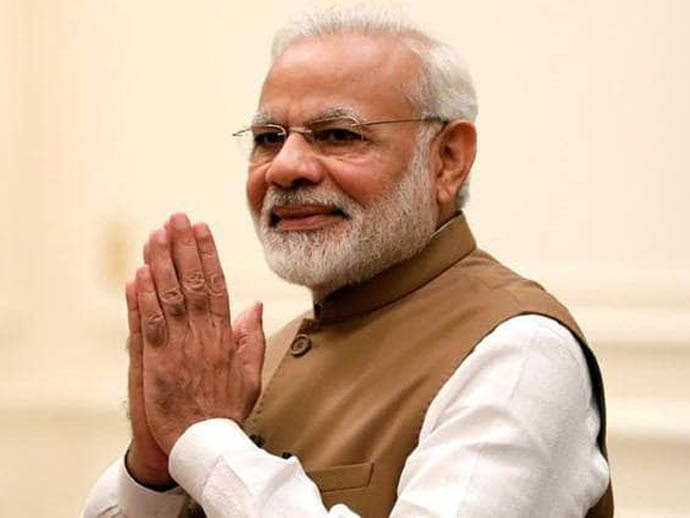 Narendra Modi has rightly taken on the ‘Khan Market gang’ — but his job is only half done. (Source: PTI)
Modi’s prime targets, however, were Rahul and Priyanka Gandhi, whom he calls ‘namdaars’. They, however, are not the only ones.
St Stephen’s, where many elite people got the opportunity to study, is run by the Kerala Syrian (Brahmin) Christians, though established by the Cambridge Mission, all of the same class, with what I think is a hatred towards reservations for SC/ST/OBCs. This is the same group that made Indian English a Sanskrit-like language by encouraging only private schools to teach it to create a Brahminic Platonic class of philosopher kings.
There is no doubt that they should lose control over Delhi. The Khan Market of today is a post-modern (but not post-Hindu) adda owned and managed by supporters of the Nagpur priest network. The high-end shopowners are also supporters of Modi’s party, the BJP, and most of them are also English-educated.
The brand of secularism that Modi keeps attacking constantly is not only aimed at protecting minorities, but also Brahminism, which can be found in abundance in his own party. The Brahminic gang operates cutting across parties and ideologies.
There is another lobby — if not gang — that Modi hardly knows about in Delhi. The India International Centre (IIC) lobby. This intellectual lobby also consists of all party elements — including that of the BJP. There, all kinds of theories were/are cooked to undermine BR Ambedkar’s legacy and do away with reservations in the long run. Of course, now, there is apparently some change at IIC.
What does Modi want to do with all kinds of dynasties?
No doubt the dynasty that works around Khan Market has to abolished — but the dynasty that works from Nagpur is a much more serious threat, given its historical roots.
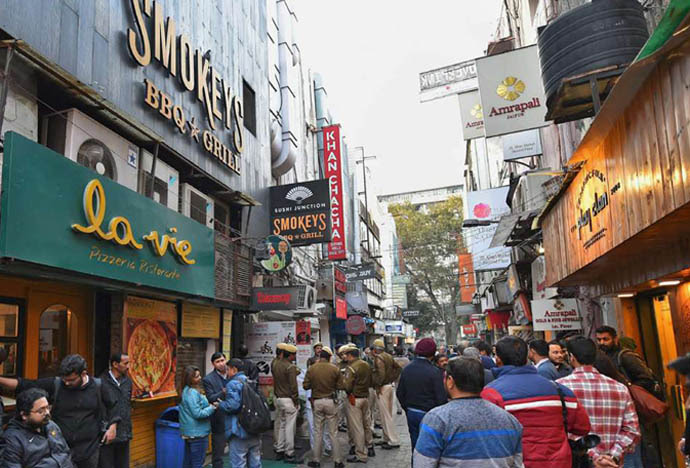 Beyond shopping: Khan Market has become a sign of entrenched privilege and entitlement. (Source: PTI)
The Nagpur high priest network educated in Sanskrit, like the St. Stephen’s English-educated lot, is totally opposed to reservations and no SC/ST/OBC is allowed to head it. The group pretends that the 10% reservation offered to the economically weaker sections (EWS) is acceptable to it. But the moment the state will be in a position to implement it, all Brahminic forces will rush to stall the move. That is the reason why we have such huge backlogs in the hiring of SC/ST and OBC candidates.
As an OBC, what mechanisms has Modi put in place to break that nexus and implement reservations?
It is here that the non-Khan Market forces can emerge. But the BJP heads of institutions for the last five years proved that they are the worst anti-reservationists and pro-Khan Market walas in the last five years at implementation level.
What Modi does in this sphere is important.
By pointing at Nagpur, I am not trying to exclude the Communist culture that does not allow SC/ST/OBC people to head the Politburo. There is dynasty in India operated through the channel of caste. Can the PM do something about it is one question. But what about the Sanskrit high priest class that controls the entire country from Nagpur — the class that controls our institutions and trains people in Sanskrit Brahaminism? Should that be abolished as well or not?
The Nagpur class wants to build temples across the country. The high clerics here appoint priests to all maths and peethas. No party, so far, has opposed this structure as it has the power to shake their social base. Not that the Indian Catholic Church and Muslim mosques are really very democratic — they too are dynastic in this respect and classical Brahminism helped them as most of them are converts from this very land and caste base.
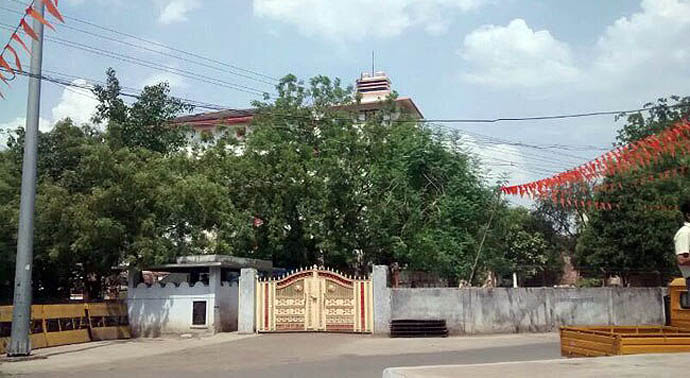 The gate is closed: Can Narendra Modi override the diktat of Nagpur? (Source: India Today)
Dynastic power structure is not uni-dimensional in India. In the context of Rahul Gandhi’s ‘resignation’ and the dynasty issue of his family, I wrote this one line mail to him: “Follow Mahatma Gandhi by becoming an embodiment of moral power by resigning to fight the present immoral state power.”
His personal PA wrote back, saying the message has been communicated.
But nobody can even think of writing to Mohan Bhagwat to resign from that post. Prime Minister Modi knows better as he lived in that organisation for decades. The consequences of such a message to Bhagwat would be serious.
But now, Modi is the most powerful Prime Minister who has emerged from the same ranks. Can he take it up? Can he say dynasty should not rule there also?
All dynastic structures are anti-democratic. Whether that dynastic power is derived from spiritual textual sources like that of the Agama Shastra or family sources, through wealth and power, it goes against the moral and constitutional basis of India.
The dynastic centre of Nagpur has the power to summon even Modi to its headquarters — like the high priests of Jerusalem had the power to summon Herod the Great.
Jesus Christ was given the crucifixion sentence by the very powerful Pilate, even though he was against it, at the command of the high priests. Today, the Nagpur high priests have that kind of power. It is a caste-dynastic power and a lifetime position without any electoral process involved. What does Modi do about it?
There is a saying, “Do not judge as you will also be judged.”
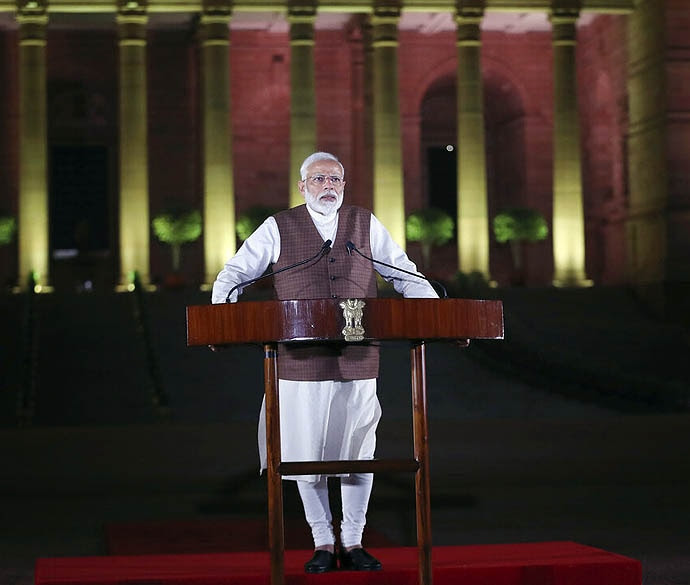 The strongest PM of India: But can Narendra Modi challenge the caste hierarchy of the RSS? (Source: PTI)
But what Modi — an OBC leader — can actually do will depend on Nagpur.
These are the times to wait and watch.
-
If caste is about experience, PM Modi has never spoken about discrimination he faced on account of his birth | The Indian Express
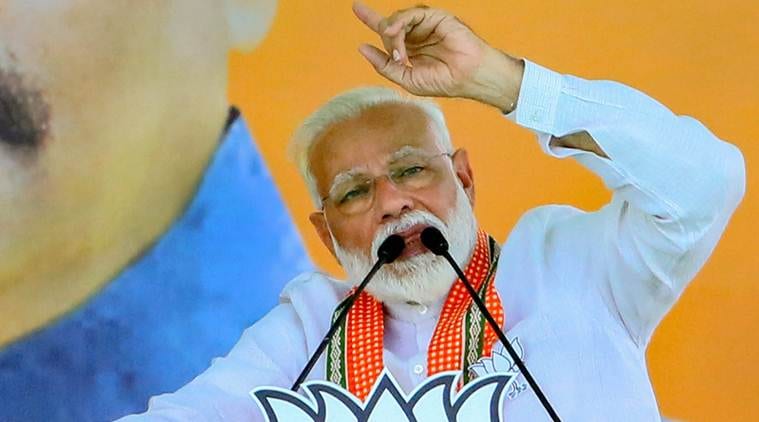
There is a saying in English: “Those who have a ‘why’ to live, can bear almost any ‘how’.” Prime Minister Narendra Modi wants to occupy the highest position without answering any why and how. But the citizens have a right to pose whys and hows to him since he is the prime minister.
Why did Modi twist a young inexperienced “dynastic” daughter’s remark about “neech rajneeti” as “neech jati” and bring up his Other Backward Caste (OBC) background while campaigning in UP in 2014? Why does he want to avoid a debate on his caste status in 2019? How much of oppressed caste consciousness did he have during his tenure as prime minister? Is there any evidence in Modi’s many biographies that he suffered caste discrimination at any stage in his life or that he fought that discrimination with the kind of caste consciousness seen in Mahatma Phule, Periyar E V Ramasamy and Babasaheb Ambedkar? Is it that Modi used the enlistment of his caste in the central OBC list to become prime minister? Did the RSS/BJP allow him to use the OBC status to win over OBC voters?
When Mayawati, Tejashwi Yadav and Akhilesh Yadav allege that the PM’s OBC status is naqli, Modi must at least recall a few anecdotes to illustrate how he suffered discrimination and humiliation in his life because of his caste background.
Our birth, of course, is an accident, but did Modi’s birth into his caste make him feel it was a “fatal accident”, as Rohith Vemula felt, at any stage of his life? Did he ever feel that the tortuous pain an OBC person or a Dalit suffers is his own? Caste discrimination is a continuous systemic process that has affected generations. Where does the nation see the generational discrimination in Modi’s life?
Yet the oppressed castes appreciated when he said “I came from a neech jati” and I want to serve them as prime minister. The appeal of Modi even moved the OBCs in West Bengal, where caste identity had been pushed under the red-carpet.
Has he revealed any discriminated caste consciousness and caste culture when he was in power at Delhi? Are not the cattle growers who lost their right to sell and buy their hard-grown animals because of the upper-caste government in UP mostly OBCs? What did the OBC PM do about it? The discrimination structured into the being of an OBC — that too most backward — is not an issue of claims but an experiential process realised in one’s life. Dhananjay Keer’s biographies of Phule and Ambedkar recall the humiliation they faced. They fought the humiliation not for their own sake but for the sake of the entire OBC and Dalit communities, for the sake of transforming this nation.
Modi turned chaiwala and chowkidar into metaphors to establish his OBCness and claim suffering. But not all chaiwalas and chowkidars are OBCs. Manu dharma has not ordained these occupations for the Shudras, the varna to which the OBCs belong. There are upper-caste chaiwalas and upper-caste chowkidars!
Modi’s OBC background was talked about when he became chief minister of Gujarat in 2002. I wrote in December 2002: “‘Narendra Modi’s victory with a two-thirds majority in Gujarat has signalled the emergence of a strong, independent OBC (Other Backward Class) leader in the BJP.” The nation did not come to know about his caste background because he spoke about it. The nation got to know about it through media after his community was included in the central list of reservation just before he became chief minister. He did not talk about it when he was chief minister of Gujarat. And, he had not mentioned it during the 1990 Mandal struggle.
Modi has disputed the allegation made by Mayawati, Akhilesh Yadav and Tejashwi Yadav that he belongs to an unreserved upper caste. But he also ought to tell the nation how he has experienced discrimination in the society, in institutions and organisations he has worked on account of his caste. That is what all “neech jati” people do.
-
By Karma and God’s Grace: Why Hindutva economics never discusses poverty or the poor
WHY HINDUTVA PHILOSOPHY NEVER DISCUSSES POVERTY
Kancha Ilaiah Shepherd
Does Hindutva’s ideology allow any anti-poverty agenda in any mode of its functioning?
Do any of its core ideological texts, written by any of its ideologues, at any phase of their operation, problematise the poverty of the Indian masses?
Do they suggest ways and means to alleviate, leave alone eradicate, poverty?
Be it the writings of Savarkar, Hedgewar or Golwalker, I have not found even a single line in these texts about the Hindu masses, of any caste, suffering miserably from poverty — or of the means to remove it.
 Not so ideologically rich? Sarvarkar’s writings lack a discourse on poverty and how to alleviate it. (Source: PTI)
Hindutva’s political pundits — Deendayal Upadhyaya, Atal Bihari Vajpayee, Lal Krishna Advani, etc. — none of them talked in-depth about improving the life of the poor and reducing inequalities. All evidence, till Narendra Modi became the Prime Ministerial candidate in 2014, shows that they rarely discussed issues of poverty.
Opposing poverty was never their ideological agenda.
Modi chose a very neutral slogan in 2014 for his campaign — “Sabka Saath, Sabka Vikas”. To my mind, his slogan stands for the privatisation of the economy and providing jobs to the poor in the government sector. It also stands for improving rural employment by pushing in corporate companies.
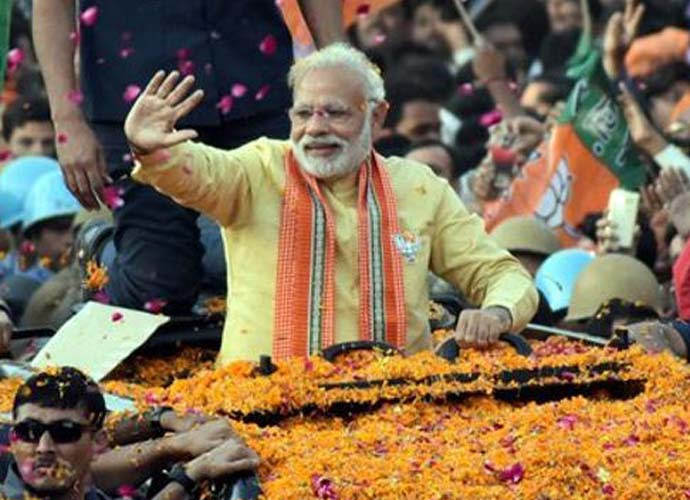 Sabka Saath, Sabka Vikas: But how far does Narendra Modi’s rallying cry really go? (Source: PTI)
The question though is, how can Modi help industrialists get more wealth — and, at the same time, provide the poor with two square meals a day, a reasonably good house, good government schools for educating their children and good hospitals in villages for basic health treatment? In practice, this proposition seems impossible and, as I see it, Modi knows this and his party also knows this well.
The Rashtriya Swayamsevak Sangh (RSS) ideologues were for the growth of Hindutva and its distribution across the country. The Hindutva cultural heritage they praised, and wanted to strengthen, was basically that the economically rich should feed the gods — but not the poor.
There is no idea of equality or philanthropy in their economic lexicography.
No text of theirs suggests that the rich who subscribe to Hindutva must be content with their wealth. No rich man is told by the gurus that if he makes more money, without helping the poor, Hindutva swarga will not allow him to enter. On the contrary, the spiritual beliefs these inculcate, to my mind, is that the richer one becomes, the more could be one’s chances to attain moksha. These ideaologues never believed in an autonomous economic paradigm called the secular theory. Economic development normally entails a question on equitable distribution — but they do not believe in such distributive theory.
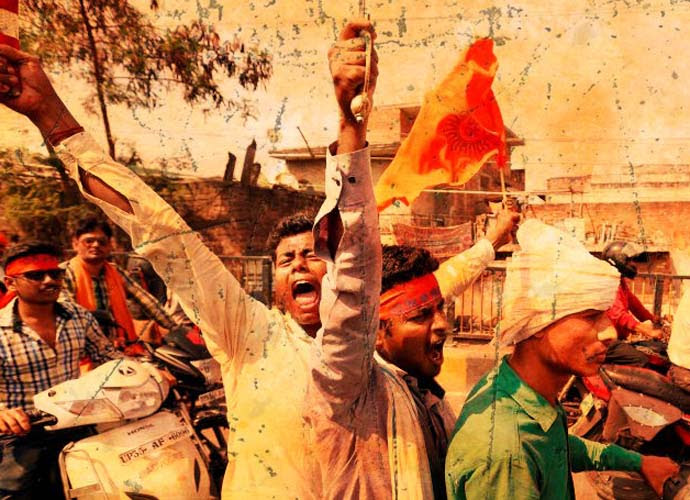 Bring back the established norm: Hindutva does not believe in a secular theory of redistribution. Or change. (Source: PTI)
In the diction of Hindutva, there is no opposition to the notion of ‘exploitation’ — both the exploiters and the exploited are given their positions by God. Hence, prominent Hindu economists, like Arvind Panagariya and Arvind Subramanian, apparently do not believe in the core ideology of reducing inequality. Of course they were deadly opposed to the notion of socialist equality, which has its own strengths and weaknesses — but what about the democratic principle of less inequality?
Does such a principle exist in Hindutva’s textuality?
Even by positive divine theory, taking societies and nations towards lesser inequalities is an acceptable norm. But that needs some planning at a human level in this world, which does not seem acceptable in Hindutva economics. Positivism is thus an enemy of Hindutva’s philosophy.
Hinduism does not agree with the human planning of taking a country towards equality — it argues that the whole planning is in the hands of God. Hence, in all likelihood, they so strongly recommended the abolition of the Planning Commission. They know that smashing the idea of a ‘mixed economy’ is smashing Jawaharlal Nehru and communist ideology. Since Hindutva’s gods created the poor as per their karma, Hinduism does not consider even malnutrition as a serious issue.
Production, according to this thought, can be increased — without increasing the distributive wages of the producers. The producers are meant to serve the consumers. The producers have to be selfless.
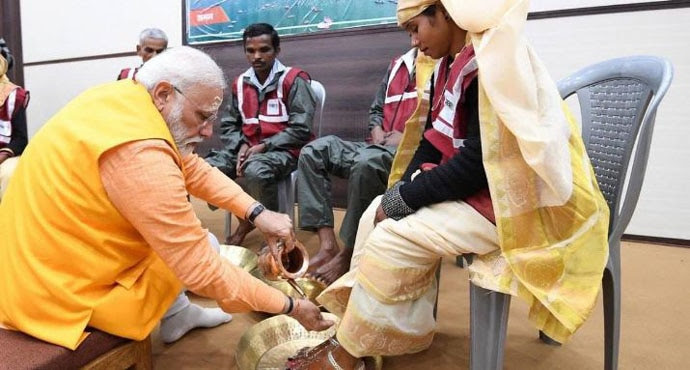 In Hindutva’s view, workers are meant to be selfless, which makes them great. (Photo: Twitter)
If the managers have better salaries and owners of industry have increased profits, even without much labour participation in market-purchasing or farmers not getting remunerative prices, the GDP still grows, by god’s grace.
Since secularism has no place in such economic thought, god’s grace plays a key role. But the universal notion of ‘Kingdom of God on Earth’ is a kingdom where there is no exploitation. In this kingdom, one who has more has the will to share with those who do not have much. Since the concept of political economy is seen as Marxist, Hindutva’s spiritual economics does not have any place for it. Hence, Hinduism should have some love for the poor. But Hindu economists, political pundits and spiritual gurus do not have that frame of thinking.
These five years (2014 –2019) of unmixed economic ideology and Hindutva’s governance have shown us what could this deliver. The powers that be have dismantled the influence of Amartya Sen and Jean Dreze on the Indian economy during this period and weakened the discourse of anti-poverty.
Now, poverty is sacred.
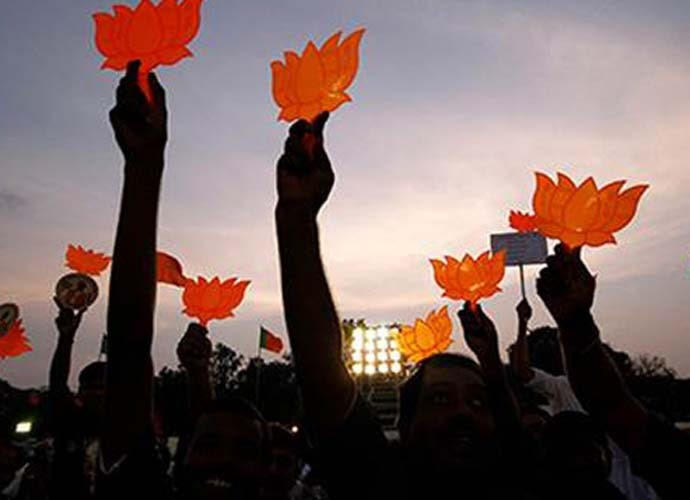 India needs to have a serious discussion on poverty, inequality, malnutrition. But the discourse is anything except that. (Source: Reuters)
According to these thinkers, by the 2019 elections, India should have been the strongest nation in the world. But now, though the poverty level, as data shows, has increased, India has become more robust apparently because the economy of Modi’s India has the best ‘growth rate’ in the world. Vedic mathematics shows all correct trends — Prime Minister Narendra Modi sees the real picture in his palm. They are all perfect when it comes to palm reading.
This growth is, of course, because the rich have increased their wealth. Since 2014, the poor have become poorer — but there is no conversation around them since the poor are not a part of Hindutva’s ideology.
Hinduism does not agree with human planning taking the country towards equality. According to them, the whole idea of equality is Western — and hence, perhaps it is anti-national too.
-
Finally, dignity of trade: Why Akhilesh Yadav’s ‘doodhwala’ vs Modi’s ‘chaiwala’ rhetoric offers hope in a post-Hindu caste world
Tejaswi Yadav calling Modi ‘nakli OBC’ and Akhilesh calling himself a real ‘doodhwala’ shows India is finally shaking off the shame associated with caste and talking about the nobility of labour.
The 2019 Lok Sabha elections have opened up many new chapters in our political discourse.
In the run-up to the 2014 national elections, when Narendra Modi started raking up the issue of caste and occupation, which was not in consonance with Hindu principles, neither his opponents, nor his Brahminic Hindutva patron, the Rashtriya Swayamsevak Sangh (RSS), realised he was apparently doing it for votes.
 Breaking from the old: Modi has repeatedly raised his OBC status. It has worked politically. (Source: Reuters)
The RSS-BJP in a way backed his claim of the Other Backward Class (OBC) status and the ‘chaiwala’ background — in reality, as I see it, the RSS has been against OBCs and work involving labour all along.
Their main plank has been Hindutva-driven cultural nationalism.
It was in essence Brahminic culture and civilisation that started with the writing of the Vedas and Upanishads and developed over a period with the writing of the Ramayana and Mahabharat. The RSS/BJP work to protect Varnadharma — but never talk about the caste background of its members. The Varnadharma order established by the Hindu texts was seen as divine and just. Any public discourse that challenges the Brahminic order is seen as un-Hindu.
<iframe frameborder="0" scrolling="no" class="i-amphtml-fill-content" id="google_ads_iframe_2" height="250" width="300" allowfullscreen allowtransparency="" referrerpolicy="unsafe-url" srcdoc="
a { color: #000000 }body { margin: 0; background: transparent; }#google_image_div {height: 250px;width: 300px;overflow:hidden;position:relative}html, body {width:100%;height:100%;}body {display:table;text-align:center;}#google_center_div {display:table-cell;}#google_image_div {display:inline-block;}.abgc {position:absolute;z-index:2147483646;right:0;top:0;}.abgc amp-img, .abgc img {display:block;}.abgs {display:none;position:absolute;-webkit-transform:translateX(97px);transform:translateX(97px);right:16px;top:0;}.abgcp {position:absolute;right:0;top:0;width:31px;height:15px;padding-left:10px;padding-bottom:10px;}.abgb {position:relative;margin-right:16px;top:0;}.abgc:hover .abgs {-webkit-transform:none;transform:none;}.cbb {display: block;position: absolute;right:0;top:0;cursor: pointer;height: 15px;width: 15px;z-index: 9020;padding-left:16px;}.btn {display: inline-block;border-radius: 2px;-moz-box-sizing: border-box;-webkit-box-sizing: border-box;box-sizing: border-box;box-shadow: 0px 0px 2px rgba(0,0,0,0.12), 0px 1px 3px rgba(0,0,0,0.26);cursor: pointer;font-size: 0.7em;margin: 0 1px 0.4em 1px;}@media (max-width: 375px) and (min-height: 100px) {.btn {display: block;width: 90%;max-width: 240px;margin-left: auto;margin-right: auto;}}#spv1 amp-fit-text>div {-webkit-justify-content: flex-start;justify-content: flex-start;}.jm.sh #spv1 amp-fit-text>div {-webkit-justify-content: center;justify-content: center;}.jt .pn amp-fit-text>div {-webkit-justify-content: flex-start;justify-content: flex-start;}.btn > span {display: inline-block;padding: 0.5em 0.6em;line-height: 1em;}#sbtn {background-color: #FFFFFF;color: #9E9EA6;text-decoration: none;}#sbtn:hover,#sbtn:active {background-color: #F5F5F5;}#rbtn {background-color: rgb(66,133,245);color: white;}#rbtn:hover,#rbtn:active {background-color: #3275E5;}#mta {position:absolute;top: 0;left: 0;font-family: Arial, sans-serif;font-size: 12px;font-weight: 400;line-height: 1em;}#mta input[type=”radio”] {display: none;}#mta .pn {left: -300px;top: -250px;position: absolute;width:300px;height:250px;-moz-box-sizing: border-box;-webkit-box-sizing: border-box;box-sizing: border-box;background-color: #FAFAFA;text-align: center;}#spv2 {display: -webkit-flex;display: flex;-webkit-justify-content: flex-start;justify-content: flex-start;-webkit-flex-wrap: nowrap;flex-wrap: nowrap;overflow: hidden;background-color: #FAFAFA;font-size: 0;}.sv #spv2 {-webkit-flex-direction: column;flex-direction: column;}.sh #spv2 {-webkit-flex-direction: row;flex-direction: row;-webkit-justify-content: center;justify-content: center;}.sh.sr #spv2 {-webkit-justify-content: flex-start;justify-content: flex-start;}.jt.sv #spv2 {-webkit-justify-content: flex-start;justify-content: flex-start;-webkit-align-items: center;align-items: center;}.jm.sh #spv2 {-webkit-align-items: center;align-items: center;}.jm.sv #spv2 {-webkit-justify-content: center;justify-content: center;-webkit-align-items: center;align-items: center;}#spv2 * {-moz-box-sizing: border-box;-webkit-box-sizing: border-box;box-sizing: border-box;}#mta input[name=”a”]:checked ~ #cbb {display: none;}#spv3 {opacity:1;}.amp-animate #spv4 {opacity:0;transition: opacity 0.5s linear 2.5s;}.amp-animate #spv3 amp-fit-text {opacity:1;transition: opacity 0.5s linear 2s;}#spr3:checked ~ #spv3 amp-fit-text {opacity:0}#spr3:checked ~ #spv4 {opacity:1;}#spr1:checked ~ #spv1,#spr2:checked ~ #spv2,#spr3:checked ~ #spv3,#spr3:checked ~ #spv4{right: 0px;top: 0px;}.ct svg {border: 0;margin: 0 0 -0.45em 0;display: inline-block;height: 1.38em;opacity: 0.4;}.ct {display: inline-block;line-height: 1.28em;color: rgba(0,0,0,0.4);text-align:center;padding: 0.3em;}.fct {padding: 1em;}#pct {display: block;font-weight: bold;padding: 1em 0.3em;}#ti {width: 300px;}#btns {width: 300px;}.fl {width: 300px;height:250px;}#si {position: relative;display: inline-block;margin-bottom: -0.15em;height: 1em;width: 1em;opacity: 0.4;}.sb {flex-shrink: 0;height: 50px;}.so {position: relative;z-index: 9110;overflow: hidden;display: inline-block;padding: 1px 5px;width: 96px;height: 50px;border: 1px solid #E0E0E0;background-color: #FFFFFF;cursor: pointer;}.so:hover,.so:active {background-color: #F5F5F5;}.so div {display: -webkit-flex;display: flex;-webkit-align-items: center;align-items: center;-webkit-justify-content: center;justify-content: center;width: 100%;height: 100%;}.so span {color: #4285F4;font-family: Arial, sans-serif;text-align: center;font-size: 12px;line-height: 14px;white-space: normal;}@media (min-height: 54px) {.sh.ss .so,.sv .so {box-shadow: 0px 0px 2px rgba(0,0,0,0.12), 0px 1px 3px rgba(0,0,0,0.26);border: none;}}.sh .so {margin-left: -1px;box-shadow: none;}.sh .so:first-child {margin-left: 0;}.sh.ss .so {margin-left: 8px;}.sh.ss .so:first-child {margin-left: 0;}.sh.jt .sb {margin-top: 8px;}.sv .so,.sh.ss .so {border-radius: 2px;}.sv .so {margin: 4px;}.sv.jt .so:first-child {margin-top: 8px;}.amp-bcp {display: inline-block;position: absolute;z-index: 9;}.amp-bcp-top {top: 0;left: 0;width: 300px;height: 10px;}.amp-bcp-right {top: 0;left: 290px;width: 10px;height: 1000px;}.amp-bcp-bottom {top: 240px;left: 0;width: 300px;height: 10px;}.amp-bcp-left {top: 0;left: 0;width: 10px;height: 1000px;}.amp-fcp {display: inline-block;position: absolute;z-index: 9;top: 0;left: 0;width: 300px;height: 1000px;-webkit-transform: translateY(1000px);transform: translateY(1000px);}.amp-animate .amp-fcp {-webkit-animation: 1000ms step-end amp-fcp-anim;animation: 1000ms step-end amp-fcp-anim;}@-webkit-keyframes amp-fcp-anim {0% {-webkit-transform: translateY(0);transform: translateY(0);}100% {-webkit-transform: translateY(1000px);transform: translateY(1000px);}}@keyframes amp-fcp-anim {0% {-webkit-transform: translateY(0);transform: translateY(0);}100% {-webkit-transform: translateY(1000px);transform: translateY(1000px);}}body{visibility:hidden}{“transport”: {“beacon”: true, “xhrpost”: false},”requests”: {“ampeos”: “https://pagead2.googlesyndication.com/pcs/activeview?xai=AKAOjsuFJGE5ezd7WJUvqkTWVLIsQ528g59n68T7y1jLvQdOaMLG1CKWpo2eEXTxAsijfi-ELJweTjt5zx5wALN84Yb6eeZYcSVA2W0x-maqKkDD_nBlKd8&sai=AMfl-YT6OBzli3RhhuHdKUBsrkRGM2tT1hiU29VbawnRW7wEWmkZEwGCw4-UAMt9VhLwXGvAI64wFR5new_8liO_zSgRxSQgdCv5I5I&sig=Cg0ArKJSzH1tlxfpCP-TEAE&cid=CAASEuRo012fQXEb6nz6KUQS_ZRRLA&id=ampeos&o=${elementX},${elementY}&d=${elementWidth},${elementHeight}&ss=${screenWidth},${screenHeight}&bs=${viewportWidth},${viewportHeight}&mcvt=${maxContinuousVisibleTime}&mtos=0,0,${maxContinuousVisibleTime},${maxContinuousVisibleTime},${maxContinuousVisibleTime}&tos=0,0,${totalVisibleTime},0,0&tfs=${firstSeenTime}&tls=${lastSeenTime}&g=${minVisiblePercentage}&h=${maxVisiblePercentage}&pt=${pageLoadTime}&tt=${totalTime}&rpt=${navTiming(navigationStart,loadEventStart)}&rst=${navTiming(navigationStart)}&r=de”},”triggers”: {“endOfSession”: {“on”: “visible”,”request”: “ampeos”,”visibilitySpec”: {“reportWhen”: “documentExit”,”selector”: “:root”,”visiblePercentageMin”: 50}}}}
{“requests”: {“convPing”: “//googleads.g.doubleclick.net/pagead/conversion/?ai=CiJp0WtXDXM-mOsOZrQH0r6-wBuOy-_pVktjz85wJjr2esqoSEAEg-MjJIGDlAqAByK-H-ALIAQOpAgbs5ieNq04-4AIAqAMByANIqgTiAk_Q0A4SOdC0VCVbSuBZjaa32NQVxEAxsz76EJCs-zKnplzQm4VNrHf5kCYp1XBnarmHpPkfZRnRsWW-u427Nt5-NQCCANwGHrQRcjVLjkLZmu3J-SAQRVfDmMT6WED91x83-0682LHOMg5vVyfVVFwHUV1k5wrtbZwXgtDBSBmOWNJ3JHqVKEka9HVhIb4wj4nkIozYtkjk3lGI9bBPyF1_tGMaAtR4gMEAiQi0PKZ3QCjMqFpsG0Er2jx-Zf_lkHj7pam0ANy-ejn8ruW0zq9B3h2iFXTpGgP9gwa4pfO7Rsv9_5Pa6-TiY1OoYOOtm_CT3AkY815FdJxRZgk9oE7ZUIVO8ArJhJlioPZtwgtvWxUsuamGk4Oq9fmF5HAYUvKWv8At9-sklBz0SktQXs-VZcIznTdSp4PQX2THUm7aWBHZPN1ahph9zGixGi_3aOCzzmzX7FcwUbm92uN6FAhHBcAEt5XBpYIC4AQBiAXv1_jtBaAGA9gGAoAHoND4hwGoB47OG6gH1ckbqAfg0xuoB7oGqAfZyxuoB8_MG6gHpr4b2AcBoAjn4qcEsAgC0ggHCIABEAEYDbEJgnwljlOnkVSACgPYEwKCFA8aDXd3dy5kYWlseW8uaW4&sigh=131dD4I6yVQ&cid=CAQSKQDwy9IZSNCEOTjzamfIxiSs03hUg0thoFeHyxurz9RU0fEe96p42EPb&label=${label}”},”transport”: {“beacon”: false,”xhrpost”: false,”image”: true},”triggers”: {“trackBC”: {“on”: “click”,”selector”: “.amp-bcp”,”request”: “convPing”,”vars”: {“label”: “blocked_border_click”}},”trackFC”: {“on”: “click”,”selector”: “.amp-fcp”,”request”: “convPing”,”vars”: {“label”: “blocked_fast_click”}}}} {“requests”: {“pageview”: “https://pagead2.googlesyndication.com/bg/MvXIeM7943BQ1N_0N4iPZKfrGpfU9VmO140X5nheLUw.js&OLL3c3Iz/0iLu2vW3Fae7SFL+02qIOo0GwcQHsc8vYRJS12CFCp0owmYmDV741Q9xHBxXLq1X+lEgigEGdQrtFWdasuxyJfvQgNNenCDDjorrUuAZCI0pWjVY9xGXonq3br9HHIxGgTRav8F0z71N/a7mOeO3muoinmOv5QLG6N3+4lH+bkw4VXkrgTUffpQv6/deh0Q039/I3R32qJgNhMROt9un0KV8Xz1EYfFVvRNFQYgLhrDNhU9AoHUDTE764h3PeOJCaoFtlEdq6dMe3o+NEXnSvHyWo88WuO9q7lcbnZMzMLBfKF6WQ1ew6t2aCpYkxQwWpL5Bs6SaU8BtmuTpVudJSEX/yOivaiJFqodi158SWxKsOA66ATdEaROZVfcGFdGR65lZccsbacmAYsbDat95RMgTP5Te+xp8iekNsaSQDKzInqzUziCxoG4rfisvI6SZlOJPjgbqOtXF0d4koQKW9ElZx8r5sqeA5RuXuUmW3Uw/jiiIBE3jGqacDNjm6wa8q8lX/81U8L01qyNEosCDEj9NU1JkiQexCQ26dEZKjNpAd9tJyud10E+G4p9mBl+SaRQR40XRwszWTq9LNvWoaqxfnhesEjat1uQqkegNw/0gd8Xs5mwAyOgXMXI8Wse7+U8zD0/XSAUQ+2Ldl0ieWLn4rqoSEw7DZqxkNuR0XUBqGrDUuepdiZWJtVNDAhgGZGYLa6kj+mZfRDy2ntPEz9rO4s08N2fw3GVRYgRKku+LjFdW4EuNQzzZLBR3NxM9S4o/bjFKW7wymPxT5+fu77xiP2qxRJr9R8hVDxbPDppNaxSMiYK6yo+Tsx+dcMkmmIZPv3pLPK0wxQP4Kv6kNdy50hGndu79+Oq2RmyOqtjni5IFhUPWsaZQ5HKxj/hDG8qRZ7WRWDEfUArGiBKktAS7zxTgEZ+Sg+ExwpheVkhK4PkmU9NAjgDINKgfK6SvII4quFuwuou1f3E34GgkrwCJfjSNXFyMt6nOXtVUpr8WTr+ZZNIeqPLplGT5D7/k6LmuDWPQ6V2eC0XuxAg2wTIFt20AOsxu80Fm0t9y+s2hCHQBxm+ZBJrnNLY+jf2DYJLP9G60hUlkmwkSV9Ee4NrQ6HQ0Fnf0RZ3igNK6cTP9xvExCBD5ap2qL4HzABQHj1OiiAwBDj41vbV3fTrYGO/rFyZQmee2pTJBja2r3sk0eeKHroaUgsfCI9N9cZfuEr1o+PZWacEbJ/+V067RG1jLsi99ylMQRxNKK3pYABpjl+kGVyWzu6t7pLVEoTRdgQ8vAPu5gBErE+I4ivdIp84Oemh8mcPUvsApKRzRC6vzd8aP2mHNpnZ7pLypYKGoBx4dYVXIyNvsz/BBAQl+legArD4gYDNOSOXMmuZCFl8fo1TeT1ewdvvBUv0P+aDvaUyaWjBtd25iusuO8MxtOwS9PTHs6Z1n6pYH14hOBQE2mJA6cOheLaSNTKH+M7cenm7DnYReny3b4YTohnIO6O1C44MOw8XzPelM/HzgJFG7v3stwFSNu9iR6p4dqakUOCbGVfC/s3tzTYrBPB7K9WYSTcLfHNFB7SfORFhJEUDzVeGZCzOpMQ/cXGyYeT/hGoS0iShO0488kDr61Mm6bWOPft/69kYG2b55QquY+Dtjx5gKcu+inun1S3NPhPhVGMv5m9CMVqhyPjM83uMRqDdBy8dzYwPoRIl+WPpjRRRJrPlyDp/lA1u9zCX4bo+S/++rccFWMxuzLAdrlll89WtHcchNyluQKPUKYZbCkaxclhKbz9X0pAovXhL3Feed4H485TVXEqckrQBriyBAgLQGTAhYfq9qZ0NztFAQNFgj9a6RbxbOYv0wPTZuq2yGEHHBWqftPgzcYl2U5XSAXLFv3MQkT2L1hfMs7sW3JZWeU+SooQnPEM8bg9fxjwXxyqy3mqylurgcfSrtMDHkAeRx3cd5X3Fwi1EMGr6tQSwYjq1TOo+6E9alCoDbM/GaDkZWn6Xdx1M5NX9pQPb0Eigu/wNQrxjDawaHwO4nLvMEhvYc4Fg1lsBHTUsCcQczbTMFTlPmMp/MeYJTIEiTkwlsn3yHIn92XZH8+APh2JbYfb9ClEO4lLcPAIWyhlWG/9UHFnU5YLadUe539sqZozIoZVWDTS/1vOGuRk3Szlq/J0FbYp8lLr05tkWz0lUp/GXbIOJPmf2ljNrBzEUhXEYvPgKRqO4CGhbup75VBd8yTsF7QrQuc17p7PxmOQ/KOx7MDOp2YI6DYlN5w6FX9nh2SDNFJBffH/s9xlCz4vJSgA2VC3HjpTxsroapL3raAtPZHs6FpNRFwTYvWju/NtOVgAtKViOIs6R8RdLS+RA13nPRlad7mwlS8l8PLjdSAdQkc6tyKYEASK27VkhaOtM0n9/PTxir+++ysKDUuEXqwEi/k1QjQHd/TTSQeKGl3JQuN0AIBCMawP3cHuCl55tJa0yLXTpijA79vE+NDXWR2tnTeFG89L1QVSyZF8GjnejNK1N1BaGeb4XU8UAdUU7nUNKW66cLd350lqCboQBOGtXGHIXIU6u/Ix/XG0d6Xka66EPgb9kwy0OnjObebGTckMW0ewrbncxQvpsmgcSg33RvYJ49ZXAy0JtevTxNQNP6AfWvzcwXmCZWjmqFMy9iPvS3Gv1upT7B1TNo9Q7fBpYQmSWl7+3x3e+cW0KeJ8p2nUFHpO+GzQ4feKiHOgX3NMUnGEJJ9vDz3pQ2uU7FO2sccXeWBGRdzcKQaX5IRBDp2KDjxLDOdTObTmtgHH7kcESivPO8FN9G53fWD4WZcFRGxjT/k8pD86M1vYR4stxoqf5a0IDKVwVEXu7uqf2pHQXGkZIBeQQIYZDGe6wzT6lQdRlxXx6C+zMqkMm0kGQuIDC0p//mQpuG6Gda7RtJNT+RaVhmxrnwkg4T9Kc9rVzDr8D0DGNtEckSAq14EoryENe+7de2sxEHe/T6qrRQ+uGCKV+MNjDI/Ph7AWIhNVDIQbwQKkaNt0SymrKyIjTjMnWJV5aPv3jrfitIZAr0ZTZAK9jJ9O4FlQIO23l4yyBEO/VJMHMZOVZdk/DbR5VBLqAwTw44AiBkXTcyaT61f8AA86xCjBtecLY7cqYznL5ePq/BhuQR5Lrb4Yz9BWt9U1PAAwhlAcmGImSizE4vsba81npITJsSZOP8M6F+ukAEej2BRUvJQwuBlbIzA5M3VLkyNmsXx5PcJ0V+3d9xQ6FM/9AHFcB0Vww1H3J7jiN+CUNQBcnNLF8kHoa99ls3zBdlu/ssAufUd2DZcVeEF51U6vJ1e10SdXkrwwYiTzPXARafeQWIX2aK32XOpYht0rnnBxvEP+IhJg7W87lmvtaDPwiwSNG3jn1XAUgiHUMERBtflr4TchYG4kUKzAAOvcDczZICQsr3O5Tn5XGZZCePguRepWGV92JTprh5R6NNki9Vl+l1RZynJod/CaBoiCo1ifPMCg8HRb66q3uHQWLgQznd003dY8nY78J8pZnZJ39WqYcsW434POoZ8OEfKh16Waf0+foCn/yEZzZEZ9N4iepJyL3hkKRB0epoAOTV3k4OSQaZ5R0xY5XsCGJA+CiigxdTueSljZVDf9UuSLI7CvABz9Q5nOTGaIF4en0mFpekT6dfx2lKlXzcPJf0Z2yfgC701wHp4GbP66k4h4eX3EEmGPtlKWcFWVlOaeaPptu1JWotDCnhln1KHWbGQUAVCxEdoaVcuG3xUbbieRYVz7D85YuBGnXMRT8ujWYqC3I1AO4mkiPcGK9CmNkIX0YC5bXBf/7LN2cq407OqnLeRIbmdMGm29XtaUQI8bJeYnqVdb5A4AaSjvN4GQSrrRHNUbjGbIkBdeSCvNjXnxH+fYxYQQ43Al+QoxJI7rGQGq2v2e5xGj7hAOPIBAu4V2pbui90n3xfeHs3elEbPOske/eLSC9SK9uARm/JUL2zwu8MASNwq24WnHTvaTt94z+WWKRY3ci0rNrMdciT5apBakrPQT92GtX0cYFCs37oD7M2BNzuXWh/ekik3botp/y3q5o8aCwR5jBZNLHHzzLP2h9rdsZhbVfhQ/9c2WyS5cKCRd2tEmA1tJMMt73x+MrwY+zT5W6Zo5h49oO+mQ2Y2wbehVlMuc1hUatHpeWSyZLw07taLfN7GQvz3nMfCSYJ1/wbjymRarPBvkh+lAB/R0NmITL4jNqbBclozVAgUKuSlvLu+bR7+LST4obOfMr5n75N722G0Rb8+PFJwdWqPlNyCoGOHxC3Gu2I6f2yDdIeJXNBd6cRnY1//GByx8MaQmzdpBOaoICN+WGLKROZVfHoPlqHzAixTaVTTvs+W3/SEql0KBEfxCAuHjOWgfOynnfQbRriaW39HDfg5H/3KzUiIFo5xuIh2jIMoZSgPrt487kYiBcARU9PS0BOMctJkxlDqhAP8+5RkPa9ocaSDndBmHxzM/gSiSsRC9wEV0gWeLw863ZPFjh01F97FHCM/ZkXkF2jzMngWkaGVcHEteB/+qsxEJxQsVn0/xLZHnJUs+1MGPz5MrEKnZtFNxRKS2Th1RoAv/SOo8kKsf3p0yPcRIVFV7uH9PYJH6ybIZeCr4fUl6f5deqCWWIag+UwieYiM6LA9dgDXiz8amoiAwkkKm28U4b2DbKUDepu0H11kw42eSpOWFRINlLMHjQCv6/9+XTtDzh/cDzP2d9TH5jv/1f3ISvb0KbDTRBFzRMyo9695b0DPTE+G2ZuJAKjUiqGRl90Yr45OCqIejXFvoW0HFOU2vsQf3xQDVsyEApg3lNYQ/6p2R03gG/ybaUuRmPF6BFSOF0/sQpdsZ”},”triggers”: {“defaultPageview”: {“on”: “visible”,”request”: “pageview”}}}{“filters”:{},”options”:{“startTimingEvent”:”navigationStart”},”targets”:{“landingPage”:{“filters”:[],”finalUrl”:”https://www.durfi.com/products/durfi-dual-comfort-dr-pillow?device=m\u0026keyword=\u0026creative343873947583\u0026placement=www.dailyo.in\u0026gclid=EAIaIQobChMIz7us8rLv4QIVw0wrCh301wtmEAEYASAAEgKRNfD_BwE”,”trackingUrls”:[“https://www.googleadservices.com/pagead/aclk?sa=L\u0026ai=CiJp0WtXDXM-mOsOZrQH0r6-wBuOy-_pVktjz85wJjr2esqoSEAEg-MjJIGDlAqAByK-H-ALIAQOpAgbs5ieNq04-4AIAqAMByANIqgTiAk_Q0A4SOdC0VCVbSuBZjaa32NQVxEAxsz76EJCs-zKnplzQm4VNrHf5kCYp1XBnarmHpPkfZRnRsWW-u427Nt5-NQCCANwGHrQRcjVLjkLZmu3J-SAQRVfDmMT6WED91x83-0682LHOMg5vVyfVVFwHUV1k5wrtbZwXgtDBSBmOWNJ3JHqVKEka9HVhIb4wj4nkIozYtkjk3lGI9bBPyF1_tGMaAtR4gMEAiQi0PKZ3QCjMqFpsG0Er2jx-Zf_lkHj7pam0ANy-ejn8ruW0zq9B3h2iFXTpGgP9gwa4pfO7Rsv9_5Pa6-TiY1OoYOOtm_CT3AkY815FdJxRZgk9oE7ZUIVO8ArJhJlioPZtwgtvWxUsuamGk4Oq9fmF5HAYUvKWv8At9-sklBz0SktQXs-VZcIznTdSp4PQX2THUm7aWBHZPN1ahph9zGixGi_3aOCzzmzX7FcwUbm92uN6FAhHBcAEt5XBpYIC4AQBiAXv1_jtBaAGA9gGAoAHoND4hwGoB47OG6gH1ckbqAfg0xuoB7oGqAfZyxuoB8_MG6gHpr4b2AcBoAjn4qcEsAgC0ggHCIABEAEYDbEJgnwljlOnkVSACgPYEwKCFA8aDXd3dy5kYWlseW8uaW4\u0026ae=1\u0026num=1\u0026cid=CAASEuRo012fQXEb6nz6KUQS_ZRRLA\u0026sig=AOD64_0NLXeKxPk6ThQuXIbHdkDLMGGKfQ\u0026client=ca-pub-3622136098794040\u0026bg=_bg\u0026nb=_nb\u0026nx=CLICK_X\u0026ny=CLICK_Y\u0026act=1\u0026ri=1\u0026adurl=https://www.durfi.com/products/durfi-dual-comfort-dr-pillow%3Fdevice%3Dm%26keyword%3D%26creative343873947583%26placement%3Dwww.dailyo.in%26gclid%3DEAIaIQobChMIz7us8rLv4QIVw0wrCh301wtmEAEYASAAEgKRNfD_BwE”],”vars”:{“_bg”:{“defaultValue”:””,”iframeTransportSignal”:”IFRAME_TRANSPORT_SIGNAL(bg,bg)”},”_nb”:{“defaultValue”:””,”iframeTransportSignal”:””}}}}}” style=”margin: auto; padding: 0px !important; box-sizing: border-box; outline: 0px; border: 0px !important; display: block; height: 250px; max-height: 100%; max-width: 100%; min-height: 0px; min-width: 0px; width: 300px; transform: translate(-50%, -50%); top: 0px; left: 0px; position: absolute; bottom: 0px; right: 0px;”>
Though Modi started an ostensibly un-Hindu discourse for votes, the RSS and BJP allowed it and went along with it.
Modi, in some sense, superiorised his legal (if not social) OBC background by asserting his chaiwala background — which, in Hindu dharma, is considered mean work.
The RSS-BJP allowed it for political expediency.
Former Prime Minister Atal Bihari Vajpayee would never have spoken such language because he came from the Sanathan Brahmin background.
While addressing the Bania (trader) community on April 19, Modi reportedly said: “Gandhiji called himself a Bania with pride. But the naamdars of the Congress brand all the businessmen as chor. Today’s Congress doesn’t know about history. The naamdars don’t know about the traders’ contribution to the progress of the country.”
Modi, thus, identifies himself with the Bania community.
Attacking ‘Harvard educational culture’, Modi said he comes from a ‘hardworking’ background. Though Modi’s family does not stand testimony for all that he is claiming, his claims have attracted many political retorts.
A fitting and honest reply to Modi’s discourse of caste and occupation came from former Uttar Pradesh chief minister Akhilesh Yadav.
<iframe frameborder="0" scrolling="no" class="i-amphtml-fill-content" id="google_ads_iframe_3" height="250" width="300" allowfullscreen allowtransparency="" referrerpolicy="unsafe-url" srcdoc="
a { color: #000000 }body { margin: 0; background: transparent; }#google_image_div {height: 250px;width: 300px;overflow:hidden;position:relative}html, body {width:100%;height:100%;}body {display:table;text-align:center;}#google_center_div {display:table-cell;}#google_image_div {display:inline-block;}.abgc {position:absolute;z-index:2147483646;right:0;top:0;}.abgc amp-img, .abgc img {display:block;}.abgs {display:none;position:absolute;-webkit-transform:translateX(97px);transform:translateX(97px);right:16px;top:0;}.abgcp {position:absolute;right:0;top:0;width:31px;height:15px;padding-left:10px;padding-bottom:10px;}.abgb {position:relative;margin-right:16px;top:0;}.abgc:hover .abgs {-webkit-transform:none;transform:none;}.cbb {display: block;position: absolute;right:0;top:0;cursor: pointer;height: 15px;width: 15px;z-index: 9020;padding-left:16px;}.btn {display: inline-block;border-radius: 2px;-moz-box-sizing: border-box;-webkit-box-sizing: border-box;box-sizing: border-box;box-shadow: 0px 0px 2px rgba(0,0,0,0.12), 0px 1px 3px rgba(0,0,0,0.26);cursor: pointer;font-size: 0.7em;margin: 0 1px 0.4em 1px;}@media (max-width: 375px) and (min-height: 100px) {.btn {display: block;width: 90%;max-width: 240px;margin-left: auto;margin-right: auto;}}#spv1 amp-fit-text>div {-webkit-justify-content: flex-start;justify-content: flex-start;}.jm.sh #spv1 amp-fit-text>div {-webkit-justify-content: center;justify-content: center;}.jt .pn amp-fit-text>div {-webkit-justify-content: flex-start;justify-content: flex-start;}.btn > span {display: inline-block;padding: 0.5em 0.6em;line-height: 1em;}#sbtn {background-color: #FFFFFF;color: #9E9EA6;text-decoration: none;}#sbtn:hover,#sbtn:active {background-color: #F5F5F5;}#rbtn {background-color: rgb(66,133,245);color: white;}#rbtn:hover,#rbtn:active {background-color: #3275E5;}#mta {position:absolute;top: 0;left: 0;font-family: Arial, sans-serif;font-size: 12px;font-weight: 400;line-height: 1em;}#mta input[type=”radio”] {display: none;}#mta .pn {left: -300px;top: -250px;position: absolute;width:300px;height:250px;-moz-box-sizing: border-box;-webkit-box-sizing: border-box;box-sizing: border-box;background-color: #FAFAFA;text-align: center;}#spv2 {display: -webkit-flex;display: flex;-webkit-justify-content: flex-start;justify-content: flex-start;-webkit-flex-wrap: nowrap;flex-wrap: nowrap;overflow: hidden;background-color: #FAFAFA;font-size: 0;}.sv #spv2 {-webkit-flex-direction: column;flex-direction: column;}.sh #spv2 {-webkit-flex-direction: row;flex-direction: row;-webkit-justify-content: center;justify-content: center;}.sh.sr #spv2 {-webkit-justify-content: flex-start;justify-content: flex-start;}.jt.sv #spv2 {-webkit-justify-content: flex-start;justify-content: flex-start;-webkit-align-items: center;align-items: center;}.jm.sh #spv2 {-webkit-align-items: center;align-items: center;}.jm.sv #spv2 {-webkit-justify-content: center;justify-content: center;-webkit-align-items: center;align-items: center;}#spv2 * {-moz-box-sizing: border-box;-webkit-box-sizing: border-box;box-sizing: border-box;}#mta input[name=”a”]:checked ~ #cbb {display: none;}#spv3 {opacity:1;}.amp-animate #spv4 {opacity:0;transition: opacity 0.5s linear 2.5s;}.amp-animate #spv3 amp-fit-text {opacity:1;transition: opacity 0.5s linear 2s;}#spr3:checked ~ #spv3 amp-fit-text {opacity:0}#spr3:checked ~ #spv4 {opacity:1;}#spr1:checked ~ #spv1,#spr2:checked ~ #spv2,#spr3:checked ~ #spv3,#spr3:checked ~ #spv4{right: 0px;top: 0px;}.ct svg {border: 0;margin: 0 0 -0.45em 0;display: inline-block;height: 1.38em;opacity: 0.4;}.ct {display: inline-block;line-height: 1.28em;color: rgba(0,0,0,0.4);text-align:center;padding: 0.3em;}.fct {padding: 1em;}#pct {display: block;font-weight: bold;padding: 1em 0.3em;}#ti {width: 300px;}#btns {width: 300px;}.fl {width: 300px;height:250px;}#si {position: relative;display: inline-block;margin-bottom: -0.15em;height: 1em;width: 1em;opacity: 0.4;}.sb {flex-shrink: 0;height: 50px;}.so {position: relative;z-index: 9110;overflow: hidden;display: inline-block;padding: 1px 5px;width: 96px;height: 50px;border: 1px solid #E0E0E0;background-color: #FFFFFF;cursor: pointer;}.so:hover,.so:active {background-color: #F5F5F5;}.so div {display: -webkit-flex;display: flex;-webkit-align-items: center;align-items: center;-webkit-justify-content: center;justify-content: center;width: 100%;height: 100%;}.so span {color: #4285F4;font-family: Arial, sans-serif;text-align: center;font-size: 12px;line-height: 14px;white-space: normal;}@media (min-height: 54px) {.sh.ss .so,.sv .so {box-shadow: 0px 0px 2px rgba(0,0,0,0.12), 0px 1px 3px rgba(0,0,0,0.26);border: none;}}.sh .so {margin-left: -1px;box-shadow: none;}.sh .so:first-child {margin-left: 0;}.sh.ss .so {margin-left: 8px;}.sh.ss .so:first-child {margin-left: 0;}.sh.jt .sb {margin-top: 8px;}.sv .so,.sh.ss .so {border-radius: 2px;}.sv .so {margin: 4px;}.sv.jt .so:first-child {margin-top: 8px;}.amp-bcp {display: inline-block;position: absolute;z-index: 9;}.amp-bcp-top {top: 0;left: 0;width: 300px;height: 10px;}.amp-bcp-right {top: 0;left: 290px;width: 10px;height: 1000px;}.amp-bcp-bottom {top: 240px;left: 0;width: 300px;height: 10px;}.amp-bcp-left {top: 0;left: 0;width: 10px;height: 1000px;}.amp-fcp {display: inline-block;position: absolute;z-index: 9;top: 0;left: 0;width: 300px;height: 1000px;-webkit-transform: translateY(1000px);transform: translateY(1000px);}.amp-animate .amp-fcp {-webkit-animation: 1000ms step-end amp-fcp-anim;animation: 1000ms step-end amp-fcp-anim;}@-webkit-keyframes amp-fcp-anim {0% {-webkit-transform: translateY(0);transform: translateY(0);}100% {-webkit-transform: translateY(1000px);transform: translateY(1000px);}}@keyframes amp-fcp-anim {0% {-webkit-transform: translateY(0);transform: translateY(0);}100% {-webkit-transform: translateY(1000px);transform: translateY(1000px);}}body{visibility:hidden}{“transport”: {“beacon”: true, “xhrpost”: false},”requests”: {“ampeos”: “https://pagead2.googlesyndication.com/pcs/activeview?xai=AKAOjssfoW16XhMWODVY7fkUZeUnrrsbOwy0_SEujcEOAK1AJs9S8ZvnmA4bhjfDP7ej1RcckuDCJiIEdhjJUNFOjMNdCB5Fdc1F9ITvUS4bDF3XTy–5iM&sai=AMfl-YQ81o6lRjdGqwKn3rWUn9udwGYsdcw9N2HUdXj1SSNXV18kbFiXr64RPVVwA4DTVCQNBbANSCAYA_1q5BQVexkma6p7QS2iFVI&sig=Cg0ArKJSzG4TWHOk0lAgEAE&cid=CAASEuRoow9l4BLfLSr8gEc3onDeVw&id=ampeos&o=${elementX},${elementY}&d=${elementWidth},${elementHeight}&ss=${screenWidth},${screenHeight}&bs=${viewportWidth},${viewportHeight}&mcvt=${maxContinuousVisibleTime}&mtos=0,0,${maxContinuousVisibleTime},${maxContinuousVisibleTime},${maxContinuousVisibleTime}&tos=0,0,${totalVisibleTime},0,0&tfs=${firstSeenTime}&tls=${lastSeenTime}&g=${minVisiblePercentage}&h=${maxVisiblePercentage}&pt=${pageLoadTime}&tt=${totalTime}&rpt=${navTiming(navigationStart,loadEventStart)}&rst=${navTiming(navigationStart)}&r=de”},”triggers”: {“endOfSession”: {“on”: “visible”,”request”: “ampeos”,”visibilitySpec”: {“reportWhen”: “documentExit”,”selector”: “:root”,”visiblePercentageMin”: 50}}}}
{“requests”: {“convPing”: “//googleads.g.doubleclick.net/pagead/conversion/?ai=CKfjkW9XDXLaDDNWUrQHVmo3wD-Oy-_pVktjz85wJjr2esqoSEAEg-MjJIGDlAqAByK-H-ALIAQOpAgbs5ieNq04-4AIAqAMByANIqgTrAk_QZQO1i_JOUAXyX7tV89nu69IXjzgJmq90vbrBAf9RaIP0z4RdZsPj3vknDM9atc-HhwNn4YQNYdRDrimsNUwX7c-uQMyxHzWwX0dl8TjwJINjsQg2PzDp9ftT7UhoE8PzZc0UkRxyyZOOOZmPAbjeVP3yNhp1W2EuPkvhDlO0CD0caWuVDGBemYYy8hcqywndjF4-nwB6I_1TLe5PkIRjME1frbHZPw7aEZ3HMNYb2McwbX9k2vf-xaB2jzR0_5bmoZxCWzGmFwFs8JKIivDP0V57-DUpWa_evUT6gO-75Wla4hoW1CG3-9fSA0eR5g_pmSkYQtD7kgknJipK7K41j6jkcCN7NC4R-us9RATmldPIFoVeixpv6yPqsN8CKeJF5Cjy7PiE5e_AqXeDJBKYX3Korysazl90tDKgg0QQyn0D8JZeVLLphfv7JsgdrwsloAKxon23oFx_9YWX7SRNIUB7IFN4HFCAFMAEt5XBpYIC4AQBiAXv1_jtBaAGA9gGAoAHoND4hwGoB47OG6gH1ckbqAfg0xuoB7oGqAfZyxuoB8_MG6gHpr4b2AcBoAjn4qcEsAgC0ggHCIABEAEYDbEJgnwljlOnkVSACgPYEwKCFCMaIWQ2NzUxNzIzMDhhNjIxNDEuYW5vbnltb3VzLmdvb2dsZQ&sigh=OIJpB6ecMXY&cid=CAQSKQDwy9IZylUiv8LoPsVMKzL8BvOhoW2hUtT0GDF7jJcNf7OoYZ4IvQvC&label=${label}”},”transport”: {“beacon”: false,”xhrpost”: false,”image”: true},”triggers”: {“trackBC”: {“on”: “click”,”selector”: “.amp-bcp”,”request”: “convPing”,”vars”: {“label”: “blocked_border_click”}},”trackFC”: {“on”: “click”,”selector”: “.amp-fcp”,”request”: “convPing”,”vars”: {“label”: “blocked_fast_click”}}}} {“requests”: {“pageview”: “https://pagead2.googlesyndication.com/bg/MvXIeM7943BQ1N_0N4iPZKfrGpfU9VmO140X5nheLUw.js&OLL5Z0dXoiOjQlQDRU8LfdSpR8wvxMVOWWV78EBlA42PKN2hpZAYXkR7glo2an6i1PoIUcubWMDxC5KoCl6N6sh1FfwpCSEZe1/3P/t510WL/IItdLw41bplcM/4LIygJGiGPqRG6R1CypYXXWgTmsHIamRqt+QHHGd9WWfkiwPcsB0rDW9JJsKnxBR/Aa54sntzK+lJ+uqmZRhfvUwFAEu5NLoaNPbVvgmCkVxv3J1aPiwqi9VPGEuI07omphj7m/mRiZPzyj4AhjYBScJoQOkdMeFtqOEN/LIHLoCMfWF9xRpVyhEb3aO6d2nyc9vQPuTtUpsBmHMbH+Kf7r3XmzxdFW8mZt494mP/VCfi58AkK11r+MV8nku7cWDYwlvdtdIL8KS78jVwggpsaXKPOX8z7qMoat0HX3ZO0cBsbCJ1yILm4s9rNtDRePpFdaLzdwN7y+Cc26QkBsEifW1hynwpRkopxm9RXuq2vc3qhuEiwo0J9LyhABXoB4hD4la0pe2A+l1jp/5cKFH+WAF440upb+0vI5EpJVUkaXU0hR9WDAi1pE2Xhca2Ix8oQbPmAy163BI1I2+nwMnct3xolKqhcskM9aPPF7fwag52TcYsir0xs7JMS7qMH0QULEhP7zeHFVkVHMO8M1xscj6MMK2zaZ4T/wEZtKpMrj2pl4aynIlYDU/wrOyEUEjH1iVC6zMsDav0ikII5LRcQEdnmRWbAM0+w+OqnoPl+HC42JpNHFaIcwwWBoQ6OMjZN84PEanJGc0uZHP0l4svxxbrrTJMv/wHkAYVZ5+i42bN/em3YinxjS2J16q3aFv7Ihxwtqqw0+wTunR2cWXzQd9Inix9QfVUE5CT9O052M+bALouFygm2EFQgj7NfpsNL+VIxVqX28yss0HZ0SMXTzHmjz5VXfWpGrEIBHdbmuXBh8VGsp2+MIQrUCEhd4Ufjqr6HZpWZmImRWYTyV9DrXN/blxk1/ksGOToLIt4ZLhWsb4qqk3oW9zq9aPvo0u0Q2NCMAglW4s+w77YM1fRNV91XEixwBPycHcP9vH54yNuOOYaF9VL0DzHQXXyx49mRvcOQx2XT14d7rSS8i13r+zChSmed1uPSlgPXlgoh/iBet08fYDYQjeD33M44zvLVFaSm1R1hhuujO3lywdXSU5x+G0CpWKcEYseiE2AnpQIIUy5ztcUZKKHo/OJSsKJVmvvQhg6oqT9YX2kbf6maOZubDM23nHCn6Z78waIZJ+w7npkPRkeh+F7/veCpjqOsuOO4kPXTMxxYxZsrDoIIuQymKQ/66cxfa1u4Uw6YesLJSA2csOi2FXiUny660aYfMTr2bnk7EqfgNXlGaRGhwpPk7mHp3qyPHR/Pwbfjf681COaRRlIT0FlcXR+mHb9/Pg4xaagNksdLT4Ie+1idG5WCXCC4KY5H/GdWcefzKPDFUjFFd6In9pqIsje+BvE2ScijoZlBb9hXztFXiI3KWLl9Z/b61tGYCQfCPfeLe8RGuk0ja55mfFRbjGAAkqkPfW6TQ/F3iwIQiemIuryfdZ6z6Cycduh9wAjb3ApKWjnK5KJ6LU8AobkYfTjVpYExKtU4lY9Y02AF/mRfYJNtLmzlNSoTPedfGEdkVSejhrfvEFbh7WgPf9PK65WViQ+d8ZyOViY3RdgOiY2HKNtSon4inNiO/zQxyikNtMwvFfJ73wUV1fJ3KCOqvzd/A/2ab0QE/fUG1t7STY0WfyyxgnhPFqLKFq/El5xCZya130wfILq9FkNv3I4BJUspBNEq2wGtNxmHn2BnmM3rjwYJnIYU9pysoE+1C2lPfeJ7VDAAK+oew5LPfDKgS9505re1wa/aeIsFE+GOxrzhJFnhi2pcP6z81zcO+GzFJ9Z1PaRx5Qn1v/JlNHDw9KWuiDLDj00tbFi3/hzSE/nhbLcacGgmZUusRCNsXHiKxMTOkguonfS7BD8ET/rGtEGGxe0fKO7jepQ+kVHWbGyObRLU+KIZ9RDGnxrPg6WtqZ+jFrJNVIGxluu3DU3DqEb7GUPXdcLh9UFD8DuXoSRRHWQln4dU8HumvbDwAAVLaWiJfE75+9jfdDfAaq+W5dcQqw7ww5PBlSP8ZjxV4E79LxVcWA0WFISYagvmuPj7FCsehvYyoqE8iAp1O/Hh6i9h3GwJB4juQuCgSQJ2sfsPB+U2h1YyUuPXM+Z//tQgJxnYv79BL0mWNfT/nU09oX9ndlsZu11wb5plLflG1EI8rPFdpeMPGQuY17zelRwTvkDruW/2ymL/AsvQMgQB4SKBW8Ad4jNuoqiCy9SBPOum/+LfpPxoRUw4Qr+LDP9rY5E35q/bjllxVLqcUgBe5n3m7PKYJEOO8v91E0iAUwV7/AApead04QrTHYdFYg0RDzqpFHsklqLhi7JSz2JNefVAvEmWgqGZW0pkqMDhz4yJ+xOJqSAvHF2r1b/cXTX6elmMZfLW/bE92rlU6WQo3NaIvq8reebSr2S56ZliqOVRzddbw97Brunq1OMKhbhIODfFiTECpOZxtLCIJS7q9l4DW+tWlQEeX5HYTGGrN1PHKea/q7zxBVt2t7ndM24geP4c3MzOaLlrs2oWbZKQ5xqgFQ7RQ2TCEgLe1F+bk/Bz2hN+U8L8coL2/RMo/b4wC635BZabZo9BN/EzSBzyQcDOOK5GdAZUbGSJHOAvSU2j2WilCJ80y+OILexT+okfUtzdr0ivL+z6mLIrMtSDEfg8RPmMD9m9Udw/bCHAPXpI+pyPChQL59QG/qpnk+B7Wnku1IbwjNBdgTAXp6/q69IpZwuHiQ83bW/rwnbQ/AtnScGlGnBjlA8+K3jhwieRd5vSG4j31p3+BS3mQhpI4PAT/Eff9enxfWwLXdgId47AWAlwrjw+xdzbjnsroSCzkKEbXZWn67u3Z3PAyhU4ladWBp7yCWz0eivy6NAI2r+n/vq3yX4ynFff1EydxNLuYZieubpez91yldJrOyrMoNKi0IGtm+7M906t4+X4V8PMs5qryOFx2sBsJPo4VjBi7c7fLW4DvIMbBG5Plq9r9Yq3FYdAcab7EIX/GJnC1luYco+haarpqvVBeYMDPCb7j5fsBfWI32sPlRSJGpvhHthO8Vbj7jPafsKq1gns907MQ2LTg7f4TFMSidsCaEv6gZjPH5ICzeMuW/f2jIJ2dximl9IKMmwX7MV/0dBJ2BwGGku9aAjYweXlPnOemcXV25Y3qQ8qE2yiU+U8EKSjFXUxFJRmgkWG0iBWIgOYIWXOIDtx1li9RCPNsP6C2xoeuDJgLCBvybEZcozNm0TQdVZX8YxuwagU7Q/9E+eHr9ujJ8QGOPWcxfr/5FQ5XD+xQDTGORZ6kya9AMk8qnzu3Rc6+UOFdtcswEcJEdt9IR4Z7E/J/nRnLksdCIXScpiqWzwodQUZB/7b5ZogeDP7uDgLc7jw0K8HbUJbqKiTmm8yno+ARURcOtNJ5Zrpqv54Bxkb//68nnNYploxNLTe3LBEnFYw26plirIMmkbgNmeGGy+12/6oF48RmPXHvUlRWUI11pEiupHZ332z0v68CZ2H1YhqMqHHry7+rJgPSE/npJf9AGagtNm7aibOAmrLD3gsA1t1sZy11llsEXcUIV9Q/9DhftIwTkzjxmTRFuP+rW7Vayh/JCmFvpV7UCAgvmnvMC25uDWJCMtZKzv6Ol772hXV1gFeXN3gIU1orxECLkCz/QYoKYBwXSqbqtL8Gv3K4NfrHM0TJJNxFqhQil+UZHo75fj+pVA034BzPValZCxpNii/pfXqZbcP+5/hIAe7AgNsltoqBlUwvzFUbB2Tby2iCWy4ska8NxjtNW/PLvumvvfag28ROAUuCTowNuoFFYaRPGI09RH0IAYdiO/Cdy7gMNtjqztONxPUVEvX0AT2eBZ9KJWfZwalLaQNUZIdy26IL70C2tJ5J1B/NLu+UbdRueoV2GrPPRTCy/phCD7BriUiQD3/5P/BeAzlvzYlPr4Z/JtLdc0EpIa2ZuI+P+9ofKVAi6LaFJSbyNGX5LFeCAChNBEaUhB2M8VH2VY0vNbvpWpUTWFYX42Ph+mgnmtzXmbxGs5ex6arbLf6Vsfg8Cep7zac/D6uKV1NQZIBdZbWnRhUBUsG8e386jrpPHvpHnCYRFIgno3b7bq325j/BnNIvl2bNqb1x4ozZ4C4U+yKAmhFs8/oJ8RT+rwnDDxcG/RtHPdyS/wL4L4PWHaJO1/8fTwzesIjqFn3z0Lz9eCZT/C/wiswgOXGDLYnDFLrK4zlnlGpijGw7A2fYL9Zm9UAXH+SFvVkyPSNk7RwGCQyAH/scKvYwmFs/gh1K8lGoGsCKdaPfIb8qh/KszeYXlscJ6gYZgZDbZO+a/83uTpc/DP3ImTs/HIBuhPltZYLUrJ9WwKblxzW8FwyJoZbRcnEYjyue3nNlYpcxVkQUd8fIDdu0kltY+V/Sijx7hHOvoa9PoVKr8xkjiip2OH/WKIxvEwSrnK1WG8NW7LKbAqycpTZBYLMyaq8ottzvvkfaWm3sykb7pIt7BmQg8iD5nObykTLwVxWLtTsrgqb5nNNEA0NWNI4tkoso1vmCxI4DBu04osXpmIgC6widUUIP+j2SnKEU5FZnU5sC90o9LcoNG5+iwUPvJDlGif+lr/TYtjW5OefmdwHvYK8OtaywkpVSP9oCE6WVgkjhiD6jSwYQptdLl1HSFqxUITI8OdDcDtS4LhS6zAPbeujrfLQFKizZgB/EIQnRVnlkJ9LZNurPlFmywg7OYdt1X/La+qkkouLsqhjJlt/JWwnnpITA0QDbubUuv7TeFSo7UFeI1jmdmFZvs/Q==”},”triggers”: {“defaultPageview”: {“on”: “visible”,”request”: “pageview”}}}{“filters”:{},”options”:{“startTimingEvent”:”navigationStart”},”targets”:{“landingPage”:{“filters”:[],”finalUrl”:”https://www.durfi.com/products/durfi-dual-comfort-dr-pillow?device=m\u0026keyword=\u0026creative343873947583\u0026placement=d675172308a62141.anonymous.google\u0026gclid=EAIaIQobChMI9py78rLv4QIVVUorCh1VTQP-EAEYASAAEgJfVvD_BwE”,”trackingUrls”:[“https://www.googleadservices.com/pagead/aclk?sa=L\u0026ai=CKfjkW9XDXLaDDNWUrQHVmo3wD-Oy-_pVktjz85wJjr2esqoSEAEg-MjJIGDlAqAByK-H-ALIAQOpAgbs5ieNq04-4AIAqAMByANIqgTrAk_QZQO1i_JOUAXyX7tV89nu69IXjzgJmq90vbrBAf9RaIP0z4RdZsPj3vknDM9atc-HhwNn4YQNYdRDrimsNUwX7c-uQMyxHzWwX0dl8TjwJINjsQg2PzDp9ftT7UhoE8PzZc0UkRxyyZOOOZmPAbjeVP3yNhp1W2EuPkvhDlO0CD0caWuVDGBemYYy8hcqywndjF4-nwB6I_1TLe5PkIRjME1frbHZPw7aEZ3HMNYb2McwbX9k2vf-xaB2jzR0_5bmoZxCWzGmFwFs8JKIivDP0V57-DUpWa_evUT6gO-75Wla4hoW1CG3-9fSA0eR5g_pmSkYQtD7kgknJipK7K41j6jkcCN7NC4R-us9RATmldPIFoVeixpv6yPqsN8CKeJF5Cjy7PiE5e_AqXeDJBKYX3Korysazl90tDKgg0QQyn0D8JZeVLLphfv7JsgdrwsloAKxon23oFx_9YWX7SRNIUB7IFN4HFCAFMAEt5XBpYIC4AQBiAXv1_jtBaAGA9gGAoAHoND4hwGoB47OG6gH1ckbqAfg0xuoB7oGqAfZyxuoB8_MG6gHpr4b2AcBoAjn4qcEsAgC0ggHCIABEAEYDbEJgnwljlOnkVSACgPYEwKCFCMaIWQ2NzUxNzIzMDhhNjIxNDEuYW5vbnltb3VzLmdvb2dsZQ\u0026ae=1\u0026num=1\u0026cid=CAASEuRoow9l4BLfLSr8gEc3onDeVw\u0026sig=AOD64_1v_jgC0MzEwuTDaSu68lOuBG9LCw\u0026client=ca-pub-3622136098794040\u0026bg=_bg\u0026nb=_nb\u0026nx=CLICK_X\u0026ny=CLICK_Y\u0026act=1\u0026ri=1\u0026adurl=https://www.durfi.com/products/durfi-dual-comfort-dr-pillow%3Fdevice%3Dm%26keyword%3D%26creative343873947583%26placement%3Dd675172308a62141.anonymous.google%26gclid%3DEAIaIQobChMI9py78rLv4QIVVUorCh1VTQP-EAEYASAAEgJfVvD_BwE”],”vars”:{“_bg”:{“defaultValue”:””,”iframeTransportSignal”:”IFRAME_TRANSPORT_SIGNAL(bg,bg)”},”_nb”:{“defaultValue”:””,”iframeTransportSignal”:””}}}}}” style=”margin: auto; padding: 0px !important; box-sizing: border-box; outline: 0px; border: 0px !important; display: block; height: 250px; max-height: 100%; max-width: 100%; min-height: 0px; min-width: 0px; width: 300px; transform: translate(-50%, -50%); top: 0px; left: 0px; position: absolute; bottom: 0px; right: 0px;”>
Akhilesh, president of the Samajwadi Party, said, “If Modi is a chaiwala, I am a doodhwala”.
 Stirring it up: Akhilesh Yadav called himself ‘doodhwala’ in response to Modi’s ‘chaiwala’ claims. (Source: PTI)
It is a known fact that without doodh, there is no chai — and Yadavs historically, as I said in Post-Hindu India: A Discourse in Dalit-Bahujan, Socio-Spiritual and Scientific Revolution, are ‘meat and milk economists’. The buffalo, cow and bull, sheep and goat-based economy, which is the mainstay of the agrarian system, was built by Yadavs and Pals (Kurumas, Kurubas, Dhangars, Bhagales and others who are the main sheep and goat raisers) all over India.
Akhilesh hit the nail on its head by asserting his caste’s contribution to the cultural economy — as against the one-time chai-selling job of PM Modi.
His community, called Modh-Ganchi, was not a professionally chai-selling one. It is actually a sect of the Gujarati Bania community whose main occupation is oil selling. It is a business community and it was never part of the historical Shudras. That is the reason why he connects himself with Mahatma Gandhi, as he said in his autobiography, “The Gandhis belong to the Bania caste and seem to have been originally grocers.” Though the Banias had agrarian roots, they left that occupation in the post-Gupta period in the 5th century AD. This discourse, however, has its own positive dimension.
<iframe src="https://tpc.googlesyndication.com/safeframe/1-0-33/html/container.html?n=0" name="1-0-33;28315;var google_casm=[];window.dicnf = {};(function(){var m;function aa(a){var b=0;return function(){return b<a.length?{done:!1,value:a[b++]}:{done:!0}}}function p(a){if(!(a instanceof Array)){var b="undefined"!=typeof Symbol&&Symbol.iterator&&a[Symbol.iterator];a=b?b.call(a):{next:aa(a)};for(var c=[];!(b=a.next()).done;)c.push(b.value);a=c}return a}var ba="function"==typeof Object.create?Object.create:function(a){function b(){}b.prototype=a;return new b},q;if("function"==typeof Object.setPrototypeOf)q=Object.setPrototypeOf;else{var r;a:{var ca={m:!0},t={};try{t.__proto__=ca;r=t.m;break a}catch(a){}r=!1}q=r?function(a,b){a.__proto__=b;if(a.__proto__!==b)throw new TypeError(a+" is not extensible");return a}:null}var da=q;function ea(a,b){a.prototype=ba(b.prototype);a.prototype.constructor=a;if(da)da(a,b);else for(var c in b)if("prototype"!=c)if(Object.defineProperties){var d=Object.getOwnPropertyDescriptor(b,c);d&&Object.defineProperty(a,c,d)}else a[c]=b[c];a.s=b.prototype}var v=this||self,fa=Date.now||function(){return+new Date};function ha(a,b){return"&adurl="==a.substring(a.length-7)?a.substring(0,a.length-7)+b+"&adurl=":a+b};var ia=v.dicnf||{};function ja(a,b,c){a.addEventListener&&a.addEventListener(b,c,!1)};var ka=Array.prototype.forEach?function(a,b){Array.prototype.forEach.call(a,b,void 0)}:function(a,b){for(var c=a.length,d="string"==typeof a?a.split(""):a,e=0;e<c;e++)e in d&&b.call(void 0,d[e],e,a)};function w(a){var b=this;this.b=!1;this.a=[];a(function(c){la(b,c)})}function la(a,b){if(!a.b)if(b instanceof w)b.then(function(c){la(a,c)});else{a.b=!0;a.c=b;for(b=0;b<a.a.length;++b)ma(a,a.a[b]);a.a=[]}}function ma(a,b){a.b?b(a.c):a.a.push(b)}w.prototype.then=function(a){var b=this;return new w(function(c){ma(b,function(d){c(a(d))})})};function na(a){var b=a.length,c=0;return new w(function(d){if(0==b)d([]);else for(var e=[],g={g:0};g.g<b;g={g:g.g},++g.g)a[g.g].then(function(f){return function(h){e[f.g]=h;++c==b&&d(e)}}(g))})};function y(a){return{visible:1,hidden:2,prerender:3,preview:4,unloaded:5}[a.visibilityState||a.webkitVisibilityState||a.mozVisibilityState||""]||0}function oa(a){var b;a.visibilityState?b="visibilitychange":a.mozVisibilityState?b="mozvisibilitychange":a.webkitVisibilityState&&(b="webkitvisibilitychange");return b};function A(a){A[" "](a);return a}A[" "]=function(){};function B(a,b){a.google_image_requests||(a.google_image_requests=[]);var c=a.document.createElement("img");c.src=b;a.google_image_requests.push(c)};var C=null;function D(){this.a=v.document;this.f=v;this.b=null;pa(this)}function pa(a){var b=[];if(ia.umi){var c=new w(function(d){a.b=d});b.push(c)}3==y(a.a)&&3==y(a.a)&&b.push(qa(a));a.c=na(b)}function qa(a){return new w(function(b){var c=oa(a.a);if(c){var d=function(){if(3!=y(a.a)){var e=a.a;e.removeEventListener&&e.removeEventListener(c,d,!1);b()}};C&&(d=C(521,d));ja(a.a,c,d)}})}function ra(a,b){/(google|doubleclick).*\/pagead\/adview/.test(b)&&(b=ha(b,"&vis="+y(a.a)));a.c.then(function(){var c=a.f,d=b;ia.atsb?c.navigator&&c.navigator.sendBeacon?c.navigator.sendBeacon(d):B(c,d):B(c,d)})}D.a=void 0;D.b=function(){return D.a?D.a:D.a=new D};var sa=document,ta=window;function E(a){try{var b;if(b=!!a&&null!=a.location.href)a:{try{A(a.foo);b=!0;break a}catch(c){}b=!1}return b}catch(c){return!1}}function ua(a,b){if(a)for(var c in a)Object.prototype.hasOwnProperty.call(a,c)&&b.call(void 0,a[c],c,a)};try{JSON.parse("")}catch(a){};var va=!!window.google_async_iframe_id,F=va&&window.parent||window;function wa(a,b){var c=void 0===c?{}:c;this.error=a;this.context=b.context;this.msg=b.message||"";this.id=b.id||"jserror";this.meta=c};var xa=/^https?:\/\/(\w|-)+\.cdn\.ampproject\.(net|org)(\?|\/|$)/;function ya(a,b){this.a=a;this.b=b}function za(a,b){this.url=a;this.j=!!b;this.depth=null};function G(){this.c="&";this.f=!1;this.b={};this.i=0;this.a=[]}function Aa(a,b){var c={};c[a]=b;return[c]}function Ba(a,b,c,d,e){var g=[];ua(a,function(f,h){(f=Ca(f,b,c,d,e))&&g.push(h+"="+f)});return g.join(b)}function Ca(a,b,c,d,e){if(null==a)return"";b=b||"&";c=c||",$";"string"==typeof c&&(c=c.split(""));if(a instanceof Array){if(d=d||0,d<c.length){for(var g=[],f=0;fe?encodeURIComponent(Ba(a,b,c,d,e+1)):”…”;return encodeURIComponent(String(a))}function H(a,b,c,d){a.a.push(b);a.b[b]=Aa(c,d)}function Da(a,b,c){b=b+”//pagead2.googlesyndication.com”+c;var d=Ea(a)-c.length;if(0>d)return””;a.a.sort(function(n,x){return n-x});c=null;for(var e=””,g=0;g<a.a.length;g++)for(var f=a.a[g],h=a.b[f],l=0;l=k.length){d-=k.length;b+=k;e=a.c;break}else a.f&&(e=d,k[e-1]==a.c&&–e,b+=k.substr(0,e),e=a.c,d=0);c=null==c?f:c}}a=””;null!=c&&(a=e+”trn=”+c);return b+a}function Ea(a){var b=1,c;for(c in a.b)b=c.length>b?c.length:b;return 3997-b-a.c.length-1};function Fa(a,b,c,d){if(Math.random()<(d||.01))try{if(c instanceof G)var e=c;else e=new G,ua(c,function(f,h){var l=e,k=l.i++;f=Aa(h,f);l.a.push(k);l.b[k]=f});var g=Da(e,a.a,"/pagead/gen_204?id="+b+"&");g&&B(v,g)}catch(f){}};var I=null;function Ga(){var a=v.performance;return a&&a.now&&a.timing?Math.floor(a.now()+a.timing.navigationStart):fa()}function Ha(){var a=void 0===a?v:a;return(a=a.performance)&&a.now?a.now():null};function Ia(a,b,c){this.label=a;this.type=b;this.value=c;this.duration=0;this.uniqueId=Math.random();this.slotId=void 0};var J=v.performance,Ja=!!(J&&J.mark&&J.measure&&J.clearMarks),K=function(a){var b=!1,c;return function(){b||(c=a(),b=!0);return c}}(function(){var a;if(a=Ja){var b;if(null===I){I="";try{a="";try{a=v.top.location.hash}catch(c){a=v.location.hash}a&&(I=(b=a.match(/\bdeid=([\d,]+)/))?b[1]:"")}catch(c){}}b=I;a=!!b.indexOf&&0Math.random())}function La(a){a&&J&&K()&&(J.clearMarks(“goog_”+a.label+”_”+a.uniqueId+”_start”),J.clearMarks(“goog_”+a.label+”_”+a.uniqueId+”_end”))}Ka.prototype.start=function(a,b){if(!this.a)return null;var c=Ha()||Ga();a=new Ia(a,b,c);b=”goog_”+a.label+”_”+a.uniqueId+”_start”;J&&K()&&J.mark(b);return a};function Ma(){var a=M;this.c=Na;this.f=this.b;this.a=void 0===a?null:a}function Oa(a,b,c,d){try{if(a.a&&a.a.a){var e=a.a.start(b.toString(),3);var g=c();var f=a.a;c=e;if(f.a&&”number”==typeof c.value){var h=Ha()||Ga();c.duration=h-c.value;var l=”goog_”+c.label+”_”+c.uniqueId+”_end”;J&&K()&&J.mark(l);!f.a||2048<f.b.length||f.b.push(c)}}else g=c()}catch(k){f=!0;try{La(e),f=a.f(b,new wa(k,{message:N(k)}),void 0,d)}catch(n){a.b(217,n)}if(!f)throw k;}return g}function Pa(a,b,c,d){var e=Qa;return function(g){for(var f=[],h=0;h<arguments.length;++h)f[h]=arguments[h];return Oa(e,a,function(){return b.apply(c,f)},d)}}Ma.prototype.b=function(a,b,c,d,e){e=e||"jserror";try{var g=new G;g.f=!0;H(g,1,"context",a);b.error&&b.meta&&b.id||(b=new wa(b,{message:N(b)}));b.msg&&H(g,2,"msg",b.msg.substring(0,512));var f=b.meta||{};if(d)try{d(f)}catch(T){}b=[f];g.a.push(3);g.b[3]=b;d=v;b=[];f=null;do{var h=d;if(E(h)){var l=h.location.href;f=h.document&&h.document.referrer||null}else l=f,f=null;b.push(new za(l||""));try{d=h.parent}catch(T){d=null}}while(d&&h!=d);l=0;for(var k=b.length-1;l<=k;++l)b[l].depth=k-l;h=v;if(h.location&&h.location.ancestorOrigins&&h.location.ancestorOrigins.length==b.length-1)for(k=1;k<b.length;++k){var n=b[k];n.url||(n.url=h.location.ancestorOrigins[k-1]||"",n.j=!0)}var x=new za(v.location.href,!1);h=null;var U=b.length-1;for(n=U;0<=n;–n){var u=b[n];!h&&xa.test(u.url)&&(h=u);if(u.url&&!u.j){x=u;break}}u=null;var bb=b.length&&b[U].url;0!=x.depth&&bb&&(u=b[U]);var z=new ya(x,u);z.b&&H(g,4,"top",z.b.url||"");H(g,5,"url",z.a.url||"");Fa(this.c,e,g,c)}catch(T){try{Fa(this.c,e,{context:"ecmserr",rctx:a,msg:N(T),url:z&&z.a.url},c)}catch(jb){}}return!0};function N(a){var b=a.toString();a.name&&-1==b.indexOf(a.name)&&(b+=": "+a.name);a.message&&-1==b.indexOf(a.message)&&(b+=": "+a.message);if(a.stack){a=a.stack;var c=b;try{-1==a.indexOf(c)&&(a=c+"\n"+a);for(var d;a!=d;)d=a,a=a.replace(/((https?:\/..*\/)[^\/:]*:\d+(?:.|\n)*)\2/,"$1");b=a.replace(/\n */g,"\n")}catch(e){b=c}}return b};var Na,Qa;if(va&&!E(F)){var O="."+sa.domain;try{for(;2b)throw Error(a+” must be a positive number.”);};function Sa(){return/\d+\.\d+\.\d+(-.*)?/.test(“1.2.14-google_20190411”)}function Ta(){for(var a=[“1″,”2″,”14”],b=[“1″,”0″,”3”],c=0;3>c;c++){var d=parseInt(a[c],10),e=parseInt(b[c],10);if(d>e)break;else if(d<e)return!1}return!0};function Ua(a,b,c,d){this.b=a;this.method=b;this.version=c;this.a=d}function Va(a){return!!a&&void 0!==a.omid_message_guid&&void 0!==a.omid_message_method&&void 0!==a.omid_message_version&&"string"===typeof a.omid_message_guid&&"string"===typeof a.omid_message_method&&"string"===typeof a.omid_message_version&&(void 0===a.omid_message_args||void 0!==a.omid_message_args)}function Wa(a){return new Ua(a.omid_message_guid,a.omid_message_method,a.omid_message_version,a.omid_message_args)}function Xa(a){var b={};b=(b.omid_message_guid=a.b,b.omid_message_method=a.method,b.omid_message_version=a.version,b);void 0!==a.a&&(b.omid_message_args=a.a);return b};function Ya(a){this.b=a}function Za(){return"xxxxxxxx-xxxx-4xxx-yxxx-xxxxxxxxxxxx".replace(/[xy]/g,function(a){var b=16*Math.random()|0;return"y"===a?(b&3|8).toString(16):b.toString(16)})};function $a(a,b){return a&&(a[b]||(a[b]={}))};function ab(a){for(var b=[],c=0;c<arguments.length;++c)b[c]=arguments[c];cb(function(){throw new (Function.prototype.bind.apply(Error,[null,"Could not complete the test successfully – "].concat(p(b))));},function(){return console.error.apply(console,p(b))})}function cb(a,b){"undefined"!==typeof jasmine&&jasmine?a():"undefined"!==typeof console&&console&&console.error&&b()};var S=eval("this"),V=function(){if("undefined"!==typeof omidGlobal&&omidGlobal)return omidGlobal;if("undefined"!==typeof global&&global)return global;if("undefined"!==typeof window&&window)return window;if("undefined"!==typeof S&&S)return S;throw Error("Could not determine global object context.");}();function db(a){try{return a.frames?!!a.frames.omid_v1_present:!1}catch(b){return!1}};function W(a){this.b=a;this.handleExportedMessage=W.prototype.c.bind(this)}ea(W,Ya);W.prototype.sendMessage=function(a,b){b=void 0===b?this.b:b;if(!b)throw Error("Message destination must be defined at construction time or when sending the message.");b.handleExportedMessage(Xa(a),this)};W.prototype.c=function(a,b){Va(a)&&this.a&&this.a(Wa(a),b)};function X(a,b){this.b=b=void 0===b?V:b;var c=this;a.addEventListener("message",function(d){if("object"===typeof d.data){var e=d.data;Va(e)&&d.source&&c.a&&c.a(Wa(e),d.source)}})}ea(X,Ya);X.prototype.sendMessage=function(a,b){b=void 0===b?this.b:b;if(!b)throw Error("Message destination must be defined at construction time or when sending the message.");b.postMessage(Xa(a),"*")};function eb(){var a;"undefined"===typeof a&&"undefined"!==typeof window&&window&&(a=window);if("undefined"===typeof a||!a||"undefined"===typeof a.top||!a.top)return V;if(a===a.top)return a;try{var b=a.top;return"undefined"===typeof b.location.hostname?a:""===b.x||""!==b.x?b:a}catch(c){return a}}function fb(a){return["omid","v1_VerificationServiceCommunication"].reduce(function(b,c){return b&&b[c]},a)};function gb(a){if(void 0===a){a=eb();var b=void 0===b?db:b;var c=fb(a);b=c?new W(c):a.top&&b(a.top)?new X(a,a.top):null}else b=a;if(this.a=b)this.a.a=this.o.bind(this);else if(b=(b=V.omid3p)&&"function"===typeof b.registerSessionObserver&&"function"===typeof b.addEventListener?b:null)this.c=b;this.f=this.i=0;this.b={}}m=gb.prototype;m.addEventListener=function(a,b){if(!a)throw Error("Value for eventType is undefined, null or blank.");if("string"!==typeof a&&!(a instanceof String))throw Error("Value for eventType is not a string.");if(""===a.trim())throw Error("Value for eventType is empty string.");Q(b);this.c?this.c.addEventListener(a,b):this.h("addEventListener",b,a)};m.setTimeout=function(a,b){Q(a);R("timeInMillis",b);if(hb())return V.setTimeout(a,b);var c=this.i++;this.h("setTimeout",a,c,b);return c};m.clearTimeout=function(a){R("timeoutId",a);hb()?V.clearTimeout(a):this.l("clearTimeout",a)};m.setInterval=function(a,b){Q(a);R("timeInMillis",b);if(ib())return V.setInterval(a,b);var c=this.f++;this.h("setInterval",a,c,b);return c};m.clearInterval=function(a){R("intervalId",a);ib()?V.clearInterval(a):this.l("clearInterval",a)};function hb(){return"function"===typeof V.setTimeout&&"function"===typeof V.clearTimeout}function ib(){return"function"===typeof V.setInterval&&"function"===typeof V.clearInterval}m.o=function(a){var b=a.method,c=a.b;a=a.a;if("response"===b&&this.b[c]){var d=Sa()&&Ta()?a?a:[]:a&&"string"===typeof a?JSON.parse(a):[];this.b[c].apply(this,d)}"error"===b&&window.console&&ab(a)};m.l=function(a,b){for(var c=[],d=1;d<arguments.length;++d)c[d-1]=arguments[d];this.h.apply(this,[a,null].concat(p(c)))};m.h=function(a,b,c){for(var d=[],e=2;e<arguments.length;++e)d[e-2]=arguments[e];this.a&&(e=Za(),b&&(this.b[e]=b),d=Sa()&&Ta()?d:JSON.stringify(d),this.a.sendMessage(new Ua(e,"VerificationService."+a,"1.2.14-google_20190411",d)))};var Y=void 0;if(Y=void 0===Y?"undefined"===typeof omidExports?null:omidExports:Y){var Z=["OmidVerificationClient"];Z.slice(0,Z.length-1).reduce($a,Y)[Z[Z.length-1]]=gb};}).call(this);vu(“https://securepubads.g.doubleclick.net/pagead/adview?ai\x3dCun_7W9XDXJzJGNWFrtoPvdCayATO-rz3Vc7PvdjqAsCNtwEQASAAYOUCggEXY2EtcHViLTM2MjIxMzYwOTg3OTQwNDDIAQngAgCoAwGqBPICT9DqK2XQGZZZ90MLkT5tkEFNQuzzcVFVp7zG67wKgIZasdxMlKwrOJl03SEyWIP_NM8xaZm5ox8bv66S8ra6CbzTC1zw1LAVGZmL1_Ca7kHbA5TcHhALip3doG7OW6Y_-yvwdd6NLdBMJF9JUm-8RqfMFm5_1hnFIdqBEHRxr0M6JxPaNC3AfZVY58Ox96Z6X5GhsYItn8aZv2X6SzAifUM_b5fzdBnxAKDjy1tPM1ByEYGhjJHlnuZQVZ_QdoZJaacre9zYXIn1ypl1NfyHI6FTvtYOdRGWRscX_ZZk6yvn9vpG36XdyAKqY1Am9fydEEHoruj33tk012Z7FCzROBN_2frF-2k6Z7Qb3k5AsgRkbpsIYu_72HtULXmMOBxmmpSctkg5qWl23s9IhumPqFU8TBLGbvkQPJV2GRjNAwF99tUauuBLnQOIr0FZ1-2864E2dJoVTtrlvaoHMNyG9jjtQp9WxtINBzDchPj4UpIlFOAEAYAG08fn9r3WkuNgoAYhqAemvhuoB9nLG6gHz8wb2AcA0ggFCIABEAE\x26sigh\x3d46fKK3myAIw\x26tpd\x3dAGWhJmvavKYU_2bYPnjMlIgrVQ_BzabiwqhuASGy-SpakZEfzlVezx6fD5M5voysSxD9TdUjQj9PhTVuAO55DgMWfHsi2Z8rTZnPrj7YAHld-XFTn9KbkUAYTXKSWjJVX6Q3uaSvf0QTGdvSZW9Ng5NZ-ACT9Bys98Yv1Cw52InE44FQa6UcYw08uKy0ywOM5kf9rq2em6z6oOgQOtI-1U6mvsNrMFVYvHSNIkTCb6yVD8Or-iUAcqH4Ffpu12nLeS0d7Pev9lyPI9jWjoWBlRIdQTZFAFAb8Oy5ZAJpFQDDu_1dTZ_mF_rni0qcYxMrjaTw2xEB7Tg2upQsWmTeqKXpk3MjRtYWBymZN-WrUuCV00O1jcnUH9KPcEbvf6SbGaZNQ0N7gKkZKp3am9pWjhV-hmy5JpWyrnudFgDrxyLZskfclrkhVzTXsBRSPyCJncx0Y3buW3_MTdtREow-l3BdkfOdPCC0N6DNujFyYJaWw1-Lsh0Fvc82dsVPEC6RSTOBVjQ6EJVDXpRQJ6lThJ4RODoQtCpnEwZYPjIS5PHC2vun7RLGWUvmY7fTyUx9NrJwjcGxQVjkzGFfJTLpsu-xQFpy1gDoIZTKX3JRkFbwUVPu1DzT9-ZCz7V6G_YMcNjV4dV1AMFjkoxW0liuEi4TEK4WQ0IB5MX0SSrSpgYBB0XR1UboutHtXci5-mMHA0oUazjZYbLkbwyC6j-ik4Nf_yWGoktGyiV20aVVCy2ZxOxYAWcbw3fGV6pAMeaZCLWkFVskt-WiB91HVhe3I1hNCjny”)
rubicon_cb = Math.random(); rubicon_rurl = document.referrer; if(top.location==document.location){rubicon_rurl = document.location;} rubicon_rurl = escape(rubicon_rurl);
window.rubicon_ad = “3212455” + “.” + “js”;
window.rubicon_creative = “3234568” + “.” + “js”;(function(){var e=this||self;function k(g){k[” “](g);return g}k[” “]=function(){};var l=/^https?:\/\/(\w|-)+\.cdn\.ampproject\.(net|org)(\?|\/|$)/;function m(g,b){this.c=g;this.a=b}function p(g,b){this.url=g;this.b=!!b;this.depth=null};function q(){var g=encodeURIComponent,b=e,c=[],f=null;do{var a=b;try{var n;if(n=!!a&&null!=a.location.href)b:{try{k(a.foo);n=!0;break b}catch(u){}n=!1}var h=n}catch(u){h=!1}if(h){var d=a.location.href;f=a.document&&a.document.referrer||null}else d=f,f=null;c.push(new p(d||””));try{b=a.parent}catch(u){b=null}}while(b&&a!=b);a=0;for(b=c.length-1;a<=b;++a)c[a].depth=b-a;a=e;if(a.location&&a.location.ancestorOrigins&&a.location.ancestorOrigins.length==c.length-1)for(b=1;b<c.length;++b)d=c[b],d.url||(d.url=a.location.ancestorOrigins[b-1]||"",d.b=!0);a=new p(e.location.href,!1);d=null;for(f=b=c.length-1;0<=f;–f)if(h=c[f],!d&&l.test(h.url)&&(d=h),h.url&&!h.b){a=h;break}d=null;f=c.length&&c[b].url;0!=a.depth&&f&&(d=c[b]);c=new m(a,d);c=c.a?c.a.url:c.c.url;a=c.indexOf("?");return g(0<=a?c.substring(0,a):c)}var r=["rfl"],t=e;r[0]in t||"undefined"==typeof t.execScript||t.execScript("var "+r[0]);for(var v;r.length&&(v=r.shift());){var w;if(w=!r.length)w=void 0!==q;w?t[v]=q:t[v]&&t[v]!==Object.prototype[v]?t=t[v]:t=t[v]={}};}).call(this);
(function() {r3px(‘1125946403’);})();
function initWindowFocus() {window[‘window_focus_for_click’] =wfocusinit(“https://googleads.g.doubleclick.net/pagead/conversion/?ai\x3dCun_7W9XDXJzJGNWFrtoPvdCayATO-rz3Vc7PvdjqAsCNtwEQASAAYOUCggEXY2EtcHViLTM2MjIxMzYwOTg3OTQwNDDIAQngAgCoAwGqBPICT9DqK2XQGZZZ90MLkT5tkEFNQuzzcVFVp7zG67wKgIZasdxMlKwrOJl03SEyWIP_NM8xaZm5ox8bv66S8ra6CbzTC1zw1LAVGZmL1_Ca7kHbA5TcHhALip3doG7OW6Y_-yvwdd6NLdBMJF9JUm-8RqfMFm5_1hnFIdqBEHRxr0M6JxPaNC3AfZVY58Ox96Z6X5GhsYItn8aZv2X6SzAifUM_b5fzdBnxAKDjy1tPM1ByEYGhjJHlnuZQVZ_QdoZJaacre9zYXIn1ypl1NfyHI6FTvtYOdRGWRscX_ZZk6yvn9vpG36XdyAKqY1Am9fydEEHoruj33tk012Z7FCzROBN_2frF-2k6Z7Qb3k5AsgRkbpsIYu_72HtULXmMOBxmmpSctkg5qWl23s9IhumPqFU8TBLGbvkQPJV2GRjNAwF99tUauuBLnQOIr0FZ1-2864E2dJoVTtrlvaoHMNyG9jjtQp9WxtINBzDchPj4UpIlFOAEAYAG08fn9r3WkuNgoAYhqAemvhuoB9nLG6gHz8wb2AcA0ggFCIABEAE\x26sigh\x3dc_Cc3uFpwQ0\x26cid\x3dCAQSKQDwy9IZVuI17mtc3Fpr63aMkBhjptkdTlo2LBDcqVelxViCSKJ8pWKu”,”WtXDXKmaK-KErtoP9rOgmAg”,”CNzix_Ky7-ECFdWCSwUdPagGSQ”);}if (window.wfocusinit) {initWindowFocus();} else {window[‘google_wf_async’] = initWindowFocus;}<iframe title="Blank" scrolling="no" frameborder="
-
Kancha Ilaiah Shepherd And The Loneliness Of A Bahujan Academic | HuffPost India
Kancha Ilaiah Shepherd And The Loneliness Of A Bahujan Academic
There are many moments in Ilaiah’s memoir, ‘From a Shepherd Boy to an Intellectual’, that speak to anyone looking to sustain a life of reading and writing.
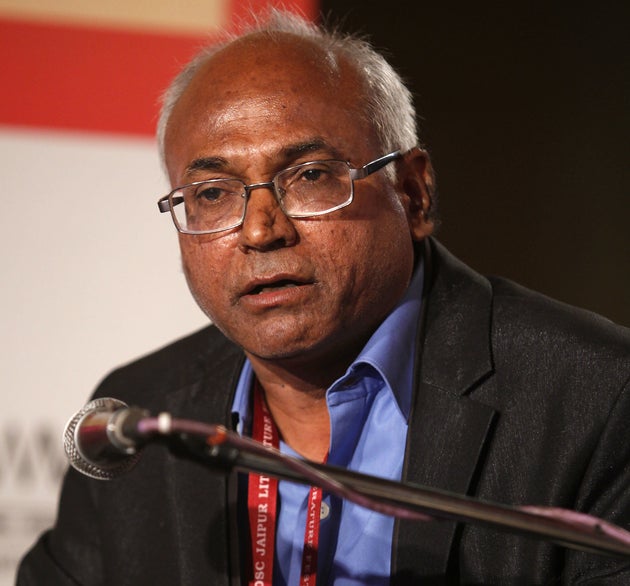
A young Kancha Ilaiah Shepherd once came across a book on Isaiah Berlin in the Osmania University library and picked it up because he thought the name wasIlaiah Berlin. He was surprised because he had never found names that sounded like his on the covers of books. In class, he was constantly made to feel like he was not as respectable as the other students because of his name. But that was going to change now.
“I looked at the name once again. I felt as if I were Isaiah, not Ilaiah.”
I like to imagine that this is the moment Kancha Ilaiah became a writer. When Gabriel Garcia Marquez read the first line of Kafka’s Metamorphosis, he almost fell off the bed because he had no idea writers were allowed to write like that (“When Gregor Samsa woke up one morning from unsettling dreams, he found himself changed in his bed into a monstrous vermin”). Marquez says he became a writer that day—that first line was like a permission for him to start writing.

For Dalit and Bahujan people who have never thought of themselves as writers, a permission like that can rescue them in ways that aren’t easy to understand.
“That day in my notebook, I wrote my name in full in the form that Isaiah’s name figured: Ilaiah Kancha, not just Ilaiah K. It sounded new. I jumped up and down amidst the book racks—a worthless name like mine is very much like that of a world-famous historian and philosopher.”
There are many such moments in Kancha Ilaiah’s memoir, From a Shepherd Boy to an Intellectual, that are powerful to anyone looking to sustain a life of reading and writing.
If finding Isaiah’s name released Ilaiah in some form, his mother was released from something similar when she decided that she was willing to risk Saraswathi’s wrath by sending both her sons to school.
′Getting free from Saraswathi’, easily the most exciting chapter in the book, narrates the story of how Ilaiah and his brother went to school despite their grandmother’s persistent warnings that Saraswathi, who didn’t like children of lower-castes going to school, would kill them. In hindsight, there is truth to this superstition because we very well know who killed Rohith Vemula.
“Saraswathi teaches the children of Bapanollu and Komatollu but she becomes a devil when it comes to our children. She will not allow our children to read and write. She will kill them. That is how my elder son died,” said Ilaiah’s mother.
Even so, there was nothing in the school that could hold his attention the way forests and fields did. “In the field-world, one does not focus one’s eyes on just one thing.” And that’s why, for some time in school, he could only stare at walls.
Staring at walls is possibly a situation that is as much an imposition of caste today as it was back then.
At a talk about Mahatma Phule recently in Bangalore, anti-caste activist Gowri recollected that as a science student, she had no idea how to follow what the teacher said in her “high-speed English”.
“I still don’t know what this Kinetic theory of gas means. I didn’t know how to ask and when I finally formed a question and asked, my classmates looked at me like I was crazy. After that I just shut up.”’
That is one kind of staring at a wall. Here is another:
A couple of months ago, I met a Dalit boy studying political science at a college in Bangalore who wanted to know how to ‘be’ in the classroom. He said that during lectures, all his attention is usually focused on forming a question for the lecturer, and framing it properly in English. Eventually, when he does ask it, he is so relieved and overwhelmed by the effort that he spends the rest of the time recovering from it. In the end, he hasn’t listened to the answer.
These are real problems for Dalit and Bahujan students on campuses today—this knowledge of how to just ‘be’ in spaces. After a point, there are things that even the most sympathetic teacher cannot give them—things like cultural capital, the courage to say ‘I don’t care what my classmates think of me’, and a way of simply surviving in an English-speaking classroom.
These are real problems for Dalit and Bahujan students on campuses today—this knowledge of how to just ‘be’ in spaces
Another serious problem, just as relevant today, is the disconnect they feel between what they have heard and watched while growing up and what is taught inside the classroom.
While learning the alphabet, Ilaiah was very puzzled when the teacher said ‘Rruu for Rrushi’. This was accompanied by a picture of a saint with “fully grown knotted hair on his head with a beard and legs folded under him”.
Ilaiah had never seen a saint before and found it bizarre that he had to remember a letter in honour of someone he had never seen. He was just as lost when poems and lessons on Krishna were taught. Culturally, there was no connection between what was being done in class and where he came from.
For Ilaiah, a way out of this came when he fell in love with the English language. This allowed him to break free of all kinds of Saraswathis, and he was able to begin enjoying school.
RELATED…
Plenty of struggle, and some humour
There is some repetition in the book. The fact that English was/is deliberately kept away from lower-caste children comes up multiple times, often in the same manner. That Brahmin and Savarna intellectuals who opposed English in government schools and fought valiantly for Telugu-medium schools continued to shamelessly send their own children to English-medium schools is mentioned one too many times.
But Ilaiah’s gratitude for being given the opportunity to learn, to read and write haunts him—and by extension the reader—through the book. Some of these repetitions arise from this gratitude, and the sense of injustice that others like him are still kept away from opportunities that can come from knowing English.
While it’s true that some of these repetitions could have been avoided with better editing, what they do is show us the kind of loneliness from which Ilaiah is writing.
Not being taken seriously as an intellectual and a writer is something that Ilaiah has struggled with all his life. Within academia in particular, this is not hard to see. Scholarly networks rarely make room for Dalit and Bahujan intellectuals. Today, because of the internet and web 2.0—thanks to things like conference alerts, which make it less necessary for humans to interact with each other—it is probably easier to access machine-operated networks. But what happens before and after that depends on what privileges one might or might not have.
But it is not hard to imagine what it must have been like for a Bahujan man to write research papers, send it to conferences, write, take classes—and still maintain an anti-caste stance. On more than one occasion, students have walked out of Ilaiah’s classes because they didn’t want to be taught by a ‘Dalit’—while it’s clear that these students had no idea what the difference between Dalit and Bahujan was, they knew enough caste to figure out who was worthy of teaching them and who wasn’t.
Some of the saddest people I know within academia today are upper-caste. For a long time, these were the only people I knew. And they were so upper-caste that they were convinced that to be an intellectual , one has to look a certain way, speak English a certain way and conduct themselves in a certain way. In short, I had neither the right credentials nor the right caste to be called an intellectual. This was in 2015. A part of me believed it then. It is 2019 now and I don’t believe it anymore. But they haven’t changed and that’s why they are sad.
Some of the saddest people I know within academia today are upper-caste.
As I write this, I am acutely aware, once again, of the loneliness faced by Dalit, Bahujan and Adivasi people at their workplaces—if we can call it that—or wherever they are. Today, young Dalit and Bahujan people with some privileges are able to come to terms with their identities. Some are claiming it fiercely, and some are finding ways to negotiate with this. In a way, an attempt at a network of sorts is being made on social media to reach out, share and contribute.
But what this does is leave out a large chunk of older Dalit and Bahujan people who are being remembered lesser and lesser today. This could be the loneliness from which Ilaiah writes. Even so, the most rewarding thing about the book is that every time Ilaiah mentions his struggles, he also tells us how he overcame them. Much like Siddalingaiah in Ooru Keri, Ilaiah does not submit to victimhood, even if it is sometimes the only option left.
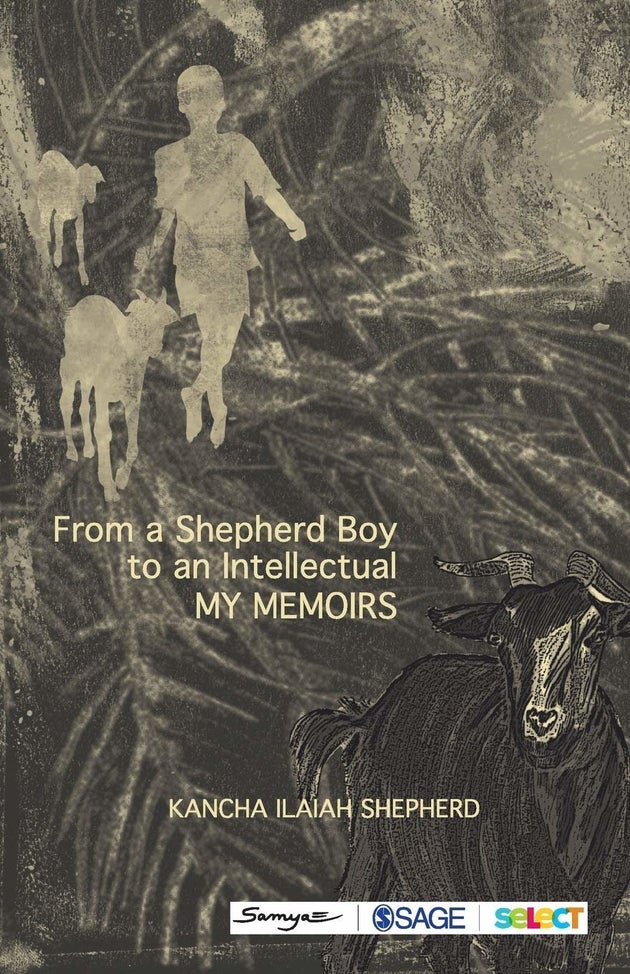
When I was growing up, my father often gave me pep talks on studies. He was always concerned that I was extremely bad at math and science. He’d sit me down and try to find out why I failed only in these subjects and passed with average marks in other subjects.
He didn’t think responses such as ‘not able to understand’, ‘very difficult’, ‘I like History and English more’ were rational because at the heart of his concern was the fear that I’d get left behind in class and that people like us don’t have the liberty to say ‘not interested.’ He kept telling me—’you should create an interest even if you are not interested. I didn’t know it then but what my father was and has been doing since then is making me self-reliant like him.
He rarely tells me stories of struggle in his past. Whatever little I know about that today is through my mother. What he did tell me, much like Kancha Ilaiah and Siddalingaiah did in their books, were stories of overcoming struggles.
Over WhatsApp one day, I asked my father what his student days in the engineering college were like. “The college which I’d joined was purely for merit students. I was only able to get a seat because I’m SC. When I joined, I found that everyone else had 80% and I only had 40%. I limped towards inferiority complex and after some days, I was engulfed in it. To come out of that complex, it took a lot of time and hard work but even then I was unable to reach their level and I finally came out as the last man in the race. I couldn’t do anything. I just had to accept the situation. If I resisted, it’d hurt more. I myself didn’t want any unnecessary advantage on the pretext of discrimination. I felt if I wrote proper answers, certainly it should fetch more marks. So I worked harder.”
I find this similar vein when Kancha Ilaiah says “Reading became a part of my suffering” and “my course was read, write and fight. I wrote this slogan on the walls of my brain”.
The vein is struggle and suffering yes, but also one of hard work—something that Babasaheb was able to show us in many ways.
“I have come to realize that excellence is achieved through devotion. My devotion does not mean retiring to a forest & meditating there. My idea of devotion implies extreme power of enduring suffering, and extreme power of working,” said Babasaheb Ambedkar.
The most rewarding thing about the book is that every time Ilaiah mentions his struggles, he also tells us how he overcame them. Much like Siddalingaiah in ‘Ooru Keri’, Ilaiah does not submit to victimhood, even if it is sometimes the only option left.
And when hard work is not rewarded, Ilaiah turns to humour. Humour can be a great weapon against Savarna bullying.
When he started teaching at Osmania University, a colleague remarked ‘What bad days have come, even Ilaiahs, Yellaiahs, Mallaiahs also think of becoming lecturers in a university’ to which Ilaiah replies, “When we have taught sheep, teaching human beings is not at all difficult”
The colleague, realising that Ilaiah’s English was much better than his, keeps quiet.
In a chapter titled ’Choosing between Two Lusts: Life or Knowledge?’, Ilaiah tells us about his reading life and how the more he read and wrote, the more independent he became and how companionship and love became unnecessary after a point.
‘But since I could not change my body, I started living with enormous respect for myself: body and brain. I knew that my body works and my brain thinks from within that body. How to make my body work and my brain think was within my control, as I believed in self-respect and self-control. My reading in English of any book that I could get and practice by myself speaking English became a ‘lustful’ act.’
In the last scene of Captain Marvel, Brie Larson’s Carol Danvers says, “I’ve been fighting with one hand tied behind my back. What happens when I’m finally set free?”
It brought to mind a scene from one of the earlier chapters in the book where Ilaiah writes about swimming to school. During the rainy season, they had to swim across a river to get to school. They had to carry food packets with one hand so those wouldn’t get wet, and swim with the other. They swam with only one hand to get to school, the way so many Dalits, Bahujans, and Adivasis fight and survive. You should imagine what happens if we start fighting with both our hands.
-
English Medium in Andhra: How Jagan Mohan Reddy’s promise can catapult him to the CM’s chair
English Medium in Andhra: How Jagan Mohan Reddy’s promise can catapult him to the CM’s chair
 The elite have long denied rural children the right to quality education, which will make them eligible for jobs not just in India but world over. Jagan Reddy could now change that, and ignite new dreams.
YS Jagan Mohan Reddy, the president of YSR Congress Party (YSRCP), delivered a shocker to Chandrababu Naidu’s Telugu Desam Party (TDP) by promising English-medium education in Andhra Pradesh’s government schools.
Of course, teaching Telugu will be made compulsory under his scheme. Jagan has also promised Rs 15,000 towards assistance to all mothers who send their children to school under the Amma Vodi scheme.
 Jaganmohan Reddy has promised English-medium education in all Andhra Pradesh government schools. (Source: PTI)
But there are many more anti-English medium forces in the TDP and government than Jagan knows. Powerful players in the private education market are apparently part of the TDP as policy makers. The only way to stop their purported loot is to convert all government schools into English-medium institutions.
For the first time in the Indian political system, a party that is likely to come to power has made such a promise — this will have a huge impact on India’s school education.
The manipulative dual mode school education (English medium in private schools and regional language in government schools) is aimed at avoiding a language parity and competition. What is central to global mobility for all youths has been denied by the ruling classes since independence — they very consciously allowed complete English medium teaching in private schools while students were taught in regional languages in government schools.
They also overburdened the non-Hindi region rural kids by forcing them to learn Hindi, which has no relevance in the globalised world. Only Tamil Nadu rejected the three-language formula and taught its children in English along with Tamil — this applied to rural schools as well.
Hence, the Tamils hegemonised the national and global employment market.
The OBC, SC and ST people living in rural parts could not send their children to good private English-medium schools and hence, they remained backward. Not that the rulers do not know that good English communication and writing skills, along with good grounding in mathematics and science, will make youths eligible for employment not just in India, but world over — but they wanted to avoid giving the same opportunities to the others to continue their monopoly over resources.
For the last 25 years, there has been a demand for uniform language and quality school education in AP and Telangana. But vested interests opposed it.
It was YS Rajasekhara Reddy who introduced parallel English medium education in 64,000 government schools in 2006. Lots of self-centered forces tried to oppose that policy but he pushed for it. Many rural youth opted for English education and despite poor English teaching resources in villages, the confidence level of the youths has indeed gone up.
 YS Rajasekhara Reddy introduced parallel English medium education in 64,000 government schools in 2006. (Source: PTI)
In Andhra-Telangana, the residential and model schools definitely improved the situation further. But these schools teach in English medium only from Class 6. This has to be overcome by introducing the two language policy from kindergarten itself.
I have been suggesting a three stage school system in villages — lower KG to Class 4 in primary school, Class 5 to Class 8 in middle school and Class 9 to Class 12 in high school. Intermediate should be abolished. All money-minting private school, colleges and training institutes should be abolished as soon as possible. They have destroyed creative learning among our youth. If every child in a village becomes a school graduate while living with his/her parents, participating in their work, pains and pleasures, the residential schools could be abolished over a period of time. That is where the child must be taught the dignity of labour working at home and in the fields.
English and dignity of labour will bring about a revolution in our education system.
In Andhra Pradesh, both YSRCP and TDP have promised several financial schemes for different sections. They all help people to live, perhaps, with improved conditions. But uniform language, content and quality education in the English medium will solve many problems of inequalities. In the globalised world, youth will search for opportunities the world over. The Europeans migrated despite their scarce population to the Americas, Canada, Australia and African nations and could build a new civilisation thus.
Why not Indians?
 Our children need the right nurturing to be able to compete in the global market. (Source: Reuters)
Global migration is only going to increase — not decrease. When the same politicians educate their own children in American-European universities and import them back into the political arena, why can’t the rural youth get quality English medium education in government schools within the village environment and become great leaders?
What is important is that once this becomes an issue in General Elections, it will reach every house. Both parents and children will discuss about it. Those parents who used to feel inferior because they were unable to send their children to English medium schools will not only turn out to vote the party that promised English medium school education, but will also see a bright new future.
-
Finally, NYAY for Indians: Rahul Gandhi’s scheme will help remove caste and class differences in our society
Finally, NYAY for Indians: Rahul Gandhi’s scheme will help remove caste and class differences in our society
The RSS and BJP have never cared about the poor because the poor do not speak the language of Hindutva.
| 5-minute read | 02-04-2019
-
Total Shares
In a recent press conference, Congress president Rahul Gandhi announced that if his party comes to power, they will directly transfer Rs 72,000 to the bank accounts of every below poverty line (BPL) family per year. Estimates suggest that there are about 20% BPL people in India — that is about 5 crore families and going by an average size of five members per family, this scheme will benefit 25 crore people.
 Do the poor of India not matter to the RSS and BJP, unless they speak the language of Hindutva? (Source: Reuters)
There is an estimate that poor families in India as of now get about Rs 6,000 through labour processes and the Congress promises to top up this income by an additional Rs 6,000, taking the monthly income of BPL families to Rs 12,000.
This money is going to make a huge difference to the lives of India’s poor.
People involved in highly labour intensive work in India live subhuman lives.
In my view, the Rashtriya Swayamsevak Sangh (RSS) and BJP have never cared about the poor — because the poor do not speak the language of Hindutva. The RSS-BJP combine has for long worked for and among the urban Hindu middle class.
Since the RSS-BJP combine is pro-business and generally a promoter of the private sector, it has never cared about the labour force and famers. The problems of the agrarian sector and the poor were thus issues taken up by the communists.
The Congress, on the other hand, supported landlords or the kulaks, who used to control and mobilise votes for the party during elections, instead of agrarian labourers.
Though the Congress coined the slogan of “Garibi hatao” during the time of Indira Gandhi, no serious financial benefit was given to the poor. That slogan too, however, wasn’t the brainchild of the Congress — but was given on the advice of left leaders and intellectuals, especially those from the Communist Party of India (CPI), which supported the Emergency in the mid-1970s.
The most life-changing economic programme, the Mahatma Gandhi National Rural Employment Gurantee Act (MGNREGA), which the Congress put in place, was during the United Progressive Alliance (UPA) period. As a result of this scheme, villages began to connect with globalised markets. A significant number of rural youth from low-income groups bought second-hand motor bikes because of this scheme. It also helped villagers improve the nutritional quality of their food and lower the dropout rate of children in schools.
The other major boost for farmers came with farm loans being written off recently. The scheme was initiated by south Indian regional parties like the Telugu Desam Party (TDP) and the Dravida Munnetra Kazhagam (DMK).
The late YS Rajasekhara Reddy of the Congress in Andhra Pradesh had also used this scheme along with another significant scheme of reimbursing the tuition fees of university and college students. This helped many poor students become doctors and engineers. Many students from marginalised castes and communities could move abroad with the help of this scheme.
But the game changer in this politics was Kalvakuntla Chandrasekhar Rao’s Rythu Bandhu programme. Under this programme, KCR transferred Rs 4,000 per acre for one crop season and Rs 8,000 for two crop seasons to all farmers — rich and poor — based on land ownership.
 In the pink: The Rythu Bandhu scheme helped KCR return to power in Telangana with a clear majority. (Source: Government of Telangana)
All those who benefited from the scheme invariably voted for KCR. He won 88 seats out 119 in the 2018 Assembly elections.
But it was mostly the rich farmers who benefited — the poor did not.
The Bahujan Left Front (BLF), in alliance with the CPI (M), made a proposal for a Cooli Bandhu scheme, with a promise of a Rs 1,00,000 interest-free loan. Though the BLF did not get good votes, as it was a newcomer, the labouring masses really appreciated it.
Now, the Congress-proposed minimum guarantee income (MIG) scheme that promises Rs 72,000 per annum to poor families could address the problem of poverty. The money transfer scheme removes all channels of corruption in the rural and urban administrative structures.
Unfortunately, both communists and the right-wing BJP do not believe in transferring money to the poor.
The left believes in wage hikes and the right believes in helping industry and the banking system. Apparently, both think that if money is transferred to the working class, it becomes lazy. In their opinion, the rich have a right to be lazy — but not the poor.
BJP-oriented economists were in fact attacking any welfare scheme as bad till Narendra Modi introduced a meagre Rs 6,000 transfer scheme for small farmers. But any amount of money given to industrialists and private business families was/is seen as good investment on capital growth.
After Rahul Gandhi announced the Nyuntam Aay Yojana (NYAY), the BJP remained silent for unknown reasons. Once the elections are over, whether the Congress wins or not, the BJP will start attacking the scheme.
 I mean you: How Rahul Gandhi’s NYAY aims to help every poor person in India. (Source: Reuters)
KCR’s Rythu Bandhu gave the rich more money under the garb of large land holdings. On the contrary, the NYAY scheme promises the same amount of money — Rs 72,000 — to all the poor.
At a time when the poor in this country are starving, there is no point talking about India being the fifth largest economy on earth. We have to get into a social democratic welfare system over a period of time. This alone will help us eradicate the caste-class differences plaguing Indian society.
-



 Kancha Ilaiah Shepherd
You must be logged in to post a comment.