-
ILAIAH LIVED HIS PHILOSOPHY
REVIEW of “From a Shepherd Boy to an Intellectuals–Mmy Memoirs by Kancha Ilaiah Shepherd Sage/Samya/Select. PP 360
by Aappu
Back in the early 2000s when I was a university student in Delhi, Kancha Ilaiah was all the rage. His book, Why I am not a Hindu, had come out and it was extensively read and widely discussed among the students. The book played a key role in provoking new wave of Dalit Bahujan assertion. I remember that my Telugu roommate with extremely limited English skills, purchased a copy and made an earnest effort to read it through. Many of our evenings were enlivened by heated discussions about the book.
Academic writing takes a long time to make an impact on society. Kancha Ilaiah’s writing is an exception. His impact has been immediate and dramatic. He has written a number of books but the main ideas running through all his writings can be summarized as follows:1. Caste in India has an underlying racial basis. The Shudra and Dalit castes in India have Dravidian or Harappan origins where as the Brahmin and Vysya castes have Aryan origin2. Hinduism is the religion or social philosophy of the upper castes alone. The lower shudra and Dalit castes have local deities and religions which have little in common with Hinduism
3. Shudra and Dalit castes are the productive communities of India. The upper castes lead an unproductive and basically parasitical life.
4. Indian nationalism glorifies the upper caste world view, religion and food habits as the national culture ignoring or delegitimizing the lifestyle, food choices and world view of the productive communities. This has harmed India as a nation immensely.
5. Dalit and Shudra salvation lies in modernity, in learning the English language, in taking pride in their productive cultures and in rejecting the Hindu world view that does not respect the essential dignity of individuals and dignity of labour.
Kancha Ilaiah has made two significant theoretical contributions to the debate on caste. (1) For him caste question is a question of production. Castes that have suffered under the caste system are the productive castes. So the system that delegitimises work and labour is deeply damaging to society. (2) Although the lower OBCs got reservation thanks to the Mandal decision of the early 90s, the theoretical basis of this arrangement was always suspect. Ilaiah shows that although Shudras were part of the caste society, being a labouring communities, they also suffered under the caste system. According to him shudra castes should give up the Hinduisation project and throw their lot with the Dalits.
The purpose of this memoir is to show the readers that Ilaiah has lived his philosophy. Iliah claims that his memoir is the first memoir written by a Shudra in English. Ilaiah was born to unlettered parents in interior Telangana. His family belonged to the Kuruba or shepherd caste which was a lower shudra (OBC) caste. His generation was first to get any education. He ultimately made his way into the Osmania University where he completed his MA and Phd. He spent most of his teaching career also at the same university.The book is ethnologically rich. He gives an absorbing picture of village life. Ilaiah’s effort is to show that life style of the lower shudras and dalits were completely different from the lifestyle of the caste Hindus. Equally interesting are his stories about his university years as a student and teacher. Iliah encountered brahmanism and caste discrimination from his teachers, fellow students and colleagues. He started out as a leftist and moved to a version of Ambedkarism after he realised that Indian left did not address the issue of caste and the left movement consisted mostly of Brahmans.
The big challenge of Ilaiah’s life was to come to terms with his caste identity. When he joined college, he found that Dalits and OBCs were shedding their given names in favour of ‘hindu names’. Ilaiah resisted this temptation. The great achievement of his intellectual life was to develop a theory that conferred dignity to the lifestyle and worldview of the lower shudras. The final act in this story reconciliation with ones background is Iliah adding the surname ‘Shepherd’ to his name. It is a triumphant declaration that his caste identity is not to be detested as unclean or backward but worthy of respect.This book is polemical and Ilaiah does not hold back his punches. However the book is verbose and badly chapterized. With better editing, it could have been pruned to half its size and made more readable
1. Caste in India has an underlying racial basis. The Shudra and Dalit castes in India have Dravidian or Harappan origins where as the Brahmin and Vysya castes have Aryan origin
2. Hinduism is the religion or social philosophy of the upper castes alone. The lower shudra and Dalit castes have local deities and religions which have little in common with Hinduism
3. Shudra and Dalit castes are the productive communities of India. The upper castes lead an unproductive and basically parasitical life.
4. Indian nationalism glorifies the upper caste world view, religion and food habits as the national culture ignoring or delegitimizing the lifestyle, food choices and world view of the productive communities. This has harmed India as a nation immensely.
5. Dalit and Shudra salvation lies in modernity, in learning the English language, in taking pride in their productive cultures and in rejecting the Hindu world view that does not respect the essential dignity of individuals and dignity of labour.
Kancha Ilaiah has made two significant theoretical contributions to the debate on caste. (1) For him caste question is a question of production. Castes that have suffered under the caste system are the productive castes. So the system that delegitimises work and labour is deeply damaging to society. (2) Although the lower OBCs got reservation thanks to the Mandal decision of the early 90s, the theoretical basis of this arrangement was always suspect. Ilaiah shows that although Shudras were part of the caste society, being a labouring communities, they also suffered under the caste system. According to him shudra castes should give up the Hinduisation project and throw their lot with the Dalits.
The purpose of this memoir is to show the readers that Ilaiah has lived his philosophy. Iliah claims that his memoir is the first memoir written by a Shudra in English. Ilaiah was born to unlettered parents in interior Telangana. His family belonged to the Kuruba or shepherd caste which was a lower shudra (OBC) caste. His generation was first to get any education. He ultimately made his way into the Osmania University where he completed his MA and Phd. He spent most of his teaching career also at the same university.The book is ethnologically rich. He gives an absorbing picture of village life. Ilaiah’s effort is to show that life style of the lower shudras and dalits were completely different from the lifestyle of the caste Hindus. Equally interesting are his stories about his university years as a student and teacher. Iliah encountered brahmanism and caste discrimination from his teachers, fellow students and colleagues. He started out as a leftist and moved to a version of Ambedkarism after he realised that Indian left did not address the issue of caste and the left movement consisted mostly of Brahmans.
The big challenge of Ilaiah’s life was to come to terms with his caste identity. When he joined college, he found that Dalits and OBCs were shedding their given names in favour of ‘hindu names’. Ilaiah resisted this temptation. The great achievement of his intellectual life was to develop a theory that conferred dignity to the lifestyle and worldview of the lower shudras. The final act in this story reconciliation with ones background is Iliah adding the surname ‘Shepherd’ to his name. It is a triumphant declaration that his caste identity is not to be detested as unclean or backward but worthy of respect.This book is polemical and Ilaiah does not hold back his punches. However the book is verbose and badly chapterized. With better editing, it could have been pruned to half its size and made more readable
-
Why Narendra Modi kept Mohan Bhagwat in the dark over 10 per cent EWS reservation
Not only the RSS chief, but several Congress anti-reservationists too have been dealt a huge blow. Modi’s proposed quota could also change how we see caste itself.
By KANCHA ILAIAH SHEPHERD
The Constitution (124 Amendment) Bill, 2019, which seeks to provide 10 per cent reservation in jobs and educational institutions to economically weaker sections (EWS) in the general category is Prime Minister Narendra Modi’s masterstroke — and will silence his opponents both within and outside the Sangh Parivar. Silent Mover: The EWS quota moved by PM Narendra Modi has stunned everyone. (Source: PTI) Ever since Modi became PM — having projected himself as an Other Backward Class (OBC) candidate — the OBCs favoured him. Interestingly, the Rashtriya Swayamsevak Sangh (RSS) chief Mohan Bhagwat has been against OBC reservations. Recently, Modi had become very vulnerable after his party got defeatedin three north Indian states. It is a well-known fact that the RSS has been opposed to reservations ever since the policy was drafted around 1950-51. Reservation was first granted to the Scheduled Castes (SC) and Scheduled Tribes (SC) in 1950. The RSS has been opposed to reservation as a whole for a long time. (Source: PTI) The Backward Class (BC) reservation came in with the first amendment, which reads: “The Constitution of India states in Article 15(4): “Nothing in [Article 15] or in clause (2) of Article 29 shall prevent the State from making any special provision for the advancement of any socially and educationally backward classes of citizens of or for the Scheduled Castes and the Scheduled Tribe.” In addition, Article 46 of the Constitution reads, “The State shall promote with special care the educational and economic interests of the weaker sections of the people, and, in particular, of the Scheduled Castes and the Scheduled Tribes, and shall protect them from social injustice and all forms of exploitation.” The Constitution (124 Amendment) Bill of 2019 will insert in Article 15, “Special provision for the advancement of any economically weaker sections of citizens.” The Bill also seeks to amend Article 16 to enable the State (including the provinces) to allow up to 10 per cent reservation in jobs and educational institutions for the ‘economically weaker sections’ of society. The RSS and the larger Sangh Parivar have remained opposed to reservations of all forms — except in this case. This is the first time that the RSS has not resisted a quota. And it so because the move has been craftily drafted by the Modi government. While the Congress had repeatedly in the past promised EWS reservation, it could never actually do this because the party has an open structure and failed to overcome resistance from its own Brahminical ranks. From the days of Indira Gandhi till today, Congress has had some very strong anti-reservation voices and the leadership could not overcome their hold on the party. It was with great difficulty that the Congress implemented some pro-reservation initiatives in 2006-07 in central educational institutions through the Central Educational Institutions (Reservation in Admission) Act, 2006. The current EWS quota allows reservation for castes that have no reservation accessibility — it is a pro-upper caste (Brahmin, Kshatriya, Bania) reservation agenda. So, why did the BJP government headed by Modi, who has an OBC certificate himself, take such a step when RSS chief Mohan Bhagwat has been repeatedly saying that the entire reservation policy needs a review? RSS chief Mohan Bhagwat has been an ardent opponent of the reservation policy. (Source: PTI) In fact, Bhagwat’s views on quotas have been echoed by many senior leaders in almost all political parties. For example, senior Congress leaders like Manish Tewari and Janardan Dwivedi have gone on record to say that they are opposed to all reservations. BJP leader Nitin Gadkari, who is reportedly being promoted as an alternative to Modi, is also an anti-reservationist leader. Ideologically, many in the BJP are anti-reservationists. Currently, Representatives of Youth for Equality, an organisation that is fundamentally against reservations, has challenged the proposed amendment to the Supreme Court. In fact, the VP Singh government was apparently pulled down majorly due to Singh pushing for reservations. VP Singh’s push for implementation of the Mandal Commission recommendations left many miffed with him. (Source: PTI) Over a period of time, the RSS had reconciled with the SC/ST reservation — but never with the OBC reservation. It was a surprise that the RSS allowed Modi to be BJP Prime Ministerial candidate even though he openly said he was an OBC. It is another matter that Modi actually belongs to the Bania caste. The secrecy that Modi and BJP president Amit Shah maintained on the Bill, till it was brought before the Cabinet, was only aimed apparently at ensuring that the news wasn’t leaked to Mohan Bhagwat. Though this reservation is meant for upper castes, among whom Bhagwat operates, it validates the principle of reservation that Bhagwat is opposed to. Modi and Shah knew that no party could oppose the EWS quota bill in Parliament, except on details. But the real sabotage could have come from the RSS headquarters. The RSS is pitching for the construction of the Ram temple through the ordinance route, but not reservation for upper castes. It is for this reason that Modi and Shah kept it a secret from RSS. TV channels that are anti-reservationist but staunchly pro-Modi were suddenly taken aback and started hurriedly looking for panellists who could oppose the BJP’s move. But it was difficult to find them since those opposed to quotas are no longer talking about ‘merit being compromised’. If the Supreme Court upholds the 10 per cent EWS quota by allowing reservation to go to 60 per cent, many state governments can work out their own reservation policies. Since every candidate who applies for reservation under the EWS category also has to produce a caste certificate on all major campuses, the reservation humiliation for SC/ST/OBCs would no longer sustain. Caste now will become a level-playing agent in all institutions. I am low caste, you are poor — and both of us came with reservation. Hence, respect each other — that will be the institutional language. The anti-reservationists and pro-merit walas have lost their moral base once and for all. Modi and Shah have more enemies within the Sangh Parivar than outside it. That Mohan Bhagwat did not oppose Narendra Modi’s candidate as BJP PM candidate in 2013-14 was surprising. (Source: PTI) They have used the ‘quota weapon’ pretty effectively to silence everyone — in just one go. The person who has been hit the hardest is Mohan Bhagwat. But he is not alone. The likes of Manish Tewari and Janardan Dwivedi have also been served a huge blow. When the amendment reaches the Supreme Court, the judges who will sit on the bench to decide the matter will face a real test of nerves.
-
Harappa To Ayyappa

Harappa to Ayyappa
By Kancha Ilaiah Shepherd – Countercurrent
Harappa! We are all your descendants
You shepherded the first civilization
You built the first city in the East
You domesticated the early animals
Goat, sheep, buffalo, dog and donkey.
You made the first pot, brick, bronze tools
You built the first tank, boat and building.
You were God’s Own Man.
Brahma came and burnt all your civilization
Indra damaged it beyond reparation
Agni and Vayu became their weapons of destruction
Harappa’s descendants came to Down South
Ayyappa is your incarnation in black dress
He rebuilt the Harappan civilization again in South
Now they want to destroy that Adivasi civilization
In God’s Own Country and turn it devilish.
-
Sabarimala row: While he defends ‘tradition’, will PM Modi also guarantee protection to Bindu and Kanakadurga?
By saying that resistance to women’s entry into Sabarimala temple is a matter of custom and sentiment, the Prime Minister has let down all marginalised groups, including women.
By Kancha Ilaiah Shepherd – https://www.dailyo.in/politics/dalits-entry-into-temples-adivasis-shudras-hinduism-untouchability-bible/story/1/28592.htmlThe entry of two women devotees, Bindu and Kanakadurga, into the sanctum sanctorum of the Sabarimala temple on January 2 led to widespread violence in the state of Kerala.The violence, which erupted during the bandh call issued by the BJP and allied organisations on January 3, saw not just damage of public property but also the loss of a valuable life.

Bindu and Kanakadurga scripted history by entering the Sabarimala temple on January 2. (Source: Reuters)
At a time when Kerala hasn’t fully recovered from the massive floods that hit the state in August-September 2009, the damage to public property caused by the BJP-called bandh proved to be a double whammy.
According to me, what actually emboldened the BJP to call for a shutdown was the statement made by Prime Minister Narendra Modi on January 1 during an interview to ANI.
Modi endorsed the protest being led by his party in the state ever since the Supreme Court lifted the ban on the entry of women (of menstruating age) into the Sabarimala temple.
#WATCH PM Narendra Modi’s interview to ANI’s editor Smita Prakash https://t.co/k2qHD2ULhN
— ANI (@ANI) January 1, 2019
During the interview, while answering a question on the Triple Talaq ordinance and the SC judgment on Sabarimala, Modi gave a shocking reply. He said while triple talaq is a issue related to women’s equality, the Sabarimala judgment is (against the Hindu) tradition. As I see it, this is a dangerous stand taken by the Prime Minister of the nation.
The BJP and the Rashtriya Swayamsevak Sangh (RSS) are opposing the entry of women across age groups into the temple. The Sangh Parivar is even indulging in violence to stop women from entering the Ayyappa temple. Going by the interview, the PM tacitly supports their violent resistance — which is in violation of the Supreme Court.
This move could have huge implications on the judicial governance of India.
Social reform has faced stiff resistance in India ever since the modern age began during British rule. Gender equality was a problem across the world, both in the societal and the spiritual domains. In India, however, because of a more rigid patriarchy and well-entrenched caste culture, women faced more problems.

Devotees, mostly women, take part in the namajapa (chanting the name of Lord Ayyappa ) in Ernakulam. (Source: PTI)
The so-called Hindu spiritual system was never organised in accordance with defined canonical laws. Every varna or caste followed its own patriarchy, both in the religious and social order.
Islam was the first religion to grant women religious rights.
This, in a way, started with the Prophet Mohammed marrying Khadija, who was 15 years older than him. She is known as the first follower of Islam, under the Prophet. Muslim women were the first to read the Quran. The Christian world subsequently allowed women to read the Bible and thereafter, Christian society allowed many reforms in quick succession.
The Buddhist women in China and other eastern countries were given social and religious rights only after great struggles. In India, after Buddhism was driven out, women belonging to the top three varnas — Brahmin, Kshatriyas and Bania — suffered enormous oppression, discrimination and exploitation. They suffered forced Sati as well as child marriages, which, in turn, led to more instances of widowhood. Added to this was the fact that widows were not allowed to marry.
Not just Shudras, Dalits and Adivasis, but women too were not allowed entry into temples.
Women were also victims of domestic violence and frequently accused of witchcraft.
The Shudra, Dalit and Adivasi temples, on the other hand, were open to everyone — including women. Some well-known examples include Sammakka-Sarakka Jatara, Komuravelli Mallanna, and Iloni Mallanna temple in Telangana. Interestingly, women play key roles in these temples. Such temples and jataras exist all over the country.
This proves the religious culture practised by the marginalised communities were far more egalitarian.
Lord Ayyappa was also part of this culture. Women were treated equally at this deity’s temple historically.
From 1990 onwards, however, Lord Ayyappa and the Sabarimala temple were appropriated by Hindu Brahminical forces — which led to restrictions on women’s entry.
In a welcome move, the Supreme Court reversed the practice.
But Modi, who claims an other backward class (OBC) background, should have known the traditions of the marginalised better than the Brahminic tradition.

In the name of tradition, PM Modi has defended Sangh Parivar’s actions in Kerala. (Source: PTI)
When Modi says that the protest over Sabarimala is about ‘tradition’, what tradition is he actually referring to?
The practice of Muslim men divorcing their wives by pronouncing ‘talaq’ three times had also become a ‘tradition’ with this minority community.
The government brought in an ordinance to stop this tradition because it is fundamentally wrong — and I support the government on it.
But I totally oppose the BJP and RSS on the issue of Sabarimala where Modi’s party is invoking ‘tradition’ and the religious sentiments of men to discriminate against women.
It is in the name of tradition — written or unwritten — that women have been oppressed for so long.
Reformers such as Raja Ram Mohan Roy brought in reforms by fighting traditions and ‘sentiments’ of the oppressors. The RSS and its allied organisations have not done anything to change any oppressive custom.
How does it take Hindu society, leave alone all of Indian society as a whole, towards modernity and advancement?
In a traditional society like ours, the Prime Minister must work for social reforms at every stage.
One Prime Minister who did that was Jawaharlal Nehru. Modi is very critical of him. But can Modi quote a single reform that he introduced or supported from his position?
If the nation’s PM does not back reforms that its judiciary is trying to enforce, who should the nation look up to?
In the light of what is happening in Kerala, let Modi answer himself the nation — will he guarantee protection to Bindu and Kanakadurga from the deadly forces hounding them?
-
Is spiritual citizenship possible for Dalits and Adivasis within Hinduism?
When a group of people is repeatedly told they were born unequal, they forget how to frame demands for rights. This is in contrast to Christianity, which prompted the genesis of equal societies.
By Kancha Ilaiah ShepherdOn December 26, the India Today TV (English) channel telecast an investigative report on the status of Dalits in Hindu temples. Its investigation report revealed that many major Hindu temples either do not allow entry to Dalits, or perform ‘shuddhikaran’ (washing the temples with milk and water) after they leave. In a panel discussion, of which I too was a part, the Rashtriya Swayamsevak Sangh (RSS) and Bharatiya Janata Party (BJP) representatives disagreed with the practice — but were not willing to suggest any reform agenda.Even in the 21st century, Dalits cannot enter temples, and Shudra/OBCs cannot become priests.
Their children cannot study in any Hindu theological school. Such schools are exclusively meant for Brahmins. In other words, the Shudra/Dalits are defined as ‘Hindu’ in terms of religion — but have no spiritual citizenship rights.
If people and communities are in a religion, but do not have spiritual citizenship rights, what implications would it have on their rights in other structures — social, political and economic?

At Odisha’s iconic Lingaraj temple, Dalits are allowed inside the sanctum only once in a year. (Image: nuaodisha)
To understand what spiritual citizenship actually means, we need to examine its nature and character.
The concept of political citizenship is well-known in the scholarly domain. That a citizen has equal rights with every other citizen in a democratic set-up is also now well-known. The basic concept of ‘rights’ starts with the right to vote, the right to contest and the right to occupy all positions in the state.
The right to vote was traditionally in operation in tribal communities, with a voice vote. The tribal democratic republics actually institutionalised the concept of citizenship in a rudimentary way. The notion of God and religion was not well-developed at that stage of human evolution.
But the concept of citizenship, in its meaningful sense of rights, is operative only in democratic systems.
In political dictatorships and authoritarian regimes, including communist regimes, the concept of ‘citizenship’, with a sense of equality even in the political domain, is not in operation. In communist systems, though equality is the main political principle, since the right to vote and the right to contest are not available, the principle of equality is circumcised by manipulation. How other domains like religion operate in the communist systems is not very clear. How civil society operates needs to be scrutinised.
However, the major Communist Party-controlled country, China, has shown better economic progress than India, which is democratic in the political domain — but its spiritual system suffers from faith-based spiritual fascist hierarchies.
Human untouchability is an accepted and practised practice in Hinduism.
Our concern here is to look into the spiritual citizenship issue, which has serious implications for the huge number of Indians categorised as Shudras or Dalits or Adivasis.
In the long history of Hinduism, the Shudras and Dalits had no spiritual citizenship. The Shudras became slaves of Brahmins, Kshatriyas and Vaisyas from the Rig Veda days. They were the Indo-Africans who built the Harappan urban civilization, by advancing the villages. The Dalits/Adivasis were part of that evolution.
In the 21st century, the question of about 800 million people not having the right to a spiritual citizenship will have huge implications for national development — and its competitive energy with neighbouring nations like China and Pakistan.

In the 21st century, about 800 million people — who have political rights — are still struggling for social and religious rights in India. (Photo: PTI/file)
Earlier, India as a nation was enslaved by colonial expansionists, and even before that, by other invaders who were better organised by their spiritual systems.
However, one fundamental question that confronts us in this discourse is, where did the notion of citizenship come from? Whether the notion of citizenship has its origin in the domain of religion or in civil society outside religious society has not been seriously examined. As I said earlier, the tribal societies instituted some sort of civil societal citizenship. But there was no developed religion in those societies.
In pre-democratic political society, apart from religion, there was no well-organised structure of non-religious civil society. Since the citizenship question is related to the notion of equality, I do not think that general civil society in itself could evolve a notion of equality. For a long time in human history, ‘might was right’ — both organised religion and the state changed this course, and improved conditions of human safety. Between the state and religion, religion played a role of mental control and institutionalised behavioural patterns.
The notion of a higher level of human equality seems to have had its origins in the religious domain itself.
There is a clear indication that the concept of citizenship has its roots in the gradual evolution of religious understanding that ‘God created all human beings equal’.
Thus, the notion of equality seems to have taken birth in the religious domain. I do not think this idea of ‘God creating all human beings equal’ has been there throughout the existence of the institution of religion. It is certainly an evolutionary idea.
It seems to have become somewhat clear with the evolution of codified text-based religion. Religion with a codified canon first came into being perhaps with the complete codification of the Bible in the post-Jesus period of the world. Though Buddhism as a religion is pre-Christian, it never evolved a codified Buddhist canonical text.
The Bible has given the idea of human equality with statements such as Genesis’ ‘God created male and female in the image of God’. Perhaps a new thinking must have begun in the minds of humans about the notion of equality based on this statement.
It is written: “So God created man in his own image, in the image of God he created him; male and female he created them. And God blessed them…”. The repeated reading of such a notion of somewhat equal creation must have led to interpretations of ‘equal creation of all human beings’.
In other words, this statement in the Bible paved a new path for human equality.
This canonical text became a reference point of demanding equality among educated members of the religion by constantly invoking the idea that God created all human beings equal.
All human perceptions of inequality started with the perception that man and woman are unequal. The other inequalities, like caste and race, evolved gradually. This perception of human beings needed to be changed. The only available powerful institution was religion. And the change of perception was initiated by the Bible as religious text.
The other major statement that the Bible put before human beings was that, “There is neither Jew nor Greek, there is neither slave nor free, there is no male and female, for you are all one in Christ Jesus” (Galatians 3:28 ). This statement established a principle that race, nationalility and male-female inequalities do not make any sense in the image of Jesus. In other words, equality is an essential principle of the divine domain.
Though this is not fully achieved in practising Christianity, the principle does give scope for the struggle for equality.
The question now is — does Hinduism as a religion show respect for spiritual citizenship in any form?
Did Hindu religious texts (as there are many texts) give any scope for spiritual equality?
Do organisations like the RSS or the Hindu Mahasabha work towards that kind of spiritual equality?

The Shudras were slaves in ancient India — they have been people without any spiritual rights since then. (Photo: Wikimedia Commons)
In terms of canonical ideology, the Rig Vedic text clearly laid down that God (the Purush or Brahma) created human beings unequal, as four Varnas — Brahmin, Kshatriya, Vaisya and Shudra. Even in the most revered Hindu spiritual text, the Bhagvad Gita, the statement ‘Chaturnam Mayamshustam’ (I have created four Varnas as unequal) clearly indicates that all Hindus are not equal.
The two middle Varnas, Kshatriyas and Vaisyas, have been given several rights.
But the Shudras/Dalits have not been given any right.
The Shudras were slaves in ancient India — they have been people without any spiritual rights under the hegemonic control of Brahmins since those days.
The same situation continues till today.
Why do not they ask for spiritual citizenship?
Protracted spiritual slavery — with a mandate that God created an individual or group unequal and that status could never be changed — conditions human mindz in a frozen manner. It was repeatedly told to the Shudras/Dalits generation after generation that ‘God created you in this fixed place, that is your Karma’. In that state of mind, most human beings fear God more than they fear the state. This is where belief and faith work as strong doses towards a mental condition.
Shudras/Dalits have suffered these conditions for a longer period in history than any other set of people in the world.
The Shudras and Dalits have not come to frame their spiritual demands. Some among them may have money and some among them may have political power — but the demand for spiritual citizenship creates a condition of spiritual fear among them.
Asking for spiritual equality is a fundamental issue before the Shudra-OBCs and Dalits. Their philosophical growth depends on this issue getting resolved.
-
Why Pinarayi Vijayan must take the RSS-BJP head-on in the Sabarimala fight
The fight is now for more than the one temple
The Sangh Parivar has started the movement to overthrow the communist government in Kerala. Vijayan must protect his turf, and all that liberal India stands for.
KANCHA ILAIAH SHEPHERD
In rural Andhra Pradesh, there is a proverb that is reportedly used by rapists against their victims, “Allow me to rape you — or I’ll cut my own organ [presumably, the penis].” The saying reflects deep-seated misogyny and chauvinistic tendencies.
The threat of self-immolationnow emerging from Thiruvananthapuram against the Supreme Court order that allowed women of all age groups to enter the Sabarimala shrine may be similarly seen. A man, who attempted self-immolation, has since died in the state of Kerala.
A similar politics, of grave threats, was seen during the anti-reservation protests in the 1990s. The protests notwithstanding, the fight for reservations in jobs and education was fought — and won.
Brahmanic patriarchal forces adopted this culture in the post-Harappa civilisation — and they retain the same anti-women and anti-Dalit/Shudra/Adivasi tendencies to this day. Indian women and food producers have been victims of this culture for millennia. But we need to fight this to its logical end.
Let me go back a bit in history.
The oldest city in the Indian subcontinent is Harappa. As per historical evidence, Harappa was the oldest city in the world built with bronze, brick, crafted wood and stone. As is well-known, it was built 1,500 years before the Aryan invasion and the writing of the Rig Veda and other Brahmanic texts. Both male and female labourers were involved in the building of the city that can safely be said to belong to pre-patriarchal times.
I have written in my earlier article — How Brahmins ensured India never progressed — that by using the power of Agni and Vayu, the Harappan civilisation was destroyed by Aryan Brahmanic forces. Later, they introduced the varna system and a brutal Brahmanic patriarchy, going on to adopt saffron as a Brahmanic colour and the swastik as their symbol.
Saffron is also now the colour of the BJP and its ideological arm, the Rashtriya Swayamsevak Sangh (RSS). Saffron was never the colour of the Shudras, Dalits and Adivasis. The Brahmins apparently declared black to be a demonic colour and it became a hue of the Periyarites and Dravidians.
It has now been proven that Harappans were black-complexioned people themselves and their favourite colour was black, the colour of the buffalo — the animal that makes the highest contribution to India’s milk production. The saffron forces never treated the buffalo on par with the cow, which is generally seen as a white animal (though there are a few black cows too, but there is no white buffalo anywhere in India).
Now, to my mind, as sources have referred, Lord Ayyappa is a Shudra or Adivasi deity who was black in complexion himself. Those who take the Ayyappa mala only wear black clothes, mostly a mundu and shirt. The other day, I was at Hyderabad’s Rajiv Gandhi International Airport and saw hundreds of Ayyappa bhakts, all dressed in black with malas on their head. Among them were children too.
If Harappa is the name of the most ancient city in India’s west, Lord Ayyapa is sitting in a temple in Sabarimala at the southern end of India.
The similarity in the names of Harappa and Ayyappa too can’t be missed. If the black-complexioned Indo-Dravidians built Harappa, the ‘black’ Ayyappa is worshipped by many Shudras, Dalits and Adivasis. Brahmins, Vaisyas, Jains and Kayasthas generally do not go to the Ayyappa temple and don’t wear the mala dress.
Telugu people constitute the largest group of Ayyappa devotees. In the 66 years of my life, I have not seen a single Brahmin or Arya Vysya in Andhra Pradesh and Telangana, taking Ayyappa deeksha and going to Sabarimala in the customary black clothes.
While women too did not wear the mala, I remember seeing a lot of them visit the temple during my childhood. This is in consonance with the Mala Araya tribe’s claim that the Brahmins of Kerala took over the temple in the 1970s and 1980s and introduced anti-women practices. While the tribals want to reclaim the temple, the saffron brigade has apparently thrown constitutional propriety to the winds.
Ayyappa is a symbol of Dravidian male-female equality. Aryan Brahmanism, under the leadership of its saffron brigade, is apparently trying to destroy this Dravidian culture now by Brahmanising that aspect of spiritual culture. However, there is serious resistance to this anti-constitutional and anti-Ayyappan Brahmanism from Pinarayi Vijayan — also the chief minister of Kerala.
After Narayana Guru and Ayyankali, Pinarayi Vijayan is leading a pro-Ayyappan movement, which he calls a ‘new renaissance’.
The Indian renaissance, started by Raja Ram Mohan Roy in Bengal and Jyotirao Phule in Maharashtra, Narayana Guru in Kerala and Periyar Ramaswamy Naicker in Tamil Nadu, began with the question of women’s liberation from sati, child marriage and illiteracy.
Ayyappa was also always for women’s spiritual equality.
Like Narayana Guru, Vijayan too comes from the Ezhava community. He joined the Communist movement during his student days and has now started the ‘new renaissance’ for good. All the progressive forces — liberals, constitutionalists and women — must support this movement, otherwise, Indian society as a whole would suffer a huge setback.
Vijayan realises that the demand to restrict women’s entry into the temple is backed by the upper caste men of the RSS. He has rightly called it an ‘upper caste conspiracy’. It is not usual for Communist leaders of Kerala to attack the casteist culture perpetuated by upper castes. In the garb of class politics, they protected casteism for a long time — but now, Vijayan has taken a bold step by calling it out.
Vijayan has started mobilising the OBC, Dalit and Adivasi groups to counter the Brahmanic anti-women and anti-Ayyappa politics. He is already getting huge support from the Periyarites of Tamil Nadu. There is a common cultural bonding in the use of a black dress code by Ayyappa devotees and Periyar followers.
How can the RSS-BJP and other Sangh Parivar affiliates, who never respected the black colour or wore the Ayyappa mala, now call for who should and shouldn’t visit the temple?
The saffron brigade has started this movement to overthrow the Communist government in Kerala.
However, if Vijayan decides to stay the course, he will not only save his government, but also the Ayyappan culture and India as a nation.
-
Launched – “From A Shepherd Boy To An Intellectual–My Memoirs”
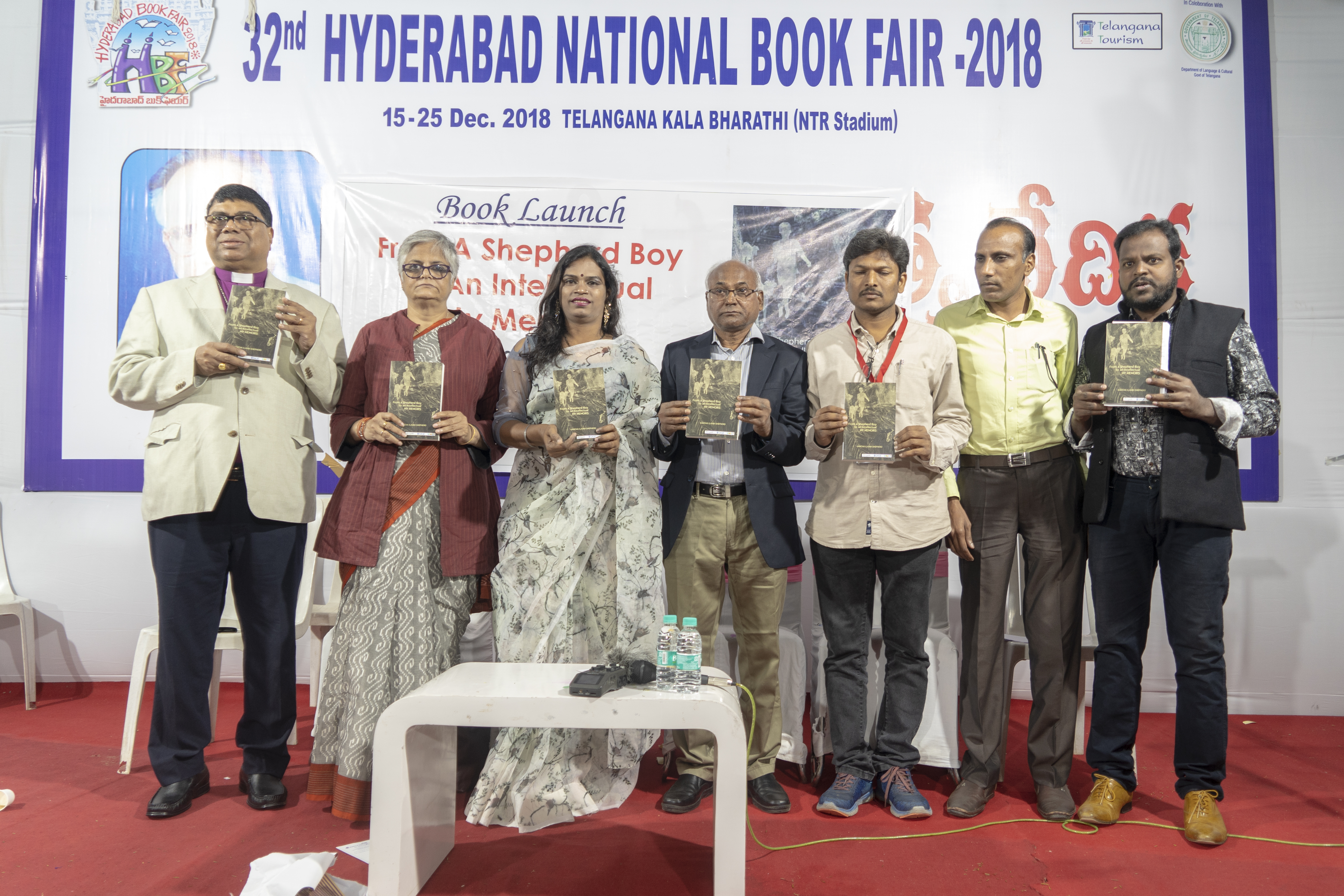
BOOK LAUNCH
The Launch of an Indian Shepherd’s Autobiography at Hyderabad
The first Shudra Autobiography in English
“From A Shepherd Boy To An Intellectual–My Memoirs”
By Kancha Ilaiah Shepherd
will be launched
at
Hyderabad Book Fair
NTR Stadium Indira Park, Lower Tank Bund, Kavadiguda, Hyderabad, Telangana 500029
by Chandra Mukhi (Transgender) on 17 December, 2018 at 6 PM.

Speakers:
Archbishop Most Rev. Dr. Joseph Dsouza, President of All India Christian Council
Kalpana Kannabiran,
Dr. Ram Bheenaveni Shepherd.
The Author will autograph the books after the launch
-
BOOK LAUNCH
The Launch of an Indian Shepherd’s Autobiography at Hyderabad
The first Shudra Autobiography in English “From A Shepherd Boy To An Intellectual–My Memoirs”
By Kancha Ilaiah Shepherd will be launched
at
Hyderabad Book Fair
NTR Stadium Indira Park, Lower Tank Bund, Kavadiguda, Hyderabad, Telangana 500029
by
Chandra Mukhi (Transgender)
on 17 December, 2018 at 6 PM.
Speakers:
Archbishop Most Rev. Dr. Joseph Dsouza, President of All India Christian Council
Kalpana Kannabiran,
Dr. Ram Bheenaveni Shepherd.
The Author will autograph the books after the launch
For Detail, kindly contact the below:
Nava Telangana Book Distributor – 9490099954, 9490099954
-
Two Patriarchies
- India’s right wing is quick to condemn Talibani patriarchy. But they outrage over the calling out of Brahminical patriarchy
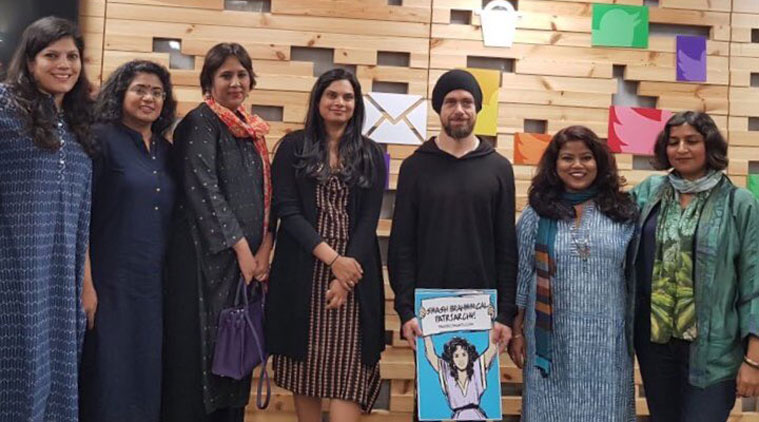
The poster must be seen against the backdrop of what is happening in the Sabarimala temple in Kerala. The photograph of Twitter CEO, Jack Dorsey, holding a poster while standing alongside some Indian journalists and Dalit-Bahujan women activists, is being made into a big issue by Brahminical forces from BJP/RSS platforms. The poster read “Smash Brahminical Patriarchy”. Union minister Rajyavardhan Singh Rathore, apart from T V Mohandas Pai and others, made it an alarmist issue and some even used it as opportunity to intimidate the journalists and activists.
The poster must be seen against the backdrop of what is happening in the Sabarimala temple in Kerala. The issue of women of menstruating age, between 10 and 50, not being into the shrine has drawn global attention. It is known that the RSS/BJP is supporting the anti-women agitation at Sabarimala. This, after the Supreme Court judgment in favour of women’s entry. The same group mobilised Muslim women against triple talaq for their freedom. However, in Sabarimala, they are mobilising Brahminical women against their own rights. Would the world understand this shift in stance?
The Western world, which follows a more liberal brand of spiritual engagement of women, sees this as the Indian version of Talibani patriarchy. The Talibani patriarchy wants the Muslim woman’s body to be hidden from men’s view in public. It is from this context that a Malala Yousafzai emerged from Pakistan as the global campaigner for girls/women’s rights to be equal with boys and men.
Brahminical patriarchy has constructed an equally horrible image of India by not allowing menstruating women to visit temples. The man’s body, which contains semen, a crucial bodily fluid, is acceptable, and he gets all the rights; but, a woman’s body, with its menstrual fluid, is deemed unacceptable, and she can’t get the same rights. This is shocking. Let’s assume that Dorsey looks at the poster from that point of view and wants to oppose this form of patriarchy. What is wrong with that? Can we hide what is happening in Sabarimala from the world’s gaze?
The Hindutva-Brahminism clique thinks that the world should hate Talibani patriarchy but not Brahminical patriarchy. The question here is: Why should this kind of patriarchy be called Brahminical? Why is it not ever labelled Shudra/Dalit/Adivasi patriarchy? Historically, and spiritually, the theory of the woman’s body and its “pollution” is a Brahminical construct. In the Shudra/Dalit/Adivasi spiritual system, there is no such man-woman difference in spiritual systems. Ayyappa, for example, was/is an Adivasi/Shudra/Dalit deity. Mostly, it is they who take the Ayyappa mala and wear black dresses, and go there. Brahmins would generally not do this. But the protests are being organised by the same forces who respect saffron as a Hindu colour but not the black dress code or colour of the Dalit-Bahujans.
The practice of women visiting the temple along with their husbands/ sons/brothers was very much a part of the spiritual experience at Sabarimala — it was also, usually, a Shudra/Dalit/Adivasi practice. Only after the Kerala Brahmin priests took over the shrine by overthrowing the tribal priests was the new tradition of women being disallowed imposed.
A similar attempt is also being made to change the traditions of the famous Sammakka/Sarakka Jatara — a tribal festival celebrated in Telangana. The Vishva Hindu Parishad is trying to displace the tribal priests who drink liquor and eat meat during the jatara time, hand over the temple to Brahmin priests, and convert the jatara into a vegetarian space. The RSS has created structures that convert Shudra/Dalit/Adivasi temples into Brahmin/Hindu temples, and impose very primitive practices on the devotees.
The historical difference between Brahminical patriarchy and Shudra/ Dalit/Adivasi patriarchy is that the former practiced sati, child marriage and permanent widowhood. The latter, what I call the Dalit-Bahujan patriarchy, has no such practices.
Some Brahmin reformers like Raja Ram Mohan Roy, Ishwar Chandra Vidyasagar (Bengal), and, Gurajada Apparao and Tanguturi Prakasam Pantulu (Andhra), tried to reform Brahminical patriarchy. Some changes have come about because of that. But the RSS is negating all those reforms and pushing back society to the pre-reform stage with a theory of Hindu parampara and sanskriti. It wants reforms in Indian Islam (by opposing triple talaq and so on), but it wants to set the so-called Hindu society back. The Shudra/Dalit/Adivasi culture and heritage (in their language, parampara) reflect a democratic man-woman relationship. That is because both men and women of the community have been working in the fields for millennia, from the days of the Harappan civilisation almost 1,500 years before the Rig Veda was written or codified. But the RSS and those who follow their ideology would treat just Brahminic parampara and sanskriti as Indian, denying the ethos of the productive agrarian communities, which is much older than the Brahminic parampara.
Though patriarchy exists within both cultures, Brahminical patriarchy is more oppressive and undemocratic. For example, there has always existed the right to remarry among the Shudra/ Dalit/Adivasi cultures. But, among the Brahmin/Bania/Kshatriyas, this is still a problem. This needs to be debated and changed.
With Sabarimala getting the world’s attention, the Indian and global public spheres are debating patriarchy. When these forces, including Prime Minister Narendra Modi, are appealing to the global order to oppose Talibanism, how can the same people prevent the global community from opposing Brahminical patriarchy?
-
RSS/BJP And The Shudra Neo-Slaves
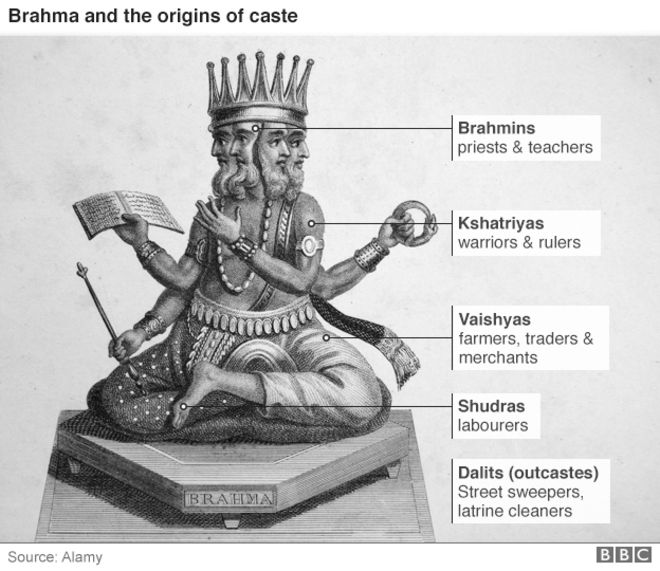
What is the status of Shudras who constitute the largest social bloc in India? In the North India, the Yadavs, Kurmis of Bihar, Yadavs and Jats of Uttar Pradesh, Gujjars of Rajsthan, the Shudras of Bengal, who are still outside the bracket of Bhadralok, the Patels of Gujarat, Marathas and Kumbis of Maharashtra, Lingayats, Vakkalingas of Karanataka, Nairs and Menons of Kerala, Modaliars, Nayakars of Tamilnadu, Kammas, Reddys and Velamas of Andhra Pradesh and Telangana constitute the top layer of Shudras in the country. In other states and regions there are other such Shudra agrarian castes that do not come under the Mandal commission reservation. In some states similar castes exist without exposure to the outside of their own state and civil society. Apart from these major upper layers of the Shudras in all states the Other Backward Classes listed for reservation are also part of the larger Shudra category of India.
This category of people have been constructed as the fourth Varna—Shudra—by the Brahmin writers in the Vedas and since then they remain as Shudras without equal rights with Brahmins, Baniyas, Kshatriyas of India in many spheres of life. Every subsequent Brahmin writer—Kautilya, Manu finally the most powerful ideologue of RSS MS Golwalaker made the maintenance of this Varna dharma order the life blood of the Hindu religion and the nation. Golwalkar said the Hindu Nation would be “The place where a people characterized by Varnas and Ashramas”— that is, following the Hindu frame-work of society, obeying the Hindu codes, in short subscribing to the Hindu religion and culture (the culture of caste). The people of the country must be Hindus by religion and culture and consequently by language to be really included in the concept ‘Janpad’ (he wrote this word in Hindi). This is a component of the Rashtra idea of the ancient Hindus (We are our nationhood defined, pp 54-55). The Hindu Rashtra that now the RSS and BJP want to crystallise through power in Delhi even with the help of Ambedkarite constitutional institutions is that the ancient kind of varna order that got disturbed with the rise of Shudra regional rulers. Also reservation has to be restored by all means. This agenda is central to RSS than any other agenda.
Golwalkar’s book appears to be mainly against Muslims but the RSS/BJP cannot take away their individual and collective access to their Allah. All forces in that community are guaranteed that right to spiritual equality. But its larger strategy is to not to allow the Shudras any accessibility to Hindu God within the Hindu religious system. This is a greater problem because the spiritual equality is basic and more important than political citizenship rights. The Shudras have not had that critical spiritual citizenship rights for millennia and the RSS/BJP are determined to maintain status quo. Unfortunately, the Shudras are their main muscle and vote power base. They do not know that they are burning their own house.
The constitutional status as citizens did not change the status of Shudras in the Hindu religion and also civil society even after 70 years of independence. The Shudras appear to have accepted that religious subordination to Brahmins and in business entrepreneurship to Baniyas. The Brahmin Baniyas of present day under the BJP/RSS rule have enough money and full control of the spiritual power. They seem to think that the Brahmin control on Sanskrit language helped them to maintain the Varna order in ancient times and their control of English now will be of immense use. English has become their nationalist language, a fact the Shudras have not at all understood.
Their position as superior people to Dalits and Adivasis also did not change. These communities practice untouchability and oppress the Dalits in the country. Now the Dalits are known as the fifth Varna and are fighting massive battle for liberation.
The upper Shudras were of the view, particularly after Independence, that they would be the Neo-Kshatriya s of India. That was because a section of them became big land owners during the British rule. In the princely states also they acquired feudal land holdings. In the Nizam state, for example, the Reddys and Velamas became the feudal land owners and acquired political power through that landed property.
So long as India was basically agrarian they controlled the vote base and hence developed a feeling that they were the real ruling elite or what was sociologically called dominant castes. In the early days of Independence the communist movement mainly targeted them by using a borrowed concept ‘feudal lords’ without realizing that because of caste character of Indian feudalism these land-owning people would not transform into capitalists, as it happened in Europe.
The Indian capitalist class mainly came from Baniya or merchant caste but not from the Shudra landed castes. As of now there are no Jat, Gujjar, Patel, Maratha, Reddy, Kamma, Lingayat or Vakkalinga, Modaliar, Nair industrialists of the kind that you see from Baniyas, Marwaris and also Brahmins in the software industry. The caste-capital nexus has become clearer after the BJP came to power—particularly in 2014.
After the Bharatiya Janatha Party/Rastriya Swayamsevak Sangh came to power at Delhi in 2014, the Shudra upward mobility seems to have taken a downward direction. At the time of Independence they thought they would play the role of classical Kshatriyas putting their feet in the shoes of classical Kshatriyas as Neo-Kshatriyas. But the emergence of the Rastriya Swayamsevak Sangh under the leadership of the modern Brahmins and the strong bondage that the RSS built with the Baniyas, who became very powerful industrial capitalists, the entire Shudra masses have now become Neo-Slaves.
Not a single Shudra leader was allowed to become the Sarsanchalak of the RSS. Nor does the RSS fight for the priesthood rights of the Shudra Hindus with properly established theological schools, colleges in Hinduism. The RSS has a concealed and well knit relationship with all the Sankara peethas and major temples such as Tirupati, Puri Jagannath, Vaishnava Devi and so on. And it operates in a manner that the Shudras remain spiritual slaves of Brahmin priest craft and financially in the margins of the Baniya capital. The strength of the Baniya capital became highly visible only after Narenda Modi and Amit Shah became the real rulers of Delhi. Till then even the nexus between Baniya capital and Baniya politics was also not very clear. In the realm of Hindu spiritual system (which is back bone for electoral operations), the Shudras have not acquired any significant spiritual and philosophical space.
The fixing of Shudras as the fourth Varna was to deny education and spiritual priesthood. In the Vedic times the Shudras were denied of the spiritual rights wherein the right to read and write spiritual ideas would throw up thinkers from their fold. They were confined to cattle grazing tasks and building the meat and milk economy for the well being of the Brahmin, Kshatriya and Vaishya communities. This situation has not fundamentally changed even in the modern capitalist era.
Control over God, using the language with which the priest engages with God was used as a weapon to keep the Shudras as the physical labour force. In order to perpetually continue their hegemony, the Brahmin spiritual intellectual force worked out various strategies to keep the Shudras under their grip. The Shudras have not attempted to weaken that grip of Brahmins and Baniyas even by the beginning of the 21 century.
The Shudras controlled state power in some parts of India in various times in history. The control of state power either in medieval times or in modern times, either during the phase of monarchical rule or of democratic rule in different parts of India, did not change their philosophical and spiritual location. Political power operates under the control of spiritual and philosophical power. Unless they acquire philosophical and spiritual equality with Brahmins or they completely go away from their control the mediocre position of the Shudras will not change. Unless the position of the Shudras changes in the spiritual and philosophical position the position of Dalits also will not change fundamentally. Because the Brahmin intellectuals, both in spiritual and secular domains, also would see to it that the Dalits are controlled by the Shudras themselves. This is a dialectical process of control and liberation. A social force that does not have the ambition of total equality with Brahmins in spiritual and philosophical domains does not allow the other social forces below them to be liberated from their own oppression and suppression.
If the Shudras get freed from this psychological slavery from Brahminism, the liberated Shudras also would not allow the Dalit liberation to follow. They are interlinked because caste hierarchy is interlinked.
The RSS never proposed that the Hindu priestly position should be caste free. They defend the hereditary Brahmin priesthood in the name of custom and Agama ordination. If they build a centralised Ram temple where the Shudras and Dalits have no right to priesthood, their spiritual slavery will increase. The Brahmin priests will also run the Indian state like the medieval Papaldom in Europe and Khalifas in the Middle East. The Shudras/Dalits and Adivasis will be finished in that system. The BJP/RSS are planning take the Shudra/Dalits to medievalism. Since the Brahmins benefit most in such a system they may help the process of building centralised temples with the same Shudra labour. This is Brahmin community’s ploy to keep even the top rich Shudras, leave alone Hindu OBCs and Dalits, under their hegemony. Once that philosophical position is taken over by Shudras lot of changes are likely to follow.
If the priesthood rights are accessed by the Shudras, the Hindu spiritual system will undergo a revolutionary change. Once the spiritual power shifts into their hands Shudras—Kammas, Reddys, Patels, Jats, Gujjars, Yadavs, and the entire other OBC social forces—will also change the fundamental basis of the Indian education system. Today the Indian education system is under the control of Brahmins—particularly the higher education is fully in their grip. This has serious negative implications to the whole Shudra education. Mahatma Phule predicted this long back. Subsequently not many Shudra leaders, intellectuals and activists understood the modern mechanism of the Brahminic operation in higher education. Unfortunately a major leader like Sardar Patel did not realize this problem and unlike Ambedkar he did not prepare any roadmap for the Shudra transformation by changing the caste relations in Hinduism, which he thought was his own religion more rigidly than Nehru did. Nehru, though by the accident of birth in a Brahmin family got everything that the RSS founder Hedgewar got and more but went against his thought by saying that by belief he was a ‘Buddhist’. He never went with Gandhi’s Hindu (Baniya) vegetarianism. He became a beeferian inviting the wrath of the RSS. But Patel quite unfortunately left his historical Shudra food culture and became vegetarian. According to Aakar Patel, as of now all Patels have become sadly pure vegetarians leaving their historical food culture.
All along while Gandhi was arguing the Varna-dharma system should not be disturbed and the caste hierarchy in Hinduism should remain as it was, Patel never protested against that view of Gandhi and the practice in the Hindu religion. Patel betrayed Mahatma Phule and Periyar Ramsami Naikar. That is the reason why the Brahmin RSS sarsanachalaks owned him and now built a biggest statue for him. Meanwhile the whole Shudra community lost a modernist philosophical vision. In a way Patel blinded them and that is the reason why the RSS/BJP celebrate his ‘Iron Brain’. It is this iron brain of Shudras that brought the RSS/BJP to power in the Centre. Now the Shudras have to fight far greater battle than the Dalits are fighting to get out of the neo-slavery.
They have to fight for reservation based on scientifically collected caste census. When the entire Shudra population also comes into reservation bloc the service sector job market of the Brahmins, Baniyas and Kshatriyas will shrink. A section of them will have to move into agrarian production and labour market. Even if a section of Brahmin-Baniyas are pushed into the domain of physical labour their philosophical orientation of life and social relations will change. From their de-humanised position, they begin to change into the process of humanization. Their work in political parties, or secular institutions, outside the domain of basic production has no bearing on social change. Because the basic hierarchies remained the same and the caste cultural relations of the production process has not changed in India. Only a Shudra rebellion against Brahminism can achieve this. The present Dalit/OBC revolt cannot achieve this goal. The RSS and its allied organizations stopped that change quite consciously.
The Brahmins not allowing this change is not surprising. But the Shudras not aspiring for the leadership of change for millennia—including in the post-Independence India- is surprising. There is a schotoma (mental bloc) within the Shudra civil society that they are incapable of handling philosophical and spiritual questions. This schotoma can be overcome only with massive English mediums education for their children. They have to get out of the Sanskritic social stagnation.
The status and position of the Shudras in the national politics and Hindu religion is systematically being controlled by political Brahmin/Baniyas. Their religious status has not changed from that of the classical Shudra position in ancient India in the institutions of religion and education even by the 21 century. The classical Shudra status was that of slaves. Quite tragically they have not even produced intellectuals who could question their slave status even by now. Nor have they realized that they remain as unequal as they were in ancient times. The first condition for any social force to fight for equality is to realize that they are unequal. The second condition is to acquire the weapons of fight to achieve equality.
The Shudras have not realized that they are unequal. Though the Dalits are far below the status of upper Shudras they have realized that they are unequal and they are acquiring the weapons of fight for equality. The Shudras so far have not acquired the weapons of fight. The key weapon is education in a language that could understand the entire structure of conspiracy of Brahminic forces. Right now only English language has that ability and the Shudras have not yet acquired mastery over that language. On the contrary the Brahmins and also Banais have acquired that mastery over English, apart from Sanskrit, which was their weapon to control Shudras in the spiritual domain.
Historically the Shudras are agrarian and artisanal and service communities which made the Indian economy sustain and progress. Their labour power has produced wealth. But this Shudra identity of theirs is lost because of thousands of castes that got subdivided into sub-castes. But no single caste that was part of the Shudra category moved into Brahmin, Kshatriya or Vaishya category. Their numbers have become their weakness within its own classical boundary. This nomenclature of the largest productive communities of India—Shudra—has become almost non-existent because of lack of its homogenous use and identity construction over a period of time.
The Dalit-Bahujan identity that I constructed in ‘Why I am Not a Hindu’ has put the Shudra upper castes outside that definition. We need to re-imagine the old identity of Shudra in a new way. To overthrow the Brahmin-Baniya hegemony in the religion, civil society and political society this re-imaging of the Shudra identity is very, very important.
Once the Mandal reservation came into practice the castes outside the pale of reserved category—who are known as the upper Shudras—believed that they do not belong to the Shudra category at all. They started believing that they are the neo-Kshatriyas of the Hindu society. But with Mohan Bhagwat, Suresh Joshi (Brahmins) Narendra Modi, Amit Shah (Baniyas), Rajnath Singh and Yogi Aditynath (Kshatriya) controlling the whole system, the Shudras of all categories have lost even the regional power. The Neo-Kshatriya ambition built for themselves got dashed to the ground.
From late the 1960s onwards, the landed feudals among these castes went on building an image that the poor Shudras have nothing to do with them. Since the Brahmins and Baniyas were obeying them in the religious and business activities within the local environment they thought they are the rulers. They started projecting them themselves as Neo-Kshatriya. They added all kinds of surnames or titles that have neo-Kshatriya essence—for example, Singh (lion), Choudari, Patel, Reddy, Rao, Nair, Yadav, Mandal and so on. These titles have given them a feeling that they transformed themselves into the Neo-Kshatriya category. The feudal landed financial status, neo-kshatriya titles have given an impression that they have become equals to Brahmins and Baniyas. But at no point of time they acquired control on a language that has the Pan-Indian presence. The present society does not run with lion’s muscles or with Iron Man’s long hands it runs with a soft power—knowledge.
In the modern period, particularly after India achieved independence they acquired some regional language education. It gave them a psychological feeling that they have acquired modernity and Kshatriya status. Quite tragically all these castes remained regional power blocs only. They have not acquired an all India identity like what the Brahmins and Baniyas acquired. More than that they could not get into an educational realm that gave them Pan-Indian language, national and global vision. They remained muscle-men to execute the Brahminic Pan-Indian plans. This is what RSS kind of organization needed. They have never developed a critical mind of enquiry and reasoning. They were happy with feudal grain treasures and village power.
During the very same period the Brahmin priest in the village connected himself with national Hindu philosophical centre and village Baniya had established connections with national mercantile/ capitalist centre. If the RSS became that philosophical centre in the religious domain the Bombay-based Baniya capital became the business centre. No Shudra could get well connected to both these centers. The Shudras have never realized that the higher national political power was/is linked up to these two Pan-Indian structures. Every religious structure has its own central agency and every business class/caste has its own headquarter. Even the Shudra feudal forces never got nexus with these central structures. Hence they remained at the national periphery.
After the RSS got established, it has been operating as the headquarters of Hinduism. It is fully in the grip of Brahmins. The headquarters of capitalist/business economy in Mumbai, in the hands of Baniyas. Shudras have no decision making role in any one of these structures. They are completely in the peripheries of spiritual thought and economic thought.
The Shudras have got into deep controlled consciousness that they need to be slaves only. They cannot think of an independent existence for themselves. This slavishness is historical and continued to operate among them. They cannot think of an autonomous operation in the realm of religion and philosophy. The RSS has understood this. Hence it makes only a Brahmin as Sarsanchalak always, like the Hindu priests of temples come from Brahmins.
This is clear after 2014 elections. The Shudras voted for the BJP and handed over power to Brahmins, Baniyas and Kastriyas, which is a very classical form of rule. The Shudras used their constitutional right to vote against their own selves.
The Shudra slavery stands out in the accepted slavish mindset of the Nair caste of Kerala, for example. Historically till the early 20th century the Nair community allowed its women to live as concubines of Brahmin men in a system called Sambhandam. They were given the right to procreate children without having any responsibility towards their life and wellbeing. This mindset has not changed. Even though they do not have the right to become priests in Hindu temples and they do not control the philosophical ruins of Hindu religious system. The way the Nair Service Society forced their women to come into the streets and oppose the Supreme Court Judgment of 2018 that all women can enter the Ayyappa Temple is a clear indication. Their women were made to oppose their own right to enter into the temple if they are in the menstruating age of 10 to 50. Hundreds of women were asked to come into streets to protest against their own spiritual right to get into the temple.
The theory of women between the age of 10 to 50 (menstrual age) should not enter into the Ayyappa temple was constructed by the Namboodri Brahmins of Kerala. Though the Shudras have no role in constructing that theory they believe that every word that Brahmin tells is true and divine and they need to work according to that Brahmin theory. Not a single Nair emerged as spiritual philosopher and challenged Brahmins and took over the temple priesthood and codified the principles of divine practice. They only implement what Brahmins codify as spiritual principles. They believed that Brahmin theory that the Nair women should live as concubines of Brahmin without rights and freedoms in the past. They now believe what Brahmins wrote as a principle that women between 10 and 50 are impure as they menstruate they should not enter temples and implement that theory by forcing their own women. The Nairs do that with a belief that it is true and act accordingly.
If only they were to get into English medium education in the modern period they would have understood the importance of religion and capital in philosophical and economic domains. They lost out even in the modern period. They never realized at any time in history—more so in modern times—mind power can easily control the muscle power. The Shudras got enrolled into the RSS Vyayamashalas but never got enrolled into the Christian English medium schools. The Brahmins and Baniyas did the opposite.
In ancient India they could not get into Sanskrit language education which had the Sub-Continental presence. They did not get into Persian language education during the Muslim rule—particularly during Mogul rule. Even subsequently they did not get into Urdu education which has a Pan-Indian presence. During the colonial period and subsequently, even after Independence, they did not get into English medium education. On the contrary they became regional language Chaunists. These castes did not produce thinkers who could handle national issues and philosophical questions.
They never believed in the power of education but strongly believed in the power of land and money. But at the same time they did not think of transforming their land power into business power so that they could enter into the capitalist entrepreneurship.
They never put their children in high end English medium schools. In fact they never thought education is power among them. They believed land as power and the neo-Kshatriya titles that they acquired. That is how Reddy, Rao, Patil, Choudary, Yadav, Goud, Nayak, Nair, Mandal (in West Bengal and Bihar) were used as surnames. These surnames or the titles as caste names helped them to control local power. These castes also acquired early local and regional political power even after the election system was introduced. The village level police and revenue power came to them from Brahmins and Muslims (in certain areas like the Nizam State and Mysore the Muslim Zamindari was also strong.). But a place to which the police station is not a match is the Hindu temple. They never understood the philosophical principle that God controls everything—including the gun.
When feudal hold on the village vote system operated as a strong instrument the Indian National Congress leaders, particularly Nehru understood their village level power and promoted some Shudra land lords at the national level, as some of them have a history of participating in the nationalist struggles. Sardar Vallabhai Patel, Kamaraj Nadar, Neelam Sanjeeva Reddy, Nijalingappa, YB Chavan emerged as national level leaders by handling raw politics with some creative ideas, but none emerged as leader and thinker who could handle philosophical, historical and theological questions. Subsequently Chaudari Charan Singh and HD Deve Gowda became the Prime Ministers of India for short period each. But because they did have not have philosophical vision and English education to back it up, they did not leave any imprint on the socio-spiritual and political system of India.
In the bureaucratic set-up, even the Shudra feudal families could not acquire a hold because as they had no English medium education. Tthey also did not think about the need for putting their children into the sophisticated English medium schools and colleges within India and abroad. Putting the children in the suitable educational institution is a philosophical and ideological issue. It is not just a question of money. There was a spiritual opposition for long time on Shudras getting educated and it became a question of orientation in due course of caste cultural existence. For example, the Brahmins made a philosophical question that the Hindu God should be communicated only in Sanskrit language at the same time to handle national and global institutions their children should study in English medium schools—preferably in Christian schools.
Even the Shudra landlords thought that their children were not suitable for that kind of educational life. Most of the Shudra land lords were uncritical admirers of Gandhi and Nehru and they thought that they would never reach their national and international stature. The real problem was in the caste cultural tradition itself. They always carried an intellectual inferiority complex vis-a-via Brahmins and Baniyas. The image of Gandhi had strengthened the village level Baniyas. For example, most of the Baniyas, across the country, even at the village level were vegetarians. They must have got this food cultural tradition because of their Jain tradition, but Gandhi made it more respectable at Pan-India level by taking up a massive campaign of linking of human food culture and his theory of non-violence. His family and the Baniya vegetarianism was historical and it started with Gandhi. He campaigned as if that was Hindu tradition in which Shudras were also part. Even Patel seems to have never opposed this kind anti-Shudra cultural value. As I said Shuras were historically multi-cuisine eaters. But Gandhi gave his family and caste food culture a nationalist twist and projected all meat or beef eaters as violent people.
The Gandhian campaign of vegetarianism went well with the North, South and West Indian Brahmins, who took to vegetarianism by then. The Post Shankaracharya Brhaminism in these regions took to vegetarianism and established as spiritually validated theory that Vegetarinism is pure food and meatarianism is impure food. But that theory became more anti-Shudra food cultural theory. Gandhi became the most modern nationalist puritan by acquiring big a place for Baniyas in modern vegetarian Hinduism. Though the spiritual Brahmins had a problem with Gandhi they invited his image into their homes very easily with vegetarian nationalism.
The only Brahmin community that did not go with that vegetarian ideology was that of the Eastern India. They were fish and meat eaters. But they did not contest the Gandhian vegetarian superiority campaign. Though by and large the Shudras of India are not vegetarian and they felt ashamed to talk about their historical meaterian food culture. The Muslims and Christian got ghettoized in this environment and even their universal food culture was projected impure.
In this process some Shudra castes in North India even turned to pure vegetarianism. The Patidars of Gujarath are one such converts. In the process the Shudras, Dalits, Adivasis began to be seen violent dull headed people because they eat meat/beef. This aspect of Baniya-Brahmin discourse not only constructed the Shudra/Dalit/Adivasi communities as violent, but were made to be seen closer to Muslims and Christians, who never believed in pure vegetarianism and food related non-violence. The Baniyas and Brahmins projected their caste culture as Hindu (religious) culture. The RSS/BJP used the same civil societal space to capture power in multiple fields—social, spiritual, political and economic. Now they want to impose pure vegetarianism on the whole nation, which is going to weaken the nation.
The Shudras did not understand the implications of leaving everything historically theirs and adopting the Brahmin-Baniya culture as theirs and also as national. Quite tragically while the Indian culture, civilization is said to have started with writing of Rigveda, which text actually divided the Indian society into four varnas. But 1500 before this text was written the city of Harappa was built. To build that city along with other cities humans used all the artisanal skills that still survive among the Indian Shudra communities. The food culture of Harappans matches with that of the Shudra/Dalit/Adivasi food culture but not with Brahmin/Baniya food culture. There was no notion of pure vegetarianism before the Jain sect emerged in the 7th century BC. The RSS/BJP will make India a Jain nation in the name of Hindu Nationalism. That will destroy the nation’s productive abilities.
The most dangerous aspect of the RSS is its commitment to sustain the classical varnadharma, with the Shudras being at the bottom to serve three varnas above them. That means even if the untouchability is abolished all the Dalits will be part of Shudra Varna and Tribals should also be added to the Shudra Varna once this phase of reservation is over. But the Brahmins/Baniyas/Kshatriyas will be as they are above all, with all the classical privileges. This is very in Golwalkar’s thesis. In his manifesto for establishing Hindu Rastra—WE OR OUR NATIONHOOD DEFINED he made it very, very clear. The Shudras of the nation must know what he said:
“ The place where a people Characterized by Varnas and Ashramas enriched itself. Characterized by Varnas and Ashramas—that is following the Hindu frame- work of society, obeying the Hindu codes, in short subscribing to the Hindu Religion and Culture—that is important. The people in the country must be Hindus by Religion and consequently by Language, to be really included in the concept Janpad (written in Hindi) a component of the Rastra, idea of the ancient Hindus” This in essence means the Shudras/Dalits/Adivasis should be where they were in ancient and medieval periods and Brahmins/Baniyas and Kshatriyas should be where they were/are.
More dangerous than this is that by invoking Manu Golwalkar lays down a code “All the people of the world to come to Hindustan to learn at the holy feet of the Eldest—born Brahmanas of this land”. In the modern Hindu Rastra the status of Brahmins should be what it was in the Vedic period where the Shudras were the slaves. If they are expecting the global Christians, Muslims, Buddhists to come to learn at the feet of Hedgewars, Golwalkars, Mohan Bhagwats and so on, one can imagine the fate of the Shudras/Dalits and Adivasis of India in future.
Prof. Kancha Ilaiah Shepherd Chairman T-MASS and political theorist.
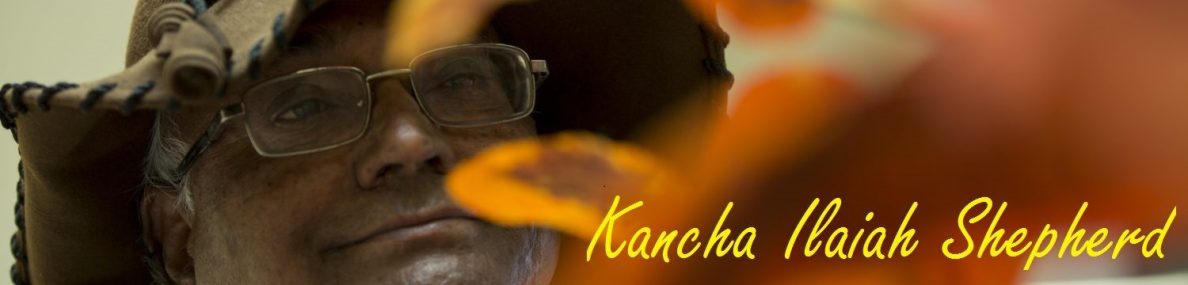
 Kancha Ilaiah Shepherd
You must be logged in to post a comment.