-
How Dalits Were Separated from Shudras? | Kancha Ilaiah Shepherd – Mainstream
How Dalits Were Separated from Shudras?
Friday 21 January 2022, by Kancha Ilaiah Shepherd
Dalits are historical Shudras. They were part of the Harappans who built the pre-Aryan agrarian and urban civilization by 3000 BCE. But now in our times despite the fact that we all live in modern constitutional democracy, not only the Dwijas, but Shudras also treat them as untouchable. There is no social cohesion among Indians in spite of the fact that this great democratic constitution was given to us by Dr.B.R Ambedkar who was born as an untouchable. But later he liberated himself and engendered a new ‘Idea of India’ where there should not be caste and untouchability. For this to be achieved the realization of the Shudras how their own fellow productive Dalits were separated from them . They should also realize through this division how the Dwija control over both of them got tightened.
The Dalits were separated from Shudras and rendered untouchable sections of the Shudra varna with a design of negative spiritual ideology, which was/is more a superstition. In contemporary India the Shudras constitute 52 per cent of the population and Dalits, as per the 2011 census, constitute 16.6 per cent. Though the Dalits constitute more in number than the Brahmins, Banias, Kayasthas, Khatris and Skatriyas together who roughly might constitute about 5 per cent or so, they are made modern untouchable slaves. As per the 2011 census the total population of Hindus is 79.8 per cent [1]. What exactly is the number of the Shudra/OBCs and Dwijas will only be clear when caste wise census is taken at some stage in future. As of now the numbers are hazy. But one thing is certain that the caste contradictions pose a serious developmental issue to India as caste played a very negative role throughout known Indian history. The problem started with writing of Rigveda as a spiritual book of Brahmins around 1500 BCE. The builders of the Harappan civilization were made the slaves of non-food producers and were made their slavery permanent. They were divided into touchable and untouchable slaves and further into many castes.
The social disease of untouchability, it appears, was not there in early Vedic Brahmanism as the Rigveda did not mention untouchables with any name and called it fifth varna. The Shudra varna was the last and its assigned duty was to work hard around all kinds of productive domains and serve the three above varnas—Vaisya, Skatriya and Brahmin. That itself was a slave status of the Shudras [2]. At that stage there could not have been a lesser social section than that. It only shows that the present population of Dalit was part of the Shudras for long time in ancient India.
It appears that once Brahminsm declared leather and leather related instruments untouchable and the section of Shudras who specialized in leather related industry were declared untouchable [3]. It was, however, certain that during the Vedic period, though the economy was called pastoral, we can assume that leather instruments were part of the economic life. Evidence for the work specialization comes from our present Adivasi society which is very similar to the Vedic pastoral society.
Even in our own time Adivasi (Tribal) deep forest village economies also developed specializations in work. To make the leather instruments a group of people have specialization in transforming animal skin into leather and also leather into bags, ropes and other essential commodities. All the Adivasi adults cannot handle this specialized task of making leather instruments. Many Adivasi villages used leather instruments which are prepared within their own community of the skin of the animals they hunt and also by using their own domesticated cattle after they are dead. In all ancient histories the Adivasis covering their body with leather could also be seen among certain tribes. The Adivasi God Shiva who later was included in the Brahmin-Kshatriya pantheon of Gods always, though semi-naked, appears in leather clad form, with a snake around his neck. But in the Adivasi society the specialists in leather technology are not treated untouchable to the rest of the society. They are part of them. This is a universal process of growth of human societies. But Brahminsm in India introduced new principle called human untouchability which is worse than slavery.
Leather As A Marker Of Untouchability
In modern times all over India leather industry is a Dalit industry and only Dalits work in that industry [4]. The leather work is talked about as a marker of untouchability between Shudras and Dalits in village India. Of course, after Islam came to India the converted Muslims, without having a clear caste identity, also worked in the leather industry. The Dwija and Shudra/OBC do not work in the leather industry now. The entire village level leather instruments like ropes, bags, chappal, shoe, belts and so on are products that are made by only Dalits [5].
At what stage the leather related artisanal occupation was made untouchable to Shudras is not known. But it is presumable that the practice came into being with the intervention of Brahminism through ritual segregation into the labour process making leather related work as a marker of human untouchability between Shudras and Dalits. They also treated production related field work as pollution as it was being done by the Shudras. Thus, division between Shudras and Dalits with an added layer of human untouchability, apart from the Shudra and Dwija division, on caste/ varna basis, is a Brahmin ritual introduction and it went into the human psyche very deep now. Historically this idea of human untouchability took root because of several layers of brainwashing to practice the Brahminic superstitions among the Shudras. This inculcation took place, over a period of thousands of years of Brahminic ritualism, more as a superstition than as a religious practice. Brahminism essentially is superstition but not a religion.
The RSS/BJP networks that function with Brahminsm as their parampara do not have an agenda to abolish untouchability. The solution to this problem should come from a combination of Dalit and Shudra philosophers who could study the Indian history of production very carefully. Even today the Dwija forces are outside production and in fact they are anti-production by evolution and training. Positive egalitarian principles cannot come from those who have no roots in production and struggle with nature. It is nature that would shape up our relations in our day to day engagement with it. The touchable and untouchable relations were not an everlasting human relationship. If we start working for the abolition of such inhuman relations they will disappear from this land.
In the early Vedic period the Shudras being majority they must have divided themselves into several occupational specialists because human interests, skills do not develop in uniform ways even among the Tribal societies. Interests and specializations form in any society that is collectively operating and struggling with nature to use it in different modes for their survival. Work specializations develop even in the pastoral or tribal economies. Until perhaps the Brahmin priestly forces declared that the leatherwork as more impure than cattle rearing and doing early agricultural work of the pastoral economy itself, the entire Shudra community would have lived as one unit of the Shudra slaves to the Dwija forces—that is to the three other varnas— Bania, Skatriya and Brahmin. The Brahminic books—Vedas, Upanishds and also epics do not tell the story of different occupations and their production related activities. They are completely silent about the whole animal and agrarian production systems. The Shudras who were the main food producers do not find much place in Vedas or in epics like Ramayana and Mahabharata, except in very marginal ways. The Dalit life stories also do not figure in those textual narratives. There are no parables or proverbs that give an idea of these communities in those texts. They mainly deal with their gods, Brahmin rishis, Skatriya kings, wars, yagyas, yagas kratus and wars. Production and distribution of goods and commodities where the Shudras and Dalits operated do not figure in their narratives [6].
There is no divine solution to the problem of caste and untouchability in any Brahmnic book. Generally religious books provide solutions to all problems suggesting ways and means through divine intervention. But Rigveda created a problem of social division, which later led to graded caste inequalities and also human untouchability, but it did not provide a solution. In other words the Shudras and Dalits are made to believe in books wherein they do not exist, except to tell them that they were/are unworthy to be treated as human beings. Their whole production work, their human relationships are kept out of the Brahminic Sanskrit books.
The RSS and BJP are now telling the Shudra/Dalit masses as part of their political propaganda that they must treat the Vedas, Uapanishads, and epics as their books as well as their own ancient book based civilization and as their parampara too. Their children are being forced to read them as part of their studies all through school, college and university education. If a Shudra or a Dalit owns Rigveda it should show them a way for his/her historical problem of untouchability and inequality. If a spiritual book does not show any solution to the problems that itself created then the society suffers as the Indian society suffered for millennia. No spiritual book in the world created a structure like caste and untouchability and put the nation to a huge loss and suffering.
This is a common modern problem before all the Shudras/Dalits and Adivasis that what is not theirs is being forced to believe as theirs. They are all now called Hindu, without showing any evidence that they are part of Dwija history. However, let us focus on the occupational divisions and how the Shudras treated Dalits as untouchable even to them. This is a major problem now. Until and unless the Shudras join hands with the Dalits to abolish untouchability and caste system they will not get into a new phase of life.
Why Writing On Leather Scrolls Avoided?
Of all the tasks, the involvement in leather work by people is a key issue in institutionalizing human untouchability. But it is a most surprising thing that in the history of human development leather was a key part of the agrarian activities in the whole world. Leather played a key civilizational developmental role in human life. The Brahminic writers treated leather so untouchable that they did not write any of their books on the leather scrolls [7]. Instead they chose to write on palm leaves called Talapatras [8]. Vedas for a long time were only orally recited. Only around 2-3 century BCE were they written on Talapatras [9]. Obviously Talapatara as an ancient instrument for writing cannot be compared to the leather scroll which was used by all great writers of the ancient world. Bible, Greek philosophy and early philosophical books of Egypt were written on scrolls. Chinese thinkers like Confucius and others also wrote on leather scrolls. Taoism as a Chinese religion came into existence based on books written on scrolls. Though I am not sure whether the Quran was also first recorded on leather scrolls. It said that the Quran was first written on Vellum which is a more sophisticated version of leather scroll [10]. The view that the Quran first was recorded on Vellum. (Historically, vellum was made by stretching calf skin over a wooden frame and processing it ) [11]… But no other country used talapatra as a writing template.
The disadvantage of writing on talapatra, which is a small sized leaf, is that its durability would be far lesser in time frame than that of leather scroll. Preserving talapatra text is very very difficult. Scroll was the best writing template that the leather makers made for writing when there was no printing paper in the ancient world. The books, that too spiritual books, remained for a longer time if written on scrolls whereas written on talapatras suffered major losses. Sustaining a written word on leather scrolls was more durable than the written word on talapatra. The Brahmin writers chose talapatra because leather was defined as spiritually untouchable. If only the Shudras and Dalits were allowed to read and write perhaps they would have used leather scrolls in ancient times for their writing. But gradually the disease of untouchability around the leather industry that the Brahmin thinkers and writers practiced was extended to Shudras through brain wash mechanism by invoking spiritual authority of the Brahminic divinity. Campaigning about divinity that promotes human equality helps the process of economic development. But imposing the ideology of divinity that promotes human inequality also destroys the productive abilities of the people. This is what exactly happened in India. Not only Dalits but even the Shudras fell victim to this spiritual ideology of Brahmanism. As a result the productive forces of India were so weakened even if other forces were not to intervene also India would have been a very backward country.
Dr. B.R. Ambedkar was of the opinion that the present day untouchability came into existence in the process of persecution of Buddhism [12].
According to him all the Buddhists were declared untouchable as Brahminism started persecuting them. In other words the present Dalits were outcast Buddhists. Though he cites other reasons along with this, one major historical problem with this argument is that by the time Ambedkar entered into research and politics hardly Buddhist symbols were seen in Dalitwadas. If they were deeply religious Buddhists some symbols should have survived in some Dalit families, at least. In Tamil Nadu region Ayothee Dass (1845—1914), a Dalit icon,who died few years after Ambedkar’s birth embraced Buddhism and propagated it. But at the mass level among Dalit families Buddhist presence was not there in nay part of India. Of course, after Ambedkar embraced Buddhism it spread quite fast in Maharashtra and also in other states. In Punjab and other parts of Western India Dalits embrace Ravidasism a few hundred years before Ambedkar started his conversion programme. Because Guru Ravidas (1450—1520) lived and taught his version of Sikhism along with abolition of untouchability in late 15th and early 16th centuries. Ravidas as a Dalit Guru was present in many Punjabi Dalit families by the time India achieved independence. Religious foot prints remain quite strong in human social and family life for a long time.
The leather work untouchability remained in every village for millennia. Even now that can be seen in the villages as a marker of human and social untouchability. Brahminism constructed very deep spiritual touchable and untouchable relations around occupational work. Graded inequality among the Shudras also is based on their caste occupation. For example, no other caste except dhobi caste would take up cloth washing of other families. Similarly no other caste would take up body shaving except nayee (Barber) in the villages. They are lowest in the Shudra caste hierarchy. Thus, occupation played a key role in fixing the social status and changing occupation in ancient and medieval times was almost impossible, because of brahminical restrictions.
What We Lost By Not Writing On Leather?
In the most ancient times when the writing was just starting leather scrolls were the most scientifically advanced material for that purpose. That was the age in which the human being was just learning how to develop a natural paper and pen to write and leather scrolls and plant liquids to write with bird feathers as the process began. Human beings were just developing the scientific tools of advancement. Once the leather workers were declared untouchable by the Brahmin pandits the division of the Shudra agriculturalists and Dalit leather workers would automatically start because Brahminism declared a great ancient scientific instrument itself untouchable. The Shudras must have thought that the Brahmins were great people since they were not involved in such untouchable work. The theory of productive and technological work untouchability gradually reached to tilling of land and harvesting crop in a most destructive manner. It created a psychological tension both among the Shudras and Dalits. This happened exactly when in Israel, Greece, Egypt and China writing on leather was taking place by constructing a philosophical vision for human advancement. Agriculturalism was reaching a positive philosophical status in China and Europe. It was assigned the topmost position in the realm of God in Israel, Europe and China.
Ancient Greek history tells that they wrote books on leather scrolls much before any religious idea around God took a definite shape in that country. That could be much before the Brahmins in India composed the oral Rigveda. Israelites wrote their early Old Testament on leather scrolls starting with Moses, who wrote the first five books of the Old Testament— Genesis, Exodus, Leviticus, Numbers, and Deuteronomy— much earlier than the Brahmins even evolved an idea of Brahma the Purush. The evidence for such a situation comes from the content of the writings of the early Brahmins. The Greek thinkers wrote about fine tuned philosophical issues whereas the Rigveda, the first book is about praise of Brahma, Indra, Agni, Vayu and so on. All of them had no positive philosophy for human survival and development. The Shudras could not understand what was going on in the world and Dalits were being crushed for developing the leather technology. Because the negation of science by the top varna—the Brahmin— only composed Vedas orally for memorization purpose. Actually writing of those books on Talapatras took place much later around 3rd century BCE, according to one version. There is a view that Kautilya’s Artha Shastra was the first book that got written on Talapatras [13] and subsequently the earlier books were put into text form on Talapatras. That also means writing took shape in India centuries later after it was done in other countries. In Israel the scrolls of prophet Isaiah’s writings that appeared as Book of Isaiah in the Bible, who lived and wrote in the 7th century BCE, were discovered at the end of the 20th century. They are now preserved in a museum of ancient Israel manuscripts. [14] The RSS Dwija leaders are now propagating that Brahmins are Viswva Gurus (teachers of the world). Millions of Shudras and Dalits—that too educated ones—believe them not knowing that the guruhood they performed was spreading myths, mythology and anti-science. That guruhood was meant to sustain the Shudra/Dalit slavery.
This leather untouchability was the starting point of the negation of development of science in India. No religion in the world did this. Israel was the birth place of the biggest religion in the world. Jews were people who created a first coherent book of religion. They never lived a stable life like that of Brahmins. They were homeless for several centuries. They lived a migrant labour life all over the world. Yet they, apart from writing a coherent religious book, Bible, on scrolls, paved a way for scientific development in many fields. But Brahmins in spite of such stable life and command over the Indian spiritual and social system and also on the Shudra slaves went on producing anti-science ideas and went on implementing them. The same underdeveloped minds of Shudras went on accepting their ideas and lived a dehumanized life. The Shudra philosophical underdevelopment is a unique thing in the world. The Brahmin operation is a global exceptionalism, which made the Shudras to walk on their heads. That mental status of the Shudras kept the Dalits physically and mentally oppressed by Brahminism. If the Shudras were to reject the Brahmin control, human untouchability would have disappeared from India a long time back.
Agrarian Work Is Still Common For Shudras And Dalits
As of now even the Shudra castes distinguish leather work, removal of town (there is no such need in the villages) level night soils, village, town. city cleaning and beef eating and other agrarian tasks in which they too involve along with Dalits. They treat the leather and cleaning of public spaces as Dalit tasks and culture but not Shudra tasks and culture. Shudras would not take up them as they see them as pure Dalit tasks. But agrarian field related tasks were/are shared by all Shudra castes, Dalits and Adivasis including Reddys, Kammas, Jats, Patels, Marathas, Lingayat, Vokkaligas, Nairs and so on depending on their economic need. It is the class status of the Shudras that determines their involvement in field work. But there is no notion among them that field work is impure and those who do it should not be touched or interacted with. Family relations between the poor Reddy or Kamma or Velama, or Patel or Jat, who perform wage labour or agrarian tasks and those Shudras who employ them to do those tasks determined by caste status. Even marriages are possible with two classes but not within two castes.
The Dwija castes—Brahmins, Banias, Kayasthas, Khatris and Skatriyas— on the other hand, treat agrarian field work as Shudra/Dalit untouchable work. This is a very critical occupational and spiritual human touchable and untouchable relationship that the caste system brought into operation. This ideology of agrarian production getting treated as untouchable has worked as a major barrier in the developmental process of this nation from ancient days and even today this is a major problem. The RSS/BJP as religious socio-political networks do not have new solutions to this problem. Rather they want to reinforce the classical Shudra/Dalit and Dwija relations in many ways. While the 75 years of constitutional democracy, operating on secular principles has weakened the touchable and untouchable relations between the Shudra/Dalits, the RSS/BJP want again to strengthen the pre-democracy values by re-imposing the Sanathan values. Their essential direction in opposing what they call the Western values and culture is to take India back to ancient relations.
While the Shudra- Dalit relations in the agrarian fields are positive their social relations in the villages and markets is negative. The village and market relations are guided by Brahmin in the temples and also occasional ritual activities that the Brahmin priest performs in the homes of Shudras. The priest constantly reminds them of the touchable and untouchable relations as necessary spiritual condition to the Shudras and he normally does not go to Dalit homes. Those Shudras who accept this ideology of Brahmin are only considered Hindu. Some of such Shudras are also part of the Hindutva networks that are used against Muslims and Christians. At the same time the RSS does not want any changes in the Brahmin/Shudra/Dalit relations as they were constructed by ancient Brahmin rishis. The fact is that among the rishis that RSS leaders talk about, there are no Shudra or Dalit rishis. Brahminism encircled the Shudras and Dalits from all sources and the RSS uses that historical encirclement for its advantage.
The Land Question
Apart from this the economic issues that crop up between the Shudras and Dalits are rooted in the land question. The Shudras own agrarian land in sizable quantities as they are main tillers. Among the Shudras there are a few landlords, BUT large numbers of them are middle farmers and also landless labour. The Shudra landed to try to exploit the chief labour of the Dalits, which became more vulnerable because of the landlessness of the Dalits. It is here that caste and untouchability have been interlinked and it works against the interests of the Dalit landless labour in a very inhuman manner. As long as human untouchability remains, the labour of Dalits would be cheaper than Shudra labour. But the real landlords are the Dwijas in all part of the country. The monopoly capitalists who happen to own vast areas of land. And more and more land is shifting into their hands. Caste and untouchability are market managers. Thus caste and untouchability have deep links with Hindu spiritual system and also economic markets. This socioeconomic system is quite useful for the RSS/BJP forces because they can use one caste against the other and collectively they use most Shudras against the Muslims and control all. However, they cannot remove Islam from India or from other countries. Their main aim is to sustain caste and untouchability so that the Dwijas can control the Shudra/Dalit/Adivasi forces for longer time to go.
Shudra Feudalism And Caste RelationsThe Shudra Dalit gap widened once the Shudras in an historical course differed in ownership of agrarian land. As I said earlier across the country the Shudras, though divided into several classes, maintained social and personal distance from Dalits both human untouchability and also ownership of land. A section of Shudras own land and most Dalits along with landless Shudras work as labour in Shudra owned fields. It is difficult to estimate exactly at what stage the Shudras started owning land by overcoming the dictum of Manu Dharma Shastra that Shudras should not be allowed to own land as they were feet born fourth varna in the Vedic system. However, by the time India became independent the Shudras had the right to own land legally and Dalits also have legal rights but in reality many Shudra agrarian castes owned land and very few Dalit families owned cultivable land in the whole of India.
There were landlords or rich peasants from castes like Reddys, Kammas, Velamas of Andhra pradesh and Telangana. Jats, Patels, Maratas in North India Lingayats, Nairs and Naikars in Karnataka, Kerala and Tamil Nadu. At the same time in Uttar Pradesh, Bihar, Bengal and Odissa most landlords are Dwijas—Brahminis, Kayasthas, Ksatriyas and Bhumihars. Brahmin temple and land control is historical even much before Shudras were allowed to own land. Indian feudalism is essentially Brahmin feudalism which fundamentally differs from European feudalism. In India the Brahmin feudalism was rooted in the caste gradedness and also inhuman untouchability which destroyed many productive knowledge systems that the Shudras and Dalits discovered from time to time. The Brahmin spiritual system always looked down on agrarian scientific discoveries. If the whole world was to have similar caste and human untouchability even the capitalist advancement would not have seen the day. Because the religious institutions also need to recognize and co-operate with scientific experiments that take place in the fields of production. Brahminism never allowed such experiments to happen. When people experimented once the Brahminic forces came to know about such experiments they stopped them with social, spiritual and legal threats. The RSS owns that kind of past as great parampara. They never critique that past as negative and India should look for a scientific future.
The Shudra landlords too were not educated and the Brahmins refused to teach them Sanskrit and Muslims also did not teach them Persian. They mostly were illiterate with a feudal cultural aura. The land rights and actual ownership to Shudras must have come in two historical phases. 1) Shudra individuals after the monarchical systems were established became kings and they were isolated from the community and were given the Ksatriya status by the Brahmin priests. In spite of the fact that such individuals were relocated in Kshatriya status, such Shudra kings must have overlooked the dictum of Manu Dharma and Vedic injunctions and granted land rights to Shudras as their caste connections cannot be cut so easily. If an individual became a king his relatives still remained as Shudra agriculturists. Social and caste relationships are long established. The historical records show that from Maurya Chandra Gupta onwards several Shudra individuals were said to have become kings. Several generations of individuals from those dynasties ruled big and small kingdoms. There were Yadava, Reddy, Velama, Maratha dynasties that ruled in small and reasonably big states in different stages of history. For example, Shivaji was a Maratha ruler. By the time India achieved independence several Shudra kings were ruling small kingdoms with a subordinated status to the British Raj. Kolhapur, Baroda, Mysore states were under the Shudra rulers. But records do not show that there was any Dalit ruler in any part of India at the time of independence. The point, however, is that the Shudra rulers must have granted land rights to Shudras who were actually in the tilling profession. The Dalits, on the other hand, were till then also not allowed to own land in many parts of India. The problem of untouchability and landlessness made the Dalit-Shudra relationship problematic.
The Shudra Feudalism Was Embedded In Brahmin Feudalism
However, during the British colonial Raj more and more lands were brought under agriculture and the need for expansion of farmer society increased. Deforestation of lands and bringing them under plough was mainly done by the Shudras, though in many cases, they used the forced labour of Dalits both in deforestation and cultivation activities. The Shudra land ownership expanded during the colonial agrarian operations, both for native use and export to Europe. The Brahmin temple economy also expanded in the rural areas during that time, as they too had Agrahara temple lands, which even the British approved and granted pattas in the name of Brahmin priests and families. The North and South Indian Brahmin feudalism expanded quite hugely during that time. The Brahmin anti-production values were injected into Indian feudalism where the development of capital from the womb of feudalism was stalled. The feudal surplus was used on the Brahmin rituals and massive consumption. The Shudra feudal lords also followed the same lifestyle and British rulers used that negative culture as an advantage. Brahmin incomes have grown up both because of feudal and ritual economy. By the time India was entering into the anti-colonial struggle phase the Dwijas —mainly Brahmins and Baniyas entered into English medium education both in India and England. The English education spread within the Dwija communities—leaving even the Shudra landlords unexposed to English education. Macaulay, whom they abused later, put the Dwija forces on the international map and now they share power and positions in the Christian democratic world, leaving the Shudra/OBCs in the lurch.
The Shudra/OBCs did not get into English education much later also. Neither the feudal Shudra landlords nor the Shudra kings sent their children to study in England while Gandhi and Nehru, along with many other Dwija youth were studying there. An exposure to Western and Christian religious values would have engendered a new philosophical vision among the Shudra youth. But quite unfortunately Shudra rulers and landlords did not send their children to the West and got them educated. The only Dalit, Dr.B.R Ambedkar, who went and studied in America and England became a philosopher, economist, sociologist and legal expert and went on to write many great books and also the Indian constitution. But not a single Shudra young man or woman went and studied abroad and emerged like Ambedkar, Gandhi, Nehru and so on. They were content with local landed power.
Without a philosophical vision opposing a deep seated practice of untouchability and caste inequality would be impossible. It required a serious study of the Brahminic books either in Sanskrit or in English as they were first translated into English during the colonial rule. The Shudras of India have not waged war against their own community’s historical ignorance, against Brahminism and also caste practices. Shudra landlords were ignorant and arrogant at the same time. By and large Shudras remain in the same ignorant status in the 21 century. Some landed wealth or feudal control over the poor with power to oppress Dalits and other Shudras is not good civilizational status of a given community.
There is a need for a socio-spiritual revolution in Indian society. The Shudras need to take a philosophical control of the spiritual system by sidestepping the Brahmins. This needs an educated civil society within their own communities. The regional parties that are controlled by the Shudras must introduce English medium education in all the Government schools and a massive cultural re-positioning has to take place.
Temple, Food And Human Untouchability
At what stage of Indian history the Shudras and Dalits became untouchable to each other is not exactly known. As I said earlier Dr.BR. Ambedkar’s argument was that the present form of Dalit untouchability came into in its full form after persecution of Buddhists. The persecution continued over a long period of time from Pushyamitra Shunga’s period to Adi-Shankara’s period. He thought that all the present Dalits are former Buddhists and imposing untouchability on them became the ultimate persecution. Since most Buddhists were forced to become untouchable to the rest of the society, Buddhism also did not get the support of the Dwijas and Shudras. The second reason he talked about was that Dalit were eating beef, mainly of dead cattle’s and that also became an added reason for untouchability. He never mentioned the role of leather and Brahminism treating leather work as untouchable from Vedic times onwards. If Brahmin writers claim that they wrote books or their scriptures much earlier than the Israelites, Greeks and Chinese and if they were not practicing leather and dead animal body related work as untouchable, why they did not write on leather scrolls but wrote even by that time on an unscientific instrument, Talapatra?
The post-Aryan migration and formation of varna dharma theory and the division of the society into four varnas itself was in a way the beginning of practice of untouchability of all food production and development of scientific instrument process. The Shudra untouchability gradually limited to leather workers’ untouchability because the service of the Shudras for the Dwija castes would have been impossible unless they were treated humanely touchable and spiritually untouchable. This process of Shudra spiritual untouchability continued for long time till the Muslim kingdoms were established. As large Shudras were becoming Muslim slowly the Brahminic temple entry of Shudras was allowed because of if all Shudras become Muslim there will be none to feed them by producing food. The ancient and early medieval food of all Indians included beef. Without eating beef along with other food items that were naturally available in nature even the Brahmin/Bania/Skatriya survival would have been impossible. However, the most negative development that happened with Shudra life was, apart from denial of education, their food culture was/is being controlled by the Brahmin priest who has no love lost to them.
But it is unthinkable that Shudras and Dwijas never ate beef from the days of writing the Brahminic books, mainly Vedas. Vedas themselves are telling that beef was part of ritual offerings and part of human food culture at that time. More importantly in Harappan civilization, the present Shudras, Dalits and Adivasis mainly depended on animal food, including the meat of bulls, cows, buffaloes, sheep, goat,deer and so on. Their food also consisted of fish and milk at that time. The human food surplus mainly came from dried animal meat, which still is a source in many Shudra/Dalit/Adivasi homes. Our Adivasis kill many animals whenever they could get them and both the skin and meat are processed for long time use. In plains of India all shepherd and Dalit families preserve dry meat called Vatti Tunukalu and also dry fish called Vatti Chapalu even today. Meat and fish are not untouchable foods in all Shudra/Dalit/Adivasi temples. They are not untouchable even in Bengali Brahmin, Kayastha families in the temples. Their food offerings consist of fish items. It is mainly the South Indian Brahmin-Banias and now the RSS/BJP and their sister organizations propagate pure vegetarianism in temples, marriages and other rituals. Both Mahatma Gandhi’s campaign in the freedom movement, with almost a Jain adherence to pure vegetarianism, and subsequently the RSS and Hindu Maha Sabha headed by mainly Brahmins and other Dwijas expanded the pure vegetarian practice by weakening the physical and intellectual strength of India. This happens more among the poor vegetarians who cannot eat rich vegetarian food like Ghee, milk products, fruits and also would not eat cheap more protein meet foods by force of childhood training. In both physical and mental health, we are no way comparable to China.The Brahmin priest and the RSS Dwija leaders have now converted India into a vegetarian weak country.
The Shudras, more so in North India, have fallen into the trap of Brahminic-Hindutva forces who fed them with an idea that any meat eating is anti-divine and now most Shudra/OBCs are unable develop their mental and physical faculties that could overcome the Brahminic tricks. The post-modern identity and self respecting cultures of all brahminic practices and values and their spiritual and philosophic guidance needs to be rejected by the Shudra/Dalit/Adivasis, if they want to overcome the historical mental and physical backwardness. They cannot surrender to Brahmin gurus and overcome their superstitious mental blocks. It is here that we must examine the Shudra backward mind set that treats fellow human productive forces, Dalits as untouchable, a culture imposed by Brahminism. This practice can be abolished by philosophical repositioning by the Shudras first. There must be a Shudra philosophical rebellion against Brahminic superstition in general and the RSS/BJP cultural and political ideology which essentially came from the Brahmin brain. There is no contribution of Shudra/Dalit/Adivasi brain to that philosophy and ideology. There is no single thinker who wrote a book about Hindutva philosophy from the Shudra/OBC background. They are only being used as muscle power for the Dwija advantage.
Of course, it is the Shudra who treats a Dalit as untouchable not not Dalit that treats a Shudra as untouchable. This situation deformed the cultural history of India and it has impacted the historical development of science and production negatively. Any nation that treats its own people as touchable and touchable that nation would suffer massive talent and organizational loss. The RSS/BJP which mobilize masses in the name of nationalism but do not want unity of people by completely erasing the old compartmentalization of the nation is going to lose but not gain. For example China, Bangladesh and Pakistan do not suffer from these spiritual and superstitious blockades. Human mind and body need a lot of protein food and open scientific thinking. Historical Brahminism and the present RSS/BJP and their other networks are meant to control the Shudra/Dalit/Adivasi forces from not developing into scientific thinkers and writers. For the last hundred years the RSS successfully did that by all means. The secular and liberal Brahmins also were fully with them on this particular issue. Though the RSS/BJP were telling that the beef and meat food culture is Islamic not of Hindus, the Shudra/Dalit/Adivasis were/are meatarians all along. The real sufferers with that campaign was not Muslims but it were/are the Shudra/Dalit/Adivasis. Philosophically the Muslims did not get influenced with RSS/BJP Brahminic spiritual and social thought. Their thought and ideology are intact, as they were globally well connected.
Brahminism exists only in India and Nepal and both countries suffered its superstition for millennia. The Shudras got influenced and the practice of human untouchability by such a large community destroyed its creative energies. The practice of untouchability does not only destroy the energies of the untouchables but it destroys the energies of touchables. Since every person has hidden philosophical and scientific energies, caste and human untouchability have killed the scope of getting people educated and experimenting with new ideas. That is what happened to the Shudra mass intellectual energies. That is the main reason why there are no great Shudra intellectuals. Unless the Shudras realize this problem it is impossible to overcome this historical tragic trap that the nation is in. Without Shudra intellectuals emerging from central and state universities continue the mantle of massive research and continue the life time work of Phule, Savitribai Phule, Ambedkar, Pariyar and so on it is impossible to overthrow the control of Brahminism from the Shudra lives.
In my view the ritual purity and pollution ideology was certainly a Brahmin destructive theory. Such ritual theory also seems to have existed in Israel at the time of Jesus. The Samaritan community was an untouchable community with whom Jesus interacted. After that interaction the Samaritans became his followers and gradually that practice of untouchability seems to have been abolished, as there is no such practice among Jews now. But in India once the brahminic ritual practice, in a superstitious manner, was set up the touchable and untouchable relations, those relations passed on through several stages of Indian life. In everyday life while drinking water, eating food, touching one’s body in the daily routine functions of production and in man-woman relations the touchable and untouchable relations determined social interactions and rankings. But the final form of it got expressed in the temple system. The Sanatanic Brahmin temples are now called Hindu temples. The temple entry has passed through several stages of both Shudras and Dalits getting treated as untouchable for a long time. But now the human untouchability has come to a stage only Dalit get treated as untouchable in the temples. The idea of not allowing Dalits into Hindu temples comes from the priest—who is invariably a Brahmin, but the Shudras do the physical act of stopping them from entry. Thus the Shudras do the job of spiritual policing as against Dalits at the command of the Brahmin priest. The Brahmin priest operates as a mythological god and a Shudra mind never grasped this unproductive man controlling their brain and body. This lack of philosophical grasp of the Brahmin mind destroyed the Shudra brain more than any other organ.
This is where the role of the RSS should have been actually nationalist. It should have declared that human untouchability, food taboos, spiritual and social casteism are anti-human and also anti-national, if its leaders have any respect for the land, as the source of our food that we all live by. They should have proclaimed that all tasks and commodities, leather or spade, mud or woman’s menstruation all are the source of life. But its ideology and day to day practice and the organizational structure shows that more than nationalism this organization is brought into existence to protect the Indian parampara, of which caste system is the main, and see that the oppressed caste do not go into Islam or Christianity. The threat to Brahminism came from these two religions, which operated with a spiritual idea of God/Allah that is abstract and universal. There are minimal obstacles to the scientific experiments. Islam and Judaism have pork food taboo but that is being opposed within those religions. Whereas Brahminism operates on the spiritual idea that Brahma is Brahmin and Vishnu is a Ksatriya. Their gods themselves are fixed in a caste. The idea of leather untouchability and beef and meat untouchability and violence around food culture has broken the back of the Indian civil society.
The RSS in its more than 5 years existence never took up a campaign against any form of untouchability as much as, at least, Mahatma Gandhi took up during the freedom struggle. Ambedkar, though himself organized a temple entry movement in early days of his activism, he treated such a movement with disdain later when Gandhi was organizing the temple entry. Because he thought that the Brahminic forces would not change hence it was a futile exercise. He also must have thought the Shudras who have not produced a philosophical mind of his stature, they too do not stop putting their physical strength both in numbers and in terms of handing over wealth in Brahmin cause. They collect money through ritual tasks and also own a huge amount of land and other movable and immobile properties. Through their ownership of landed property they constructed such feudal values that abolition of untouchability in the civil society and temples was/is impossible. Pandit Nehru remained totally away from the caste problem as if it was no issue at all. Sardar Vallabai Patel also remained indifferent to that activity because the Shudra Brahmin collaboration was needed for achieving freedom from the British. Unfortunately he also did not proposed any philosophical agenda for abolition of untouchability for the future after independence was achieved. He has not written anything philosophical in his long life of seventy five years. He just remained an iron man. What does Ambedkar do in such a situation of national Shudra leadership. Periyar Ramsamy Naikar was an atheist without much English writing to support Ambedkar and was largely a regional leader. The Shudras had no national level intellectual brain at a time Brahmins started the RSS for continuing their hegemony for a long time to go.
But the RSS remained totally indifferent to even that movement and mainly focused on anti-Muslim and Christian campaigns. In a country of historical inequality, oppression, human untouchability and man-woman inequality, the forces in power must constantly strive for social reforms and economic development. The RSS/BJP are anti-social reform and have no theory of their own about economic development as they never had a theory of both these democratic agendas. It is in this situation of our nation we must examine the role of Shudras in spiritual and intellectual domains. The Congress Party in its long rule of the nation, the power was mainly handled by the same Dwijas with a secularism as their theoretical arm, where the religious inequality and human untouchability were conveniently overlooked. They were hiding themselves under the cover of secularism and vague socialist ideas that both the Marxwadi Dwijas and the Congress Dwijas promoted. On the question of caste and untouchability both Manuwadi Dwijas and Marxwadi Dwijas had similar opinion— silence. And they also did not allow the Shudras to enter into sophisticated global English medium education and hence no philosophers and thinkers who could shake the system emerged from them in any region. Thus, lack of philosophical vision among the Shudras sustained the Shudra-Dalit untouchabe relations and oppression. This human untouchability was conveniently used to exploit Dalits more brutally than they could exploit Shudras.
Atrocities On Dalits And The Shudra Imbroglio
As of now the tension between the Shudras and Dalits is more in the rural agrarian fields and villages. Across India the Dalits, by and large, are agrarian labour whereas the Shudras are divided into various classes. The Dalitwadas are also generally outside the village where the rest of castes live inside in caste clusters. Among Shudras there are landlords, rich farmers, small farmers and also huge numbers of pure agrarian labour. Apart from these, there are various cultural castes with nomadic and semi-nomadic life among the Shudras. Their caste status changes from state to state. Yet the human untouchability between Dalits and all classes of Shudras is a common phenomenon. This deepened the practice of caste based graded inequality and untouchability that went beyond the temple and priest controlled mechanism of spiritual untouchability. Most post-Independence atrocities, including rape and killing of Dalit women and men came from the deepened untouchability consciousness of the Shudras. Major post-Independence atrocities like Belchi (Bihar), Karamchedu and Chunduru (Andhra Pradesh), Kharlanji (Maharastra), Una (Gujarat), Jajjar (Haryana) and so on were mainly committed by the Shudra youth and post-Ambedkarite Dalit movement fought these Shudra atrocities in a more organized way than ever before.
Such Shudra-Dalit conflicts also lead to huge number SC/ST Atrocity Act related cases against Shudras. This confrontational situation created a anti-democratic atmosphere in the country. In the urban areas in the Government and private offices and other industries where the employment is under the roof, the Dwijas are involved in more atrocity cases than Shudras. Educated Shudras, particularly those Shudras who got jobs because of reservation tried to co-exist with Dalit employees as all of them face discrimination from the Dwija officials. In the non-productive public service employment the Dwijas—i.e.Brahmins, Banias, Kayasthas, Ksatriyas and Khatris— who involve in sophisticated atrocities, through various forms of discrimination. Many upper middle class Dwijas and the Dalits working within the urban offices clashed in the office spaces and the SC/ST Atrocity Act related cases against Dwija officials are normally seen. However, the question is unless the Shudra-Dalit relationship changes in the rural India serious change in the socio-cultural and also economic system would not take place in India. Once the Shudras stop treating Dalits as untouchable, the urban setting will also change. However, the religion and temple remain the key message senders on the questions of caste and untouchability. So long as the Shudras do not take control of the religion the priestly Brahmin keeps on playing tricks and abolishing caste and untouchable relations become impossible. Thus, the Indian civil society became an enmeshed cobweb.
Shudra-Dalit Intellectual Relations
There is no intellectual crop among the Shudras. When we are talking about intellectualism we are not talking about the food production intellectuality. We mainly talk about writing texts about ourselves and their history. The Shudras were kept out of this activity even in modern times—more particularly during the freedom struggle and also in post-independence times. The historical brahiminic forces and more particularly the Hindutva stream of thought brainwashed them that their main role, apart from food production, is in physically fighting the Muslim and Christian, Other. The intellectual field was divided among three schools in modern India—the liberal Brahmininist, Manuwadi Brahminist and Marxwadi Brahminist. The only challenging school that emerged in text writing intellectual domain is the Dalit intellectual force. There is a fairly good crop that emerged to carry the intellectual mantle of Ambedkar in post-independence India. But over a period of last two-three decades the Dalit intellectuals were concerned about the Shudra atrocties on Dalits, even at the cost of electoral and intellectual alliances between Shudra/OBC and Dalit masses. The relationship between the Dalit intellectuals with sparsely emerging Shudra/OBC intellectuals in the universities and literary realms is not very intimate with an understanding of abolition of caste and untouchability as a goal.
The Shudra exploitation and atrocities on Dalits is a serious problem of India. At the same time the Dalit intellectual disengagement with the Shudra slavery and intellectual bankruptcy is equally problematic. There is no systematically written Shudra/Dalit history. Particularly at a time when the RSS/BJP are pushing the Hindutva brahminic literature as main teaching material in the schools, colleges and universities writing of history from the Shudra/Dalit point of view is a critical project. The Dwija intellectual history shows that both Shudras and Dalits do not exist in that. Now the Hindutva ideology will make them perpetually non-existent. Hence the need for going to the roots of construction of the idea of untouchability and how it sustained through the sustained process of deployment of brahminical manipulative hegemony. The RSS/BJP is the most organized network that controls the national power. Such a situation demands a collaborative intellectuals battle by both the Shudra and Dalit intellectuals.
[1] https://www.google.com/search?q=population+of+Hindus+in+india+as+per+the+2011+census&rlz=1C1CHBF_enIN858IN858&sxsrf=AOaemvJHpIfTnnAyrFxnNoX0LJMM-ZY8fg%3A1638347972014&ei=xDSnYaEkhpqx4w_f1rnIDA&ved=0ahUKEwihlo_nmcL0AhUGTWwGHV9rDskQ4dUDCA4&uact=5&oq=population+of+Hindus+in+india+as+per+the+2011+census&gs_lcp=Cgdnd3Mtd2l6EAM6BwgAEEcQsAM6BwgjELACECc6CAgAEAgQBxAeOgYIABAIEB46BQgAEM0CSgQIQRgAUN1PWJuIAWDInwFoAXACeACAAZIBiAHyE5IBBDAuMjGYAQCgAQHIAQjAAQE&sclient=gws-wiz
[2] The first mention of Varna is found in the Purusha Suktam verse of the ancient Sanskrit Rig Veda. Purusha is the primordial being, constituted by the combination of the four Varnas. Brahmins constitute its mouth, Kshatriyas its arms, Vaishyas its thighs, and Shudras its feet. https://www.google.com/search?q=four+varnas+in+the+purusha+suktam&ei=ah3QYdjTCPaaseMPl8iH6Ak&ved=0ahUKEwjYsNOmnZD1AhV2TWwGHRfkAZ0Q4dUDCA8&uact=5&oq=four+varnas+in+the+purusha+suktam&gs_lcp=Cgdnd3Mtd2l6EAMyBQghEKABMgUIIRCgAToHCAAQRxCwAzoHCAAQsAMQQzoHCC4QsAMQQzoICAAQ5AIQsAM6CgguEMgDELADEEM6BAgAEEM6CAguEIAEELEDOgcIABCxAxBDOgUIABCABDoHCC4QsQMQDToECAAQDToICAAQCBAHEB46CggAEAgQDRAKEB46CAgAEAgQDRAeOgUIABDNAjoICCEQFhAdEB5KBAhBGABKBAhGGAFQ4gtYwsUBYOnYAWgBcAJ4AYABmAaIAfIrkgEPMTAuMTUuMi4wLjEuMi4xmAEAoAEByAESwAEB&sclient=gws-wiz
[3] Dalits in the Telugu villages are known as Tolupanollu (leather workers) and they are treated as untouchable mainly because of that work.
[4] See Kancha Ilaiah, Post-Hindu India—A Discourse on Dalit-Bahujan, Socio-Spiritual and Scientific Revolution, Subaltern Scientists pp 25—48, Sage, (New Delhi), 2009
[5] Ibid
[6] In the Ramayana and Mahabharata, which are made very popular through multi-media propaganda, Shudra and Dalit life, their productive struggles with nature, do not figure in any meaningful way. In Mahabharata, for example, only when reference to Karna comes, his Shudra background is mentioned. But he was also shown by birth a Ksatriya as he was a son of Kunti herself. In Ramayana Sri Rama and his family represents the Ksatriya community and all other rishis represent the Brahmins. No significant figure represents Shudra or Dalit communities, who were the main food producers of India.
[7] https://www.smithsonianmag.com/history/who-wrote-the-dead-sea-scrolls-11781900/ The earliest biblical texts were written on scrolls made from papyrus (a plant-based paper) or parchment (animal skins that had been scraped, burnished, and stitched together). It is very likely that all biblical books were initially written on scrolls. Only in the second or third century C.E. did scribes begin to write on papyrus or parchment that was folded and stitched into a codex, which more closely resembles our modern print book. After the invention of the codex, Christians tended to copy their scriptures into codex form, whereas Jews traditionally continued to copy their scriptures in scroll form. (https://www.bibleodyssey.org/en/tools/bible-basics/how-was-the-bible-written-and-transmitted)
[8] Palm-leafmanuscripts are manuscripts made out of dried palm leaves. Palm leaves were used as writing materials in Indian subcontinent and in Southeast Asia reportedly dating back to the 5th century BCE. Zhixin Shi; Srirangaraj Setlur; Venu Govindaraju. “Digital Enhancement of Palm Leaf Manuscript Images using Normalization Techniques” (PDF). Amherst, USA: SUNY at Buffalo. Archived (PDF) from the original on 2010-06-16. Retrieved 2009-06-23.(https://en.wikipedia.org/wiki/Palm-leaf_manuscript)
[9] The Vedas have been orally transmitted since the 2nd millennium BCE with the help of elaborate mnemonic techniques. The mantras, the oldest part of the Vedas, are recited in the modern age for their phonology rather than the semantics, and are considered to be “primordial rhythms of creation”, preceding the forms to which they refer.[25] By reciting them the cosmos is regenerated, “by enlivening and nourishing the forms of creation at their base.” (https://en.wikipedia.org/wiki/Vedas)
[10] verses 282-286, from an early Quranic manuscript written on vellum (mid-late 7th century CE), https://en.wikipedia.org/wiki/Early_Quranic_manuscripts
[11] https://www.google.com/search?q=what+is+vellum&rlz=1C1CHBF_enIN858IN858&sxsrf=AOaemvJF7i0ZBahh6lQMcodVEb_aiaM7mA%3A1639058624961&ei=wAyyYerDOayWseMP0Lqz0Aw&oq=What+is+vellum&gs_lcp=Cgdnd3Mtd2l6EAEYADIFCAAQgAQyBQgAEIAEMgUIABCABDIFCAAQgAQyBQgAEIAEMgUIABCABDIFCAAQgAQyBQgAEIAEMgUIABCABDIFCAAQgAQ6BwgjELADECc6BwgAEEcQsAM6BAgjECc6BwgjEOoCECc6BwguEOoCECc6BwgjECcQiwM6BQgAEJECOgsIABCABBCxAxCDAToICAAQgAQQsQM6BAgAEEM6BQguEIAEOggIABCxAxCDAToFCAAQsQM6BwgAEIAEEApKBAhBGABQxhFYl1pgkosBaAJwAngEgAH7AYgBxBmSAQYwLjE1LjSYAQCgAQGwAQrIAQm4AQLAAQE&sclient=gws-wiz
[12] See Dr.B.R. Ambedkar, The Untouchables: Who Were They and Why They Became Untouchable? Chapter 9 to 14 wherein he says “The Broken Men hated the Brahmins because the Brahmins were the enemies of Buddhism and the Brahmins imposed untouchability upon the Broken Men because they would not leave Buddhism. On this reasoning it is possible to conclude that one of the roots of untouchability lies in the hatred and contempt which the Brahmins created against those who were Buddhist”.
[13] https://www.livemint.com/news/india/neglected-and-decaying-the-original-arthashastra-may-soon-be-lost-forever-11574012580117.html
[14] https://en.wikipedia.org/wiki/Isaiah_Scroll
http://mainstreamweekly.net/article11958.html
https://pagead2.googlesyndication.com/pagead/js/adsbygoogle.js?client=ca-pub-6388611372302111
-
English in govt schools, a masterstroke by TRS to check the BJP | The News Minute
No national political party – be it the BJP or the Congress – could support English medium education in government schools because of the regional language bias they themselves constructed.

FB/CMOVOICES OPINION FRIDAY, JANUARY 21, 2022 – 13:17Kancha Ilaiah Shepherd
The cabinet decision of the Telangana TRS government to introduce English medium in all the government schools from 2022-23 academic year is a masterstroke to stop the expansion of the BJP in the state. English medium education along with Amma Vodi programme (a flagship scheme whereby every mother or a recognised guardian in the absence of the mother is entitled to financial assistance for her child/children’s education from class 1 to class 12) in the neighboring Andhra Pradesh has become so popular among the rural and urban poor that the demand for the same in Telangana has become quite strong. The programme might even set the wheels turning for a third-time victory for Telangana CM KCR, just as the Rythubandhu (a scheme whereby the government provided aid during the Kharif season to farmers, to take care of their investment needs), helped him in the 2018 elections.
No national political party – be it the BJP or the Congress – could support English medium education in government schools because of the regional language bias they themselves constructed over a period of 70 years all over the country. I had a discussion about the possibility of English medium education in Karnataka’s government schools with the then chief minister Siddaramaiah (2013-2018). He told me the Kannada intellectuals would oppose this move. Even CPI(M)’s dynamic Chief Minister in Kerala, Pinarayi Vijayan, also told me that the Kerala intellectual class would oppose such a move in the state. But let us not forget that all such intellectuals educated their own children in private English medium schools.
The BJP for instance, whether at the state or national level, opposes introducing English medium education in government schools, but at the same time, gives a free run to the private sector to have entirely English medium schools for the rich. After the BJP came to power in 2014, on one hand, there was massive privatisation of school and university education, and on the other, the party stressed on regional language medium education in government schools. In all the states where it is in power, government school education remains in a poor condition. Meanwhile, the industrialists and feudal rich who support the BJP financially and in vote mobilization have started private English medium institutions all over the country to make easy money.
In no state can the local unit of the BJP promise English medium education in all government schools. Its aggressive agendas are around religion and communalism. But the people in the villages find no use of such agendas beyond a point. People need education that equalizes the rich and poor. English medium education with good infrastructure in government schools that can compete with the best of the private schools is only the way forward for the Indian poor.
Good infrastructure does not mean air-conditioned classrooms, but basic facilities where there are good classrooms with seating arrangement that allow children to sit through the day comfortably. By good infrastructure, we mean clean water and toilet facilities. More than anything, we need teachers who can teach with commitment and necessary knowledge from not just textbooks but also the surroundings, state, nation, and the world with conscious learning habits. Supply of books and other learning teaching material is also crucial.
For the last 73 years, the education system has contributed to making the rich, richer, and the poor, poorer. English medium education for the rich and regional language instruction for the poor along with sub-standard facilities has forced the children from villages to suffer in every sphere of life. Till the YS Jaganmohan Reddy government took a bold step of transforming the school education system, no chief minister ventured such a step. The Telangana government told the people in 2014 that there will be free education from KG to PG, and KCR did not dare to initiate a complete shift of the medium of education for the last seven years. Though the government has initiated improving the residential schools and making them English medium, the vast village level school education both in quality and quantity remained very underdeveloped, that too, with Telugu medium teaching.
It has reached a point where the Telangana education system has become significantly weak and most graduates and postgraduates are not competent enough to get relevant jobs in the national and international markets. School and inter-education across the state have been sending ill-equipped students to higher education. The educational standards of Telangana have become as good as any BJP-ruled states’ educational standards. The quality of English communication and writing of the school and university teachers has become dismally poor. This situation requires systemic and massive change in the school education system.
Shifting all the government schools to English medium with a focus on improving the basic infrastructure is the first step. It is good that the government has initiated that. But there is much more to do. The general perception about teaching in the state seems to be that it is “easy” – a downfall of the prestige and seriousness that the teaching profession had during the Telangana agitation days. To overturn this declining quality, training school teachers both in language and content is one aspect, and disciplining the whole teaching community to be in the school, college and university around the academic work is another. The government has to send a strong message that work discipline cannot be compromised by any means while respecting their democratic rights.null
The BJP, at national level, has no seriousness on quality education. The National Education Policy in itself does not bring radical changes in the education system. Its main discourse and ideology is around religion and marginalizing minorities. The previous Congress governments also did not make the education system world class with focus on the rural school system. Neither party took India toward universal and quality education like the Chinese did.
Hence the regional parties have to show the way. The Andhra Pradesh Government began that new way and the Telangana government is moving in the same direction. By initiating this system educational reform agenda, KCR is likely to win the election for the third time in 2023.
(Kancha Ilaiah Shepherd is political theorist, social activist and author. He has been fighting for the introduction of the English medium in the government schools for three decades.)
https://www.thenewsminute.com/article/opinion-english-govt-schools-masterstroke-trs-check-bjp-160101
-
The Congress Is Heading in the Right Direction by Highlighting a Dalit Leader
Until this point, the Congress has not allowed many leaders with mass appeal to emerge from within party ranks in the states. However, this needs to change for the sake of the party’s future.19 hours ago | Kancha Ilaiah Shepherd
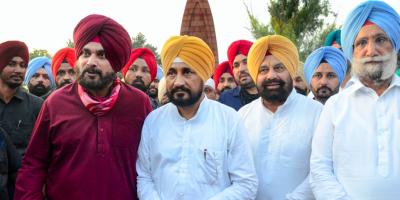
Punjab Chief Minister Charanjit Singh Channi along with Deputy CM Sukhjinder Singh Randhawa and PPCC President Navjot Singh Sidhu pay tribute at Jallianwala Bagh in Amritsar, Wednesday, Sept. 22, 2021. Photo: PTIADVERTISEMENT
The Congress has been in a deep crisis ever since it lost power in 2014 and one of the main reasons for this crisis is that the party has not had a single young leader to fight the BJP at the state level, wherever it was in power. This situation has been created by the Congress high command in New Delhi sending its own nominees to challenge its opponents in different parts of the country, overlooking the many talented young leaders who emerged from within party ranks and prompting them to leave for greener pastures.
Leader after leader was thrown out while they were still young, even as they began to garner mass appeal within their respective electorates. Some of them have even gone on to form their own regional parties; Mamata Banerjee and Y.S. Jagan Mohan Reddy being the best examples of the same. Yet the party’s Delhi high command still mostly works on the guidance of non-vote pullers.
The Nehru/Gandhi family, which formed the party’s national-level core, has not produced a single leader with ground-level experience since Indira Gandhi. Rajiv, Sanjay, Sonia, Rahul and Priyanka, though all backed by lineage and familial ties, never acquired the ground-level political, social or ideological experience required to take on and defeat the dangerous yet experienced foes from the RSS/BJP.
Congress leaders following Indira Gandhi were raised in a sanitised, closely-guarded and protected environment without ever being exposed to the knowledge and experiences from the village, field and town levels while they were still young. At the same time, a bunch of foreign-educated Dwija (Brahmin, Bania, Kayastha, Khatri and Kshatriya) intellectuals entered the party, under whose guidance the power structure in Delhi still remains.More in Politics :
These intellectuals enter the driving seat through the Rajya Sabha and depend on their proximity to the Gandhi family to gain votes and seats before eventually heading ministries and ruling thusly. Even today, the Congress’s Delhi high command consists of these leaders.
As these leaders continue to cook up theories of the dangers posed by serious, ground-level contenders, the party lacks vote-pulling leaders in many Indian states.
Ground level leaders mostly come from the Shudra/Dalit/Adivasi communities. For example, Y.S.Rajasekahar Reddy and Vilasrao Deshmukh emerged as mass leaders from an agrarian background. But the Congress never allowed these strong state-level leaders to play a critical role in Delhi and they were kept from emerging as national-level leaders.
Nowadays, well-educated leaders from agrarian backgrounds are emerging in various states; Akhilesh Yadav in UP and Tejaswi Yadav in Bihar are fighting the BJP with tact. If the Congress was to allow such leaders to emerge from within its own ranks, the long-standing issue of politics centred around one family could perhaps, finally be overcome.
But the coterie around the party’s high command mostly sustains itself by constructing conspiracy theories rather than making any real changes. This has created the severe problem which the Congress faces today. The BJP is now definitively the most powerful national party and the Congress’s dominion has been reduced to only a handful of pockets scattered around the country.
From the Adivasi background, P.A. Sangma did emerge from the Congress but from the Dalit background, no leader from any state has emerged so far. That is until the introduction of Charanjit Singh Channi.
For the situation in which the Congress currently finds itself, Channi, a young Dalit leader recently elevated to the post of chief minister of Punjab, perhaps shows a way out.
Channi, who has been educated in Punjab’s finest universities; has a degree in law, an MBA and is currently pursuing a Ph.D, succeeded a feudal raja in Amarinder Singh and edged out an arrogant cricket player in Navjot Singh Siddhu to win the post. By selecting Channi, Rahul Gandhi took a recognised risk, but the new Punjab chief minister is proving himself to be not just a capable leader but a shrewd politician as well; one who could handle Prime Minister Modi’s pre-election tricks in that state.null

Punjab police personnel on the flyover in Ferozpur where Prime Minister Modi’s convoy was stuck on January 5. Photo: PTI.
The Modi government had tried to seriously politicise the January 5 security issue in Punjab, directly attacking Channi by reportedly telling state government officials, “Apne CM ko thanks kehna, ki mein Bhatinda airport tak zinda laut paaya (Convey my thanks to your CM for my being able to reach Bhatinda airport alive)” when he was departing for Delhi.
This remark was heavily political, intended, no doubt, to malign the young Dalit chief minister and bring his political career to an end. But Channi handled the charged atmosphere well, saying, “I express regret that Prime Minister Modi had to return during his visit to Ferozepur district today. We respect our PM.” He also said he couldn’t personally receive the Prime Minister as one of his companions had tested positive for COVID.
Channi proved that a Dalit could handle the prime minister unlike anyone else so far.
Even then, the Modi administration were after Channi, driving the discourse towards the dismissal of his government. But Channi came out stronger, raising the question of ‘Punjabiyat‘ (the self respect and identity of Punjabis) and defending the long-standing, peaceful protests from his state’s farmers.
The BJP’s top brass were projecting the incident as if Modi had escaped a major threat to his life, even though no such signals had come from the Prime Minister’s security personnel who were with him on the day. Channi silenced all overzealous ‘life threat’ propaganda with a single quote from Sardar Patel, tweeting: “One who cares for his life more than duty, he should not take big responsibilities in a country like India.”
This quote took the steam out of the BJP’s campaign to malign Channi. While it is true that the Prime Minister was stopped from reaching his destination that day, there was no violence or attack on his life.
Channi further said, “… the life threat gimmick was aimed at toppling a democratically elected government,” further adding, “…there were no slogans against him, no stone throwing or no firing or anything, why such ‘cheap theatrics’?”
Channi’s handling of a problem of this magnitude demonstrated courage on the part of the young leader, that too when his party’s Delhi leadership was asking him not to make any statements since the Prime Minister’s security was in question. All the while, the party’s Punjab chief was not cooperating with him either.
Now that the security risk issue is being investigated by a committee constituted by the Supreme Court, Channi’s stature in Punjab and in the country as a whole has gone up significantly. The Congress party must understand that such young, educated, able leaders from Shudra/Dalit/Adivasis backgrounds should be promoted in every state so that any one of them could become the Prime Minister of the country in the future.
Leaders with good modern educations, records of ground-level party work and administrative experience should be allowed to emerge. The Congress’s aforementioned elite Delhi leaders, whatever their education and community background may be, will not be able win elections. Channi’s selection as chief minister of Punjab certainly shows that the party is moving in a new direction.
Kancha Ilaiah Shepherd is a political theorist, social activist and author. His well known books are God As Political Philosopher: Buddha’s Challenge to Brahminism, Buffalo Nationalism: A critique of Spiritual Fascism and The Weapon of the Other.
-
Uttar Pradesh Polls: Encouraging New Signals! | NewsClick
Many Shudra, OBC, Dalit, and Adivasi people have seen through the false RSS-BJP claims to unite Hindus. Leaders like SP’s Akhilesh Yadav need to convert this dissent into votes.
kancha Ilaiah Shepherd11 Jan 2022
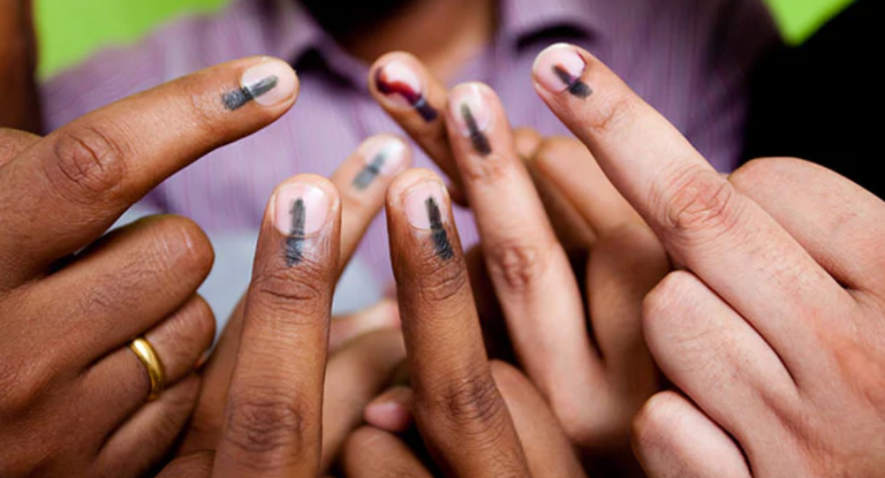
The Assembly election schedule of five states is out now. It is a known fact that the result of the Uttar Pradesh Assembly election will provide the direction of the 2024 parliamentary polls. After his loss of face with the farmers, the Uttar Pradesh and Punjab elections will be a significant challenge for Prime Minister Narendra Modi. The farmers successfully agitated against the three draconian farm laws, and the Modi government faced moral and political defeat with their unconditional withdrawal.
In the future, the historical fight of farmers and peasants that lasted about 14 months, and the death of around 750 farmers during their agitation, can potentially write off any positive things—if any—done during the Modi rule. Recently, Meghalaya Governor Satyapal Malik, a Jat from western Uttar Pradesh, signalled a significant crack in Modi’s authority after seven years in power.
The election to the electorally important province of Uttar Pradesh is being projected as one between Modi and Samajwadi Party leader Akhilesh Yadav. Suppose the Bharatiya Janata Party (BJP) led by Modi loses the election; in that case, a young but experienced and skilful leader will emerge on the national scene, and India will progress in a new direction after that.
The food-producing forces, historically known as the Shudras in the Varna system, are now feeling rebellious against Modi. They have realised that his 2014 slogan, ‘Sabka Sath, Sabka Vikas—With Everybody, Development for All,’ is no longer trustworthy. They proved during the farm agitation that the RSS or Rashtriya Swayamsevak Sangh, the progenitor of the BJP, is against the interests of the food producers. Their movement demonstrated that the RSS and BJP repeatedly insist that the food producers fall under an umbrella Hindu identity, while they actually represent forces that work against the interests of farmers.
The farmers’ fight against the RSS-BJP government has firmly shown that the idea of majoritarianism propounded by these outfits and propagated by several writers and mainstream media outlets is meaningless. Remember that it is primarily Shudra or Other Backward Classes (OBC) food producers of India who forced Modi to withdraw the farm laws.
Indian farmers have demonstrated to the world that the RSS and BJP rulers favour two or three monopolistic business houses, which emerged from the Gujarati Bania community from where Modi and his second-in-command, Union Home Minister Amit Shah, also come. They showed that the top RSS leaders Mohan Bhagwat and Dattatreya Hosabale come from the Brahminical priestly class and that their organisations still represents those Brahmanical interests. This realisation among the conscious forces of the Shudra, OBC, Dalit, and Adivasi peoples holds great significance for future political developments. It is a realisation that has to sink into the voting consciousness too. These sections should overcome the money power, state power and muscle power that the RSS-BJP rulers are letting loose against every Opposition party—particularly against the Samajwadi ranks now.
The RSS/BJP forces are dead scared of the rise of a skilful young Shudra leader like Akhilesh Yadav from Uttar Pradesh. They have tried to inject sentimentalism into voters with the Ram temple and ‘Ram Rajya’ issues. But Akhilesh skilfully started invoking Sri Krishna, who is likely to be more acceptable to the Shudra-OBCs. The present situation is different from the pre-Ayodhya judgment of the Supreme Court. The anti-Muslim steam has been taken out of the Ayodhya temple issue now. The most serious problem is the livelihood of masses, particularly the farmers who do not believe in the RSS-BJP’s “Ham Sab Hindu Hain—We are all Hindus’ slogan any longer. The RSS/BJP leaders saw the dying farmers protesting on the borders of Delhi as their worst enemies, even worse than their earlier so-called Muslim enemies. They have shown how their idea of ‘Ram Rajya’ works against the food producers of India with its Sanathan Varna Dharma mindset.
Earlier, the Shudra-OBCs did not realise that going against the interests of labourers, tillers, and artisans was the core ideology of the RSS. But the farm laws made them understand their ultimate direction. Akhilesh Yadav’s slogan that ‘Krishna Rajya’ is Samajwadi (Socialist) rajya is likely to galvanise Shudra/OBCs with much stronger emotions than Ram Rajya. There is no doubt that mythological narratives invoke sentiments among the masses, and such feelings have been used for political purposes from the freedom movement onwards. As Bheenaveni Ram Shepherd wrote, “Krishna never worked as a follower of Brahmin gurus, he declared himself God of Gods and showed his Viswarupam to put Brahmins gurus in their place in the Mahabharatam story”. So we can understand why the RSS did not promote the image of Krishna because of his Gopalaka assertion and remaining above Brahmins. If only the Shudra-OBCs realised the autonomous spiritual agency of Sri Krishna, they would flock around him and go with the new Krishna Rajya slogan of Akhilesh Yadav.
Suppose Yadav deploys the symbol of a flute-bearing Sri Krishna, known as Gopalaka or cattle herder. In that case, people are more likely to believe his ‘Krishna Rajya’ idea than the BJP’s ‘Rama Rajya’ idea, which enacted the farm laws against cattle herders and food producers.
The seven years of BJP rule at the Centre has shown people a taste of ‘Rama Rajya’, which systematically goes against the interests of the rural poor, farmers, and students. They have been transferring public wealth to big business houses and start-ups owned by non-food producers. The present government has not promoted a single Shudra, OBC, Dalit or Adivasi into a big-business network. Their design is to rob the wealth creators and make the robbers the owners of wealth.
To support the very unpopular Chief Minister of Uttar Pradesh Yogi Adityanath, the Modi government is deploying all its central machinery from the CBI and Income Tax officials to police to raid the houses of Samajwadi Party supporters. So far, we have never heard that Modi and Shah went after Jain business forces, as mostly they are BJP supporters. But in Uttar Pradesh, they attacked a Jain business family head who supports Akhilesh Yadav. By mistake, they also ended up raiding their own supporter, who, it turned out, had a lot of cash in his house. They do not know how to return his money now! The attempt is that there should not be any opposition to the BJP-RSS in any state, and they muster up a financial backup to win elections.
How can the world trust that such a party or organisation believes in democracy? They are displaying, day after day, that democracy as a system as instituted in India with a detailed Constitution, is not acceptable to them. They are trying to compete with Pakistan in theory and practice! Hence, democracy remained undefinable there. The RSS-BJP want the Indian democracy also to become undefinable. In other words, they want to conveniently use all rules of democratic elections to their sole advantage. However, that will subvert the entire social and political system. What message does the democratic world get when the government ruling over the country from Delhi raids the homes and offices of Opposition-party leaders and activists just before a crucial election? This method has to be fought by all Opposition parties, collectively and on a national scale.
The author is a political theorist, social activist and author. His latest book is The Shudras—Vision For a New Path, co-edited with Karthik Raja Karuppusamy. The views are personal.
https://www.newsclick.in/uttar-pradesh-polls-encouraging-new-signals
-
Haridwar ‘Dharam Sansad’ shows Modi is facing an internal threat from Sangh Parivar
As Modi’s OBC background grew more and more in public discourse, Mohan Bhagwat started spelling out his anti-reservation, anti-minority agendas.
KANCHA ILAIAH SHEPHERD4 January, 2022 09:02 am IST
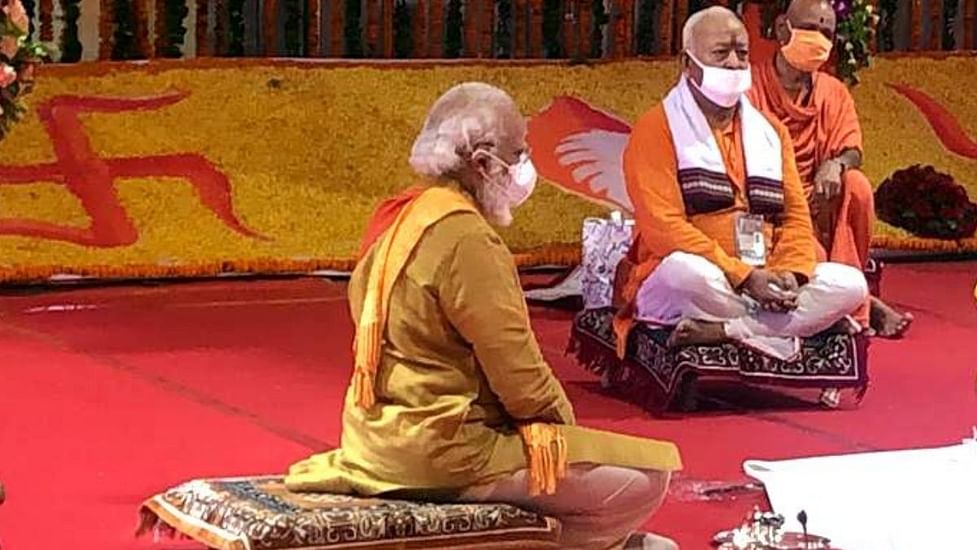
Representational image | PM Narendra Modi and RSS chief Mohan Bhagwat | ANIText Size: A- A+
The Haridwar ‘Dharam Sansad’ organised by Yati Narsinghanand and others poses a serious threat to the social harmony of India. It is highly unlikely that such a conclave would take place without the Uttarakhand government’s permission. The question is: Was it organised without the approval or knowledge of at least a section of the top Rashtriya Swayamsevak Sangh leaders? The open call to kill Muslims by speakers is not just an issue of the minority community’s survival. Repeated invoking of Nathuram Godse’s name and making former prime minister Manmohan Singh a ‘target’ shows the brazenness with which they issued a threat to Narendra Modi’s authority.
The organisers know that they cannot wipe out Islam from this land as Indian Muslims are not isolated. The Islamic world is too big to be handled by such forces, even with the RSS/Bharatiya Janata Party’s power and command. The ‘sadhu samaj’ is getting more and more involved in national issues but in terms of caste ideology they are Brahminical. So far, not many Shudras, who accept that they are part of Hinduism, have become sadhus. Historically, they were not allowed to be.https://c2366de3c7d3d01b7f7b056e5d854afb.safeframe.googlesyndication.com/safeframe/1-0-38/html/container.html
Narendra Modi is a self-proclaimed Other Backward Class (OBC) prime minister, and in his second term after the 2019 Lok Sabha election, things seem to have gone out of his hands. The RSS has started executing its agendas through his government. His image as a ‘strong PM’ seems to have worked only during the first term. In the second term, his attempts to reassert that image in certain spheres is facing resistance, with a counter activity launched by his detractors within the Sangh.
RSS’ exclusion of Shudra/OBC
The RSS agenda consists of many Muslim-related issues that were kept completely out in Modi’s first five years. He was seen as a man in full command of the central government machinery, despite being new to Delhi.
The 2019 election, unlike the 2014, was fought by the BJP with an anti-Pakistan and anti-Muslim rhetoric. With the new government in place, Amit Shah put out a future roadmap. They went one after the other — abrogation of Article 370, triple talaq law, Citizenship (Amendment) Act, and marginalising Muslim presence in all the State institutions. Some of these issues had the support of a section of the Shudra/OBCs because they thought that it might benefit them.
However, the RSS has not evolved any agenda related to Shudra/Dalit/Adivasi forces except repeatedly defining them as ‘Hindu’. No Shudra/OBC was allowed to emerge as theoretician even in the Sangh system. Most social and political agendas related to Shudra/OBCs were evolved outside the Sangh system — be it reservations, share in political power, or education. There is not a single issue that pertains to Shudra/OBCs that the RSS broached when the Congress and other parties were in power and fought to achieve it at the national or state level.
This has been a challenge for the RSS throughout its history. The Shudra/OBCs are mainly farmers and tasted their first attack through the enactment of the farm laws. For such a large Sangh network to not anticipate farmers’ backlash is unthinkable. They wanted to bulldoze them. But it did not work.https://c2366de3c7d3d01b7f7b056e5d854afb.safeframe.googlesyndication.com/safeframe/1-0-38/html/container.html
If Modi hadn’t said he is for ‘Sabka Saath, Sabka Vikas’ as Prime Minister, I don’t think the Shudra/OBCs would have ever believed him. If we carefully examine the language of RSS sarsanghchalak Mohan Bhagwat, he never said that he or his organisation would implement or work towards achieving the idea ‘Sabka Saath, Sabka Vikas’. In fact, throughout the 2014 election campaign, Bhagwat remained totally silent and also invisible. It appeared as if there was no RSS in that election scene.
As Modi’s OBC background grew more and more in public discourse, Bhagwat started appearing on the national scene, speaking on various forums by spelling out his anti-reservation, anti-minority agendas. His call for a debate on reservation and attack on Mother Teresa institutions are cases in point. The strategy in the 2014 election appeared to be — ‘let Modi promise anything he wants and get votes and power’. During Modi’s second term, a section of the top RSS leadership sprung into action.
Now it appears that even the most powerful Modi government team has no control over the system. The recent developments clearly show where things are headed: To boost his international image, particularly in the Western Christian world, Modi met the Pope and invited him to India. Many in the RSS leadership obviously disliked that because they were opposing the Pope’s Christian agenda for India. However, just before Christmas, attacks on churches in different parts of India started. It is important to note that most of the instigators come from ‘upper’ castes. On 16 December, at the Hindu Mahakumbh in Chitrakoot, Mohan Bhagwat gave a call for ‘Ghar Wapsi’ (homecoming) of Christians back into Hindu fold.
While the whole country was worried about such attacks, the Ministry of Home Affairs rejected the FCRA renewal application to Mother Teresa’s Missionaries of Charity, quite shockingly on Christmas Day itself. This can be seen in the light of what Mohan Bhagwat said about the saint’s work a few years back: “There was a motive behind the service that Mother Teresa provided to the poor — to convert them to Christianity”.
Modi has never spoken about Christianity in that tone. The Western democracies, by and large, are Christian. Modi must have thought of repairing his image by inviting the Pope. But the Sangh network at the ground level has shown its opposition. Now, nobody believes in his slogan: ‘SabkaSaath, Sabka Vikas’.
Haridwar offenders haven’t been booked yet. Modi himself remains silent on all these planned offences. His silence is a major setback for his government, especially in the aftermath of the farmers’ agitation. All this is not an accident. Something certainly seems to be brewing within the Sangh, while the nation continues to suffer on all fronts.
Kancha Ilaiah Shepherd is a political theorist, social activist and author. His most known books are Why I Am Not a Hindu: A Shudra Critique of Hindutva Philosophy, Culture and Political Economy, and Post-Hindu India: A Discourse in Dalit-Bahujan Socio-Spiritual and Scientific Revolution. Views are personal.
(Edited by Srinjoy Dey)
-
The Message From the Shudra/OBC Conclave
KANCHA ILAIAH SHEPHERD | 28 DECEMBER, 2021The Delhi Declaration
On December 21 2021 a major National Shudra/OBC conclave took place in Delhi Talkatora stadium with hundreds of activists, intellectuals and political leaders across parties, different universities and civil societal organizations. They brought out the first ever Shudra/OBC declaration, which has a historical significance for the nation .
After the historic farmers struggle, which essentially was a Shudra/OBC fight against the privatization of Indian agrarian markets, this marked the emergence of another major Shudra/OBC movement for caste census and against the privatisation of employment. Those representing the ruling castes and class conspire even now to weaken the Shudra/OBC forces and make them slaves as they were in ancient India. This is clear also from the unending speeches and writing of the Hindutva religious unproductive forces in every sphere of national life. They have deployed negative preachers in all spheres of Indian life.
The organizing committee of the conclave was headed by Mandal hero, Sharad Yadav, while Chhagan Bhujbal( Nationalist Congress Party Cabinet Minister, Maharashtra), Tejashwi Yadav (Rashtriya Janata Dal president), Kanimozhi Karunanidhi (MP, DMK) Kancha Ilaiah Shepherd (Editor, The Shudras–Vision for a New Path) and Sunil Sardar (President, Satya Shodhak Samaj) were members. The conclave was organized by Samruddha Bharat Foundation, Delhi and Mahatma Phule Samata Parishad, Maharashtra.
Several scholars, political leaders and activists spoke and discussed the Delhi Declaration at length and also worked out a future programme in different states in coming months. Lalu Prasad Yadav, who led several post-Mandal battles in the country, spoke on screen and made it very clear that caste census is the only way forward for achieving social justice. His party will take up the matter in every possible way.
D.Raja (CPI General Secretary) Chhhagan Bhujbal, TKS Elangovan (MP DMK) Madhu Yaski Goud ( Former MP Congress) Ajay Yadav (Former Haryana Minister, Congress) and many other leaders of different parties, intellectuals spoke and set out a political and intellectual agenda for organizing the Shudra/OBC forces across the country to achieve the set goals in the declaration. Well known writer Arundhati Roy sent a powerful message that caste census is a common cause of every socially responsible intellectual of India.
The battle for caste census and protection of state properties will become a life and death struggle of the food producers and artisans.
The movement has and will take its inspiration from the farmers who have fought a life and death battle for more than 13 months. 750 farmers laid their life at the altar of the Hindutva and monopoly exploiters. The Shudra/OBCs, who voted for Modi and the RSS, believing that they would treat them as children of Bharata Mata, have shown their anti-farmer and anti-OBC colors within just seven years of their rule.
The Delhi declaration promised the nation that the fight for social justice did not end with the Mandal movement in the 1990s, but is an ongoing battle.
It is time that in every state the Shudras who are within the Mandal reservation and those castes that are now seeking reservation–like Maratha, Jat, Patel, Kapu and so on–must pull all the resources to fight the present dangers and challenges. Even castes like Reddys, Kammas, Velamas (of Andhra Pradesh and Telangana) , Nairs of Kerala, Mahishyas of Bengal thought that under a BJP government the agrarian economies will prosper and corruption will come down. But instead lakhs of crores are shifted into monopoly houses by writing off loans. Now they are thinking of privatizing all state owned banks, railways, Airways.
The Shudra/OBCs/Dalits/Adivasis are not going to get any jobs in the privatized institutions. Their children will be pushed into a wealthless agrarian sector. Hunger will increase. They do not want the poor to eat protein meat foods. They are now making every Shudra/OBC believe pure vegetarianism is parampara. Food and religion are being linked to power. This is the biggest trap that Shudra/OBCs have got into. Those in power love their ignorance not their knowledge. Unless high class global class educated intellectuals, thinkers, writers and fighters emerge from within these communities their children will be made slaves again.
Work will not be available to millions of people both in villages and privatized industry. Already millions of Shudra/OBC/Dalits/Adivasis are joining the security staff squads in companies owned and run by companies of the few rich, where they get less than ten thousand rupees a month. These companies are private companies. They are run in collusion with the establishment’s business families.
The Shudra/OBC Delhi conclave realized this process. Let the Shudra/OBC/Dalit/Adivasi peoples be ready for a second freedom struggle, following the path of our farmer heroes.This is the message of Delhi Shudra/OBC conclave. -
Guru Nanak vs RSS guru Hedgewar—farmer protests showed how Sikhs have a lesson for India
Whenever India’s farm sector was in jeopardy, Sikh-Punjabi farmers fought for their rights. The BJP underestimated them.
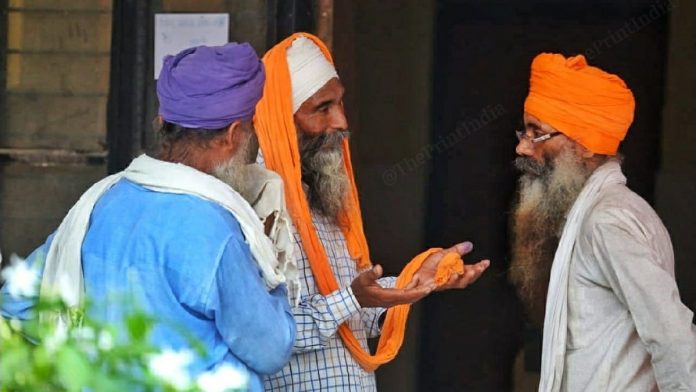
Sikhs in Lakhimpur Kheri, Uttar Pradesh (representational image) | Photo: Praveen Jain | ThePrintText Size: A- A+
The Sikh-Punjabi farmers are akin to the Tamil backward classes, who fought for OBC rights by bending the Delhi anti-reservation trends many times. When it comes to Dalit rights, it is the Maharastra Dalit forces who showed the way. Guru Nanak, Periyar Ramasamy, and Dr B.R Ambedkar thus created forces that are protecting our Constitution, democracy, and pluralism today.
The movement that spelt victory
Prime Minister Narendra Modi addressed the nation on Guru Nanak’s birthday, 19 November, and said that his government was withdrawing the three farm laws that it had enacted a year ago in Parliament. The Punjabi Sikh farmers declared a war against the laws in the thick of the second wave of Covid-19 and moved the farming fraternity to the borders of Delhi NCR. Their victory came after more than 700 farmers died since the start of the protests and several others were put in jail with all kinds of cases against them. A militant section of the Sikh farmers and the Nirankaris climbed the Red Fort in Delhi and declared an immature victory. Journalists and writers faced several cases and police beatings. Yet, the Rashtriya Swayamsevak Sangh (RSS) and the Bharatiya Janata Party (BJP) under the PM, appeared unmoved.null
The RSS-BJP underestimated the Sikh conviction to fight for the rights of food-producing farmers. They seemed to have thought that the Sikhs would not understand what was happening. Agricultural produce was being handed over to the monopoly capitalists of India, who want to make immoral money in every sector of the economy and remain indifferent to poverty and suffering.
The anger against the government spread to the villages of Punjab, Haryana, and Uttar Pradesh. Subsequently, under the leadership of Bharatiya Kisan Union’s Rakesh Tikait, a massive non-Sikh farmer movement also came up. Villages in UP got drawn into the fight for survival in a big way. Finally, victory arrived. The PM had to bow before the annadata (food providers) with a big apology and repeal of the laws. However, there is a moral lesson for the Hindutva forces from Guru Nanak and the Sikh community that follows his teachings in the Guru Granth Sahib.
Also read: 5 reasons why farmers won the farm laws battle against Modi govt
Farming is God’s lifeblood: Guru Nanak
Guru Nanak’s teachings are different from that of the other guru who established the RSS in 1925, K.B. Hedgewar. The former formulated his spiritual ideas in a complex Hindu-Varna society under oppressive Muslim rule. Though he was born into the Hindu Bedi Khatri clan, in a Patwari family in 1469, he soon realised that agrarian production is the lifeblood of human survival, and God—he believed in one God—is the director of productive labour. God was not a war hero for him. A nation was not an arresting land unit of human narrowness. That is the reason why Guru Nanak’s followers went all over the world with labouring hands and worked in the fields and survived. They not only made Indian agriculture productive, but also made the same effort in countries such as Canada, the UK, and Australia. They never made their nationalism ‘anti-somebody.’
Though the Sikh farmers have 10 Gurus, Guru Nanak, the first, is the main guiding force of Sikhism. Whenever the nation’s farm sector was put in jeopardy by the Union government, Sikh-Punjabi farmers fought for their rights. Of course, this time they saved the nation and the Constitutional principle of federal democracy, which was being destroyed by the misuse of parliamentary majority to undermine Indian agriculture. But for their quick realisation of the danger, the country would have drifted from its constitutional path.
Also read: BJP leaders call farm laws repeal ‘bitter pill’ but foresee better prospects in UP, Punjab
The ‘anti-anything’ ideology of the RSS
Hedgewar, on the other hand, built an organisation that wants to be seen agreeing with the Constitution, democracy, and pluralism, but in practice, goes in the opposite direction. Guru Nanak never set a spiritual or social ideology of anti-anything, whereas Hedgewar set ‘anti-Muslim,’ ‘anti-beef and meat,’ and ‘anti-equality’ ideologies in the name of Hindu dharma and parampara (tradition). Now, farmers have stopped the Hindutva juggernaut. The nation will salute the Sikh farmers who resisted the might of the government, and saved the agrarian sector of India.https://5bf7726b3107d8a1a9558d793053c504.safeframe.googlesyndication.com/safeframe/1-0-38/html/container.html
Sikhs in India also have a religion-centred political party, the Akali Dal. It works on the ideological principles that the Sikh Gurus put in place. But in its known history, it never went against other religious communities in Punjab. It never interfered with the food rights of any community in the state. It never stopped women between the ages of 12 and 50 from entering gurdwaras, unlike the RSS, who in 2018 asked the temple authorities to ‘respect the tradition’ that banned the entry of women into the Ayyappa temple in Kerala. On the question of human rights, the people of Punjab never felt the difference between the Congress and the Akali Dal, despite the differences in their economic and administrative agendas. Such differences are acceptable in a constitutional democracy.
But now, not just India, but the whole world sees the difference between Congress and BJP rules when it comes to human rights despite their pledge to the same Constitution. Not that I have forgotten the Emergency of Indira Gandhi’s time. But that was fought by all of us and the Punjabi Sikh farmers did not spare their might in fighting it.
Also read: Why the farmers’ protest is led by Sikhs of Punjab
Sikhism has a lesson to teach every religion
Spiritual morality must move through politics to establish an egalitarian society and not a divisive one. The farmers’ movement and its victory gave new confidence to the nation in a depressive situation. For the last one year, the whole world was watching the unending movement. At last, the RSS and the BJP realised that this movement would continue till its victory.
The Sikh farmers’ movement in Delhi showed the world how peaceful the Sikhs were, how they fed every hungry person in their gurdwaras, including the police personnel who beat them on the roads. That is the grace they acquired from Guru Nanak. Within India, the Sikh farmers have shown that each religion must respect other religions and ways of living. More than anything, they showed that religion is meant to increase production through labour in the fields. This is a lesson that all other religions of India must learn from Sikhs and their Gurus. No food producer should be judged by one who does not produce. The farmers, who fought this battle and won, have written history.
Kancha Ilaiah is an academic, writer, social scientist, and Dalit rights activist. Views are personal.
(Edited by Humra Laeeq)
-
RSS May Want to Peddle ‘Integral Humanism’ Now, But Its Core Is Devoted to Brahminism
Caste What is the use of a new theory, if within it, the present status of Shudras, Dalits and Adivasis will not change?Nov 16, 2021 | Kancha Ilaiah Shepherd
Intellectuals of the Rashtriya Swayamsevak Sangh (RSS) and Bharatiya Janata Party are foregrounding the theory of integral humanism that Deendayal Upadhyaya (1916-1968) is said to have propounded.null
RSS chief Mohan Bhagwat, general secretary Dattatreya Hosabale and secretary Ram Madhav have been repeatedly talking about Upadhyaya’s integral humanism, defining it as the core philosophy which will guide their future in power.
Prime Minister Narendra Modi also occasionally talks about this philosophy as his government’s beacon. The latest invocation of this theory was at the book launch of Ram Madhav’s The Hindutva Paradigm: Integral Humanism and Quest for a Non-Western Worldview. At the launch, Hosabale said, “Hindutva is neither left nor right, integral humanism is its essence.”
The question, however, is how this philosophy of integral humanism makes the RSS and its ideologues different from what they were earlier, as followers of the likes of V.D. Savarkar, K.B. Hedgewar and M.S. Golwalkar. It is important to examine this philosophy not only for the interest of India’s minorities – whom the RSS has traditionally reviled – but especially for the interest of Shudras, Dalits and Adivasis, whom they use as muscle power against Muslims and Christians without giving them equal status in the varna dharma parampara (the tradition of caste-based religion) that the Brahminic Hindutva philosophers so far have been following.

From left to right: RSS ideologues K.B. Hedgewar, M.S. Golwalkar, Deendayal Upadhyaya
Deendayal Upadhyaya was an RSS worker, who later in life became the second president of the Bharatiya Jana Sangh, the political wing of the RSS. He was a Brahmin from Uttar Pradesh, brought up in the same environment that Bhagwat, Hosabale and Ram Madhav spent their childhood in, as all of them come from the same caste background, though born in different states.null
The growth of caste culture that takes place in an Indian’s personality in childhood remains with her or him for the rest of their life.
There are many traits of Brahminism that go against human equality, even within the scope of Hindutva, and which are a byproduct of the varna dharma casteism of the Brahminic tradition. In many of its earlier theoretical writings, particularly of Golwalkar, the RSS elaborated a whole system of Hindutva parampara. Both Golwalkar and Hedgewar had a Brahmin background, and so far, there is no Shudra, Dalit or Adivasi theoretician from among the Sangh’s ranks.
An upbringing within the caste culture eschews any integral co-existence with other caste beings. Caste divisions are enforced more rigidly than divisions with persons born and brought up in different religious cultures. Can integral humanism serve the purpose of making India an individually equalised cultural nation? Only if it incorporates the goal of making Hinduism a democratic religion.
Upadhyaya was opposed to both western capitalist individualism and Marxist socialism, though he supported western science selectively.
Any science – western or eastern – is rooted in the dignity of labour and production of goods and commodities without involving purity and pollution principles around human production, including agrarian and artisanal activity.
As an organisation deeply rooted in Brahminism, the RSS’s notion of Indian tradition is constructed around the Brahminical values of purity, pollution and the graded inequality of caste and gender, along with human untouchability.
Upadhyaya has not problematised the question of caste in the same manner as Marxist and liberal intellectuals from Brahmanic backgrounds did. Nor do the contemporary RSS or BJP intellectuals problematise caste culture by integrating the ideology of Mahatma Phule and Dr. B.R. Ambedkar, in which abolition of caste and human untouchability in all spheres of human life is a cardinal principle.
What Upadhyaya tries to do is combine Mahatma Gandhi’s sarvodaya and gram swaraj. Why Gandhi and not, say, Phule or Ambedkar? Because Gandhi too was a supporter of Hindu varna dharma, if not human untouchability.
According to one critique, the integral humanism theory of Upadhyaya followed the tradition of advaita developed by Adi Sankara. Though the advaita school talks about non-dualism of the divine essence, it did not go against the worshiping of deities that have Kshatriya (Vishnu, Sri Rama and so on) and Brahmin (Parashurama) roots in the Puranic and Ramayana mythological tradition. The Ram temple movement – with its ‘Jai Shri Ram’ slogan and violence against minorities as an acceptable norm – was the RSS’s creation itself. RSS intellectuals know that Ram came from a Kshatriya dynasty which did not believe in the abolition of caste but in the perpetuation of it.

A statue of Ram in Ayodhya. Photo: Reuters/Danish Siddiqui
How does the idea of integral humanism become possible when the divine deities they promote and institutionalise have roots in caste spirituality? The idea of non-dualism should operate, at least, in the principle that there is only one god and that god created all human beings – men and women – equal. The major challenge before the Shudra, Dalit and Adivasis working in the Hindutva school – even with the newly emphasised ideology of integral humanism – would be in negotiating their place in that spiritual and cultural nationalism.
As the integral humanist philosophy being propagated by RSS and BJP intellectuals does not have an agenda for abolition of caste, gender inequality and untouchability as part of its core ideology, what will happen to the unequal status of Shudras, Dalits and Adivasis in the Indian system and also within the Hindutva organisations?
It is not a coincidence that within their networks, they did not allow any Shudra, Dalit or Adivasi intellectual to emerge and offer a reflection of their own self-status.
The RSS and BJP have so far not accepted that dignity of labour, even in the Hindu spiritual domain, is part of their ideological agenda. Even if you ignore caste language, a Hindu shoe maker, pot maker, sweeper, scavenger or shepherd cannot become a priest in a Hindu temple even if the person is qualified. How does integral humanism overcome this historical problem? Without a theory of human equality what does integral humanism mean?
Upadhyaya’s integral humanism theoretically talks about the organised attributes of body, mind, intellect and soul. Does it include the mind, intellect and soul of Shudras, Dalits and Adivasis, who are organised into the Hindutva organisations? As of now, they do not have equal spiritual rights in Hinduism and equal intellectual status to that of Brahmins who are propounding these theories.null
Also, how does integral humanism deal with the food culture of all Indians?
Both modern Brahminism and Hindutva organisations believe in vegetarianism.
Universal humanism, a known philosophical postulate, does not discriminate against human beings based on their food culture, whether in civil society or in spiritual society. If the RSS’s integral humanism is like universal humanism, what will it do to its long history of (about 96 years in the present form) stressing about vegetarianism?
Upadhyaya’s integral humanism opposes individualism, thinking that it is of Western origin. It appears that its opposition to individualism is based on its belief in casteism or communalism. But the Indian constitution itself functions based on individual rights as every individual is a citizen with one vote and one value. Is not, then, the RSS’s integral humanism opposed to the present constitution?

Representative image of protesters holding up a picture of B.R. Ambedkar. Photo: PTI/File
Herein lies the threat to Shudra, Dalit and Adivasi rights, apart from minority rights, in this philosophy.
Look at the paradox of Hindu society. Except for Brahmins and other Dwijas, both theoretically and practically, Shudras, Dalits and Adivasis are considered to be people of only body but not of mind, intellect and soul.null
In the Rig Vedic theory of four varnas – Shudra, Vaisya, Kshatriya and Brahmin – the Shudras were assigned the role of slavery (what was called ‘service’ to other three varnas) without allowing them to use their mind or intellect. They were denied their spiritual soul. The notion of the soul is that it is a separate entity within the human and is supposed to exist independent of the body.
The Hindutva school that believes in religious dogmatism and wants to use it in political domain as well, still does not believe in promoting Shudras, Dalits and Adivasis as priests in Hindu temples. Thus, they are still being treated as soulless beings.
Again, how does integral humanism generate a Soul among the productive masses who constitute the food producing farmers of India? They are the vast majority and the Brahminic integral humanism of the RSS does not show them any new path of liberation.
Kautilya’s Arthshastra, Manu’s Dharmashastra, the Ramayana and the Mahabharata have all affirmed the status of castes. These books are being promoted in schools, colleges and universities under the present regime.
What kind of integral humanism will be taught in our educational institutions where there is no syllabus that teaches castelessness and dignity of labour? Silence about the systemically institutionalised caste and deeply entrenched indignity of labour that promotes human untouchability does not serve any purpose of transformation.
I am of the strong view that the RSS and BJP are anti-transformational structures. How does this theory of integral humanism make them transformational if within it, the present status of Shudras, Dalits and Adivasis will not change?
If Mohan Bhagwat, Dattatreya Hosbale and Ram Madhav let the nation know how this theory of integral humanism which is being newly propagated is different from Hindutva Brahminism and how it solves some of the major issues raised here, the nation will be certainly thankful to them.
Kancha Ilaiah Shepherd is a political theorist, social activist and author. His books God As Political Philosopher, Buffalo NationalismandPost-Hindu India have dealt with the philosophy of spiritual democracy in detail.
-
Round Table India – The God: Clashing Visions of the Jews and Brahmins
Kancha Ilaiah Shepherd

The Idea of The God
The idea of God even in the twenty first century rules the global human mind more than the state, and the constitutional laws. There is also fear and reverence of God more than just the idea of God. Though rationalism, secularism and liberalism emerged as a powerful alternative to human consciousness, the broad spectrum of human ideas still dominantly operate around the notion of God more than anti-God or out of the domain of the God. Four major religions of the world–Christianity, Islam, Buddhism and Hinduism–have varied visions of the God. Though the idea of the God existed for several millennia ever since that vision of the God was written into spiritual books, by and large, it is the book view of the God that governs human consciousness as of now, as human knowledge level has grown into written discourse. And that will be around for several centuries to come. However, I would like to look at the vision of the God that Jews of Israel institutionalized and also the vision of the God that the Brahmins of India institutionalized.
How Does The Jewish and Brahmin Ideas of The God Clash?
The Jewish vision was constructed in the Old Testament to start with and expanded into an advanced form in the New Testament. The Brahmin vision got constructed in the Rigveda to start with, and expanded in the Puranas, Upanishads and Bhagavad Gita. The first difference is that Jews visualized God in an abstract mode, without any form, without human relationship, as a creator of the entire universe, including Adam and Eve as first humans. God was neither Jew nor Israelite. Also the first Man and Woman that the God created were not created in any modern nation state. They were created in the universal garden. They were created neither as Jew, nor were they created white or black; nor were they created in any caste or creed. They were created as Man and Woman, as universal beings.
The Brahmins’ first idea of God was that of Brahma and his wife Saraswati as man and woman, as God/Goddess themselves. They have names and human form. There is no God above them. It could be easily traceable that Brahma is an Indian Aryan. They called India Bharata Khanda or Bharata Varsha in their Sanskrit books. It was from the mouth of this Brahma—the Purush, (man)- Brahmins were created, not from his wife’s womb. So the first God that they visualized was from their own Brahmin caste. Colour wise, in all portraits and also in statue forms, both Brahma and Saraswati are shown as brown in colour, or what is known as Aryan racial colour. He has three heads and four hands. There are temples for Brahma with a statue of this image inside the temple, the most famous being Pushkar temple, Rajasthan.
Racism and Casteism
Racism and casteism were written into the very origin of the creator God, Brahma. This was the beginning of the caste system in India. God himself belonged to a caste. India became a country with a caste system thereafter. Even in our times, such a caste based human society does not exist in other countries in the world. The Brahmin God exempted the Brahmins from physical labour. Brahma’s story also does not talk about his involvement in physical work.
The God of Jews worked for six days to create the universe including all life on the earth. And on the seventh day the God took rest, guiding humanity that they should live by working and also resting. If God worked to create the universe and life, the humans have to work on the land and in the nature that God created to eat, drink and live. Human body, according to the Jewish divine imagination, is meant to work and at the same time it needs rest in the nights as well as one full day in a week. This process is to recreate energy in the human body as long as he/she lives. In the case of the Brahmin God, there is no notion of working or resting. Rigveda is silent about Brahma’s own work culture. Once work culture is not part of the creation, only the culture of resting remains as a divine method of living. This process of living without working goes against the very philosophical foundation of spirituality and also religion.
But this very Brahma was said to have created a separate varna–Shudra– (varna in Sanskrit, in which the Rigveda was written, means colour) maybe in black or dark colour to be different from Brahmins. It appears that the pre-Aryan Harappans who built the Indus Valley Civilization were described as Shudras, as their colour was darker than Aryans. They were also said to have been born from the feet of Brahma. They were condemned to be the slave/labour force by the Brahmin divinity. There were two other groups called Ksatriyas and Vaisyas in the very creation story, whose colour in some narrations comes out as blue. Later on, Vishnu was created in blue colour in the Ksatriya caste. In a series, other God-Heads were added up to the divine narratives of Brahminsm. They were given both Ksatriya and Brahmin caste identity. Rama, for whom they are building a temple now, which is being described as the Vatican of Hinduism, is part of the Ksatriya caste. The spiritual ideology that the Brahmin writers constructed created God images from Brahmin and Ksatriya castes. In the life process they believe that physical labour is pollution. One who believes in Brahmin and Ksatriya gods should live without soiling their hands. By implication, the Brahmin spiritual theory says that the earth itself is untouchable as it consists of dust and mud. How do human beings survive with this philosophy?
The pre-Rigvedic spiritual philosophy of Harappans, who built a great civilization of agriculture and animal economy, much before the arrival of the Aryans, was made to be forgotten as it survived without a written text. Perhaps that spiritual philosophy would have operated around the idea of a productive God. The Brahmins later seem to have treated all those labouring masses as Shudras and their spiritual philosophy was discarded. The Shudras in reality were forced to be the slaves who toiled for the well being of the Brahmins, Ksatriyas and Baniyas. The modern Dalits, who not only suffered slavery along with the rest of the Shudras also suffered human untouchability. The Brahmin divinity stamped a seal of approval on this unusual barbaric civilizational practice and forced the rest of the Shudras to practice and enforce it. The state administration till 1947 was under the rule of both Ksatriya and Shudra (who were given ksatriya status after they became rulers; this happened till the princely states were abolished after independence) rulers, who were made to implement the caste laws codified by Manu, a Brahmin himself. The Brahmin head priest and prime minister were overseeing the implementation of the caste laws. Every caste practice was given a written codification with a direction that it was Gods’ command, as those Gods themselves were rooted in the caste system. Their books did not allow any re-interpretative gateway also. Thus, India as a nation was made a jail with a full blown caste structure and the head of the jail was always a Brahmin. Within this jail the Shudra/Dalits were forced to produce food, other goods and commodities and the other three castes, Brahmin, Ksatriya and Baniyas, consumed that food, goods and commodities. Knowledge hybridization was completely arrested therein. The Jewish spiritual textuality, on the other hand, allowed scope for interpretation and re-interpretation and each prophet went on changing the spiritual, social and economic knowledge system based on the need, geography, times and conditions as it became global.
This being the central philosophy of the Brahmin spiritual books one does not have to laboriously read those books in terms of contradictions, positive and negative ideas that they contain. Their fundamental thesis is anti-labour and caste centered: that automatically goes against human advancement. The great spiritual, legal and socio-political thinker of modern India, Dr. B. R. Ambedkar, very laboriously examined those books and said that they would not allow change in the Indian spiritual and social system. Hence they would not allow human equality and economic development. What needs to be studied very carefully is: how among the Shudras/Dalits and Tribals of India an alternative spiritual philosophy still exists. The Brahmin literature, both spiritual and social, does not mention about the parallel existence of a positive productive spiritual philosophy in India. However, it exists, otherwise Indian people would have starved and disappeared from the earth.
This also shows that the early Jewish spiritual literature like Genesis of the Bible could have been written much earlier than Rigveda, otherwise they too would have been influenced by the Brahmin spiritual thought of God being anti-labour. The Jewish spiritual book related ideas spread far and wide in the world, whereas the Brahmin spiritual literature remained confined only to India.
Producers and Prophets
Jewish spiritual thought talked about the narratives of humans as commoners and prophets. After Adam and Eve their children–Cain and Abel– were born as commoners from Eve’s pregnancy. Cain was a farmer and Abel was a shepherd. Both of them are equivalent to Shudras in Brahmin sacred books. Agriculture and animal economy became part of the Jewish sacred book, the Torah or the Old Testament. This follows the whole development of human productive labour, struggles, and advancement of human civilization, as it happens in the human history of any society.
Abraham, a shepherd (in Indian context, a Shudra), emerges as a prophet and a leader, who built the first society or nation. He was a human and a member of Adam and Eve’s dynasty. Both shepherding and agriculture remain part of his and his children’s life. Then, of course, the population multiplies in a system of human production and procreation process. Labour, human and animal positive relations, conflicts, and advancement of society remain part of the Bible.
The Brahmins have excluded themselves, in all their writings, from production. The other caste group, Ksatriyas, was assigned the role of ruling the society and state strictly under the guidance of Brahmins. The Shudras had no spiritual, social and economic rights. The Vaisya caste was assigned the work of agriculture and business in the beginning. Gradually the Baniyas also eschewed productive work and started confining themselves to business and accumulation of wealth. The Shudras were spiritually given the role of producing food of all varieties without allowing an access to Brahmin Gods. The Jewish spirituality assigned all varieties of food production to all humans, including prophets. Thus, it left scope for the emergence of social classes but not social castes. And also it led to creative thinking about productive science. Historically social classes competed in discoveries and social castes had no way to compete with other castes. The Brahmin spiritual theory arrested humans by binding them to caste boundaries. Caste became part of Brahmin blood, bone and body.
The Bible gave the story of Moses, Jeremiah, Isaiah and finally the birth and growth of Jesus. Of course, from Abraham to Jesus their nationality was shown as Israelite and Israel is written about as the chosen land of God. But at the same time the Israelites were said to be slaves in the hands of Egyptians and hence God took the responsibility of liberating them. But all of them were humans and by their conduct, acts and teachings have come to be known as that of prophets but not of God. Prophets taught about God’s commands or teachings to shape the moral and ethical conduct of people in a manner that the human society lived with civilized relations. Moses and Jesus’ teachings show humanity how societies were moralized. Each human being lived a life of poverty, struggle, survival by sharing everything with other human beings. From there the societies moved towards prosperity. Labour was integral to their life. Many things in those stories resemble the human life stories of modern times–tilling the land and cultivating, heavy rains and droughts, human quarrels and dispute resolution were written about, in the form of stories and parables. Men and women shared everything. There is a social science in that spiritual narratives. There was no race preference in God and prophets. However, gender inequality was written into the Jewish spiritual books. But commoners became kings and prophets in the Bible. Moses was an ordinary shepherd and King David too was a shepherd who becomes a king by displaying courage and sacrifice. These are outstanding examples. In the Brahmin spiritual writings, quite opposite to the Jewish spiritual system, God enslaves the Shudras from the very beginning. Thus, in the Brahmin spiritual narrative God is an enslaver but not liberator. Commoners’ life struggles, pains and pleasures do not figure at all. The Shudras and Dalits remain invisible and history-less in those narratives all through.
Priest and Labour
The Brahmin books were always concerned about Brahmin labour-free life, and also their hegemony over the rest of Indians. Of course, the Brahmin books negotiated with colour questions by constructing Gods as blue and black also. The third major God, Shiva, appears in black colour, though his wife Parvati is shown in brown Aryan colour. All Brahmin books depicted women only in brown colour. We, therefore, get a doubt that black or blue women are not fit for marriage. In the Jewish portraits, men and women appear in the same white Israelite colour.
In the visual portrayal of Vishnu, Rama’s blue colour was shown as God’s colour. But never were they said to have compromised with the caste system.
In the Brahmin spiritual literature caste was constructed as part of its blood, roots, bones and body. Caste was made an inescapable institution by the divine agencies themselves. Labour was not allowed to be a universal human survival base but forced upon the Shudra/Dalit social forces. The tribal communities were left to themselves without giving them any scope to come into the spiritual domain of Brahmins. Hence there is still tribal society within the forest zones in India, which does not exist in Africa or Latin America where the Jewish Bible spread. The Jewish spiritual literature gave scope to any human being to enter into God’s domain. A tribal could come into religion and become a priest without any social hurdles. In Brahmin literature and practice such entry is strictly prohibited with a fear that the new entrants could claim equality and change the spiritual and social structure they constructed in their spiritual books. Thus, the spiritual books that they wrote were made fortresses to sustain their unproductive living process.
Jesus and Shambuka
The rich and high powered people controlling God without allowing the poor to enter the high pedestal of the religious system was broken by Jesus in the Jewish system. He was an ordinary shepherd woman’s son (equivalent to the Indian Shudra), who worked as a carpenter with his father, Joseph, who adopted him, though he was born before his marriage with Mary. He broke that powerful class controlled spiritual system with a spiritual and social revolution. He did that by declaring himself as the son of God. He walked most of the time on bare foot or rode a donkey. He lived in tattered clothes. He had no chariots and no weapon wielding armies. He lived among fishing folks, shepherds and broken women. No Shudra in Brahmin literature could declare that he/she was son or daughter of Brahma or Vishnu or Rama because of their caste location. No Brahmin saint lived among fishing folk, shepherds and helped women who were condemned and suffering with object poverty and exploitation because of caste and isolated food culture–pure vegetarianism.
Jesus changed the class status of poor into rich and rich into poor. He lived in poor people’s houses and ate whatever food they offered. He never believed in the theory of purity and pollution of human occupations and food items. This revolutionary process is seen in the New Testament.
Contrary to such practices of Jews, any attempt to change in the Brahmin religious system was violently stopped. The case of Shambuka, a Shudra, in Ramayana is a case in point. Shambuka was a Shudra who wanted to realize God through tapasya. The Brahmin gurus of Sri Rama advised him to kill him, as he was Shudra hence not permitted to negotiate directly with God. Rama kills him. The whole of Brahmin literature is silent about Shudra/Dalit hunger for spiritual equality and liberation. Or it tells the stories of tortures and killings of Shudras who asserted their right to religion. If Jesus were to be born in India he would have been killed at an early stage in life. He would not have had any Brahmin followers. But many Jews, including a royal Jew like Paul became his followers and spread his message across the world. Saint Thomas who came to India as a follower of Jesus was a Jew and was killed by a Brahmin.
Survival of Jews in Europe
After Jesus’s crucifixion and resurrection Christianity was formed as a religion. Some Jews accepted it and some did not. Once Islam got constructed as a separate religion from the very source of the Jewish Old Testament, conflicts between Christianity, Islam and Jeudaism got sharpened. Finally Jews of Israel lost their nation. The Jews spread all over Europe just with the hope of surviving with labour and their spiritual books in their hands. Until the 1948 resettlement in Israel, their knowledge was used in Europe in many spheres. They produced great intellectuals, scientists, industrial innovators even in that torturous life. Karl Marx, Charles Darwin and Albert Einstein are just a few outstanding examples. They worked for global transformation, human enlightenment and progress. After resettling back in Israel they built their nation within a short time with a combination of hard labour and creative knowledge. Today’s Israel is a powerful nation with just 9.2 million people. With a combination of labour, science and wisdom the Jews built a very powerful modern nation within just 70 years. India is dependent on Israel for many scientific innovations.
The Brahmins were never displaced from this land. They lived a comfortable life with the labour of the Shudra/Dalit/Tribals. As of now a rough estimation of the Brahmin population is about 4 per cent of the total Indian population of India. In other words the Brahmins constitute roughly about 50 million. Their labour power contribution in the agrarian and other productive economy of India is negligible. They have not contributed by educating the actual tillers as they believed that if the Shudras get education they will not accept a slavish life and live under their control. Not allowing Shudras to educate themselves was to see that skilled intellectual leadership could not emerge from the agrarian masses. An organized rebellion would then be possible against the comfortable leisurely spiritual and social life of Brahmins. No Jewish leader could think of such a strategy because everyone in the Jewish community could work in any field of life. In one Jewish family there could be a shoe maker, there could be a rabbi, and there could be a shepherd. A Brahmin household cannot think of having in the same family a shoe maker or a shepherd or even a tiller together.
Does a Brahmin nation survive?
The Brahmins opposed soiling their hands with a theory that the Vedic Gods treated soil itself as a polluting substance for hands, thereby the human body. Hence the entire production work was forced on the Shudras since then. Till today that theory is alive and operates as a spiritual norm. They have also not produced intellectuals who could match the Jewish intellectuals, with all their spiritual literature at their command. Historically they were against combining physical labour and mental labour. As I said earlier they treated physical labour as spiritually polluting. Let us ask a hypothetical question: can these 50 million Brahmins constitute a nation and develop it as Israel was developed by Jews? Can they develop that nation like the Jewish nation and make it globally visible? The Jews built enormous vitality in themselves by combining physical and mental labour power as historical spiritual and social processes. The Brahmins, on the other hand, reserved intellectual work but could not advance because of the disconnect between physical labour and mental labour. Neither in the realm of God nor in the realm of nature such a disconnection is acceptable and allowed.
In my opinion it is impossible because of the Brahmin anti-labour casteist intellectuality, which does not allow them any open creative thinking. Their knowledge and literature never were positive. Lot of Brahmins in the twenty first century migrated to various countries in the world, not as labourers but as middle class intellectuals with the same caste controlling spiritual literary heritage as their property. Does the Western world treat them as valuable as Jews? I do not think so. The Jews suffered holocaust and barbaric German fascist attacks, humiliation, labour camps yet sustained their civilizational strength. They retained their positive will of spirituality, humanity, labour and scientific approach to life. Would Brahmins have recovered form that holocaust trauma and built a nation of their own? I do not think so. Given their negative spiritual history of caste, anti-labour and human untouchability they would have lost their historical existence. Unless one’s spiritual book gives that strength and positive will to work, suffer, eat and rest and start working again no human community can reconstruct themselves as the Jews did.
In my sixty nine years of life, I have worked with many Brahmins. I have seen the Brahmins who are known as spiritual, left, liberal and so on. Some claimed thems to be secular, democratic, radical, rationalist and so on. But I have not found them honest reviewers of their spiritual and social history. I have not known even one Jew personally. But I read their writings and their history. Their commitment is to physical labour, intellectual honesty and positive will for human equality.
The communist Brahmins knew that there is something fundamentally problematic with their ancient civilizational roots. Many of them read Karl Marx, Sigmund Freud, Einstein and other Jewish thinkers who changed the civilizational paths of the world. But they have not tried to look at their own anti-production divine, social and cultural ethic. They know that many Jewish scholars and thinkers contested their own philosophical evolution, in spite of its inclusive culture and positive production and labour ethic. But no Brahmin in such a long history opposed their living process and the kind of spiritual, social philosophy they constructed. Thus, India was made to be a stagnant nation. Theirs is not love for the nation but it is love for their own community. This ancient civilizational nation is built by the Shudra/Dalit/Adivasi labour. But they were never allowed to emerge as thinkers, philosophers and prophets. It is their turn to change the nation and the world with a positive spiritual, social and scientific thinking and writing in a globally understandable language, English.
~~~
Kancha Ilaiah Shepherd is the author of Why I am Not a Hindu, Post-Hindu India, The Shudras–Vision for a New Path (edited along with Karthik Raja Karuppusamy) and other books. He is a political theorist, social and spiritual reformer and a follower of Mahatma Phule and Dr.B.R.Ambedkar.
-
Watch “शूद्रों की बात, Kancha Ilaiah के साथ” on YouTube


You must be logged in to post a comment.