-
The Christian Schools And Brahmin Women
Share:
Share onWhatsAppShare onFacebookShare onTwitterShare onTelegramShare onRedditShare onEmail
In 1971 , when I left school, I was sure that I was opting out of the traditional Brahmin world–it was too burdensome for a woman to carry that cross. Gita Ramaswamy in her just released Memoirs
Land, Guns, Caste, Woman (2022)
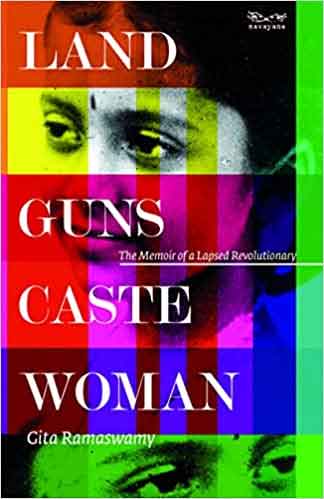
Gita Ramaswamy was born in a Brahmin family, never remained one in her later life. She is an activist and writer, now has written her memoirs Land, Guns,Caste and Woman (Navayana, 2022). In her memoirs there is an unusual chapter ‘Brahmin at Home, Catholic in School’. This chapter in the book tells how with English medium education in Catholic Christian schools, actually the Brahmin women’s liberation from the most atrocious brahminical anti-woman traditions, practices and torturous life process, have changed. She narrates how in the course of education in a Catholic school in Madras (Chennai) she fought the Brahminic myths and superstitions in the family and caste having been brought up in a middle Government employed father ( in her words patriarch) headed family .
Her story tells us that more than the male Brahmin reformers like Rajaram Mohan Roy, Easwar Chandra Vidyasagar in West Bengal, Ranade in Maharashtra, Mahatma Gandhi in Gujarat, Kandukuri Veeresha Lingam Pantulu (in Andhra Pradesh) and so on, it were the Christian English medium schools that liberated Brahmin women from many ritualistic superstitions. In Tamilnadu where Gita studied in formative school days, there was no male Brahmin reformer, at least I know of. However, the male Brahmin reformers only worked against child marriage, female dowry (kanyashulakam), permanent widowhood and so on. In fact in Tamil, coastal Telugu and Kerala regions it was Pariyar’s Dravida Khazagam (DK) movement that pushed Brahmin women into English education because they–men and -women– wanted to live better employed life in the central Government sector all over India and the world as revenge against the anti-Brahmin movement . Some Brahmins women left India in protest against the DK movement and are now living a global life. Kamala Harris’ mother, Indira (much later) Nooyi and many others became big names having come from Tamil Brahmin families.
From Bengal and Maharastra many Brahmin women became English educated in view of the fact that the modern Indian state was seen as a Brahmin asset for best jobs in India and global employment markets, as other castes were nowhere near English education. Pandita Ramabai is a case in point. Now Bengali Brahmin and Kayastha women intellectuals, professionals are all over India and the world. Shudra/Dalit/Adivasi men are nowhere near Dwija women English educated lot. At the same time we do not see Brahmin women sharing agrarian tasks with Shudra/Dalit/Adivasi women in the rural agrarian economy. They are either in the home ritual economy, employment or in politics trying to compete with their own and other caste men.
The Christian English medium schools injected rational thought, new spirit of life completely over growing out of the mythological stories, prarthanas, rituals, home and public bhajans, bharata natyam and so on that were normally making Brahmin girls’ childhood self- sacrificing, male worshipping, grinding themselves them with myriad tasks of ritualism. Gita shows, for the first time in modern Indian history, how English education opened a different world that Sanskrit or Tamil or other regional language education would not have done. There is a lesson for Tamil chaunists in her story, though indirectly.
Before Gita Ramaswamy told her story no other Brahmin highly English educated, westernized, globalized, woman writer, liberal or feminist or free thinking, told this historical facts of Brahmin life. It is a known fact that Brahmins, both men and women, are the most educated in the country today. After the non-priest Brahmins left Sanskrit, English has almost become their modern national and global mobility language. Even the women writers from among them–they are the largest English and regional language writers—-never took a clear stand that English education liberated them by injecting rationalism into their brahminic superstitious miserable home and public life, and that should be made available for all girl children–poor and rich irrespective of caste– in the country. Those who were educated in Catholic Christian missionary schools never said that they did not convert them into Christianity but made rational human beings, with the courage and confidence to live on their own. Gayatri Chakravorthy Spivak, Jhumpa Lahiri, Arundhati Roy (born to Syrian Christian mother and Bengali Brahmin father) , Uma Chakravarti, Kalpana Kannabiran (born in English educated Brahmin family and married a Shudra), Sudha Narayana Murthy, Madhu Kishwar (one does not know what exactly her caste name because she hides it) and many others came from that or similar caste background and became known and influential writers and theoreticians, working in different ideological streams, in different parts of the world. But they never told how Brahmin or Dwija women faced serious superstitions and torturous course of human existence, without knowing what was productive field in their family history and how English, not Sanskrit, that made them what they are today. Some noted women writers with Brahmin family background are second and third generation well educated in English parentage and they might not have faced the same family superstitions and ritualistic fanaticism.
Kalpana Kannabiran, whom I know well, is one such writer and took an anti-caste position in her writing. Uma Chakravarti and Arundhati Roy also did that but what is important is writing either through experience or by researching into that cultural heritage would help the nation to come out of Brahmanism. Wandana Sonalkar’s Why I am Not a Hindu Woman and Gita Ramaswamy’s menoir have done that as initiators. Much more needs to be done in future.
More superstitions survive in families that live off others –Shudra, Dalit and Adivasi– labour and when an education of new rationalism liberates them they need to tell honestly what was the root cause of that superstition based atrocity on women. If highly educated in globally communicable language–English– do not write how the schooling in English language liberated them from the caste-cultural oppression of Brahminsm, India as a nation cannot overcome the structural problems that Brahminsm created. Researching about other’s castes (say Dalit and Adivasi) and cultures and backwardness is one thing, but researching about a Brahmin caste, its roots, its good and bad life practices in spite of education in the family and caste is another thing. Those are the families which constructed all kinds of destructive superstitious theories in written texts from ancient days, put them in practice in their families and spread those values in the rest of the society. Research on Brahmin cultural history plays a major role in overcoming oppression on women in India much more than studying about the exploitation and oppression in productive castes. Their women never had Catholic English medium school education that Gita Ramaswamy and most Brahmin women writers had.
Once we agree that Brahmin and other Dwija castes are outside production and in fact are anti-production, then we must see how the women in those castes are controlled by their patriarchal men and how their wives, mothers, sisters and so on were forced to believe that before English education reached their families and how it changed generation after generation with English education. That story needs to be told through their autobiographies and also historical writings. There is no such literature available as of now. Along with Dalit/Adivasi and Shudra female and male autobiographies Brahmin and other Dwija women’s autobiographies would play a major transformation role is proved by Gita Ramaswamy and Wandana Sonalkar through classic work Why I am Not a Hindu Woman.
There is proverb in Telugu, Kadupu chinchukunte kalla meeda padutadi (If one split- opens ones stomach all that is inside falls on ones own feet)Brahmin culture is in every woman’s stomach, but needs to be thrown out,even though it falls on ones own self. This is what exactly progressive Brahmin women writers need to do.
English education started in India only by Christian institutions and later non-Christian English educational institutions came into existence only to do good business. Many of them are trying to inject Brahminic values in their schools. In this situation it is important to know what books Gita read in her school days and how her rebellion against the Brahminic superstitions was because of the rationalist thinking those books injected into her mind. Gita tells “ My earliest memories of resentment for the cross that Brahmin women carried go as far back as when I was ten”.
Brahmin men, leave alone women, were so superstitious that they would not cross seas, by any means of travel. That was when their caste spiritual education strictly limited for men was in Sanskrit language. As per available information the known early Sanskrit educated woman was Pandita Ramabai. But she also later studied English, went to England and became Christian. However, she too never campaigned for English medium education for all children and more girl children. She remained sentimental about Sanskrit even after converting to Christianity and asked for Sanskrit scripted Cross not Latin scripted. She did not ask for an English scripted one, even. Later she wrote a book in English, The High Caste Woman and sold it in America, brought a huge amount of money back and established her institution. She also educated her daughter in English medium Christian school. But see the irony. Savitribai Phule, though not English educated, campaigned for English becoming the mother tongue of all Indians because she thought that it would liberate all the Shudra and Ati-Shudra mothers.
The actual Brahmin women’s liberation seems to have begun with the new practice of Brahmin girls getting sent to Christian English medium schools from the early 1950s onwards by understanding that all Government and private sector jobs were available for Brahmins in Nehruvian India. The Tamil and Bengali Brahmin women families were more conscious of this post-colonial modern desk, teaching, science related jobs were available only to them and they wanted to grab them by four hands–wife and husband. They started sending girls to the best Christian schools and colleges available in big cities.
What exactly Gita said in her memoirs need not be elaborated here as the book is in the market. But just two quotes to show her guts to her family and caste history: “ Our upbringing was contradictory in many regards. While there were traditional strictures in the confines of the home around food, pollution, dress, behaviour codes and culture, there was an equal push towards English language education and a direct encouragement of Western oriented leisure activities, such as seeing English-language films, reading English books or listening to English songs. These were probably seen as helpful to education and career”. This contradictory but transformative Tamil Brahmin women’s life should owe to Periyar’s DK movement, not to Brahmin reformers. Periyar’s movement has done more good to Brahmin women than Dalit/Shudra population of that region. Their love for English language education was a direct result of revenge against Periyar rather than a positive direction derived from the Goddess, Brahmin Saraswati.
Gita talks about many destructive sentiments that Brahminism institutionalized in Brahmin family life and extended them to the rest of the Shudra/Dalit societies for survival without working in the productive fields. Gita’s father was an high end engineer in the Postal and Telegraphs yet he saw to it that the traditional control over women with a rigid regime of superstitious values at home and in caste culture remained in tact. She tells about that regime through many examples of her childhood life.
Gita had four female siblings and no male and all were educated in good English medium schools.
She says “We were six women at home and menstrual periods were three days of seclusion each. Of course, there was no dingy outhouse…But nothing, absolutely nothing was touched while menstruating”. One only must read her book how she rebelled against all of them and became a Naxalite and rebelled against the Naxalite way of living and fighting also. She finally became a Telugu book publisher and liberator of Dalit bonded labour around Hyderabad, and in the process Dalitizing herself to a degree that was possible.
What comes out through this book is that many Dalit women and men, if they love this country and India as nation should write their memoirs and autobiographies what Brahminism or Brahminness has done to them and to the nation. From Arun Shourie to hard core communist Brahmin tried to hide the anti-production, which in essence is anti-national, culture and civilization that they built to keep that caste men and women away from tilling the land and harvesting the crops. By constructing such a spiritual civilization that is destructive to the whole of society they kept the nation in the darkness of scientific experimentations.
I have been asking my Brahmin friends to write about the Brahminness within them, irrespective their ideology or gender. They wrote many autobiographies to say: “my family is of great Sanskrit pundits, and bhajan bhakts”. But nobody wrote how they avoided food production labour in their whole existing history. The Brahmin research scholars, educated abroad and India, that too in English, wrote about others by deploying many borrowed methodologies from the West. They wrote in sophisticated English to deceive the Shudra/Dalit/Adivasi masses. In the process they destroyed the nation as well. They called that knowledge merit.Gita for the first time opened that can of worms.
Kancha Ilaiah Shepherd is a Political Theorist, Social Activist and Author. Many of his books, Why I am Not a Hindu, Post-Hindu India, Buffalo Nationalism, From a Shepherd Boy to An Intellectual– My Memoirs, The Weapon of The Other, God As a Political Philosopher, Untouchable God, The Shudras–Vision For a New Path and so on are meant to reform the socio-spiritual system in India
https://countercurrents.org/2022/05/the-christian-schools-and-brahmin-women/
https://pagead2.googlesyndication.com/pagead/js/adsbygoogle.js?client=ca-pub-6388611372302111 -
India’s Brahmin, Baniya profited from English. BJP-RSS want to deny that to Dalit, Adivasis
First Brahmins benefited from the pro-English agitations of Tamil people. Now Amit Shah’s agenda is harming Shudra/Dalit/Adivasi global job prospects.
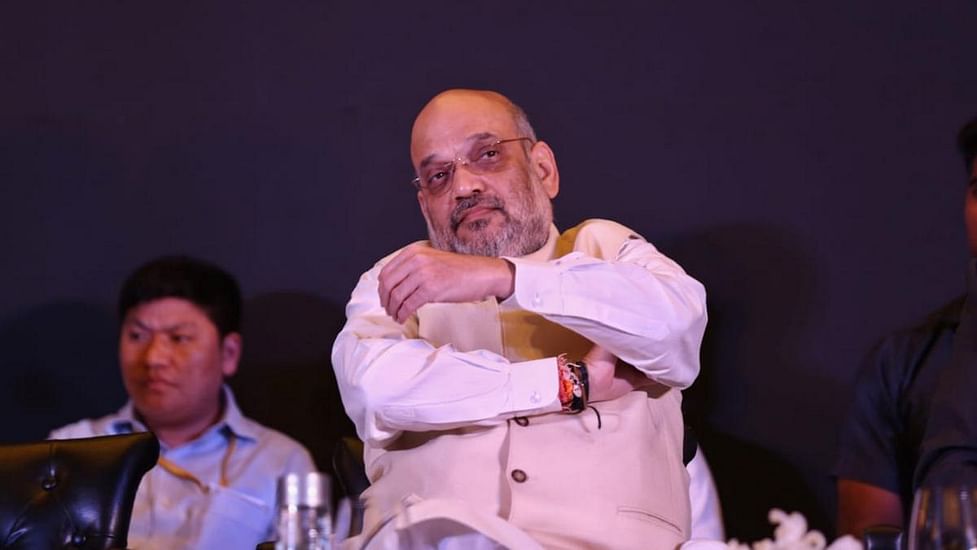
Union Home Minister and BJP president Amit Shah | Photo: Suraj Singh Bisht | ThePrint
The Rashtriya Swayamsevak Sangh and the Bharatiya Janata Party’s agenda of ‘One nation, One language’ is back, and with that, the Narendra Modi government’s plan to pressure the South and Northeast India to accept Hindi as the ‘national’ and ‘official’ language. But it’s not just that. Union Home Minister Amit Shah’s recent statements indicate something more serious — alongside the nationwide Hindi imposition, there is also an anti-English agenda being promoted.
In his capacity as the chairperson of the Official Language Committee, Amit Shah, on 7 April, said: “People from different states should speak Hindi, not English”. Significantly, he completely ignored the private sector, where English is usually the primary language of communication. Just a day before, the chairperson of the University Grants Commission (UGC), M. Jagadesh Kumar, announced that there was a plan underway to enable foreign universities to set up campuses in India. Will the students and teachers within these campuses speak Hindi? Will students of certain caste/class be excluded from these universities on account of the language barrier? Did Amit Shah ask Ashoka or Amity universities to teach in Hindi and not English? These are questions that need to be asked. Clearly, the home minister would like to see JNU and Delhi universities converted into Hindi-medium institutions. The process is already on.
Implication for Shudras, Dalits and Adivasis
Before we start worrying about the future of linguistic pluralism in India, it’s important to see the serious implications of opposing English in the government sector for the country’s Shudra/Dalit/Adivasi communities. Amit Shah is one of the strongest proponents of privatisation of the government-sector industries and educational institutions. School and university education are also not untouched by it. But what the home minister is conveniently ignoring is that most private-sector educational institutions run English-medium schools and colleges. What does Amit Shah do there? How does he plan to impose Hindi on software companies that are a big source of revenue for the Indian economy? Much of the software industry is in private hands and operates only in the English language? Will the industry survive if it is barred from using English?
If the South and Northeastern states are forced to speak Hindi, their reach and exposure will suffer. This is not the first time that the central government has tried to impose Hindi on non-Hindi speaking states. Even the Congress government had done so when English did not command the same status in internal and external economic relations. Now that the language has become a real engine of survival for India, how does Amit Shah solve this economic conundrum?
How Tamil Brahmins benefitted
Between 1937 and 1940, C. Rajagopalachari, the first chief minister of Tamil Nadu, tried to impose Hindi on the state’s population and caused a major anti-Hindi agitation. Rajagopalachari was a soft Hindutva man in the Congress camp and was essentially representing a Brahmanical view of Indian civilisation. His stance on Hindi also divided the Brahmin Congress ideologues. T.T. Krishnamachari was a strong anti-Hindi and pro-English leader. However, Periyar Ramasamy Naicker mobilised the Shudra/Dalit masses against the imposition of Hindi and succeeded in resisting it. In 1965, when the Lal Bahadur Shastri government-imposed Hindi, it led to massive agitations, firings and several incidents of self-immolation in Tamil Nadu. More than 70 people died and as a result, the Congress lost in the 1967 assembly election when Annadurai of the Dravida Munnetra Kazhagam (DMK) became the chief minister. The rest is history.
Who benefited from the pro-English agitations of Tamil people? The Tamil Brahmins, most of whom studied in private Christian missionary schools. In a recent memoir — Land, Guns, Caste, Woman — Gita Ramaswamy, a Tamil Brahmin woman who rebelled against Brahmanism, said that her childhood was led by diametrically opposite beliefs at home and in the English medium school where she studied. She says that she was a ‘Brahmin at home and a Catholic in school’. The Brahmin home taught her that her menstruation was ‘a horrible pollution’ that could ‘break idols of gods’ if she touched them during her menstrual cycle, while her school taught her that menstruation was a process of her ‘procreative energies’. English, in a way, liberated Brahmins and Baniyas more than other castes. Today, the top Bania industrialists operate only in English and also run world-class private English medium schools and colleges. Does Amit Shah plan to close them down too?
English-medium education is critical
The Shudras/Dalits/Adivasis are just starting to absorb English but Amit Shah wants to deny them even the hope of getting into the global job market. Within India too, because of the lack of command over spoken and written English, these communities are denied private-sector jobs. If they do not speak English, how would they ever learn it?
It is because of this English education that Tamil Brahmin-origin Kamala Harris is the vice president of America and Sunder Pichai is the CEO of Google. Not only that, but because of their strong English-medium education, the Tamil Brahmins have historically held high positions in successive central governments. In the Modi government, Finance Minister Nirmala Sitharaman and Minister of External Affairs S. Jaishankar are a continuation of that English education legacy.
Amit Shah seems to be working out another agenda that could light a fire. India and China are now competing in the global markets with an expanded English language base. Whatever the nationalistic rhetoric, if it’s set against learning English, it will invariably push India backwards.
Kancha Ilaiah Shepherd is a political theorist, social activist and author. He has been campaigning for English-medium education in government schools across the country for the last 30 years. Views are personal.
(Edited by Srinjoy Dey)
https://pagead2.googlesyndication.com/pagead/js/adsbygoogle.js?client=ca-pub-6388611372302111 -
How English Language Initiated the Idea of Nationalism in India | NewsClick
India got Mahatma Jotirao Phule, Savitribai Phule and BR Ambedkar, the first Shudra and Dalit intellectuals, only after their communities could access English medium schools.
01 Apr 2022
India got consciously organised no earlier than from the mid-19th century onwards. If we seek a benchmark period for the modern Indian nation-state that is a clear successor of the present landmass, then it would be that of the first rebellion against the British colonial rulers in 1857. Now, which forces invested their physical and mental energy to organise and enforce that revolt. The forces that contributed to protect the land from the control of the British imperial power mainly were the Shudras, Dalits and Adivasis. Without their peasantry and youth employed in different regiments of the British Army, the rebellion of 1857 would not have been possible.
The Rashtriya Swayamsevak Sangh and liberal Dwija writers wrote history, but no Brahmin books such as the Vedas, Ramayana or Mahabharatam were responsible for the rebellion, nor were their sentiments about cow and pig fat. The peasants who suffered under the yoke of the British tax regime and exploitation by the British colonial government—for whom many Dwija officials worked—forced the farming communities to rise in rebellion right from the village level. Hardly any Shudra, Dalit or Adivasi officials worked for the British regime at the time.
Even before the British came to India, Brahmin, Kayastha, and Khatri communities formed the officialdom Mughal administration, apart from the Muslims. The Bania or trader communities continued their village and town-level businesses throughout British rule and pre-Mughal and Mughal rules. Of course, all Muslims were not rulers, and the poor Muslims suffered along with the Shudra, Dalit, Adivasi productive masses. It is well documented that the accumulated wealth of present-day Banias has a centuries-long history owed to the ‘reservation’ in their favour in businesses and professions. Besides, the Shudra, Dalit and Adivasi people never got entry into government jobs in those days because no rulers in this land overturned the Brahmanical dictum against educating these communities.
The Shudras, the most significant human mass of India that is Bharat, as the Preamble of the Constitution calls it, are the lifeblood of this nation. Only if the body and brain of an entire people function on a philosophical foundation that is humanitarian can it secure the release of the landmass from foreign bondage, then seek sustenance as a nation. After all, a land would need to design modes and methods that can release the energies required to take back their land from an occupying force. The Shudra, Dalit and Adivasis played that crucial role even though they were prevented from educating themselves.
In the last decades of its rule, the British administration opened up school education to these groups. This change is how Mahatma Jotirao Phule, Savitribai Phule and BR Ambedkar could emerge as the first Shudra and Dalit intellectuals who challenged the millennia-old Varna-Dharma-Jaati exploitation and oppression. For the first time in these communities’ living history, they got educated intellectuals who could read and write in a globally understood—not just national—language, which is English. It is now that they took their first steps toward liberation.
But even this process of liberation was manipulated, and after India attained freedom, Nehruvian governments introduced the dual model of education. They made English the medium of instruction in private schools and “regional” languages the medium in government schools. The result is that the productive castes still suffer an unequal existence in all spheres of life. When English became the language of the British rulers in India in 1835, the Shudra, Dalit and Adivasi people were entirely left out of the education system.
Brahmins did not permit the emergence of a universal educational system. Even after the first English medium school started in Kolkata in 1817, the colonial language first went into the homes of the Dwijas, who had controlled the Sanskrit language until then. For example, Raja Ram Mohan Roy (1772-1833), from a Bengali Brahmin Zamindari family that interacted with British officials, learned English in the late 18th century. There was more than a linguistic relationship between the Sanskritic Brahmins of India and the beef-eating British English-speaking administrators. Roy was the son of Ramkanta Roy, a zamindar from a so-called noble Vaishnavite Brahmin family from Radhanagar. The father, too, was educated in the Sanskrit tradition and had also learned Persian and English. Roy was trained as a pandit to reach a Shastri’s position and was also taught Sanskrit, Persian and English from childhood. In those days, his education in a new language like English would not have been possible without a tutor, perhaps a British one.
At any rate, Brahmin life was strictly Varna-dharmic in those days, and it was accompanied by the merciless practice of untouchability against fellow human beings. That Brahmanical parampara or tradition was imposed at will on the Shudras and Dalits. Brahmanical noble-ness was never humanitarian. Central to sustaining its imposition was ensuring the lack of education of the Shudras and Dalits, though they lived in the same village and urban societies. The Adivasis, for a long time, were away from village and town life that was the centre of production and distribution of goods and commodities. The Shudras and Dalits were part of that life, so they suffered its graded caste and cultural impositions. In any case, English language education started in India with Ram Mohan Roy, who made it a part of the school education system, with William Carey, a British missionary who had settled in Bengal.
The second most significant man in modern India was Dadabhai Naoroji (1825-1917). He was born in a Parsi Zoroastrian Gujarati family. Educated at the Elphinstone Institute School, perhaps one of the earliest English medium schools in the Bombay province, he was patronised by the ruler of Baroda, Sayajirao Gaekwad III, who made him diwan or minister of his state. The Parsi community, though small in number, was highly educated. Naoroji became a member of the British Parliament and took the lead to establish the Indian National Congress in 1885 along with the Scottish Indian Civil Service officer AO Hume, who wanted to reform the Indian administration with help from educated Indians. So even though Naoroji was more or less the same age as Mahatma Jotirao Phule (1827-1890), because of his community’s educational background, he got help not just from the ruler of Baroda but from British officials.
It is also interesting that the maharaja family of Baroda was Shudra, but it was given Kshatriya status because it had a ruling position. Brahmin prime ministers and head priests ran all Shudra kingdoms. Even such a king never educated his children in English medium schools in India nor sent them to England for higher studies. Yet, this family later financed Dr BR Ambedkar’s education at Columbia University in the United States.
We must understand this phenomenon: Irrespective of economic status, the Shudras were frightened of education as it was said to be un-Shudralike to get educated. Rumours would spread about how the gods would get angry if the Shudras started reading and writing. The Brahmanical ideology of control through caste made myth and superstition a part of India’s historical heritage. Over millennia, they injected the fear of education within the Shudra, Dalits and Adivasis. They fostered the psychology of fearing education, which confined all—except them—to local languages or oral traditions and prevented them from reading and writing even in colonial times.
The author is a political theorist, social activist and author. He has been campaigning for English medium education in government schools for 30 years. The views are personal
https://www.newsclick.in/how-english-language-initiated-idea-nationalism-india
https://pagead2.googlesyndication.com/pagead/js/adsbygoogle.js?client=ca-pub-6388611372302111
-
Mayawati & BSP’s political ‘evaporation’ certain. Blame it on shift to ‘Sarvajan Samaj’ in 2007
Changing Kanshi Ram’s fundamental slogan of ‘Bahujan Samaj’ to ‘Sarvajan Samaj’ has cost Mayawati and BSP. UP and Punjab election results were expected.
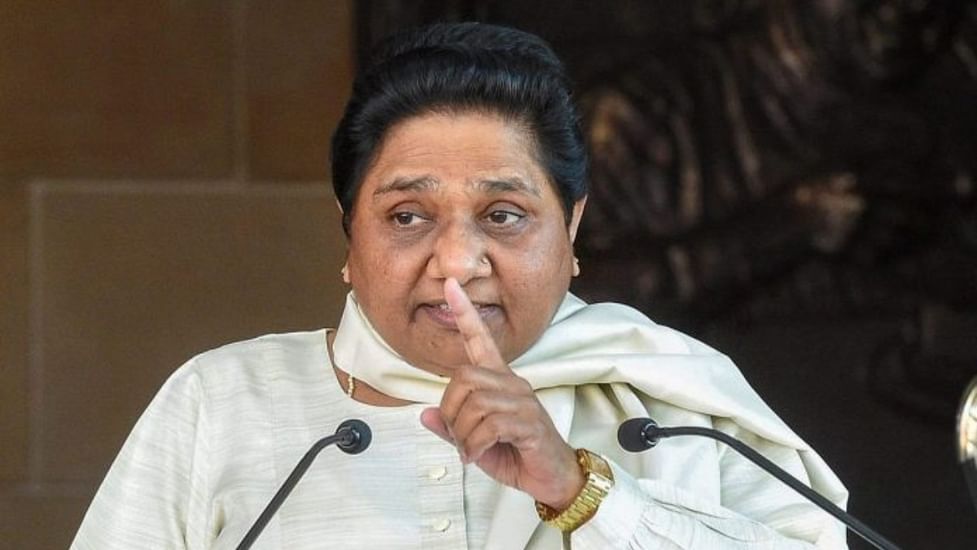
File photo of BSP chief Mayawati | PTI
In the recent Uttar Pradesh and Punjab elections, the Bahujan Samaj Party, headed by Mayawati, remained almost invisible like the Left parties of India. In UP, where Mayawati was a chief minister for one full term from 2007 to 2012, and before that, for three short terms, she did not undertake a visible campaign. The party did not win seats, and its vote share dropped to the lowest. But that was expected.
There are both knowns and unknowns behind Mayawati’s inactivity. We know that the Narendra Modi government might raid her properties. What we don’t know, however, is if the threat of a raid existed even before the 2019 election when the BSP contested in alliance with the Samajwadi Party and Mayawati was still an active player.
Also Read: Beyond minor tweaks, BJP, SP, BSP are still following old caste, religion formulas in UP
BSP’s ideological shift
Is there any other reason for her inactive political life? Yes. The party rank in Uttar Pradesh has become so weak that she cannot run an effective and visible campaign. In fact, Mayawati punctured her own ideological tyre just before the 2007 election. She, along with her new ‘ideological mentor’, Satish Mishra, a Brahmin leader, changed the fundamental slogan of Kanshi Ram from ‘Bahujan Samaj’ to ‘Sarvajan Samaj’.
The idea of Bahujan Samaj was a new electoral combination of Dalit/Other Backward Classes/Adivasis with the support of minorities wherever possible. Moreover, it was supposed to be a sociopolitically transformative slogan with a systematically worked-out agenda drawing heavily from Ambedkarism. Even though a parallel OBC party came into existence in UP in the form of the Samajwadi Party, the BSP was the main ideological strength for all oppressed communities in terms of ideology.
The BSP won the 2007 election by roping in the Brahmin community, not so much Kshatriyas. The Kshatriyas remained with the Bharatiya Janata Party in the post-Congress phase in the state and completely owned the Ram temple controversy as more of a community issue than religious. The stable position that the Kshatriyas occupied in Rashtriya Swayamsevak Sangh/BJP gave enormous strength to Yogi Adityanath. Meanwhile, the Brahmins lost bargaining capacity in the BJP because of their association with BSP from 2007 to 2012. More significantly, however, the BSP lost credibility among the Dalit/OBC ideological forces and also among voters because of its political marriage with the Brahmin community.
During her tenure in power from 2007 to 2012, Mayawati did not show any major policy reforms that could become a model among the poor and lower-middle classes in the country. The only ‘change’ she brought was distributing land among Dalits and building some monuments around Ambedkar, Kanshi Ram, and of course, her own self. The Brahmins were upset with monuments, though they got some state benefits like jobs along with Dalits and OBCs. There was a view that in the general category jobs, Brahmins were preferred not Thakurs and Jats during her regime. However, by the 2012 elections, the Brahmins moved away from the BSP. The non-Yadav OBCs who were with BSP also seemed to have become frustrated with her politics and personal behaviour like putting note garlands around her neck in public meetings, not caring for ministers, etc, and moved away.
In 2014, the RSS/BJP changed their ideological position on caste and roped in many non-Yadav OBCs along with non-Jatav Dalits into their electoral base. Mayawati and her mentor, Satish Mishra, lost out on all fronts. They did not know where to go and which combination would work in their favour. The Muslims are still aligned with Samajwadi Party — they were never strongly with BSP even during Kanshi Ram days because, for a long time, they did not buy into the caste ideology.
Also Read: Is the game over for BSP? Mayawati’s politics pales in the face of Kanshiram’s legacy
Lack of structure
The BSP, as a party, has never built a structured organisation with proper central and state bodies, despite its presence in many states. When Kanshi Ram was alive, he was the BSP’s ‘all-in-one’, and after his death, Mayawati became the party’s ‘everything’ as the party president. But at the same time, she lost her decision-making capacity and started relying on Satish Mishra. A party that came into existence with a Dalit centrality was thrown into the lap of a Brahmin who was never known for any social reform work. There was no second Dalit leader in that party, at least to represent the ideology with an organic social base.
This kind of structure, except individual leadership, though not dynastic, does not even have the scope for survival that the communist parties have in an adverse political atmosphere. While the communists became irrelevant in a caste identitarian environment and stuck to their class theory, which had hardly any takers, the BSP gave up its ideology of ‘Bahujan Samaj’ within a short time for the sake of power in 2007. The power came with the Brahmin alliance, but the party’s death began from that very position of power between 2007 and 2012.
Soon it was not just the power that it lost, but its political, economic and moral support base as well. Unlike many regional parties, the BSP did not come into existence just for power within the welfare ideology of the Congress or the BJP. It came with a definite anti-caste ideology. Unfortunately, the ideology no longer plays a part within the BSP. It has become a Mayawati-Satish Mishra party.
Also Read: Calling BSP ‘BJP’s B-team’ shows caste bias. Here are four reasons
Mayawati’s shortcomings
Mayawati is not a great ideological leader with an all-India reach like Kanshi Ram. She has oratory skills but speaks without an ideological standpoint and is a politician who cannot inspire the cadre. She has gradually become a ‘script-reading leader’ even in public meetings. It is a sad state of affairs. Illiterate, semi-literate and even educated Indian masses need a leader who arouses emotions in public meetings.
Mayawati’s failure to retain an all-India leadership role is because she and her party confined themselves to Delhi and Uttar Pradesh. Despite having activists working and living for the party ideology in other states, it wasn’t much use. It has no leader who could sustain the ideology of Kanshi Ram in the present political environment.
To me, it appears that even though the communist parties — Communist Party of India (Marxist) and Communist Party of India — have become irrelevant, they still have organisational structures and hang on to their classical ideology. The BSP may gradually evaporate as the only known leader has given up on its Bahujan (read: anti-caste) ideology and there’s no second-level leadership and structure to take it forward. It is a great tragedy that Kanshi Ram’s labour and love of Bahujan liberation has been dragged down so soon by someone he chose with so much hope.
Kancha Ilaiah Shepherd is a political theorist, social activist and author. His book God As Political Philosopher — Buddha’s Challenge to Brahminsm was written to strengthen anti-caste ideology in the 1980 and 90s. Views are personal.
https://pagead2.googlesyndication.com/pagead/js/adsbygoogle.js?client=ca-pub-6388611372302111 -
The Russian Orthodox Church And The World Crisis
in World — by Kancha Ilaiah Shepherd
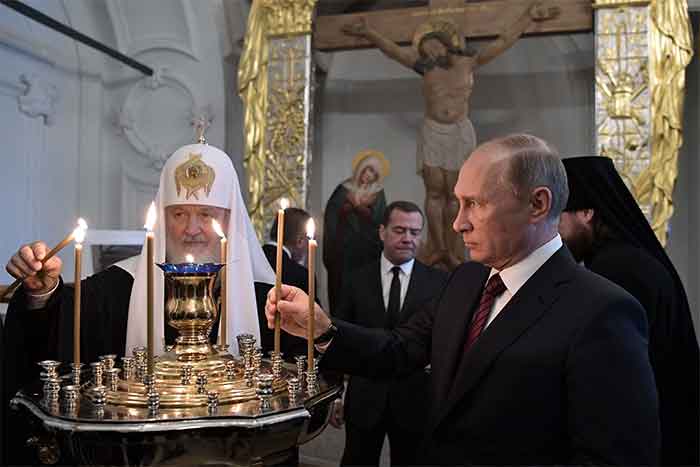
Extreme religious or anti-religious engagement of the ruling political forces in modern times would have serious negative consequences for the society as whole and the state apparatus. The Russian experience shows this very clearly. The communist phase of Russia was completely anti-religion. Now Putin’s Russia is deeply associated with the Orthodox Church that suffered a lot during the communist regime.
Vladimir Putin’s relationship to the Russian Orthodox church and the present global crisis bear testimony to this. From the early 20th century onwards the Russian society and state have gone through very extreme positions on the question of religion.
After the Bolshevik revolution in Russia the anti-religion campaign was so rigorous that church symbols and church buildings were pulled down. The communists thought that all people must practice atheism, though at the ground level the people were still religious. Now Putin pushed the people to believe and practice religion as a matter of state policy. The Russian Orthodox Christian church, headed by a classical kind of patriarch, which is different from Roman Catholicism, is not only fully supporting the authoritarian regime of Putin but fully supporting and mobilizing forces to fight the Ukraine war. Putin has become a regular visitor to the church, and has become a part of orthodox activities. He has been financing construction of new churches and organizing orthodox congregations.
The Church’s interpretation of Russian history and nationhood is exactly on the lines any other theocratic religion would interpret. When religion becomes the key source of defining a nation, fundamentalism creeps into every aspect of the society and the state. The Russian orthodox patriarchs believe that Ukraine is part of Russia, because the Orthodox church was first born in the present Ukraine region in the 10th century. St Andrews was said to have established the first church at Kievan Rus around, perhaps, the present capital of Ukraine. Russia, Ukraine and Belarus were said to be the Orthodox Akhand Russia. This is like what many RSS leaders earlier were talking about Akhanda Bharat that consisted of India, Pakistan, Bangladesh. Putin bought this theory from the Orthodox patriarchs who seem to think that the peaceful disintegration of the Soviet Union should not be accepted and at least these classical Orthodox church centred Russia should be re-united whatever could be the cost. Though there are dissenters within the orthodox church, who oppose the war but most orthodox church leaders are with Putin. The whole world is talking about Putin but the problem is not just one Putin. The religious nationhood of whole orthodox patriarchs is the problem.
Once he used the starving Orthodox Church for his consolidation, he could easily undercut the democratic process and he slowly emerged as a new model dictator. The Russian election system is not at all democratic. It is totally stage managed.
There are some fundamental issues on which the Orthodox Russian Church differs with the Roman Catholic Church and much more with the Protestant Church of the West. After Putin became the unchallengeable leader of Russia on some of those issues, with the support of the Orthodox Church, the Roman Catholics within Russia were persecuted and attacked. Since the Roman Church is taking a liberal view of abortions and homosexual marriages, liberal dress codes and so on the Orthodox Church thinks that these are all spiritual immoralities that crept into Church in the post-modern phase of the Western world. All such things should be opposed.
The Orthodox Russians see the Western liberals as the enemies. Though one cannot say that Russians as people are opposed to democracy. The very idea of proletariat dictatorship during communist phase has a negative impact on their psyche. Their experience during the communist regime, particularly the religious orthodox people feel more assured in an orthodox dictatorial political regime. Though Russia cannot be called a theocratic state yet, Putin kind of ambitious rulers easily can turn such a convenient orthodox environment into a theocratic dictatorship. If he wins the Ukraine war the chances of Russia becoming a more dangerous theocratic regime with so much nuclear power at its command poses a major threat to the world’s democratic order.
The Orthodox Church is not only opposed to communism and socialism in any form but they also oppose liberal democracy which would bring in anti-Orthodox values into Russian society. Such religious nationalist schools think that conservative authoritarianism of the Putin type is very useful. They see the Ukrainian democracy in the neighborhood is going to have a corrupting impact on their conservative, nominal election based dictatorship. It is this politico-spiritual social base that made Putin what he is now.
The problem is not just Putin but it is the Orthodox Christian nationalism that is posing a threat to the Western liberal democracy and globalized capitalism. Russians also do not want a China type of market communism. Since the communist regimes crush the spiritual autonomy of people and the state must direct every aspect of life the Russian conservatives want authoritarianism which combines the state and religion into one whole. This post socialist Russian hunger for a religious state where there should not be any space for separation of the state and religion is fully backing Putin.
Most Muslim nations also operate in this kind of spiritual authoritarian states. They do not want to engage with secularism discourse at all. The Afghan Talibanism is only an extreme form of it.
Religion and state mixed authoritarianism look for wars with neighbours who want to practice different socio- political systems. The Russian-Ukrainian war is similar one. Once religious fundamentalism controls the ruling oligarchs’ mind the destruction of war does not appear to be a problem.
Once the socialist systems collapsed, the world has come to pre-socialist conflict stage again. In Russia spiritual nationalism, not democratic welfare nationalism, decides the nations’ actions. Though Russia is being described as a Rogue State by the West it does not seem to bother about that label. The mass psych could be more easily maneuvered with religious fundamentalism. Russia seems to show that direction within the Christian world. Since Ukraine is also a nation of similar Orthodox Christianity which accepted the democratic model with a weak separation of the state and church, we will have to wait and see what happens in this war.
The world is now encountering many forms of spiritual fundamentalisms like Afghan Talibanism, Russian Orthodoxism. In India though Hindutva forces repeatedly say we believe in democracy and as of now operating within the framework of the Indian constitution, we are not sure which direction religious fundamentalism drives those forces. If religion is thoroughly mixed with the state operation and once a ruler is convinced that he should become life time ruler and the religious forces militantly control the civil society and the election system could be manipulated or abandoned any system is likely to get into dictatorship. Every nation now needs to be cautious about deeply mixing religion with the state.
If Russia wins and dismantles the Ukrainian democracy the Christian world will enter into a new phase in their experimentation of nationalism, democracy and secularism.
Kancha Ilaiah Shepherd is a political theorist, social activist and author. His book God As Political Philosopher–Buddha’s Challenge to Brahminism, deals with spiritual democracy as new idea
https://countercurrents.org/2022/03/the-russian-orthodox-church-and-the-world-crisis/
https://pagead2.googlesyndication.com/pagead/js/adsbygoogle.js?client=ca-pub-6388611372302111 -
Statue Politics and the Myth of Ramanuja’s Equality
The name given to the statue is meant to mislead the Shudra/Dalit/Adivasis, who have their own spiritual symbols in Telangana and also have major spiritual icons like Mahatma Phule, Savitribai Phule & Dr. B.R. Ambedkar.
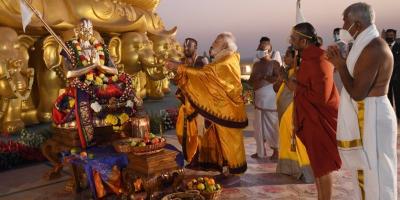
Narendra Modi at the inauguration of the “Statue of Equality” in Hyderabad. Photo: Twitter/@narendramodi
Earlier this month, a 216-foot high statue of Ramanujacharya – founder of the Vishishta Advaita school of Vaishnavism in 11 century South India – was unveiled by Prime Minister Narendra Modi. The statue is named ‘Statue of Equality’, presumably on the lines of the Statue of Liberty in New York. Modi said Ramanuja’s Statue of Equality and Sardar Vallabh Bhai Patel’s Statue of Unity will change India.
The main institutionaliser of the latest statue is Chinna Jeeyar Swamy, said to be the guru of Telangana chief minister K. Chandrasekhara Rao. Jeeyar Swamy’s background is not mentioned anywhere but he is from East Godavari district of Andhra Pradesh. Indications are that he himself comes from a Brahmin family background.
Though Ramanuja established his sect of Vaishnavism with the idea of human equality about 1000 years ago, the impact of this drive for equality ought to have been visible in present day Tamil Nadu and Kerala – the region he taught his philosophy and lived his long life. Especially since we know there was no elite or violent counter-reaction of the kind which Buddhism faced. Ramanuja’s main preaching happened around the Srirangam Ranganatha temple in Tamil Nadu. For about 900 years after his death, by the time Periyar, Ramasamy Naikar, Sri Ayyankali and Srinarayana Guru started their struggles for equality in the same region, the Tamil and Kerala Dalits and Shudras experienced little socio-spiritual equality. If anything, their condition was worse than any other part of the country.
If the Vaishnavite Ramanuja opposed the Shaiva casteist tradition of Adi-Shankara and started a movement for equality, what does the caste-cultural history of that region tell us? Chinna Jeeyar Swamy claims and the prime minister of India affirms, that a great spiritual movement of equality was launched, but then why was untouchability in those areas even more widespread than the rest of India – with even some of the Shudra castes like the Nadars of Tamil Nadu and Ezahvas of Kerala too being treated as untouchable and unseeable? This was only region where the Shudras were treated as untouchable till the early 20th century.
For those looking to build statues, there is no shortage of true icons of equality. Ayyankali (1863-1941), who was a Dalit himself, started a movement for allowing Dalits of that region to be allowed to walk in the village streets. Narayana Guru (1856-1928), who came from a toddy tapper community, started a movement to fight for the Shudra ‘Right to Religion’ by establishing his Linga and finally established a mutt of his own. Periyar Ramasamy (1879-1973) a Shudra agri-businessman, finally delivered a major blow to the forces of inequality in the region. Where was the influence of Ramanuja’s equality in all this? If the ‘equality’ claims being made today were true even in the spiritual domain, why were Dalits not even allowed to walk on the roads where Vaishnava temples like the Padmanabha temple of Kerala stood?
It is a known fact that Ramanuja was by birth a Brahmin and never left the Brahminic socio-spiritual practices within temple and outside. He was the opposite of Basaveswara, a Brahmin by birth who rebelled against Brahmanism to establish a spiritual system of human equality in Karnataka.
Adi Shankara started his Shaivite movement in the 8th century CE in the context of the inroads Buddhism, Islam and Christianity had made. But that did not stop the growth of these religions. The Brahmins of that region thought that promoting Vaishnavism would stop religious migrations as the Ramayana and Mahabharata were more usable mythological texts. In the absence of any concrete Shaivite mythological text, they promoted Vaishnavism. Both the Ramayana and Mahabharata were composed around Vishnu’s avatar narratives. Ramanuja in that situation worked to promote the Vaishnava cult with vague talk of human equality – in the hope that it would stop the Shudra/Dalit migration to other religions. But the rigidity of Brahminism did not allow any change and untouchability and Shudra inequality were rampant till reformers like Narayana Guru, Ayyankali and Periyar emerged.
The philosophical discourse of Ramanuja did not raise the issue of dignity of labour and respect to production in the Vaishnava system as well. After all, caste inequalities and human untouchability were rooted in productive occupational discrimination. He tried to re-define Brahmanism without differentiating between Brahma the God and Brahmin the human, with a new form of worship but it had nothing to do with equality.
Why then have Chinna Jeeyar, KCR and Rameshwar Rao (the richest Velama real estate business man) planned to establish a Rs 1200 crore spiritual centre with a huge statue in Hyderabad? Does Jeeyar himself believe in human and cultural equality?
Since KCR comes from a Velama landlord family, which also thinks that the Velamas have Kshatriya heritage, they started promoting the Vaishnava sect of Hinduism in Telangana. However, the relationship between Jeeyar Swamy and the RSS/BJP is well established. The financial supporter of this project is Jupally Rameshwar Rao, a billionaire, and real estate monopolist of Telangana. Since there is no political support to Ramanuja’s ideology in Tamil Nadu and Kerala, they chose Telangana but the ‘Statue of Equality’ name is meant to mislead the Shudra/Dalit/Adivasis, who have their own spiritual symbols in Telangana and also have major spiritual icons like Mahatma Phule, Savitribai Phule and Dr. B.R. Ambedkar.
Modi’s assertion that Ambedkar was a follower of Ramanuja is totally misleading. He was never a follower of Ramanuja.
What KCR also did not understand is that Chinna Jeeyar is an RSS supporter. If he is really opposed to the RSS/BJP he would not have supported the whole agenda of Chinna Jeeyar. In 2013, he “presided over inaugural ceremony of the 32nd state conferences of the Akhil Bharatiya Vidyarthi Parishad (ABVP),” the student wing of the RSS, where he said that “the ABVP was guiding the student community and inculcating patriotism among them.”
The country knows what kind of educational values and patriotism the ABVP promotes across Indian universities. In Telangana,, the ABVP was born in Osmania University before the Bharatiya Janata Party was formed in the late 1960s. However, not a single serious scholar has emerged from this organisation so far. The situation in the rest of India is not different.
Jeeyar himself does not believe in human and cultural equality. A key component of equality is respect for the food and work culture of different caste-community people.
Jeeyar said in one of his sermons just before the inauguration of the Statue of Equality:
“If you eat pork, you would only think like a pig. If you eat mutton, you would only follow the herd like a goat as your own brain stops working. If you take eggs, you would only behave like a chicken – peck in the dirt, place to place, and eat from it”.
With this statement, Jeevar Swamy insulted the food culture of the majority of Indians. He disrespected the blood in the body of Shudras, Dalits and Adivasis, apart from Christians, Muslims, Sikhs, Lingayats and so on. Even his own follower, KCR, eats meat.
Is this the kind of equality that Ramanuja practiced and taught? Even after a thousand-year-long spiritual and cultural legacy, this kind of human intolerance and inhuman cultural traits survive among followers of Ramanuja whose statue is now called ‘Statue of Equality’.
This means they are coming out with a new meaning for the concept. Equality now means the practice of Varna Dharma, casteism and untouchability.
Kancha Ilaiah Shepherd is a political theorist, social activist and writer: His well known books are: God As Political Philosopher – Buddha’s Challenge to Brahminsm, Buffalo Nationalism –A Critique, and Spiritual Fascism and the Shudras –Vision For a New Path, co-edited with Karthik Raja Kuruppusamy
https://m.thewire.in/article/caste/statue-politics-and-the-myth-of-ramanujas-equality
-
A New Civilisational Discourse for India | The India Forum
UPDATED: 11 FEB 2022ISSUE: MARCH 4, 2022
Kancha Ilaiah Shepherd is a political thinker, social activist, author, and socio-spiritual reformer.
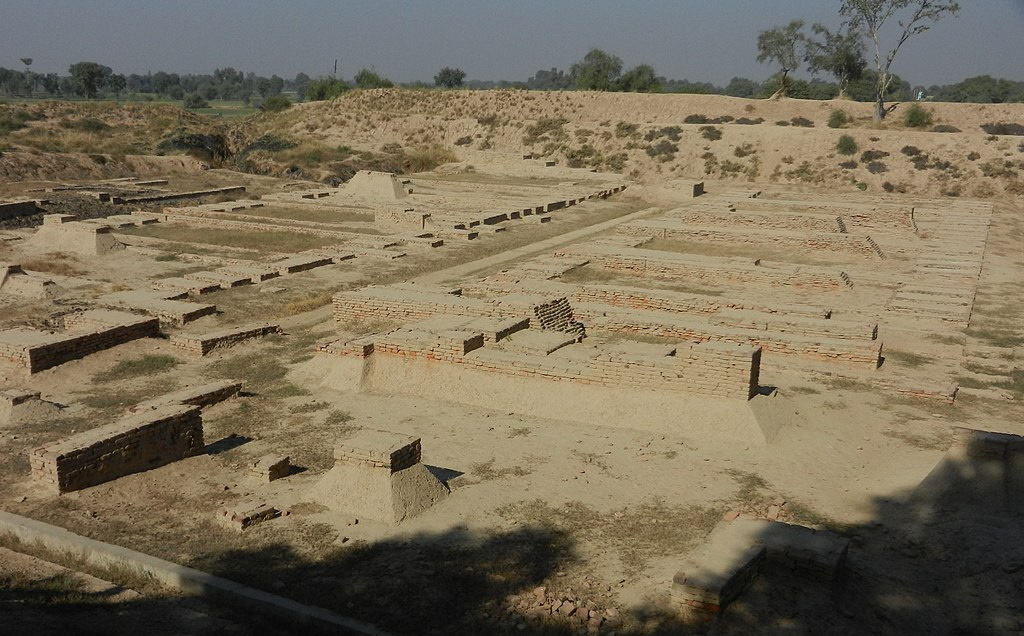
The Great Granary of Harappa, dated to 2450 BCE. Much before the Aryans came to the subcontinent, the Harappans had built an advanced urban civilisation. | Wikimedia
A right-wing nationalist agenda would make us believe Dwijas alone were civilisation builders in India. But Indian civilisation began with the Harappan culture, whose inheritors are the present-day Shudras, Dalits, and Adivasis.
Where and how did Indian civilisation begin? What is its status in the 21st century world? Who were the people who originated civilisation in India?
I would not have entered this discourse had the Rashtriya Swayamsevak Sangh (RSS) and Bharatiya Janata Party (BJP) not come to power and imposed their extreme Dwija right-wing nationalist agenda on India and its education system. They would make us believe that Indian civilisation started with the Vedas. All sections of people — Shudras, Dalits, Adivasis, Sikhs, Muslims, Christians, and so on — are forced to accept the Vedic civilisation as India’s originary civilisation. By implication, they create a make-believe theory that the Dwijas alone were the builders of the Indian civilisation.
The earliest Brahmin books — the Vedas — were composed in Sanskrit beginning 1500 BCE after the migration of the Aryans to the Indian subcontinent. But before the Aryans arrived, composed the Vedas, and divided Indian society into four varnas, a very advanced civilisation had already been built on the subcontinenent by the Harappans.
The present-day Shudras, Dalits, and Adivasis are the real inheritors of that civilisation — not the Dwijas. This is the reason the Dwijas overplay the Vedic civilisation and either ignore or undermine the Harappan civilisation.
The book and the spade
If the Vedic civilisation can be symbolised by the books it produced, the Harappan civilisation could be symbolised by the spade. The Harappan urban civilisation was not only built using spades but also grew through revolutionising agriculture with the help of the plough — an advanced form of the spade. The Harappan spade civilisation has a life of 1,000 years of pre-book Vedic civilisation in India. Therefore, the spade, rather than the book, should be treated as the original symbol of Indian civilisation.
A book is not an instrument of civilisation building. On the other hand, the spade is an instrument with which civilisation is built. A book can only tell us about a particular aspect of the civilisation that a spade as an instrument builds from time to time. In the process of the growth of human civilisation, the spade continues to play a central role in the production and development of resources. A spade is not a messenger of a particular civilisation but a key instrument with which civilisation-building work is done. It represents the genealogy of technology in each stage of human civilisation.
The Hindutva school does not want to learn and teach about the knowledge of production, as the Brahminical forces are against it. They want to include the history of Shudras, Dalits and Adivasis as part of Brahminic knowledge.
A spade may change its shape. Once it was used by a human hand, and now it might be mechanised. But a spade remains a spade. While the book plays a critical role in improving and spreading civilisation in vast areas, even without a book a civilisation can survive and its culture of production can spread from region to region.
The Brahminical ideological heritage will not allow the spade civilisation to be part of history. The Hindutva school does not want to learn and teach about the knowledge of production, as the Brahminical forces are against it. They want to include the history of Shudras, Dalits and Adivasis as part of Brahminical knowledge.
This way of reading of Indian history does great injustice to the spade civilisation built by Shudras, Dalits and Adivasis before the Aryan arrival. The Vedas, Upanishads, Ramayana, and Mahabharata do not reflect any aspect of the spade civilisation that has its roots in the Harappan civilisation. The Vedic culture did not teach anything new in the production and construction realms, but rather, pushed us backwards by constructing a myth that production is pollution. It did not develop any urban centres like those of Harappa. Indeed, the next urban rise in the subcontinent was only around 600 BCE, with the Magadhans, around the same time as the development of the Shramanic Buddhist civilisation.
Every generation has to know of the Harappan roots of India’s production and construction knowledge. For that is the foundation of our civilisation.
Harappans and the pre-Aryan economy
In Early Indians—The Story of Our Ancestors and Where We Came From, Tony Joseph writes: “By the time the last migrants, the Aryans, arrived sometime after 2000 BCE, Indians in the subcontinent were already one of the largest modern human populations on earth (if not the largest); had already led an agricultural revolution and then an urban revolution leading up to the creation of the largest civilisation of its time; and were spearheading an agricultural transition in almost every region, in the north, south, east and west. It would be accurate to say that the very foundation of India as we know it was laid during the period of the Harappan civilisation.”
The Harappan civilisation was a continuation of the hunting, fishing, pastoral, and agricultural economy that the pre-Harappans built. The advances in agriculture were accompanied by advanced human cultural relations and Harappa emerged as one of the earliest urban civilisations in the world. This civilisation was built with the skills, labour, and instruments that formed the earliest forms of technology on the Indian subcontinent.The making of bricks, pots, and bronze tools, or the crafting of wood required proper planning by enthusiastic people, curious to innovate things with available materials like earth, wood, ores, and so on. The construction of houses and urban centres requires a range of technical tasks that need to be performed by a large number of people, who made significant contributions in building that civilisation.
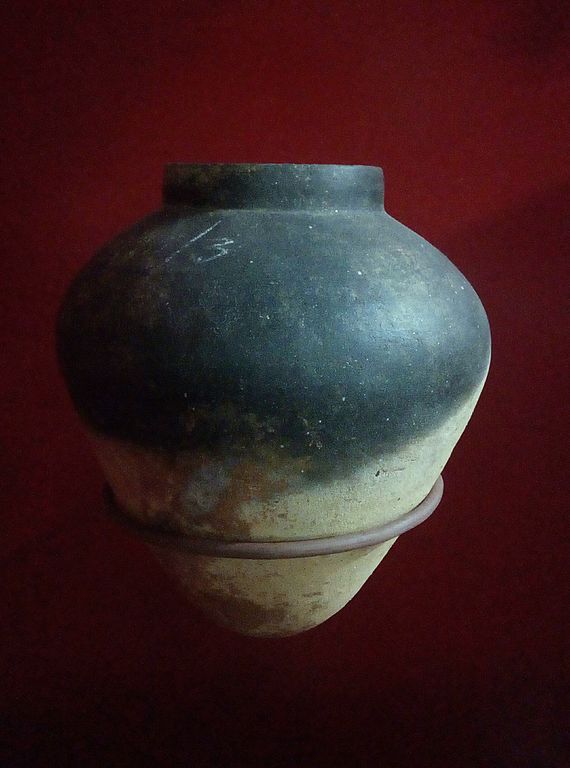
A pottery artifact from Harappa on exhibit at Krishnapuram Palace, Kayamkulam | Wikimedia
Building the Harappa and other cities of the Indus Valley Civilisation, like Mohenjodaro and Dholavira, would have been possible only when surplus food generated by collective production activity was available for those focused on improving technology. For these tasks — house construction, pot making, vessel making — are done by specialised artisans who practice their occupational tasks full time. Brick and pot makers, carpenters, ironsmiths and goldsmiths, or barbers are not involved in the direct food production, animal economy, or fishing. Farmers produce food for them, in return for implements like spades, ploughs, pots, cloth, and iron and wood instruments.
Since artisans depended on others in society for surplus food, there would have been a collective engagement with the production and distribution of commodities among agriculturists and artisans. As the Harappans went about building their civilisation, they would have been a collective social force, with the division of labour similar to that seen in present-day tribal and plain agrarian collective production processes.
Is not the Shudra mind a library?
The production and construction knowledge — of the Harappan vintage or of the present — is not considered as legitimate knowledge by Brahminical pundits.
In a recent article, Devdutt Patnaik, a writer on Brahmanical mythology, claims that Brahmins “were men who memorised and transmitted Vedic chants and Vedic rituals. Killing them was akin to destroying a library as writing was unknown in the Vedic times, and all chants were passed down by word-of-mouth. So, the concept of Brahma-hatya-paap, the grave sin of killing a Brahmin, gained popularity.”
Were the minds of Shudras and Dalits not human libraries which played a very fundamental role for the survival of human communities?
If Brahmins who memorised the Vedas were human libraries, what about those people who kept the whole production and construction knowledge in their memories and passed it on to several generations? Were the minds of Shudras, Dalits, or Adivasis not human libraries which played a very fundamental role for the survival of human communities? Historically it was these communities who grew food and engaged in production-related technologies. Few Dwijas — whether they be Brahmin, Banias, Ksatriyas, Kayastha, or Khatri — undertake these tasks even now.
Skilled workers continue to be part of modern Shudra, Dalit, or Adivasi communities. Their knowledge is not of myths. Artisans are both theoreticians and practitioners, with enormous skill and expertise. Experimentation is part of their profession. It is more real than the Brahmanical book-based based knowledge, which is transmitted by seniors to juniors merely by making them memorise mantras. This teaching of Vedic knowledge needs verification through re-recitation, but it cannot be verified whether that teaching has really produced concrete results in form of punyam — sacredness.
On the other hand, productive and constructive knowledge needs to be taught at two levels to produce concrete results. First, it needs to be explained theoretically and has to be memorised by the younger generation. At the second stage, it needs to be tested in the field. A senior pot maker first teaches a younger person the principles of how to make a pot, which then needs to be verified in practice — whether that method really produces a pot. Agrarian production needs a concrete study of the relationship between soil and seed in each geographical context. It does not give practical results merely from memorising the method of cultivation. That knowledge has to be tested in the praxis.
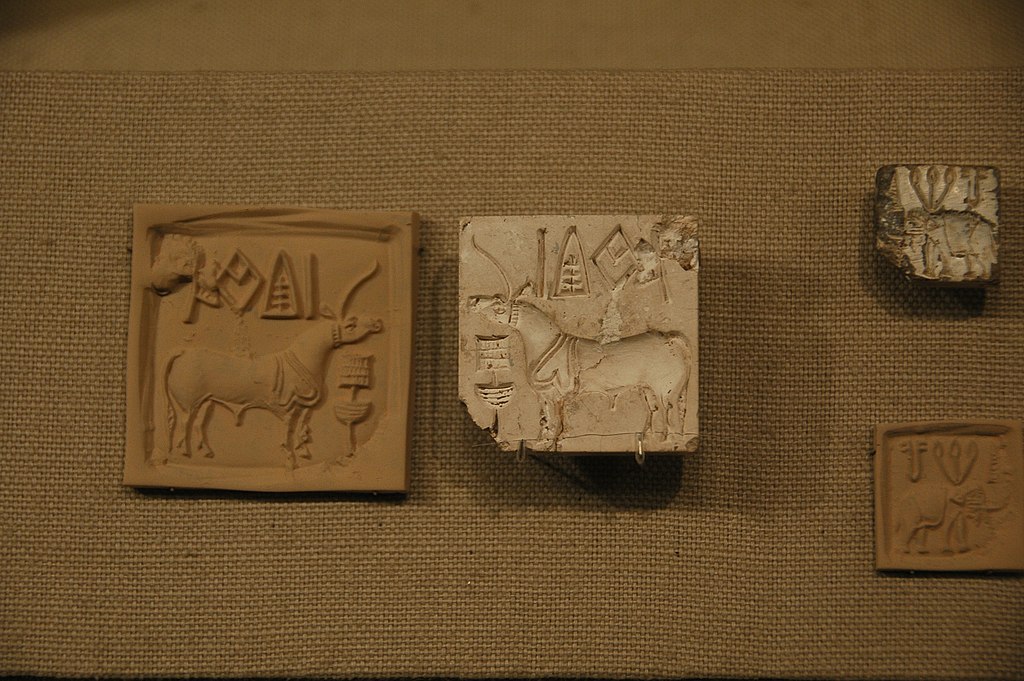
Stamp seals from Harappa engraved with images of animals on display at The Metropolitan Museum of Art, New York | Wikimedia
The Brahmanical idea of parampara has nothing to do with this knowledge. In fact, it is against this productive knowledge. Brahmanical writers never bothered to understand the importance of this knowledge. Hindutva Brahminism does not want that this knowledge to be brought into books and taught to young Indians.
Further, Brahmanical knowledge is not taught to all those who want to learn, whereas anybody could learn pot making or carpentry or animal grazing or tilling. A Brahmin is free to go to a Shudra to learn how to produce food. But they do not want to learn that knowledge or do the work of producing, as it is seen as polluting. This kind of spirituality is not a religion but superstition, and condems India as a nation to be superstitious. No Brahmin realised that this anti-production disease weakened and damaged the nation and its people for millennia.
Sanskrit as anti-spade
Spade civilisations constructed spiritual systems without undermining the animal economy and agriculture. They are organically linked to the language of communication. They produce texts that do not separate spade and book as antagonistic civilisational entities, as did the Brahminical culture. It is very possible that ritual work in the Harappan civilisation was carried out by almost everyone in the community, as they do in Indian villages even in our times, with no separate group whole time on that job. The present village practice of productive work and spiritual operations carried out by the same people seem to be a legacy of pre-Aryan Harappans.
In contrast, Brahmins became full time ritual specialists, keeping themselves out of production and construction work. This gave birth to an anti-productionist spiritual agenda that kept the nation stagnant. It was not an accident that the majority of the Indian population, the Shudras, Dalits and Adivasis, were kept away from reading and writing and exchanging ideas. Sanskrit was denied to the tillers of the land for their day-to-day productive life. It was a rishi’s language but not a language for krishi. The prohibition on the usage of Sanskrit was enforced by violent means: as evidenced by historical Shudra and Dalit productive life and by Brahminical texts like Manu’s Dharmashastra. Even into the early 20th century, no Shudra or Dalit could learn Sanskrit in gurukulas.
Brahminism, by separating the spade and the book, made Sanskrit a non-accessible language and stopped the growth of production and distribution of knowledge processes.
In this system of control and management not only Shudras, Dalits, and Adivasis, but India itself suffered a great civilisational loss. Brahminism, by separating the spade and the book, made Sanskrit a non-accessible language and stopped the growth of production and distribution of knowledge processes. Shudras, Dalits, and Adivasis in the past did not have a common, pan-Indian link language to exchange their ideas and knowledge. Even after they got literate in their local languages, their knowledge could not be communicated to people outside their linguistic zones. This restricted the spade civilisation’s mobility and innovations in knowledge and technology. Many innovations and technologies died out because their form, content and use value could not be transmitted beyond their locations through a common language.
This is the contribution of the Brahminical parampara, which the RSS and BJP wants to teach all young Indians.
Writing about productive minds
After Vedic Brahminism emerged, all the spade civilisation builders were declared as the fourth varna: the Shudras. The Shudra masses came to believe that Brahmins were God-sent people to rule over them spiritually. By consenting to be spiritual slaves and labourers, they handed over economic, social, and political power to the Brahmin. Even when they occupied royal positions, Shudra kings were controlled by Brahmin priests, prime ministers and intellectuals. They imbibed the Brahmanical superstition against Shudras, assumed Kshatriya status, and sought ritual acceptance from Brahmins. The famous case of Chhatrapati Shivaji is an example. This fear psychosis played havoc with the Shudra civilisation. Shudra kings were alienated from the rest of the Shudra masses and were only agents of Brahminism.
What the spade meant as a civilisational heritage was never written into books. That greater civilisational stream never got talked about in historical terms. Few Dwija scholars in the post Independent India felt the need to research the productive knowledge of the spade civilisation. The Shudra, Dalit, and Adivasi mind-library in its multi-dimensionality has not yet been fully recorded in writing. India as a nation lags because their productive thinking and application processes have not been engaged with.
Critical engagement with knowledge is possible only when productive minds are written about and analysed. Writing on Brahmin rishis and Ksatriya kings, without any relationship to the constant struggle with nature for producing goods and commodities, does not enlarge the social knowledge base. What constructs a civilisation is not books, but the collective labour power of people.
The RSS has become a modern instrument of classical Brahminism to keep Shudras, Dalits, and Adivasis under its grip, through spiritual, linguistic and also political power mechanisms.
The Shudra question does not just deal with historical oppression as an issue of human rights. The Shudra question is more about discovering unwritten production knowledge, skills, technologies, innovations, successes and failures in the process of human engagement with nature itself. The Shudra, Dalit, and Adivasi mind still remains unwritten because the Brahmanical mind thought that it was not worth writing. Now that the Shudras, Dalits, and Adivasis come to realise their great loss, the RSS and BJP do not want that knowledge to get into books for schools and colleges.
The RSS has become a modern instrument of classical Brahminism to keep the Shudras, Dalits, and Adivasis under its grip through spiritual, linguistic and also political power mechanisms. From power positions in Delhi both the RSS and BJP want to impose an educational syllabus on Indian civilisation that draws only from Vedic, Puranic, and epic sources, in which Shudra, Dalit, and Adivasi productive, creative and human centred life activities are absent. They do not want to allow future generations to know about the spade civilisation, but want only their book civilisation to be presented as Indian civilisation.
Shudras, Dalits and Adivasis should reject such one dimensional understanding of India, past and present. Unfortunately, some Dalit writers aligned with Hindutva nationalism have joined the stream of Vedic nationalism. In August last year the RSS ideologue and leader Dattatreya Hosabale — who comes from a Kannada Brahmin family background — launched Makers of Modern Dalit History, a book written by Sudarshan Ramabadran and Guru Prakash Paswan. The book claims that Veda Vyas, the composer of the Mahabharata, and Valmiki, the composer of Ramayana, were Dalits. The authors came to this conclusion by accepting the Brahmin view of history and civilisation.
How can Dalit writers construct Brahmins and Kshatriyas as superior people, without giving any dignified place for their parental community which was involved in various productive activities? How do these Dalit writers believe in books which do not discuss the sources of human survival but see labour as mean? How do Dalit writers believe that their own self is worthless? They might be great writers but they could in no way be called Dalit. This is ‘Dalit history’ coming from Dalits who have power positions at Delhi and Nagpur. They do not know that history does not change because they write from power.
Brahminical writers argue that Brahmanical heritage is the real civilisation and culture of India. But without production no civilisation or culture could develop. Even as the Brahmanical texts were being composed, the production and distribution of food and other production resources continued. If that was to cease life would have come to an end. Books would not have saved the nation if production and distribution halted.
It is the continued Shudra and Dalit culture of production and construction in the face of Dwija anti-production that brought India into the 21st century. The RSS’ attempt to push its favoured books as the only real nationalist syllabus, leaving out the whole history of knowledge of production and construction, will only push the nation backwards.
https://pagead2.googlesyndication.com/pagead/js/adsbygoogle.js?client=ca-pub-6388611372302111 -
Telangana CM’s idea of a ‘new Constitution’ is self-destructive. It echoes RSS propaganda
KCR himself has many streaks of Hindutva thinking. Perhaps the call for a ‘new Constitution’ was his way of appeasing the RSS while opposing Modi.


Illustration by Soham Sen | ThePrint Team
India always knew that there was, and perhaps still is, a threat to the Constitution from the Rashtriya Swayamsevak Sangh, RSS, because they are rooted in the ‘Sanathan Brahminic’ spiritual system. Their theoreticians and founding leaders disapproved of the Constituent Assembly, the drafting committee and B. R. Ambedkar heading it. K. B. Hedgewar and M. S. Golwalkar spoke and wrote about their disagreement with the Constitution as ‘un-Indian’. Their idea of ‘Indianness’ was a constitution affirming caste order, but not one that enshrined the steps to abolish the Varna system and drive the socio-economic system towards equality.
The Indian Communists also opposed the Constituent Assembly and attempted to oppose drafting of a democratic constitution calling it a “bourgeoisie attempt.” But fortunately, they too failed, and the present Constitution came into being on 26 January 1950.null
The Bharatiya Janata Party (BJP) government, headed by Atal Bihari Vajpayee, on 22 February 2000, constituted a national commission headed by Justice M. N. Venkatachaliah to review the entire Constitution, not just sections of it. This idea was/is different from amending its provisions — wise to suit the needs of the changing society. But the move was rejected by vast sections of Indians. The review committee died a natural death.
After the RSS/BJP came to power in 2014, they didn’t talk about changing the Constitution, but sections associated with the Sangh system keep talking about removal of the Constitution. Most people, though, have been ignoring this threat.
KCR’s ‘new Constitution’
A few days ago, Telangana Rashtra Samithi (TRS) president and Telangana Chief Minister K. Chandrasekhar Rao (KCR) said in a press meeting that he is opposed to the present Constitution and will start a movement to change it. While talking about the Budget, he asked the mediapersons present there on 1 February 2022 to write that he is “opposed to the BJP and Congress rule and also the present Constitution”. When some media people tried to ignore it, he said he was serious about it: “Let there be a debate about changing the whole Constitution” and “we need a new Constitution”. There are two ways we can approach this: either ignore such a plan by a small regional party leader’s idea of a ‘new Constitution’ for a country like India or see it as a serious attempt to appease the RSS while opposing Modi. Whichever way you look at it, one thing’s certain: this very talk by a sitting chief minister of a state is disturbing. Because no other chief minister has made such a proposal.
KCR himself has many streaks of Hindutva thinking. He is deeply religious; spends a lot of money on yagyas, yagas and kratus and temples. He is a serious follower of Vaishnava peetadhipathi (head of a Vaishnava mutt) Chinna Jeeyar. Though he comes from a Velama landlord (Shudra dominant caste) family, touches the feet of only Brahmins; sometimes prostrates at their feet in public. He touched the feet of Pranab Mukherjee, when he was president, and E. S. L. Narasimhan, when he was Telangana governor, as both of them were Brahmins. He did this in public at the airport, on podiums and other places. But he never touched the feet of Ram Nath Kovind (the present President, a Dalit) or Tamilisai Soundararajan (present Governor of Telangana, an OBC woman). He is also spending about Rs 130 crore state money on Yadadri temple reconstruction. It is this deep religious dimension of his personality that makes him get into the grey areas of questioning the Constitution He is also known for his feudal behaviour, even in public.
It’s not that KCR does not have a right to hold such views personally. But as a chief minister, who swore by the Constitution, cannot start a movement to change it. Many of its founders lived in jail for years for the sake of India’s freedom. They were part of the Constituent Assembly, which drafted this Constitution after a lengthy debate on every major issue that the country has encountered historically.
Issue with RSS’ Gana Rajya system
The other day Mohan Bhagwat, the Sarsanghchalak of the RSS suggested that there was a better democracy in the ancient Gana Rajya system. This is a new myth being spread with so-called nationalist propaganda. Several indirect remarks are being made about this ‘colonial model of Constitution.’ Gana Rajyas were small tribal units with equal distribution of power that operated on a local level. The best example of that is the Vajji tribal Gana Rajya democracy that existed during Buddha’s own lifetime. He protected it from Magadha state usurpation. That is not at all comparable with the modern constitutional democracy of India. (I’ve previously discussed this in my book God As Political Philosopher: Buddha’s Challenge to Brahminism)null
Our constitutional democracy is an unparalleled experiment in India and the world, with a population of this size (1.3 billion people). Any attempt to dismantle it is a dangerous proposition. All welfare schemes that the oppressed, exploited masses are receiving will be hampered. India, because of its caste system, untouchability and tribalism, did not have universal education before 1950. With the adoption of the Constitution, the exploited masses got opportunities that they had never known before. We are fortunate that Ambedkar crafted this Constitution and the other founders accepted it. Small, power-hungry leaders like KCR, or other Hindutva forces and ideological folds should not be allowed to steer off the Constitution.
At one stage in life, I too, was part of a Left-wing ideological force that was working for abolition of constitutional democracy. I was fortunate to realise quite early, by the time I wrote my well-known book Why I Am Not a Hindu in the early 1990s, that ideas like these were a self-destructive political and ideological process.
India needs the unending functioning of this Constitution, just as the American constitution has been working for hundreds of years. I am glad that people all over Telangana are disapproving of KCR’s idea and the opposition parties and social organisations are protesting against it. He will do well to remember that even for him, it is a self-destructive idea.
Kancha Ilaiah Shepherd is a political theorist, social activist and author. His most known books are Why I Am Not a Hindu: A Shudra Critique of Hindutva Philosophy, Culture and Political Economy, and Post-Hindu India: A Discourse in Dalit-Bahujan Socio-Spiritual and Scientific Revolution. Views are personal.
https://pagead2.googlesyndication.com/pagead/js/adsbygoogle.js?client=ca-pub-6388611372302111 -
The rise of Akhilesh Yadav amid Dwij jeers
Historically, Hindutva forces have treated the Shudras and Dalits and Adivasis as enemies. The minorities are only a late addition to their list of enemies. They created the caste system and nurtured it to perpetually enslave the food producers. This enmity of the Dwijs with Shudras is millennia old, writes Kancha Ilaiah Shepherd
Notwithstanding the results of the 2022 Uttar Pradesh elections, it is now clear that Akhilesh Yadav has emerged as a major leader in national politics. The way he challenged the top leaders of the Bharatiya Janata Party (BJP) and the Rashtriya Swayamsevak Sangh (RSS) and their massive network in Uttar Pradesh with courage, confidence and tact has made him a new hero of the youth across the country. Particularly, the youth of the Other Backward Classes (OBC) see him as a man who can challenge Narendra Modi in the future.
Narendra Modi projected himself as an OBC leader to win the lower OBC votes, particularly in Uttar Pradesh, in 2014. There is now a feeling that he has not been true to himself and the public. He never supported the OBC cause at any time in his life before the 2014 elections. The RSS/BJP networks, which never supported the Mandal Commission’s recommendations for carving out an OBC category for reservations, suddenly projected him as OBC for the sake of votes.
Akhilesh comes from an OBC family that has contributed greatly to the self-respect and political upward mobility of the OBCs in Uttar Pradesh. The nation knows his father Mulayam Singh’s stern handling of the Ram Rath Yatra led by L.K. Advani, in which Modi participated, as it tried to derail the Mandal train. In fact, Akhilesh – educated in a modern English-medium school and college system, including abroad – has proved to be far more deft than his father.
The BJP/RSS central and state governments have become pawns in the hands of what the BJP leader and former minister Arun Shourie calls tycoons in the industrial economy and of sadhus and sanyasis for whom abusing Mahatma Gandhi has become normal behaviour. As they are privatizing the Public Sector Units (PSU) to deprive the Shudras (OBC), Dalits (SCs) and Adivasis (STs) of jobs, the tycoons are taking over many of these industries at throwaway prices and investing their money in foreign countries. They are also buying massive houses in safe havens (Ambani house in London is just one example) for such a time when the nation realizes it has been hoodwinked. Vijay Mallya and Nirav Modi have already done so under BJP rule. Gautam Adani’s investments in many countries is well known. The private companies do not employ Shudras and Dalits and Adivasis. The private sector in India means jobs only for the Dwijs – Brahmins, Banias, Kayasthas, Khatris and Kshatriyas. The notion of merit has become a tool of manipulation.
On the other hand, the RSS/BJP associate sadhus and sanyasis are organizing their own Parliament (called Dharam Sansad) to declare war on the food producers and also on the democratic system. After the farmers’ struggle of 2020-21, the political discourse has shifted from the minorities to the Shudra, Dalit and Adivasi food producers. Historically, Hindutva forces have treated the Shudras and Dalits and Adivasis as enemies. The minorities are only a late addition to their list of enemies. They created the caste system and nurtured it to perpetually enslave the food producers. This enmity of the Dwijs with Shudras is millennia old.
ALSO READ: THE FARMERS’ PROTEST AND THE NEW SHUDRA CONSCIOUSNESS
The RSS/BJP associate tycoons swindle the food producers and the sadhu-sanyasis eat without participating in any productive activity. And in the RSS/BJP theoretical realm, the food producers are anti-nationals and the parasitical swindlers and consumers are nationalists. This is their theoretical paradigm. Ram Madhav and other Dwijs theoreticians write that this new paradigm of nationalism has ancient roots.
The time has come for the minorities – Muslims and Christians – to support the Shudras, Dalits and Adivasis. The 14-month farmer agitation and the deaths of 750 food producers during the agitation was treated as the puppy being run over by the Hindutva rath. The battlelines are now drawn between all the food producers of India and RSS/BJP Hindutva anti-farmers. The likes of Asaduddin Owaisi are out there to assist the RSS/BJP even in this battle – which is very sad for Muslim intellectualism.

Akhilesh Yadav takes out a cycle yatra in Lucknow
It is this new battle that Akhilesh, born into a productive caste, is fighting organically. If they shouted Ram Rajya, he countered with Krishna Rajya; if they claimed that the BJP was for the OBCs, he said the BJP was the biggest seller of lies. He explained to the people how in their own life experience lies are sold as truth. The Shudras, Dalits and Adivasis have not got anything from this regime. In the absence of Mayawati in the battlefield, as Rahul and Priyanka described themselves as Brahmins of yore, Akhilesh went to the non-Yadav OBCs and Jats and urged them to work for Naya Samajwad (New Socialism). He took the Samajwadi Party out of the confines of the Yadav camp and sidelined all those in the party who were known as corrupt.
Most praiseworthy is the way he handled the Hindutva media with firmness and dexterity. He has nullified the tendency of the media to paint the Yadavs as being inclined to gundagiri and managed to convincingly portray Thakur Raj as Terror Raj. The people have now come to see the difference between Akhilesh’s term as chief minister and that of Yogi, who loves cows more than humans.
The Hindutva media spread lies for decades, starting from the days of Mulayam and Lalu Prasad, that Yadavs are only good for grazing cattle but not for ruling. Now, Akhilesh and Tejaswi Yadav have disproved the theory that Mandalwalas are useless and meritless and only the Dwijs are meritorious.
Even amid the Modi-Shah threat of raids and deployment of muscle power, Akhilesh emerged as a leader who could give confidence to young, secular and liberal leaders all across the country. With an absolutely weakened Indian National Congress and the communist parties failing to provide a national alternative to the RSS/BJP, Akhilesh Yadav, powered by a successful farmer’s struggle, is a ray of hope.
https://pagead2.googlesyndication.com/pagead/js/adsbygoogle.js?client=ca-pub-6388611372302111
The rise of Akhilesh Yadav amid Dwij jeers
-
Telengana Armed Struggle Hero Bandru Narsimhulu Dies At 106
in Life/Philosophy — by Kancha Ilaiah Shepherd
On 22 January, 2022 a 106 years old Bandru Narsimhulu died in Hyderabad with a heart attack. Otherwise he was still active. When he was much active he entered into an agreement with Mahabub Nagar district Government hospital, to give his body for research use. On the very day of his death after his friends, political supporters and relatives saw his body the hospital officials took it away to dissect his body and brain, maybe to find out how he lived so long with good health.
It was this man during the Telangana Armed Struggle (TAS) between 1946-48 made waves for his militant gun fight as a Dalam leader against the landlords working to protect the Nizam state in Nallagonda district. Born on 2 October, 1915 at Aledu a small town on the way to Warangal from Hyderabad in a poor shepherd family, he was never sent to school and started working from childhood. He worked as an amali (heavy bag lifter) at a local rice mill. Along with his mother in very early age he fought against the village Bania business family that took away their small piece of land and won in the court.
His bold mother Badru Komuramma was said to be his inspiration. In all his communist life he was in jail for seven years. During the Armed Struggle he was arrested and tortured by the police yet Narsimhulu remained very strong willed person, constantly worked for his revolutionary ideological beliefs. He remained a Marxist-Leninist revolutionary. He made his whole family, if not forever, for a good number of years follow his path. As of now his youngest daughter Vimala, popularly known as Vimalakka, is a model revolutionary singer and political activist owning her father’s heritage. She is the most popular revolutionary female singer in India.
Narsimhulu lived and fought through several generations. When he started his rebellious life as an young labour boy Telangana was a feudal state with Nizam ruling with local Muslim, Reddy and Velama landlords as his agents. They were exploiting the people as if they were chattel. The Telangana bonded labour (Vetti-Chakari) system was one of the worst in India. Narsimhulu joined the early armed squads to fight landlords, but the Telangana state was integrated with Indian Union in 1948. A section of the communists still wanted to fight the Indian state. Narsimhulu was for that fight without leaving the arms. But finally, they surrendered the weapons in 1951 and decided to participate in the 1952 first general elections.
He lived through the electoral system himself, contesting the 1967 elections for assembly and 1984 for parliament from Miryalaguda. Telangana state went through several stages in his own life. It was merged with Andhra Pradesh in 1956. Several agitations for separation and bifurcation followed. Telangana state again formed in 2014 when he was still conscious and active at 99. On 2 October 2015 his hundredth birthday was celebrated in a major programme in Hyderabad with 101 songs, speeches and other activities. He was in good health by then. I was one of the speakers along with many others. For all of us Telangana Armed Struggle of the 1940s was a boon because that lead to the liberation of state from the feudal Nizam monarchy, though the last Nizam, Osman Ali Khan, was better than many of his predecessors, who established the Osmania University where many of us studied and became what we are.
Vimalakka, the most well known female singer in the revolutionary movement led the cultural team on that day. It was a treat of songs around people’s struggles as the old man sat and heard all through the programme. His energy at 100 was unbelievable. He himself drew all his children into the most risky Naxalite movement and his youngest daughter having got married to a CPI (ML) underground leader, Koora Devender, who came from a poor fishing family of Telangana, is well known face of the party with a vibrant cultural movement. She says ‘my father fed perugannam (curd rice) when I met him underground in my childhood and made me sing for people liberation’. She carries her father’s red-revolutionary flag with a melodious voice.
As revolutionary patriarchy would have it, he gave birth to five children and left to his wife Narsamma to work, feed and educate them. Added to that she also carried the burden of looking after her husband’s fellow revolutionaries. Thus Narsamma nursed him, children and the revolution and died much before him.
His was a long life that saw several ups and downs. His militant spirit that has shaken the Telangana feudals, including the Nizam Government and the Razakar army has remained the same, though they surrendered the weapons in 1951 because of a new assessment of the Communist Party of India that armed struggle would not succeed in the post-independent India. Later he joined the CPI (M) which reassessed the question of surrendering arms was a wrong step, but that party again split in 1969. Narsimhulu went with the new revolutionary force led by Tarimela Nagireddy and others.
Narsimhulu has every reason to become a rebellious and took to guns both for general anti-feudal and anti-Nizam atmosphere, and also as an young man coming from the shepherd (Kuruma) community who faced every day landlord atrocities and brutal exploitation, as the sheep and goats needed to be grazed in the open lands. Almost all the lands around villages in those days were claimed by the landlords (mostly Reddys and Muslims) as theirs. During the Nizam feudalism there were hardly any land records to separate private lands and Government lands. Whatever lands the landlords claimed were supposed to be treated as theirs. The general bonded labour apart, this kind of caste specific exploitation of the shepherds (consisting of two communities Kurumas and Gollas) drew many conscious shepherd youth into armed struggle. The first great martyr of TAS was Doddi Komuraiah in 1946 and he was a shepherd youth (Golla), who in the recent past, particularly after the Mandal movement became hero of Telangana along Chakali Ilamma (a washer woman heroine). Earlier the caste-blind communist parties treated them as marginal figures. But after the Mandal movement that situation changed as it started a new movement of re-writing wronged history OBC/Dalit/Adivasis.
The artisanal communities like Toddy tappers (Gouds), Golla-Kurumas, kummaries (pot makers), Chakalis( clothes washers), Shalas (weavers) and so on were horribly exploited by the landlords. From among the Gouds two prominent armed struggle leaders emerged–Dharma Bixam 1922-2011) and Vardelli Buchi Ramulu (1935- 2019). Thus Chakali Ilamma, Doddi Komuraiah, Dharma Bixam, Buchiramulu, Bandru Narsimhulu and Mallu Swarayam (only living armed struggle heroin born 1931) made history by fighting for our liberation in those difficult days.
In every communist party and group there is a conscious OBC/SC/ST force that does not allow marginalized treatment to their own heroes and heroines.
Now Narsimhulu’s own village has become a big town with booming real estate around. Though Telangana still sustains remnants of feudalism he fought against, it is mainly capitalist now. The post-globalization capitalist economy all around him when he died in Hyderabad does not leave any scope for agrarian revolution that he fought in his youth.
Kancha Ilaiah Shepherd is a political thinker, social activist , author and socio-spiritual reformer. His books Why I am Not a Hindu, Post-Hindu India, Buffalo Nationalism, God As Political Philosopher–Buddha’s Challenge to Brahminism, From a Shepherd Boy to an Intellectual and The Shudras–Vision For a New Path co-edited with Karthik Raja Karuppusamy are meant for the socio-spiritual change
https://countercurrents.org/2022/01/telengana-armed-struggle-hero-bandru-narsimhulu-dies-at-106/
https://pagead2.googlesyndication.com/pagead/js/adsbygoogle.js?client=ca-pub-6388611372302111


You must be logged in to post a comment.