-
Is The Congress On Suicide Course?
The Congress Party’s ideological steps remind us of a famous saying of Lenin “ One Step Forward, Two Steps Backward’ not in a tactical sense of retreating and advancing with a progressive strategy in a given unfavourable political environment, but retreating in a more consistent manner with blindfolded vision. The present crisis is much bigger for the party than that it faced in the 1970s, with the JP movement, emergency and formation of the Janata Party that overthrew the party.
The rise of the Bharatiya Janatha Party under the leadership of Narendra Modi and Amit Shah in 2014 created a most difficult and unfavourable political environment that the grand old party with a huge history of experience of conducting movements and running administration for decades.
It appears that the top leadership does not have the political stamina and capabilities to face the unexpected turn of events one after the other. Most of its old top leaders, Sonia Gandhi, Man Mohan Singh and P.Chidambaram and so on have no experience of mass mobilization in their life time or conducting any agitations. But they controlled power for ten years during the UPA period. Man Mohan Singh and Chidambaram were in power during P.V.Narsimha Rao period also. But they had no grass root experience and never involved in the mass mobilization. The present BJP, on the other hand, have many who worked at the ground level, of course, with negative ideology of the Sangh system.
The Congress got largest number of seats, though less than 50 per cent. in 2004 and 2009 because of weak BJP under Vajpayee and L.K Advani because they also did not think of addressing the caste question. Under their control over the BJP structures, the opinion was that discussion on caste was negative and harmful. Now that understanding changed in the BJP structures, to a large extent.
The BJP used the caste card more skillfully than the Congress in 2014 elections and continues to do so. It won two elections with full majority very easily. The Other Backward Classes (OBCs) are roped in as the backbone of the BJP vote power. But their communal agenda, that constantly puts the Muslims and Christians in spot, is creating negative environment, which is likely to create major crisis in the deeply globalized economy. The response of the Muslim and Christian world to the recent Masjid-Mandir issues has a potential to disrupt the economy and the society. But the Congress is still in its blindfolded anti-OBC agenda. Hence it is likely to lose 2024 election as well.
The anxiety of the nation as to what will happen in 2024 could be seen everywhere. But that anxiety does not seem to bother the Congress intellectual leaders who ruled India through Rajya Sabha for several decades.
In this background the Congress held a Chintan Shibir at Udaipur. It created some hope with some new declarations. Of which the social justice, one family one post and two term limit to Rajya Sabha nomination were very significant.
But within few days the ten nominations for the Rajya Sabha have shown that all the three declarations were violated. Of the ten seats seven were given to Dwija (top upper ) castes. The list is here under:
1. P Chidambaram – Shettiar, Dwija
2. Jairam Ramesh – Brahmin, Dwija
3. Rajeev Shukla – Brahmin, Dwija
4. Pramod Tiwari – Brahmin, Dwija
5. Ajay Maken – Khatri, Dwija
6. Vivek Tankha – Kayastha, Dwija
7. Ranjeet Ranjan – Khatri, Dwija
8. Imran Pratapgarhi – Muslim
9. Randeep Surjewala – Jat, upper Shudra
10. Mukul Wasnik – Dalit
Even if we consider Ranjeet Ranjan as an OBC as she is Pappu Yadav’s wife, six are given to the Dwijas. However, no OBC in the country considers her to be their representative.
Look at the way two of its intellectual senior most leaders, P.Chidambaram and Jayaram Ramesh, violated two declarations of Udaipur–one family one post and two term- Rajya Sabha nomination. Jayaram Ramesh is an all time Rajya Sabha ruler and the party’s known intellectual face, without showing any understanding of the history of caste system. He also does not seems to be interested in checkmating the BJP. He againt became a Rajya Sabha law maker.
Chidambaram is a leader who seems to think that without he being in the house the Indian parliament would not be able make laws, deliberate ideas on economy. But Modi said in many election campaigns that ‘hard work not Harvard’ should rule India. The Shudra/OBCs who represent the agrarian hard work seem to believe Modi and do not read the unending columns of Chidambram in English media. The direction is clear. Many OBC youth understand the meaning of hard work vs Harvard now. Chidambaram’s son is already an MP and has not shown any new wisdom in the parliament, worse facing money laundering cases time and again.
Why did they accept this renomination if they are really serious about the party’s future? These two leaders have the ability to get anything in such a weakened party structure. Could not they have promoted two young leaders from grass roots by sidestepping? They do not recognize caste as a institutional reality. But the BJP recognizes and the people are responding. Greater education seems to make leaders more blind to social reality. Their writings are a living testimony for their caste blind intellectualism, which will never help to revive the party.
Chidambaram has taken many decisions when he was Home and Fiance Minister that the BJP uses to their advantage today. Chidambaram declared that the Telangana state will be granted when K.Chandrasekhar Rao was in hunger strike, which has gone in his favour. The Congress lost power once for all in Telangana, it appears. He changed the FCRA ( 2010) policy. Now the BJP is using it for its advantage by destroying many small employed livelihoods.
After Modi claimed that he was an OBC chaiwala and mobilized OBCs and also labour, those who were not habitual voters of the Bharatiya Janata Party voted for the party both in 2014 and also 2019. In 2024 that looks to be the future.
Even this has not woken up the Congress intellectual Rajya Sabha rulers and law makers. They do not even seem to understand that the BJP, which was known as Brahmin-Bania party, is now turned into multi-caste party by promoting more and more Shudra/ OBCs/Dalits into the power positions. The Congress never made an OBC as the Vice-Chancellor of JNU. Now the BJP made a first woman-OBC vice-chancellor of JNU. Does not that work in their favour by influencing young Shudra/OBC stsudents? The BJP’s present cabinet and Rajya Sabha list also shows the new caste composition.
The two national parties must compete for promoting new social forces into the process of system running. But the Congress is refusing to compete. What diversity does this Rajya Sabha list present? What secularism the Congress leaders preach when they do not understand the productive castes that constitute 52 per cent get just one seat out of 10 (Surjewala, a Jat) even after 75 years of Independence?
Kancha Ilaiah Shepherd is a Political Theorist, Social Activist and Author. His books God As Political Philosopher, The Shudras–Vision For a New Path are well known.
https://countercurrents.org/2022/06/is-the-congress-on-suicide-course/
-
Human As Christian
-
St. Devasahayam’s Caste, Crucifixion And His Resurrection As A Global Shudra Saint
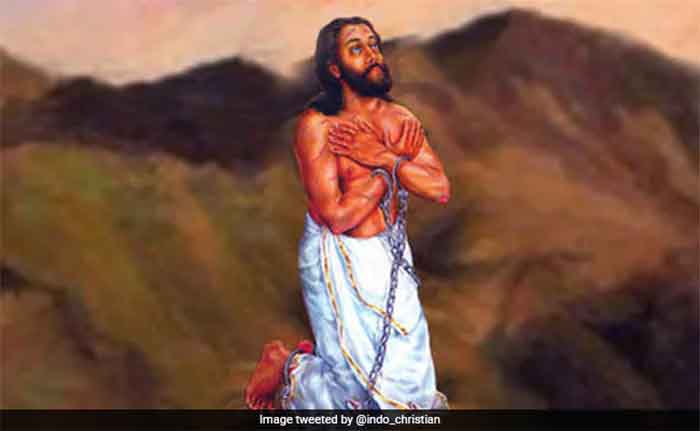
The canonization of the first ever layman of India, Devasahayam, or Lazarus (1712–1752) as saint, on the lines of Mother Theresa or on the lines of St.Peter, by the Vatican on 15 May, 2022 is historic in many strange ways. The human history of religions does not find a man of his kind of torturous life from birth, growth and death to become a saint in the Christian world. While he is being prayed for his sacrifice for the sake of other Indians by Christians, he is also being worshipped in Hindu mode with multi-flower garlands around the neck of his statue. Women and men beg for gifts (miracles in Chritian heritage) as they do in Hindu temples. One of the testimonies for granting his sainthood was of a woman who said “ he turned a dead foetus in her womb into a living baby after she worshipped him”.
Why his birth itself began with a unusual torture? He was not born to a man and woman in proper marriage, nor was he born to a virgin like Mary with her consent to God’s gift in the form of Jesus, before she was married to Joseph. Jesus lived with his mother and father, who adopted him knowing pretty well that that baby boy was not the son of any man on the earth. He was the son of Mary and Mary alone. But Joseph protected him from getting killed by Herod, the king and nurtured him in a family. He trained him to be a carpenter and educated him in Jewish history and scriptures till his 30th year.
Jesus’ birth in that form only tells that the future world may witness a woman who could procreate children without having an intercourse with man and that religions have to adjust to such a scientific birth of humans as well.
BORN IN SAMBANDAM
Devashayam was born in a system of wretched caste spiritual, cultural and Brahmanic superstitious hegemony over Shudra women. His mother was Devaki Amma, who belonged to the Shudra agrarian productive caste called Nair. He was an illegitimate child of a Brahmin priest working in a Hindu temple called Vasudevan Namboodiri. He was working in Adikesava Perumal temple at Thiruvattar. The relationship between Devaki Amma and Vasudevan Nambboodiri was not because of a love affair between them nor because they were married. She was not a prostitute earning money out of sex trade. Her sexual submission to Namboodiri was because a casteist coersion by Brahmins of that region to have sexual relations with Nair woman at will and leave the children to be nurtured by mother, without any responsibility. Such a relationship was called Sambandam (relationship between a Brahmin man and a Shudra woman) in that area.
The caste ritual system and the state power allowed such sambandam only by a Brahmin man and Shudra woman not a Shudra man with a Brahmin woman. If such reverse Sambandam was found, very harsh punishment was given to the Shudra man and Brahmin woman, including killing them. When Devasahayam as a Shudra was undergoing this human torture as child and as adult the Manu Dharma Shastra legal codes were being implemented by states under supervision of the Brahmin priestly forces in the Indian subcontinent.
WHY NEELAKANTAN PILLAI REBELLED?
The torture part of the Brahmin led sambandam was that the children would know who their biological father was, while living with mother at her parental home or outside alone doing agrarian works. Though many Nair families accepted such illegitimate children of their daughters and gave them some property rights, but for children born in sambandam, who live in families where there were other children with father and mother ( of his/her maternal uncle’s and so on) living together, it was a life of worst toruture. The worst part of it was that life was forced on the children like Devasahayam (before conversion Neelakantan Pillai) as god given. If he were to get the patrilineal heritage his last name should have been Nambbodiri. But he had to live with his mother’s caste name Pillai even in the eighteenth century. Some writers justified this kind of Brahmin coerced illegal fathering as matrilineality, but it is a total misnomer. In this system not that the woman does not know who impregnated her, irrespective of her Will. She and her children knew the whereabouts of the man who was responsible for their fate. The the families of that region did not treat that kind of child as a product of a rape by an unknown man. The man is known and he lives in the same village or town with greater respect than of the woman’s family. In the case of Devasahayam’s father he was a priest of a Hindu temple and Hinduism treated him with more dignity and respect than an ordinary Brahmin. But his son did not inherit that dignity. He and his mother remained undignified Shudra.
They had to suffer that life of so called god given wretchedness without revolting against it. Devashayam rebelled against that wretched inhuman life in Hinduism and embraced Christianity. This was seen as the greatest crime both by the priestly class and the state that was under the control of a Ksatriya ruler who gave him the maximum punishment that Manu Dharma prescribed. The Manu Dharma Brahminic laws were more cruel and brutish than Roman laws that punished the slaves and those who embraced Christianity in the first two centuries before Constatine himself became Christian and his mother, Helena, became a devoted follower of Jesus and visited Israel and built many churches, including the tomb of Jesus at Golgotha. Devashayam was killed by applying more cruel methods than the Romans had applied.
WHAT DID HE DO AFTER HE BECAME A CHRISTIAN?
As a Christian he seems to have realized that it was the caste system that led to a cursed life of millions of people around him. He started interacting with lower castes than that of Nair caste and untouchables. The Nair caste was/is a top layer of the Shudra agrarian caste in Kerala even now. There were landlords, small farmers and agrarian labour also in that caste. But in caste location the Nair caste was/is higher than all other Shudra artisan and agrarian castes. At the same time the Nairs had no right to wear sacred thread. They had no right to read the Sanskrit books and become priests in Hindu temples. It was the 8th century Adi Shankara who handed out this life to the Shudras and Dalits.
Devasahayan started breaking that caste system. He was said to have mingled with all castes and ate food with all caste people (2). It was like Jesus mixing with Samaritans, Gentiles and prostitutes and so on in Israel.
According to his Wikipedia bio ‘ that the Brahmin chief priest of the kingdom, the feudal lords, members of the royal household and the Nair community brought false charges on Devasahayam to the Dewan, Ramayyan Dalawa”. (3)
Why should Nair community which was suffering both Shudra historical slavery, and in addition the most humiliating sambandam man-woman relationship, joined the priests and the king in torturing and killing a liberator? This consciousness of the Shudras in India made this land a perpetual slave land. Devashayam had shown the way with his death as Jesus has shown the way for the entire human slavery in the world about 2000 years ago. Till today the Shudra spiritual slavery continues. The Nairs of Kerala, who are perhaps most educated Shudra community in India, still accepts the spiritual slavery as given and divinely ordained.
THE PUNISHMENT
What was the treatment that he got after he became Christian both from the priestly Brahmins and the king of the Travankore state? He was living in Maharaja Marthanda Varma’s kingdom and was also serving the state in some significant position when he embraced Christianity and got crucified in his 40th year, in 1752. Varmas were Ksatriyas who ruled the Tamil-Malayali region for a long time. Ksatriyas ruled India as part of their caste divine right granted by Brahminism in their books. They were no less cruel and inhuman toward Shudras and Dalits (the food producers of India) than the Roman rulers in Israel of Jesus’s times towards the masses. The Brahmins made the laws for the Ksatriya ruled states, in the whole of Indian subcontinent, as the Pharisee council at Jerusalem did for the Roman rulers at the time of Jesus’ crucifixion. Though the Roman ruler, Pontius Pilate, did not want to be very harsh towards Jesus while giving him the capital punishment, the the priestly council was merciless and brutish in awarding crucifixion punishment with all the cruelties that were available in their armours–beating, kicking, putting thorny crown on his head, making him carry the cross all along the road up to the crucuixion point–Golgotha.
The main Brahmin ancient law book Manu Dharma shsastra says a Shudra slave has no scope for liberation from the control of Brahmin authority. One of its codes said “Even if a Brahmin frees a Shudra from slavery the Shudra continues to be a slave as he is created for slavery. Nobody has the right to free him”. (Manu VIII-50,56 and 59) 1. Because of such a law the Shudras were afraid of leaving Hindu fold. Even after leaving the Brahminical Hinduism they decided to kill him in the most cruel form of toture. The small film made after he was canonized ( https://www.youtube.com/watch?v=WdnUo9eqbS8) shows how brutal it was. India did not have the method of nailing persons alive to the cross like the Romans and Israelites had. But the Indian rulers and the priests evolved their cruel methods of execution. One could see how such barbaric methods in killing Devasahayam were used.
NO RIGHT TO LIVE AFTER LEAVING HINDUISM
Devasahayam had no right to freedom even after becoming a Christian. In fact such an escape was seen as a bigger crime. The mental freedom of thinking was destroyed among the Shudra and Dalit population for millennia. But Devasahayam decided to break that historical shackles even though he knew that he would get the cruellest punishment for that.
He was accused of working to destroy the caste system and untouchability by sharing food with Dalits and other lower castes like fishermen/women, carpenters, shepherds, potters, iron and gold smiths and so on. The caste and untouchability were treated as sacred and god given by the Brahmin priests and the state mandated to protect that system. Devasahayam was seen as the most dangerous breaker of the caste system. He was also accused of indulging in conversions, and treason for giving information to foreigners. He was first arrested and put in a torturous solitory cell, as Jesus was put. After three years torturous imprisonment, because of the pressures from the Europeans, he was exiled with a systematic process of torture and humiliation.
Devasahayam was beaten up mercilessly and was made to sit on buffalo, as the buffalo was described as an animal of death and hell (Yama) in their books, facing backwards. He was whipped all along the ways in the villages in which he was made to pass through.
It is this buffalo that produces the largest amount of milk in the Indian subcontinent. Since it is a black animal it was treated by the Brahmin priests and the Ksatriya rulers as a devilish animal. But for Devasahayam it became a God given vehicle as the donkey was the vehicle of Jesus.
While the buffalo was moving on, he was beaten to bleed. For several days he was made to undergo the torture sitting on the bufalo without giving water and food. His wife was forced to watch how he was being tortured and suffered. Finally they shot him dead in a forest amidst rocks and bushes. But it is said that as he was being taken on buffalo from village to village to the productive masses, particularly the fishing community became his followers, as the fishing community on the banks of Sea of Galilee became the followers of Jesus.
RESURRECTION IN 2022
The idea of resurrection worked in the Devasahayam’s case differently. After five days of his death his body was found by his followers, may be because his caravan of torture was not to be seen and heard by villagers. They finally located his dead body. They took it to the church of Kottar Nagercoil. They entombed him, perhaps amidst crying and veiling. He inspired millions from that tomb. The Christians prayed at his enchained statue and the non-Christians worshipped by garlanding his statue. But ultimately he resurrected to become a St like Peter and Paul in 2022.
Kancha Ilaiah Shepherd is a socio-spiritual reformer and author in a caste ridden India. His books Why I am Not a Hindu, Post-Hindu India, Buffalo Nationalism, The Shudras–Vision For a New Path, Untouchable God, God As Political Philosopher–Buddha’s Challenge to Brahminism are meant to carry on the reform
References
1) https://velivada.com/2017/05/31/casteist-quotes-verses-manusmriti-law-book-hindus/.
-
JNU’s VC is Celebrating ‘Herstory’ With Men, a ‘Civilisation State’ With No Rights
If the OBCs, Dalits and Adivasis were to follow Santishree Dhuilipudi Pandit, they would have to give up the agenda of social justice and forget about the rights recognised in the constitution.

Shantishree Dhulipudi Pandit. Photo: Facebook
The vice chancellor of Jawaharlal Nehru University has attempted to construct a strange theory of the Indian state. In an article in the Indian Express, which was part of a talk she gave to a Delhi University conference, Santishree Dhulipudi Pandit held forth on India as a constitutional state and ‘civilisation state’, Indian feminism and methods of writing ‘her’ story (herstory) and ‘his’ story (history). However, her creative social science theorising raises more questions than it answers.
The moment she became JNU’s VC, Pandit declared that she had broken two glass ceilings: she was the first woman and the first Other Backward Class (OBC) person to hold the job. This I thought was good news. But when I read her article, I realised her thinking runs against the interest of both OBCs and women. Let me explain why.
Pandit writes, “Reducing India to a civic nation bound by a constitution disregards its history, ancient heritage, culture and civilisation. I would place India as a civilisation state.” In other words, as a female intellectual coming from an OBC background, she is telling us that there is no place for constitutionally-mandated civic rights for either women or the Shudras (OBCs) as there were none in the ancient ‘civilisation state’ of India that she celebrates.
Pandit also said that history was ‘his’ story and that there has been no ‘her’ story written so far. One would have expected her to elaborate on the women who made herstory, which would have helped us understand her own new mode of writing about Indian civilisation by foregrounding women’s creativity, knowledge, bravery and so on. But all she did was to mention the two very conventional mythological names of Sita and Draupadi: one whom she lauded as a ‘single mother’ and the other as wife of five husbands with her own autonomy. The popular writer Chitra Banerjee Devakaruni made these points a few years ago. Why does the scholar Santishree’s herstory end there?
In her article, Pandit mentions only male thinkers of modern India – Subramanya Bharati of Tamil Nadu, Balagangadhara Tilak, Gopal Krishna Gokhale, Eswar Chandra Vidyasagar, Mahatma Gandhi, Kandukuri Veeresha Lingam Pantulu and so on. There is not a single modern woman in her herstory. Strangely, all the men she names are Brahmin-Bania. Neither Savitribai Phule, not Pandita Ramabai, Jilukaribai or even Sarojini Naidu – who worked with Gandhi – exist in the JNU VC’s herstory. Pandit’s herstory does not talk about Periyar Ramaswamy Naikar of Tamil Nadu, Narayanaguru of Kerala or Mahatma Phule and Ambedkar of Maharashtra, the state from which Tilak and Gokhale came and who – according to the JNU VC – made bigger history, if not herstory, than them. Human equality was Phule and Ambedkar’s focus, a subject which was totally negated in Pandit’s ‘civilisation state’.
If the OBCs, Dalits and Adivasis were to follow Santishree Dhuilipudi Pandit – the new organic intellectual from an OBC background who came into the limelight thanks to the current power dispensation in Delhi rather than by her writing of herstory – they would have to give up the agenda of social justice. They would have to disregard the constitution that gave them rights to education, employment and equality, rights that the Vedas and Dharmashastras denied. They would henceforth seek to recreate ‘civilisation states’ like the classical janapadas and mahajanapas or monarchies, which constructed caste and untouchability and executed them through the punitive apparatus of the ‘civilisation state’ with the guidance of the Vedas, Puranas, Kautilya’s Arthashastra, Manu’s Dharmashastra and so on.
Does Pandit, as vice chancellor of India’s leader university in the social sciences, seriously want students to debate the merits of the present constitution vis-a-vis the classical ‘civilization states’ of ancient India? Is she aware of the fact that Bahujans were never allowed to take part in such debates in the ancient ‘civilisation state’ she valorises?
Her proposal that henceforth we should write herstory and not history is a positive, feminist one but why should herstorians only draw, as she did in her article, on the knowledge reserves of men, and that too of only Brahmin men? As an OBC intellectual heading such a great university, does she not want her students to critique the caste system? I ask this question because history and herstory both tell us that no civilisation state in ancient India tolerated such a critique or allowed it to take permanent root. Is there any place in her world for the thinkers who worked to build an egalitarian India by abolishing all inequalities, including caste and gender based inequalities? Is there a place in her regime to think afresh that civilisation in fact starts with hands and implements producing food from the earth and not with the Vedas? We will know the answers to these questions only when Pandit elaborates on her new theory of herstory.
One good thing is that she is a believer in E.H Carr’s facts as ‘sacred theory’, as against the existing trend of interpretations are ‘sacred theory’. By citing Carr, a foreign scholar to boot, she is in a way disagreeing with the present ruler’s worldview – which functions not on facts but faith. The movements the BJP deployed in the post-Mandal phase of Indian politics are based on the idea that faith is more sacred than anything else.
One gets the feeling that the JNU VC wants to write herstory based on Sita’s single mother battle. Once the Rama temple in Ayodhya is complete, the present regime will start implementing its version of Ram Rajya with a new name called Hindu Rashtra. What will be the fate of Sita and Draupadi in that state? Does she expect many newborn girls to be called Draupadi, a name we rarely encounter today? The JNU VC surely knows Sita did not become a single mother because Ram ceased to exist as her husband. Rather, the caste law of Rama Rajya forced him to abandon his pregnant wife.
I hope the students and social scientists at JNU engage themselves with some of the questions their VC’s article raises. In particular, one hopes the Akhil Bharatiya Vidyarthi Parishad takes a cue from her and enters into scholarly discourse through reading and writing rather than keeping a watch on who eats beef or meat.
Whether one agrees with her or not, Pandit has done well as a university vice chancellor to speak and write about social science issues. Since the present regime came to power in 2014, those in positions of authority have rarely given the rest of us the chance of engaging with ideas and theories. In my view, this is one of the primary tasks of a vice chancellor. In the recent past, sadly, VCs have engaged mostly in non-academic work to please their masters above.
I seriously hope Santishree Dhulipudi Pandit continues with her academic discourse in the future too.
Author’s biographical note: I am a Shudra OBC retired professor from Osmania University Hyderabad, who failed to get a seat in M.Phil course in JNU in 1976
-
For long, Congress wavered on social justice. Now it’s waking up to BJP’s OBC politics
Many wanted Congress to focus on secularism, diversity and pluralism. But party has realised that the Shudra/OBC/Dalit/Adivasi aren’t interested in these abstract ideas.
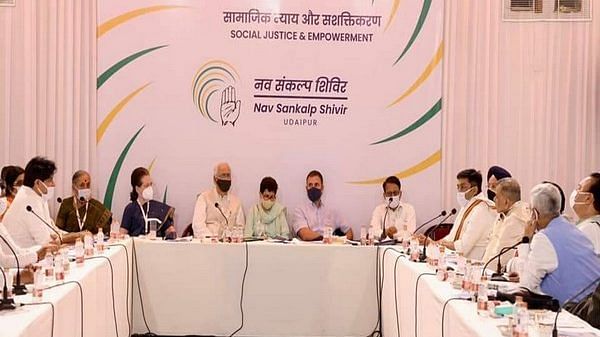
Congress leaders including Sonia Gandhi and Rahul Gandhi at the Nav Sankalp Chintan Shivir at Udaipur, Rajasthan. (Photo Credit: Twitter/Salman Khurshid)
The Congress’ revival strategy has gained a potent factor. At the recently held three-day Nav Sankalp Chintan Shivir, or New Resolution Brainstorming Conclave, in Rajasthan’s Udaipur, the Congress constituted a social justice committee headed by senior leaders Salman Khurshid and K. Raju. The committee has recommended several social justice measures to restructure the party.
The panel, according to media reports, has recommended “50 per cent representation to Scheduled Castes, Scheduled Tribes, OBCs and minorities at all levels in the party organisation”. It has also recommended fighting for OBC reservation in Parliament and state assemblies, and “quota within quota in the women’s reservation bill” with “proportionate reservation for SC, ST and OBC women”.
More crucially, the social justice panel has recommended caste-based reservation in the private sector. This is a difficult area for the ruling Bharatiya Janata Party (BJP). Although the BJP twice came to power in large part because of the OBC vote, it has not taken any step to improve the presence of OBC/SC/STs in the private sector. In fact, the Narendra Modi government’s massive privatisation drive severely undercuts their presence in the employment sector.
While the Congress’ top decision making body, the Congress Working Committee (CWC), didn’t ultimately approve the panel’s recommendations, the fact that such a reformative social justice programme has found a footing in the party’s thinking could well decide its future politics.
As Hindustan Times reported, Congress leader K. Raju said the quota policy has “not been rejected”. “Not everything can be decided in one meeting. The quota for SC, ST, OBCs and minorities will be taken up in the next phase of internal reforms,” he said, as per the newspaper.
A major shift
A social justice package like this is the maximum that a national party like the Congress could come up with. Significantly, the Khurshid-led panel also recommended that the Congress should fight for enumeration of caste census, which the BJP has been ignoring. It now openly, and categorically, challenges the BJP, which is in power largely because of the OBC vote.
If the Congress does make a resolution on these recommendations, its composition and ideological position will undergo a metamorphosis unlike anything we have seen since Independence.
Unsurprisingly, the social justice agenda of the Congress has shocked not only the BJP but also those who don’t want social justice issues — particularly the reservation question — to take centre stage in the national polity. The Congress’ brainstorming teams were sympathetic to the view that the party should seek power by focussing on issues like secularism, diversity, pluralism, and anti-communalism. But the Shudra/OBC/Dalit/Adivasi masses are not interested in these abstract ideas anymore. Clearly, the Congress has realised this.
And the credit for this goes to Rahul Gandhi, who is the Congress’ only mass leader.
Ignoring social justice
The Congress has long wavered on taking a strong position on the social justice agenda because of its internal structural dilemma. Though the Congress ruled India for 15 years after the Mandal Commission’s report was implemented by the V.P Singh Government — five years of P.V. Narasimha Rao rule and 10 years of Dr Manmohan Singh’s tenure — the party was mainly under the hegemonic grip of anti-social justice elite.
Most of its elite leaders were boardroom managers but not vote mobilisers. Manmohan Singh, P. Chidambaram, Jairam Ramesh, Mani Shankar Aiyar, and the late Ahmed Patel were managing the government and the party, with a negative view about the Mandal forces at the ground level. Rajya Sabha route became the power politics of the elite. Now that route has been cut short for two years.
After Rajiv Gandhi’s victory in the 1984 Lok Sabha election, when the party won 414 seats in the backdrop of the assassination of Indira Gandhi, the Congress effectively became a Doon School team. The victory made the Doon School team overconfident, causing internal crisis and the rise of V.P. Singh as a new national leader. Though the Congress was able to form a minority government under the leadership of P.V. Narasimha Rao in 1991, Rao was no mass leader to take the Congress forward.
The Mandal movement was opposed by the anti-reservationists, who raked up a merit theory. And Rajiv Gandhi’s arch enemy V.P. Singh implemented the Mandal Commission Report, much to the annoyance of Rajiv and his elite team. They opposed the OBC reservation with all their strength. Not a single person in the Congress’ elite team was from the Shudra/OBC/Dalit/Adiavsi background. Both the Congress and the BJP misjudged the aspirations and strength of the Shudra/OBC youth and the masses.
During the ten years of UPA rule — 2004 to 2014 — some positive steps were taken to satisfy the Mandal forces that were getting more and more organised. But the Congress did not give any visible position to any Mandalite either in the government or in the party. It mainly depended on the Dwija, minority (Muslim and Christian), Dalit and Adivasi electoral base and Dwija leaders to run the government.
By 2014, there was no leader in the Congress who could effectively communicate to the masses in rural India as to what they did in their ten-year rule. It solely depended on young Rahul Gandhi to fight the well-organised RSS/BJP across India. Manmohan Singh did not address any major public rally as he was never a mass leader. Such a Rajya Sabha PM was no match to the BJP, which had positioned its understanding of Mandal forces and brought Narendra Modi with an OBC card.
A late realisation
The rise of Narendra Modi and consecutive electoral losses has perhaps made the Congress realise that the OBC won’t align with the party unless it restructures itself.
Given the numbers of the Shudra/OBC — 52 per cent as per the Mandal estimation — winning a general election without addressing their concerns is unthinkable in today’s politics. The Congress seems to have realised that the old ideological agenda of secularism, pluralism and minoritism is not going to bring OBC votes.
It remains to be seen if Rahul Gandhi’s image among the social justice forces will change. He will have a tough time bringing on board the group opposed to his and the Khurshid-led panel’s social justice measures. Though for the sake of Indian institutions, which are under threat from communal forces bent on eroding them, the Congress will have to mount a struggle for social justice and re-democratisation of the country’s constitutional polity. Not only will it pull the country back from the dark path it is on, but it will also put the Congress back on the national stage. For what it’s worth, the party’s Udaipur Conclave has made a start.
Kancha Ilaiah Shepherd is a political theorist, social activist and author. His most known books are Why I Am Not a Hindu: A Shudra Critique of Hindutva Philosophy, Culture and Political Economy, and Post-Hindu India: A Discourse in Dalit-Bahujan Socio-Spiritual and Scientific Revolution. Views are personal.
https://pagead2.googlesyndication.com/pagead/js/adsbygoogle.js?client=ca-pub-6388611372302111 -
Public intellectuals must end their hypocrisy on English education for the masses
In a closed-door meeting with public intellectuals, Rahul Gandhi told me he’s not opposed to English medium education in government schools. But surprisingly, a Left intellectual disagreed.

COURTESY: PTI. IMAGE FOR REPRESENTATION.
Public intellectuals play a very important role in a democratic system. A public intellectual challenges the policies they think will go against the people’s interests, and keeps on proposing pro-people policies and theoretical propositions. India needs more honest public intellectuals becasue of the historical, spiritual, social, and political discrimination of the SC/ST/Shudra communities, and women. Specifically, when it comes to education, many public intellectuals take a hypocritic stand, where what’s good enough for their own children is not what they propose for the children from historically marginalised communities.
The education sector has played a most powerful discriminatory role in Indian history, keeping out marginalised people from getting an education that can lead to material improvements in their lives. To correct this, the constitutional democracy is opening up many channels of anti-discriminatory policies, and the school and university education system is constantly undegoing shifts and changes in this process. Currently, one of the important issues across states is whether governments should promote English medium education in schools.
On May 7, 2022 Rahul Gandhi, the former Congress president, wanted to meet some public intellectuals and activists in Hyderabad. I was also invited to meet with him, of course, without any specified agenda. I went to the meeting with a view to ascertain his opinion mainly on two issues. Firstly, his view on English medium education in government schools, along with the question of development of government school infrastructure to match private schools. Second, to know what his Other Backward Class policy is. Both these issues have immediate relevance to Telangana, where he addressed a big public meeting on May 6 at Warangal. In that meeting, the Telangana Congress made a declaration for farmers, but on other issues, they were silent.Featured Videos from TNM
At the meeting, I asked Rahul Gandhi what his stand on English as a medium of education in government schools was. He said, “I am not opposed to the English medium in government schools.” He then asked Revanth Reddy, the Telangana Congress president who was also present in the meeting, as to what the party’s state unit’s stand was. The KCR government has already announced English medium education in all government schools from the 2022-23 academic year for classes 1 to 8. Revanth Reddy also said that the Telangana Congress is for English medium in government schools.
That Rahul Gandhi, at least in private, agreed that he is not opposed to the English medium in state government schools is important. In 2015 when I met Siddaramaiah, the then Chief Minister of Karnataka, in his official residence for a one-on-one meeting and told him that he should think of introducing English medium in Karnataka government schools, his response was two fold. One, his high command would not accept such an educational policy, he said. And secondly, Kannada intellectuals including UR Ananthamurthy and Girish Karnard had been opposing any such move in the state for a long time. Hence, he said, high profile intellectuals and the media will create a problem for his government. Instead of introducing English medium in school education, which would have brought more votes, he chose to rake up the Tipu Sultan issue. That ended up strengthening the BJP.
Rahul Gandhi is a driving force of the Congress party’s high command and to know his stand is important in the context of the BJP’s anti-English posture.
However, in that closed-door meeting last week, one public intellectual who was also an invitee intervened and said, “I am opposed to introducing English medium in government schools.” Rahul Gandhi asked him why, and he replied, “Since I studied in the Telugu medium, I think studying in the Telugu medium will be better than studying in the English medium.”
I was surprised at this position of someone who is known as a Left intellectual. The problem with those who take this position on the question of English medium in state government schools is that they educate their own children in the best private English medium schools that they can afford. I knew that the man who opposed English medium education in government schools educated his own sons in one of the best English medium schools in Hyderabad.
It’s not just one public intellectual who opposed English for rural children in one meeting — this is a hypocritical stand taken by several public intellectuals without concern for how it practically affects the futures of SC/ST/Shudra children.
Public intellectualism in Euro-American countries emerged as a Left-Liberal profession to spread the ‘Idea of Honesty’ and fight for human equality in every sphere. A public intellectual is neither a politician nor an institutionally trained bureaucrat to say one thing in office and do something else in personal life. Particularly on issues of public concern, they have to have an honest, committed stand, which should not drive the society and the state in opposite directions. For a public intellectual, what is good for them should be seen as good for others, and they must fight for others’ benefit. Such a consistent stand of public intellectuals pushes politicians to a new position in the interest of the larger masses.
Intellectual dishonesty is a historical legacy of Brahmanism. The productive masses suffered historical loss and backwardness during the period of Sanskrit hegemony, which was controlled by the Dwijas, mainly Brahmins. Now, this kind of intellectual dishonesty about English language education for the poor keeps the rural and urban working classes away from English education, which will confine them to the margins of the system.
The Vice President of India and a popular right-wing leader, Venkaiah Naidu, and the Chief Justice of India NV Ramana, have expressed similar opinions. They have repeatedly said in public that introducing English medium education in government schools is a wrong decision. Naturally the reference is to the decision of Jaganmohan Reddy government in Andhra Pradesh and the KCR government in Telangana. The AP government pushed the policy by overcoming the political and judicial hurdles. The Home Minister of India, Amit Shah, went one step further and said that people of all states must communicate with each other in Hindi and not in English.
But to my surprise Rahul Gandhi without hesitation said he was not against states deciding about the medium of instruction issue in government schools. And I hope that his party at the national level will formulate a language policy that gives freedom to the states as he believes that India is a ‘Union of States’ not a unitary state.
If the Congress comes to power in Telangana and a grand old national party like the Congress goes along with the view that Rahul Gandhi expressed in that closed-door meeting, the nation will enter a new phase of education policy. Naturally, the BJP also will have to come around.
Kancha Ilaiah Shepherd is a political theorist, social activist and author. He has been campaigning for English-medium education in government schools across the country for the last 30 years. Views expressed are the author’s own.
https://pagead2.googlesyndication.com/pagead/js/adsbygoogle.js?client=ca-pub-6388611372302111 -
An Open Letter To Muslims And Christians Of India
As some of you are aware, I am a Shudra intellectual and activist, working and writing to change the unequal conditions of the Dalits, Adivasis and Shudras (including the Other Backward Classes) in the Indian Brahminic Hindutva rule. My books Why I am Not a Hindu, Post-Hindu India and Buffalo Nationalism have been attacked by the Brahminic Hindutva forces and also dragged to courts, up to the Supreme Court of India. Time and again I was called an agent of Muslims and Christians. Since I worked as a professor at Maulana Azad National Urdu University from 2011 to 2017, I am accused of being a pro-Muslim and anti-national person. However, I have been doing my job without caring for the consequences.
I am writing this open letter to the Muslims and Christians of India in the context of the Hijab controversy and fundamentalist stand that Brahminic Hindutva forces and Muslims of India have taken. The Hijab issue is a part of the dress code of human beings. We, the Shudra/Dalit/Adivasis of India, have suffered in the hands of historical Brahminism on the dress code issues for a very long period. The Shudra/Dalit/Adiavsi women were not supposed to wear the upper garments– a blouse or jacket — for a long time. For instance, such oppressive practices were in vogue in Kerala till Ayyankali, a Dalit leader and Sri Narayana Guru, an OBC leader, fought against it. Women and men from oppressed castes were also not allowed to wear footwear even while toiling under the hot sun all day. Even the widowed Dwija women (belonging to the five castes –Brahmin, Bania, Kayastha, Khatri and Ksatriya), were forced by the Brahmin priestly men and also other educated pundits, to not wear blouse or jacket and their head was tonsured. Also the married Dwija women, especially from Brahmin families were subjected to perverse customs such as madi (women cooking in wet clothes as long as they were in the kitchen). The Shudra/Dalits/Adiavsis, women from all castes and some reformers from the Dwija communities as well, fought against these practices and religious sanctions. Many of such Casteist and Sexist dress code norms were obsolete now.
Women’s dress codes are generally dictated by men in all organized religions in the name of God. Whether Christianity, Islam, Buddhism, Brahminism (I am deliberately not using Hinduism), Judaism, Sikhism and so on, the men who lead communities or religions dictate women what to wear and what not to; or to wear more than what is required or wear less than what they needed in seasons and times; or forced them not to wear what they want or not to wear enough even to protect themselves from sun, rain and cold. All these are done by invocation of God (those who believe in one God) or Gods (those who believe in many Gods) and spiritual books. The most sufferers in this world because of such men dictated methods of life for women and men are the Dalit/Shudra/Adiavsis. The RSS/BJP combine, which is ruling India, stands for all the historical Brahminism that we suffered. The latest barbaric spiritual interpretation of Ayyappa temple entry issue for our women between age 10 and 50, with a spiritual theory of women’s menstrual blood impurity, is also constructed by men pundits of Brahmanism.
When we are fighting against these forces for their anti-women and anti-Dalit/Adivasi/Shudra spiritual systems and practices the Muslims and Christians should not give them a scope to claim that they could liberate Muslim and Christian women from their men’s oppression. After the Triple Talaq judgement of the Supreme Court and the law passed by the BJP/RSS Government, they started claiming that Muslim women are liberated from the unjust divorce system and abandonment of the helpless children.
Now, the Hijab issue is raised in relationship to school, college education for Muslim girls. It has become another issue around which they will claim that they are liberating Muslim women from an oppressive dress code.
The Hijab, pardhah or burkha system is a form of over-dressing by completely covering a woman’s body from toe to head to guard women’s visibility in public places. This is said to guard women’s bodies from the evil eyes of men. To me, this is a very oppressive dress code. It also projects all men as possible rapists. If our women suffered from the brahminic under-dress oppression, the Muslim women are being forced to suffer from over-dress oppression, in all kinds of weather, including tormenting them in summer heat. If I go by what I see amongst Muslim women and men in India, I find that the Muslim men do not have the problem of Hijab, pardhah or burkha. Why should it be there for women alone? If one goes into Quran or courts this problem cannot be resolved. Because this issue is fundamentally related to the question of spiritual equality: whether God created man and woman equal or not! What is contemporary spiritual rationalist understanding of scholars about this question?
A recent collective team study of the Genesis of the Bible, which both Christians, Muslims and Jews accept as a common spiritual guide, referring to the status of Adam and Eve, the first man and woman that God created said: “Notably God’s image is expressed as male and female together. There is no room for male’s superiority or domination. Most human societies have featured both ( superiority and domination of men–emphasis mine), but it was not God’s intention, and it does not reflect the most basic truth about our (human) nature”. (God’s Justice, The Holy Bible)
This understanding of God’s creation of men and women as equals was never there among the brahminic forces of India and hence they forced dress codes or even prescribed death for the wife along with the husband if he dies. Because of a lack of understanding of history, the Christians (the Catholics, Orthodox of Russia and the Protestants), the Judaists, Sikhs and Muslims forced their women to over-dress. In the case of women’s under-dress or overdress it was not of their choice. It is forced training from childhood onwards. The practice of covering face with an extra cloth also came into many non-agrarian castes, which is known as the purdah system.
Let us not go by the face value of the public declaration of women sufferers saying ‘we want to under dress or over dress’. Women publicly said in the brahminic spiritual system “we want to burn ourselves on the funeral pyre of husband and die”. When you force-feed an idea as religious and God-given from childhood onwards, self-suffering becomes a ‘hobby through lobby’.
There are Christians who say women should cover their heads with Hijab in the church or at prayer times. But that is not the rule for Christian men. Christian churches practice human untouchability within the church. Such practices would only strengthen Hindutva brahminism.
Muslim women in India are not allowed into the Masjid and pray standing side by side with men of their own family or other men. This itself gave a handle to the right-wing Hindutva forces to claim “look at us, our women; they go to temples freely either alone or with their men’. But what they try desperately to hide is the fact that the Shudra/Dalit/Adivasis are not allowed to become priests in the so-called Hindu temples (read Brahmin-controlled). Such practice is not there around the temples managed by the Shudra/Dalit/Adivasis themselves The RSS/BJP forces never open their mouths for that spiritual right of Shudra/Dalit/Adivasis who they paint as ‘Hindus’.
The RSS/BJP forces are known as conservative and fundamentalist across the world. But the Muslim women’s question of conservatism and fundamentalism is giving them a progressive posture, making our struggle for equality difficult. The Indian Muslims and Christians should understand that there is a massive struggle for reform in India now. It is not by the RSS/BJP combine, but against it. In this situation with the Muslim conservatism and fundamentalism–particularly about women’s question — all of us suffer and the national reform becomes impossible.
If the Muslims keep on insisting that their women students or employees must go in Hijab or otherwise they will not study or work as it is their essential practice of religion, the brahmanic forces can say that caste and untouchability are an essential practice of Hinduism and all caste students cannot sit together should be accepted by us, the sufferers. This is where Mahatma Phule and Ambedkar rebelled against such practices. The Shudra/Dalit/Adivasishave been fighting that. The Hindutva forces can say that caste and untouchability are essential practices of Hinduism. The Brahmin priests and pundita told to the Muslim rulers that caste and untoucability were part of their religion. Hence the Muslim rulers did not abolish caste and untouchability. But the caste system was/is against human equality and God’s idea of creation of human beings. If the Hindutva forces say that caste segregation and untouchability have to be practiced in the schools how do the courtshandle the issue? The Brahmin priests and pundits told the Muslim kings that caste and untouchability practices were essential practices of Hindu religion and they had shown Rigveda and Manu’ dharma shastra evidence. The Muslim kings obviously accepted such arguments and allowed such barbaric practice to continue, even though Islam does not have such a practice. Should we the Shudra/Dalit/Adivasis accept and sit in segregated class rooms today? Such arguments about caste and any other practice of discrimination should not be projected as essential practice of religion, if the religion needs to survive in changing times. These things cannot be settled in courts or with quotations from religious books. They are old practices, characterized by men or or by community control and oppression over women and Dalits and so on. They must be changed through laborious reforms from within. Muslims and Christians have to be part of this reform agenda in India. Otherwise all of us will suffer.
Religion and God are universal phenomena. Man-woman equality in all spheres is a God-given gift. What is not required for men is also not required for women. We, Indians, with our roots in Harappan civilization with equality of man and woman and hard physical labour and equality, while working with nature, can teach the world that we shall overcome every inequality, whatever religion or caste we belong to. Let all our women study on par with men as equals in every respect. Under the force of training if the elderly Muslim women, who are used to such over-dress, may be allowed but young ones who are going to live a long life should be allowed to overcome it. To me all religious systemic practices should be subject to the very idea that ‘God created all men and women equal’.
Kancha Ilaiah Shepherd is a Political Theorist, Social Activist and Author. Many of his books, Why I am Not a Hindu, Post-Hindu India, Buffalo Nationalism, From a Shepherd Boy to An Intellectual– My Memoirs, The Weapon of The Other, God As a Political Philosopher, Untouchable God, The Shudras–Vision For a New Path and so on are meant to reform the socio-spiritual system in India
https://pagead2.googlesyndication.com/pagead/js/adsbygoogle.js?client=ca-pub-6388611372302111 -
Social Reform in India and the Intellectual Rebellion of Women
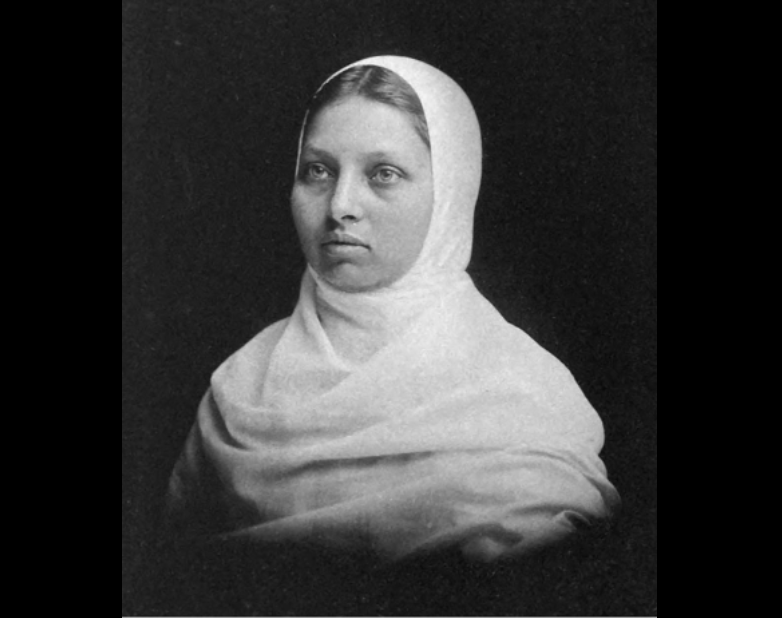
Social Reform in India and the Intellectual Rebellion of WomenTwo recent books by Brahmin women intellectuals strike at the root of the caste-based order by exposing how it operates within their families, from where it spreads to the rest of society.kancha Ilaiah Shepherd 07 May 2022
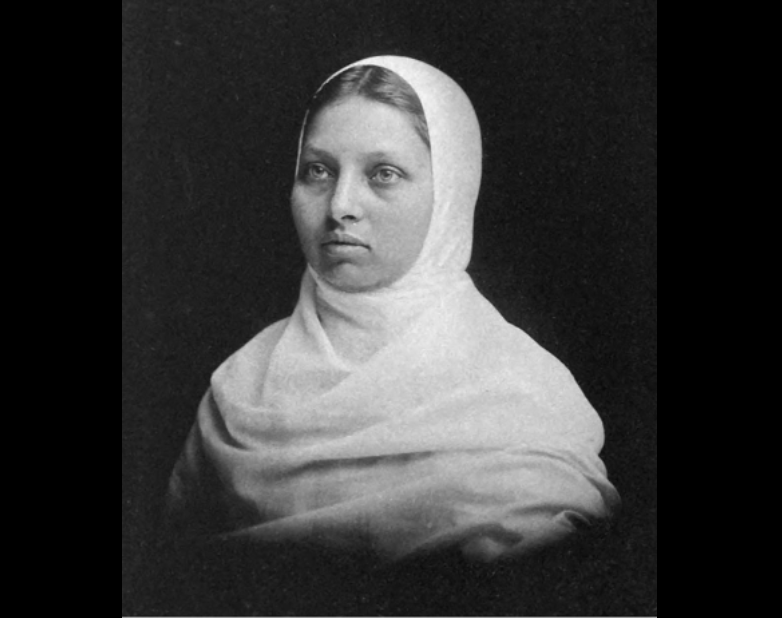
April 2022 was a historic month for India, and not just because celebrations of Mahatma Jyotirao Phule and BR Ambedkar’s birth anniversaries were more visible than ever. April 5 was also the death centenary of Pandita Ramabai, India’s first modern woman social reformer from the Brahmin community. If Phule’s Gulamgiri, or Slavery, was the first-ever Shudra intellectual work, which initiated the process of liberating them and the Ati-Shudra or Dalit communities, Ramabai’s The High Caste Hindu Woman, published in 1887, started the modern rebellion of Brahmin women against a millennium of Brahmanical patriarchy. Importantly, Mahatma Phule and social reformer Savitribai Phule had supported Ramabai’s struggle for gender equality. Contemporary Shudra, Dalit, and Adivasi intellectuals and activists owe their achievements to the reform movement Ramabai started.
The ruling RSS-BJP combine looked the other way while people marked Ramabai’s death centenary in many parts of the country, for she had converted to Christianity and challenged the rosy picture of Hinduism that Vivekananda presented in America. However, in Maharashtra, the Shiv Sena-Congress party coalition government prominently observed the day.
In recent times, two Brahmin women have written critical books that follow in the footsteps of Ramabai’s heritage and tradition. These books are bound to play a crucial role in anti-caste and gender equality movements in India. Wandana Sonalkar wrote Why I am Not a Hindu Woman (Woman Unlimited, October 2020) and Gita Ramaswamy wrote her memoir, Land, Guns, Caste, Woman (Navayana, April 2022). Many Brahmin English-educated women writers emerged in earlier times as well, especially during the freedom movement and the feminist movement of the 1970s and eighties. Many became celebrated writers and thinkers, such as Sarojini (née Chattopadhay) Naidu and the America-settled theoretician Gayatri Chakravorty Spivak. But they were silent on what Brahmin life is all about within society, the religious system, and especially in the context of family.
In 1996, after I wrote Why I am Not a Hindu, many Brahmin intellectuals treated it as a meaningless book written by a Shudra who did not know how to write. Hindutva intellectuals demanded its withdrawal from the syllabus of Delhi University for the same reason. But today, Sonalkar and Ramaswamy are strengthening the intellectual resources of change-makers. The feminist school also produced many Brahmin-born women intellectuals who made the ‘personal is political’ methodology of Western feminists their own. However, they did not open the can of worms of Brahmanism, which creates and sustains caste and is the source of India’s anti-production culture and civilisation.
It is important to note that the intellectual presence of Brahmin women in modern India and the world is because they were educated in English, not Sanskrit, nor any other Indian language. Though Ramabai was a Sanskrit pundit, if she had not gone to England, and from there to America, she would not have acquired the ideas of freedom and equality or written her book. Access to English-language education exposed her to a different world-view that allowed her to commit to the cause of liberating women from moribund Indian Brahmanism. Equally, but for their English education, Sarojini Naidu and Gayatri Spivak would not have become a poet and a thinker, respectively. They, too, did not fight intellectual battles with Brahmanism and its mythical world-view, which has implications for the entire caste-based order.
However, Sonalkar and Ramaswamy’s books hit the proverbial nail on the head of Brahmanism. They reveal how their households constructed a spiritual prison for women, where a hell for Dalits and Shudras was forged. Such a prison-family moulds girl children, right from their formative years, in a moral and ethical code that accepts human slavery. This code was—and is—never exposed to the world outside the family.
Such a family did not only ensure women remained illiterate—so long as Sanskrit was the only spiritual language, illiteracy was the only choice. It also unleashed and imposed innumerable superstitions that have had disastrous consequences for family, society and nation. India suffered for millennia because of this family, caste and social system.
If women had not gained access to education in English-medium schools in the post-colonial times—for a newly-formed State was offering them jobs at the time—Brahmin women would have been worse off than Shudra women. After all, the productive world was open to Shudra women; they could rebel against oppressive fathers or husbands, earn a wage and live alone in the village. Brahmin women had no such option.
Post-colonial English education in big Indian cities produced many Brahmin English-educated women intellectuals. Yet, hardly any dared fight their English-educated man’s world by critiquing Brahmanism and its history. Their family and caste history remained “maya” or illusory until Sonalkar and Ramaswamy told us what went on inside the prison cells of their families. This history is essential to annihilate caste and abolish male-female inequality in India. The RSS does not want these prison locks opened because that structure is male controlled—that too, Brahmin male-controlled. This family prison is part of the parampara or tradition they wish to bring back and sustain.
Ramaswamy was more forthright in her battle, which began in her early teens while living in Madras. No Brahmin male reformer was present there, unlike Ishwar Chandra Vidyasagar and MG Ranade in Calcutta (now Kolkata) and Bombay (now Mumbai).
In Madras, too, it is Periyar’s DK movement that brought Christian school education to Brahmin men and women. Of course, central government jobs were waiting for them. If not for Periyar, they would not have been where they are today. Kamala Harris (mother, Shyamala Gopalan) and Indra Nooyi (née Krishnamurthy) are by-products of this education process, which brought them to the pinnacle of life in the western world. They must all be thankful for the struggle waged by Periyar, whom their men back home hate.
Ramaswamy narrates a fascinating story about how she was a “Brahmin at home and Catholic at school”. Home injected superstitions and myths into her mind, all geared to make her an enslaved woman in the hands of a future English-educated Brahmin husband. On the other hand, the school injected science and rationalism into her thinking. She realised that two opposite worlds lay before a girl with four female siblings and being raised under the supervision of an educated and employed father-patriarch and an always subservient mother steeped in ritualistic myths. At 13, Ramaswamy took the battle straight into the pooja room by touching the idols while she was being kept out as an untouchable during menstruation. The Christian school did not convert Ramaswamy to Christianity but created a rebel against Brahmanism at home and in the caste system. It put her on the path of a self-respecting human journey.
In the past, many Brahmin women intellectuals got liberated because of English medium education and became communist or feminist scholars. Their careers flourished, but without them ever serving up papers and articles about their Brahmin-ness within. And Brahmin male intellectuals, whether educated abroad or in India, guarded the can of worms that lay in their homes, castes and cultural heritage. This allowed Brahmanical Hindutva to grow to its present level. The Dalit, Adivasi, and Other Backward Class movements could not use a single book of theirs in their fight for a caste-free India. Yet today we have Why I am Not a Hindu Woman and Land, Guns, Caste, Woman, both potent weapons in the fight against Hindutva Brahmanism and historical Brahmanism.
The author is a political theorist, social activist and author. His book, Why I am Not a Hindu, inspired a range of new generation Shudra, Dalit, Adivasi and women writers. The views are personal.
https://www.newsclick.in/social-reform-india-and-intellectual-rebellion-women
https://pagead2.googlesyndication.com/pagead/js/adsbygoogle.js?client=ca-pub-6388611372302111 -
How Arun Shourie was wrong about VP Singh, Narendra Modi – and BR Ambedkar
The BJP leader stridently opposed reservations, only for the Mandal Commission report to be implemented. He pinned his hopes on 2014, only to be sidelined again

VP Singh, Arun Shourie and Narendra Modi. | Reuters and Wikimedia Commons In recent weeks, with the release of his new book, former Union Minister and journalist Arun Shourie has been giving interviews about the Narendra Modi-dispensation as well his experiences as the editor of The Indian Express in the 1980s and 1990s.
Shourie has also been talking about his association with the ruling Bharatiya Janata Party and serving as the Union Minister for Communication and Information Technology between 1999-2004 under the government led by Prime Minister Atal Behari Vajpayee.
Of all his statements, what stands out is that Shourie now claims that he misjudged VP Singh and Modi and supported them as prime ministerial candidates – Singh in 1989 and Modi in 2014.
Anti-reservation stance
In the 1990s, Shourie was among the leading voices arguing against reservations in educational institutions and government jobs for members of the Other Backward Classes. His editorials in The Indian Express and articles instigated students and youngsters to oppose the implementation of quotas.
At that time, though the BJP supported the VP Singh government, its student wing and youth wing violently opposed the implementation of the Mandal Commission recommendations for reservations for members of the Other Backward Classes.
The Congress and Singh-headed Janata Dal were bitter enemies. Singh had become a hero by resigning from the Congress party because of the Bofors scandal involving defence purchases, laying the ground for him to be appointed prime minister in 1989.
Shourie befriended Singh and remained his ardent supporter till the Mandal Commission Report was implemented. Shourie turned against Singh till his government was pulled down by the BJP.
Shourie continued his tirade against reservations as an ardent supporter of the theory of merit, the dubious social science theory that Dwija intellectuals constructed in the 1990s. They even claimed that the caste system was a construct of British colonialism.
Shourie promoted many upper-caste intellectuals to write articles in The Indian Express about the merit theory, pushing the dodgy idea that caste had not existed in India until the British conducted a caste census.
He then turned his pen against the architect of the Indian Constitution BR Ambedkar. Shourie wrote an obnoxious book titled Worshipping False Gods: Ambedkar, and the Facts Which Have Been Erased. The pro-Mandal forces had no voice in the English media and no national English newspapers seemed ready to publish their counterpoints. Shourie, thus, became an intellectual hero of the anti-Mandal forces.
This was when a small Telugu fortnightly Nalupu, which means “ black”, published an article I wrote titled “Parannabukkulaku Prathibha Ekkadi” or Where is Merit Among Parasites? The article was published in a pamphlet that became popular in the fight for Mandal reservations.
In our view, Shourie was a living version of Kautilya, the scheming political theorist of the fourth century Before Common Era. We believed that members of the Other Backward Classes, Scheduled Castes and Scheduled Tribes should battle Shourie’s anti-Mandalism to the end.
As part of this campaign, Gaddar, the revolutionary bard, also wrote a song titled Arun Shouriega Neeku Aakalannademeruka, which translates to, O, Arun Shourie how do you know the pain of hunger.
Shourie, ‘a BJP intellectual’
After the Singh-led government fell in November 1990 and the Babri Masjid was demolished in December 1992, Shourie became a full-time BJP intellectual. Shourie took charge as the disinvestment minister under Vajpayee with the single-minded agenda of shifting jobs from the government sector to the private sector to fulfil his anti-reservation goal. He sold several government companies.
It is not immediately clear when Shourie discovered Modi, who is a member of the Other Backward Classes, as an ally of his ideology. Was it during his anti-reservation campaign or veteran BJP leader LK Advani’s Rath Yatra to step up pressure for a Ram temple to be built in Ayodhya at the site of the Babri Masjid, where Modi was an event manager?
Shourie has, since, time and again called Modi an event manager. What was the assessment Shourie made when he decided support Modi’s candidature for prime minister in 2013? Perhaps, the assumption was that if Modi were to become prime minister, Shourie and others like him, who held degrees from foreign universities and who had worked for the World Bank, would run the system.
Instead, Modi dropped Shourie, Advani, BJP politicians Murali Manohar Joshi and Yashwant Sinha like hot potatoes.
This was the first shock for Shourie. He probably assumed that a BJP-ruled government with a full majority would abolish reservations. But Modi’s vote base is where Shourie’s enemy base is. Though Modi continues Shourie’s disinvestment policy, the beneficiaries have changed. Most shockingly, Modi is worshipping Shourie’s “false god” Ambedkar.
The Shourie of the 1990s must have thought that Ambedkar’s emergence as a new deity would be a passing phenomenon. But his false god has more followers than his real god, Mohandas Gandhi.
Another of his gods, Vivekananda, only exists in the occasional quotes by Hindutva supporters or the Shashi Tharoor-type Congress-United Nations-trained intellectuals. But Ambedkar graces the homes of Dalits, Adivasis, Other Backward Castes, and is revered at intellectual forums, festive occasions, court judgements, university discourses and newspaper columns as the saviour of democracy.
No one buys Shourie’s argument that Ambedkar was not the real writer of the Constitution. Shourie, as he himself declared in the title of a recent book, is Preparing for Death, a thoroughly frustrated a Hindu prani – living being – while Ambedkar, who initiated the theory and practice of anti-meritocracy and positive democracy, occupies a place of national pride. All of Shourie’s anti-Ambedkar hopes have been dashed down to the ground.
To Dwija anti-Mandal intellectuals, Modi is a merit-less OBC. But despite his uncertain educational background, he has shown them their place. If Shourie had misjudged Singh for unleashing the forces of Mandal, he also misjudged Modi for sidelining intellectuals like him and ruling the country in his own way.
One only pities Shourie’s understanding of India and Ambedkar, the real god of Indian democracy. Without Ambedkar, VP Singh’s Mandal politics would not have come to pass. Without Mandal politics, Modi would not have been prime minister today. No wonder Shourie’s voice on the national stage has grown feeble.
Kancha Ilaiah Shepherd is a political theorist, social activist and author of Why I am Not a Hindu, Post-Hindu India and Buffalo Nationalism. He was very active in the pro-Mandal movement.
https://pagead2.googlesyndication.com/pagead/js/adsbygoogle.js?client=ca-pub-6388611372302111 -
Hello World!
Welcome to WordPress! This is your first post. Edit or delete it to take the first step in your blogging journey.


You must be logged in to post a comment.