-
Manipur: A ‘Triple Engine’ government at work
The third engine, the most critical one, systematically divides people into majority and minority at the ground level in every state, like in Manipur, writes Kancha Ilaiah.

Written by Kancha Ilaiah Shepherd
On July 23, 2023, Vardhelli Murali, the Editor of popular Telugu daily Sakshi, wrote a poignant editorial with the title ‘Is my country a naked body?’ He says that Prime Minister Modi keeps talking about a double engine government in states where the Bharatiya Janata Party (BJP) is in power, with the support of the Centre, a second engine. Murali says actually there are three engines at work in Manipur. Writing about the horrendous incident in which Kuki Christian women were paraded naked and one of them gangraped in Manipur, he said in whichever state the BJP is in power, the governments are run with ‘Triple Engine’ power. The third engine is the Rashtriya Swayamsevak Sangh (RSS).
The third engine systematically divides people into majority and minority at the ground level in every state. This engine is the most critical engine which works out ways and means to divide people on religious lines. Earlier they used to divide for ideological purposes. From the formation of the BJP/RSS-led Union government in 1999, they started using the mechanism for electoral purposes. More particularly, from the 2014 elections a massive anti-minority campaign was taken up all over the country. Muslims and Christians are mainly targeted. Very well organised Hindutva forces keep using all kinds of attack strategies. They use methods of isolation, generate fear among them, and finally use violence as a last resort to create a superior notion of control among the supporting majority. There were rumours that in the North-Eastern states dividing ethnic groups based on whether they were Christian or non-Christian had been going on for quite a long time. After the 2014 elections, the RSS/BJP acquired control over the local state apparatus and the faultlines deepened.
In Manipur, as per available data, around 53 percent population are Meiteis and the remaining consists of Kukis and Nagas, who are similar in numbers. While around 95 percent of Kukis and Nagas are Christian, among the Meiteis only 2-3 percent are so. The Hindutva forces seem to think that the Christian influence was growing even among Meitetis, therefore, they wanted to checkmate the religious transformation. They seem to have started first by organising Meiteis into a strong Hindu force. At the same time, the Kukis and Nagas of the state remained either loyal Christians or did Ghar Vapsi. Yet another major idea was to recognise the Hindu Meiteis as STs so that they get land rights and Government jobs. This is a Hindutva package to de-Christianise the North East. It is a long term project. The Manipur Chief Minister Biren Singh, it appears, is given the task of allowing the organised Hindu Meiteis to do the job.Featured Videos from TNM
Murali says this method was first used in Gujarat during the first phase of the second engine in control of Delhi. The Opposition, particularly, is wrong when they say only Narendra Modi is responsible for what is happening during his Prime Ministership, while leaving the most powerful ‘Third Engine’ out of the political discourse. Modi is handling the second engine with a bigger power than Vajpayee is a fact. But without the ‘Third Engine’ getting involved both the Union and the State governments cannot make use of the Hindutva apparatus like the one which is at work in Manipur. It is the ‘Third Engine’ that tells the Chief Ministers what to do and what not to do. One of the key directions is in the charter of ‘What Not to Do’ . In the states, the machinery should standby following the theory of ‘What to Do’. They should not stop the Hindutva forces from its ideological actions under the theory of ‘What Not to Do’. After Gujarat we have seen Karnataka. Now Manipur has the same theories operating.
The behaviour of the men who made the Kuki Christian women walk naked needed training to be merciless. One of them was brutally raped. The PM condemned the incident once the videos of that scene shook the world. But the RSS chief Mohan Bhagwat did not speak a word against that brutality. The organisation earlier issued a general statement that normalcy should be restored in Manipur. However, in the background of the video of the brutal incident, he made a statement:
“Many times negative discussions are heard. But when we go around the country and see, then we come to know that there is 40 times more discussion about the good things that are happening.”
Without even condemning the anti-women nature of the incident, the Sarchanlak talks about ‘40 times more good things’. Since the three engines worked in synergy in Manipur, shall the Hindutva forces that were involved in that act want those women to do Ghar Vapasi? Should our cultural nation praise the forces that paraded indigenous Christian women naked and raped one to teach them a lesson for being born into a ‘foreign’ religion?
The Manipur CM announced that his government will see to it that the victims will get capital punishment. But later they could be released like the 11 convicts in the Bilikis Bano rape case, who were treated as great nationalists in Gujarat.
Many of us fought Indira Gandhi’s Emergency with the fear that dictatorship was imminent. At that time in my state—Andhra Pradesh—it was a double engine Government. Jalagam Vengal Rao was a fully oiled state level conductor of that engine. Killing any serious opponent, particularly young boys or girls, labelling them as dangerous Naxals, was the norm. No police protected them but every officer competed to kill more to get a medal. Double Engine governments were not new. Till 1967 in all states there were Double Engine Congress governments.
But we have never seen a woman being paraded in that brutal state of Emergency. Maybe because a woman was heading the Delhi engine, such an operation was not allowed. Luckily the nation overcame those nightmare days, maybe because there was no ‘Third Engine’ at that time in that political structure.
But now there is no such openly declared emergency in Manipur or in the country. There people are not just getting killed in individual encounters, but getting burnt alive in their own houses and outside.
According to Sarsanchalak Mohan Bhagwat, he is heading an army that can reach any part of India much quicker than the regular army of India. For what purpose should that army be used from power is a critical issue in a multi-religious and multi-caste country like India? Manipur has shown yet another level of brutal violence which we have never witnessed earlier.
The final act of cultivated violent culture is as Murali said: “My country is made of naked bodies of crying women’. They were not only paraded in the streets, not in night but in day light, and were taken to the fields to be raped. What should the world make of this culture of violence and barbarity?
Kancha Ilaiah Shepherd is a political theorist, social activist and author. His latest book The Shudras: Vision For a New Path, co-edited with Karthik Raja Kuruppusamy, has put forth a powerful argument that without the cooperation of Shudras with Dalits and Adivasis, caste inequality and oppression cannot be changed. Views expressed are the author’s own.
https://www.thenewsminute.com/article/manipur-triple-engine-government-work-180442
-
The abuse of Christian women in Manipur tells a tragic story of the new India
Indian authorities are ignoring attacks by radicalized Hindus on Christians.
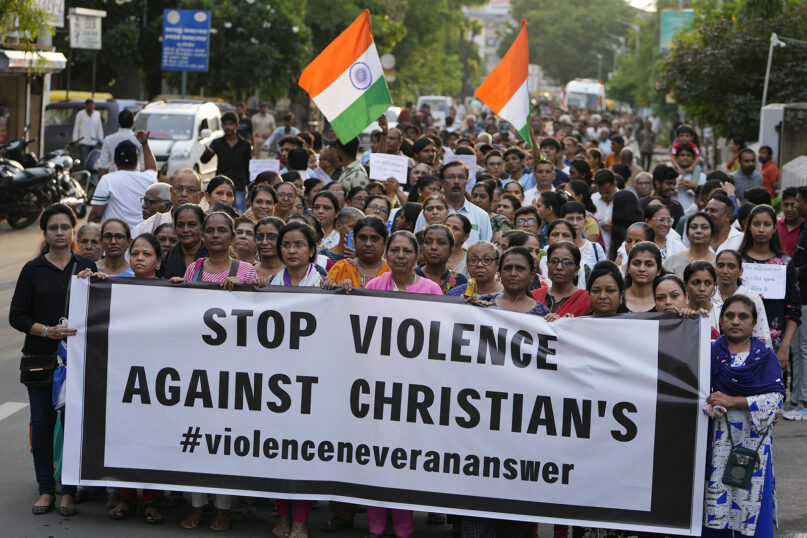
Demonstrators hold a banner during a rally in solidarity with the people of northeastern Manipur state, in Ahmedabad, India, Sunday, July 23, 2023. Protests have erupted across the country after a video showing mob assaults on two women who were paraded naked sparked widespread outrage on social media. More than 130 people have been killed in the northeastern state since violence between two dominant ethnic groups erupted in early May. (AP Photo/Ajit Solanki)
July 24, 2023
(RNS) — In 1972, the course of the Vietnam war was changed by the horrifying photo of a naked girl burned in a napalm attack. Searing Americans’ collective conscience, the picture of 9-year-old Phan Thị Kim Phúc revealed the immorality of the war. Now, a viral video of Christian Kuki women being paraded naked in public, groped, gang-raped by Hindu men, has seared the Indian and even the global conscience.
A day after video of the event went viral, the chief justice of India, D.Y. Chandrachud, demanded that the central government act, saying the Supreme Court would otherwise take matters into its hands.
The central and the state government in Manipur have failed to deal with the ethnic strife and carnage in Manipur, which has targeted the Kuki population with the complicity of the police. But wherever minority Christians have been attacked, in Uttar Pradesh, Madhya Pradesh and other states, local police have allowed Hindu extremist mobs to attack hapless Christians without consequences. Indian authorities can no longer deny the reality that the Manipur attack, while an example of barbaric ethnic cleansing, is also religiously motivated.
The Indian public has only now found out about the Manipur attack because the state was put under an internet blackout for 80 days following the incident. As the opposition member of Parliament Jaya Bachchan put it, “It’s very frustrating. Every day something is happening with women. In (Uttar Pradesh) we don’t get to know what happens there.”
The claim by the chief minister of Manipur, who has been sympathetic to Hindu extremists there, that both sides had precipitated hundreds of similar incidents is grossly misleading. While there has been general unrest, the vast majority of the victims are Kuki Christians.
A massive number of Christians in Manipur, who make up some 40% of the state’s population, have been displaced, while Kuki Christians in particular have witnessed the destruction of hundreds of their churches and the brutal rape of their women. It is obvious that Kuki Christians are under full-scale attack by radicalized Hindu groups and that the police are ignoring this injustice. When he resigned earlier this month, the vice president of the neighboring state of Mizoram, a member of Prime Minister Narendra Modi’s ruling BJP Party, said the party has become an anti-Christian party.
In the wake of the outrage, Modi has broken his 80-day silence on the Manipur violence and the breakdown of law and order. He condemned the violence against these innocent Kuki women, yet his statement veered into politics by also mentioning violence against women in Rajasthan and Chattisgarh, which are ruled by the opposition party.
The human rights issue has tragically been politicized here in India, as it often is elsewhere throughout the world. It’s not only within the BJP. Other parties have also succumbed to this.
The India we knew is fast disappearing. This violent assault and murder of women in Manipur points to the possible India of the future if we fail to awaken the Indian conscience across religious and caste lines.
Whether it’s a Muslim, Christian, Hindu or Dalit woman who is raped or killed, all of India, and the world, must speak out for justice. Indians must reject any form of religious, caste or ethnic polarization that stands in the way of equal treatment under the law. India must reject any form of politics and hatred as it pertains to these issues.
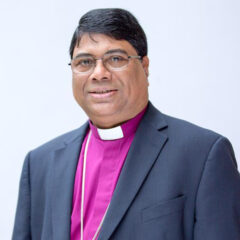
Archbishop Joseph D’Souza. Courtesy photo
Violence and sexual assault against any Indian woman is a travesty, no matter the background of the victim or the perpetrator. Yet if hate speech and bigotry continue to rule the day, as we’ve witnessed in Manipur, India will descend further into chaos for women nationwide.
(Archbishop Joseph D’Souza, archbishop of the Anglican Good Shepherd Church of India and president of the All India Christian Council, is the founder of Dignity Freedom Network. The views expressed in this commentary do not necessarily reflect those of Religion News Service.)
-
US SC ruling on affirmative action is universities is a setback
American SC judgment quashing affirmative action in universities may inspire anti-reservationists in India, too

In America, white racism got countered by producing black intellectuals from universities, who could construct a counter narrative to racism and influenced policies. Along with America, the whole world benefitted. Image: iStock
The American Supreme Court judgment quashing affirmative action in colleges and universities has opened a new debate on whether racism in America is getting validated in larger civil society again.
Unless the well-educated elite component of the society is multi-racial, racist decisions in administrative structures will not change. Whatever changes had unfolded because of the new intellectual force that entered into various structures of the US administration from multi-cultural and multi-colour social bases, would they not limp back into 21st century racism?
Social justice walking backwards
The Supreme Court took a dangerous decision at a time when the multi-racial America is producing talent in every intellectual field, with which the whole world has been benefitting. The oppressed castes in India were inspired by the Black-Slave intellectualism.
Mahatma Jyotirao Phule dedicated the first-ever written book on Shudra Indians —Gulamgiri — to the Black liberators. Dr BR Ambedkar, who learnt a lot from Black intellectualism, became a liberator of untouchables and worked out an Indian mode of affirmative action — reservations.
Even before the world has yet to become free of racism, America’s highest court blocked the difficult path of intellectual inclusion. This may inspire many anti-reservationists in India and abroad as the Dwija Non-Resident Indians (NRIs) are as anti-reservationists as those who live in India.
A social counter-revolution now is initiated from the highest court of America. The court’s judgment initiates an anti-social justice process. American political philosopher John Rawls gave a model by writing his famous book A Theory of Justice, which made the world think about social justice.
The global judicial institutions learnt a lot from the American Supreme Court and John Rawls. Now the American Supreme Court is moving backwards, by dismantling the idea of social justice.
Indian experience
Given the history of two national political parties of India, the BJP and the Congress, who opposed reservations during the Mandal and the pre-Mandal times, the Indian reservation system would not have been accepted but for the Black empowerment example.
Our courts too are waiting for the reversal of that policy in America. Now the future of our reservation system seems to be up in the air. Our Brown brothers and sisters love everything American — while chanting Hindu nationalism slogans. They love reversing the reservation system with a new phrase — caste-blind education in the interest of Hindus. The Dalit/OBCs/Adivasis do not even know what will be in store for them.
The often repeated RSS slogan that Hindu traditions should be respected is an indicator for keeping them outside Hindu priesthood and intellectual powerhouse. Dismantling the reservation system will be projected as part of that tradition. The US SC judgement will serve as an epithet.
In America in the post-civil war era, white racism got countered by producing black intellectuals from colleges and universities, who could construct a counter narrative to racism and influenced policies both at the federal and provincial administration levels. With that, along with America, the whole world benefitted.
The modern administrative structures require well educated and trained intellectuals from the universities. With advanced knowledge their courage and confidence would grow. That was what happened in America. Now the judiciary seems to have checkmated it. Quite sadly, of the two black judges (one man and one woman) in the court, the senior judge, Justice Clarence Thomas, went along with the Chief Justice, who has been an opponent of affirmative action for quite some time.
Black woman judge hits back
But Justice Ketanji Brown Jackson, the court’s first black female justice, chimed: “With let-them-eat-cake obliviousness, today, the majority pulls the ripcord and announces ‘colorblindness for all’ by legal fiat. But deeming race irrelevant in law does not make it so in life.” This is true. Colour blind decisions in the court do not remove colour discrimination in the society that institutionalised colour — slavery for centuries.
Universities and colleges are meant to produce intellectuals who construct new theories and ideas that change human life for the better and by reducing social conflicts and civil wars. America realised this after suffering a civil war in the late nineteenth century. Abraham Lincoln made that possible.
Ever since the affirmative action policy was adopted the American society has produced many black intellectuals who played a key role in changing the world. Where does the reversal take it now?
The problem of admission essay
The American colour students when applying to a college or university course do not fill columns like our reserved category. They write an essay about how their colour played a role in their social, economic and educational life. Their school grades, their social service service while being a student, including labour related work that they undertake while studying in the school count.
Even the rich whites or blacks or Latinos or Asians need to impress the elite educational institutions that they are hardworking, talented enough to get admission. They have to show their concern for poor, disadvantaged children and so on.
The blacks and Latinos get preferential treatment in universities like Harvard, Stanford and Yale, based on their essay which describes their experience with racial discrimination. The universities also take into account their family background, even though in terms of marks they may score less than the other candidates.
The US Supreme Court’s Anti-Preferential Treatment (APT) judgment is expected to cut down the black and Latino admissions by more than 50 per cent of their intake. In other words, the talent that was growing among the former slaves and labouring races will be reduced.
Caste-based reservation in India and race-based APT in the US are meant to include the historically excluded forces in the intellectual pool that the nations are trying to build in modern times. So far this has proved to be contributing to the growing new knowledge zones in the larger civil society with equally respectable citizenship rights. Both the new knowledge and social equality are complementary for human advancement.
In India, caste played a role in negating the growth of the new talent pool. In the West, race-based slavery did the same. The Shape of the River — Long-Term Consequences of Considering Race in College and University Admissions (2000), a famous book by William G Brown and Derek Bok (both were top academics and administrators in the US), said that the American talent pool grew enormously after the APT system was put in place. This is true of the Indian experience. I myself am a product of the reservation system.
White Gurukulas
The consequences of the Supreme Court judgement would certainly be detrimental to the US knowledge power. Their elite universities are likely to become White Gurukulas where multi-cultural knowledge hybridisation is likely to stop. The historical Indian experience tells only that kind of negative story of the Brahmin Gurukula education system. Our ancient Gurukulas and the pre-reservation modern higher educational institutions have not produced great innovations. Since mobility of people from the production field to university was never allowed, caste-blind education continued for long. But it did not advance the Indian knowledge system.
In America too, if the best universities become White Gurukulas, knowledge production is likely to suffer. The most famous Harvard university may become an institute of Boston Brahmins. The race-blind admission system that the court has put in place may lead to a knowledge-blind system itself.
(The writer is former Director, Centre for the Study of Social Exclusion and Inclusive Policy, Maulana Azad National Urdu University, Hyderabad.)
-
The Enemies Of Social Change And Unethical Scholarship| Countercurrents
The Enemies of Social Change and Unethical Scholarship
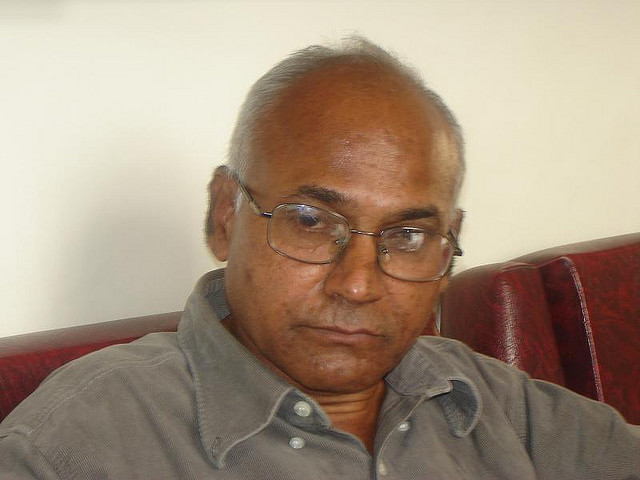
On May 17 suddenly I got a video on my watsapp. When I opened it I saw the title “Kancha Ilaiah shepherd: Bharat Vikhander”. Two supposedly experts on my work, Sharada Narayanan and Shubhodeep Mukhopadhyay, wrote an essay on me and my work in a book that was said to have been edited by Rajiv Malhotra and Divya Reddy. Both the authors talked about their essay.
The title of the book was more amusing,“ Ten Heads of Ravana—A Critique of Hinduphobic Scholars”. In those ten heads my head is supposed to be one. Their talk itself was abusive.
Later the mike was handed over to Madhu Kishwar who abused me in the talk in a choicest language to the point of crucifying me. (see this https://www.youtube.com/watch?v=jMzzxROTF0c)
I then ordered the book and read.
First let me list out the grave wanton lies about what I said in Post-Hindu India on page 238 in reference number 11. They wrote:
“For example he explicitly calls for a civil war to exterminate Brahmins globally in order to make Indian society more energetic….”. ( Ten Heads of Ravana p. 296)
Nowhere in page 238 of Post-Hindu India such a sentence, with a call for extermination of Brahmins, is written.
Again in page 310 of the book they wrote, “ It is to be noted calling for the genocide of Brahmins a minority community which makes up less than three per cent of India…” Nowhere in page 182 of the book they referenced again, such a sentence of genocide of Brahmins exists. These are their deliberately worked out concoctions.
Why did they write these kinds of false non-existing sentences in my book? It is very clear that this team is meant to crucify me exactly like the Pharisees concocted false stories on Jesus Christ, in order to crucify him.
Malhotra’s team seems to have acquired a crucifixion cultural mentality.
Look at their bad collection of facts about me. They said “ He was Associate Professor in the Department of Political Science at Osmania University till he retired in 2012” I became a full Professor in 1998 and served as the Head Department for two years and retired in 2012, with twelve years of service as professor”.
They say that Why I am Not a Hindu was published with the financial help of Rajiv Gandhi Foundation (p. 310). I never took any money from any foundation to write or to publish my books. The field work for Why I am Not a Hindu and Post Hindu India (almost for ten years) was done entirely by spending from my own salary.
The fact that Ten Heads of Ravana is dedicated to ‘All Intellectual Ksatriyas’ shows how casteist they are.
All my books are written for development of the productive masses of India and they are an embodiment of the Indian civilization and knowledge systems of the food producers, artisans and adivasi knowledge systems, but not of the reflections of the Brahminic books, with which the masses do not have any engagement in the living history of this nation.
They all were written in Sanskrit and that language was not theirs.
RAVANA AND EVIL
In the introduction Malhotra writes “The historical Ravana disrupted society’s Hindu structures, and the heads chosen for this book are considered by Hindus today to be individuals doing something similar…” Who are these individuals? They are: Romila Thapar, Irfan Habib, Shashi Tharoor, Ramachandra Guha, Sheldon Pollock, Wendy Doniger, Devdutt Pattanaik, Kancha Ilaiah, Audrey Truschke and Michael Witzel.
According to Brahminic theory Ravana represented the evil of the universe and got killed by Rama. His kastam (funeral fire) keeps burning forever. Perhaps with a view that if that kastam does not keep burning, or rather the moment it stops burning, Ravana will resurrect and re-establish his kingdom again. Malhotra and his team settled down at Ravana Kashtam to keep a watch whether all his ten heads, in reality the heads of ten authors, they hate in the present Kaliyuga of democracy, be burnt properly.
THE INTENT OF THE BOOK
The book shows how Rajiv Malhotra and his team hate the idea of social change; the idea of human equality; the idea of casteless society; the idea of man-woman equality in the name OF Bharata Dharma.
Quite surprisingly News 18 which publicized the book launch on March 3, 2023 said, “ The team of authors said they had invited the 10 scholars whose works they had critiqued to the event but had not got any response from them”. This is a lie. I did not get any invitation in any mode from them. If they were to give me a flight ticket from Hyderabad to book a launch place I would have gone.
Their right to write a critical account of any writer is undeniable in a democracy, but that writing cannot be an account of a Police report. The editors and authors claimed that they undertook the effort to protect the Hindu Dharma and Indian civilization. But the whole book in general, the chapter on my work and my person in particular, does not show any serious reading and goes to the roots of my evaluation of village labour economics and culture. They do not seem to have to do anything about the Shudra/Dalit/Adivasi production and civilization. Because my two books they said to have studied, required a deep understanding of the rural system of production. They have no clue what the Indian village agrarian and artisan system is.
They tried to attack me from their Puranas and Shastras point of view. I reject all those texts because they have nothing to do with Indian land, labour and production and spirituality that got constructed by the Indian masses for millennia.
WRITING BASED ON FIELD WORK
Both Why I am Not a Hindu and Post Hindu India are written based on field work among the productive communities, which in caste terms are Shudra, Dalits and Adivasis. From Harappan civilization to present day civilization the production process, the technology, the methods of production, peoples’ knowledge of nature and their spiritual culture made India what they are. Both my books reviewed history and civilization for the first time from the village upwards. Both the authors do not seem to know that whole knowledge. My criticism of Brahminism is based on that rooted knowledge of Indian people, not about the knowledge of gurus and saints.
They were searching for my knowledge of Vedas, Upanishads, Ramayanam, Mahabharatam and other Puranas, written in Sanskrit in ancient and medieval times. I never treated those books as representative of Indian knowledge. My critique of Brahmin, Baniya, Ksatriya life was from the point of production and distribution of goods, commodities, the man-woman relations that shaped up in the civilization and cultural domain in the process of production.
Their books and their gurus have no contribution to the food and other material and culture production at any point of time in Indian history. The Shudra knowledge system and Brahmin knowledge system operated in two parallel lines without a meeting point anywhere.
Most of the books and the gurus they referred to in the essay were alien to the historical agrarian process. In fact, no book dealt with anything serious about the Indian food producers, their knowledge, culture, spiritual or material. No Brahmin guru, or Ksatriya ruler respected them with a view that they too were/are human beings. Their productive labour was treated as anti-Santhan Dharma. That’s why I did not bother about such books.
Can they show any ancient and medieval Sanskrit book that wrote one full chapter on the Shudra production process and their spiritual systems. Almost all the books were written to establish control mechanisms with Danda Neethi. No book talked about doing justice to laboring masses. The Dharma that they repeatedly referred to in this whole book is irrelevant to the Indian masses.
METHODOLOGY OF REFERENCING
All through their essay they attacked me for not referencing my books. They were searching for references for my arguments from their Sanskrit books.
Where are references in Sanskrit books? Whom did their gurus who wrote the Sanskrit books quote?
It did not strike these writers and the editors that there are no references in Vedas, Upanishads or Kautilya’s Arthashastra and Manu’ Dharma Shastra. Why do they want my books written from mass production knowledge, science, technology and spirituality point of view to be referenced from unconcerned Sanskrit books?
The idea of Dharma they constructed in those books was to the advantage of the anti-production and Shudras/Dalits/Adivasis. How did those books without references become authentic and rather sacred? Sacred for whom and what for? What is Dharma in those books? Is it Justice for the Shudra/Dalit/Adivasis or injustice? All their ideas and of Dharma have been handed down injustice, violence, discrimination up to the level of treating agriculturists, artisans as untouchable and unwanted in the Brahminic in social and religious life.
Only a fool from these communities gives them the respect that a Brahmin, Ksatriya, or Baniyas, who benefited from those books, gives. If Sanskrit is so sacred to these writers why did not they write “ Ten Heads of Ravana” in Sanskrit? Why did they write in English which according to them is a colonial language?
Does this American Malhotra’s team want the Shudra/Dalit/Adivasi masses to believe them even though there is no single line in the whole book about agriculture, artisan economy; about the divine deities that exist in thousands all over India. Almost all the essays were trying to portray that India since ancient times was/is pure vegetarian. They have no idea of how meat food was/is offered as culture and divine purity in the agrarian human relationships. All these authors and editors’ think that their own household culture is Indian culture. Once such concrete historical questions from the standpoint of the productive masses are raised they say that these are pro-Christian and pro-Muslim arguments. This is a fear generating argument using the modern Danda of nationalism. How can those who live in America teach nationalism for the masses of India who are producing wealth living in this country facing all odds?
THEY WANT END PLURAL DISCOURSE IN INDIA
These writers and editors want an end of plural discourse in India by repeatedly accusing all ten authors whom they critiqued as pro-Islam, pro-Christian and Hindu Phobic. In this whole book the name of the religion Hindu is used as synonym for Brahmin, Bania, Ksatriya, Khatri and Kayastha, (broadly known as Dwijas) culture that too as a monolith, even though writers like Romial Thapar, Ramchandra Guha, Devadut Patnaik come from those caste backgrounds with their own understanding of secularism and pluralism and practice in life.
This whole exercise is to stop creative thinking and writing. But they will not succeed in this attempt.
Kancha Ilaiah Shepherd is a Political Theorist, Social Activist and author. His two well known books, Why I am Not a Hindu– A Sudra Critique of Hindutva Philosophy, Culture & Political Economy and Post-Hindu India–A Discourse in Dalit-Bahujan, Socio-Spiritual and Scientific Revolution have been attacked by Rajiv Malhotra and his team in their latest book Ten Heads of Ravana.
https://countercurrents.org/2023/06/the-enemies-of-social-change-and-unethical-scholarship/
-
Interview on Hindutva Mukta Bharat
-
V. P. Singh: Kshatriya Turned Social Justice Agent
June 25 is the 92nd birth anniversary of the almost forgotten Mandal Messiah
By KANCHA ILAIAH SHEPHERD|
22 June 2023 9:57 AM
On June 25, a celebration meeting of V. P. Singh’s 92 birth anniversary meeting has been planned by several pro-social justice organisations at the Constitution Club, New Delhi. This will be the first of such celebrations on V. P. Singh who is almost a forgotten Mandal Messiah.
It is expected that several political leaders, activists, writers will participate to recall Singh’s work for social justice. Born and brought up in a Ksatriya (also spelled Kshatriya) Raja family from Uttar Pradesh, his role in the post-Independence Indian history as a Prime Minister has to be re-assessed.
India has had several other Prime Ministers up to Narendra Modi, who has claimed to be an OBC. We should also see V. P. Singh’s role as PM, in contrast with the Ksatriya rulers like Uttar Pradesh Chief Minister Adityanath and Union Defence Minister Rajnath Singh who also hail from that community of feudal ruling background of the same state as V. P. Singh. As a person who fought for justifying the implementation of reservation, and who witnessed Singh’s fight for defending the implementation of Mandal Commission Report recommending 27 percent reservation in national jobs for the OBCs, I would like to ask: if Modi were to be the PM at that time would he have implemented and defended it the way V. P. Singh did?
Would Deve Gowda, a Shudra beneficiary of reservation, who became PM have done that? Nobody would have taken the ideological and moral position that V. P. Singh took. Singh was even prepared to be even killed for the sake of Social Justice, like Abraham Lincoln did for the sake of Black Rights.
While Abraham Lincoln sacrificed his life in America V. P. Singh sacrificed his position and image among anti-Mandal ruling forces. It led to his Government being pulled down by the Bharatiya Janata Party (BJP).
The Congress was Singh’s arch enemy at that time, and was willing to finish him by all means. Immediately after Singh was thrown out by the BJP, the Congress brought in another Ksatriya Chandra Shekhar from UP, as PM.
He pretended to be a socialist all his life but remained a strong anti-social justice element. In 1991 another cunning Brahmin P.V .Narsimha Rao became the PM and nobody would have expected him to implement the Mandal Commission Report, if V.P.Singh were not to take that risk from that position.
It is true that many other political forces of that time demanded implementation of the Mandal Commission Report. However, if V.P Singh had not chosen to do that, no silent revolution would have taken place in Indian history.
Because the Shudra OBCs of that time were completely incapable of handling the ideological and philosophical question of social justice. Though there were some politicians from North India who demanded and worked for the Report’s implementation, there were no intellectual forces from the Shudra/OBCs to defend it in the hostile power structures and in the media.
Arun Shourie kind of anti-social justice forces in the media , when all papers, electronic media (including Doordarshan) was against the Report’s implementation, and the OBC leaders would have buckled down easily.
They had driven Dwija youth to self-immolate, abuse and attack the pro-Mandal forces. The Communist Dwijas were against the Mandal Commission Report’s implementation.
Very few pro-Mandal writers, such as Gail Omvedt and I, had to struggle for a space to publish even a small article in English in support of V. P. Singh’s implementation. Only journals like ‘Economic and Political Weekly’ gave marginal space.
There was no social media at that time. We were helpless and could do little except cry in isolation. The only strength was V. P. Singh’s undaunted defence of the Mandal Commission Report’s implementation from every public space possible, including in his bold August 15 speech from the Red Fort.
Singh’s resignation letter and address to the nation before he resigned put all other Prime Ministers who came before, and after him, under the dark clouds of shame and guilt. If PM Modi, as a self-proclaimed OBC who got many votes because of that, reads Singh’s philosophical defence discourses on social justice his head would hang in shame.
Modi never takes Singh’s name as an exceptional PM of India who implemented the Mandal Commission Report with courage and conviction. Modi never issues a statement on Singh’s birthday.
V.P. Singh’s short stint in the PM office reminds us of the saying that, “it is not how long you rule that is important for the people, but how you rule when you are in power”.
Nehru’s 17-year rule, Indira Gandhi’s 14-year rule and Modi’s 10-year rule fades away when compared to V. P. Singh’s less than one year rule. Singh changed the country’s 5000 years of history within that short span of less than a year.
I do not know how much space is allotted to V. P. Singh in the newly built Prime Minister Library and Society at what was once named Teen Murti House. But he deserves as much space as all other PMs including Nehru, Indira Gandhi, Manmohan Singh, Atal Bihari Vajpayee and Narendra Modi get.
Hence, it is important that when the present and past ruling parties want him to be forgotten the people must remember V. P. Singh, and celebrates his birthday as Social Justice Day. Tamil Nadu is planning to install V. P. Singh’s statue and such efforts must be made in every state.
Kancha Ilaiah Shepherd is a political theorist, social activist and author of many books, the latest being From Shepherd Boy to an Intellectual: My Memoirs.
-
Doniger, Truschke, Pollock didn’t ‘kill’ Sanskrit. Brahmins did
Indian Americans who have written ‘Ten Heads of Ravana’ aim to decolonise the Indian mindset. Why do they not send their children to Sanskrit schools in India but to prestigious universities in US?

10 June, 2023

Tripura Chief Minister Manik Saha at Central Sanskrit University in Agartala | Image source: @DrManikSaha2 | Twitter
Agroup of mostly Indian Americans led by Rajiv Malhotra recently published a book called Ten Heads of Ravana: A Critique of Hinduphobic Scholars. Written in English, the book criticises ten scholars, including Romila Thapar, Irfan Habib, Shashi Tharoor, Ramachandra Guha, Devdutt Pattanaik, Sheldon Pollock, Wendy Doniger, Audrey Truschke, Michael Witzel, and this author.
Malhotra and his team attack these scholars by comparing them to the mythological character Ravana and accusing them of killing Dharma, which they derived from ancient Sanskrit books. In the introduction, Malhotra writes, “The ten contemporary scholars in this book have been chosen because their work includes aspects that many Hindus today consider adharmic, just as the historical Ravana was perceived in his times.”
Notably, the four foreign scholars targeted in the book have worked on Sanskrit and taught the language in various Western universities for quite a long time. On the other hand, Malhotra owns a financial network called Infinity Foundation in America and runs Garuda Prakashan in Delhi, which has published the book.
Now the question is: Why did these Sanskrit-loving Indian Americans not write their book in Sanskrit? They write books in English and attack the language as colonial. They praise Sanskrit as a great global living language but never use it in any text. When Sheldon Pollock called Sanskrit a dead language in modern times, he was not wrong. How many households are there in India where family members communicate in Sanskrit or use it in their daily lives?
The problem with these pseudo-intellectuals is that they think abuse is analysis. By writing this book, they have exposed only themselves, not Romila Thapar, Irfan Habib, Shashi Tharoor, Ramachandra Guha, Sheldon Pollock, Wendy Doniger, Devdutt Pattanaik, Audrey Truschke, Michael Witzel, or this author.
Linguicide, the death of any language, occurs when there are no surviving native speakers of a language. However, Sanskrit’s linguicide has been orchestrated by a group of people who used it to maintain hegemonic control. Historically, Sanskrit was controlled by Brahminic writers who restricted access to it and denied the ancient Shudras and Dalits the opportunity to read or write in the language. Sanskrit was treated as the exclusive property of Brahmins and Kshatriyas, primarily Brahmins.
Brahmins killed Sanskrit
Now, they no longer use Sanskrit for writing books with social or academic significance. Essentially, they are consciously responsible for the demise of their own language while continuing to blame the rest of the world for its death. In post-colonial India, no single Brahmin has written any meaningful modern book in Sanskrit.
Contrastingly, other cultures like Jews write globally popular modern books in Hebrew, such as Yuval Noah Harari’s influential work, Sapiens – A Brief History of Humankind, which was originally written in Hebrew and later translated into numerous languages worldwide. Greeks write in Greek, and Arabs write in Arabic. But Brahmins do not write in Sanskrit. Why is it so? Is it because they hate the language but continue to praise it to deceive the gullible Shudra/Dalit/Adivasi masses?
Brahminic intellectuals, supported financially and institutionally by the Rashtriya Swayamsevak Sangh (RSS) and the Bharatiya Janata Party (BJP), consciously emphasise and glorify only the Sanskrit past while disregarding India’s agrarian and artisanal history. They claim that Sanskrit is the richest and greatest language in the world. These intellectuals propagate the notion that all globally available knowledge in various disciplines was originally stolen from Sanskrit texts—Vedas, Upanishads, Brahmanas, Ramayana, and Mahabharata. Even their scientists claim that all modern science is available in ancient Sanskrit books. Yet, how many of these scholars have actually read those books in Sanskrit?
If Sanskrit possesses such immense creative energy, why do Indian Brahmins, who are now spread across the world, leave the global philosophical and intellectual space to individuals like Harari? They could write remarkable books in Sanskrit and demonstrate its richness compared to Hebrew, Greek, and Arabic. Instead of writing quality books in Sanskrit, why do they choose to write in English, a language they frequently criticise as a colonial language?
Sanskrit was considered a “father tongue” rather than a “mother tongue” throughout its history in India. This applies even to Dwija families (Brahmin, Kshatriya, Bania, Kayastha, and Khatri). It is important to remember that Sanskrit was never allowed to become a “mother tongue” even within Brahmin families, as it was never used as a language for everyday communication or in the household. A language can only be considered a “mother tongue” if it is regularly used in daily life within the home, including communication between a mother and her child while breastfeeding. Was Sanskrit ever used by any mother in India to communicate with her child during breastfeeding?
When Sanskrit was not allowed to become a “mother tongue” even within Brahmin households, the question of its adoption in production fields among the Shudra/Dalit/Adivasi communities throughout history did not arise. There was a severe prohibition on the use of this language among agrarian and artisanal communities since the composition of the first Sanskrit book—the Rigveda. Prior to the composition of the Rigveda, the status of Sanskrit as a language was largely unknown.
Not your Amrit Kaal
Given these circumstances, one must question why this group of Indian Americans, which identifies itself as a protector of civilisation, does not write their books in Sanskrit. This team aims to decolonise the Indian mindset, primarily consisting of individuals living in America, Europe, Canada, or Australia, and mobilising financial resources. Why do they not send their children to Sanskrit schools and universities established in India? Instead, why do they choose to send their children to prestigious American universities?
These individuals who have written Ten Heads of Ravana accuse the scholars of being ignorant about India’s civilisation that comes from Sanskrit books. But what do they mean by civilisation? Can civilisation be built through books? Interestingly, in their entire discourse on civilisation, there is no mention of the role of agriculture, science, and technology—the very foundations built by ancient Shudras, Dalits, and Adivasis. Even a cursory reading of any translation of Sanskrit books indicates the absence of social forces from the Shudra, Dalit, and Adivasi communities. These books primarily focus on two castes, Brahmins and Kshatriyas, centered around themes of war, yagnas, and kratus. However, the entire systems of food production, gathering, and animal grazing are completely absent from these books.
All Hindutva writers accuse those who view civilisation from an agrarian, artisanal, and animal economy perspective as being anti-national. Since I keep writing about the agrarian, artisanal and animal economy, while living in India, they call me “Bharat Vikhander”. They behave as if they are sustaining themselves solely by consuming the pages of Sanskrit books. It is crucial to acknowledge that all human beings, including these Hindutva writers, survive on the food produced by Dalit, Adivasi, and Shudra agrarian masses. Even during the composition of the Vedas, the composers relied on food produced by Shudras for their survival. How could they have composed books in which the very food producers were absent?
These forces are internationalising their hypocrisy and constructing a literary treasure trove filled with myths. They want the world to believe that India sustained itself by consuming the Amrutam (elixir) that emerged from the churning of the seas. They never write about those who tilled the land, produced meat and milk through animal grazing, or crafted the ornaments worn by the kings and queens who supposedly lived in that “Sanskrit Age”.
Ironically, these Indian American elites, particularly members of the Infinity Foundation who oppose anti-caste laws in the US, refer to themselves as “Intellectual Kshatriyas”. Isn’t that casteism? Dalits, Adivasis, and Shudras are not interested in your Sanskrit Age. They want to move forward into the English Age, displace these forces from all centres of knowledge production, and establish a connection between food production and knowledge production.
This is not the Amrit Kaal; it is, in fact, the Shudra Kaal. In this era, production is not pollution, as depicted in Sanskrit books. Here, production is sacred.
Kancha Ilaiah Shepherd is a political theorist, social activist and author. His latest book is The Shudras—Vision For a New Path co-edited with Karthik Raja Karuppusamy. He is currently working on a book, The Shudra Rebellion—History From Field Memories. Views are personal.
(Edited by Prashant)
https://theprint.in/opinion/doniger-truschke-pollock-didnt-kill-sanskrit-brahmins-did/1621532/
-
Doniger, Truschke, Pollock didn’t ‘kill’ Sanskrit. Brahmins did
Indian Americans who have written ‘Ten Heads of Ravana’ aim to decolonise the Indian mindset. Why do they not send their children to Sanskrit schools in India but to prestigious universities in US?
10 June, 2023 10:54 am IST
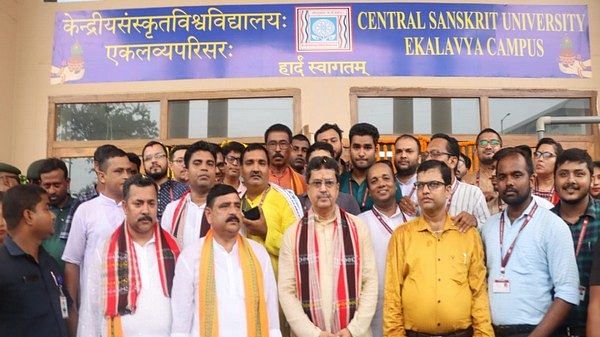
Tripura Chief Minister Manik Saha at Central Sanskrit University in Agartala | Image source: @DrManikSaha2 | Twitter
Agroup of mostly Indian Americans led by Rajiv Malhotra recently published a book called Ten Heads of Ravana: A Critique of Hinduphobic Scholars. Written in English, the book criticises ten scholars, including Romila Thapar, Irfan Habib, Shashi Tharoor, Ramachandra Guha, Devdutt Pattanaik, Sheldon Pollock, Wendy Doniger, Audrey Truschke, Michael Witzel, and this author.
Malhotra and his team attack these scholars by comparing them to the mythological character Ravana and accusing them of killing Dharma, which they derived from ancient Sanskrit books. In the introduction, Malhotra writes, “The ten contemporary scholars in this book have been chosen because their work includes aspects that many Hindus today consider adharmic, just as the historical Ravana was perceived in his times.”
Notably, the four foreign scholars targeted in the book have worked on Sanskrit and taught the language in various Western universities for quite a long time. On the other hand, Malhotra owns a financial network called Infinity Foundation in America and runs Garuda Prakashan in Delhi, which has published the book.
Now the question is: Why did these Sanskrit-loving Indian Americans not write their book in Sanskrit? They write books in English and attack the language as colonial. They praise Sanskrit as a great global living language but never use it in any text. When Sheldon Pollock called Sanskrit a dead language in modern times, he was not wrong. How many households are there in India where family members communicate in Sanskrit or use it in their daily lives?
The problem with these pseudo-intellectuals is that they think abuse is analysis. By writing this book, they have exposed only themselves, not Romila Thapar, Irfan Habib, Shashi Tharoor, Ramachandra Guha, Sheldon Pollock, Wendy Doniger, Devdutt Pattanaik, Audrey Truschke, Michael Witzel, or this author.
Linguicide, the death of any language, occurs when there are no surviving native speakers of a language. However, Sanskrit’s linguicide has been orchestrated by a group of people who used it to maintain hegemonic control. Historically, Sanskrit was controlled by Brahminic writers who restricted access to it and denied the ancient Shudras and Dalits the opportunity to read or write in the language. Sanskrit was treated as the exclusive property of Brahmins and Kshatriyas, primarily Brahmins.
Brahmins killed Sanskrit
Now, they no longer use Sanskrit for writing books with social or academic significance. Essentially, they are consciously responsible for the demise of their own language while continuing to blame the rest of the world for its death. In post-colonial India, no single Brahmin has written any meaningful modern book in Sanskrit.
Contrastingly, other cultures like Jews write globally popular modern books in Hebrew, such as Yuval Noah Harari’s influential work, Sapiens – A Brief History of Humankind, which was originally written in Hebrew and later translated into numerous languages worldwide. Greeks write in Greek, and Arabs write in Arabic. But Brahmins do not write in Sanskrit. Why is it so? Is it because they hate the language but continue to praise it to deceive the gullible Shudra/Dalit/Adivasi masses?
Brahminic intellectuals, supported financially and institutionally by the Rashtriya Swayamsevak Sangh (RSS) and the Bharatiya Janata Party (BJP), consciously emphasise and glorify only the Sanskrit past while disregarding India’s agrarian and artisanal history. They claim that Sanskrit is the richest and greatest language in the world. These intellectuals propagate the notion that all globally available knowledge in various disciplines was originally stolen from Sanskrit texts—Vedas, Upanishads, Brahmanas, Ramayana, and Mahabharata. Even their scientists claim that all modern science is available in ancient Sanskrit books. Yet, how many of these scholars have actually read those books in Sanskrit?
If Sanskrit possesses such immense creative energy, why do Indian Brahmins, who are now spread across the world, leave the global philosophical and intellectual space to individuals like Harari? They could write remarkable books in Sanskrit and demonstrate its richness compared to Hebrew, Greek, and Arabic. Instead of writing quality books in Sanskrit, why do they choose to write in English, a language they frequently criticise as a colonial language?
Sanskrit was considered a “father tongue” rather than a “mother tongue” throughout its history in India. This applies even to Dwija families (Brahmin, Kshatriya, Bania, Kayastha, and Khatri). It is important to remember that Sanskrit was never allowed to become a “mother tongue” even within Brahmin families, as it was never used as a language for everyday communication or in the household. A language can only be considered a “mother tongue” if it is regularly used in daily life within the home, including communication between a mother and her child while breastfeeding. Was Sanskrit ever used by any mother in India to communicate with her child during breastfeeding?
When Sanskrit was not allowed to become a “mother tongue” even within Brahmin households, the question of its adoption in production fields among the Shudra/Dalit/Adivasi communities throughout history did not arise. There was a severe prohibition on the use of this language among agrarian and artisanal communities since the composition of the first Sanskrit book—the Rigveda. Prior to the composition of the Rigveda, the status of Sanskrit as a language was largely unknown.
Not your Amrit Kaal
Given these circumstances, one must question why this group of Indian Americans, which identifies itself as a protector of civilisation, does not write their books in Sanskrit. This team aims to decolonise the Indian mindset, primarily consisting of individuals living in America, Europe, Canada, or Australia, and mobilising financial resources. Why do they not send their children to Sanskrit schools and universities established in India? Instead, why do they choose to send their children to prestigious American universities?
These individuals who have written Ten Heads of Ravana accuse the scholars of being ignorant about India’s civilisation that comes from Sanskrit books. But what do they mean by civilisation? Can civilisation be built through books? Interestingly, in their entire discourse on civilisation, there is no mention of the role of agriculture, science, and technology—the very foundations built by ancient Shudras, Dalits, and Adivasis. Even a cursory reading of any translation of Sanskrit books indicates the absence of social forces from the Shudra, Dalit, and Adivasi communities. These books primarily focus on two castes, Brahmins and Kshatriyas, centered around themes of war, yagnas, and kratus. However, the entire systems of food production, gathering, and animal grazing are completely absent from these books.
All Hindutva writers accuse those who view civilisation from an agrarian, artisanal, and animal economy perspective as being anti-national. Since I keep writing about the agrarian, artisanal and animal economy, while living in India, they call me “Bharat Vikhander”. They behave as if they are sustaining themselves solely by consuming the pages of Sanskrit books. It is crucial to acknowledge that all human beings, including these Hindutva writers, survive on the food produced by Dalit, Adivasi, and Shudra agrarian masses. Even during the composition of the Vedas, the composers relied on food produced by Shudras for their survival. How could they have composed books in which the very food producers were absent?
These forces are internationalising their hypocrisy and constructing a literary treasure trove filled with myths. They want the world to believe that India sustained itself by consuming the Amrutam (elixir) that emerged from the churning of the seas. They never write about those who tilled the land, produced meat and milk through animal grazing, or crafted the ornaments worn by the kings and queens who supposedly lived in that “Sanskrit Age”.
Ironically, these Indian American elites, particularly members of the Infinity Foundation who oppose anti-caste laws in the US, refer to themselves as “Intellectual Kshatriyas”. Isn’t that casteism? Dalits, Adivasis, and Shudras are not interested in your Sanskrit Age. They want to move forward into the English Age, displace these forces from all centres of knowledge production, and establish a connection between food production and knowledge production.
This is not the Amrit Kaal; it is, in fact, the Shudra Kaal. In this era, production is not pollution, as depicted in Sanskrit books. Here, production is sacred.
Kancha Ilaiah Shepherd is a political theorist, social activist and author. His latest book is The Shudras—Vision For a New Path co-edited with Karthik Raja Karuppusamy. He is currently working on a book, The Shudra Rebellion—History From Field Memories. Views are personal.
https://theprint.in/opinion/doniger-truschke-pollock-didnt-kill-sanskrit-brahmins-did/1621532/
-
Shudra Wrestlers Vs Ksatriya Controllers: The Battle For Women’s Rights
in India — by Kancha Ilaiah Shepherd — 26/05/2023
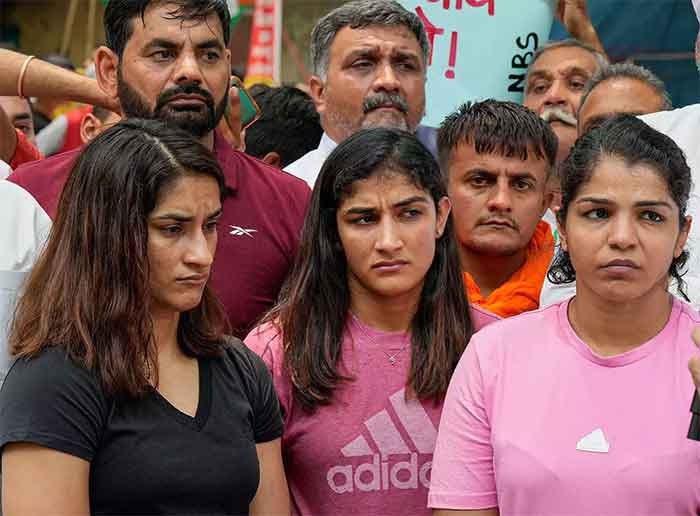
“An investigation of police records by The Indian Express reveals that since March 2017, when Yogi Adityanath took charge, and till date, the state has witnessed 186 encounters. This works out to more than one alleged criminal being killed by the police every 15 days”. 25 May, 2023 Indian Express
But Brijbhushan Sharan Singh remains MP, without any worry of initiating action by the Central Government at Delhi with the support of his own community Sports Minister, Anurag Thakur. And Yogi Adityanath seems to be fully supporting him in spite of the fact that the Shudra (Jat) women wrestlers, who brought laurels to the nation, are fighting for justice in Delhi streets in the burning heat waves of the unusual summer.
The women wrestlers, Sakshi Malik and Vinesh Phogat, who are fighting against Brijbhushan Sharan Singh, a Rajput (Ksatriya) MP, the President of Wrestling Federation of India, have complained that he misbehaved with them. They are demanding his arrest. Two women wrestlers have complained to the police about their own bodies getting touched with a suspicious motive by the Brijbhushan Singh. Most of India’s high physical strength sport—women and men-come from Shudra/Dalit/Adivasi families. Haryana and Uttar Pradesh Jat community is known for training their boys and girls in wrestling.
In the present situation the accused Brijbhushan Sharan Singh comes from UP Chief Minister and Central Government’s sports minister Anurag Thakur community and ideological background. They seem to be protecting him with a will to save him.
Sadly according to the Wikipedia bio of Brijbhushan Singh has this record:
“As per police records, 38 criminal cases were lodged against Brij Bhushan Singh between 1974 and 2007.[16][17] In particular, the FIRs were filed under the stringent Gangsters[18][19] and Goonda Acts[20][21] for various charges including theft, dacoity, murder, criminal intimidation, attempt to murder, and kidnapping, though he was acquitted in most of the cases as per his election affidavit.[22][23][24]”
But Yogi, who declared that all the criminals in his state will be eliminated, does not even want to arrest him. Similarly the Narendra Modi Government does not even want to talk to the wrestlers who have been fighting for so many days for justice. Now the Jat community of Haryana and UP seem to have decided to support their brave girls and announced a Khap Panchayat on May 28 in front of the New Parliament building that the PM is planning to inaugurate. The Sikh Jat farming community also joined the protest. Slowly this movement seems to take the shape of 2020 farmers’ movement of the Shudra agrarian communities against the farm laws.
Delhi is witnessing a similar trend on its inner roads now—India Gate, Jantar Mantar and so on. Thousands of farmers are joining the protest at India Gate for the last few days. It is taking the shape of a battle between Jat farming forces and Ksatriya ruling forces of UP. In future the OBC andDalits of that area are likely to join the protests.
Earlier the UP had witnessed “Garv Se Kaho Hum Shudra Hai ” movement in the context of Tulsidas’ humiliating language against Shudras and women in his book Ramcharitmanas.
Now this is a question of Shudra women Vs a Ksatriya man in power.
Akhilesh Yadav has been saying that UP CM was not ordering to kill Non-Rajput criminals but ordering to kill the OBC/SC so called criminals and according to Indian Express so far 186 had been killed. But the country never witnessed a women’s movement—that of great sports women in its living history—like the one we see now. But even the popular Hindutva women like Kangana Ranaut and Madhu Kishwar, who support the RSS/BJP and keep on attacking any agitators against the RSS/BJP Governments are very consciously silent about this struggle of sports women’s sexual abuse and the inaction of the central and state Governments, in spite of the Supreme Court direction to take action against the culprit.
The National Commission for Women is also totally silent. Why? These forces seem to think that women wrestlers’ bodies do not look like women’s bodies of their liking. They all come from agrarian farming communities. Their wrestling life is not shaped up in rich training institutes or they are not like Hindutva women intellectuals in the universities or film industry with great visibility. Though they won medals in the Olympics their financial lives do not cross the middle class range. If such a sexual harassment was done by ordinary working class men against the sports women of the high economic and caste status, the culprits would have been sent to jail immediately.
The Hindutva nationalism’s justice system does not work even on the basis of religion. It has a clear stand against Muslims and Christian Indians right from the inception of the RSS ideology. But the Jats of India also consider themselves as Hindu. Their women participated in building the civilization and culture of India through hard physical labour for centuries. Wrestling qualities of their women emerged out of that physical labour heritage of Jat women.
During farmers’ movement the central Government has shown similar indifference because they were hard working agrarian masses. There were no top industrialists among them. Now similar indifference is being shown.
Now the Jats of Haryana, Punjab and UP are planning to resort to Khap Panchayat in support of their wrestling women. The same Khap Panchayat they earlier used against inter-caste marriages. Though I am not an admirer of the classical caste panchayat dispute resolution system, I think the nation should support the struggle in support of our hard working wrestling women who faced such a treatment by their own organization head.
How did the Modi Government appoint Brijbhushan Singh as the chairman of the Wrestling Federation of India? In his life he had nothing to do with sports. It is only to satisfy his criminal career and his involvement in the Ram Janmabhoomi issue they gave him that critical position.
Globally recognized sports organizations are not like Yoga centres, in which the RSS/BJP networks are globally involved. Sports involve young people’s life and death. Let the central Government dismiss Brijbhushan Singh from the chairmanship of WFI and prosecute him based on the FIR’s already filed against him. The nation must see that India’s great fighting daughters have to win this battle, as they won in the Olympics.
Kancha Ilaiah Shepherd is political theorist, social Activist and writer. His recent book The Shudras–Vision for a New Path Co-edited with Karthik Raja Kuruppusamy has shown a possible way out from the communal OBC morass that the RSS/BJP has deployed.
-
Now I Am Ravana’s Head
in Arts/Literature — by Kancha Ilaiah Shepherd — 28/05/2023
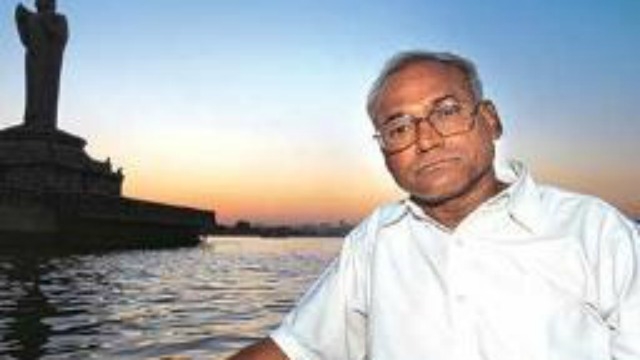
My first reaction to the book that Rajiv Malhotra, from America, published on Romila Thapar, Irfan Habib, Shashi Tharoor, Ramachandra Guha, Sheldon Pollock, Wendy Doniger, Devdutt Pattanaik, Kancha Ilaiah, Audrey Truschke and Michael Witzel,with a title “Ten Heads of Ravana”’. The chapter on me is entitled as Kancha Ilaiah—Bharat Vikhander
There is team of intellectual Ksatriyas
They say I am Ravana’s head,
The Vikhander of Akhanda Bharat,
They write with a sword, not with a pen.
This head must be burnt till it becomes ash,
This must be done to protect Dharma.
Earlier another team said
I was a hand of Bin Laden.
Yet another team said,
I was a foot soldier of George W.Bush.
What am I, actually?
Who knows the truth about me?
Mahatma Phule and Savitribai know who I am.
I am a great grandson of Harappa
Grandson of the Phules,
I am a shepherd roaming
In search of the lost sheep.
Shepherds world over make nations, not break them.
Harappa, Moses and Beerappa
Are known for making nations.
I too go in their path
I am a path breaker, not a nation breaker.
Kancha Ilaiah Shepherd is political theorist, social Activist and writer. His recent book The Shudras–Vision for a New Path Co-edited with Karthik Raja Kuruppusamy has shown a possible way out from the communal OBC morass that the RSS/BJP has deployed.


You must be logged in to post a comment.