-
Caste census a huge step against RSS tradition; will Sangh agree to it?
Kancha llaiah Shepherd

Caste is a mystical psychological category. It makes people crazy when entitlements are assigned on the basis of its oppressive history. It makes a progressive a reactionary when the oppressed caste’s shade reaches the comfort zone of the oppressor castes | Representative image: iStock While Rahul Gandhi went against the understanding of three PMs of his family, the Brahmin-Bania-Kshatriya leaders of RSS-BJP doggedly opposed caste census
Why has the Narendra Modi government suddenly decided to take up the caste census now even though the
RSS and BJP were against it as part of their Sanatana Dharma ideology all along? Is the RSS fully aligned with the decision?
Though the OBCs within the RSS-BJP had been asking for such an enumeration, the Brahmin-Bania-Kshatriya leaders were against it. Even the monopoly capitalists-mostly from the Brahmin-Bania communities-were against a caste census.
Concerns of big businesses
The big businesses worried that once the 50 per cent Supreme Court cap got removed, the reservation issue would reach the private sector. After the caste data is put before the court, it may not have an excuse not to do so, as it has been repeatedly asking for a credible figure of OBC population.
The monopoly houses knew that the next step by OBCs and Opposition parties would be to push for reservations in the private sector. In fact, immediately after the government’s decision, the Congress Working Committee (CWC) met and demanded reservations in the private sector. The CPM, though weakened, except in Kerala, also passed in its Madurai conference that reservations should be extended to the private sector.
Also read: Caste census: Congress steps up efforts to own narrative, deny political mileage to BJP
But is the RSS-BJP realising that Rahul Gandhis image among the OBCs and farmers of India is growing and Narendra Modi’s weakening?
Rahul Gandhi and caste census
The Congress and Rahul Gandhi-pushed to a corner by the RSS-BJP and the monopoly capital-had no way but to take up the issue of caste census and seek the removal of the 50 per cent cap before the 2024 elections to win over at least a section of OBCs.
In fact, there was no unanimity within the Congress, until the RSS-BJP announced the decision to do a caste census. But in the post-Bharat Jodo Yatra rallies, Rahul made it his main campaigning point.
After Amit Shah’s attack on BR Ambedkar in Parliament, the Congress, at the instance of Rahul, adopted a new slogan: “Jai Bapu, Jai Bhim, Jai Samvidhan”.
This was also unexpected-a party being led by, among others, a man from the Nehru-Gandhi family has changed so much.
Rahul’s altered avatar
Rahul has now become a movement leader after his Bharat Jodo and Bharat Jodo Nyay Yatra. He is not a leader aspiring only for the prime minister’s position. There is a social reform aspect in his activism.
Also read: Kharge writes to PM Modi, urges him to consult all political parties on caste survey
As the BJP under Modi, an OBC, pushed Rahul to a wall with constant insults, attacks, and cases, he had to fight back with the twin weapons of social reform and politics. And once a leader goes beyond power politics and takes to movement politics, any kind of harassment, including court cases and losing parliament membership, becomes a weapon of determination, sacrifice, and willingness to fight for the people. That gives a different image to members of eminent political families such as Rahul’s.
Until Rahul took up the issue of caste census, reservation was mainly an issue of OBC regional leaders, social organizations, and so on. They have been, of course, demanding a caste census from different forums ever since the Supreme Court imposed a 50 per cent cap on reservations. But it could not become a national issue.
After VP Singh, who steered the implementation of the Mandal Commission report in central jobs, no other upper caste leader has owned the agenda of OBCs like Rahul has. But Rahul’s family, social and political location is far more different than VP Singh’s.
Moving away from family tradition
Rahul’s great grandfather discontinued the caste census as the prime minister in 1951. His grandmother did not implement the Mandal Commission report with a view that it was retrograde and would go against the merit theory of the elite of her times. His father opposed the implementation of the Mandal Commission report on the same ground of merit.
But Rahul has quite determinedly gone against the understanding of three prime ministers of his family. It was a risky step given his background. But he realised that the Backward Classes got alienated from the Congress because of Nehru, Indira, and Rajiv’s approach to the OBC reservation.
However, Modi gave him a chance to own the social justice agenda more firmly than any other upper caste leader in Indian history. The RSS-BJP thought of marginalizing the Nehru-Gandhi family by attacking Rahul as a “joker”. But he turned the joke on them instead.
Rahul became Opposition leader with that agenda. The Congress won in Telangana and Karnataka with that agenda. He pushed those governments to go for caste census. Congress president Mallikarjun Kharge is his go-getter as the most senior Dalit leader in the country.
An uncomfortable subject
My generation has repeatedly heard during the Mandal and post-Mandal discourses that caste was a British construct. Some even said that it was a Muslim construct. All the left-liberal upper-caste intellectuals opposed OBC reservations as a retrograde step in a secular democracy.
Even after the Congress put it in the 2024 election manifesto, most upper-caste intellectual supporters of the party were uncomfortable, as it was seen as a divisive agenda. All Left Front governments in the past were against such caste count in what they call a “class society”.
The Kerala Left Front government, though headed by an OBC, Pinarayi Vijayan, was not willing to take a caste count even after the 2024 elections. Telangana did that. Karnataka approved the 2015 caste survey.
Bihar, of course, took the first step. Now, how can all these people, who were earlier avoiding counting caste populations in their states, avoid the central government caste census?
Also read: As Centre prepares to embark on national caste census, here’s how Telangana did it Yogi Adityanath-a strong opponent of the caste census-now welcomes it. Mamata Banerjee has always been silent about it. Normally, Bengali “bhadraloK’ intellectuals ignored caste as if it never existed, particularly in Bengal. Now they, too, will be counted. Assam Chief Minister Himanta Biswas Sarma, I am sure, must be boiling within himself, unable to shout out his opposition to the Cabinet approval.
A divisive issue now a unifier
Before the Telangana caste survey, some upper-caste forces moved high court for the inclusion of a “No Caste” clause in the survey manual, and several enumerated in that category. Will they do so in the national caste census as well?
Caste is a mystical psychological category. It makes people crazy when entitlements are assigned on the basis of its oppressive history. It makes a progressive a reactionary when the oppressed caste’s shade reaches the comfort zone of the oppressor castes, like the shade of Phule haunts his contemporary Brahmins in the film Phule.
The RSS-BJP have to organise serious re-education camps for their karyakartas and leaders. The caste census is a national step against the Brahmanic tradition and more so from the age-old Sanatana Dharma.
However, some of their ideologues started a new explanation that the caste census will work for Hindu unity.
Therefore, what was seen as a divisive issue now becomes a unifier. Good if such a change of explanation is part of a change of heart. But the question still remains: will the RSS allow the caste census to happen?
(The Federal seeks to present views and opinions from all sides of the spectrum. The information, ideas or opinions in the articles are of the author and do not necessarily reflect the views of The Federal)
About the Author
Kancha Ilaiah Shepherd
Kancha Ilaiah Shepherd is a political theorist, social activist and author. His latest book is The Clash of Cultures – Hindutva – Mullah Conflicting Ethics.
https://thefederal.com/category/opinion/will-rss-agree-to-caste-census-186178
-
Why shouldn’t English be India’s single national language?
This article is based on excerpts from a talk by Prof. Kancha Ilaiah Shepherd at the first KP Sasi Webinar on Politics of Language and Language of Politics held on 15 April 2025. In the video his speech is from 36.21 to 50.44 minutes.
At the outset, I pay tribute to KP Sasi. Though I did not know him nor ever met him, what I know is that he was a remarkable man who passed away quite early.
Now, when it comes to the topic—the politics of language and the language of politics—I have a major problem with the idea of “mother tongue” itself. You see, when I entered primary school from a completely illiterate family—with no literate relatives in between—we had no idea about our roots. My family could have had its origins in the Harappan civilization.
Around my village, there were more Lambada families whose household language was Gor Boli. But the schools taught only Telugu, and the Lambada children struggled immensely with Telugu, even though they were the majority in that village. This was in a single-teacher school in 1960.
Even my own family spoke a different caste language. So, the idea that the mother tongue for all Telugu regions is now defined as Telugu is false. The mother tongue—or rather, the family language—of the Lambada, Koya, Gondi, and other tribal communities remains their own languages, which are very different from Telugu. So, this entire concept of defining “mother tongue” is absurd.
The three-language formula has been imposed since 1947. Even Nehru’s government attempted it, and the biggest push came from Lal Bahadur Shastri—not just the current government.
Luckily, South Indian states were saved by the Periyar movement, which defined Tamil regions as having only two languages: historically evolved Tamil (which absorbed many other languages) and English. That saved them.
United Andhra Pradesh accepted three languages, Karnataka protested, and Kerala remained silent. In my school, I struggled to learn Telugu’s 56 letters, then English’s 26 letters, and finally Hindi. I found English easier than Telugu.
By sixth grade, I was forced to learn Hindi. Telugu’s script—possibly derived from Pali or Harappan languages—is entirely different from Hindi’s Sanskrit-based script. But Hindi was imposed with a mere 25 marks needed to pass, while other subjects required 35.
Today, children in Telugu states try to avoid Hindi even for those 25 marks. In my life, Hindi has been useless—unlike Telugu, which I use here, and English, which I use globally.
During Nehru’s time, despite Constituent Assembly debates (where Ambedkar suggested retaining English), the policy allowed English only in private schools for the elite, banning it in government schools.
For the first time, the Y.S. Rajasekhara Reddy government challenged this, citing a Supreme Court ruling from Karnataka (where the BJP tried to impose Kannada). The Court upheld parental choice in language medium. Andhra and Telangana now have English-medium government schools.
But here’s my question: Did Hindi states ever teach three languages like we in South India were forced to (except Tamil Nadu)? Why were we burdened with a useless third language while Hindi regions stuck to only two?
Now, the BJP pushes “one nation, one language,” yet their own elite send children to English-medium schools. If the BJP’s industrialist backers’ kids learn only English, why shouldn’t English be India’s single national language?
Our first-generation learners have no problem with English from LKG onward—no need for debates on “mother tongue” or “market tongue.” This is all nonsense. When I asked Karnataka Chief Minister Siddaramaiah why Karnataka doesn’t introduce English-medium schools, he said, “Kannada intellectuals oppose it.”
Even Kerala CM Pinarayi Vijayan hesitated, while only Tamil Nadu, thanks to Periyar, stood firm. The fear of Brahmin and Baniya intellectuals—who educate their own kids in English, CBSE, French, or German—keeps regional politicians from reforming.
What’s this talk of “language and culture”? Where is the link between Sanskrit, the Vedas, or Telugu texts and tilling land, making pots, forging tools, or growing food? Culture comes from labour—not language. This Brahminical myth must be rejected.
Our culture is in how we farm, what forests we nurture, what food we eat. What does Sanskrit have to do with it? This debate is rubbish.
English is now our mother language. We need just one language—English—and can learn Telugu regionally. Two are enough.Name: Email:
Prof. Kancha Ilaiah Shepherd is a prominent Indian social activist, political theorist, and scholar known for his influential writings on caste, social justice, and the rights of marginalized communities. A retired professor of Political Science at Osmania University, he has authored several groundbreaking books, including Why I Am Not a Hindu and Post-Hindu India, which challenge upper-caste hegemony and advocate for the empowerment of Dalits, Adivasis, and Other Backward Classes (OBCs).
https://countercurrents.org/2025/05/why-shouldnt-english-be-indias-single-national-language/
-
Will the Modi Government Carry Out the Caste Census or Will it Remain an Eyewash?
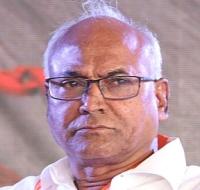
The Hindutva organisations had never believed that the RSS would allow a caste census to take place.
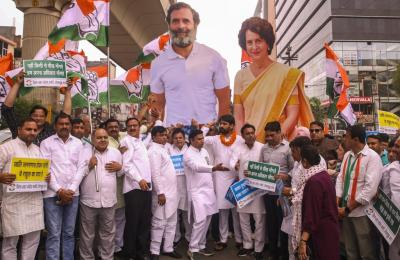
Congress workers in Noida take part in a rally to celebrate the Union government’s decision to include caste enumeration in the upcoming national census on Friday, May 2, 2025. Photo: PTI
On April 30, the Modi government took a sudden decision to include enumeration of caste in the forthcoming decadal national census. The founding fathers of the RSS − K.B Hegdewar and M.S.Golwalkar – would have never imagined such a step by a BJP Government.
Both these founding fathers had the same mindset that the Poona Brahmins had during Mahatma Jyotirao Phule’s times. All of them believed that the caste system was part of the Sanatan Dharma. Their stand was that the Shudras/Dalits could never claim equality. Spiritual, social and educational equality were believed to be foreign to the Indian parampara (tradition) by all RSS leaders.
The idea of caste census is based on a modern democratic belief system that caste should be abolished and drive Indian society towards absolute equality. This is one of the ideals of Mahatma Phule and Ambedkar.
The underlying philosophy of Sanatan Dharma is that caste is created by divine intervention and it can never be abolished. Democracy however believes that every individual, irrespective of caste, creed and sex should live as equals. The Hindutva school was against such democratic ideals .
However, the RSS ideologues, after forming the Jana Sangh and later the BJP, thought that caste must be only used for the advantage of upper castes by not allowing its identity to express itself in the political and spiritual domain, though it could be manipulated in the electoral arena. A national caste census will go against that central ideology of the RSS/BJP.
Caste census and Congress
The last caste census data was collected in the 1931 decadal census by the British regime. That was the growth period of the Congress party under the leadership of Mahatma Gandhi to achieve independence from the British. Most Congress leaders had the same mindset that the RSS top ideological leaders had on caste questions.
They too did not want caste to be abolished. Hence the enumeration of caste by the British Government in the decadal census was seen by them against Indian parampara and the Hindu social order. The British enumerating caste was seen as a conspiracy.
Even in the Constituent Assembly, Ambedkar had to struggle a lot to use the word caste among the conservative Sanatan ideologues all around, irrespective of their political affiliation. Among upper caste leaders of that era, except Rammanohar Lohia, no one else had an open stand on the Shudra/Dalit liberation question.
Nehru was more worried about other pressing issues as the Prime Minister and also believed in the theory of merit not social reform by confronting the caste system. But Ambedkar kept the lamp burning all his life time outside of and inside the Constituent Assembly. He continued that strategy while he was part of the Government till 1953.
His conversion to Buddhism sent a message that if the Indian constitutional democracy could not address caste issues, the oppressed castes would go out of Hinduism. This was a shock to the RSS. However, the Congress managed the system with the ideology of secularism. All university research programmes were confined to secularism and democracy without allowing any research on the caste system. It was the 1990s Mandal movement that brought caste to the central stage because V.P. Singh was willing to allow that.
A turning point in the Congress history
Caste was the most difficult disease among the upper castes till Rahul Gandhi came to the political scene and demanded the ‘X-Ray of the country’ in his 2024 election rallies after making it part of the party’s election manifesto. That was a major turning point in the history of Congress.
Even at that point, the other Congress upper caste leaders were of the opinion that Rahul’s caste census agenda was a negation of their history. But Rahul took an anti-caste movement leader’s position much more categorically than Rammanohar Lohia and V.P. Singh.
Even after becoming the leader of the opposition after the 2024 elections he continued that position. Now his position in the Congress is more credible because the RSS/BJP has had to accept his demand. The detractors have nowhere to go.
The RSS/BJP upper caste forces around Narendra Modi had to accept to go for such an X-Ray because the OBCs in India now found a national leader having come from the same Nehru, Indira Gandhi and Rajiv Gandhi family to take up their cause.
Also Read: How a Caste Census Can Lead Us Towards a Casteless India
Rahul has created an atmosphere of inevitability. He asked Telangana Government to go for the caste census and also asked the Karnataka Government to release the caste survey done by the Siddaramaiah Government in 2015. Rahul took serious political risk in pushing the issue to that far.
Let us not forget the fact that even Nitish Kumar went for a caste survey much against the will of the BJP when he was part of INDIA alliance within Bihar along with the Rashtriya Janata Dal (RJD). The BJP had a serious problem with such a historical issue being raised, one that went against their ideological parampara.
A sudden turn
History of caste has turned 360 degrees after the Modi government’s announcement. The BJP ministers and leaders are attacking the Congress, particularly Nehru as anti-OBC reservationist after this turn. Its tongue twisting talk has really got exposed now. If there was anything that the RSS agreed with Nehru, was the question of avoiding caste census.
Now BJP spokespersons are projecting their Government as pro-OBC and pro-caste census, though they were opposed to the caste enumeration till just the other day.
The Congress and other regional parties must now see that the caste census takes place on a scientific basis. Just adding one column in the questionnaire is not enough. This is where the Telangana socio-economic, educational, employment and political caste survey, 2025 provides a good model.
The Registrar and Census Commissioner of India as a Constitutional body must take an autonomous view of the census and collect all possible methodological information from Telangana, Karnataka and Bihar Governments. This will not be a one time exercise. Every decadal census has to include caste census hereafter.
The future discourse
The future caste discourse, in my view, is not for settling historical scores. But it will be and should be for changing the stagnant systems of India since millennia. Now the BJP, particularly Modi, will try to use this step for his advantage and the Congress has to unify its anti-census forces within its ranks. Several intellectuals, who held high administrative positions during the Congress regimes till 2014 were against caste census.
This is what Rahul Gandhi realised while pushing the caste census agenda and removal of the 50 percent cap. The RSS.BJP upper caste leaders saw the writing on the wall and took this decision.
The left parties were also against caste census and mobilising the OBCs around the idea of human equality and casteless society. The BJP Government’s sudden announcement about caste enumeration has created an ideological crisis among all parties, organisations, NGOs, individual intellectuals who were opposed to caste census.
So long as only Rahul Gandhi was speaking about caste census in India and outside, they thought that he was crazy. Many said that he was a man of without serious ruling and leadership qualities. But now he will be seen as a major change maker.
Also Read: What Does Telangana’s Survey Reveal About Caste Structures Among Muslims?
However, this turn of events would not have happened without the more conscious post-Mandal OBC electoral power. It is the educated OBC youth and leadership that has changed the course of history.
Now let us wait and see whether the BJP Government will really carry out a caste census or it will be just remain an eyewash announcement.
The Vishwa Hindu Parishad (VHP), Bajrang Dal top leaders and the Brahmin sadhus, etc. had hoped that RSS would never allow this to happen. Even the monopoly houses supporting the RSS/BJP for the last ten years thought that Rahul’s movement would fail because the RSS would not allow the caste census to happen. But now it is on the cards.
Kancha Ilaiah Shepherd is a political theorist, social activist and author. He is the Vice-Chairman of Independent Expert Committe that the Telangana Government constituted to examine its Caste Survey data and how it should be used for social justice governance.
-
‘Phule’: A Revolution on Screen
No other couple in human history has shown such a spirit filled with revolutionary ambition for change. That too in a stagnant society like that of India.

Image credit: Instagram My only complaint against the filmmakers is that the film’s title should have been Phules— not Phule. Savitri is not Jyotiba’s better half, but full in herself.
A FIRST IN LIFE
For the first time in my life, I went and saw the Hindi film, Phule, made by Anant Mahadevan, in a modern mall theatre in Hyderabad, and that too along with 20 Phuleites — lawyers, doctors, including a Telugu film director. I do not normally see films unless they have historical relevance. I have seen major changemaker’s films, such as Amazing Grace, made on the life of William Wilberforce in England in 2006. It was directed by Michael Apted. I saw Richard Attenborough’s film, Gandhi. I also saw Dr. Babasaheb Ambedkar, directed by Jabbar Patel in 2000.
The movie, Phule, can be compared more with Amazing Grace than any other. Both of them are about the life and struggle of slave liberators.
Amazing Grace is a biographical drama film about the abolitionist campaign against slave trade in the British Empire, led by William Wilberforce (1753-1833), who was responsible for steering an anti-slave trade legislation through British Parliament. He fought against slave traders and masters in the British Empire and forced British Parliament to make a law against slave trade.
That was the first ever law against slave trade in human history.
A COUPLE’S FIGHT TO THE END
The Phules fought against the Shudra/Dalit slavery beginning in 1848. The film is a feast for thinkers, writers and activists, as it combines both fighting in a non-violent way and constructing a theory about how the Shudra farmers, untouchables and women get liberated through education, which was prohibited for them for millennia.
Though Mahatma Phule, even before his marriage, was a spirited boy, after his marriage with Savitribai Patel (after marriage Savitribai Phule) he became a revolutionary, with her readiness to learn and educate herself as a 9-year-old girl. She too was an uncommon girl since her childhood. Her desire to learn and go against her father’s spirit of casteism is well documented. Her spirit lit a real fire in Jyotiba to educate women in India, and she was willing to join the fight from the beginning.
A SCENE THAT SPEAKS ABOUT A CRITICAL POINT
The film captures the collective consciousness of Phule’s school mate team along with Savitri and Fatima Sheikh and her brother Usman Sheikh, to take a massive step to liberate the entire Shudra/Dalit samaj from the superstitious grip of Brahmanism.
There is an amazing scene that invokes the most significant and game-changing thought process. After the 1957 war, the Poona Brahmins made a drum-beat announcement on the streets where the Shudras lived that to fight the British, they must join Vyayam Shalas (for physical training). That they must learn the methods of fighting and making their bodies fit, while seriously opposing access to education for them.
A Shudra pehelwan (wrestler) keeps training the youth in an open air vyayam shala, teaching them all kinds of exercises —weight-lifting, stick-rolling and fighting. Jyotirao goes there to talk to the master. He asks the master, “Why are you training the youth in this art?” The pehelwanreplies that “if we make our youth learn these arts, they can fight the British.” Phule tells him, “Rather, we must teach them reading and writing to fight the British in a better way.” The pehelwan says, “No, it is a sin. We should not do that. If we learn reading and writing we will violate the Dharma”. Phule tells him that there is no such religious rule. The pehelwan throws him on the ground and puts his foot on him and asks him to “get lost”, since he was opposing Dharma.
Phule simply gets up and walks away.
PHULE’S SHUDRA NATIONALISM
The Shudras and Dalits were supposed to fight the British only physically, not intellectually. But the British rule was being sustained through their intellectual might more than military might. Jyotirao understood this. Unless the Shudra/Dalits and women of all castes—including Brahmins—are educated, the fight against the British will not succeed. That is what he tries to impress upon the pehelwan. In response, the latter uses his enslaved brain to physically beat Jyotiba down.
In another scene, a Brahmin team goes to their school and attacks them, beats up Phule and destroys the furniture. Savitri protects the traumatised girls by huddling them in a room. Afterward, she treats Phule’s wounds. Phule tells her that they must be prepared for not just yuddh (battle) but for a Maha Yuddh (mega battle). The Phules’ life was under threat all the time. Yet, they did not abandon the fight.
Two mercenaries were paid Rs 100 and sent by Brahmins to kill Phule. But he won over them. Phule says, “At least, they spent hundred rupees on me.”
Phule’s philosophy was to educate farmers to produce more food. Educate Dalits to produce better technology of leather and better services by joining the whole society. Phule’s deeper reformist revolution was to prepare India to defeat the British once for all.
The Brahmin pundits, on the other hand, were thinking that they could come to power while keeping humans, production and distribution of goods and commodities backward even after the British left. Savitri tells the Pandits when she confronts them, “You want to rule us exactly like the British are doing”. The Brahmins of that time had a self-interest, not national interest. The Phules were envisioning a bigger national interest.
After some time, the Phules opened a school for girls in an open field. But no parent was being allowed to send girls to school as an atmosphere of terror was created in entire Poona town.
Suddenly, we see the pehelwan walking with several girls to the school and admitting them. He later follows the Phules all through their struggle.
The Phules started Shudra/Dalit and women’s education, a revolutionary process in an absolutely non-violent way. Throughout the film, when the Phules and their supporters face violence, they kept the movement completely non-violent. Except in one incident, when the Shudra workers themselves were opposing girls’ education and come to threaten Savitri and Fatima Sheikh, Savitri slaps one. Patralekha, who played Savitri’s role, has shown her talent as an actor.
The Shudra/Dalits were brainwashed for centuries, generation after generation, that education for Shudras is paap— a sin. It became a self-inflicting human torture. Whenever there were attempts to overcome the fear of ‘sin’ and punarjanma (rebirth) as pigs and dogs, a violent attack was launched from multiple corners. The life of the Phule couple is a standing example of that process of Indian history.
The whole project of Phules’, graphically shown in the film in a manner that even a child can understand, was to violate the rules of Shudra/Dalit slavery. From Phule teaching his ‘child wife’, Savitri, opposing the controls of the Brahminic society and self-inflicted father and elder brother, stretching his reform movement farther and farther in the face of resistance, is a new mode of non-violent revolution. No couple in the world has ever played such a revolutionary role in changing their own uncivilised society.
William Wilberforce was fighting his educated and slave trading class with reasoning. It was to make a law to abolish slave trade in the early 19th century in England. But the Phules’ fight was much more difficult. The determined couple, by embracing a philosophy of mass liberation of all Indians, including Brahmins, who were steeped in deep superstition, paved a way for the future. They steered the struggle with grit. They were fighting to counter the practice and theory of embedded slavery and barbarism. No other couple in human history has shown such a spirit filled with revolutionary ambition for change. That too in a stagnant society like that of India.
While watching the film, I was either breaking into tears or trying to clap when they (the Phules) won in some fight.
No other film has made such a deep impact on my life and conscience as the film Phule has.
The writer is a political theorist, social activist and author. His latest book is the Shudra Rebellion. The views are personal.
-
Kancha Ilaiah Podcast Interview with Geetha Ramaswamy |The Shudra Rebellion| EHA TV
-
Full Text | Sort of Cuts Demanded of ‘Phule’ Will Deprive Film of Its Soul: Kancha Ilaiah Shepherd

Shepherd also pointed to the irony that the Maharashtra government recommended a Bharat Ratna for Phule but is mum on the film’s censorship.
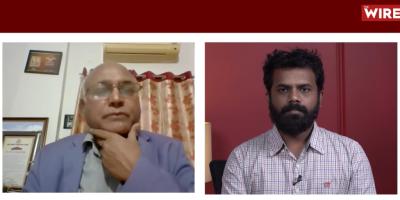
Kancha Ilaiah Shepherd in conversation with Atul Howale.
New Delhi: A biopic on Mahatma Jyotiba Phule and Savitribai Phule, which was supposed to be released on Phule’s 198th birth anniversary on April 11, could not be released after the Central Board of Film Certification (CBFC) asked for cuts following protests by Brahmin organisations in Maharashtra.
The film titled Phule, directed by Anant Mahadevan, depicts the lives of the 19th-century social reformers, who fought against caste oppression and promoted education for women and Dalits.
Political theorist Kancha Ilaiah Shepherd in an interview expressed dismay over the CBFC’s swift response to the protests.
“The film is based on historical facts, yet the CBFC is asking to remove caste names like ‘Mahar’, ‘Mang’ and ‘Peshwa,’ and even the term ‘Manu dharma,’ which is central to understanding the caste system,” he said.
The board also objected to scenes depicting untouchability, such as a Dalit man carrying a pot to collect spit or a Brahmin boy throwing dung on Savitribai Phule.
Shepherd highlighted that the protests were led by just a handful of Brahmin organisations in Maharashtra, such as the Akhil Bhartiya Brahman Mahasangh, yet the CBFC acted swiftly.
He also criticised the silence of feminist organisations and upper-caste intellectuals.
He pointed to the irony that the Maharashtra government, which is led by Brahmin chief minister Devendra Fadnavis, has recommended a Bharat Ratna for Phule but is mum on the censorship of the reformer’s biopic.
The following is the transcript of Shepherd’s conversation with The Wire’s Atul Howale.
§
Atul Howale: My first question is, why is there censorship against the Phule film?
Kancha Ilaiah Shepherd: Well, I was surprised when I saw that the release of the film on his [Phule’s] 198th birth anniversary was stopped by the CBFC on the pretext that there was a complaint by some Brahmin organisations, particularly one Anand Dave, who represented the Brahmin Federation of Maharashtra.
Now, this film is the first film by Bollywood, with a proper director, producer and with well-known character actors like Patrick Gandhi and Patralekha [Paul]. After the film was finished, when they went for certification – that too after the trailer was released – quite surprisingly the CBFC said that several cuts need to be made because there are protests, there are complaints by Brahmin organisations.
And those cuts which they suggested, some of them are very straight. For example, they were asking for cutting caste names like ‘Mahar’, ‘Mang’ and some other Maratha surnames. Why are they asking to cut what Phule called the ‘Atishudra’ names, who were untouchable at that time? What is the concern of Brahmins here, that these names should be cut?
The other major thing is that they don’t want to use the phrase ‘Manu dharma’-situated society, or society of Manu dharma.
They also don’t want visuals like that of a Dalit having a pot to his neck and broom to his waist. In the 19th century that was a reality in most parts of India, and more particularly in the Peshwa kingdom, that if a Dalit were come to a village or a town, he had to notify [villagers] by even ringing a bell in certain cases, he had to spit [in a pot] and then his footprints were supposed to be swept off because there were dusty roads in those days.
Now that only indicated the level of untouchability that Indian society suffered. That they wanted to remove. And then there is a scene in the trailer, where a boy with a janeu on his body – a sacred thread on his body – a shaven head, obviously a Brahmin, gurukul-trained boy, throwing dung on Savitribai Phule when she was going to school.
That was a very well established fact – whether it was a boy of that age or whether it was different people of different age – but it were those Brahmin community members who threw dung on her [following which] she had to bathe and change clothes to go and teach.
If those kinds of things are removed, I think the soul of the film is gone.
AH: Do you think this film accurately reflects history and the Phules’ work? Some Brahmin organisations have come forward to protest – I saw that protest, there were only ten to 20 people protesting. Is the censor board really taking this protest by ten to 20 people seriously?
KS: It is interesting that it is in the same year that … the government of Maharashtra headed by Devendra Fadnavis, who himself is a Brahmin, proposed a resolution in the state assembly – which all parties unanimously voted for on March 24 – to give a Bharat Ratna to the Phules …
Although there were such demands for quite some time that the Maharashtra assembly must pass a resolution – because they belong to the Maratha society and so on – it never happened. And the BJP government passed this resolution, obviously with the nod of the RSS [Rashtriya Swayamsevak Sangh] and the BJP in Delhi.
In the same year, when a major film is being made and is supposed to be released, with the pretext of a handful of people with some kind of organisational, caste organisational names – the protesters themselves are caste organisations – the CBFC immediately responds to that.
Earlier, there were several protests as several films, including films on historical background, films on man-woman relationships and also minority-related films like The Kashmir Files and The Kerala Story, but the CBFC did not respond so quickly.
The only film that it took some time to clear recently was Kangana Ranaut’s Indira Gandhi film [Emergency] because various forces talked about its historical inaccuracy and it was a very recent history of a prime minister of a country that two women [inaudible].
This [Phule] is a film on 19th-century reforms and the facts about those incidents around Savitribai and Phule’s life … the first biographer who noted most of these facts was Dhananjay Keer, who himself was a Brahmin historian. He has written several biographies, including that of Savarkar and so on.
The film’s director, Anant Mahadevan, repeatedly said that ‘no, the film is made on absolute historical facts with a lot of research’ and ‘why would I make a film to offend a community to which I myself belong to’.
So even the film’s actors like Gandhi and [Paul] in their interviews said, ‘no, these are all based on historical facts, we also looked at that background and we were so deeply involved, we thought that we are making a film on a god and a goddess’. So that kind of respect they have for the couple.
What surprised me more is that the protesters are just a handful.
Also read: Anurag Kashyap is Right. Indians Need to Confront the Uncomfortable Truth About Caste
AH: We saw only ten or 20 people in the frame who protested against this film.
KS: Yeah, there are ten or 20–or three organisations they mentioned … I mean, these are known caste organisations. Now, the fact that the CBFC itself is very much concerned about it–how can they say that you should not use ‘Mahar’ and ‘Mang’ names in the cast? They were well established–
After all, see, Phule used the words ‘Shetji’ and ‘Bhatji’ for Brahmins and Baniyas, these were Marathi colloquial names for those communities. And he used Shudras and Atishudras … a whole conglomeration of agrarian communities as Shudras, including Marathas, pot makers, goldsmiths, ironsmiths, all kinds of cattle rearers and so on, what they call Dangars in Maharashtra. Then all Dalits, he put them together as Atishudras.
Now the question is, after that Ambedkar wrote The Annihilation of Caste, organised a Scheduled Caste Federation, including with Mahars and Mangs, and the caste names are very well known all over the country.
At one level we are talking about caste census, but at another level they say don’t use caste names.
AH: But professor, my question is, what will happen if the caste names are shown in the film?
KS: If you look at the history of Madigas and Malas in Telangana and Andhra Pradesh, Madiga is a surname now … of a whole community–writers, intellectuals, leaders and activists, and surprisingly the CBFC says ‘don’t use caste but use varna’.
I mean, how does just the fourfold varna that was just used in a Rigvedic text based on the colour complexion of people at that time, in the context of the Aryan migration, which Phule himself recorded in Gulamgiri very well, that …fourfold Varna idea does not capture the caste system.
And if they say that you should not use ‘Manu dharma’ in the film, I mean, where is the [film’s life] then?
AH: In the last ten years we have seen many propaganda films like The Kashmir Files and The Kerala Story. They run smoothly and don’t have any issues with the censor board and have no restrictions, but at the same time, while truthful history is shown in Phule, the censor board asks for certain parts of it to be cut before it is released.
KS: We saw that when films like The Kashmir Files or The Kerala Story were released, it was not just Muslim intellectuals but even a lot of secular intellectuals and a lot of women journalists said that these films are not made based on historical facts. Even then, the film board did not take cognisance of such writings, protests or whatever.
Leave that alone; in the context of a major reform being accepted by [inaudible] sections in terms of caste and women’s equality, the history of the Phules is the history of not just the anti-caste Satya Shodhak Samaj being built with an idea that all castes must live as equal human beings, the question of women’s liberation and education, the kind of struggles that Phule and Savitribai Phule faced from the Pune region’s elite.
And that was the time when Bal Gangadhar Tilak was also alive, and this couple was thrown out of his own father’s house, and yet they went to the Dalit wada and started a school for all children, including Brahmin children.
When that kind of couple’s life is coming into a film form, all those depictions are historically verified facts and several biographers have written about them.
It is in this context I think it is very disturbing, and they are not bothered about the protests by various sections. Unfortunately, you know, not many feminist organisations have come in the defence of the film. Not many journalists outside the OBC organisations, Dalit organisations, like headed by Prakash Ambedkar.
The media of course is writing the news, but where is the protest against this kind of censorship by the others … at a time when the BJP itself recommends, for the first time to 19th-century reformers, a Bharat Ratna?
I mean, where is the protest? I am shocked at this also. A lot of feminists should have talked about it, [asked that] it should come out without any cuts. And we know that the feminist movement and a large number of women writers, women executives, women journalists–a lot of them come from upper-caste backgrounds.
The propaganda films [are] based on their own hodgepodge research of modern events and contemporary events. They produce all kinds of films and if there are such objections from the film board and agencies like that, even in this case, the information and broadcasting ministry itself suggested that the word Manu dharma not be used in this film.
This is a very strange thing. How can the information ministry now suddenly come in and say ‘don’t use Manu dharma’? The critique of Manu dharma by Ambedkar, the critique of Manu dharma [by] Kanshi Ram and [in] the whole of academia now, the word ‘Manuwadi’ has become very popular.
Also read | I Don’t Agree With the Modifications the Censors Made to My Film on Phule: Ananth Mahadevan
In this context, the ministry also says ‘you should not use words like Manu dharma in the film’. It’s a very scary situation for the freedom of the productive masses, their representatives and their reformers. And particularly, see, reforms of Phule and Ambedkar were not like the reforms of Raja Ram Mohan Roy or Dayanand Saraswati or Ishwar Chandra Vidyasagar or Ranade.
These reforms actually have changed the whole social system to make it competent to change this country into a modern country and face any eventuality tomorrow, either from China or from America, we should become a modern nation with [gender] equality, education for all and caste-lessness in society.
When such films are coming, everybody seems to be against it either by acting against the film or by remaining silent.
This kind of intellectual environment shows that caste is a very, very deep institutional thing. And not only caste; in the very same Maharashtra, the BJP government has given Savitribai’s name to the Pune University.
In this atmosphere also a film, for the first time – earlier small films came – but for the first time a Bollywood film is being made on this and a handful of people protest. The CBFC responds, the information ministry responds, and only [there is only] fighting in defence of the film producer, director, actors … [inaudible]. Why should it be like that?
AH: In the last ten years this government has suppressed the voice of Bahujan communities, because on the one hand we saw other movies like The Kerala Story, Chhava and other propaganda movies run smoothly, but what happens when Phule or any other movie connected to the Bahujan people [comes out?]. Why is the government censoring them? Is the government suppressing the voice of this large community?
KS: I’m also concerned about the OBC prime minister who has been talking about the OBCs in order to mobilise votes in Maharashtra in the recent election. They did win the election with OBC votes mainly.
He also knows that the information and broadcasting ministry is asking for removal of the word Manu dharma or other words related to Manu dharma from the film; or even the CBFC remaining very firm about the cuttings, in spite of the fact that Anant Mahadevan himself said, ‘Look, I’m a Brahmin myself, why would I hurt my own community?’. The film does not have that kind of negative issues involved in it, it is based on historical facts.
Yet the BJP government is not intervening to [tell] the CBFC that ‘no, there is no need for these kind of cuts for such a remarkable film made on remarkable people like Savitribai and Mahatma Jyotirao Phule’, whom we all respect today and need them to change this country into an egalitarian country.
My feeling is, in the recent context, both the BJP and RSS, on the one side talk about changes that they are also accommodating. But on the other side, they keep insisting that the sanatan dharma has to be protected, completely protected, and no reforms within the sanatan dharma are allowed.
This goes against their own argument when it came to Muslim women. The very same party, the very same organisations were saying that there is a need for reform within Muslim women. And after all, what Phule did is the same. He did for Brahmin women, he did for Shudra women, he did for Dalit women–Savitribai and Phule–education, Satyashodhak Samaj, everything.
So I think there is a double-edged weapon that both the BJP and RSS and the government are using. Now suddenly when the film of Phule is made by the Bollywood industry [with] a very well-known director, a very well produced film and then seasoned actors acted [in it], they came out with this kind of politics.
I think the whole country must really remain watchful. It is not a question of only SC/ST/OBCs or intellectuals from those communities. It is an issue of all castes.
Why should the Brahmins, who–see my caste has treated Dalits as untouchable; today I’m saying my parents were wrong. My caste earlier was wrong. They should completely treat, they should completely realise that Dalits are equal to shepherd communities, Dalits are equal to all other OBCs. There should not be any discrimination.
So Brahmin intellectuals should take a similar stand wherever they are: whether in the government, whether in the media, and I’m very concerned about feminist organisations not at length talking about this film and the kind of developments that are taking place.
https://thewire.in/film/full-text-kancha-ilaiah-shepherd-phule-cuts
-
The untold truth of Phule & Savitribai: Why their legacy still scares the powerful: The Hindu
-
‘Phule’ depicts a brutal truth of our past. We cannot sweep it away
If we want to reform, we must acknowledge the barbaric acts our ancestors perpetrated against fellow human beings with a sense of historical guilt. We must appreciate what the Phules and Ambedkar have done to reform our society
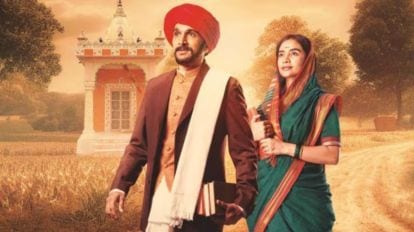
Though there are many small films on these social reformers, Phule is the first major Bollywood film.

Apr 19, 2025
The censoring of the Bollywood film Phule, based on the lives of Mahatma Jyotirao Phule and Savitribai Phule, played by Patrik Gandhi and Patralekha, and directed by Anant Mahadevan, has led to an unusual controversy. Though there are many small films on these social reformers, this is the first major Bollywood film. The scheduled release of the film on Mahatma Phule’s birth anniversary (April 11) — later postponed to March 25 — would have gone well with the unanimous resolution of the Maharashtra Assembly recommending the country’s highest award, Bharat Ratna, to the couple on March 24.
If the Central Government accepts the proposal and awards them with Bharat Ratna, it will be the first-ever award to the 19th-century reformers. Earlier, it was mostly given to freedom fighters, post-Independence leaders and artists.
The Central Board of Film Certification’s (CBFC) direction to postpone the release and to implement cuts — removing words like Mahar, Mang, Peshwai, phrases like Manu Dharmic Society; scenes where “untouchables” are with broom tied to their waist in order to clean the path that they walk through, as per the traditions under Peshwa rule — is itself strange. Though the film is a drama, those words and events mentioned are not fictional. They were part of history.
All of this happened after some Brahmin organisations protested against the trailer and filed a complaint with the CBFC. The CBFC’s response was quick. Mahadevan said that the suggestions for cuts were “innocuous”, and they were carried out. One concern flagged by the CBFC, it is believed, was a scene depicting a boy in traditional Brahmin attire throwing dung on Savitribai.
The listed objections of the CBFC stand against the historical facts about Phules. Why should Brahmin organisations object to caste names like Mahar and Mang when the communities themselves have no problem? Dalits use their caste names just as Brahmins use Sharma and Shastri, or Kshatriyas use Singh. Caste identities reflected in these end-names are historical identities. However, the problem starts when such end-names relate to hierarchical status. Phule started the anti-caste movement — forming Satyashodhak Samaj (truth seekers) – to give equal respect and status to every caste, occupation, and name: Bhatji (Brahmin), Shetji (Banya), Shudra (that includes several agrarian castes), and Ati-Shudras (includes many Dalit castes).
The brutal practice of “untouchability” has existed in India in many forms through the ages. For example: Punishing Shudras and Dalits by cutting off their tongue or pouring hot liquids into their ears if they read or listen to the recitation of Vedas; Shudra/Dalit women not being allowed to wear upper garments; or not letting Shudras and Dalits walk on temple roads. Why can such practices not be depicted in films?
If we want to reform, we must acknowledge the barbaric acts our ancestors perpetrated against fellow human beings with a sense of historical guilt. We must appreciate what the Phules and Ambedkar have done to reform our society. We cannot behave with the same medieval mentality and try to avoid the historical truth. History is a guide to change, not a tool to hide the sins of our ancestors.
As a Shudra, born and brought up in a shepherd family, I cannot condone my parents and grandparents’ bad treatment of Dalits in my village. I own the Phules and Ambedkar as the lights who can guide my family and caste through change. A Brahmin or Baniya should also do the same.
A forward-looking nation state cannot allow institutions to put historical truths under the carpet. It will make us complicit in these atrocities. It is our moral responsibility to face the evil, whether of the past or present. Reformers like the Phules suffered violence without retaliating. There is not a single recorded instance of Phule indulging in violence. Even while saving the life of their adopted son Yashwantrao’s widowed mother from a Brahmin crowd that was planning to kill her, Phule did not use violence. After Gautam Buddha, it was the Phule couple who made this land worth worshipping.
The CBFC and central government fall short of their nationalist responsibility by delaying the release of the film and by asking for cuts that would not have caused any violence. Rather, it would have pushed the audience to think and introspect.
The writer is former Director, Centre for the Study of Social Exclusion and Inclusive Policy, Maulana Azad National Urdu University, Hyderabad. His latest book is The Shudra Rebellion
-
Censoring Caste Realities Will Kill the Soul of Phule’s Biopic: Kancha Ilaiah | The Wire
-
Without Phules, India would not have had a feminist movement: Kancha Ilaiah on ‘Phule’ controversy


You must be logged in to post a comment.