-
Strongly Condemn the Delay of Phule Film
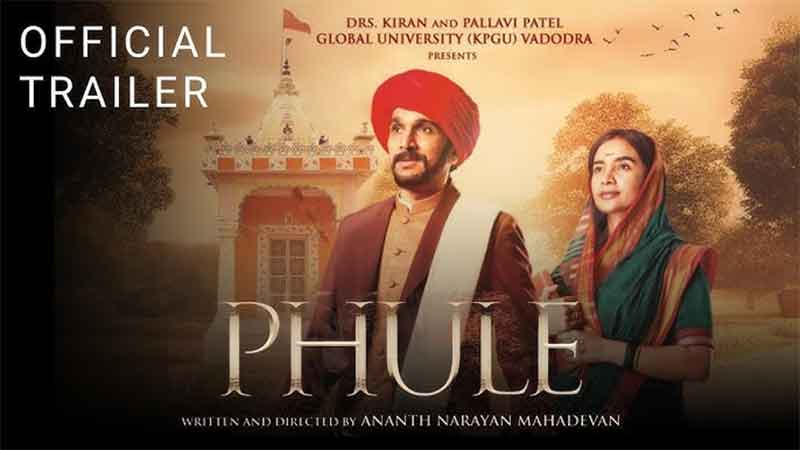
I saw this news on 10th April morning that this great film Phule, which was meant to be released on 11 April (today), has been stopped by the CBFC. The news item reads:
The release of the Hindi film Phule,” about the lives of social reformers Jyotirao and Savitribai Phule, has been delayed due to concerns raised by the Brahmin community about its portrayal. The Central Board of Film Certification (CBFC) has asked for edits and removal of caste-related references after objections from Brahmin groups.
How can the CBFC ask for a postponement of such a film on a great social reformer based on the Brahmin community’s opposition? How and why does it want to remove caste-related references from the film? Phules’ struggle was against caste and Brahmin communities’ inhuman practices of his times. It is for the same Phules’ that the Maharashtra state assembly recommended for Bharat Ratna on 24 March unanimously. Phule couples’ fight against Brahmin casteism is a well-documented history. The TRAILER of the film reflected absolutely truthful incidents. A Brahmin biographer of Mahatma Phule, Dhanajay Keer himself, recorded these facts.Name: Email:
All the reform-loving masses of India- particularly the Shudra/OBCs, Dalits/Adivasis of India, and also intellectuals must fight against this anti-reform step of the CBFC and demand that the film must be released without cuts from its earlier approved version. India must rise against this kind of casteism.
Jai Phules
Kancha Ilaiah Shepherd
Hyderabad
-
What made BJP consider giving Bharat Ratna to Jyotirao, Savitribai Phule?
Kancha Ilaiah Shepherd
11 Apr 2025 6:30 AM (Updated:11 Apr 2025 6:30 AM)
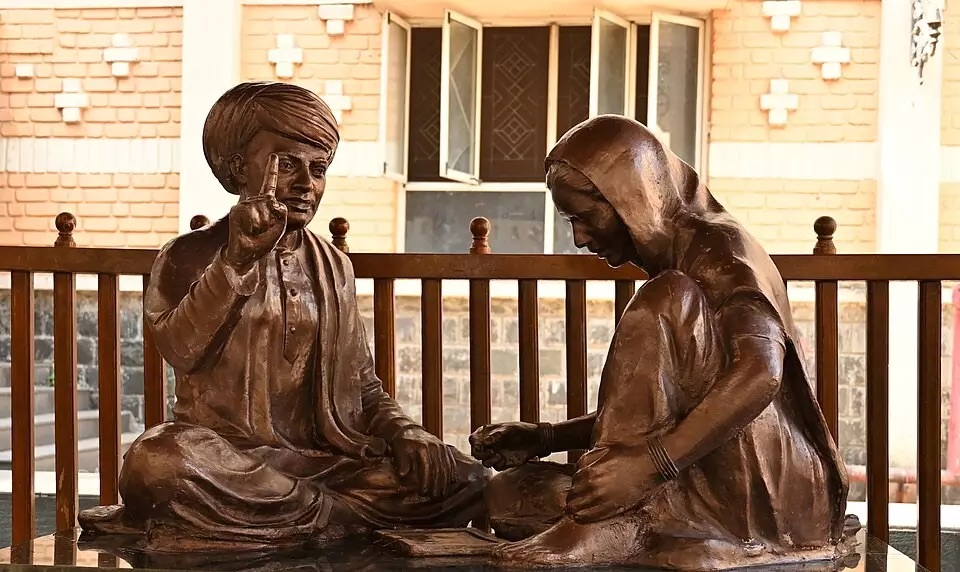
It is important that the BJP itself is asking for the Bharat Ratna award for great social and educational reformers like the Phule couple | Photo: Wikimedia Commons
Why has the BJP come up with a proposal to give Bharat Ratna to this great couple, whose lifetime work was against its ideological and political agendas?
Today (April 11), India celebrates the 198th birth anniversary of Mahatma Jyotirao Phule.
Jyotirao (1827-1890) and his wife Savitribai Phule (1831-1897) are considered the first
“modern” Indian couple that initiated a social revolution in India. But that revolution was most despised by the upper castes, mainly the ones Jyotirao called the “Shetji-Bhatjis”
– the rural colloquial Marathi names for Indian Brahmins and Baniyas.
So, it comes as a surprise that the Bharatiya Janata Party (BJP), which, for a long time was known as the “Brahmin-Bania party”, tabled a resolution in the Maharashtra Assembly – that too with a “Bhatji” as chief minister (Devendra Fadnavis) – to recommend Bharat Ratna for this 19th-century Shudra revolutionary couple.
The resolution was passed unanimously on March 24.
Reform movements
Phule’s famous book Gulamgiri (Slavery) assessed Indian history and religious institutions from the Shudra and Ati-Shudra points of view.
The couple also started a major social revolutionary organisation, Satyashodhak Samaj, as against Arya Samaj (Dayanand Saraswati), Brahma Samaj (Raja Ram Mohan Roy), and Sarvajanik Sabha (MG Ranade).
While the other organisations introduced reforms mainly among the Brahmin community, particularly for their women, the Satyashodhak Samaj (Truth-Seekers’ Society) initiated anti-caste and anti-patriarchal reform movements.
Also read: Savitribai Phule: India’s first female teacher, and a forgotten liberator
By and large, the Kshatriyas of India remained silent about such reforms. In fact, they did not produce intellectuals to engage with modern ways of life for a long time durina the 19th and 20th centuries. The
Vyshyas also did not engage with reform questions until Mahatma Gandhi emerged.
Opposing ideologies
The Phules were the only couple to take on the historical issue of barbaric untouchability and Shudra-peasants’ oppressed life. And one can surmise that they will be the first 19th-century reformers to get the title of Bharat Ratha, once it’s given. No other social reformer of that period has been given this highest award.
Obviously, the step did not come without the nod of the Rashtriya Swayamsevak Sangh (RSS) and the top BJP leadership in Delhi.
So, why has the BJP come up with a proposal to give Bharat Ratna to this great couple, whose lifetime work was against its ideological and political agendas?
A fundamental difference
If one just compares the narrative of Gulamgiri that Phule wrote in 1873 and Veer Savarkar’s Hindutva written in 1923, they clearly stand for two opposite ideologies.
For the Phule couple, the Muslim question was not at all central. In fact, Muslims were seen as the helping hands in their reform agenda. Fatima Shaik was a friend-in-arms of Savitribai in teaching untouchable girls.
On the other hand, Savarkar’s main enemies were Muslims. There was no discourse on how Shudras and Dalits need to be liberated from caste oppression and educational backwardness in Savarkar’s agenda.
Phule’s main fight was against the Aryan ideology of the four-fold Varna system. His fundamental thesis was that agrarian and artisanal production was the key to sustaining Indian civilization and not human hatred based on caste or religious beliefs.
For Savarkar, human production relations and the exploitation of one community by the other was never an issue.
Therefore, naturally, a question arises – why this sudden love and respect from a Hindutva right-wing ruling political force for the first anti-caste reformer couple? Why did the Congress, as the ruling party, and the Left liberals, as intellectuals, ignore them?
It is quite possible that with this decorative step for the great caste and education reformer couple, particularly who worked for women and Shudra/Dalits, the RSS/BJP want to own their legacy. They are already trying to own Ambedkar (the tallest Dalit icon) and Sardar Vallabhbhai Patel (the tallest Shudra icon) in Independent India.
Historically, the RSS ideology was against such reforms. As I said, their hero Savarkar never accepted such an anti-caste reform agenda that the Phules, in that very Maharashtra, worked for – till Dr BR Ambedkar dedicated his controversial book
Who Were the Shudras-How They Came to be the Fourth Varna of the Indo Aryan Society? to Mahatma Phule.
Wooing the OBCs?
Ever since an OBC, Narendra Modi, rose from the RSS ranks to become the prime minister in 2014, the BJP has become the most obvious choice of OBC hopefuls, particularly in northern and western India.
However, in the 2024 general elections, Rahul Gandhi’s focused campaign around OBC reservation and caste census shook the RSS/BJP vote bank.
The caste census in Telangana and the state government’s proposal to increase the OBC reservation to 42 per cent signalled that the OBCs might move away from the BJP in the north and west too.
In the Maharashtra state elections in 2024, the OBCs were offered more seats and a better share in the power, and the BUP alliance won. Since they are against a caste census, they must do some significant thing to retain the OBC goodwill in Maharashtra. It appears that they proposed the Bharat Ratna for the Phule couple with a long-term political agenda to retain the OBCs in the RSS/BJP camp.
Also read: Savarkar’s story: Myths, truths, and the political narrative
Congress on back foot
This step has, however, put the Congress in an irksome position. The party never gave a Bharat Ratna to an OBC leader, thinker, cultural icon, or social reformer. Though they gave the Bharat Ratna to Kamaraj Nadar, a Shudra leader from Tamil Nadu, he was never owned by OBCs in the context of the Dravidian ideological struggle against Brahminism in that state.
When it was in power, ever since the most prestigious award was instituted, the Congress gave it to many Brahmin leaders, starting from C Rajagopalachari of Tamil Nadu in 1954. It also gave the Bharat Ratna to Muslim leaders like Maulana Abdul Kalam Azad and Zakir Hussain.
In fact, the BJP has also attacked the Congress over Pandit Jawaharlal Nehru and Indira Gandhi conferring the award on themselves.
Welcome move
The BJP — with the RSS’s approval – has also given the award to Brahmin icons like Atal Bihari Vajpayee, Lata Mangeshkar, Pranab Mukherjee, and Bania leaders like LK Advani.
It even gave the award to Karpoori Thakur, a comparatively lower-rung OBC leader, keeping the OBC votes of Bihar in mind.
Thus, it became a political award, rather than being one that recognises the contributors of socio-economic change in the country in modern history.
Therefore, the BJP asking for the Bharat Ratna for the great social and educational reformers that the Phule couple was, has its significance.
Also read: Nehru implemented idea of India:
Historian Aditya Mukherjee
Whatever may be the reasons, the fact that they recommended the Bharat Ratna for the
19th-century Phule couple – for the first time in the history of the award – is welcome.
(The Federal seeks to present views and opinions from all sides of the spectrum. The information, ideas or opinions in the articles are of the author and do not necessarily reflect the views of The Federal)
Kancha Ilaiah Shepherd
Kancha laiah Shepherd is a political theorist, social activist and author. His latest book is The Clash of Cultures – Hindutva – Mullah Conflicting Ethics.
-
India – A Buffalo Nation Not a Cow Nation :
Kancha Ilaiah | Bijumohan Channel
-
Muslims under OBC: Ideological fight around Telangana caste survey
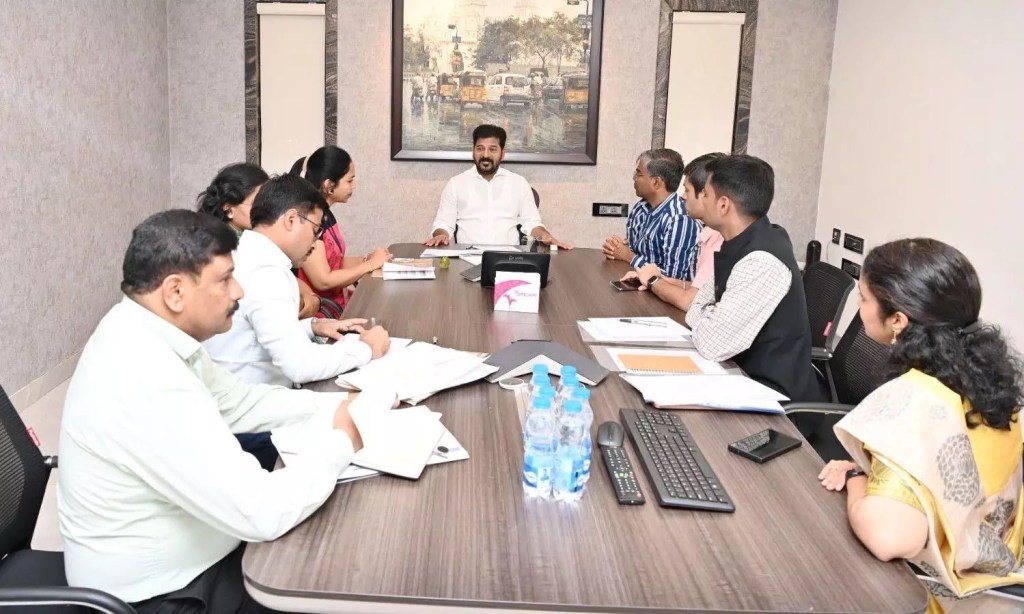
Telangana Chief Minister A Revanth Reddy in a meeting with state government officials on the caste survey. File photo:
X/@JacobBhoompagAccording to BJP, Congress converted 10.08 per cent Muslims into OBCs, who otherwise should be in the general category. A dangerous communal argument, indeed
Kancha Ilaiah Shepherd
9 Mar 2025 9:10 AM
The Telangana Socio, Caste, Economic, Education, Employment and Political Survey, popularly referred to as a “caste census” was done on the personal initiative of
Congress leader Rahul Gandhi. The Revanth Reddy-led state government got it done despite the resistance of the upper castes.
Rahul has been flagging the Telangana census as a model for the nation.
This is the first scientifically done caste census in Telangana in recent times. The earlier one, in 1931, was done in tough circumstances in the Nizam state that ended in 1948.
At that time, several villages and hamlets were not approachable. Some parts of present-day Maharashtra and Karnataka were in the Nizam state along with the existing Telangana.
Also read | Telangana: BJP sees red as Revanth claims Modi not backward class by birth
The enumerators were mostly Urdu-speaking whereas the people spoke regional languages. The questionnaire and methodology were underdeveloped though the British used the best possible methodology of that time.
A scientific survey
Undoubtedly, the present Telangana government has used very modern methodology by deploying Telugu, Urdu and English-speaking enumerators. Every village and hamlet can be reached now.
The then Telangana Rashtra Samithi (now
Bharat Rashtra Samithi) claimed it carried out a survey in 2014 in just one day, days after the government was formed on June 2, 2014. That cannot be called a census survey.
The Congress government in Telangana placed the general data of caste census in the Assembly on February 4. After it released the percentiles of broad nata, it has
become a source of ideological battle between the Congress and the BJP, the latter from its anti-Muslim point of view.
The BRS has pedaled its own so-called
‘Kutumba survey’, whose data was never released.
Also read | Telugu states never disliked Hindi; it’s partly politics, the rest is history
Muslim OBCs
The BJP argument is that the Congress government deliberately increased the Muslim OBC percentage to show fewer
Hindu OBCs. It has warned that if and when it comes to power, it won’t recognise Muslims as OBCs as that category belongs only to Hindu castes. The 4 per cent reservation now with Muslims will be shifted to Hindu OBCs.
The latest survey was done over a period 50 days with a scientifically prepared questionnaire. The Telangana government
contained an annexure of caste lists of four categories – OBC, SC, ST and OC (general caste).
The Muslim OBC-E group list mentioned 60
Muslim OBC caste names. The enumerators asked the respondents which group they belonged to and enquired their caste name as per the list.
Low caste Muslims
Per this survey, 10.08 per cent of Muslims came under OBC. Only 2.48 per cent Muslims identified themselves as OC.
This Muslim OBC caste list was prepared by the YS Rajasekhar Reddy government around 2006. Now this list is also common for Andhra Pradesh, where the BJP is a part of the ruling coalition. If the Andhra
government does a caste census tomorrow, will they show all Muslims of the state in the OC category?
Also read | Caste survey arithmetic and growing fear of small numbers in Karnataka
Quite surprisingly, the Muslim castes included in the OBC list are mostly those related to begging, street vending and culture. The list starts with Acchukattalavandlu and ends with Turaka Kasha. It includes beggars, vegetable vendors, cycle mechanics, performers and so on.
Most of these lower castes were converted to Islam during the Asaf Jahi dynasty’s rule over a period of 300 years.
BJP and Muslims
The BJP’s ideological opposition to their caste heritage is anti-Indian. The BC Muslims have not come from the Middle
and leather business dealers, apart from the Shudra artisans, got converted to Islam to escape untouchability and caste oppression.
The BJP is not concerned about the poor Muslims’ past history and their conversion.
The 2.48 per cent upper castes are perhaps Pathans, Saiks, Mughals, Sayyads and so on.
Some of their ancestors would have been migrants from outside.
They came to this country the same way Brahmins, Banias, Kayasthas, Khatris and Shatriyas later migrated to America and are still migrating in our times. Many got converted to Christianity in the US and Europe. Should America deny them welfare benefits? The welfare policies of the state must be based on human values, not merely on religion.
Raising questions
The Telangana data has shown that the non-Muslim OBCs (in which Buddhists, Sikhs and others are a part) constitute 46.25 per cent.
It has also shown that the non-Muslim OCs, which are out of reservation, are 13.31 per cent.
The OC percentage has also raised questions whether it is more than what was claimed in the BRS government survey. That survey estimated the OC castes to be around 7 per cent. But what is not realised is that from 2014 to 2025, huge upper caste migration pushed up the upper caste numbers.
The IT sector, real estate business and house buyers from North Indian upper castes in Hyderabad is unparalleled in known history.
Upper caste influx
The upper caste list included 18 castes including Marwadis, Jains, Banias, Shettis, lyers/lyengars and general Brahmins.
Most IT and business sector employees who migrated after the 2014 Andhra bifurcation to Hyderabad are from these castes. There are also many retired employees who moved from other parts of India to Hyderabad due to its weather and cosmopolitan nature.
Hitec City in the western part of Hyderabad looks like Manhattan, and is full of migrant rich upper castes from other Indian states.
SCs and STs
There is not much controversy about the SC and ST population percentages. These are 17.43 and 10.45 respectively. On the same day in the Assembly, the government
announced SC categorisation into three groups: A, B and C.
The government proposed to give 9+5+1 per cent reservation to each group called Madiga, Mala and others within the SC group.
Also read | Rahul is right; caste reform is only viable path for Congress’ future
The BJP itself has been mobilising Madigas to fight for reservation division based on
SC/ST sub-categorisation judgment of the Supreme Court. But the BJP at the central level is not willing to allow caste census nor does it want to implement the Supreme Court sub-categorisation ruling. Its sole agenda appears to be to disrupt the Telangana Congress government.
BJP’s anti-Muslim stance
The BJP is pitching to come to power in Telangana by mobilising OBCs. It had proposed an OBC face in 2023 as the CM candidate. It was a strategic move against
And yet, it it was against a caste census in Telangana although this was a longstanding demand of the OBCs.
The BJP’s consistent campaign during the
2023 Assembly and the 2024 Lok Sabha elections in Telangana was that Muslims should not be treated as OBCs and their 4 per cent reservation should be given to non-Muslim OBCs. This argument certainly appeals to Hindu OBCs and has the potential to turn them against Muslims.
Prime Minister Narendra Modi and Home Minister Amit Shah ran their campaign in Telangana around an anti-Muslim agenda.
When the caste census showed a 10.08 per cent Muslim OBC population, the state BJP president, Kishan Reddy, and a Central minister, Bandi Sanjay, along with party
The BJP’s misleading propaganda is that the Congress came up with these numbers to give away the Hindu OBC reservation jobs and seats to Muslims.
According to the BJP, the Congress converted 10.08 per cent Muslims into OBC, who otherwise should be in the general category. A dangerous communal argument, indeed.
The only option left for the BJP-led Union government is to include a caste census in the general population census the government is supposed to undertake. If that does not include Muslims in the OBC category, it will delink religion and caste all over India. But that will be grave injustice to lower caste Muslims across the country.
(The Federal seeks to present views and opinions from all sides of the spectrum. The information, ideas or opinions in the articles are of the author and do not necessarily reflect the views of The Federal.)
Kancha Ilaiah Shepherd
Kancha Ilaiah Shepherd is a political theorist, social activist and author. His latest book is The Clash of Cultures – Hindutva – Mullah Conflicting Ethics.
-
The Emerging Trend of Tycoon Nationalism
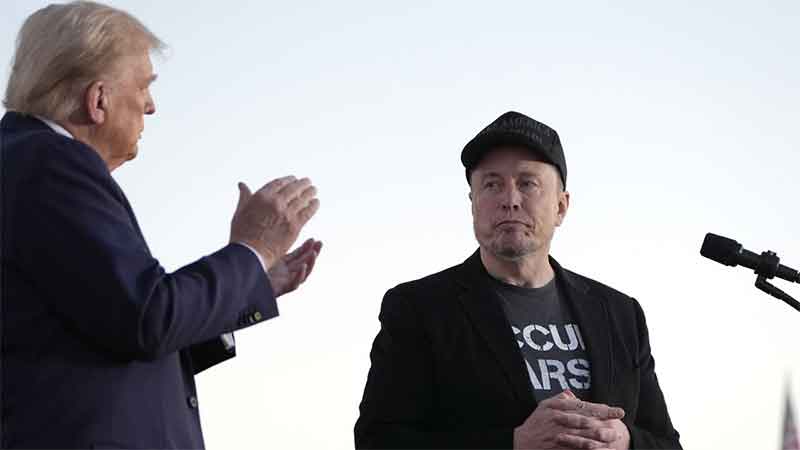
Under the guidance and massive supply of money by Elon Musk, Donald Trump won the elections in 2024. Ever since the electoral democratic systems came into being in the world, such big tycoons with total disrespect for democratic principles never won an election in any country. In America, which remained the global model for the constitutional democracy, no leader of Trump’s wealth and with Musk kind of megalomaniac tycoon won an election, that too for the second time. Not that the Democrats and left liberals, from the Clinton family, Obama family to Biden family and their supporters did not commit blunders by their anti-village, anti-native working class approach. This is a paradoxical situation where democrats were seen as anti-working class and Trump kind of tycoon is seen as pro-poor in America.
The democrat leaders created the Trump-Musk combination by their own family empire politics by setting up global NGOs. Trump used this situation to his advantage. With Elon Musk joining him in the 2024 elections the whole world is facing a new situation.
DE-GLOBALIZATION PROCESS IN MOTION
However, the globalization process that started during Bill Clinton times seems to have entered into a retreat phase. Within thirty years it created its own nemesis in the Trump-Musk team. A de-globalization process seems to have started with these two impulsive leaders, with a slogan of America first. In real terms Trump-Musk nationalism is anti-poor. It is true that the global poor need not live with a begging bowl and every nation has a responsibility to feed its own working masses, children and the old. But in the post-World War II situation America gave misguided hope to the world that America would help the poor and be a guard of welfare democracy all over the world. In the Cold War times its stature had grown and it fed millions of poor and that led to the thinking that dependence on America is not bad.
The globalization and liberalization process expanded the market economy worldwide. Cheaper goods and commodities came into global markets and such goods and commodities reached nooks and corners of the globe. Food, shelter and education avenues improved worldwide. The USAID played a definite role in this process. Now the Trump-Musk team stopped any flow of funds from the USAID to poor countries. Millions of children still depend on such global help in Africa and Asia. The tycoon’s nationalism will lead to more and more concentration of wealth in the hands of the very poor and they try to capture electoral structures and they themselves could come to power in many countries like Trump and Musk. Seasons politicians trained in the political philosophy and future of humanity with creative ideas will be displaced by tycoons, who become rulers by winning elections. America that produced highly philosophic rulers like Thomas Jefferson, Abraham Lincoln now gave way to Trump and Musk in the very process of globalization. Where the de-globalization process with tycoon nationalism would lead is not known.
The world is now getting divided into new blocs. The European Union has taken a decision to militarize itself as Trump-Musk America withdrew from several important global forums. Canada and many Latin American countries seem to join the camp of anti-Trump-Musk America. Around the issue of Ukraine and Russia a new global order seems to emerge.
UNACCOUNTABLE MUSK
By bringing an unaccountable Musk to play a key role in democratic setup by creating an uncontrollable Department Of Government Efficiency (DOGE) , a large-scale privatization process, by dismantling state apparatus, seems to be on the cards of the Trump-Musk team. They are removing thousands of Government employees to run the system with their cronies.
They are trying to establish a Marxian mode of imaginary ‘Stateless Society’ without creating a self- governing human society. American society is also full of crime, with gun culture leading to a killing spree on a daily basis. If in a stateless America capitalist tycoons rule, with their private armies, who will not be accountable, the system will only move into tycoon dictatorship. Since this is happening in America, a nation that was the torch bearer of electoral democracy for more than 250 years, the very idea of democracy itself might get into a trap.
MUSK’S AMBITION
Musk has shown his ambition for deconstructing the state sector with a deep authoritarian private economy to rule the roost in the world. Vulnerable democracies like India have already shown bending behavior to Musk’s business power. The fact that the Indian Prime Minister, Narendra Modi, went crawling to his house giving gifts to his children and unmarried partner, is a new low operation of our biggest democracy in the world. The fear of this global tycoon is running deep in the world.
The only country that seems to be unwavering to the Trump-Musk tycoonism is China. It is preparing deeply dug up tunnels for a war with America, if necessary.
ILLEGAL MIGRATIONS
The massive illegal migrations of Indians, Mexicans, Muslims from the entire Muslim world to America happened with the American Dream hunt that the American intellectuals, cultural scads and media, apart from the American state, sold to the world. That dream forced the people to migrate to America illegally and legally as if life is only in America and nowhere else. Now the Trump-Musk team is sending them back to their nations literally handcuffed in American military planes. Despite Narendra Modi’s presence before the Trump-Musk team, the Indian migrants were sent back in torturous travel and huge humiliation to the Modi Government. We Indians need to bend our heads with a sense of shame, how our own fellow citizens lived through this kind of torturous illegal migration and merciless drop down in our nation.
The Trump-Musk combination is shaking the world with everyday tweets that shake the global conscience. They are doing psychological warfare on the global vulnerable.
NATURE OF TYCOON NATIONALISM
World so far has seen several forms of nationalism. Linguistic nationalism when Europe got divided into many language nations played a key role. Tensions and wars broke out, based on the linguistic ideologies. World also has seen ideological nationalist wars and cold wars. The whole cold war period was the ideological nationalist conflicts between democracy and socialism. America and the Soviet Union were in the lead of these nationalist camps.
The Second World War was fought as an ideological war between Nazism and Fascism on the one side and democracy and socialism on the other, before the Cold War started. Religious nationalism had its brutal impact not just in Islamic world, but in Christian world in the early modern times. After globalization in the recent past religious nationalism has posed a challenge to secular nationalism in India and many other countries, in Europe and Americas. Trump was seen as a new type of nationalist when he was the president of the USA between 2016-20, his first term.Name: Email:
Now there is new nationalism. This kind of tycoon Nationalism by monopoly capitalists can emerge in any country, including India. With the emergence of the Trump-Musk team in the USA, tycoons the world over will think of becoming rulers. This form of nationalism was not known to the world earlier.
Globalized capitalism has led to a massive wealth concentration in the hands of a handful global tycoons. The Trump-Musk team emerged from the globalized wealth concentration in the hands of a few tycoons. But what this kind of tycoon nationalism does to the world is not exactly predictable now.
Kancha Ilaiah Shepherd is a political theorist, social activist and author. His latest book is The Shudra Rebellion.
https://countercurrents.org/2025/03/the-emerging-trend-of-tycoon-nationalism/
-
Will PM Modi come clean on his OBC status?
Kancha Ilaiah Shepherd
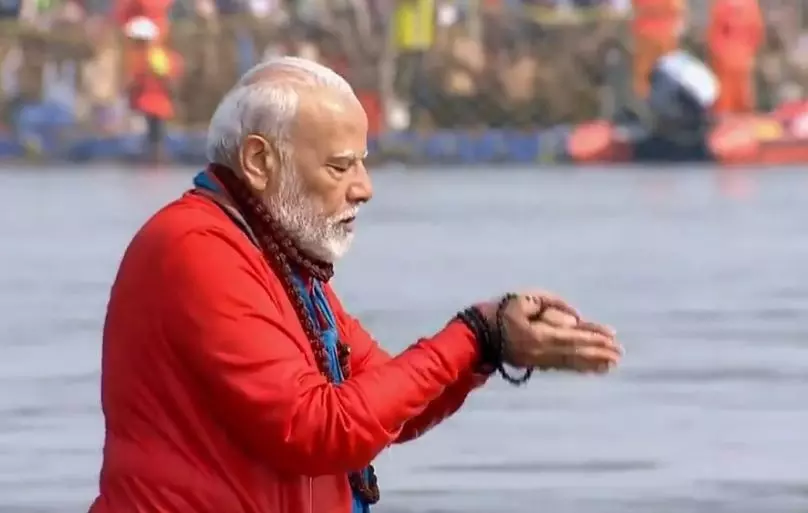
Prime Mister Narandra Mod has been defending Sanatan Dharma if he is organically part of it| Fle phces
Revanth Reddy says Modi is not a Shudra OBC, but a ‘converted’ Baniya OBC; pushing non-Shudras into OBC list is a strategic Hindutva ploy of RSS
Telangana Chief Minister Revanth Reddy said in a meeting on February 14 that Prime Minister Narendra Modi is not from a backward class (BC) by birth but a “legally converted BC”. He challenged Modi to conduct a caste census in 2025 if he has any sense of commitment.
Modi is not a Shudra OBC, Revanth said, but after he became the Chief Minister of Gujarat, he saw to it that his caste, Modh Ghanchi, was added to the OBC list.
According to the Telangana CM, that is also a conversion. He emphasised that he was carefully wording his statement that Modi is “a converted OBC”.
Owning Shudra heritage
Reddy is a Shudra. Though the Reddys of Telangana and Andhra Pradesh happen to choose to be out of OBC reservation, he has been claiming his Shudra background quite consciously.
When he was an MP before he became the chief minister, in a debate with Union Finance Minister Niramala Sitaraman, who sarcastically insulted him with a jibe that his understanding of Hindi was bad, Reddy quipped, ‘I am a Shudra and historically denied of good language skills”.
His ownership of Shudra heritage and his community’s sufferings at the hands of Dwijas drew the attention of the media. Now, this statement by Reddy on the PM’s caste conversion became an issue of national importance as he is himself a chief minister.
Reddy’s caste is equivalent to that of Sardar Vallabhbhai Patel in Gujarat. The Patels in Gujarat also chose to be outside the OBC list in the 1990 Mandal reservation list. However, for the past few years, they have been demanding the inclusion of their caste in the OBC list. The BJP government refused to include them in the OBC list, though Modi’s caste itself entered the list much later.
Hits the nail on the head
The BP Mandal report included all Shudras, who historically were outside the frame of Dwija (Brahmin, Ksatriya and Vaishya) communities, as OBCs. Historically, all Shudras were agrarian producers.
Though Vaishyas were said to be agriculturists in Vedic times and Shudras were designated as slaves who were meant to serve the Dwijas, of which Vaishyas were a part, the Reddys were never part of the Dwijas.
They were part of the Shudras and even now their occupation is agriculture.
Of all the Reddy chief ministers who ruled the Telugu states from Neelam Sanjiva Reddy onward, none except Revanth Reddy has publicly stated that he is a Shudra. For quite a long time the upper agrarian communities like Reddys, Velamas, Nairs, Patels and Marathas were trying to claim the Kshatriya status.
But such status in ritual terms was never granted to them by the Hindu Sanatana Dharma heads, who happen to be Brahmins.
Revanth Reddy hit the nail on the head of the RSS anti-conversion ideology by characterising the Vaishya kind of Modi’s caste getting into the OBC list during the B.JP regime in Gujarat. Modi never made it clear that his family was historically Shudra or a part of the Vaishya caste group.
It is therefore a major issue how non-Shudras are being allowed to get into the OBC list through different conversion modes.
RSS and conversion
The Rashtriya Swayamsevak Sangh (RSS) has been consistently opposing religious conversions from Hinduism to Islam or Christianity. But it has been deliberately converting non-Shudra castes into the OBC category by taking shelter under the “Socially and Educationally Backward Class” language used in the Constitution to weaken the existing Shudra OBCs, who had no right to education in Sanskrit and Persian languages in history.
The Muslim rulers also did not allow the Shudras to learn Persian language based on Brahmin priestly recommendation to all Muslim rulers including the Mughals. They told the Muslim rulers that according to Hindu tradition, the Shudras should not be allowed to read and write in india.
The Muslim rulers went by that advice till the British came and opened up school education for Shudras, in a proper school system.
Harmful conversion
The definition “Socially Educationally Backward* (SEB) was used in the Constitution with a historical sense that only the Shudras who were not allowed to enter into Gurukul or school education could be treated as SEBs.
But in North India, several Bania communities that live with different gotra or sub-caste names were encouraged by the RSS quite deliberately to convert to the OBC category. This conversion is very harmful for the real artisans and tillers of lands for millennia.
In All India services, the Shudra OBCs certainly cannot compete with Bania OBCs. For example, Dilip Mandal, a Bania OBC, acquired a top journalist status and repeatedly presented himself as OBC, without ever revealing that he came from a Bania background. Only recently his caste background was revealed.
Now he has shifted to the RSS-B.JP camp and became a media adviser in the Ministry of Information and Broadcasting. This is a very strategic move of the Hindutva networks.
Reddy’s RSS roots
Revanth Reddy knows about the RSS strategies as he was part of that organisational network when he was a student leader. He knows how the RSS used the caste structure to its advantage.
It does not want castes to be abolished but at the same it should not be seen as pro-OBC and Dalit by using different methods of co-options. It wants to appear pro-OBC to maintain the Hindu structures where the Dwijas are in the hegemonic place.
In the recent past, particularly after Udhayanidhi Stalin’s critique of Sanatana Dharma, the Sangh Parivar started a major campaign that Sanatana Dharma is the soul of Hinduism. If that is so, the Shudras/Dalits and Adivasis can never become equals to Dwijas, as Sanatana Dharma does not allow such equality.
Modi himself has been defending Sanatana Dharma as if he is organically a part of it. But no Shudra or Dalit can defend Sanatana Dharma even though he/she is part of the BJP. Modi’s spiritual inclinations also show that he has been deeply influenced by Dwija childhood training.
Revanth Reddy’s statement that the PM is a converted OBC from upper caste acquires credibility in this background. Modi himself should tell the nation whether he is a Shudra OBC or not.
(The Federal seeks to present views and opinions from all sides of the spectrum. The information, ideas or opinions in the article are of the author and do not necessarily reflect the views of The Federal.)
Kancha Ilaiah Shepherd
Kancha Ilaiah Shepherd is a political theorist, social activist and author. His latest book is The Clash of Cultures – Hindutva – Mullah Conflicting Ethics.
https://thefederal.com/category/opinion/will-pm-modi-come-clean-on-his-obc-status-172179
-
Opinion: SC sub-classification verdict and the dangers of conflating class and caste
The Supreme Court order allowing SC sub-classification could alter India’s reservation system to suit the Hindutva ideology and obfuscate caste injustice, Kancha Ilaiah Shepherd writes.

Supreme Court of IndiaFile Photo/PTI
Written by:
On February 4, the Telangana government announced the criteria for sub-categorisation of Scheduled Castes (SCs) in the state, as recommended by a one-member judicial commission led by Justice Shameem Akhtar. However, Chief Minister Revanth Reddy said that his government had rejected one of the four main recommendations – that of introducing a creamy layer among SCs.
The suggestion has its roots in the August 2024 Supreme Court judgement allowing sub-categorisation of Scheduled Castes (SCs). Four of the seven judges on the Constitution Bench that decided the case said in their judgements that the ‘creamy layer principle’ should apply to SCs, with different criteria than OBCs.
Although the then Chief Justice of India DY Chandrachud remained silent on the creamy layer issue, the language used in his judgement, which often uses the term ‘class’ rather than ‘caste’, portends the possibility of changing the SC reservation category from a caste-based one to a class-based one, on the lines of Other Backward Classes.
The Presidential Order of 1950
Even after the August 2024 Supreme Court judgement allowing the sub-categorisation of Scheduled Castes (SCs), the Union government and various state governments have issued several notifications for job recruitments – including the Union Public Service Commission (UPSC) – only in accordance with the Constitution (Scheduled Castes) Order or the Presidential Order, which specifies the communities deemed to be SCs in various states and union territories.
As of now, these governments have not bothered to incorporate the directions of the sub-categorisation judgement, which allows a quota within quota for castes that are more marginalised among the groups within a reserved category.
But in Telangana and Andhra Pradesh, the verdict has heightened the conflict between Madigas and Malas, leading to confrontational caste mobilisations on a regular basis.
Based on the directions of the seven-judge Constitution Bench, the Union government may even have to amend the Presidential order or the Constitution (Scheduled Castes) Order, 1950. However, the use of the word ‘class’ in this judgement has the potential to change the basic principle of untouchability.
The Presidential Order and Ambedkar
The Presidential Order of 1950 was drafted by Dr BR Ambedkar in addition to Article 341 of the Constitution of India, which empowers the President to “specify the castes, races or tribes or parts of or groups within castes, races or tribes which shall for the purposes of this Constitution be deemed to be Scheduled Castes” in any state or union territory.
Based on his long, strenuous struggle against untouchability as the then Law Minister, Ambedkar treated the entire group of Scheduled Castes as homogenous in Article 341. His fundamental goal was to provide reservations in the electoral system, education, and employment for the Scheduled Castes of India.
To be fair to the tribes, who were also severely oppressed, Ambedkar included them in the Presidential order as Scheduled Tribes. Of course, these two broad categories were already listed in the Census records of India as homogenous categories.
Six of the seven judges of the Constitution Bench agreed that sub-classification of SC/ST groups is not unconstitutional. Their conclusion was based on the Union Law Ministry’s approval note, and oral arguments by the Union government’s advocates in the Supreme Court.
Supreme Court’s proposed reservation models
There were a total of six judgements given by the Constitution Bench. Then Chief Justice of India DY Chandrachud, in the judgement written for himself and Justice Manoj Misra, proposed two models of reservations for the “sub-classified classes” – a preference model and an exclusive model.
“In the first model, the class(es) [emphasis added] that are more socially backward are given a preference to all the seats that are reserved for the Scheduled Castes,” Justice Chandrachud’s judgement said.
Justice Chandrachud had said in his judgement that the preference for certain castes can apply to either all seats or just a certain percentage of the seats.
This is the model that Telangana has decided to follow, by splitting the 15% SC quota into three sub-categories. This means any vacancies notified but left unfilled by candidates from Group 1 (comprising sub-castes that are socially, economically, and educationally most backward) shall be filled by candidates from Group 2, and those unfilled by Group 2 shall be filled by Group 3. If suitable candidates are not available in all the groups, the vacancies will be carried forward.
In the exclusive model, a percentage of seats shall be exclusively available to certain castes, to be carried over to subsequent years until they are filled by those castes alone.
Heterogeneity among SCs
Ambedkar included Article 341 in the Constitution after facing a lot of opposition. The term ‘caste’ and not ‘class’ was used quite consciously by him. In the Presidential order too, the term ‘caste’ was used with the same approach.
The category of ‘untouchables’ is entirely different from categories such as ‘Shudra’ and ‘Dwija’, even in ancient and medieval India. The ‘untouchables’ were known as ‘Chandalas’ in those times, and were attributed a common identity by the Hindu Sanskrit texts including the Vedas, Ramayana, and Mahabharata. There was no differentiation between the sub-groups. The modern-day Chamars, Jatavs, Mahars, Matangs, Valmikis, Malas, Madigas, and so on, were seen as one group of Chandalas back then.
Whatever occupation they were in–leather work, cattle rearing, village cleaning, or village defense–the concept of Chandala treated all of them as one group of human untouchables, who were forced to live outside the Shudra and Dwija localities.
The Dwijas—Brahmins, Kshatriyas, and Vaisyas—also treated all Shudras as one group, whether they were tillers of land, shepherds, potters, smiths, etc.
With a conscious understanding and intent of eradicating the barbaric system of human untouchability, Ambedkar classified the various ‘untouchable’ castes under one group of Scheduled Castes. Hundreds of castes continue to suffer various forms of untouchability even today.
Precedent set by the RSS and BJP
In the recent past, many Hindutva leaders associated with the Rashtriya Swayamsevak Sangh (RSS) and the Bharatiya Janata Party (BJP) have been referring to Scheduled Castes as ‘former untouchables’ or ‘ex-untouchables’, suggesting that they no longer suffer untouchability now. The RSS has been trying to convey to the world that untouchability no longer exists in India.
Hindutva intellectuals have been arguing that the caste system itself was a Muslim-British construct. It is a known fact that human untouchability as a structural practice in Hinduism is a major embarrassment to Hindutva forces.
Caste, class, and the creamy layer
A majority of the Constitution Bench was of the view that the Scheduled Caste category under Article 341 was not a homogeneous group and that the sub-castes faced varying degrees of backwardness. The majority view was that creating sub-classifications within the SC category does not dilute the President’s powers to notify the Scheduled Caste list under Article 341.
However, the language used in the judgement, and the inclination towards bringing in a creamy layer for SCs, is worrisome. The Justice Shameem Akhtar commission in Telangana, for instance, recommended a creamy layer comprising of families of MLAs, MPs, Zilla Parishad chairpersons, mayors, and other public representatives, as well as those employed in Group I services and similar positions in the government.
Along the lines of Justice Chandrachud’s judgement, if ‘caste’ is replaced with ‘class’ in an amended Presidential Order, the question of creamy layer that four of the seven judges of the Constitution Bench approved of is likely to find a place in SC and ST reservations. It is only a matter of time.
The RSS and BJP have already taken steps to introduce class and not caste as the criteria for affirmative action, by bringing in reservation for Economically Weaker Sections (EWS).
Hindutva intellectuals have repeatedly asked how long reservations are to continue in India. The main hurdle to removing caste-based reservations all along was the Constitutional status accorded to SCs and STs through Article 341. Once the basis of that category changes from caste to class, the whole foundation that Ambedkar laid for reservations in India will collapse.
Of course, if untouchability in India has really been done away with, then such a step makes sense. But untouchability of SCs is still in operation in various new and old forms. The Supreme Court judges, who delivered the SC sub-classification verdict, were aware of this fact.
In villages, in the fields of production, in food practices, and in marital relationships, untouchability still operates in age-old forms. In addition, in most modern capitalist-democratic institutions such as universities and colleges including the prestigious Indian Institutes of Technology (IITs) etc. young people are often driven to suicide through institutional untouchability. The most stark example is that of Rohith Vemula’s institutional murder in 2016 at the University of Hyderabad, but there have been many others before and after him.
The SC sub-classification judgement, as many pro-sub-caste classification forces are expecting, is not a straightforward boon on the track of social justice, especially if it paves the way for a creamy layer for SCs. Such a move would be an ideological capital punishment for the foundation of the reservation system in India.
Prime Minister Narendra Modi promised in an exclusive public meeting of Madigas in Hyderabad in November 2023, just before the Telangana Assembly elections, that he would set up a committee to consider the community’s demands for sub-categorisation. His government also argued before the Supreme Court in favour of SC sub-classification.
The Constitution Bench judgement, in a way, has helped fulfill PM Modi’s promise. At the same time, however, it might have paved the way to enforce the RSS narrative that untouchability no longer exists in India. If the word ‘caste’ is replaced with ‘class’ in a new, amended Constitution (Scheduled Castes) Order, it means that Article 341 could also be amended to suit the Hindutva ideology and obfuscate the reality of caste injustice in India.
Kancha Ilaiah Shepherd is a political theorist, social activist, and author. His latest book is ‘The Shudra Rebellion’.
-
Telangana caste survey data: Some surprises, many challenges
Revanth Reddy-led government would have to implement the Congress promise of 42 per cent reservation for OBCs in the upcoming local body elections.
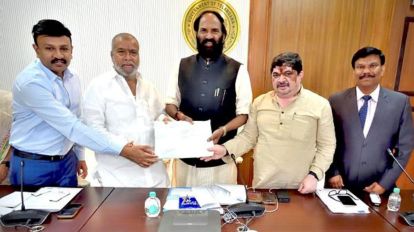
Telangana Minister N Uttam Kumar Reddy receives the report of the Judicial Commission headed by Retd HC Justice Shameem Akhtar, with recommendations on SC categorisation after completion of the comprehensive caste survey. (Photo: PTI)

The Telangana cabinet sub-committee released the data of the recently-concluded caste survey on February 3. The cabinet approved the survey and placed it before the state assembly on February 4. The broad percentiles of the survey show that non-Muslim Other Backward Classes (OBCs) constitute 46.25 per cent and Muslim OBCs constitute 10.08 per cent of the state’s population, while Scheduled Castes constitute 17.43 per cent and Scheduled Tribes 10.45 per cent. Non-Muslim general castes (Other Castes) are at 13.31 per cent. Non-Muslim OBCs also include Christians, Sikhs and Buddhists, not just Hindus, although their numbers are small. What is surprising in this data is the number of Muslim OBCs. Nobody expected that out of a total 12.56 per cent Muslims, only 2.48 per cent would not claim the OBC status. The general castes, including Muslim general castes, constitute 15.79 per cent.
It is also possible that poverty levels of the Muslim OBCs match their caste position. As of now, Telangana Muslims have just 4 per cent reservation. The Bharatiya Janata Party (BJP) has been opposing giving any reservation to Muslims.
The increase of the tribal population, broadly from about 7 per cent in united Andhra Pradesh to 10.45 per cent in Telangana is because of the concentration of Lambada population that lives in the plains, along with forest tribes, such as the Gonds and Koyas.
Implications of the survey
This state-level caste and socioeconomic survey has serious implications for national and local welfare politics. For the first time, a Congress state government has undertaken such a survey in the country. Rahul Gandhi had launched a national campaign on the issue, saying that 90 per cent OBC/SC/STs are out of the power structures in India. During the Bharat Jodo Yatra from Kanyakumari to Kashmir and the Bharat Jodo Nyaya Yatra from Manipur to Mumbai, Rahul Gandhi promised that if Congress comes to power in 2024 elections, it will get a comprehensive caste census done at national level.
An important reason that Rahul Gandhi pushed the caste census was to put the BJP government in Delhi in an ideological fix. Under the leadership of Narendra Modi, the BJP has won a substantial number of votes from the OBCs. It was this bloc in north India that helped the BJP retain power for a third term, albeit with the support of alliance partners. Rahul Gandhi wants to break this fortress of the BJP by pushing a much more radical pro-OBC agenda. The caste census is a key anchor in that fight.
Opposition from upper castes
The Revanth Reddy government’s efforts to conduct a caste survey within 14 months of coming to power are praiseworthy given the complications involved in the survey — not just at the level of states, but also at the national level. Normally collection of census data is done by the Union government. But so far, no national government has touched the issue of caste data in the national census, which is normally conducted once every 10 years. After the 2011 Census, the UPA government did a half-hearted socioeconomic survey, part of which was the collection of caste data. But this was never released. Once the BJP came to power in 2014 that data was dumped. The Modi government has shown total indifference to the caste census issue because of the RSS/BJP’s long-time dependence on general castes.
The non-OBC general castes have usually opposed such an exercise, as the numbers would certainly bring in new political equations everywhere. In the post-Mandal decades, OBCs have slowly but surely become vote banks in themselves, creating a crisis in the old dependence of Congress on the Muslim and Dalit vote banks. It was the OBC vote bank that enabled the BJP to come to power.
The OBC demand
However, OBCs have been demanding a caste census for a while, because once the caste data comes out, the Supreme Court’s cap of 27 per cent on OBC reservation can be challenged. This position, taken by OBC leaders across the country, strengthened after the Modi government gave 10 per cent reservation to the economically weaker sections (EWS) of the general castes. The government brought an act and implemented it to begin with the All India Services. This was challenged in the Supreme Court, which then upheld the reservation.
The Nitish Kumar-led government in Bihar was the first state government to do its own caste survey. The survey showed that OBCs formed 63.14 per cent of the state’s population. Based on this data, the Bihar government tried to increase the OBC reservation of the state, but the Patna High Court struck it down as “unconstitutional”.
When it comes to the percentage of non-Muslim OBCs, the Telangana survey data is along expected lines. The immediate impact of these numbers, though collected by a state government through its state planning board, is that the government has to implement the party promise of 42 per cent reservation for OBCs in the local body elections, due this year.
The fresh SC/ST data will also force the government to take a stand on the sub-caste classification of their reservation immediately. And like the Bihar government, it will try to push the OBC quota in the state reservation beyond the existing 27 per cent.
In both cases — OBC reservation and SC/ST sub-classification — legal hurdles are likely to emerge.
The writer is Former Director, Centre for the Study of Social Exclusion and Inclusive Policy, Maulana Azad National Urdu University, Hyderabad
-
Hyderabad: Kancha Ilaiah’s support for women’s college new name stirs controversy
Kancha Ilaiah, during a public meeting on Monday, December 23, had argued against with certain intellectuals commenting against Koti Women’s College named after Chakali Ilamma despite her being uneducated.

Hyderabad: Bahujan activist Prof Kancha Ilaiah’s statements in support of naming the Koti Women’s College after freedom fighter Chakali Ilamma raked up a new controversy, against which he gave an explanation on Wednesday, December 25.
During the statue unveiling of freedom fighter Doddi Komuraiah held in Gudur mandal of Mahabubababad district on Monday, December 23, addressing the gathering Ilaiah said that there were intellectuals who were asking him why he suggested the state government to name the Mahila University after Chakali Ilamma, who was uneducated.
“I asked them whether Tirupathi Venkanna or his wife Padmavathi were educated. Chakali Ilamma was a great warrior who cleaned society by washing clothes. All the girls here should take a pledge that they will study in this university, and we will ensure that they will become intellectuals,” the professor said.
The issue drew criticism from certain sections of media and debates on social media.
Explaining the intent of his statements, he said that he was only trying to remind the critics that when universities could be named after gods and goddesses, for example, Sri Venkateshwara University and Padmavathi University in Andhra Pradesh being named after them.
“When I was trying to impress upon my critics that the names of universities need not be viewed in relation to education, some channels are trying to start debates which can lead to confusion. For the first time in the country chief minister Revanth Reddy named a university after a woman coming from the most backward class,” he said.
He said that the comparison between the university names was done just to keep educational credentials of those on whom the universities were named out of the discussion or decision of the governments.
“By creating a controversy on this issue, it will only harm the university. There is an argument that naming a university after an uneducated woman is not right, and students will not join such a university. Another argument is against using the word ‘Chakali,” he observed.
He said that Chakali (dhobi) is her name and identity and that there were not only Sri Venkateshwara University and Padmavathi University named after gods, but there were also universities named after Gautam Buddha and Lord Jesus.
“Nowhere does the discussion about the education of these gods come up. In that case, giving reference to Chakali Ilamma’s educational credentials is not right, which is my opinion. That kind of debate will only lead to preventing women from studying in that university,” he clarified.
-
Negativity Spreads Over My Comments On SV University, Says Kancha Ilaiah


You must be logged in to post a comment.