-
English is Ambedkar’s Language, Not Macaulay’s!
excerpt from “Ambedkar’s English: A Language of Liberation,” argues passionately in favour of English-medium education in India, framing it as a crucial tool for liberation, particularly for Dalits, Adivasis, and Shudras. The author, Prof. Kancha Ilaiah Shepherd, contends that English should be viewed not as Macaulay’s colonial language, but as “Ambedkar’s English,” due to its role in empowering historically oppressed groups. The text highlights a strong political and cultural opposition to English from parties like the BJP and RSS, as well as certain state leaders, who often promote Hindi or regional languages while hypocritically sending their own children to English-medium schools. Furthermore, the author presents the example of former Tamil Nadu Chief Minister Kamaraj Nadar as a model leader who understood the necessity of English for socio-economic upliftment, comparing his efforts favourably to others. Ultimately, the piece positions English as an essential “weapon of liberation” that allows oppressed communities to connect globally and challenge the caste system.
Kancha Ilaiah Shepherd, English language debate India, Ambedkar English, Macaulay’s language, Language of Liberation, Oppressed communities India, Caste system India, Dalit rights, BC SC ST, Education policy India, Colonial language debate, Nationalism and language, Language politics India, Indian politics, Social justice India, Education reform, Opinion piece, Public debate, Telugu states education, BR Ambedkar, Kamaraj Nadar, Ramoji Rao, Revanth Reddy, Narendra Modi, BJP RSS, Government schools English medium, Central Universities Hindi -
How de-secularisation may slowly steer India away from electoral democracy

Mohan Bhagwat, as a sort of Hindu head priest and Narendra Modi, as an elected ‘modern Chandragupta’, are de-secularising every institution. File photo
Click the Play button to hear this message in audio format
Religious ideology is being used to manipulate elections and weaken secularism; this raises concerns of a shift towards authoritarianism, as seen in Pakistan
The state and religion worked as one functional unit in ancient and medieval times under the leadership of priests and kings. In India, for example, the Chandragupta Maurya’s state was established as the first-ever non-secular monarchical empire, with Kautilya as its Hindu head priest, and Chandragupta as the king.
But the powers of Kautilya, including emoluments, were more than the king’s. Chandragupta was expected to rule according to Kautilya’s advice. In fact, this was the first Hindu theocratic monarchical state in ancient India and also the world.
Chandragupta was known as a Shudra, as he was Mura, a Shudra woman’s son. However, we have no authentic information about his caste background. But we have authentic information about Kautilya, a Brahmin, and the author of the book Arthashastra (3rd century BC). Arthashastra suggests such a non-secular state mechanism for future generations to sustain the Brahminic social order.
Pope and the King
In Europe, a similar pattern emerged after the Catholic Holy See State was established in the late ancient times. The Pope was like Kautilya, controlling every king of the European state, and the king was supposed to function under his guidance.
This control was broken only after the Protestant rebellion of Martin Luther and the emergence of the Protestant Christian denomination. The first-ever revolt against the Pope came from Henry VIII (June 28, 1491 – January 28, 1547), a British monarch.
This revolt of Henry VIII could be compared to King Ashok’s revolt against Brahmin priestly Hinduism with his Buddhist vision. However, he did not separate religion from the state but subordinated Buddhism to his suzerainty. Exactly like how Henry VIII subordinated the Anglican Church through the establishment of the institution of Archbishop, similar to the Pope of the Holy See State.
The Archbishop could never direct the state policy in Britain.
Secular democracies
Gradually, the same Britain evolved into a secular democratic state, separating religion from the state, creating the idea of a secular state where even that one Protestant religion operating in the nation has no role in running the democratic institutions. This led to the emergence of many secular democratic states in the Euro-American continents.
Modi, who calls himself OBC and blames colonial rule for everything, would not have had the right to educate himself but for colonial rule, even in Gujarati, though it was exploitative in nature.
However, the Muslim world did not allow such secular democracies to emerge. Therefore, democracy as a modern political system did not stabilise in the Muslim world except in very few nations.
In the Eastern world, only India adopted the secular democratic constitution in 1949. By then, it had a more complicated, multi-religious society because several religions and political forces had entered India during the late medieval and modern periods, influencing and even subordinating the Hindu-Buddhist, Sikh, and Jain religious forces.
Particularly, Islam and Christianity made India a more complicated multi-religious nation. Both Islam and Christianity have a political history. The Indian Muslim rulers also established theocratic monarchical rule and ruled large parts of India for centuries.
Christianity and colonial rule
Christianity has its political relationship with colonial rule, though it arrived here symbolically in the 1st century AD itself. In view of this social complexity, the modern Indian thinkers had to carefully study the secular democracies of the West.
Historically, after the emergence of Christianity as a powerful religion, the Western nations became, by and large, “one religion” states. Their secularism was basically a new mode of separating state from religion, as democracy was settling down.
But India was/is a multi-religious and multi-caste country. It had to address both caste and religious conflicts. Its secularism had to be different. Both Dr BR Ambedkar and Pandit Jawaharlal Nehru seemed to have understood this complexity more than any other Indian thinkers.
The Indian democracy that worked stably for 75 years is on the path of de-secularisation after the RSS captured state power.
The freedom struggle evolved a new idea of a secular democratic state in the process of decolonising India. From 1947 to 2014, India functioned as a secular democracy.
It is true that Indian democracy was not evolved but it was created with the will of the people. Ambedkar, Nehru and Sardar Vallabai Patel played a key role in the process of establishing such a secular democracy. Mahatma Gandhi gave moral strength to that process.
De-secularising democracies
The 21st century witnesses a strange process of de-secularising global democratic states. Some are doing this quite rapidly, while some are doing it very slowly and haltingly. The Republicans in the US and conservatives in Britain and other European democracies are slowly de-secularising their democracies.
Within institutions, de-democratisation begins with the appointment of persons of one ideology under the command of the religious leader. For 11 years, the head of the RSS has been playing that role.
India is the only stable democracy surrounded by the Muslim theocratic monarchies and unstable Islamic democracies and Buddhist-Communist dictatorships, or monarchies, or democracies.
The Indian democracy that worked in a stable manner for 75 years is on the path of de-secularisation after the RSS captured state power. The Indian state and its institutions are becoming de-secularised with fundamentalist fervour because the Kautilyan-Manudharmic ideology is central to them.
The Indian education system is being brought under the grip of these ancient thinkers and other Sanskrit religious texts.
The process started during the Atal Bihari Vajpayee regime from 1999 to 2004, somewhat cautiously. Now, RSS chief Mohan Bhagwat, as a sort of Hindu head priest, and Prime Minister Narendra Modi, as the elected ‘modern Chandragupta’ with an OBC tag, are de-secularising every institution and the whole democratic set up by creating structures of deep fundamentalist state institutions.
De-secularisation is easier
Since religion and state worked as one unit for a longer time in human history, separating religion from the state was a difficult process. It needed a laboured theory of such a possibility.
Niccolo Machiavelli (1469-1527), in his masterpiece The Prince, first proposed such a separation. But it took a long and difficult process to make the state’s administration secular, while ensuring that individuals who followed a religion in their personal lives could still work in state institutions in a secular manner.
India had no history of such theoretical discourse as the vast Shudra/Dalit/Adivasi productive masses, who were kept outside the structures of organised religion – present Hinduism – had no right to education before the British established the colonial structures.
Ambedkar, Patel and Nehru
There was no theoretician from them to see through the prism of religion what would happen to them. Fortunately, Ambedkar emerged and saw through the danger of establishing a Hindu Rashtra. Sardar Patel, the only top Shudra leader, was not a thinker like Ambedkar, but was concerned about the Muslim question.
Nehru too was worried about the complexity in the context of the two-nation tussles. Understanding the complexity of the colonial state needed deeper education in modern world history and the power of English to compete with colonial rulers in developing new ideas for the future of India. The RSS kind of inward-looking knowledge in Sanskrit or Hindi would not have grasped the importance of secularism and democracy in those days.
Modi, who calls himself OBC and blames colonial rule for everything, would not have had the right to educate himself but for that colonial rule, even in Gujarati, though it was exploitative in nature. His ancestors were not allowed to educate themselves before colonial rule got established, even in the local language.
Unfortunately, under his leadership, the de-secularisation of the Indian state is taking place with a vengeance.
Religion as an institution does not allow dissent. It is an institution of faith, not reason.
During the freedom struggle, a learned atmosphere was created to understand the secularisation process as many of our freedom fighters got educated in the West. Particularly, Gandhi, Nehru, Ambedkar and Patel were conscious that democracy as a political system would not survive if the Kautilyan model of theocratic state was allowed to come into existence once the British left India.
That very idea of establishing a secular state in India was resisted by Brahminic pandits who thought that it was a British idea.
De-democratising institutions
Whether in India or in Western democratic states, de-secularisation often goes hand in hand with weakening democracy, where power becomes concentrated in the hands of one person. That person’s vision is derived from religion, not from the point of view of people’s welfare and future. Peoples’ rights are subordinated to duties.
Within institutions, de-democratisation begins with the appointment of persons of one ideology under the command of the religious leader. For 11 years, the head of the RSS has been playing that role.
The scope of contending ideas and evolving policies, based on discussion and disagreement and by evolving a consensus or with a dissenting minority, still continuing to implement majority decisions in a democratic manner, is not allowed.
De-democratisation kills dissent in every institution. Of course, policy decisions are also influenced by the individual from a socio-religious point of view. A de-secularised state or institution does not allow discussion and dissent in any policymaking.
Religion as an institution
Religion as an institution does not allow dissent. It is an institution of faith not reason.
In India, this has been happening for the past 11 years. In America, this is happening during Donald Trump’s regime more consciously. There, the religious ideology is not very brazenly allied with state power as of now.
Already, mass protests have started against the de-secularisation trend in America. But in India, there are no such mass protests because it is a caste-divided society.
De-democratisation of institutions manages the election process of the governing forces. The entire election system, to start with, gets manipulated through religious ideology itself. Once the anti-secular forces capture state power, the direction is to slowly move out of the election system itself. In the process, like in Pakistan, the military dictators can emerge by using the same religious ideology in the very process in India, too.
India is going through a difficult phase, while being amidst non-secular dictatorships, by pushing itself into a de-secularised democracy as of now. Once de-secularisation is deep, it will move into a phase of deep de-democratisation. Those who are in agreement with de-secularisation as a historical necessity in a multi-religious nation cannot see the possibility of de-democratisation.
(The Federal seeks to present views and opinions from all sides of the spectrum. The information, ideas or opinions in the articles are of the author and do not necessarily reflect the views of The Federal.)
About the Author
Kancha Ilaiah Shepheris a political theorist, social activist and author. His latest book is The Clash of Cultures- Hindutva – Mullah Conflicting Ethics
-
Women’s World Cup: Cricket and Religion in India
Kancha Ilaiah Shepherd | 18 Nov 2025
It is one thing that players follow a faith in their personal life, but in a stadium or in public discourse, religion should not be made a source of controversy.
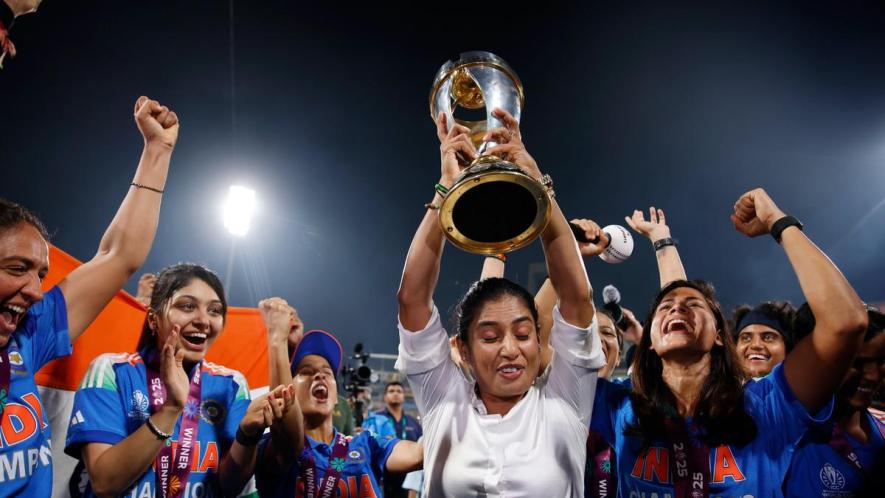
Image Courtesy: X/@BCCIWomen
Cricket has become a most visible corporate and upper middle-class game in India. It is also the most expensive game. More than any other game, the players, the billionaires, and politicians hang around cricket because the leisure class and the rich have made it a party and a home gossip game. It has established a serious interlink between Hindi cinema, cricket and political parties.
Though in India, cricket has a rural version called ‘chirragone’ in the Telugu-speaking region, which I played in my childhood in my village, the British colonial rulers introduced their own version of cricket to India. Now, it has become the most popular Commonwealth game.
Well-known British author George Bernard Shaw (1856-1950), saw this game as that of fools, who have nothing else to do and have enough money to live on with, and plenty of leisure and seekers of eternal pleasure.
Shaw said: “Cricket is a game played by 11 fools and watched by 11,000 fools,” indicating the game’s perceived absurdity. Another well-known quote is his observation that “The English are not a very spiritual people, so they invented cricket to give them some idea of eternity”.
Perhaps by the end of 19th Century, secularism was sweeping the socio-political atmosphere of the United Kingdom and church attendance was gradually getting reduced. The rich and upper middle classes of any society need an anchor around which social gossip becomes necessary. Cricket emerged as that anchor of social gossip in Britain and gradually spread to other colonial countries.
Opposite Direction
In the present situation, cricket seems to be travelling in the opposite direction that Shaw’s Britain is going in. It is becoming a de-secularising game, as the new proponent of the game in India is the Right-wing Hindutva spiritual ideological force. This force has already de-secularised most of the rich and upper middle classes that sustain cricket.
Cricket has become a Hindutva-tainted game, at least for now. Its promotion has become part of the vote and anti-minority weapon. From the Prime Minister to the streets, Rashtriya Swayamsevak Sangh (RSS) activists and Hindutva billionaires are treating the sport as a source of power politics and business advertisements.
During Congress rule and other party prime ministers’—Charan Singh, V.P Singh, Chandra Shekhar, HD Deve Gowda or I.K.Gujral – rule, this game was not so politicised. But the Bharatiya Janata Party or BJP-RSS have turned the game into their own ideological game by following a method of politicised promotion. In the process, it has also done one good thing — promoting women to play this game on par with men. Power also forces certain unexpected changes among the rulers, whatever be their ideological orientation.
Women’s World Cup
During the recent Women’s World Cup, the victorious Indian cricket team, while inspiring the nation, particularly young girls and women, religion was also made a tool to fan conflicting religious views through social media.
The Prime Minister’s tweet on X after India won the match with Pakistan recently linked it to the India-Pakistan war and Operation Sindoor, giving it a political dimension. That created an opinion among the youth that cricket can be used for political and religious ends.
Religious contentions around the game became more brazen after the Indian women’s team won in the World Cup semi-finals over the powerful Australian women’s team, when India’s Jemimah Rodrigues stated, “Firstly, I want to thank Jesus, because I couldn’t do this on my own. I know he carried me through today”.
A young girl, who made 127 runs that defeated the mightiest women’s team of the world that won the same trophy for seven times, in a situation of emotional joy, using the name of Jesus, was turned into a communal social media frenzy by Right-wing forces. However, Jemimah’s religious childhood training and her using the name of Jesus, as a modern girl and cricketer, has implications for the secular environment of the game. Players, whatever be their religious belief, should be careful in the public domain.
Taking spiritual symbols’ names even in a fit of emotion in a country like India creates an environment of de-secularised discourse around the game. Quite surprisingly, Prime Minister Narendra Modi, who interacted with the victorious women’s team when the nation’s eyes were on them, raised the issue of Deepti Sharma’ belief in Jai Sriram and Hanuman. This has a much more serious politicised religious implication.
Sport advances in a democratic, secular environment, not in a communal environment. Our schools and colleges must give opportunity to girls and boys without tagging sports to any religious ideology.
It is one thing that players follow a faith in their personal life. One may go to Hindu temples, one may go to Church, one may go to Masjid or Vihar for personal spiritual fulfilment, but in the stadium or in the public discourse, religion should not be made a source of controversy.
It is true that the present regime in Delhi has consciously encouraged women players. Of course, with regard to wrestlers, it failed to address their harassment by the board chairman. Lot of dust was raised around it.
However, India lifting the Women’s World Cup rekindled a new hope. The conscious promotion of girls in the realm of sports at the school level will certainly help in changing the status of women in every sphere of life.
The writer is a political theorist, social activist and author. His latest book is the ‘Shudra Rebellion’. The views are personal.
-
Rakesh Kishore defined Hindutva version of Sanatana Dharma in India’s highest court

There is a spiritual saying: “The Word was God.” But Rakesh Kishore, a 71-year-old senior advocate at the Supreme Court, redefined the Word to be killed—and did so in the Supreme Court of India itself. Kishore, a staunch believer in Sanatana Dharma, decided to use a shoe, a symbol traditionally associated with Dalits in India, as a weapon of violence against the Dalit Chief Justice of India. The shoe he threw at the CJI is a double-edged weapon, conveying both violence and humiliation. According to media reports, Kishore is an upper-caste—perhaps a Dwija (as Shudras/OBCs/Dalits/Adivasis would typically not engage in such Sanatanist violence)—and demonstrates to the world that ‘Violence for Word’ is their mode of spiritual response.
On 2 October, coinciding with Dussehra and Gandhi Jayanti, former President of India Ramnath Kovind, himself a Dalit, addressed the centenary celebration of the RSS, declaring that the RSS believes in “Bhim Smriti, not Manu Smriti.” I thought that, if true, if Dwijas within RSS/BJP truly believe in Bhim Smriti as Kovind claimed, India would return to secular politics. But Rakesh Kishore disproved Kovind’s optimism.
Just four days after Kovind’s promise that Bhim Smriti would guide the nation, Kishore vehemently disagreed. He forcefully demonstrated that any word that hurts Dwija sentiment will provoke a violent response, rooted in the ideological tradition of Manu Smriti, showing no regard for Bhim Smriti.
Opposition parties universally condemned the attempted violence in the highest court against its highest judge. The OBC Prime Minister of India issued a delayed condemnation. Yet, at the time of writing this article (11:30 AM, October 7), no prominent RSS functionary has spoken out.
Had Rakesh Kishore followed Bhim Smriti, he would have petitioned the Chief Justice to retract his words against Kishore’s chosen deity. Arguing his case before the CJI was a legitimate, peaceful option. But the path Kishore chose epitomizes classic Manudharma Sanatanic violence. This is not merely an “eye for an eye” ethos; it is an “eye for a word” ideology.
Recently, the notion that Sanatana Dharma is the only legitimate Indian Dharma has been actively promoted by RSS/BJP ranks. Sanatana Dharma is equated with Hinduism, but Hinduism has a wider meaning. Even the Prime Minister has campaigned for Sanatana Dharma in public speeches, especially after Udayanidhi Stalin criticized it during a seminar in Tamil Nadu.
Shudra/OBCs affiliated with RSS/BJP and others may not realize that Sanatana Dharma philosophy has historically disadvantaged the productive masses—known as Shudras in ancient times. Dalit untouchability grew with internalized hatred for leather shoes, the very weapon Kishore used in the topmost court.
If someone hurls a sword, it signals anger intended to harm—any caste or gender could do this to anyone else. But hurling a shoe inflicts both physical pain and mental humiliation.
Thankfully, Justice Gavai responded with maturity, wisdom, and grace, pardoning Kishore. His response to violence and humiliation was that “the sinner did not know what he was doing.” The sinner is put to shame, while Gavai elevates India’s non-violent tradition, rooted in the teachings of Buddha.
But there is a lesson for Shudra/OBC/Dalit/Adivasis who silently support the Sanatana ideology of “violence for word”: this ideology has historically targeted all who produce food, not just Dalits.
As long as Shudra/OBCs do not recognize the concept of Sanatanic violence for words, people like Rakesh Kishore will act with impunity against Dalits, and will eventually target all Shudra/OBCs.
Once secularism is destroyed in India’s pluralistic society, religions that justify violence for words in the name of sentiment will undermine the very foundation of productive forces. No argumentative Indian can survive in such a violent Sanatanic atmosphere.
Shudra/OBC, Dalit, and Adivasi communities are the backbone of India’s agrarian and artisanal production. In Hindutva, Dwijas are more organized as Sanatanists than others.
Of course, Islam also has instances of violence for words based on religious sentiment, and we have seen organized protest in India over language deemed disrespectful.
Justice Gavai has become our moral, ethical, and cultural torchbearer. His grace draws from traditions distinct from Sanatana values—specifically the legacy of Gautama Buddha.
From the bench of the highest court, Gavai sent a message: Bhim Smriti has the resilience to withstand violence, casteism, and arrogance from all quarters.
The day Bhim Smriti is torn down, India as a nation will collapse. Justice Gavai stands as a symbol of its saviors, even at the risk of his own life. Justice Gavai—the nation salutes you.
Kancha Ilaiah Shepherd is a political theorist, social activist and author. His latest book is The Shudra Rebellion.
-
English is essential for economic mobility, Hindi can never replace it
The retrograde politics of using Hindi while naming schemes and Institutions, terms that need to be understood by people of all regions and states, does not help in keeping the nation integrated.

Union Home Minister Amit Shah
Written by:
Every year, October 5 is celebrated as the Indian English day to commemorate the start of English being taught as a language in India. This year marks the 208th Indian English day. The celebration of this day is not only meant for expanding the use of the English language, but to create a modern, globally competitive India.
In a way, the movement to expand Indian English education started as a response to the retrograde steps of the Union government from 2014 onwards to discredit and rundown the language.
Denying English education to the poor rural masses is an ideological design of the Rastriya Swayamsevak Sangh (RSS) and the ruling Bharatiya Janata Party (BJP) and has received push in recent years.
In terms of caste location the people who are impacted by this are mostly from Scheduled Caste (SC), Scheduled Tribes (ST) and Other Backward Castes (OBC) communities, who survive in a weak agrarian economy.
Though the English language teaching in India is more than two hundred years old in urban private educational institutions, in rural India and tribal areas across the country, if one were to use a metaphor, it remains a small plant that has sprouted and needs to be nurtured.
After the 2024 general elections, as the influence of RSS/BJP deepened with the support of leaders like Chandrababu Naidu and Nitish Kumar, their strategy appears to be preventing this sapling of English education from taking root. This could leave the future of rural and tribal masses increasingly uncertain, depriving them of a language that has become essential for economic mobility and access to opportunities in contemporary India.
During the regimes of the Congress and other political dispensations, the policy of denying English language education for the rural poor remained, but in a muted form, as the state governments could allow it as an option in higher education institutions. But the BJP-led NDA government is slowly and systematically pushing for Hindi in higher education institutions as rural youth from the SC/ST/OBC communities reach there aided by reservation.
Unfortunately, even NDA allies like the TDP and the JDU are trying to stymie the English language education from growing in rural areas of states under their control, while allowing promotion of English medium education among the rich and upper castes.
Look at the way the Union government is naming their institutions and programmes. They are doing this either in Hindi or Sanskrit by removing the English names. The Union Ministry of Education and the NCERT are asking to adopt book titles in Hindi or Sanskrit, even if the content inside the book is still in English. This policy affects the entire South States, North East India and non-Hindi speaking states like West-Bengal and Odisha. People in these states would struggle to understand the meaning of such titles and names.
The Modi government started this retrograde step by abolishing the Planning Commission of India and establishing NITI Aayog (National Institution for Transforming India, Aayog). Though most of the name is in English, many states, not just individuals, failed to understand what the word “Aayog” meant. When I searched for its meaning on the internet, it turned out to be “Commission or Committee”. The concept of ‘Commission’ is known all over India, even in villages of all states, not Aayog.
The National Institute of Open Schooling (NIOS) has now been changed to Rashtriya Mukta Shiksha Sansthan, the Directorate of Education is now Shiksha Nideshalaya. A person from South India or North East India would be hard pressed to understand what Nideshalaya means.
The book for India’s new criminal law system is called the Bharatiya Nyaya Sanhita. While the name, Code of Criminal Procedure (Cr.PC), is understood by police officers of all states and lawyers of all states, Nyaya Samhita would go above the heads of someone from a non Hindi-speaking rural area.
Several schemes and campaigns launched or repackaged by the Union government after 2014 now sport Hindi names. Prime examples are, Atmanirbhar Bharat Abhiyaan (self-reliant India campaign), and various schemes in the name of Prime Minister – Pradhan Mantri Laghu Vyapari Mandhan Yojana (pension scheme for traders and self-employed persons), Pradhan Mantri Shram Yogi Mandhan Yojana (pension scheme for unorganised workers), Pradhan Mantri Kisan Maandhan Yojana (pension scheme for farmers), Pradhan Mantri E-Shram Yojana (national database of unorganised workers), Pradhan Mantri Fasal Bima Yojana (crop insurance scheme), and Pradhan Mantri Kisan Samman Nidhi Yojana (farmers’ tribute fund).
Following the footsteps of the Modi Government, Chandrababu Naidu has adopted a policy that all Government Orders (GOs) in Andhra Pradesh would be released only in Telugu language. Nara Lokesh, the state’s Education minister, said the change was made with pressure from Venkaiah Naidu, a BJP leader.
The former Chief Justice of India NV Ramana is also campaigning for the use of Telugu in all government operations and in courts. The irony is that many of these leaders educated their own children in costly private English medium schools. Chandrababu Naidu educated Lokesh, his son, in the United States. This kind of hypocrisy and duplicity of education policy followed by NDA leaders is harming the future of the marginalised when they need it the most.
During British rule, when the first political party was formed, they named it the Indian National Congress. In the course of the Independence struggle several movements like the Quit India Struggle were named in English. Even the illiterate masses understood those names and participated in them risking their life and properties.
One of the first organisations of national stature to adopt a Hindi name during the British rule seems to be the Rastriya Swayamsevak Sangh (RSS). Communists formed a party in the same year that the RSS was formed, 1925, and named it the Communist Party of India (CPI) in English. Later, many socialist parties were launched with English names. When the RSS launched a political wing it had a Hindi name: Jan Sangh, though it later transformed into the BJP.
The retrograde politics of using Hindi while naming schemes and Institutions, terms that need to be understood by people of all regions and states, does not help in keeping the nation integrated.
The sidelining of English and promotion of Hindi is part of the ‘Hindi, Hindu, Hindustani’ ideology followed by the RSS and BJP. But can they ever make Hindi a global language like English?
In India, English spread its wings as a British colonial language but sustained itself after the country attained independence. World over, English rose up to became the language of knowledge production in every branch of science, engineering, medicine and humanities.
Former colonies of Britain like the United States, Canada and Australia, empowered by the English language, became rich and innovative. The power of the English language has even forced communist countries like China and Russia to adopt it as the language of science and technology research.
Speaking at 5th Akhil Bharatiya Rajbhasha Sammelan in Gandhinagar last month Amit Shah stated that “Hindi is not just a spoken language or a language of administration. Hindi should also be the language of science, technology, justice and police.” This is not the first time that he openly spoke about the wish to replace English with Hindi.
Has any original science book been written in Hindi before English came to India? The idea of modern science is alien to both Sanskrit and Hindi. If today, the Hindi speakers know something about modern science, technology, medicine and engineering, that knowledge comes mainly from books written in English. By stifling access to English the Union government will be doing enormous disservice to nation building.
The obsession with having only Hindi names for the government schemes would adversely affect non-Hindi speakers, limiting their understanding and thereby access to it. If these names were in English, there would be someone in all villages, perhaps a school teacher, who could explain to them the meaning of these schemes. This seems plausible because English is far more recognised in the country than Hindi by now.
It is because of these attempts to impose Hindi that the celebration of Indian English Day on October 5 looks more relevant than ever.
Kancha Ilaiah Shepherd is a political theorist, social activist, and author. His latest book is The Clash of Cultures—Productive Masses Vs Hindutva-Mullah Conflicting Ethics.
-
Kancha Ilaiah’s Big Demand: Temple for Bhagwan Vishwaguru like Ram Mandir | EHA TV
-
How Trump thwarted RSS’s Vishwaguru dreams, leaving Hindutva project adrift
Kancha Ilaiah Shepherd
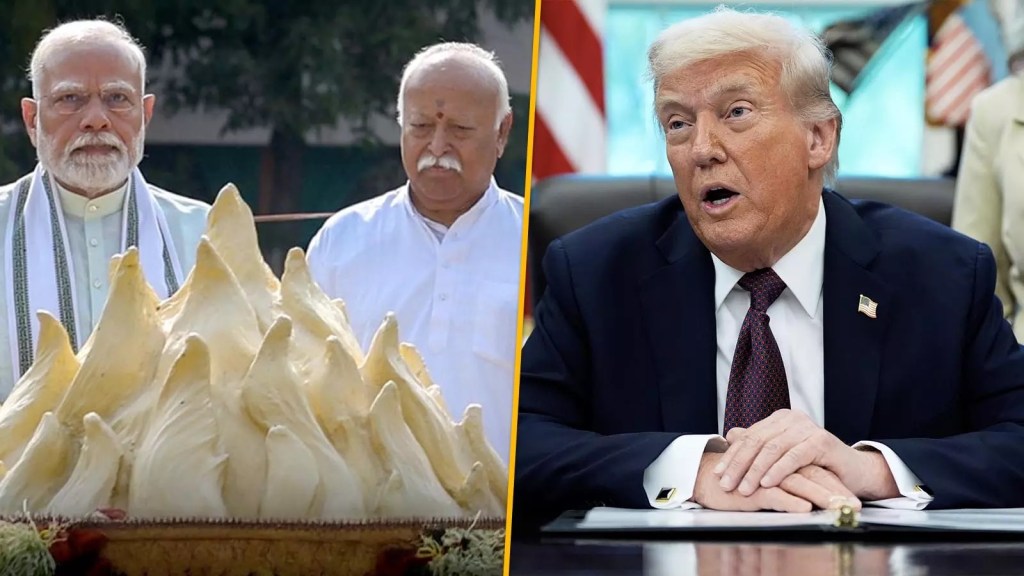
The Narendra Modi-Mohan Bhagwat team’s 11-year control over Delhi spurred the Sangh Parivar to float its new Vishwaguru campaign, but Donald Trump put paid to such ambitions. As US snub stings and old foes China-Russia turn into uneasy partners, RSS struggles to reconcile its 100-year global Hindutva vision with harsh new realities
While it prepares to celebrate its centenary anniversary on October 2, and 11 years of control over the Union government in Delhi, the Rastriya Swayamsevak Sangh (RSS) is probably faced with the biggest conundrum of its 100 of existence.
The organisation, which has slowly emerged from the shadows of socialism and communism, and built a strong Hindutva pitch over the years, while spreading its wings in the West, has few takers for its ideology, mostly in the wake of Donald Trump’s cold shouldering of India, anti-India sentiment in the West and the Narendra Modi government’s turn towards communi China and Russia for succour.
Vision of ‘Hindu Rashtra’
For a long time after the RSS was formed in 1925, the world appeared to be far from accepting the idea of religious nationalist forces coming to power. The communist parties were at an advantage almost till the early 1990s, and the RSS was against any idea of socialism, let alone communism.
With Russia witnessing a revolution in 1917, China in 1949, and the shift of most of Eastern Europe and Far Eastern countries to socialism, the phase wasn’t very suitable for the RSS to establish its goal of a ‘Hindu Rashtra’ – a rather impossible proposition.
At that time, its only hope was the Muslim world sticking to the theocratic state ideology.
The RSS believed that Hindu mobilisation was essential to counter Islamism in India and the world over. The hatred of its founders towards Islam was based on the religion’s 1,000-year rule over India. The RSS knew that Islam was under the grip of spiritual fundamentalism and hence wanted a fundamental Brahmanic Hindu nation to counter it.
Countries in the Christian West, by the end of World War Il, were either moved into secular democratic statehood or were vacillating between liberal democracy and socialism. Theocratic statehood in the Christian West looked out of question.
Gradually, many RSS-BJP supporters migrated to the West. Many gurus aligned with the Hindutva ideology settled in America, teaching yoga and the concept of moksha to the Western world. Many rich Europeans and Americans were influenced by these teachings, which in turn led to a euro-dollar mobilisation by the branches of Hindutva.
RSS’s ascent to power
However, the believers and propagators of Hindutva ideology had to live a life of political powerlessness till the post-Emergency era, more so till the post-Mandal phase. They sensed that the anti-Mandal upper caste media, upper caste capitalists, and high-end public and private educational institutions were against OBC reservations.
They correctly estimated that all those forces would stand by the diversionist Hindutva agenda.
The Congress, the communists and the socialists – the upper castes among all parties – saw the RSS as a saviour from the Shudra/OBC ‘reservation grabbers’.
Mandir against Mandal was seen as a new panacea. When PV Narasimha Rao, a soft-Hindutva man, was the prime minister, the unachievable was achieved. Babri Masjid was demolished on December 6, 1992.
From there on, the RSS’s chariot moved from the opposition side to the ruling side – from having some influence in a few states to grabbing power in Delhi. The Lal Qila (Red Fort) was captured by the saffron army. It also put paid to the hope of communists that they would hoist their red flag on the Red Fort one day. Now, communist parties are almost dead in India.
Fresh life from Emergency
From 1925 to 1999, the Congress party’s one-party dominance left the RSS ranks largely confined to issues like anti-Muslim rhetoric, communal clashes, and the demand for the abrogation of Article 370.
They stuck to offering social services in urban areas and temples till the Ram Janmabhoomi issue in Ayodhya gave them a new purpose in the 1990s.
The RSS’s ideology of Sanatana Dharma and the hope of establishing Hindu Rashtra survived mainly among the Brahmin caste and around the temple economy. The RSS’s political wing, Jana Sangh, was no consequential force in the electoral field till the end of the Emergency in 1977. The Emergency gave RSS a new life. Even the socialists and communists joined hands with the Jana Sangh in a situation of desperation because of the Emergency.
Had Indira Gandhi resigned as prime minister in 1975 and allowed a Shudra leader to take her place, the history of Congress and the RSS would have been different.
That did not happen, and the RSS charted its path to power, forming a stable government at the Centre in 1999. The five-year rule under Atal Bihari Vajpayee marked a real turning point for the Sangh. That was the Sudarshan-Vajpayee era. (KS Sudarshan was the chief of the RSS from 2000 to 2009.)
Vishwaguru campaign
The Mohan Bhagwat-Narendra Modi team’s 11-year control over Delhi from 2014 to now is well known. Interestingly, it is during this era that the Sangh Parivar floated its new campaign of making India a ‘Vishwaguru’ (global teacher) on the strength of the RSS-BJP’s Hindutva ideology.
The ruling BJP has subtly followed the same campaign in most of the Union government’s ministerial tours in foreign countries.
Mahasabha emerged because Congress avoided religious issues’
The international wings of the RSS have actively and confidently pursued this campaign in many countries like the US, the UK, Canada, and Australia after the BJP’s win in the 2019 Lok Sabha elections.
Modi, in his capacity as prime minister, has been touring foreign countries and addressing systematically planned and mobilised NRI meetings by giving a subtle message that Hindutva is going to capture global spaces. Subtle messages about the spread of Hindutva have also been delivered to all Christian and Islamic countries.
Trump delivers a blow
However, the very act of propagating a religious ideology under the brand of ‘Vishwaguru’ has also sent a negative message to countries with their own sets of beliefs. Both the Muslim and Christian worlds have spiritual fundamentalists with their own evangelical aspirations. In America, Donald Trump’s team has many such fundamentalists.
That the Hindutva ideologues underestimated their influence on Trump became evident recently when his so-called camaraderie with Modi failed.
When the American President smashed
India’s dream, Russian President Vladimir Putin played his card well by selling crude oil at a cheaper rate to New Delhi. This type of oil business was conceived amid comprehensive sanctions imposed by the US and European countries in the context of the Ukraine war.
The RSS-BJP never expected Trump’s America to snub the right-wing Indian ruling and business class. They expected that he would not turn against Putin, as he was not against him during the first term. In fact, Trump had faced criticism over Putin’s alleged help in his winning the American election in the first term.
When Trump poured cold water on the RSS-BJP’s Viswaguru campaign, they were forced to seek Putin’s shishyarikam (discipleship).
No takers for Hindutva in Russia, China But, the Vishwaguru concept had no takers in either Russia or China – countries which have strona roots in communism, even though formal communist ideology has now been reshaped into a capitalist one-party rule.
The one-party rule complements a formal election system where one leader slowly captures power for his/her lifetime. Both Vladimir Putin and Xi Jinping have declared themselves as lifelong presidents. Putin wants to follow Joseph Stalin’s legacy, and Xi wants to follow Mao Zedong’s legacy without any communist blood in them. They abandoned the communist ideology of proletarian dictatorship and now believe in one-man dictatorship with full control over their respective parties.
Yet religious dogma is not popular in either nation. These countries do not allow babas allied to the BJP and RSS like Jaggi Vasudev, Sri Sri Ravi Shankar, or yoga camps and temple buildings, as was entertained in America, Canada, the UK, and Australia.
Confused cadres
Hit by these setbacks, the RSS and BJP also face the tough job of explaining the unexpected turn towards Russia and China to their anti-China and anti-Russia cadres as well.
In its 100 years of existence, the RSS has hated communism, apart from hating Islam and Christianity as foreign religions. Their leaders’ dreamland was America. Most of their leaders’ children are sent to American universities. And they cannot think of sending their Hindutva ideologues to form organisations like Vishwa Hindu Parishad of America and the Hindu American Foundation as they did in America, in either Russia or China.
At this juncture, the only way out for our Delhi government is to survive in the changed world order.
Anti-India sentiments
Meanwhile, the idea of Vishwaguru seems to have acquired notoriety in the West and the Muslim world, creating a perception that the RSS is trying to spread its Hindutva ideology worldwide.
The evangelical Americans also seem fully aligned with Trump’s anti-BJP-RSS stance, potentially fuelling anti-India sentiment in the US, Canada, and Australia. This threatens the IT and NRI-driven economic gains, including outsourced jobs and remittances that the RSS-BJP relied upon over the past 11 years through the migration of its Hindutva techies.
Swadeshi pitch offers no succour
The top business monopolies of India are also less likely to be happy with the new RSS-BJP’s Gandhian pitch of “Swadeshi” – used as an answer to Trump’s hefty tariffs.
The fundamental principle of Gandhian Swadeshi would not support the Adani-Ambani kind of crony capitalism, let alone capitalism itself. A Swadeshi economy does not support the new highways, airways, and ports that Gautam Adani built and is still building.
The bottom line is that the RSS top gear, with their ambition to make India Vishwaguru as soon as possible, has been defeated by Trump. With India having lost Trump’s patronage and taking refuge in the friendship of Putin and Xi, there is little scope for the RSS or the BJP to propagate any Hindutva-related activities in their countries.
With Bhagwat and Modi having overcome their 75-retirement deadline by mutual appreciation, and putting the so-called moral obligation of promoting the young generation aside, the next line of leaders, when they take over, will be faced with the troubling prospect of juggling ties with their historical enemies – the ‘comrades’ – and fulfilling the vision of making India a Vishwaguru.
Kancha laiah Shepherd is a political theorist, social activist and author. His latest book is The Clash of Cultures – Hindutva – Mullah Conflicting Ethics.
-
Repositioning Indian Lawyers in Defence of the Poor

An important two-day lawyers’ conference was held in Guntur, Andhra Pradesh, on 30–31 August 2025, where a new discourse on legal practice was initiated. Shanta Kumar, president of the AP chapter, did an excellent job organizing the event, which was hosted by the Indian Lawyers Association (ILA). The AP chapter’s conference drew about 700 lawyers.
ILA’s founder-president, Srikanth Chintala—a young constitutional lawyer from the Telangana High Court—is working to build a well-informed legal team committed to defending the oppressed. Justice Suresh Kumar Kait, former Chief Justice of the Madhya Pradesh High Court, was the chief guest. He is especially known for declaring at his oath ceremony that “he was elevated to that office because of Ambedkar and the constitution he gave to India.” As the first Dalit Chief Justice of an RSS/BJP-controlled state, his appointment became both newsworthy and controversial.
I, too, was a speaker at the event.
Shifting Ideologies in Judiciary and Policing
Across the country, right-wing forces have established significant ideological influence on the courts and the legal community, promoting the idea that courts and police should follow Sanatana Dharma rather than constitutional morality. This conference sought to reset constitutional morality as the guiding principle for the judicial system nationwide. Increasingly, judges in higher courts are demanding that lawyers justify their arguments with references to the Ramayana, Mahabharata, Manu Dharma Shastra, or Kautilya’s Arthashastra, instead of the Constitution, Cr.P.C., and IPC. The criteria for judicial appointments may, over time, shift to a candidate’s knowledge of Sanskrit texts rather than foundational legal documents.
In one court, while Srikanth himself was arguing a case using evidence from the Constitution and relevant precedents, the judge pressed Srikanth, asking, “Did you read the Bhagavad Gita?” Srikanth replied that “he read the Indian Constitution, not the Bhagavad Gita.” The judge nearly shouted in response, nearly calling him in contempt of court.
This trend is not isolated. There is a growing judicial inclination toward Sanatana nationalism. Should RSS/BJP dominance continue for some years, police FIRs may be written with reference to Sanskrit Sanatana literature rather than the Constitution, IPC, or Cr.P.C.
This pattern mirrors that of Muslim monarchies, where legal decisions are guided more by the Quran than by secular law. Ironically, Hindutva forces seek to replicate this model.
Defending the Oppressed Within Changing Systems
The conference expressed concern about the judiciary and police’s changing tendencies and the ways this endangers oppressed castes and communities. It emphasized educating lawyers on how to fight in courts at every level with a new consciousness, efficiency, and commitment to the life, liberty, and property of the oppressed.
For judicial and police officers, adherence to Sanatana ideology often becomes a path to promotion, given the preferences of current rulers. Delhi’s ruling class and RSS leaders place more value in Sanatana Dharma texts than in the present Constitution. These traditional texts have, for centuries, facilitated the oppression and exploitation of Shudra, OBC, Dalit, and Adivasi masses. Officers from these groups often conform to prevailing ideology to secure their positions and advance. Corruption is overlooked as long as the individual aligns with the rulers’ ideology.
The Imperative for Competent Legal Advocacy
A key question addressed by the conference was how lawyers must fight for the poor and oppressed in a caste- and male-dominated legal system that increasingly reinforces those hierarchies.
There was extensive discussion on the need for rural and urban poor, and especially first-generation lawyers, to acquire command of English, given that court proceedings operate almost exclusively in that language. While the RSS/BJP push for court use of regional languages—mainly Hindi—the Supreme Court recently held that “such translations cannot be considered authentic.” Only the English version is treated as official in courts. Lawyers arguing cases in regional languages cannot effectively shape written judgments. Clear and persuasive English arguments improve a lawyer’s chances of winning. Thus, mastery of English is more vital for court practice than for universities.
In Western countries, courts and police never write FIRs or judgments by referencing the Bible. Srikanth reminded participants that the first known cross-examination in a court before a judge comes from the Bible’s Book of Daniel, with no such precedent in Indian Sanskrit texts. There is no notion of justice in Manu Dharma—only caste duties. While the Bhagavad Gita offers moral guidance, on many points Krishna’s statements are hostile to Shudra and Chandala castes, and the concept of caste-free justice is absent from these texts.
For example, in the Bhagavad Gita, Krishna judges that even if Karna wins Draupadi’s Swayamvara, she may still refuse to marry him because he is a Shudra, even though the rules did not bar Shudra/Chandalas from competing. Such judgments are celebrated as “Dharma,” though they are, by contemporary standards, deeply unjust.
Indian courts only recognise written history, not oral tradition. In ancient Sanskrit sources, productive castes long remained under the dominance of the three Dwija castes. What those upper castes did to the lower castes was considered Dharma, meaning equality was unknown until Dr. Ambedkar’s Constitution articulated such a principle.
Lawyers defending the oppressed must understand the legacy and ideology behind Sanatana Dharma and the Sanskrit texts that sustain it.
Sustaining Constitutional Democracy
The ILA conference took up a comprehensive discussion of all forms of Indian jurisprudence. Ambedkar, the first genius lawyer from the oppressed communities, set an example for defending the marginalized.
Notably, several judges participated as speakers and attendees, repeatedly affirming that the survival of constitutional democracy in India depends on the legal community. The Constitution itself is the outcome of legal minds from around the world, and Ambedkar drew from the world’s positive legal philosophies in drafting it.
Kancha Ilaiah Shepherd is a political theorist, social activist and author. His latest book is The Shudra Rebellion.
https://countercurrents.org/2025/09/repositioning-indian-lawyers-in-defence-of-the-poor/
-
‘Caste Census the Greatest Achievement of Rahul Gandhi’: Kancha Ilaiah on Rise of OBC and Reservation Politics
Rahul Devulapalli
Sep 9 2025
Congress party’s demand for backward caste reservations has checkmated the BJP, Ilaiah says, calling it a ‘masterstroke’ by the grand old party.
Kancha Ilaiah Shepherd. Credit: Facebook
Real journalism holds power accountable
Since 2015, The Wire has done just that.
But we can continue only with your support.Contribute NowWhen the Congress government in Telangana tabled the summary of its caste survey report in the Assembly this year, it laid a cornerstone for Indian politics. Even though Bihar and Karnataka had undertaken similar surveys in the past, the Telangana administration conducted a more comprehensive exercise to gather caste-linked economic, social and educational data, making it a unique case.
Among those who hailed the project was Kancha Ilaiah Shepherd, writer, activist and retired professor, who called it “historic”. For decades, Ilaiah and like-minded intellectuals pressed for a caste survey in the state and the country, which has finally materialised.
“Such a survey has never been done in India. Neither the monarchies, nor the British, nor state governments ever attempted something like this,” says Ilaiah, who served as vice chairman of the Independent Expert Working Group (IEWG) constituted by the Telangana government to examine the outcome of Social, Educational, Economic, Employment, Political and Caste (SEEEPC) survey.
The vice-presidential candidate of the INDIA coalition, Justice B. Sudarshan Reddy, was the chairman of the committee. Ilaiah believes that the data has the potential to shake up the logic and conscience of Indian polity. He argues that the 300-page report submitted by the committee to the government justifies the Congress government’s proposal to raise OBC reservation in jobs, education and local bodies to 42%.
According to him, the survey, a promise made by Congress leader Rahul Gandhi, also marks his emergence as a reformist leader willing to take risks.
What the data says
The survey counted 242 castes among 3.5 crore people in the state. Using 43 parameters, the expert group prepared a ‘Composite Backwardness Index’ in which every caste, Ilaiah explains, was assessed on indicators such as education, employment, housing, property and social status. The outcome revealed that OBCs, including Muslim backward classes, account for more than half of the state’s population at 56.3%.
“The data would strengthen the government’s case to defend 42 per cent reservation for OBCs. Courts have always asked whether the numbers justify it. Now the evidence is there,” he says.
He explains why Muslim backward castes should be seen through the prism of caste, since Shudra and Dalit converts to Islam continued with their traditional occupations. Typically, barbers remained barbers and leather workers remained leather workers. They continued to be caught in caste entanglement even without untouchability, he adds.
“This data is useful for economic welfare readjustment,” he says, “It shows, for example, that a certain number of houses is still unconnected to electricity and drinking water. These things came up in the data. There are some nomadic BC castes like Pichakuntla and Gangireddulas. They can be settled at some place to send their children to school. Not every reform requires money; state intervention can help sometimes,” says the author of the book Why I Am Not a Hindu.
The SCs were found to be 17.4%, STs 10.45% and OCs 15.7%. Regarding comparisons with an intensive household survey conducted by the Bharat Rashtra Samithi (BRS) government in 2014 (then known as Telangana Rashtra Samithi), whose numbers differed from the Congress government’s survey, Ilaiah calls the BRS exercise unscientific, noting that its authenticity was doubtful, since it was completed in a single day and without proper methodology such as caste coding.
Congress’ gamble with OBC
In March, the Congress government in Telangana passed two bills to increase BC reservations to 42% in government employment, education and local body polls. In July, the state government submitted an ordinance to enhance BC quota to 42% in the upcoming local body polls. Both the bills and the ordinance were forwarded to the President by governor Jishnu Dev Varma.
Earlier this month, chief minister A. Revanth Reddy, along with his cabinet, staged a protest at Jantar Mantar in New Delhi, demanding presidential assent for the bills and blaming the BJP-led Union government for blocking them.
Pushing through the survey and fighting for reservation, as an upper-caste Reddy leader batting for BCs, is a “feather in the cap” moment for chief minister A. Revanth Reddy, feels Ilaiah.
“Congress, till 2019, was a mobiliser of upper castes, Dalits, Adivasis, Muslims and Christian minorities, except in Punjab,” he says. “There had been no OBC support for them since the early 1980s, from Indira Gandhi’s time. The regional parties were Shudra OBC parties led by leaders like Mulayam Singh Yadav. The only exceptions were two regional parties with Brahmin leaders — Mamata Banerjee and Biju Patnaik. So, the Congress lost the support of Shudra OBCs, and the BJP used them over the last 16 years as part of the Hindu vote.”
He says that on the issue of Sardar Vallabhbhai Patel, the Congress, by not owning him, allowed the BJP to appropriate him and begin building statues of him, while farmers and Shudras moved into their hold. “So now the Congress has taken this up. It is better to negotiate with Patel also.”
Even if the Congress’s push for OBC reservation is electorally advantageous, won’t it alienate other groups like SCs and STs from its fold? Ilaiah does not think so. He feels that the chances of Dalits or Adivasis shifting to the BJP are slim.
“Even if 20% of OBCs shift to Congress, I don’t think they will lose correspondingly that much in Dalit and Adivasi areas. There is even a possibility of the Congress coming back to power on its own due to the OBC issue,” he says.
Rahul Gandhi – betting on caste survey
For Ilaiah, the Telangana survey has already achieved what Rahul Gandhi has been campaigning for since his Bharat Jodo Yatra days – mainstreaming the demand for a national caste census.
“Intellectuals sympathetic to the Congress opposed him when he raised it, and they hoped the BJP would not allow it,” Ilaiah recalls. “He was in two minds as leaders like Jairam Ramesh and Manish Tiwari were against a caste census. Anand Sharma even wrote a letter. The media was not enthusiastic either. But Rahul stuck his neck out and said caste census is an x-ray of society. That risk forced the BJP to announce a national caste census. That is his greatest achievement.”
According to Ilaiah, Rahul is a leader with a “reformist bent of mind” who has started a new phase for the Congress in its 140-year history. He feels that Rahul is on the path of course correction regarding the grand old party’s attitude towards OBC voters and leaders.
“People (OBCs) have been holding public meetings, seminars, rallies, raising demands. But the Congress refused to see their point. Their stand was that OBCs reduced Congress to a minority. They formed their own regional parties. But the question is why did they form them? Because the Congress did not give them an opportunity to become big leaders,” he said.
However, he adds that unlike in recent times, during the Nehru period OBC leaders like K. Kamaraj and Sardar Vallabhbhai Patel were promoted well in the leadership ladder, and Rahul is attempting to repeat that.
In his personal interactions with Rahul, Ilaiah found him to be a well-read individual, familiar with his writings on caste and not power-hungry. He believes that if the Congress comes to power, one cannot assume Rahul Gandhi will automatically become prime minister, as OBC leaders like Siddaramaiah and Sachin Pilot also stand a chance. And if regional parties in the INDIA alliance like the Samajwadi Party do well, then why not Akhilesh Yadav too, he asks.
Whatever the case, Ilaiah feels one thing is clear, “I am convinced that BJP cannot make India a theocratic corporate state. They were planning it. Rahul has stopped it,” he said.
Impact on BJP
For the BJP, the Telangana survey and the push for 42 per cent OBC reservation present both a political and ideological crisis. If the President assents, Telangana can go ahead with enhanced BC quotas and hold local body polls under the new formula. Analysts feel that would mean handing credit to the Congress, which would translate into an electoral magnet for the OBC community in the polls.
At the core of BJP’s resistance is the inclusion of Muslim backward classes in the OBC list. They are placed in a sub-category called BC-E in Telangana. They get quota benefits as OBCs, not as a “religious quota.” The BJP argues that it amounts to a religion-based reservation and allege that it is unconstitutional, saying the Congress is resorting to appeasement politics. Around 10 per cent of Telangana’s population are Muslim OBCs and another 2 per cent are Muslim upper castes.
Kancha Ilaiah argues that BJP’s objection is selective. “The same BJP which gave 10 per cent quota to less than 10 per cent of the population through EWS is now refusing to recognise OBCs who form more than half of the population. Why? Because it gives enormous credibility to the Congress government in the state and to Rahul Gandhi at the Centre,” he said.
He questions why no OBC chief minister of the BJP has conducted a similar caste survey in the past and reasons that it is because they are fundamentally opposed to OBC reservations.
“The BJP operates on a classical mode and it helps the upper castes,” Ilaiah insists. “They may project Narendra Modi as an OBC Prime Minister, but in policy terms they operate for the upper castes. The privatisation drive has systematically shifted public sector jobs, where reservations apply, into private monopolies run by Baniyas and Brahmins. Where is the OBC benefit in that?”
He sees the OBC reservation push as a masterstroke by the Congress as he predicts that community youth will rally against the BJP in the future.
Ripple effects of reservation
The total reservations in the state could reach more than 75% if the President assents to the reservation bills. Previous Supreme Court judgements (the Indra Sawhney case of 1992) capped the maximum reservation at 50% though exceptions could be made under extraordinary circumstances. The Tamil Nadu government, however, has 69% reservations which was navigated through an introduction of a Special Act.
In the 2010 K. Krishna Murthy vs Union of India case, reservations for local body polls too were capped at 50%. But the 2022 Janhit Abhiyan vs Union of India (EWS case) opened the doors, as the court upheld the 10% reservation for EWS, pushing the total beyond 50%. Even though there is a high probability that the Telangana government’s attempts may reach the courts at some point, the government is confident that its caste census data will help it ride through.
The most visible outcome of the caste survey was the BJP-led central government deciding to endorse caste enumeration.
“In case the reservations are applied, it will immediately have an impact on employment, education and local bodies. So, the educated OBC mobility will be very short and they will rise into the middle class,” says Ilaiah.Based on an interview by Rahul Devulapalli with Kancha Ilaiah Shephard for The Wire Telugu.
-
Rahul’s Systemic Reform & Media Underplay
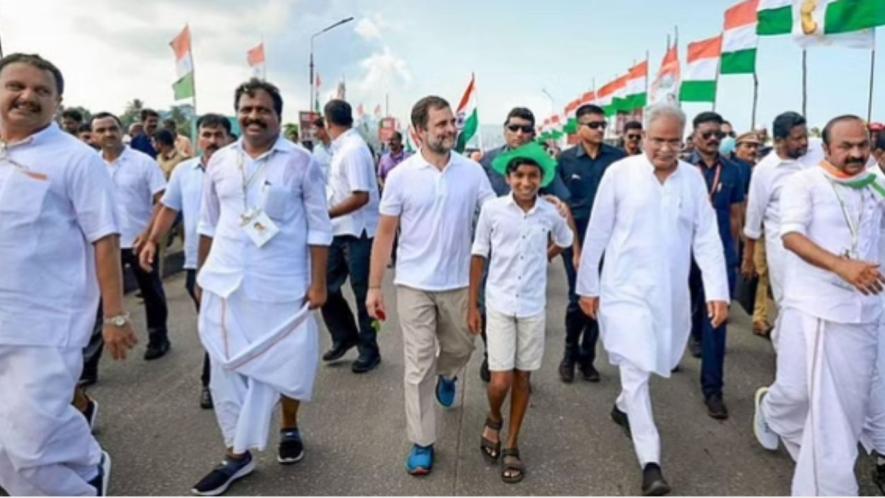
Bharat Jodo Yatra and #VoterAdhikarYatra are showing new mobilisation in terms of social reform in the electoral process as well as society.
File Image
Recently one English television news channel conducted a typical ‘state of the nation’ survey and declared that Congress leader Rahul Gandhi got 25% preferential votes for the Prime Minister’s post and Bharatiya Janata Party’s (BJP) Narendra Modi got 52%.
If one conducts such polls in a communally-instilled population, a secular socio-political reform leader would certainly get less votes.
Such mobile phone surveys might show some trend but what the media is under-estimating is the long-term impact of Rahul Gandhi’s fight for reforms in the Indian socio-political system, which will do greater good to the country. If the regional parties go with Rahul Gandhi in the real elections, such online polls will go haywire.
If Rahul Gandhi becomes Prime Minister with such reform politics for human equality and social justice, Indian history will remember him, just as the Americans remember Abraham Lincoln. But the Indian media is also against his fight to shape India in a reformed mode.
UNEXPECTED RISE OF RAHUL GANDHI
Rahul Gandhi is a persecuted Opposition leader with his party holding a 100 seats Parliament. He faces several cases that have been slapped just to harass him. He led the Congress party in difficult states, such as Telangana, Karnataka and Himachal Pradesh, to victory. Earlier, under his leadership, the party had won in Punjab, too.
In the battle of elections, Rahul Gandhi has become a mass leader more than any other BJP leader, including Modi, who was not a mass leader before he was sent to Gujarat by the BJP’s central leadership to power in 2001. Modi became a communally polarising leader after the Godhra incident and the 2002 communal violence in Gujarat. His main agenda was anti-Muslim and anti-Christian, projecting both as “foreign religions”, as part of the Rashtriya Swayamsevak Sangh or RSS/BJP combine’s 100-year-old ideological campaign against these two religions.
Modi also built his image among communalised Hindus as a strong anti-Nehru family leader. He won the 2014 general election in an atmosphere of 10-year rule of the Congress-led United Progressive Alliance (UPA) with a non-political Prime Minister, Manmohan Singh, in the saddle. By the time the 2014 elections arrived, both Singh and then Congress president Sonia Gandhi were not in a position to address even one major public meeting because of their health issues.
In that situation, Rahul Gandhi did not know how to fight Modi, who claimed that he was the first OBC (Other Backward Class) Prime Ministerial candidate and was the main campaigner of BJP.
AN UNUSUAL UPBRINGING
Having been brought up in an atmosphere of serious threat to his family after Prime Minister Indira Gandhi’s (his grandmother) brutal assassination, a powerful Prime Minister, and Rajiv Gandhi’s (his father) assassination when he was Opposition leader, Rahul Gandhi did not know what India actually was. In particular, he did not know what the caste system was and why the system allows so much violence.
But neither RSS nor Modi had any social or caste reform formula in owning up the OBC card that was played in that election. Social and caste reform was never in the agenda of RSS or Modi.
When this writer met Rahul Gandhi before the 2014 election, he had no clue how the OBC card would affect the election results. He was the main campaigner of the Congress party. Since he entered into politics just in the 2004 elections and the party came to power, he did not learn through political struggles of his own.
India is a complex country. To counter an organization, like RSS’s, strategies, Rahul Gandhi needed to go through a personal struggle and reform.
YATRAS HAVE SHOWN RAHUL THE REAL INDIA
In order to fight such a powerful social divider network in power at Delhi, in the process of massive attack on his heritage and individuality, with well-organised anti-Rahul media in their hands, he had to evolve into a leader on his own and fight back. He had no way except to adopt new methods of social and political reform by understanding the Indian caste system and the agrarian situation, as well as the status of Indian education among the working castes.
Since Modi had shifted the discourse to caste from 2014, Rahul Gandhi had to study and perceive politics through his experience of struggle. His party structure was against a serious discourse on caste—particularly about the caste census, English medium education for all in rural areas and even to reduce the caste-based disconnect in society. Earlier, the Congress also allowed English medium education in the private sector for the rich upper castes. Its classical secularism ideology was not enough to fight RSS, Modi and his confidante Amit Shah.
However, Rahul Gandhi found a way in the first Bharat Jodo Yatra. Social media helped in changing his image. But the so-called mainstream media was always focusing one the question: do such yatras get votes? They did not see the serious implication of his slogan “Nafrat Ki Bazaar Mein, Mohabat Ki Dukan” (In Market of Hatred, a Shop of Love). They saw that slogan as just anti-BJP communalism. But it had deeper implications on the caste and untouchability system in India. There were no loving relationships between upper castes and Dalits/OBCs/Adivasis. Loving the neighbor is not part of the RSS Sanatana Parampara (tradition).
That slogan attracted educated Dalit and OBC youth, more than Muslim youth.
Read Also: Understanding the Growth of European Style Nationalism in India
Rahul Gandhi’s Bharat Jodo Nyay Yatra made that message clearer. Nobody from the RSS fold was trained to start a mass movement for social reform. The Indian big media did not see the new Rahul Gandhi – who spoke of socio-political reform with the aim of capturing power from RSS/BJP through the yatra, which had an anti-caste and anti-elite formulation.
When Rahul Gandhi became Leader of Opposition leader in Lok Sabha, with Congress winning 100 seats, he won half the battle. Mere vote manipulation is one thing, pushing the electoral process into social reform is another. No Indian leader after Ambedkar and Gandhi have tried such a method.
‘VOTE THEFT’ CAMPAIGN
With the “Vote Theft” campaign, as Rahul Gandhi himself said, he started “fighting the fire”. But his determined Bihar #VoterAdhikarYatra definitely is showing new mobilisation. This is not just an election winning issue. It is an issue of saving democracy itself.
Yet, the big media has quite deliberately confined Rahul Gandhi’s yatras and campaigns to vote and power politics. The upper castes, in all camps, not just in the RSS/BJP camp, do not want to project him as a socio-political reform leader. Such projection of a person from the Nehru family will have long-term implications. There is a strong history of anti-socio-political reform parampara among the upper castes. So far, the Nehru family is known as a “political power” family, as Nehru did not write much about social reform.
The mainstream Indian media does not want serious caste and education reforms, as that will create a crisis in their deeply settled historical hegemony. The secularism of liberal and Left anti-communal campaigns do not include caste reform. The idea of a caste census unsettles this hegemony through ‘number consciousness’. Rahul Gandhi seems to have understood its deeper implication on the future of India, as ‘number consciousness’ among the oppressed castes helps them to deconstruct the silent minority’s double standards.
The writer is a political theorist, social activist and author. His latest book is ‘The Shudra Rebellion’. The views are personal.
https://www.newsclick.in/rahuls-systemic-reform-media-underplay


You must be logged in to post a comment.