-
Telangana’s ‘No Caste’ surge signals privilege hiding in plain sight
Kancha Ilaiah Shepherd
27 Apr 2026
END THE CASTE RULE, SHRINATHE
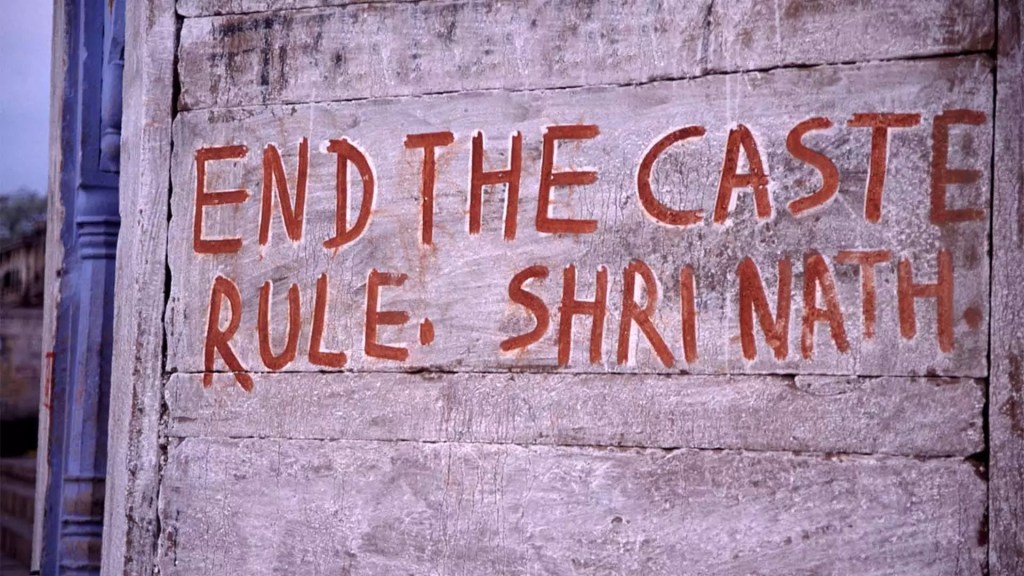
It is socially and spiritually immoral to practise caste in everyday life in one form or another and deny it in the state enumeration. Image: iStock State’s caste survey had 12 lakh people identifying as ‘no caste’, mostly upper-caste professionals in elite jobs, thus denying caste while enjoying its benefits
In the 1980s, top communist leaders routinely deflected any conversation about caste with a singular ideological assertion: “In India, there is no caste, only class.” Literature produced by the Rashtriya Swayamsevak Sangh (RSS) and writers allied to it echoed what their polar opposite rivals said, that there was no caste in India.
However, as a mark of difference, they remained silent on class. In their words, written and spoken, only the Nation and its enemies, the Muslims, were a reality.
These writers, then and now, are “Dwijas” (twice born) – mainly English-educated Brahmins, some of whom trained in the West.
The communist no-caste theory, on the other hand, came from the same Brahmin and in some cases, Kamma and Reddy intellectuals.
In essence, they all shared the philosophical foundation that one must produce myth out of reality.
Caste as a colonial construct
One believes there is no caste till one reads Mahatma Jyotirao Phule and BR Ambedkar.
On examining the caste situation in real life and going through the literature of anti-caste thinkers from the Dalit and Shudra backgrounds, the mind changes.
During the Mandal movement of1990. Both Hindutva and the Congress’s liberal intellectuals came up with a new theory that caste is a British colonial construct. The communist upper-caste intellectuals did not differ with this, broadly speaking, Hindu theory, either. It was because of the Christian British rulers’ ploy of Divide and Rule.
Those who do not see untouchability of Dalits and graded inequality among Shudras were projected as great intellectuals.
Fast forward to Telangana’s ‘No Caste’ The “no caste” scenario emerged again in April 2026, when the Independent Expert Working Group’s (IEWG) findings on the Telangana Socio-Economic, Educational, Employment, Political and Caste (SEEEPC)
Survey of 2024 were released. The report said, “One of the most significant and unexpected findings of the SEEEPC Survey is the emergence of a large and diverse group of × itizens who identify as having “No caste”.
Nearly 12 lakh individuals-now the 10th largest community in Telangana-chose to not identify in the conventional caste labels, opting instead for a civic identity beyond caste categories”.
“While publicly caste-neutral, 43% of them claim to possess a caste certificate and may have previously accessed reservation benefits (13.5%). Their profile reflects a trajectory of mobility shaped by caste-linked pathways, now navigating institutional and professional spaces where caste neutrality is selectively performed but not structurally absolute.
Also read: How government school mergers hit Dalit, Adivasi, girl students hardest
“The group shows particularly high representation in top-tier government services such as IAS/IPS (22.9%), other Central Government positions (13.2%), and among judges (9.3%). These are not network-driven sectors but gatekept through highly competitive and credential-dependent processes.
“This pattern suggests that many “No Caste” individuals likely emerged from households that invested heavily in education, possibly drawing on historic OC (open category or general caste) privileges or having transitioned through BC/SC/ST categories with upward mobility over generations.”
Small group moved sought tag
The process by which this category came into the enumeration manual is intriguing. A small group went to the Telangana High Court and filed a petition that there should be a “No Caste” category in the enumeration manual.
The court gave an interim order that the state government may consider including this category, while posting the case for final hearing. Without even waiting for the final judgment, the government officials created the abnormal code number 999 in the manual just before it was about to be printed, and the enumeration process kicked off.
The high volume of registrations – predominantly from upper-caste individuals, highly educated and occupying positions of power – points to a well-orchestrated campaign among entrenched elite networks in Hyderabad.
Paradox of caste denial
For decades, organised upper-caste groups – right-wing and left-wing – have conveniently denied caste’s existence, even while firmly controlling the nerve centres of a deeply caste-ridden society.
It is precisely this long-running paradox – rejecting caste publicly while wielding its privileges privately – that likely enabled such coordinated, large-scale entries, cutting across party lines and ideological boundaries.
We know that among the upper castes, surnames such as Sharma, Shastri, Verma, Gupta, Jain, Reddy, Rao, Iyer, Iyengar and others point to their caste location even if they registered themselves under the “No Caste” category. The purpose is not difficult to understand. It is to, perhaps, sabotage the entire process of the caste survey.
Whither caste neutrality?
One moral question pops up here. It is also social and spiritual.
All these “No Caste” people are obviously Hindus. The caste system is Hindu, according to a recent judgment of the Supreme Court. It is not Christian nor Muslim. Have these 12 lakh people out of Telangana’s total population of 3.55 crore people covered under the survey succeeded in annihilating caste among themselves?
To illustrate the contradiction, consider a Brahmin family that declares itself “No Caste”. Suppose one member of the family serves as a priest in a major Hindu temple while another is an IAS officer. Temple priesthood remains exclusively reserved for Brahmin families — no Dalit or Shudra can occupy that sacred position. The AS officer, meanwhile, likely benefited from generations of educational and social privilege rooted in caste. How, then, can such a family credibly claim caste neutrality?
Neutrality will work only when…
Caste neutrality will be real only when all castes in the Hindu religion become equal and have equal rights in all spheres of life.
Suppose an inter-caste married couple registered themselves as “no caste” in the survey. Yet their children can choose one of their parents’ castes. Like the communists, a some families might not believe in God-Hindu or Christian or Muslim. But such an atheist spiritual life does make them caste-neutral in social life. The casteist communist leadership established this truth.
It is socially and spiritually immoral to practise caste in everyday life in one form or another and deny it in the state enumeration.
Organisations and political forces might take up campaigns that do not acknowledge the caste. But that does not make an individual casteless.
Dangerous trend
The caste-based social capital does not automatically disconnect because one individual or one family declared itself caste-neutral. An individual’s abilities do not make what one is in a system of caste. Caste capital works like a safety valve in a caste society’s life. Hence, caste neutrality remains a myth.
The only credible path forward is acknowledging that one’s caste has fundamentally shaped who one is and actively working toward genuine caste equality across all spheres of social, spiritual and political life.
Telangana’s “No Caste” registrations signal that organised, privileged forces may replicate it at the national level during the ongoing caste census. This is a dangerous trend aimed at wrecking the entire exercise.
(The Federal seeks to present views and opinions from all sides of the spectrum. The information, ideas or opinions in the articles are of the author and do not necessarily reflect the views of The Federal.)
About the Author
Kancha llaiah Shepherd
Kancha llaiah Shepherd is a political theorist, social activist and author. His latest book is The Clash of Cultures — Hindutva – Mullah Conflicting Ethics.
https://thefederal.com/category/opinion/telangana-survey-no-caste-registrations-increase-240767
-
THE ICONIC STORY OF PROF. KANCHA ILAIAH| Philosopher, Activist/ Vashista
-
What is Hinduism? | Kancha Ilaiah with @Adialoguewithswathi
-
Savarkar Against US: RSS/BJP’s Removal of Gandhi is only to Bring in Savarkar as Father of the Nation

This essay, “Savarkar Against US,” is written in the context of the RSS/BJP Government of India starting to take several steps to change the basic structure of the present political system in the light of the Hindutva thesis proposed by their father of the modern nation, Vinayak Damodar Savarkar. The idea “US” refers to the Shudra/OBC/Dalit/Adivasis, who built this nation starting with the construction of the Harappan city civilization almost 1500 years before the Aryan Brahmins migrated to this land and composed their fundamental spiritual text, the Rigveda.
The Aryan Brahmins produced two ideological leaders—Kautilya and Manu—in ancient India. In modern India, they produced Savarkar. The RSS/BJP came into existence as by-products of Savarkar’s theory of Hindu-Aryan racial and spiritual supremacy.
This essay examines Savarkar’s fundamental anti-Shudra thesis in his well-known book Essentials of Hindutva. Though Savarkar was organizationally with the Hindu Mahasabha, he is being owned by the RSS as their own organic ideologue and thinker because he was the only Brahmin who wrote a theory for the continuation of their modern Brahminical system. His writings and the violently militant nationalism that he proposed became the core philosophical vision of the entire Hindutva forces. Quite tragically, Shudra/Dalit/Adivasis who believe in the RSS/BJP ideology and work in their organizations think that they will be integrated into Hinduism as equals with Brahmins.
The RSS has been organizing Shudra/Dalit/Adivasi forces with an anti-Muslim and anti-Christian agenda for the last hundred years, with ups and downs. Since the Dwija social forces cannot come to power with their own mass strength, the productive masses are drawn in as muscle power to fight against Muslims and Christians, but they are not allowed to emerge as intellectuals. If they become intellectuals, they will understand the modern designs of Brahmanism.
The Brahmin intellectuals running the RSS worked generation after generation for about 90 years to capture state power, and they succeeded in 1999 with Atal Bihari Vajpayee becoming a stable RSS-trained Brahmin Prime Minister and ruling India for a five-year term. That was the beginning of their future anti-secular and anti-democratic plans, with the support of ideologically domesticated Shudra/Dalit/Adivasis.
Thus, the turning point came when the RSS/BJP came to power in Delhi in 1999. It took a deeper turn after they came to power again in 2014 with Narendra Modi, who carried an image of being OBC. A Savarkarite, Mohan Bhagwat, head of the RSS, established his full grip over all institutions of power. He set up RSS Brahmin ideological managers in every institution, including schools, colleges, and universities. The Shudra/OBC/Dalit/Adivasis have no ideological control even in government structures. Some of them were given positions, but without any power to control. They work with an instilled fear of being punished by government and non-government agencies headed by Dwija RSS officials if they do not function according to the directions of RSS Brahmin leadership.
WHAT ARE THEY DOING FROM POWER?
They came to power in 1999 and ruled one full five-year term. Again, they came back to power in 2014 and since then have ruled India without any break. At the time of writing this essay, they have been ruling for eleven years with Narendra Modi as Prime Minister.
During the RSS and BJP rule, they reshaped India completely in their Hindutva image. The image of the Father of the Nation, Mahatma Gandhi—a Bania secular democrat—is slowly being shifted to their Father of the Nation, Savarkar, a fundamentalist anti-Shudra/Dalit/Adivasi Brahmin thinker from Maharashtra.
Of course, Gandhi was declared the Father of the Nation by Pandit Jawaharlal Nehru’s government, which had a strong Shudra leader, Sardar Vallabhbhai Patel, along with Nehru, a secular Brahmin. However, by bringing back Savarkar—a follower of Bal Gangadhar Tilak and his Brahminical authoritarianism—into a cunning moral authority over the nation, they want to reverse the fruits of the entire history of the freedom struggle. The freedom struggle was fought by millions of masses and leaders coming from Shudra/Dalit/Adivasi forces.
Both the Hindu Mahasabha and the RSS were formed exclusively by the Brahmins of Maharashtra, descendants of the Peshwa rulers. Their design was to ensure that their civilizational path of Sanatana Dharma, where there was no respect for agrarian and artisanal production, would be resettled in a modern mode after British rule.
In the background of these forces getting organized, Mahatma Gandhi—though a Bania himself—had to take a pro–Varna Dharma stand and was forced to oppose Ambedkar’s plan of caste-based proportional representation, particularly Dalit representation. Gandhi himself was a strategic moralist. His Bania vegetarian Hindu heritage played its own role in influencing his decisions. However, his secular credentials cannot be doubted. That was one reason why Nathuram Godse, who belonged to Savarkar’s Hindu Mahasabha, killed Gandhi. The RSS has been a supporter of Savarkar, who trained Godse to be a militant Hindutva agent.
THE PESHWA BRAHMINISM
The Peshwas were the last Brahmin rulers in the Indian subcontinent who ruled the state of Maharashtra by implementing Vedic Sanatana Dharma principles. Strict practice of Varna Dharma was part of the Peshwa administration. They enforced human untouchability and graded inequality by following strict Manu Dharma rules. Phule wrote about the conditions of Shudra–Ati-Shudras during that period of Maharashtra’s social life. Those conditions, combined with colonial English school education for Shudras, produced Phule and Savitribai as the first great Shudra intellectual rebels.
Savarkar was the counter-intellectual to the Phule reform movement and the newly emerging Shudra intellectualism. Though the entire argument Savarkar developed in Essentials of Hindutva was about Hindu-Aryan pride, he hardly critiqued the British colonial system. The Hindu Mahasabha was an antithesis of the Satyashodhak Samaj, not so much an anti-British movement. He did not examine British exploitation in his book. The whole thrust of the text is to militarize Hindu religion and establish a strong Hindu Rashtra. The Shudras and Dalits in that Rashtra are expected to be muscle power, not intellectual power.
The RSS has so far used them in exactly the same way. There is not a single Shudra intellectual who has emerged from the RSS network to write critically. All Shudra/OBCs who work in these organizations follow Brahmin leaders like Mohan Bhagwat and Golwalkar. Savarkar’s writings provide the theoretical basis for this structure.
In the post-Peshwa period, the Brahmins of Maharashtra (which included present-day Gujarat) believed that Peshwa rule was their last golden age. From Bal Gangadhar Tilak onwards, they felt that British rule and Phule’s reforms led to an undesirable Shudra ascendancy. Tilak opposed the Phule reform movement. Savarkar was his disciple. Tilak encouraged him to go to England and learn English. Savarkar was a determined Brahmin with strong roots in Vedic education. Though he appeared rational, his core conviction was to re-establish a Pan-India Peshwa rule with Vedic thought as its guiding force. Naturally, graded caste inequality and human untouchability were to be restored in full force.
Mahatma Jotirao Phule and Savitribai Phule challenged Brahminical history and hegemony just before Savarkar was born. Perhaps Savarkar read Phule’s Gulamgiri and was disturbed by such a Shudra awakening.
Savarkar was born in 1883 and died in 1966. He lived a long life and was responsible for establishing the Hindu Mahasabha. Later, Hedgewar established the RSS inspired by Savarkar’s Hindutva nationalism. Savarkar’s Essentials of Hindutva was written against the backdrop of Phule’s Gulamgiri (Slavery) and Mahatma Gandhi’s Hind Swaraj, both of which aimed to shape a future democratic India.
Though Savarkar’s Hindu Mahasabha remained dormant during the freedom struggle, the RSS later grew into a ruling force and now uses Savarkar as its foundational thinker.
The RSS/BJP under the leadership of another Marathi Brahmin—Mohan Bhagwat—worked out strategies for dismantling secular democracy and moving toward the establishment of a Hindu Rashtra dictatorship. Savarkar’s Hindu Rashtra thesis does not provide any scope for electoral democracy. This is very clear from a serious reading of his book.
ENSLAVING SHUDRAS
The RSS, from power since 2014, has gone far beyond subduing Muslims and Christians. It has turned to re-enslaving Shudra/Dalit/Adivasis. Unfortunately, no Shudra thinker after Mahatma Phule emerged to challenge this Brahminical march in post-Phule modern India. Several Shudras got trapped in the myopic dogma of the RSS. They pretentiously appropriated Sardar Vallabhbhai Patel, making Shudras believe that they were being integrated into Hindutva as equals.
Savarkar’s writings make it clear that the Hindu Rashtra is not meant for a casteless society. It is meant to re-stabilize Shudra/Dalit slavery. The Hindutva Brahmins realized that Shudra/Dalit/Adivasis were gradually getting liberated because of reform movements during the freedom struggle and the British liberal thought that entered Indian caste society. It was in this atmosphere that thinkers like Mahatma Phule and Savitribai emerged. Brahmin intellectual leaders like Tilak and Savarkar were enraged by this social change. Subsequently, Ambedkar’s constitutional democracy deepened this liberation process.
The RSS/BJP and their affiliate organizations are now working to reverse this process of change. Their declared agenda is to confront Pan-Islam and Pan-Christianity and completely subdue Muslim and Christian communities within India. However, their deeper agenda is to re-establish Brahmin-Bania absolute control over Shudra/Dalit/Adivasis by destabilizing democracy and establishing a Hindu Rashtra dictatorship. They know this process takes time, but they began by capturing power in Delhi through the electoral system itself.
During their second term (2014-2019), they were more cautious, possibly because of Modi’s careful approach after Atal Bihari Vajpayee’s term. The RSS allowed Modi to speak as if he were Gandhian. Due to his Gujarati roots, he did not initially appear as an explicit RSS spokesperson or an anti-Gandhi figure. They had already been appropriating Sardar Vallabhbhai Patel, especially since the Indian National Congress sidelined him for a long time. They also began appropriating Ambedkar, as the Congress was not very fond of him either.
However, Ambedkar will eventually be discarded because he is a difficult thinker for them to manage or co-opt. Their core Brahmin-Bania ideology cannot accept his anti-Hindu image for long. If electoral democracy is dismantled and a Hindu Rashtra established, Ambedkar statues may not exist in India. Buddhism too may be targeted, similar to Islam and Christianity. Savarkar’s first major thesis written in 1923 subtly placed Buddhism in the enemy camp.
In their third term (2019–2024), the RSS/BJP focused on their anti-Muslim agenda. The construction of the Ram Temple, the abrogation of Article 370, and bringing Kashmir under Union Territory status were major anti-Muslim initiatives with long-term historical implications, which they successfully implemented.
Muslim leaders within their own structures have been marginalized. If Muslims within India are pushed too far, the Muslim world may unify in response, as the RSS/BJP are now increasingly viewed as anti-Islam. Signals from the Muslim world are becoming clear. The formation of an “Islamic NATO” is one such indication. They understand that if Muslims are cornered in India, 56 Muslim nations could unite against the Hindu Rashtra project.
They also targeted Christians through legal and illegal means, but the Western Christian world now appears to have understood this agenda as well. Trump’s anti-India policies can be seen as part of that Christian response.
Now they are turning toward a deeper agenda: the historical Shudra/OBC/Dalit/Adivasis must be brought under the complete classical hegemony of Brahminism by weakening electoral democracy. They know that Shudra/OBCs are decisive in the voting system. They are slowly encircling the constitutional framework that granted Dalit/Adivasi/Shudras the right to vote, property rights, and the right to exercise political power through elections.
Savarkar did not accept individualism as a systemic practice in India. In Essentials of Hindutva, he did not recognize the identities of Shudras, Dalits, and Adivasis. He spoke only of Aryans, the children of Vedic fathers. It is clear that Shudra/Dalit/Adivasis are not Aryans. They are not children of Vedic fathers; they are children of Harappan mothers and fathers. Savarkar did not even recognize Vedic mothers.
RSS/BJP OPEN FIGHT AGAINST NEHRU
Regarding Jawaharlal Nehru, the nation knows that the RSS/BJP have decided to erase him from national memory unless a major section of Brahmins inside and outside the RSS resists this process. Though Nehru was Brahmin by birth, his philosophy of secularism, democratic socialism, and his family’s continued stature are unacceptable to Savarkarites.
Apart from Ambedkar, Nehru was responsible for sustaining electoral democracy for 75 years. Because of democracy, some Shudra/OBC/Dalit/Adivasis became educated. The RSS/BJP hold Nehru responsible for this change, questioning how a Brahmin could allow such an “anti-Sanatan” transformation. Shudra/OBC/Dalit/Adivasis working within RSS/BJP do not understand this dimension of the anti-Nehru sentiment.
REMOVAL OF GANDHI’S NAME
The agenda to remove Gandhi from acceptable icons began with removing his name from the Mahatma Gandhi National Employment Guarantee Scheme, which feeds the poorest of the poor—mainly SC/ST/OBC communities.
Reports that Gandhi’s image will be removed from currency notes are widespread. Imagine removing George Washington’s image from American currency. From 1776 to 2025, no one dared to do so because he is recognized as the Father of that constitutional democratic nation.
In India, within just 75 years, radical changes are underway similar to those in certain Muslim countries where constitutions are frequently altered. A similar instability may emerge. In Savarkar’s theoretical framework, constitutional continuity was never expected. Since they cannot openly blame Ambedkar, they target Nehru. Gandhian morality—however problematic—also contributed to sustaining Indian electoral democracy, which is why they have subtly begun undermining Gandhi as well.
A careful reading of Savarkar’s Hindutva thesis shows that he did not support electoral democracy. He argued for an Aryan state based on Vedic Varna Dharma. Violence is central to his vision of India. History shows that violence preserved caste and untouchability for thousands of years.
Savarkar did not propose any social reform like Mahatma Phule did in his writings. His Essentials of Hindutva was written in the background of Mahatma Phule’s Gulamgiri (1873) and other Marathi writings that supported Mahatma Phule’s Satyashodhak movement, as well as Mahatma Gandhi’s Hind Swaraj (1909). No Shudra/Dalit thinker reviewed Savarkar’s militant Brahminic writings from their historical point of view, which was encoded by Mahatma Jotirao Phule from the same Peshwa state where Savarkar came from. If Mahatma Phule was seen as a dangerous disruptor of the Brahmanic social order, Gandhi was seen as a negotiator with the Phule reform agenda by many Brahmin pandits of Maharashtra. Savarkar was a theoretical epitome of that Brahminism of the post-Phule era.
The advancement of this agenda depends on how the Shudra/OBC masses cooperate with the Brahmin-Bania plan of establishing a Hindu Rashtra. No Shudra/OBC thinker emerged in India who could study Savarkar’s vision of establishing a Hindu Rashtra. RSS Brahmin thinkers from different wings keep writing about the greatness of Savarkar’s modern thought based on his Vedic vision. It is not just Vikram Sampath’s (a right-wing Brahmin intellectual) books, but many other mainly Brahmin writers living in India and abroad who are working on his thought to make him the father of the Hindutva nation by removing the Gandhian nationalist legacy that the INC put in place.
IS THERE A COMMON INHERITANCE AMONG CASTES?
Let us examine some of the main propositions of Savarkar.
In his book Essentials of Hindutva, he says: “A Hindu inherits Sanskrit, Hindu civilization, history, heroes, literature, art, law, common fairs and festivals, rites, rituals, ceremonies, and sacraments. Not that each does all, mind you. But he has more of it in common with his Hindu brothers than with an Arab or Englishman.”
Do Shudras/Dalits/Adivasis inherit Sanskrit? Leave alone Dalits and Adivasis, the Shudras, who were the main food producers of India when Savarkar was writing this book, had no right to learn Sanskrit or use it as a ritual language for spiritual purposes. Only Brahmins had that right. For millennia, the Shudras who built the civilization of India had no right to learn Sanskrit after this language migrated to India along with the Aryans. Such a false claim by the Hindutva theoretician is only to hoodwink the Shudra/Dalit/Adivasis.
What does he mean by Hindu civilization? Does his notion of civilization include the production of all human necessities from land and water by investing human labour? Does the name Hinduism include production and science? All the Sanskrit ancient and medieval books that Brahmins wrote have not mentioned the production processes, production technologies, and human relations that developed in the process. They told themselves and others that everything came from their Sanskrit books. There are two contradicting civilizations in India: the Shudra civilization and the Brahmin civilization. The Shudra civilization built this nation’s wealth through labour. The Brahmins constructed ritualism through myth and myth alone. Savarkar did not even mention how this nation was built through agriculture and artisanal production.
He was worried about Pan-Islamism and the Muslim presence in India. He says: “Great combinations are the order of the day, etc. The League of Nations, Pan-Islamism, Pan-Slavism are each little beings seeking to be incorporated into greater wholes, so as to be better fitted for the struggle for existence and power. ‘Who to those who have them already as their birthright and know them not; or worse, despise them!’ Can any one of you, Oh Hindus! whether Jain or Samaji or Sikh or any other subsection, afford to cut yourselves off or fall out of the organic combination that already exists? Strengthen these ties if you can: ‘pull down the barriers that have survived their utility, of castes and customs, of sects and sections… inter-marriages between provinces and provinces, castes and castes, be encouraged where they do not exist.’”
The RSS/BJP never worked for inter-caste marriages. If they allowed inter-province marriages, that was basically within the Dwija castes, who got educated in English. Before colonial rule, though Sanskrit was their national language, they did not allow inter-province marriages. Savarkar’s aim in proposing inter-province and inter-caste marriages was to appear somewhat progressive, but social reform was not at all his agenda.
It is very clear that he wanted all castes and non-Brahmanical religions like Sikhism to forge unity with Hindutva only under Brahmin control. He was not asking for the abolition of caste. He was not saying that the idea of Varna Dharma should be abandoned. At several places in the book, he argues that Varna Dharma is the core of Indian civilization, not productive labour. As a Sanatanist, he did not think of human equality in civil society or spiritual society.
Look at his definition of Hindutva. According to him, “Obviously Hindutva comes from the words Hindu and Hindusthan.” He says, “Hindutva, to serve as a word, must appeal to the geographic source of India’s cohesion. It does so via Hindusthan. This word is understood as Americans understand the word ‘India,’ without religious connotation.”
If that is purely geographical, what is wrong with the name India? Why should it be called Hindutva? The word Hindutva definitely has religious connotations, and that religion will be controlled by Brahmins. Savarkar’s hidden agenda is that Brahmin hegemony should continue after the British left India.
He further writes: “The word ‘Jati,’ derived from the root Jan, means ‘brotherhood, a race determined by a common origin, possessing a common blood.’ All Hindus have the Vedic fathers…”
This is a mischievous definition of Jati. The idea of Jati (caste) has its origins in Varna. While defining “Jan” (which actually means people) as “brotherhood” and calling all Indians Hindus, and telling them that they are all children of “Vedic fathers,” he completely misled the Shudra/Dalit/Adivasis of India. He very cleverly tried to enslave the pre-Aryan civilization builders—who are the present-day Shudra/Dalit/Adivasis—forever, even after colonial forces left India.
He further says: “Speaking relatively alone, no people in the world can more justly claim to get recognized as a racial unit than the Hindus and perhaps the Jews. A Hindu marrying a Hindu may lose his caste but not his Hindutva.”
Do Brahmins accept uniting as national cohesion under the leadership of Dalits or Shudras? Never. For them, caste comes first and nation next.
Savarkar, while knowing the fact that Sanskrit was a language not allowed to be learned by Shudra/Dalit/Adivasis, says: “Sanskrit unites us as our best that enriches all the family of our sister languages, Hindi, Bengali, and more.”
In fact, Sanskrit divided us by remaining a language purely of Brahmins; it never became a language of food producers. While he says, “A Hindu marrying a Hindu may lose his caste but not his Hindutva,” Savarkar did not build any movement for inter-caste marriages. His Hindu Mahasabha subsequently became an organization of anti-inter-caste marriage networks. All its leaders were mainly Brahmins.
The RSS, which now owns Savarkar as their father of the nation, did not encourage inter-caste marriages. It never tried to protect inter-caste married couples from attacks and even murders. In areas where they are strong, there is evidence that the RSS did not take up activities of social reform through inter-caste marriages.
HOW TO FIGHT SAVARKARISM?
The fundamental thesis of Savarkar is that Hindutva should become the sole ideological basis of post-colonial India. Quite mischievously, he defined it as a name for India, like Hindustan or Sindustan; the argument was couched in a spiritual discourse of Vedic Sanatana Dharma. He tried to preserve the classical status of Brahmins in the modern world, where universal equality through a process of democratizing every aspect of Indian life was expected to happen. His book Essentials of Hindutva was written in the background of Mahatma Phule’s Gulamgiri (1873), which had already shaken the caste order.
Savarkar by then had become a staunch enemy of M. K. Gandhi, who wrote his first book Hind Swaraj, which did not treat Muslims as enemies or Islam as an enemy religion. Since Gandhi also came from a Bania background, the Brahmins of Western India did not like his rise as the leader of the Congress.
Though Ambedkar had not become a popular leader by 1923, when Savarkar wrote Essentials of Hindutva, he had already written his famous essay Caste in India, and in 1923 he earned his first PhD from Columbia University. Savarkar must have been following the intellectual movements of Ambedkar. Ambedkar wrote his fundamental thesis Annihilation of Caste in 1936, and Savarkar was very active in spreading his Hindutva ideology during that period.
The RSS/BJP and right-wing intellectuals want Savarkar to replace the Gandhi–Nehru legacy, as the Congress still survives around those two Bania-Brahmin liberal leaders. But in a more serious and conspiratorial way, they want to undo the Phule–Ambedkar legacy and the constitutional democracy that Ambedkar institutionalized by undermining Vedic Sanatana Dharma. Savarkarism can be fought more effectively with Phule–Ambedkarism than with Gandhism.
Kancha Ilaiah Shepherd is a political theorist, social activist and author. His latest book is The Shudra Rebellion.
-
Dignity of Labour: Notions of Purity and Pollution in India
If caste and gender-based indignity of labour and the idea of ‘pollution’ of women’s bodies around menstruation and childbirth does not change, India will not progress.
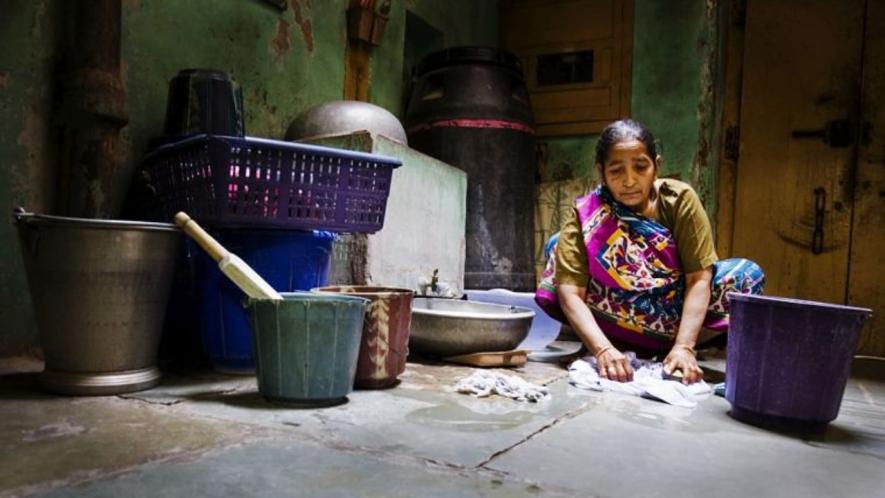
Image Courtesy: Flickr
Children’s upbringing in India faces two distinct challenges. One how to upbring girls and boys as equals. Second, how to upbring them with a sense of dignity of labour in a society where labour is looked down as uncivilised.
Let us take up the first problem. If there is a girl and a boy in a nuclear family, how does a mother start teaching the girl and boy about food eating and playing games? Generally, a mother’s daily interaction with the child is more intimate and more frequent than the father. If the family is multi-cuisine, and eats meat, fish and vegetables, the mother keeps mentioning that one must eat meat or vegetables as these are tasty. The child, hence, acquires a mental framework of enjoying meat, fish or vegetables by listening to his/her mother’s lessons on food culture.
If it is only a vegetarian family in a caste-ridden society, mostly a mother teaches her children to eat only vegetables, highlighting its taste and health benefits. Incidentally, if the child interacts with another child who eats multi-cuisine, and does try to eat meat or fish items too, the mother admonishes, terming these as “bad items”.
This has nothing to do with girls or boys but with caste and food-cultural background of a family. The father would do the same. Here children are taught about caste, food culture, the “difference” between families and children. Gradually, this becomes a ritual or a religious cultural difference. This is mostly a case of Indian caste cultural food division training of the children. This training does not take place in the same way among Indian Muslims or Christians. In those religions, the food culture does not divide families so much.
THE LABOUR QUESTION
Second, teaching about work or labour-related issues as differing ones between girls and boys of the same family and same caste, is a more serious one. The difference begins with games in childhood. Girls are given feminine toys, and are told about dress codes and hair styles. Boys are given male toys told how they should dress and keep the hair styles. At this stage, both parents are involved in buying sexually differentiated toys.
Even among poor families that cannot afford toys, the female and male differences are explained by showing the difference between a mother and father and other members of the family. Even before children understand their biological and sexual differences, the family members educate them on how they are different.
But, a more serious gender difference is with regard to work. Education begins while children grow and help in housework, even before they go to school. Home is also a work culture training place. Children see only their mother or mother-like women members sweeping the house, washing dishes and washing clothes. They see only mothers or other women working in the kitchen. Men are never seen entering a room to arrange things related to cooking. They see only mothers or other women serving food to men and children, never do they see men doing those things. Many men do not even wash the plates in which they themselves eat food.
Children see men handling cattle and going for work outside the house. In the villages, they see them tilling land and women sowing the seeds and weeding crops. But not vice-versa.
In urban areas, children observe mothers or other female members doing similar gendered tasks. In urban society, though men are at home, the children never see them sweeping the house, washing dishes, clothes or cooking food. They see them driving scooters or cars and so on.
CASTE DIVISION OF LABOUR
In India, children are taught division of labour based on their caste status. Only children born in Dalit/adivasi and Shudra families are told that it is their historical role to get involved in the work that soils their hands—like preparing land for agriculture, artisanal productive work. They are taught that only Dalits do road cleaning or leather technology work. Even while talking about such tasks, the language is condescending.
Among upper caste—particularly Brahmins, Banias and Kshatriya—families, children are taught that the work of producing food in fields is polluting. Those who do not get involved in such muddy work are treated as superior. Those who do such work are seen as inferior. Such treatment of productive work by educated people as “pollution”, becomes a norm for other children whose parents do productive work, because it involves a sense of shame.
Once children begin to be told that such work is not dignified, the idea of physical labour begins to be treated by them as inferior. Based on caste cultural values, as children grow, they think that those who work in agrarian fields, sweep roads, make pots, do the tasks of smithing—iron, bronze or gold- or leather technology, are also unworthy of respect.
Once such ideas are taught to children generation after generation, it becomes national culture, where all artisanal, agricultural and animal economy related work is generally despised by the children and youth. Nowhere in the world does ritual (religious) ideology treat production or agrarian-based engineering or leather-related work as “pollution.” This practice exists only in India, particularly as practiced by Hindu religion.
There is yet another purity-pollution ideological training that conditions the life of girls and boys. This is purely a gender issue. The menstrual cycle of girls around 11-12 years of age is treated as “pollution” or impure. This treatment goes up to childbirth.
A young college girl, Soorya Sri, writes: “Then suddenly, that day arrived. They called it menstruation.
At first, I was not unhappy—rather, I was glad. I got nearly two weeks of leave: watching TV, playing with cousins, eating, sleeping, talking, laughing. Then, after seven days, the cycle repeated. I was happy.
But I did not realize then that this celebration was actually a ceremony of confinement—a ritual meant to place a child inside a golden cage. People’s eyes changed after that—especially men’s. I was made to stay completely outside the house for five whole days, regardless of rain, wind, or cold. I slept on the floor with insects, enduring a haunting pain that was entirely new to me. I was no longer allowed to go out, not even to nearby shops as I had earlier. I was forbidden from speaking to boys—even my cousins—and was expected to remain constantly within my parents’ sight”.
She further adds: “Slowly, society made me believe that this is how a “proper girl” must be. That was when my inner child began hiding behind a people-pleaser mask. I started doing what others wanted me to do. I said things people liked to hear. I became the most obedient girl in my family” (Unlearning a Childhood of Silence And Embracing a Future of Resistance, in the book Learning English Nationalism, published by Phule-Ambedkar Centre for Philosophy and English Training. (PACPET) Tellapur, Hyderabad, 2026)
WHAT COULD BE DONE
The cycle of a child’s life in India is conditioned by strict gender inequalities and caste inequalities. If this human cycle of indignity of labour and the idea of pollution of women’s bodies around menstruation and childbirth and also gender-based division of labour does not change, India will not progress. This very backward cycle of life puts the nation backward in many scientific discoveries, making it dependent on Western nations, where this cycle of life certainly is different.
In my entire experience of writing on rural human societies, I found two profound sayings that could change this cycle. In Telugu, it is said “Buruda Lenide Buvva Ledu” (Without Mud There is No Food) and “Rajaswala Kanide Pindem Ledu” ( Without Menstruation There is No Child). If all castes and all human beings—men and women-understand these two sayings and mould their life accordingly, India as a nation will change into a powerful nation.
The writer is a Political Theorist, Social Activist and Author. His latest book is The Shudra Rebellion. The views are personal.
https://www.newsclick.in/dignity-labour-notions-purity-and-pollution-india
-
With arrival of ‘Islamic NATO’, BJP-RSS must rethink religious nationalism
Kancha Ilaiah Shepherd
Recently, a new organisation is said to have been formed by three powerful Muslim countries to safeguard their interests in West Asia. According to both global and Indian media reports, Pakistan, Saudi Arabia and Turkey formed an alliance. This alliance has been described by the media as the “Islamic NATO”.
Though Turkey was already part of the North Atlantic Treaty Organisation (NATO), where Europe, the US and Canada are in alliance, as a security military bloc of all these nations, it has now joined a religion-based alliance as well. Turkey’s army is the second biggest after America in that alliance.
Religion-based alliance
Turkey joining a religion-based defence alliance with Pakistan and Saudi Arabia is a major global development, and this will have huge implications for India and Israel. The Islamic NATO is expected to operate with Saudi money power, Turkey’s army power and Pakistan’s nuclear power.The “North Atlantic” in NATO refers to the geographical location of the Western hemisphere. In the Middle Eastern alliance of Islamic Treaty Organisation, religion plays a central role going beyond the national interests of these countries.
Historically, whenever Islam as a religion is challenged, Muslims tend to join together as a united force. There are predictions that even Kuwait, Qatar and other Muslim nations in South Asia, like Indonesia, Bangladesh and Malaysia, may join this alliance in future. Now that Iran is in a major civil war situation, only the future will tell how its history will unfold.
No more neutrality
Ever since the Kashmir issue was reshaped following the abrogation of Article 370 by the BJP/RSS government as part of their long-standing demand during the rule of other political parties, and it was made into a Union Territory, not only Pakistan, but other West Asian Muslim countries seem to have moved away from their neutral stance on the Kashmir issue.The BJP/RSS aggressive deployment of religious language by targeting Indian Muslims in elections, and their opposition to the term “secular” in the Preamble of the Constitution, has given rise to a feeling of a Hindu-Muslim clash in the making.
Well-known American political scientist Samuel P Huntington predicted that future conflicts would arise in the domain of religion, in what he called the Clash of Civilizations. Are we leading to a Hindu-Muslim conflict in future?
The RSS/BJP anti-Muslim campaign started in the 2014 elections, with a strong attack on the Congress — which handled the Kashmir issue and the Muslim people’s developmental issue with a democratically accommodative stance — as “Muslim appeasement”.
This campaign continued for the past 11 years. Of late, the Islamic world started perceiving this campaign as anti-Islam. The Islamic world seems to have reassessed its relationship to Pakistan and India in this background.
Post Operation Sindoor
Operation Sindoor seems to be a turning point. Notwithstanding who won that four-day war, it changed global alliances. The Muslim world stood by Pakistan for the first time in this war.During the 1965 and the 1971 wars, India could successfully isolate Pakistan by using India’s secular position in the global arena. At that time, the Muslim countries were convinced that it was basically an issue between these two countries and religion was not in the centrality of those wars.
The “Sindoor war” changed the narrative. The RSS/BJP government used the brutal killing of tourists in Pahalgam to attack the terrorist camps in what India calls Pakistan Occupied Kashmir (POK) and Pakistan calls “Azad Kashmir”. These two are opposite perceptions of the partitioned countries.
During the Congress regime too, the same antagonism between the two countries existed. But the strong secular image of the non-BJP regimes could keep the rest of the West Asian Muslim nations away from Pakistan.
Anti-Muslim rhetoric in India
There is no doubt the RSS/BJP government pursued a massive global campaign against Pakistan harbouring terrorists. But, at the same time, the anti-Muslim political rhetoric continued within India in an aggressive tone by all RSS/BJP leaders, including Prime Minister Narendra Modi and RSS head Mohan Bhagwat.They, along many other leaders, went on talking about Muslim appeasement by the Congress. At the global level also, they took up the campaign that Sanatana Dharma was/is Vishwa Guru.
Several NRI meetings in Muslim and Christian countries were organised with a religious nationalist vision. Added to this, the campaign by RSS/BJP leaders that the word “secular” must be dropped from the Preamble of the Constitution seems to have given an impression that they are targeting Islam as a religion.
It is here that a global view seems to have formed that the biggest democracy in the world will become a fully Hindu theocratic nation. Since there are Muslim countries around India with theocratic and unstable dictatorships, they have always envied the Indian democracy with a stable electoral system.
All religious nationalisms hate democracy as a system. The RSS/BJP seems to be falling in a trap by attempting to centralise religion in the state structure.
Israel-Palestine’s recent war
The Middle Eastern Muslim countries have a long-standing conflict with Israel. They have not forgotten the 1967 war between Israel and the Muslim countries of that region.Also read: How de-secularisation may slowly steer India away from electoral democracy
The recent Israel attack on Palestine as a response to the October 7, 2023 terrorist brutality on Jewish people was a genocidal war. It was just a one-sided war, except with minor losses to Israel.
These two factors seem to have led to the formation of the Islamic NATO by powerful Muslim countries.
The threat to India
The threat, however, is a bigger one to India. In terms of religious ideology, Muslims and Jews came from common Abrahamic (Ibrahamic) roots. In future, they could resolve that conflict without converting it into a religious global war. Already, they have signed an accord called the Abraham Accord.Even if that accord does not work, Israel will have the massive support of the Christian world, as the Judo-Christian tensions have almost disappeared. The 56 Muslim countries have common organisations like the Organisation of Islamic Cooperation (OIC) and the Muslim World League (MWL) to them in the event of a major religious war.
There are not many Hindu nations — neighbouring Nepal may not join India in case a religious war breaks out. China will not back us given the history of rivalry. Beijing also wants democracy in India to be dismantled because a thriving neighbouring democracy influences its youth to aspire for a similar democracy.
Time for caution
The current situation demands that the ruling RSS/BJP be extremely careful in handling the rising global religious nationalism. If they keep attacking the basic secular structure of the Constitution by constantly deploying anti-secular and anti-Muslim rhetoric, the Indian path to survival and development will enter into a risky position.This was the reason why the framers of the Constitution inscribed a deeper principle of secularism. The word “secular” in the Preamble is only an outward expression of that hidden secular structure. If they constantly attack it, the religious Muslim theocratic states will certainly take advantage of that discourse.
As a nationalist working for the expansion of secular productive nationalism, not religious nationalism, I wish the RSS/BJP would take this new development seriously.
(The Federal seeks to present views and opinions from all sides of the spectrum. The information, ideas or opinions in the articles are of the author and do not necessarily reflect the views of The Federal.)
About the Author
Kancha Ilaiah Shepherd
Kancha Ilaiah Shepherd is a political theorist, social activist and author. His latest book is The Clash of Cultures — Hindutva — Mullah Conflicting Ethics.https://thefederal.com/category/opinion/india-islamic-nato-bjp-modi-pakistan-turkey-saudi-226800
-
KANCHA ILAIAH SHEPARD explained “Why He is Not a Hindu Book Explained in Hindi
-
-
A Miracle on This Christmas Day!
From Nehru to Vajpayee to Manmohan Singh, no Prime Minister has attended a Christmas prayer meeting, singing carols, but Modi did, that too amid RW attacks on Christians.
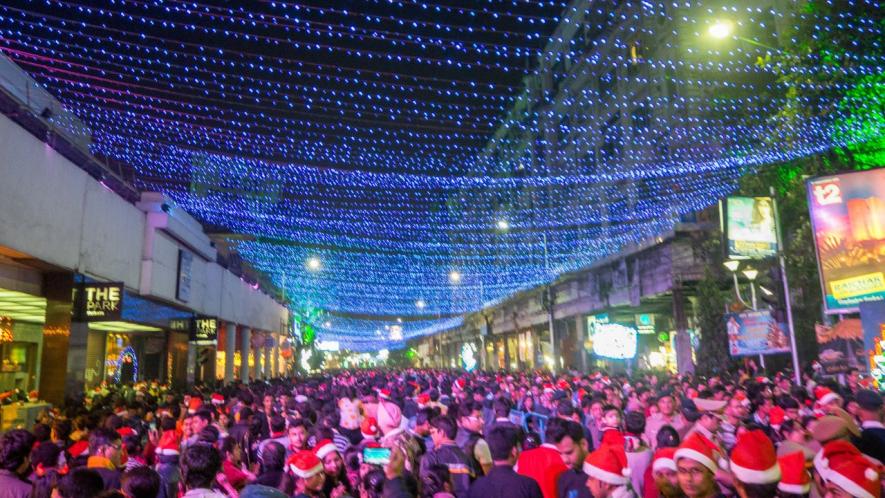
Representational Image. Image Courtesy: Wikimedia Commons
Miracles in Christianity are deeply believed and also globally contested beliefs. In my lifetime, I saw a strange miracle on Christmas Day 2025 in India. The Rashtriya Swayamsevak Sangh (RSS) and its sister organisations, including the Bharatiya Janata Party (BJP), were born and brought up opposing Christianity. Their father theoretician Vinayak Damodar Savarkar’s idea of Hindutva was meant to drive out Christianity and Islam from, what he calls, father land, India.
I have seen several attacks on Christianity from my student days in the early 1970s by members of the same school of thought. The Christians would go on organising candlelight processions in city after city. The Congress or the other coalitional regimes that ruled India from 1947 to 1999 could not stop such attacks because of the fear of allegations of collusion with a foreign religion. The idea that India was/is Hindu and other religions should have equal rights, was not part of the Hindutva ideology and campaign.
In 2014, the RSS-BJP came to power with a silent propaganda that the Congress leaders Sonia Gandhi and Manmohan Singh’s 10 year- rule handed over the nation to Christian values. Their rights-based policy decisions were seen as part of Christian values. Sonia Gandhi was openly attacked as an Italian Christian who had captured India. But we have not seen Sonia Gandhi or Manmohan Singh visiting any Cathedral on any Christmas Day, praying to Jesus with folded hands.
From Jawaharlal Nehru to Atal Bihari Vajpayee, no Prime Minister visited a Cathedral on Christmas Day and sang carols with a book of songs in hand.
Prime Minister Narendra Damodar Das Modi did that on this Christmas Day in New Delhi. He sat along with Christian devotees on a bench in the Delhi Cathedral of Redemption. He held the book of songs in his hands along with the others, as if he was asking for redemption. The idea of seeking redemption is central to Christian belief. Not that Modi and the Prime Minister’s Office do not know the name of the cathedral. They know that and he chose, perhaps, by himself to go to the Cathedral of Redemption.
Two bishops, under the leadership of Paul Swarup, lead the prayers in English—not in Hindi or Sanskrit. PM Modi stood with folded hands.
Is it not surprising that PM Modi did this amidst attacks on Christmas celebrations across the country by Right-wing forces? He did not condemn them, but like a Christian himself, he prayed in the church.
Some time ago, in a podcast discussion, when the interviewer asked Modi what he would do after he moved out of this comfort zone (the PM’s office), he said he would go and spend time in a temple doing pooja. In his biography, it is said that he ran away from home after his school education to become a Hindu monk. But he was not welcome by the saints and poojaris in many spiritual places, perhaps, because he was not a Brahmin. However, he landed up in the RSS office and rose to become a controversial leader in fighting against Muslim culture. Though Modi did not speak in harsh language against Christian culture, he treated it as foreign religion, no doubt.
His frequent visits to different Hindu temples in the country are well known.
During his 11-year rule now, most Christian Non-Governmental Organisations have lost their FCRA (Foreign Currency regulation Act) permissions to get funds from outside India. Even churches have lost the scope to get financial assistance from other Christian countries. Thousands of Christian and non-Christian people have lost jobs because of his government’s anti-Christian policies.
Many Christian tourists were deported to their own countries from airports with a view that many such people have been coming to India to convert people from Hinduism to Christianity. Under the PM’s nose, the Uttar Pradesh government has not declared this Christmas as holiday for school children of the state.
Modi has repeatedly said that English education in India was a colonial contribution. His government took a strong stand against English and now makes laws only in Hindi. His government is sanctioning huge amounts of money to Sanskrit language education that has no use value in India or abroad.
But suddenly the PM in his official capacity attends a prayer meeting in the cathedral in English language. Isn’t that a miracle?
From Nehru to Manmohan Singh, no Prime Minister attended a Christmas prayer meeting, singing carols, but Modi did.
Imagine if Rahul Gandhi, as Leader of Opposition, were to do this? What would have been the response of the BJP-RSS leaders and activists across the country? He would have been asked to go to Italy or become a bishop in the Holy See State. Since Modi did this, there is no word about it.
Is it also not a miracle that Modi has such a grip on the party and the government? There is a feeling that he functions like the Pope in the Vatican.
Why did PM Modi do this? Is it because he wants to send a message to the Christian West that his government is not against Christianity as a religion in the context of the Pan-Christian world that sees India ‘as a country of concern’ for Christian persecution. The conservative Christian forces in the US, Europe, Australia, Canada and so on, are also responding to Indians living in those countries in a communal manner.
In the situation of growing communal calculations of nations after this Christmas, does Modi want to send a message that India will follow the secular path, as institutionalised by the founding fathers and mothers of our Constitution? Because, of late, from the RSS-BJP ranks, the demand for removal of the word ‘secular’ from the Preamble of the Constitution is increasing. Modi’s act certainly seemed to send a message to Western secular democracies, which, in terms of religion, are Christian nations, that India will not de-secularise itself. If that is the intention, it is good for the nation.
Does his prayer in the Cathedral of Redemption lead to stopping persecutions and change the policy of thumb rule on Christian socio-economic and spiritual life. Let us hope so.
The writer is a political theorist, social activist and author. His latest book is the ‘Shudra Rebellion’. The views are personal.
-
When RSS-Modi Attack Macaulay and English, They Attack Upward Mobility of Dalits, Shudras, Adivasis
Kancha Ilaiah Shepherd
The upper caste and the rich can continue to learn English in expensive private institutions, it is the Bahujans who will suffer.
Representative image of BJP flags. Photo: Facebook/BJP4India
The Rastriya Swayamsevak Sangh (RSS) and the Bharatiya Janata Party (BJP) have opened another front of attack on the future of the Dalit/Shudra/Adivasis. This front has nothing to do with Muslims. In a certain sense, though it appears anti-Christian, it does not affect the future of Christian population of India, which is very small in number. This front is English education. Though their attack appears to be on colonialism and Lord Thomas Babington Macaulay, it is fundamentally against the English education of the Dalit/Shudra/Adivasis, who are slowly getting English education and hoping to compete with the upper castes in all states and at the national level. English is also enabling them to enter into global markets. This language came into their life through Mahatma Phule, Savitribai Phule and Dr. B.R Ambedkar, not through Macaulay.
It was Ambedkar who gave them the confidence with unparalleled command over English in India during the freedom struggle and in writing books and the constitution. He had shown the oppressed castes that this language can become a tool of their liberation from their historical slavery. Sanskrit was used as a tool to enslave the Dalit/Shudra forces with a design for millennia. English became a counter weapon in the hands of the oppressed and exploited castes.
Now the RSS/BJP, is systematically using an OBC Narendra Modi, as the prime minister, to deny English to these castes. I, as a first generation writer in English from a Shudra shepherd community, know the power of English as a liberative language. For us it is not a Macaulay language but an Ambedkar language. It is an Indian and Dalit-bahujan liberation language.
Why it is not a Christian language
The Telangana social, economic, educational, employment, political and caste survey has shown that though the Christian population is very small in terms of numbers, its English education level is as higher as that of Brahmins, Reddys and Kammas. Perhaps that is because the church system established English medium schools along with churches in several places. However, for them it was a language of job either in India or abroad or of prayer.
No Christian scholar of India used it as a liberative tool as Ambedkar, who was not a Christian. For him it was a language that could change the life of the oppressed and exploited people in future.
It is also a fact that not many Shudra/OBCs have become Christians and hardly send their children to Christian English medium schools. Some upper castes, particularly Brahmins have become Christian and most Hindu upper castes sent their children to learn that language in Christian schools. Brahmins, Banias, Kayasthas, Khatris and Kshatriyas are the most English educated elite in contemporary India. They have also not used that language as a tool of liberation from caste oppression.
Of late, the Shudra-OBCs are realising that Ambedkar’s English writings have helped them to gain the reservation benefits and also the importance of learning the English language.
The Telangana caste survey has shown that the most backward in the English education parameter are Adivasis/Dalits and OBCs in that order.
According to the Telangana castes survey, Iyers and Iyyangars (they are shown as a separate caste group in the survey) and the Brahmins of the state are most English educated. The highest private school education so far is acquired by Iyyangars/Iyyars and Brahmins. They are the most powerful in the bureaucracy of Telangana. Historically these communities were privileged. Earlier they controlled Sanskrit and Persian language as well. The rich among Muslim have Urdu, Arabic, Persian and English. Even today the Muslim Nawabs are English educated like high end Brahmins. All their languages are not regional and confined to one small area.
They are global languages and all Indian languages. They too never used those languages to liberate the oppressed castes. When they ruled the nation before the colonial period they pretended as if caste and human untouchability do not exist. They went by what the Brahmin court pundits told them.
English in our times
The Telangana caste survey also has shown the overall development of Shudra/OBC/Dalit/ Adivasi communities is more linked to English medium education than land. Even the most landed families are looking for an English educated employee in settling the marriage alliance. That is the reason why the Government schools are converted into English medium in the state. The idea of English medium and employment got into the life of the Shudra/OBC/Dalit/Adivasis because of Ambedkar’s fight for new liberation direction during the post-colonial period. No other freedom fighter made as much impact in their homes as Ambedkar did.
Ambedkar is not like Gandhi to upper castes, nor like Rabindranath Tagore to the Bengali Bhadralok, nor like Jinnah to Muslim separatists, he is a reformer, a new language teacher and an employment source and divine figure for the oppressed castes. No Indian from marginalised castes knows about Macaulay as source of English language in their lives, and they only know Ambedkar as the source of English language education, employment, in India or abroad, and also protecting them in courts.
And yet, the RSS/BJP Macaulay mania will have serious implications to their lives.
The Macaulay mania
Why are the RSS/BJP top leaders like Mohan Bhagwat and Narendra Modi have started identifying English language education to the British official, Macaulay? The RSS/BJP leaders’ pro-Sanskrit and anti-regional language bias towards languages like Bengali has also come out clearly in the debate in the parliament about Vande Mataram Vs Jana Gana Mana, the present national anthem. Pandit Jawaharlal Nehru in his letters to the chief ministers and his final opinion was very clear that understanding Vande Mataram is difficult whereas Janagana Mana is easily understood (Indian Express, 10 December) not only by Indians but by foreigners. Both its anti-Macaulay campaign and subtly opposing regional languages in favour of Sanskrit or Hindi is a long term deceptive policy of the RSS/BJP forces.
The RSS/BJP main leadership seems to have planned to systematically go about denying the future global mobility by slowly undercutting the English language education in government schools in the states. However, they are not against the rich mainly (Brahmin/Baniya/Ksatriya) forces studying in private English medium schools and universities.
As I said above, for the Dalit/Shudra/Adivasis English is not a language given by Macaulay but by Ambedkar. Ambedkar wrote all his books in English. It is true that he wrote in Marathi for his journals such as Mook Nayak and Bahishkrit Bharat. But his transformative writing starting with his famous essay Caste in India ended with his last book The Buddha and His Dhamma. He wrote all in English. He gave his major speeches in English. His Constituent Assembly debates are in English. A first generation untouchable became such a renowned lawyer, thinker, writer and speaker influencing the whole nation because of English, a global language by then.
Ambedkar’s writings were translated into all national languages because in every region there were/are English speaking Dalits, who wanted to introduce Ambedkar’s writings to their children and grandchildren. Thus, Ambedkar’s writings in English became a source of their liberation all over India. Now the RSS/BJP want to disempower them by removing that national and global inter-connecting language from these communities.
English as our future national language
India is not a one language country like China or Japan or Germany. It is a country of several castes, communities, tribes still speaking several small languages in small regions, apart from several regional official languages. They need one national language to communicate with each other and that should be English. But the RSS/BJP want to impose Hindi on them, while allowing the rich to use English as home, market and job language. The top rich class of India uses English as a global language for frequent migrations to different Euro-American nations. If the Dalit/Adivasi/OBC communities do not learn English they will remain oppressed for centuries to come. The RSS/BJP top leaders know the power of English.
It is a conscious attempt of the RSS/BJP to club the question of learning English with colonialism and Lord Macaulay. Macaulay’s central theory by arguing in favour of English education was to create a class “Indian by blood and colour, but English by tastes, opinions, morals, and intellect”. Which castes and communities became Indians by blood and English by taste?
Did V.D. Savarkar not become exactly that? He studied in England, ate English food and wrote books in English not to liberate the Dalits and Shudras from untouchability and oppression but to construct a theory of upper castes to establish a Hindu theocratic state. His book Hindutva: Who is a Hindu?, was written in English only. It is from this man their core theory of Hindutva and Hindu nationalism emerged.
Kancha Ilaiah Shepherd is a political theorist, social activist and author. His latest book is, The Shudra Rebellion.


You must be logged in to post a comment.