-
Nationalism should be built by accepting truth, not by telling falsehoods
Mohan Bhagwat says 70% of Indian population was educated pre-British Raj; but didn’t Shastras say Shudras and women must be left uneducated?
6:30 AM, 11 March, 2023
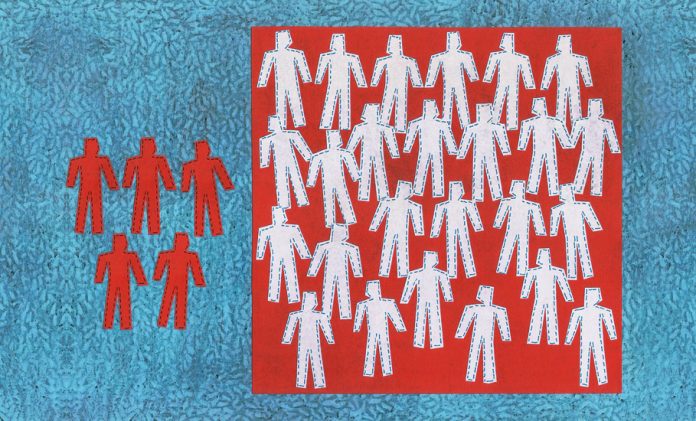
The Shastra literature that Bhagwat is talking about does not provide a descriptive narrative of equal respect for all occupations.
Mohan Bhagwat, the sarsanghchalak of the Rashtriya Swayamsevak Sangh (RSS), has been making quite unusual statements in the recent past. A few days back, he said God did not create caste in India, but it was pundits (priests) who did so. A few days later, he said that the shastras for a long time were transmitted only orally and till then they were good. But, while writing them, wrong things were introduced into them. These two statements had some reform intentions.
Mohan Bhagwat on Sunday (March 5) said 70 per cent of India’s population was educated before British rule. He further said there was no unemployment in the country then. The media reported this statement quite widely.
The first girls’ school
While writing in the context of Savitribai Phule Jayanti on March 7, in the Punekar News, Camil Parkhe wrote an interesting article about an American missionary lady called Cynthia Farrar, who started the first girls’ school in Bombay (now Mumbai) in 1824. Farrar became the inspiration for Mahatma Jyotirao Phule to start a girls’ school in Pune where Savitribai and Fatima taught.
India today considers Savitribai as the first woman teacher of India in a nationalistic sense. But, actually, Cynathia Farrar should be considered the first woman teacher. She never married but all her life worked for girls’ education in India and died in 1862 in Ahmednagar.
Parkhe says: “Cynthia Farrar’s important identity is being the teacher of veteran social reformer Savitribai Phule, wife of Mahatma Jyotiba Phule. Farrar is also a pioneer of women’s education in India and she is credited with launching many girls’ schools and girls’ boarding schools in Mumbai and Ahmednagar”.
Were such girl schools started by Hindu Brahmin missionaries in India at any time in history?
Reflecting truism
To have more than 70 per cent Indians educated would mean that Shudras and Dalits, who were living around villages and towns, were also educated. The pre-British India that Bhagwat was talking about was Mughal rule. Bhagwat’s statement implies that in Muslim period more than 70 per cent of Indians were educated. If that was so, why was Muslim rule bad? There were no 70 per cent Muslims in India when they were ruling. If Muslim rulers educated Shudras and Dalits, then why did they remain illiterate till recent times?
Bhagwat’s statement generally reflects the RSS truism. If RSS is saying that caste and women’s inequality entered into the Sanskrit shastras by later writers, the RSS and BJP government can now constitute a review committee and remove all the references to caste and women’s inequality from them. As of now, in what they call shastras and puranas, even the caste of Gods is mentioned. For example, Rama is mentioned as Kshatriya and Krishna is mentioned as Yadav (Yadu).
Caste groups like Shudras (OBCS) and Chandals (Dalits) are mentioned in a very derogatory manner, whereas Brahmin, Kshatriya and Vysya communities are mentioned as most respectable and which need to be served by the Shudras and Chandals.
‘Initiate change’
Nobody can stop the RSS and BJP government from changing that language in shastras. The right to priesthood education can be given to all occupational groups whom they consider or recognise as Hindu. This is a necessary step because Bhagwat as head of the RSS is saying ‘God did not create caste’. Whatever is incorporated by men could be removed from those books.
Spiritual equality is dependent on equal opportunity of spiritual education. The RSS/BJP can initiate Hindu spiritual schools for all Hindu children. It is well known that till recent times Shudras and Dalits had no right to read the Hindu spiritual books. Within the books their life is portrayed as equivalent to animals. The debate about such language in Ramcharitmanas in the UP Assembly is well known.
The central issue is that the right to education in an equal environment must be guaranteed in all spheres. The curriculum should also contain the teaching material that inculcates dignity for all professions and occupations of Indians. The Shastra literature that Bhagwat is talking about does not provide a descriptive narrative of equal respect for all production occupations.
No society at any point of time could survive without agriculture, animal economy and artisan instrument making. In all Shastras — from Rigveda to Ramayana and Mahabharata — all these occupations were treated un-divine, hence Shudra or Chandala. This language cannot be accepted by modern youth studying in colleges and universities. Therefore, change is necessary. The RSS/BJP, as religious socio-political formations, need to initiate a process of review.
Confusing claim
To claim that in pre-British India 70 per cent Indians were educated implies that Shudras, Dalits and women were educated in the Brahminic gurukuls in Sanskrit. Where is the evidence? When the Shastras themselves are saying that Shudras/ Chandals and women must be kept out of the education system, what does Bhagwat mean by saying that 70 per cent Indians were educated in pre-British India?
The first open school that in principle accepted to educate all caste and community children was initiated by William Carey, a British missionary, with the support of Raja Ram Mohan Roy in 1817 in Calcutta. The first girls’ school, as per available information, was opened in 1824 in Bombay by the American Marathi Mission. Cynathia Farrar came to India as part of that mission school and dedicated entire life to teaching girl students from all castes.
Was there a Brahmin or Hindu mission either during the Muslim rule or earlier to educate all castes/community or occupational group children in India? Without such missions, who were educating 70 per cent children of India? No monarchical state was running schools in India. Brahmins, who were the Dwijas (mainly literate among Brahmins and Kshatriyas, not even Vysyas), should have done that. But the Shastras did not allow them to do so.
Even during Mughal rule, there were no schools established for all caste/community children in Persian language. The Mughal rulers, including Akbar, went by the advice of Brahmin pundits, who were against universal education. The most tragic part of the pre-British Mughal rule was that lower-caste converts to Islam were not educated by Muslim mullahs, who came from the high castes or from Pathan or Mughal races. That is the reason why lower-caste Muslim illiteracy is higher than that of Dalits today.
Nationalism cannot be instilled by telling untruthful stories to the Shudra/OBC/ Dalit/ Adivasi masses today, who are the main voters. Let the nationalist spirit be instilled by accepting the mistakes of the past. The future of the nation should be built on honesty and self-correction, not on falsehood.
(Kancha Ilaiah Shepherd is a political theorist and author. He has been campaigning for English medium education in all government schools of India for the past 30 years.)
-
Prof Kancha Ilaiah || Teaching English To The Sheep || Lesson 3 ||@RTV T…
-
Prof Kancha Ilaiah Says Importance Of Learning English | Part 1 | Kancha…
-
Anti-Caste Laws In America: Thwarting Aryan Hatred Against Jesus As Dalit?
in Annihilate Caste — by Kancha Ilaiah Shepherd — 27/02/2023
Lot of discussion and writing is happening in India about anti-caste laws and rules getting framed in America, the dream land of Dwijas of India. Several Hindutva intellectuals are telling stories about their love for Dalits without telling anything about how their forefathers created this barbaric system, which is now getting globalized and how they want to participate in abolishing it. Their innate deep down Aryan Brahminic hatred to Dalits and Christians needs to be examined to understand whether global anti-caste response is useful for future development of the world or not. They say America is doing it as part of its Hinduphobia, but they hide their deep Christianphobia, as they see it as a Dalit religion. These very same forces loved Nietzche, who worked out a theory for justification of caste and untouchability and has shown that the most dangerous Dalit was Jesus himself, who was supposed to have worked for abolition of caste and untouchability and stood for equality of all humans before God. The Hindutva ideologues remain silent about their Dalit and Christian phobia in India and also in the West-including America.
NIETZCHE AS THEIR ARYAN ALLY
Friedrich Nietzche (1844—1900) was a German philosopher and thinker. What he wrote about the Aryan supremacy and Jewish Christian Dalitness (what he calls Christian Canadalas) has many things in common with the present Hindutva notion of Hinduism’s (in essence Brahminism) Vishwa Guru idea and the Christian un-Indian untouchable religion. Nietzche has written several books that formulated the idea of Nazi Aryan nationalism and anti-Jewish semitism.
He had great admiration for the Indian Aryan caste hierarchy and was of the opinion that the Aryan power and Dalit slavery were necessary for superior racial civilizational growth.
Quite surprisingly in many of his writings Nietzche said that Jews were inferior people like Candalas (Dalits). Jesus, according to him was Chandala (Dalit) hence rebelled against the aristocracy in a changed environment of Israel.
As one looks at the expansion of Christianity mostly among Indian Dalits and Tribals, not so much among Shudras, Vaisyas, Ksatriyas and Brahmins, one realizes how Nietzche’s Aryan speculative truism operated in Indian context. Christianity in India is seen only as Dalit religion. Nietzche’s formulation of Jewish Christian evolution against the Aristocratic ethic of the European, more particularly of German, Aryan civilizational evolution still holds good in India. The Aryan Brahmin civilization has walked into modernity in the form of Hindutva Brahmanism that spreads hatred against modern Dalits/Adivasis and also Shudras, not just in India but in the whole world.
This is the reason why the Christian West also is realizing that neo-Nietzchism is spreading cateism in America. And America is trying to thwart it by making anti-caste laws. The anti-caste ordinance of Seattle and rules being framed in many American universities tell the story of how the modern globalized Candala (Dalit) can create a new anti-caste Christ in the world.
Nietzche thought that the Indian Aryan racial and caste system were the best mechanism for maintaining what he calls “Aryan aristocracy and Candala slavishness”. A scholarly book written by Dorothy M.Figueira, herself an American scholar, Aryans, Jews and Brahmins, sums up Nietzche’s theory of Indian Aryan Brahmins and Jews about human racial superiority and inferiority. She also tells us how German Aryan racists saw Jews and Christ as Candala–Dalit.
The following is a brief summary of what Nietzche says in the words of Dorothy:
“ In Christianity the individual had become so important that he could no longer be sacrificed. Nothing was more dangerous than all types became equal before God. Christianity as counter-principle to selection, represented the anti-Aryan total subversion of Aryan values and a victory of Candala (modern Dalit) values. With Christianity, the master had been defeated by common men. Their victory entails blood poisoning. As the religion for the poor and downtrodden, the wretched, ill constituted and underprivileged, Jewish Christianity defeated race. Although it passed itself off as a religion of love Christianity represents nothing but the revenge of the Candala (Dalit). It denies enslavement necessary to bring about the emergence of a higher type.
In order for Christianity to function as a Candala (Dalit) religion, it had to have originated among a Candala (Dalit) people. And indeed the Jews were once Candalas (Dalits) under the servitude of Hindus (Aryan Brahmins). It was during this time that their type as an enslaved and despised group took root. As a Candala (Dalit) race the Jews gradually ennobled themselves by taking control of lands and creating gods. They learned from their Indian rulers how to make a priesthood, their masters and how to organize a people. In fact, in the figure of the Jew that Candala (Dalit) hatred first became flesh. In other words, the Jews recognized their Candala (Dalit) status, embraced it, and turned it to their advantage. They incorporated animosity against the aristocratic, noble and proud into their religion.
They institutionalized their hatred against the power and the ruling classes. Their revolt ultimately resulted in the creation of the true Candala (Dalit) religion, Christianity. When the Jewish priestly caste itself became a privileged aristocracy and was overthrown. Christ was the ultimate Candala (Dalit) a figure who rejected the Jewish priests in order to be redeemed” (Aryans, Jews and Brahmins pp 57-58)
SPREAD OF ARYAN BRAHMANISM IN THE WORLD
The spread of Aryan Brahminsim in the West because of its modern capitalist wealth and science, there is an innate plan to undermine the Christian ethic as it is seen a Dalit ethic in Hindutva ideology. Lot of writing and discussion is taking place within India about the anti-caste laws and rules that are being framed in America and Europe as Hinduphobia but actually there is deep Christianphobia among them as Christianity as religion, exactly on the lines of Nietzche had seen as Dalit religion in India and also the world over by the Indian Dwijas.
The Christphobia is not hidden in India by the Hindutva agencies. But that phobia becomes more pronounced once they see the Christian institutions—Churches, schools or NGOs—in Dlitwadas and Tribal areas working. If these sections learn English they get more enraged. So long as the Christian aristocratic institutions taught English to the Aryan Brahminic children it was tolerated. The movement Dalit/Adivasi/Shudra children learn English, become scholars, thinkers, engineers, doctors they get intoxicated with anger of Aryan Nietzscheism. If they get a good education in English and go to America or Europe they too compete with Dwijas in dollar earning jobs. The Dwijas get mad because they, like Nietzche, think that the Dalits should never compete with them. Nietzche within them comes out for both because they are Dalit and also suspected Christian. Every Dalit in India, more particularly in South India, is suspected to be Christian, even if one is not. Like Nietzche thought Christianity is seen to be the religion of spiritual equalizer.
We can see in elite educational institutions in India, America, Britain, Canada and Australia if the Dalit/Adivasi youth are seen doing well harassing them becomes normal. They are insulted called reservation walas. They are forced to commit suicide as Rohit Vemula and many other young bright students did. As Rohit Vemula said “ The value of a man was reduced to his immediate identity and nearest possibility. To a vote. To a number. To a thing. Never was a man treated as a mind. As a glorious thing made up of stardust. In every field, in studies, in streets, in politics, and in dying and living.
Not just in India but wherever Indian Nietzscheism is going—to America, Europe, Canada, Australia and so on, the anti-caste battles will follow. To stop this Nietzscheism not few universities, one Seattle, all Governments of the world including the UN must make laws to annihilate caste and human untouchability.
Kancha Ilaiah Shepherd is a political theorist, social activist and author. His latest book is The Shudras–Vision For a New Path, co-edited with Karthik Raja Kuruppusamy. He is now working on a book The Shudra Rebellion–History From the Field Memories
-
Rahul can be ‘tapasvi’; what Congress needs is labourers on its side – The Federal
The Bharat Jodo Yatra and Rahul Gandhi’s changed image have to be cemented by roping in productive masses like farmers, artisans and farm workers
2:37 PM, 22 February, 2023

Rahul Gandhi has not yet become the force that can change the present situation. He has to continue to run his ‘mohabbat ki dukan’ for a longer time. File photo
“The person you are looking at is not Rahul Gandhi. You can see him. You don’t understand it… Read Hindu scriptures. Read about Shivji (Lord Shiva), you will understand. Don’t be shocked. Rahul Gandhi is in your head, not mine. He is in the BJP’s head, not mine,” Rahul Gandhi said, answering a question in Haryana during his Bharat Jodo Yatra, on January 7.
The question was from a journalist who had no positive view of Rahul Gandhi’s life and politics. He wanted to know what changes occurred to him in Bharat Joto Yatra. The media projected this description of himself as “He (Rahul) has killed Rahul Gandhi.”
Rahul said India is a country of tapasvis (hermit), not pujaris (priests). According to him, “The BJP and the RSS would not respect tapasya, but respect those who do their pooja (worship).”
He asked: “Did demonetisation respect the tapasya of the poor? Certainly not. It was an attack on tapasya…The BJP and the RSS are taking the country towards forced pooja using wealth, capturing institutions and making people fear.”
Tapasya as labour
Rahul gave a new definition to the concept of tapasya (a position of sitting cross-legged under a tree all the day worshipping Vedic Gods) as work or labour. He also called himself a tapasvi as he was walking across the country. During the padayatra, he started talking from a different moral position.
However, the notion of tapasya was never related to productive labour in Indian history. It was the work of a small group of Brahmins who sat under trees, without involvement in any production work or even in teaching some new knowledge to food producers, whether scientific or spiritual.
Rahul Gandhi has to reshape the Congress by inducting more and more Shudra/Dalit/Adivasis to challenge the RSS/BJP, which operates on pure spiritual ideologies without any connection to the production and distribution of resources, overcoming the caste discriminatory ideology.
Since the RSS/BJP brought in Narendra Modi — with an OBC image — into the Prime Minister’s office, the Congress, with no history of allowing a Shudras/OBC to become the Prime Minister, will not be trusted easily by the Shudras/OBCs.
Rahul’s humiliation
Rahul Gandhi has been humiliated by RSS/BJP leaders as ‘Prince’ of the Nehru-Indira Gandhi dynasty. Modi has dubbed him ‘tubelight’, ‘shehzada’ (prince) and so on. His party members called him ‘pappu’, escapist, foreign tourist and so on.
However, the central attack of all the RSS/BJP leaders was that this was a dynasty political formation. He was projected as a dull headed incapable person with an undesirable lifestyle, one who can never pull the Congress in elections to win the required numbers, and one who never can become the Prime Minister. He was ridiculed as a nobody before Modi, who is seen as a great courageous leader.
Rahul and his mother Sonia Gandhi were accused of being agents of Italy. Finally, the RSS/BJP repeatedly talked about ‘Congress Mukt Bharat’ which was under the leadership of Sonia-Rahul dynasty and much more.
They were accused of corruption. Court cases were launched by a BJP politician, Subramanian Swamy. Finally, Rahul and his mother were grilled by the Enforcement Directorate. Over and above, Jawaharlal Nehru, on whose credibility the family sustained its status, was attacked as a Muslim, beef eater, womaniser and anti-national.
The RSS/BJP regime period was the most difficult period for that family. The suffering was much more than the two murders the family faced or the responsibility for the anti-Sikh riots. The last eight years were a period of moral shattering for Rahul’s family. This is the background in which Rahul undertook his Bharat Jodo Yatra.
‘Power is poison’
Rahul as a person appeared to be unwilling to hold any position in the government even when the Congress was in power. His statement in Jaipur, that “my mother came to my room and cried… because she understands that power is poison,” way back in 2013 after he was made the Vice President of the party was an indicator that he has an anti-power trait in him. As recently as 2022, he told a public meeting: “I was born in the centre of power but it does not interest me.” These traits of Rahul were worrisome issues for the Congress leaders who wielded power by getting votes or Rajya Sabha seats with the image of the Nehru-Indira family.
The RSS/BJP wanted to demolish that family image so that it cannot come to power in the near future or forever.
Congress structure
Added to this, the Congress was and is full of traditional BrahminIcal leaders, whose main interest was power and continuing their own family dynasties. When the party was in power, they did not build any sustainable assets for the party but a lot of leaders made family assets. The party does not even have a well-built office in Delhi and in state capitals. On the other hand, the RSS/BJP built huge properties all over India. In Delhi, they built a massive party office.
This situation gave enough fodder to the RSS/BJP ranks to attack the politics of dynasty in Indian democracy. The regional parties also have this problem of dynasty; hence the RSS/BJP took a campaign against dynasty rule. Even small Muslim parties like AIMIM and National Conference are dynasty parties.
Educated leader
Rahul is the most educated in his family. His great grandfather Jawaharlal Nehru took a law degree from London. Indira Gandhi, Rajiv Gandhi and Sonia Gandhi were not graduates though educated in England. Rahul studied in Delhi’s St Stephens College, Harvard, and completed his graduation in Rollins College Florida, US, in the difficult times of his father’s assassination, his own security facing a threat even in the US. Finally, he moved to London and completed his M Phil degree in Trinity College, Cambridge. He worked for three years in England on a research project, Monitor Group, a management consultancy.
I met him three times and I found him well read. This is a rare quality among Indian politicians after the first generation freedom fighters. Not that he has no weak side of the personality. He did not seem to fit the kind of political environment that both the Congress and RSS/BJP and regional parties built over a period of time since the days of Indira Gandhi. The RSS/BJP wants to follow the Indira Gandhi model, Emergency or no Emergency. Rahul Gandhi certainly does not fit into that model.
It is in this background we have to understand his statement that “Rahul killed Rahul Gandhi”. He certainly washed away his prince or ‘pappu’ tag with his padayatra, with a will power that many have not seen in him earlier.
Dynasty tag
However, the main problem is that of his dynasty. Unless he turns into a moral force after this broad image shifting padayatra from Kanyakumari to Kashmir, he would not morally and ethically defeat RSS/BJP. His repeated statement that he has opened a “mohabbat ki dukan (store of love) in a nafrat ki bazar (market of hatred) of RSS/BJP” is not going to achieve concrete sociopolitical results in India unless he becomes a 24/7 working moral political force.
Two examples that serve his purpose that overcame the ruling dynasty problem are that of Gauthma Buddha and Mahatma Gandhi. Both had a ruling dynasty background. They gave up formal political rule marg (path) to change the national conditions of their times.
Though the Buddha is a distant example of establishing moral Sanghas, Mahatma Gandhi belonged to Rahul’s party by always remaining out of formal power, living in ashrams but directing the party and the power wielding forces with his moral authority. The Buddha left his Sankhya dynasty tag behind, and Gandhiji left his Kathiawar ruling dynasty tag completely behind.
Though Rahul is working hard to change the situation in the country, several forces around him keep talking about his prime ministerial candidature in the 2024 elections. The coterie around Congress headquarters is visibly Brahminic and consciously anti-Shudra/OBC, if not anti-Dalit. This coterie wants power in Delhi very soon, that too with just his changing image.
Should he think of being PM?
If Rahul aspires to become the Prime Minister of India, as his party’s old guard and power-wanting forces want, he cannot change the institutions that have undergone a huge change in the last few years. The Buddha remained an unchallenged leader, mellowing kings, because he did not want to become a king himself. Mahatma Gandhi became an unchallenged leader of his time because he never even became the president of the Congress but directed it to have his own choice person as president.
Subhas Chandra Bose and Sardar Vallabai Patel had to give up the president’s position in the party because he asked them to give up. Sardar Patel, because of Mahatma Gandhi’s intervention, gave up his ambition to become the Prime Minister. The moral power of Mahatma Gandhi over the Congress and the civil society was unparalleled. Rahul has to seriously learn from that experiment of Mahatma Gandhi.
Rahul has not become the force that can change the present situation yet. He has to continue to run his mohabbat ki dukan for a longer time. The RSS/BJP infrastructure at the ground level is not like that of British rule. It is much more cemented by roping in huge Shudra/OBC vote power by presenting Modi as the first OBC Prime Minister. Given the Congress history of remaining anti-Shudra/OBC right from the 1990 Mandal days, the party has to do ground work at the mass level.
Shudra/OBC PM
Rahul has to give a strong message that he prefers a Shudra/OBC for the Prime Minister’s candidate, not himself. The power monger lobby, if the Congress becomes the single largest party in Parliament and forms a government with the support of the regional parties, has to be sidelined and ground level election winners have to get power. The Shudras/OBCs have to be convinced about the possible change. As of now they have no trust in the Congress. That trust must be built by Rahul Gandhi by turning the party into a new mass movement.
The Bharat Jodo Yatra and the changed image of Rahul Gandhi only initiated a new path for the party. But that path has to be cemented by roping in a massive number of productive masses like farmers, artisans and agrarian labour. These masses have to be assured that in future their children will get the same language and content education in government schools that the rich are getting in private English medium schools. Their labour will be paid for in the future Congress rule. Rahul should convince them that he will be a guarantee to their empowerment.
(Kancha Ilaiah Shepherd is a political theorist, social activist and author. His latest book is ‘The Shudras–Vision for a New Path’, co-edited with Karthik Raja Kuruppusamy. He is now working on a book, ‘The Shudra Rebellion–History from the Field Memories.’)
(The Federal seeks to present views and opinions from all sides of the spectrum. The information, ideas or opinions in the articles are of the author and do not necessarily reflect the views of The Federal)
https://thefederal.com/opinion/rahul-can-be-tapasvi-what-congress-needs-is-labourers-on-its-side/
-
A New Shudra Movement Arrives in North India
Kancha Ilaiah Shepherd | 15 Feb 2023
We must redefine the Shudra category as a dignified, productive force with a role in the political, social, economic and educational fields.

Members of Vishwa Sarva Sanatan Sangh previously protested against Swami Prasad Maurya. Image Courtesy: PTI
Members of the Other Backward Classes (OBCs) or Shudras have opened up a new anti-caste battlefront in Uttar Pradesh and Bihar. The trigger came from a doha or lyrical verse in Goswami Tulsidas’s famous epic poem, Ramcharitmanas, which says the Shudras, animals, drums and women should not be allowed near anything respectable—and punished if they cross boundaries. In this way, the Ramcharitmanas abuses the productive agrarian Shudras as people of animal status who do not deserve education and reputable employment.
Samajwadi Party leader Swami Prasad Maurya in Uttar Pradesh and Rashtriya Janata Dal (RJD) leader Prof Chandra Shekhar, the education minister of Bihar, flagged off this battle. Now it has spread to Shudra-OBC and Dalit organisations. Chandra Shekhar said the Ramcharitmanas “spreads hatred” and discrimination against the non-elite or lower castes.
The idea is catching on like wildfire. Shudra-OBC leaders have burnt copies of the book, challenging the RSS-BJP’s Dwija or twice-born leaders, saints and sadhus. There is little role for productive work in their lives, which most Sangh Parivar members spend around temples and RSS organisations. Some saints from UP have issued “fatwas” to kill Swami Prasad Maurya for a price. In Bihar, there are demands to dismiss and arrest Chandra Shekhar, but he has refused to apologise.
However, book-burning and banning are no solution—the authentic way out is to rewrite Indian history to include the contributions of the Shudras.
According to the protesters against the abusive language in the Ramcharitmanas, India does not just belong to Dwijas or the Brahmin, Kshatriya, Kayastha, Khatri and Nania, who believe the Shudra, Dalit and Adivasi communities must live as second-grade citizens in Hindu society. The latter do not want their children to learn those ancient or medieval books that abused these identities. They are rejecting syllabi of the kind the RSS-BJP has designed and presented as the “New” Education Policy. They are rebelling against ideas that humiliate them in classrooms and beyond—for example, the books circulated and published by the Gita Press, which promote casteism and Dwija authority in modern India. The New Education Policy wants to systematically promote the regressive ideas in such books.
In Lucknow, several banners appeared with the caption “Garv Se Kaho Hum Shudra Hain—Say with pride, we are Shudras”. They are harking back to the term “Shudra”, which referred to food producers and artisans in ancient and medieval Sanskrit books written by Brahmin saints and priests. These writers imbued the term to mean that the Shudras were unworthy of respect and human dignity, starting with the Rigveda and expanding after that. But the Shudra term is being redeployed by the productive communities as a concept worthy of positive identity. This Shudra movement is like the Black movement in America to rediscover their humiliated past as a weapon to fight for equality.
The Shudras were construed as born of the feet of Brahma, an Aryan war hero given the status of the highest god, while the Shudras were turned into perpetually enslaved people. In the Vedas, Ramayana, Mahabharata, Ramcharitmanas and so on, food producers and artisans were condemned to perform hard labour while kings, priests and saints were asked to shun food production and any other form of labour. But it is the labour-power of the Shudras that built this nation. Wealth cannot be produced by books that do not promote human equality and productive work ethics.
The RSS-BJP calls the Shudra and Chandalas (former untouchables) Hindus but does not go beyond making verbal claims. In practice, it denies them equal spiritual rights in temples or access to their Utopian visions of life after death. The power to control temples has remained in the hands of Brahmin priests, and the RSS never sought equal rights for Hindus of other castes—except the three elite classes—to enjoy this power.
Since the 2014 parliamentary election, the RSS-BJP forces have divided the Shudras into lower, middle and upper OBCs. It has mobilised them within the Brahmin, Kshatriya, and Bania voting blocs, which favour the BJP in every election. It did this to weaken the regional parties and strengthen its own power at the cost of the disadvantaged Shudra, Dalit and Adivasis. Make no mistake—even national wealth is being transferred to the hands of Dwija industrialists, as the Hindenburg report, published not from India but overseas, has exposed in the Adani Enterprises case.
The RSS-BJP combine wants to organise Hinduism precisely on the lines of conservative Muslim systems in, say, the Middle East, Pakistan or Afghanistan, where kings, dictators or religious figures control the wheels of power. That is why we hear of so-called religious “leaders” in North India issuing fatwas against Shudra leaders.
We must redefine the Shudra category as a dignified, productive force with a role in the political, social, economic and educational fields. Without mass mobilisation around this historical category, the productive status of the masses will get pushed back to Tulsidas’s time. This is why “Say with pride, we are Shudras” is the right slogan for these times.
When Chandra Shekhar put Manu Dharma Shastra, the Ramcharitmanas and the RSS’s ideological guru MS Golwalkar’s Bunch of Thoughts in the same basket, clarity about this situation emerged. Promoting such knowledge will automatically make classical Shudra-Dalit enslavement the norm. Today, OBC-Dalit schoolchildren do not realise that the Shudra category refers to their productive, labouring parents. We need a new cultural battlefront to stop their modern enslavement.
Periyar Ramasamy started this fight in Tamil Nadu, unifying the Shudra-Dalit categories as Dravidians. The RSS-BJP plan is to break Dravidian unity and Shudra-Dalit-Adivasi unity by putting the Muslims up as enemies of Hindus. The Shudras and Dalits have bought into the RSS-BJP’s claims about a Muslim threat to the nation and voted them to power in Delhi and several States. But its undeclared agenda is to relegate the Shudra-Dalit forces to classical Brahmanical hegemony.
For all these reasons, India must start an intellectual battlefront by reading and re-reading Sanskrit texts. BR Ambedkar did this during his time, but the RSS-BJP are trying to co-opt his ideas by selectively quoting him on the minority question. A new discourse around the foundational books of the RSS-BJP—what they call Sanatan Dharma books—must also begin. Many Dalit scholars in North India do not want to enter this debate since they believe the Dalits are Buddhists and need not fight with Hindu religious ideology. But Shudra intellectuals and leaders have to fight this ideological battle.
In Uttar Pradesh and Bihar, Shudra leaders have realised that the New Education Policy reimposes the classical slavery of Shudra-Dalits in the garb of nationalism. Through it, the RSS-BJP regime wants to impose anti-Shudra and anti-Dalit books as sacred texts and lessons in schools, colleges and universities, where children and youth from these backgrounds study.
The slogan, “Garv Se Kaho Hum Shudra Hain”, shows a way out. Reuniting all productive communities, split into reserved (OBC) and unreserved Shudras, is necessary. If regional parties join this battle, it will signal definite hope for transformation. Once a historical category transforms into a category for social change—like the category ‘Black’ discarded ‘African-American’ and ‘Negro’—the Shudra identity will develop the next stage of social movement in India after the Mandal revolution. This new path is filled with hope, and Mahatma Phule, Periyar Ramasamy Naikar and Ambedkar are its guiding lights.
The author is a political theorist, social activist and author of ‘The Shudras: Vision For New Path’ with Karthik Raja Kuruppusamy. His next book will be The Shudras: History From Field Memories. The views are personal.
https://www.newsclick.in/new-shudra-movement-arrives-north-india
-
Bhagwat’s New Spin on Caste Will Not Stem the Rebellion Against Texts That Insult the Shudras
The RSS/BJP intellectuals tell us today that texts like Ramcharitmanas are mirrors of our civilisation. Then where do the Shudras, Dalits, Adivasis and women exist, except for occasional humiliation?
Kancha Ilaiah Shepherd
Feb 09, 2023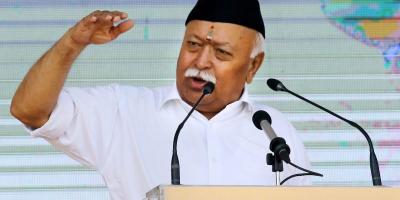
Mohan Bhagwat speaking on the RSS’s foundation day. Photo: PTI/File
The mainstream media has been trying to avoid entering the debate triggered by the ongoing Shudra rebellion against the Ramcharitmanas of Tulsidas, a Brahmin, for pleading with his God Rama to punish Shudras, Dalits and women, and equating them with animals and drums.
In the whole of Tulsidas’s 16th-century retelling of the Ramayana, there isn’t a single line that criticises – even by allegory – the Mughal emperor Akbar for the effect of his rule on the poor and downtrodden. But at several places, there are derogatory references to Shudras, equating them with animals. Tulsidas used the same language and methodology that Manu used in the 2nd century BCE against the productive masses of India in his time.
Bihar education minister Chandrashekar and Swami Prasad Maurya of the Samajwadi Party (SP) have opposed the inclusion of such texts in the school and college curriculum – something the BJP regime in its ‘New Education Policy’ is pushing with a view to teaching students about India’s ancient culture and heritage. The debate they have triggered has introduced a ‘Shudra vs Brahmin’ dimension to the caste question in north India, hitherto confined to reservations and the economic accommodation of the oppressed castes in the governance.
The Shudra vs Brahmin debate has opened up the Pandora’s box of Sanskrit and Brahminic textual history and initiated a larger debate about India’s caste cultural civilisation. With SP leader Akhilesh Yadav taking a strong position on the question of Shudra identity, the Rashtriya Swayamsevak Sangh (RSS) knows it is vulnerable on this account.
Speaking at a public meeting in Mumbai on the occasion of the Santh Ravidas’s birth anniversary last week, RSS head Mohan Bhagwat made an interesting statement aimed at salvaging the situation in North India. “The varna system was not created by God and everyone was equal before God,” he said, adding that “pandits were responsible for creating castes and sects”.
The RSS has since tried to ‘clarify’ that Bhagwat was referring not to pandits as a caste but to ‘learned persons’ as a class. The Sangh is being disingenuous. We know that pandits in the Brahminic religious system even today are only Brahmins. We also know that the RSS has been a strong supporter of the varna system in its organisational literature for the past 98 years.
Earlier, in a 2014 meeting in Kerala, Bhagwat himself said, “The Sangh should not get into eradicating or opposing caste. Caste is a system that exists in society. It would remain until the society believes in it.” But who really believes in it? Surely, the Shudra/Dalit/Adivasi society is not interested in the caste system. In fact, it is ‘Dwija’ society which is still interested in this system because it is the source of its power, privilege and spiritual authority.
It is from this perspective that Akhilesh Yadav has challenged Mohan Bhagwat to take his recent statement to its logical conclusion. “You have clarified [there is no caste] in front of God. Please also make it clear what is the reality regarding the caste system for human beings.” In other words, what are Bhagwat and the RSS doing at the ground level to remove caste inequalities? This is a serious and genuine question which cannot be ducked.
A question for everyone
Such questions about caste, untouchability and women’s inequality should be asked by everyone of us.
The Ramachariatamanas is a historical casteist text, just like the Manudharma Shastra, the Arthashastra of Kautilya and also Bunch of Thoughts by Golwalkar.
A major political party in a big state like UP is asking why a Brahmin author sought to humiliate Shudras, Dalits and women – the main wealth creators of society. In Tulsidas’s time, Birbal, a Brahmin and Todar Mal, a Kayastha, were among Akbar’s top administrators.
When the Shudra/Dalit/Adivasi peasantry was expanding agricultural land, the emperor’s administration was imposing backbreaking land rents on them. Yet Tulsidas is not asking his God Rama to punish the rulers but the Shudras/Dalits and women. Is it a crime to question or oppose such authors and their texts?
Since the RSS/BJP want Shudra/Dalit/Adivasi students to study all ancient and medieval texts in universities, colleges and schools, should their parents not see how those texts portrayed their community? It is not just one Ramcharitamanas, but the whole range of Sanskrit texts starting with Rig Veda which treated the category of Shudra – the producers of food and of artisanal scientific work – as contemptible. What is surprising about political leaders challenging this?

Tulsidas composing Ramcharitmanas. Photo: bazaar art/Wikimedia Commons, Public Domain,
After the questions raised by the Shudra movement started spreading beyond party ideology and posters saying ‘Garv Se Kaho Ham Shudra Hai’ and ‘Jai Shudra’ began appearing in UP. When even RSS/BJP Shudra/Dalit leaders and women slowly began to tilt towards supporting this movement, Bhagwat had to come out and make such a statement.
So far, Prime Minister Narendra Modi and Union home minister Amit Shah have remained silent. Their dilemma is real. We know how they organised the lower OBCs – the non-Yadavs – in UP and came to power in the state. But then Yogi Adityanath, who is known for his caste arrogance, was made the chief minister. When he washed the CM’s official residence with cow urine after Akhilesh vacated it, how could the RSS/BJP imagine a caste war would not start in that state someday?
The humiliation of the Shudras and Chandalas and Adivasis in most classical Sanskrit books is not unknown. In the Ramayana, Shambuka was killed because he was Shudra. In the Mahabharata, Karna was not allowed to participate in Draupadi’s Swayamvara because he was a Shudra and Ekalavya was not allowed to learn archery because he was an Adivasi. More than anything, these sacred books say nothing about who was growing the food, grazing the animals and building the palaces that the authors described in those texts. Were they not Shudras/Dalits and Adivasis? How is it that they are not talked about? These books only tell us the story narratives of Kshatriya kings and Brahmin rishis as if they are the only persons who lived in India in those times.
If, as the RSS/BJP intellectuals tell us today, those books are mirrors of our civilisation, where do the Shudras, Dalits, Adivasis and women exist, except for occasional humiliation around some individual characters like Shambuka, Karna, Eklavya and so on?
Whose life should the students study in those books? Should they read about the ancestors of Yogi Adityanath and the priests and saints who are issuing fatwas to kill Shudras? No. That is not education. It is the process of 21st century enslavement for the Shudras/Dalits/Adivasis who are aspiring to human life in this constitutional democracy of ours.
The RSS/BJP intellectuals who are trying to impose these books should realise that Shudras, Dalits, Adivasis and women are not cows who will be content with some praise or some worship even as they are confined to goshalas without proper food and water. They will rebel in a manner that Indian history has not witnessed earlier. The slogans in UP – ‘Jai Shudra’ and ‘Garv Se Kaho Hum Shudra Hai’ – are signposts of that rebellion.
Kancha Ilaiah Shepherd is a political theorist, social activist and author. His latest book is The Shudras–Vision For a New Path, co-edited with Karthik Raja Kuruppusamy. He is now working on a book The Shudra Rebellion–History From the Field Memories.
https://m.thewire.in/article/caste/mohan-bhagwat-ramcharitmanas-shudra-insult-caste
-
Opinion: Why Shudra leaders in north India are against Ramcharitamanas | The News Minute
For the first time, north Indian Shudra/Dalit politicians are fighting an intellectual battle against casteist (so-called Hindu) texts, written by Brahmins in ancient and mediaeval times.

PTI
VOICES OPINION MONDAY, FEBRUARY 06, 2023 – 14:39
Written by Kancha Ilaiah Shepherd
Ramcharitamanas, written by 16th-century poet Goswami Tulasidas has now created a caste war in north India – particularly in Uttar Pradesh and Bihar. The Brahmins and Kshatriyas of that area treat the book as their spiritual Ramayana with reverence, but Shudras and Dalits find it problematic as it has derogatory couplets against them. Two Shudra/OBC leaders Swami Prasad Maurya (UP) of Samajwadi Party and Chandra Shekhar (RJD), Education Minister of Bihar, opened a conscious debate by demanding a ban on the book, as it dehumanises Shudra, Dalits and women. Samajwadi Party president Akhilesh Yadav also took a serious stand on this issue by strongly owning his Shudra background.
Though I do not support any book ban or book burning, it is necessary to critically examine the contents of books written by saints and sanyasis who hated food production as Shudra work and demeaned other artisanal tasks. Tulsidas used the words Shudra as an equivalent of an animal and condemned them to be suppressed forever. How can Shudra/Dalit/Adivasi children read this book with respect? It is good that the Shudra/Dalit political leaders have started scrutinising the books written by anti-production writers attacking and humiliating the productive masses of India and launched a literary liberation programme. It will enthuse young Shudra/Dalit/Adivasi youth in the country to fight for self-respect.
Addressing a press conference on January 29, 2023, former UP Chief Minister Akhilesh Yadav said, “Am I a Shudra or not? I am not against Ram or any other Hindu divine figure, but can CM Yogi Adityanath recite those lines about Shudras from Ramcharitamanas?” When a journalist continued to pester him about the issue, he asked him to recite the lines if he knew them. The journalist recited those lines, which have this to say, “Dhōla gavāomra sūdra pasu nārī. Sakala tāḍanā kē adhikāri (a drum, an illiterate, a Shudra, a beast and a woman — all deserve punishment).” Akhilesh then asked whether it was not humiliating to Shudras, Dalits and women. He asked the journalist’s full name clearly to know his caste background, but the journalist avoided it. Akhilesh further said, “I will ask the CM (Yogi Adityanath) to recite the couplet in the Assembly, as he is a yogi.”Featured Videos from TNM
Earlier, the RSS/BJP forces tried to stop Akhilesh during his visit to a temple on the pretext that he must take action against his party leader. They were referring to Swami Prasad Maurya, who said that Ramcharitamanas insulted Shudras/Dalits and women and should be banned. The RSS/BJP forces have been behind Maurya in the name of hurting Hindu sentiments. They filed cases against him, but he stood by his stand. Replying to the attempt to stop him at the temple, Akhilesh said, “The BJP considers all Backwards (OBCs) and Dalits as Shudras.” In essence, he was saying that Ramcharitamanas humiliated all the Shudras, Dalits and women, even those in the BJP and those who voted for that party. But both RSS/BJP dwija (twice-born) leaders do not treat them as equals. Similarly, Bihar Minister Chandra Shekhar said, “The Ramcharitmanas is “a divisive text” like the Manusmriti and A Bunch of Thoughts of Rashtriya Swayamsevak Sangh’s (RSS) second sarsanghchalak (chief) MS Golwalkar.”
For the first time, north Indian Shudra/Dalit politicians are fighting an intellectual battle against casteist (so-called Hindu) texts, written by Brahmins in ancient and mediaeval times. The RSS/BJP want to use similar texts to construct contemporary Hindu nationalism and establish hegemony over all educational institutions. Most of those texts used the concepts Shudra and Chandala to denote the food producers and artisans – like leather workers, carpenters, pot makers, tillers of the soil, cattle grazers, shepherds and so on, as unworthy of respect. They were considered to be unworthy of education, employment in state institutions and respect in society. They were also not allowed to enter temples where the Brahmins, Kshatriyas and Vaisyas worshipped.
Contemporary categories like OBC and Dalit are used mostly for those castes and communities in post-independence India. But earlier, OBCs and Dalits did not carefully examine Brahmin books and hence never understood how they figure in them. The category Shudra, for example, is completely wrapped in book pages of ancient and mediaeval Brahmin writers without any referential understanding of the OBCs of India. During the nationalist period, the educated Shudras like Jats, Patels, Marathas, Kammas, Reddys, Lingayats, Nairs and so on thought they should claim Kshatriyahood but not Shudra status. The Shudra status was considered condescending and humiliating.
Most Brahmin writers and saints in ancient and mediaeval writings used concepts like Shudra and Chandala to portray them as unworthy people. This has happened historically from the days of the writing of Rigveda. Those writers never considered themselves Hindu. This concept of Hindu came into the Indian dictionary only after the Muslim writer Alberuni (973-1053 CE) wrote his book Al-Hind. But now, in all RSS/BJP media, Tulsidas has become a great Hindu prophet like Mohammed to Muslims. Anyone who critiques the prophet faces death. Two priests have already issued fatwas to kill Swami Maurya with financial rewards on his head. But this may not work if they do against Shudras and Dalits, who are now conscious about their status and abilities. Maurya called such seers terrorists.
null
The OBC Mahasabha members publicly burnt pages of Ramcharitamanas. They say that Tulsidas was against all food producers and artisans who built this nation to the present level. The RSS/BJP forces today claim this nation as a superpower. It is the Shudra/Dalit/Adivasi labour that brought the nation to this level and not because of writers like Tulsidas who abused them. But this is a new perception of India.
We know very well that book burning and banning are no solution to this negative literary heritage of India. A serious critique of them and repositioning the Shudra/Dalit position with new writing and discourse is the way forward. Mass involvement in this debate is very important. If this war escalates, the RSS/BJP division between Hindus and Muslims will be relegated to the background. The battle will be between the Shudras and Dalits on the one side and the Dwijas, who consider Tulsidas as their prophet on the other side.
After the RSS/BJP combine has come to power, caste relations have faced serious scrutiny, because the ruling forces want to reimpose those casteist texts in the social and political discourse. The Shudra/OBCs and Dalits have slowly realised that there is a new trap to their existence and future. Earlier, the OBCs and Dalits were only fighting around the reservation issue but the RSS/BJP have almost made that issue irrelevant with the privatisation of all jobs. They wanted to bring all the Shudra/Dalits under Dwija control by fixing their gaze on the Muslim enemy image under the Dwija leadership. The RSS/BJP want to finish the regional parties.
The regional parties all over India, except in Bengal and Odisha, are headed by the Shudra leaders who emerged after the Mandal revolution. However, a new battle line of Shudra/Dalits Vs Dwijas has been drawn, and this alone can put the RSS/BJP in a new fix.
All this new discourse around Ramcharitamanas and other classical Sanskrit texts would be because of the emerging organic intellectuals from the Shudra/Dalit communities all over India. Akhilesh Yadav and the Shudras and Dalits remember how Yogi Adityanath humiliated him when he washed the UP Chief Minister’s residence with cow milk and urine after he vacated, as Akhilesh is Shudra. Will he do this if he becomes the Prime Minister of India and starts living in the PM’s residence, where Narendra Modi is living now? With the issue of Ramcharitamanas, many cultural struggles of castes will take centre stage in north India.
Kancha Ilaiah Shepherd is a political theorist, social activist and author. His book The Shudras–Vision for a New Path initiated a major discussion among the OBCs as to why they should look back to their Shudra identity. Views expressed here are the author’s own.
-
Why Did Tulsidas Ask His God Rama To Punish Shudras And Women Not Mughal Rulers?
Kancha Ilaiah Shepherd
The anti-Shudra, Dalit and women language of Tulsidas in his Ramcharitamanas engendered a major controversy in North India. Its impact could also be seen in the South, which already had a strong Shudra mobilization history. He equated them with animals and drums and wanted to keep punishing them forever. The new consciousness of the Shudras, Dalits and women is not going to accept this kind of writing. They do not want their children to study these historical humiliating books in the schools, colleges and universities. It is a known fact that the RSS/BJP want to impose all such books in our educational institutions.
All over the country the Shudra consciousness is opposing such books. Regional language articles and opinions keep appearing in the South Indian languages. It will not die down soon, because the defenders of Tulsidas are not saying that such abusive sentences were interpolations, not of original writer, as they do in the case of ancient Sanskrit books that used caste cultural abusive language. They earlier were making the Muslims and colonial rulers and writers responsible for caste division among the Hindus on caste lines to sustain their political power and economic exploitation.
This line of argument was first developed by the RSS supporting Dwija writers and speakers, as there were hardly any Shudra or Dalit writers in those ranks. All the defenders of Tulsidas and his book as their spiritual grandh are Dwija RSS/BJP leaders or the saints, sadhus, who are Brahmins. No Shudra/Dalit from the RSS/BJP ranks can defend this kind of abuse of food producers, cattle grazers, pot makers, leather workers, barbers, weavers and so on. This abusive language of Tulsidas is against the nation’s wealth creators, which in essence means against the nation. The Shudra/Dalit/Adivasis working in RSS/BJP cannot defend that language, as they too have self respect.
Tulsidas wrote this book during Akbar-Jahangir rule. As information available on the internet shows that it was written in the end of 16th century. That in essence means that it was written during Akbar’s rule. Akbar died in 1605 while sitting on the throne. Tulsidas died in 1623. That was the time Shudras/Dalits were struggling with nature to bring vast areas of land under cultivation. Deforestation, agriculture expansion were the main burden of the Shudras and Dalits. The Dwijas, more particularly the Brahmins, to which community Tulsidas belonged, were not even respecting agriculture work as spiritually respectable. They designated all agricutural operations as Shudra kaam (work). It was then he was writing that “ढोल गवाँर सूद्र पसु नारी। सकल ताड़ना के अधिकारी।(ḍhōla gavāomra sūdra pasu nārī. sakala tāḍanā kē adhikārī). “A drum, an illiterate, a Shudra, a beast and a woman — all deserve punishment”.
Punishment by whom? Punishment by his God Rama and by the Mughal State, which was imposing heavy land taxes on the Shudra farmers. Agrarian masses- men and women–were starving. But the Dwijas had protective valves in Akbar’s administration.
Tulsidas knew that the Mughal state during Akbar rule was run by Birbal and Todar Mal. According to Wikipedia Birbal, was a Saraswat Bhatt Brahmin advisor and main commander (Mukhya Senapati) of the army in the court of the Mughal emperor. . He had a close association with Emperor Akbar and was one of his most important courtiers, part of a group called the navaratnas (nine jewels).
Todar Mal was the finance minister of Akbar. According to Wikpidia Todar Mal was Kayastha with a scribe background. He was the Finance Minister (Mushriff-i-Diwan) of the Mughal empire during Emperor Akbar‘s reign. He was also the Vakil-us-Sultanat (Counsellor of the Empire) and Joint Wazir. He was one of the premier nobles in the Mughal Empire and was a Mansabdar of 4000. He was one of the Navaratnas in Akbar’s court. Under Todar Mal, there were 15 other Dewans nominated for 15 Subahs of Akbar. He must have appointed many Brahmins, Rajputs and Kayasthas as wazirs, Mansabdars Navaratnas in that regime.
The Shudras, Dalit and Adivasis must have been living in the worst oppressive conditions in that Muslim-Dwija medieval state that was collecting back breaking land rents and other taxes from the peasantry. Even a very well known expert on Mughal history Irfan Habib has not told us what was the state of the Shudras/Dalits/Adivasis in such Muslim and Dwija collaborated deep state. His Marxism remained blind folded when it came to examining caste cultural and economic relations.
Tulsidas wrote his horrible casteist book in that socio political and religious milieu in Akbar’s kingdom.
If Brahmins were against Muslims and Muslim rule Tulsidas should have appealed to Ram to punish the Muslim rulers or all Muslims. But he did not do that. In his entire writing there is no single sentence against Muslim rulers or Akbar. But he was pleading with Ram, his God, to punish Shudras/Dalits and women of all castes–including the Brahmin women. This writer for the RSS/BJP forces becomes a prophet and his abusive book becomes a ‘Holy Granth’. Is it not surprising? Do they think that Shudras and Dalits are still living under the spell of their karma theory even now?
The categories of Shudra and Chandala are now designated as Other Backward Classes (OBCs) and Scheduled Castes in the constitutional scheme. They were not used just for social or work based identity purposes in Tulsidas writing. The designations were used to keep the productive masses as perpetual slaves in all Sanskrit texts. Tulsidas was not the first or last to use that language. Even later the Brahmin, Ksatriya mindset continued. The fact that Yogi Adithyanath, a Ksatriya, washed the CM house with cow milk and urine for Shuddikaran when he first occupied it, because Akhilesh Yadav was a Shudra living in that house prior to him. This is an expression of the same caste cultural arrogance. This has to be fought.
The present defense of Tulsidas’ anti-Shudra, Dalit and women heritage is part of the RSS/BJP hundred years cultural heritage. Its top leaders spoke one thing publicly and another thing in their Nagpur discourses. In public platforms the Shudra/Dalit masses are told we are all Hindus and we are one organic unit. The enemies are Muslims and Christians. Let us not forget that the RSS even now is headed by Brahmins. Most intellectuals in the country come from that community background, whether they call themselves left or liberal. They are all silent spectators of the present debate as they were during the Mandal debate in the 1990s.
However, there is no single text that the Brahmin writers wrote against Muslim rulers when they were in power. They started writing against Muslim anti-Indianness only while the British colonial rulers were in power. Savarkar or Bannkim Chandra’s writings against Muslims were written during British rule–particularly after the 1857 rebellion of soldiers. But they were continuously writing against the Shudra and Dalits.
During the Mandal movement a massive amount of literature was brought out against them in the name of merit. But the Shudras collectively never encountered them. Because they were more rigorously divided on caste lines. After the Mandal movement they were again divided as reserved and unreserved Shudras. Some Shudra castes hoped that they could join the ranks of Ksatriyas. In UP Jats went in that path with a hope they would be equal to Ksatriyas. But Yogi Adithyanath has shown their place. With the three farm laws they realized there is a deep state situation against them at Delhi.
Muslims are a global community with a population living in 56 nations with a common cultural identity and also political power. Though the RSS has been campaigning against Indian Muslims and Pakistan but they know if they continue this forever there will be a global mobilization against Hindutva and also RSS/BJP. The BBC documentary is one such global response. But the oppression or even violence against Dalits/Adivasis/Shudras will be treated as Hindu internal matter by the outside world .
And the Shudra/Dalit/Adivasi historical backwardness in the backdrop of Tulsidas’ kind of violent campaigns against their education, employment kept them still backward and organizationally weak.
Not the Dwijas working around the Congress and other parties would behave differently when it comes to cultural and educational issues of the Shudras/Dalits and Adivasis. Abolition of caste cultural inequalities and oppression by disagreeing with the ancient and medieval Brahminic texts like that of Tulsidas will be seen as the beginning of erosion of their authority in the Indian civil society and the state. That is the reason why all Dwija intellectuals are silent on this issue.
However, the Shudras, Dalits and Adivasis will not tolerate such books and arguments now. They will be prepared to fight to the end of this humiliation and exploitation.
Kancha Ilaiah Shepherd is a political theorist, social activist and author. His latest book is The Shudras–Vision For a New Path, co-edited with Karthik Raja Kuruppusamy. He is now working on a book The Shudra Rebellion–History From the Field Memories -
The Dichotomy Of Discourse On Cow Between The Demonic And The Divine
How does the cow politics of the RSS/BJP or relevant theories by scholars justify the complete marginalization of the buffalo in our history, memory, consciousness and culture, asks Kancha Ilaiah

Too Little Too Late? Getty Images Updated: 27 Jan 2023 12:54 Pm
Imagine, in an undertaking like the ‘Bharat Jodo Yatra,’ a school child is taken from Kanyakumari to Kashmir. Which animal would he/she see more in number and find more useful to human life: the buffalo or the cow? If the quantity of milk that restores our health and well-being were the standard by which one judged the use value of an animal, which animal produces more milk in India, not just now but historically: the buffalo or the cow? According to a report on Statista, an online provider of market and consumer data, “Indigenous non-descriptive buffaloes had the highest share of milk production in India with 45 percent in the fiscal year of 2021.” In Indian agrarian history, the male buffalo was used in more regions than the bull (male cow) to till the land and pull carts. In any Indian village, among the poor, the buffalo is seen as a source of livelihood that would make a marriage alliance acceptable. The buffalo, in the absence of landed property and guaranteed wage earning, is seen as the main source of livelihood. In Telugu, the proverb “Barre lenide batuku ledu” (No buffalo, no life) should convey the historical use value of the buffalo.
On the other hand, make a child read ancient Indian literature in Sanskrit from the Vedas to the Ramayana, Mahabharata, Bhagavatas and so on. Which animal is mentioned more times, and discussed at length in such literature: the buffalo or the cow? Or read the literature produced in any regional language or in Indian English texts; which animal is given more place in discourse? In most literary sources, the cow was and is praised as Kamadhenu (a celestial cow whose milk is life itself), Gomata (Mother Cow) and as the mother of gods and goddesses. Paintings with divine figures of the Hindu pantheon sitting in the stomach of cows are aplenty. It is these kinds of literary narratives around cows that led to the formation of the idea of the Hindi-speaking region being referred to as the ‘cow belt’ of the country. In Sanskrit literature, the male buffalo finds a place, at best, as the vahana (vehicle) of Yama, the god who escorts humans to naraka (hell). At worst, the poor animal is condemned as the demon, Mahisha.
If the Sanskrit books of ancient times and modern books in English and regional languages were the only sources of our knowledge of the animals that once existed in India, the buffalo would seem non-existent. Even in the few places that it is mentioned, it is cast as a ‘bad’ animal that should not be treated with love, for it is an agent of hell. The cow, on the other hand, is an animal that is frequently referenced, is more respectable and must be cared for.
This kind of partial treatment in favour of cows appears not only in what is now commonly known as ancient (and modern) Hindu literature but also in Islamic civilisations and in the Quran, according to which, Allah (God) approves of cows as fit for consumption. But nowhere in the Quran does the buffalo feature as a milk-producing animal or as an animal preferred for its meat. Nor are male buffaloes used as a source of labour in the Middle East. It does not exist in Europe or the Americas as a civilisational, cultural or economic symbol. But cows exist in all those countries, both as milk-producing and meat-supplying animals. When cows are so common in the world but buffalo are not, why do cows get such special treatment in Indian literature, Hindu ideology and politics? Why does the cow get treated as ‘divine’ at the cost of the reputation of the buffalo—an animal endemic to the region which also has enormous economic value?
Naturally, one would wonder at what stages in our civilisation were the buffalo and the cow domesticated. We do not have the dates or a timeline. Both species were found aplenty in ancient times. The buffalo was not ‘brought in by colonial rulers’ for it to be to be considered with disrespect. It existed in Vedic times and certainly in pre-Vedic Harappan civilisation. Why, then, has the buffalo become demonic, and the cow, divine?
The answer may be found in Brahminical philosophy that dominates religious and cultural discourse in India. As I mention in the book, From a Shepherd Boy to an Intellectual: My Memoirs:
‘Caste is Race in Ancient Times
Race is caste in Modern Times’Even though the black-coloured buffalo gives white-coloured milk, it was cast as a demonic creature in Sanskrit literature, and continues to play that role in the cultural domain. This is the contribution of the Brahmins to the spiritual, social and cultural history of India. Why? Because it is a black-coloured animal. The place of the buffalo in Brahminical literature is exactly like that of the Shudras and Dalits in Sanskrit literature. Like the buffalo, they too are given no space to generate discourse and find no mention within it, even though they comprise a considerable fraction of the social mass who produce food and cultivate other resources in this country.
Nobody Is Allowed To Eat Cow Meat, But One Can Eat Buffalo Meat As Much As One Wanted To And Export It As Well.
This cultural conflict of the place of the buffalo versus that of the cow is rooted in Brahminical politics of colour, where black is considered demonic and white suggests divinity.
The cow, which is broadly thought of as a white-coloured animal (though there are reddish-brown and black cows as well) has always been portrayed as divine, both in ancient and modern times. Like in Islamic civilisations, beef was the preferred meat presented as prasadam (ritual offering) for a long time in ancient and medieval India. Exactly along the lines of Islamic spirituality, the Brahmin rishis (sages) used cows and their products for food, milk, ghee and so on.
Why, then, is the cow seen as an ‘anti-Muslim’ animal? That is a mystery in terms of the conditioning of the consciousness of the Hindus. It is also a mystery in Indian nationalist theory. An animal consumed globally for its meat becomes a divine creature in Hinduism.
At what stage in Brahminism was the cow spiritually constructed as sacred but unsuitable for consumption? Was it part of the Brahmin-led transformation to vegetarianism seen in many parts, if not all parts, of India? One view is that the conflict between Buddhism—that opposed ritual animal sacrifice—and the Brahminical practice of the same led to the latter being forced to give up meat-based food completely, and recasting themselves as ‘pure’ vegetarian, like the Jains.
Neither colonialism nor modernity has changed the Brahminical construct of the cow being sacred and the buffalo being demonic. If the colour of the animal being the impetus behind this discrimination were indeed true, it does not explain why the hair on the head of Brahmin men and women is not seen as ugly or a bad omen! On the contrary, black hair on the head is seen as a symbol of beauty, both in real life and in literature.
The theory of the ‘holy’ cow is now ‘State theory’ after the Rashtriya Swayamsevak Sangh (RSS)-backed BJP came to power in 2014. Nobody is allowed to eat cow meat, but one can eat buffalo meat as much as one wanted to and export it as well. The taste of buffalo meat does not find a mention in any cookbook, although writing about it does not send the writer to jail. The taste of cow meat is universally written about. In India, it is part of secret cookbooks.
Although most Indian children grow up on buffalo milk, there is not much research on it. On the contrary, there is enormous Hindutva-backed research about the medicinal values of cow milk, urine and dung. But no research is done on buffalo urine and dung and how they differ in composition and possible uses. The spiritual perception of something gets to be examined in the scientific domain only in India where charlatans such as Baba Ramdev can become scientists.
How does the cow politics of the RSS/BJP or relevant theories by scholars justify the complete marginalisation of the buffalo in our history, memory, consciousness and culture? When a ruling party like the RSS/BJP aggressively campaigns for cow protection without considering the buffalo as a historic national animal, would that not reinforce the caste and racial colour discrimination even further? The very same school of Hindutva continues to claim that India will advance in science and technology to a level where it shall overtake Europe, the US and China in the next few decades. That India will be Vishvaguru (‘Teacher to the world’) in the next few decades.
But for me, as a person who grew up as a shepherd boy, God created all animals as equal to all the humans that were and are created. If North India continues to be treated as the cow belt, a day will come when South India will become a buffalo belt.
The only solution is that no region gets to control discourse about any one animal so that India remains one nation with respect for all humans, animals, colours, castes, religions and races, with women on par with the country’s men.
(This appeared in the print edition as “The DEMONIC and the DIVINE”)
(Views expressed are personal)
Kancha Ilaiah Shepherd is a political theorist, social activist and writer


You must be logged in to post a comment.