-
Rahul Gandhi is reshaping Congress’ welfare agenda. I call it the Shudra Development Model
In contrast to the BJP’s economic model, which benefits big industrialists, the Congress focuses on the masses who produce wealth from land and labour.

Congress leader Rahul Gandhi interacts with a farmer regarding paddy harvesting during his visit to Kathiya Village, near Raipur | ANI
Kancha Ilaiah Shepherd
15 November, 2023 11:40 am IST
The Congress’ welfare agenda, introduced during the last assembly elections in Karnataka and upgraded in Telangana, has left the BJP and its Right-wing economists in disarray. Even pro-Congress conservative economists and traditional intellectuals of the party are confused. Veteran leaders such as former Prime Minister Manmohan Singh and P Chidambaram would not have approved such massive welfare measures for rural productive masses.
According to a Right-wing classical theory, providing bank transfers akin to monthly pensions to rural farmers and labourers—Rs 5,000 for those over 55 years of age, and Rs 15,000 per acre every year in schemes like Rythu Bandhu to both the owner of the land and their family members—is seen as an investment. The Congress also promised Rs 12,000 per annum for every labourer’s family as an improvement dose. Such money transfers are seen as catering to the agrarian masses’ lazy lot.
In addition to all that, every woman in Telangana will be given Rs 2,500 per month for her family expenditure, along with a gas cylinder for Rs 500. The Congress also promised Rs 2 lakh loan waiver, in addition to medical treatment up to Rs 10 lakh, directly paid to the concerned hospital. However, many economists argue that such welfare initiatives weaken industrial growth. Most of these economists are for writing off loans of hundreds of crore to big industrialists if they show losses, considering them hardworking rather than lazy.
In contrast, the welfare economy of South India is believed to increase the purchasing power of the vast rural Dalit/Adivasi/OBC/Shudra masses—the real producers of wealth in India—whether in agrarian or industrial sectors. As the Bihar caste census has correctly shown, the well-being of vast productive masses was consciously negated by the Dwija (‘upper caste’) intellectuals in social, political, economic and educational fields. The national caste census will expose the disease within the Indian social system just like an ultrasound does in the human body.
Dwija economists
The conservative Dwija economists, whether educated abroad or in India, interpreted such schemes as unviable, citing they might make the labour force lazy. But the reality is that the rural agrarian sector is in the hands of Shudra/OBC/Dalit/Adivasis. They have to work hard to produce food, whether welfare help comes from the state or not. They cannot afford to be lazy in production seasons.
The new welfare agenda of the Congress, if it is adopted all across India, injects money into the rural markets that don’t have luxury malls and the riches of the upper-middle class found in cosmopolitan cities. Money flows into these markets and is spent almost immediately within a month or two in villages and semi-market towns. This will enrich the rural economy, which is away from the highways, airports, and Vande Bharat trains that the BJP is building. It’s a better approach to lead the development of rural housing, education, and health, as it improves the living conditions of productive individuals and their families. With better food, clothing and housing, malnutrition among the labour force is likely to decrease, and the productive energies of the population will grow. Their lifespans will expand.
GST income
The GST returns of Telangana, and India as a whole, are anticipated to grow significantly with booming rural and semi-urban markets. With digitised payments in villages, no small traders can escape tax. Money that goes into villagers’ accounts from the state budget will get ploughed back into the state exchequer in the form of expanded GST.
In a country like India, if governments allocate huge amounts of money to major contractors, only a fraction finds its way back to the markets. Apart from the massive wealth concentration in a few hands, prevalent issues include tax evasion (we see tax raids only in rich households), and hawala transactions to foreign countries. India is not meant to be like the US with its high-rise buildings, highways and massive ports and airports. The masses produce wealth from land and labour in our country.
Currently, these wealth producers are controlled by the richest of the rich—who invariably happen to be Dwija. They lack sympathy and empathy for the rural productive masses. This cultural disconnect reinforces caste divisions, a contradiction to the Rashtriya Swayamsevak Sangh (RSS) belief that Hinduism promotes goodwill beyond castes. India, marked by widespread caste barriers, faces challenges in fostering universal human goodwill.
Congress agenda
The Congress is also not free from its old Dwijamindset. The present model of economy that the RSS/BJP are operating in was built by the Congress. It seems to be changing now and the credit must go to party leader Rahul Gandhi. His symbolic efforts, such as joining men and women in planting and harvesting paddy, suggest a departure from the traditional mindset of the party. Unlike his grandmother and father, his interaction with food producers seems to have taught him something new—the existence of a caste-based economy in India. To what extent Gandhi’s insight will reshape the nation’s welfare system, beyond the electoral system, remains to be seen. While he has started to push for a new development model, as seen in the Chhattisgarh experiment, it is a challenge to make it an all-India model. Only time will tell how long the party will function according to his stance.
Gandhi and the Congress will have to fight the Narendra Modi government and the RSS/BJP’s contrasting economic model in the upcoming 2024 general elections. In contrast to the BJP’s economic model, which benefits big industrialists, the Congress model focuses on the masses who produce wealth from land and labour. Gandhi’s model, influenced by South India—especially Tamil Nadu—and theoretically rooted in his great-grandfather Jawaharlal Nehru’s democratic socialism, offers an alternative approach.
English education
As of now, the Congress has not promised English medium education in village schools, likely due to concerns about potential criticism from the Dwija media branding it as anti-mother tongue. There is also apprehension about encouraging the influence of the private English medium school and college education mafia. However, the party has promised to introduce one International English medium school in every mandal (covering about 15 villages) to the already established 709 residential schools that are teaching English in Telangana. It initiated the same in Chhattisgarh and Rajasthan by opening a few schools. And was opposed by the BJP/RSS.
The Congress, as a national party, has finally accepted what I call the Shudra Development Model (SDM), as against the current BJP Brahmin-Bania Development Model (BBDM). While the pre-Rahul Gandhi Congress adhered to BBDM, the party is now willing to change. This shift is certainly going to be good for the country.
Kancha Ilaiah Shepherd is a political theorist, social activist, and writer. Views are personal.
-
This Diwali, think why we celebrate death
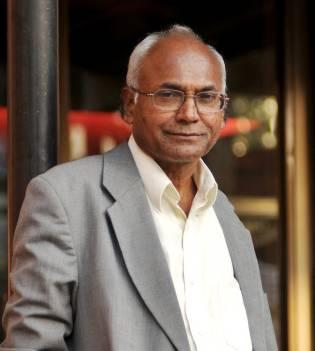
Kancha Ilaiah
There are two prominent stories around the celebration of Diwali. One, this is the day on which Ram returned to Ayodhya and coronated himself as king after killing Ravan. It is also the day when Krishna and his wife Satyabhama killed Narakasur, known as the evil rakshasa. It’s the death of the enemy that is celebrated.
Perceptions differ from north and south India about Ram killing Ravan and Krishna killing Narakasur. Diwali day just does not remain a day of lighting lamps, wearing new clothes, worshipping whom one considers god, but also burning massive amount of crackers that pollute the atmosphere so much so that even the health of the forces that keep celebrating would also get damaged. The emissions in urban areas on that day rise to the level of choking people. And several people, especially children, die because of fires and pollution.
Let us first see the Ram narrative on which this festival is based. The reason why a festival gets celebrated and the way it is celebrated is very important for building an inclusive society and nation. Nothing wrong if a nation or a section of the nation celebrates Ram’s birthday or coronation day. But why burn Ravan’s effigies on that day?
Ravan as mythological figure is owned and venerated by a section of Dravida/Shudra/
dalit/Adivasis. None other than Mahatma Phule, Periyar Ramasami Naikar and B.R. Ambedkar presented a different image of Ravan. Should then the office of the Prime Minister hurt the sentiments of historical victims, who were born in castes/tribes that get castigated as bad people or people who respect Ravan.The Dravidians and dalit-Bahujans across the country treat Ravan as their representative. His action of abducting Sita was seen by them as an answer to mutilating the beautiful body of Shurpanaka, his own sister, by Lakshman at the instance of Ram himself. Further, he did not physically assault Sita at all. They see Shurpanaka and Sita as women who have equal rights for their dignity and self respect. Why demonise Ravan alone?
We know that mythologies are constructed by the dominant caste/class writers, not only to sustain their dominance but to subvert the emerging knowledge and identities of the historically oppressed people. The view that Ravan is a representative of Dravidian/dalit-Bahujan masses has been growing over the years. Of course there are multiple readings of Ramayana and different ways to understand the characters of that story. So also of Ram. The notion of dharma and adharma too differ from class to class and caste to caste. Those who want to worship Ram have the right to worship him, but similarly, those who want to worship Ravan or admire him have the right to do so as well.
A secular state must, thus, maintain its neutrality. If state functionaries attend the burning of Ravan’s effigy they are sanctifying the culture of historical partisanism. They are then joining the ranks of the oppressors.
Similarly, Deepawali (as it is called in the south) is also the day when Krishna killed Narakasur. Narakasur is seen as a representative of Dravidian adivasis because he represents black sturdiness, which is a part of Dravidian warrior heritage. Why should any death be celebrated? If terrorists celebrate the brutal killing of Rajiv Gandhi, men who perceived him as the man responsible for deaths and devastation in Sri Lanka, how will we respond? For Indians Rajiv Gandhi was a good man, but for Sri Lankan Tamils he was a bad man. For this historical event the reply is not killing Prabhakaran and celebrating his death in India. Even for Khalistanis who killed Indira Gandhi, she was a bad Prime Minister. If the Khalistanis celebrate the killing of Indira Gandhi with burning of crackers and lighting of lamps how do we feel?
Such events of killing and counter-killing should not become occasions for celebration that will only serve to remind representative groups of their inimical relationship. And even if wrong cultural practices continue as festivals, the state must remain aloof. The images of Ravan and Narakasur and so on were not seen as their heroes by the Dravidian masses till Mahatma Phule’s writings and activism came to play a significant role among their lives. Now they treat Ravan, Naraka, Bali as their un-Hindu heroes. Why not the other civil society respect their view of history?
We now have definite scholarly groups to own the representative images of Ravan and Narakasur. At least this must make people re-think the narrative of why we celebrate Diwali/Deepawali as festival of death but not life.
When Christians started celebrating the birthday of Jesus, as a counter the Pharisees who killed him started celebrating his crucifixion day. Gradually they understood the cruelty of their celebration and a day came in human history that the successors of Jesus’ enemies began to celebrate his birthday. Now Christmas is the biggest celebration in the world. Let those Indians who like to celebrate Ram’s persona fix some day as his birthday and celebrate it with lights, new clothes, good food and so on. So also for Krishna — Janmashtami. Nobody has a problem with that.
It’s only the evil, cruel mind which wants to celebrate death. Mahatma Phule was of the view that historically the Shudras and Ati-Shudras never celebrated death or murder. But now Diwali celebration has extended to them too. In a multi-cultural nation we all should protect everybody’s right to worship birth, not death. We should celebrate creativity and productivity, not destruction.
The writer is director, Centre for the Study of Social Exclusion and Inclusive Policy, Maulana Azad National Urdu University, Hyderabad.
https://www.roundtableindia.co.in/this-diwali-think-why-we-celebrate-death/
-
Wokeism’: The Rashtriya Swayamsevak Sangh’s latest sworn enemy
After almost ten years of BJP rule, with two powerful leaders – Narendra Modi and Amit Shah – at the helm, the RSS has now discovered that ‘wokeism’ is posing a ‘serious threat’ to family and societal life in India.
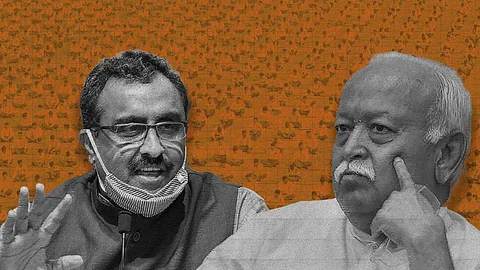
Ram Madhav and Mohan BhagwatStylised by Jaseem
Written by : Kancha Ilaiah Shepherd
Edited by : Maria Teresa Raju
02 Nov 2023,
In his Dussehra speech this year, the Rashtriya Swayamsevak Sangh (RSS) Sarsanghchalak Mohan Bhagwat attacked ‘wokeism’, calling it an ideology that will cause the destruction of families and in turn, the society. Writing about Bhagwat’s speech, the RSS intellectual Brahmin Ram Madhav says that the “destructive, all-devouring forces” out to destroy the unity that Bhagwat referred to were “cultural Marxists or wokes”. The ‘wokes’ were accused of capturing institutions like media and academia, and plunging education, culture, politics, and social environment into chaos. Bhagwat held the ‘wokes’ responsible for creating a “vicious cycle of fear, confusion, and hatred” and described their modus operandi as “mantra viplav”.
The question that arises then is — what is ‘wokeism’? Never has there been any course on wokeism in Indian universities. I have never read about it, even though I am an ardent reader of new schools of thought. But the RSS seems to have done quite a bit of research on ‘wokeism’. After its almost ten-year-long rule through its brainchild Bharatiya Janata Party, with two powerful leaders – Narendra Modi and Amit Shah – at the helm, the RSS has now discovered that ‘wokeism’ is posing a ‘serious threat’ to family and societal life in India. What is this ‘wokeism’ that even the Indian intellectual circles do not know of?
What does ‘wokeism’ mean?
The Cambridge Dictionary defines woke as “aware, especially of social problems such as racism and inequality”. The word, which originated in African American English, began to be widely used in the 2010s as part of the Black Lives Matter movement. It came to encompass a broader awareness of social inequalities such as racial justice, sexism, and LGBTQIA+ rights, as well as ideas of the American Left, such as white privilege and reparations for slavery in the United States. “By the end of that same decade it was also being applied by some as a general pejorative for anyone who is or appears to be politically left-leaning,” says Merriam Webster.
The RSS leader, with his Dussehra speech, made out ‘wokeism’ to be a dangerous concept that Indians should not fall prey to. The Dalits, Adivasis, Shudras, and Other Backward Classes (OBC) of India must be thankful to Mohan Bhagwat for bringing the idea of ‘wokeism’ into their lives and discourse. If in America it refers to reparation for slavery, in India the productive masses must think about demanding reparations for their historical slavery. The enormous wealth that Brahmin-Bania industrialists have accumulated without investing any amount of labour actually belongs to the Dalits, Adivasis, and OBCs. It is caste that causes such an ownership disorder. If the priestly and business castes, who constitute a very small number, own disproportionate wealth and properties, how can the RSS accept that as the rightful, nationalist property ownership of those castes?
Among the top 100 wealth owners of India, there is not a single Dalit, Adivasi, or OBC person. Instead, there are millions of producers who are landless and homeless. History holds records of millions who starved to death in this very Matru Bhoomi, despite the massive labour power they invested in the agriculture fields and industries. The RSS never cared for their life, and were, until recently, talking about cultural nationalism. Now they have turned to attacking Marxists, who, in fact, have remained unbothered about culture and caste in India, calling them cultural Marxists, and attributing the ‘wokeism’ discourse to them.
Only after Gramsci’s writings reached them did a small section of Dwija Marxists invoke the cultural discourse with an Italian mode and speak about subalternism in India. Now Ram Madhav writes that it is these Gramscian cultural Marxists who, having captured educational, media, and literary institutions, are disturbing the Indian family and social systems. Additionally, ever since Rahul Gandhi and the Congress party began talking about caste census, the RSS is trying to portray them as ‘wokeists’ and cultural Marxists. But the BJP used the OBC bloc to come to power by projecting Narendra Modi as an OBC. Was it not wokeism then?
In the last hundred years, the RSS has never campaigned for fair, let alone equitable, distribution of resources for those Indians who produce food by investing their labour. If the philosophy of ‘wokeism’ supports the idea of dignified survival of humans, it must be invoked by the Dalits, Adivasis, and OBCs, at least in the future. The RSS thinks that any demand for a share in the Brahmin-Bania wealth is a social disturbance. They want the Dalits to live as Dalits, Adivasis should live as Vanavasis, and Shudras as subordinates to the Brahmin-Banias. The Shudras, including Jats, Patels, Marathas, Reddys, Kammas, Velamas, and Nairs (apart from all OBCs) along with Dalits and Adivasis, must oppose the Brahmanic design of the RSS.
After the birth of RSS, the situation of the productive masses has become worse, as it has supported the Brahmin-Bania exploitation without any hesitation. With globalisation, the Brahmin-Bania monopoly capitalists were fully integrated into the RSS network. There was a collective design to push wealth into the hands of the Brahmin-Bania monopoly. During Congress rule, the same castes profited from the expanding capitalist wealth. Within the last 30 years, the Brahmins and Banias of India have reached a stage where their members find themselves in the top three richest families in the world.
At the same time, the Dalit/Adivasi/Shudra working masses remain among the poorest of the poor. When they demand a share in the wealth, the RSS sees social chaos in that attempt. But when they silently suffer hunger and death, the RSS sees cultural nationalism in the tragedy.
Is the RSS for family welfare and stability?
RSS is an organisation of male, unmarried persons. There are also instances where some married young men left their wives and parents to join the RSS. When young men leave the parents who brought them up, remain totally unconcerned about familial responsibilities, and work for the RSS, what is happening in the process? Is that ‘wokeism’ of the RSS kind or not?
The RSS follows the models of the Buddhist Sangha system of ancient times and the Catholic Jesuit system of the mediaeval era. However, the only difference is that the Catholic Jesuit system did not accept married persons even if they wanted to join the order after leaving their spouse. They trained young students in their theological colleges and recruited them to teach in their schools and colleges, and to work as pastors in the churches. Nevertheless, I am of the opinion that these three models are anti-family.
In Sanatana Dharma, marriage does not become a hindrance to temple priesthood. However, Brahminism encourages sainthood in which marriage is not the norm. Even now, there are many such saints and sadhus with deep connections with the RSS. These saints are not involved in any form of social service like teaching, or serving the sick in hospitals. They simply sit, travel, and think of self- salvation. Is that not anti-family?
How did Communists, who neither preached celibacy nor remained unmarried, become anti-family and cultural anarchists? Even the liberal leaders and workers in Congress never preached against family. The only top leader who has remained unmarried in the Congress is Rahul Gandhi.
Previously, the RSS stumbled upon a sudden discovery of urban Naxals in India. Now, as the debate around caste census has gained traction, the new awakening of the Shudra/OBC, which the RSS calls ‘wokeism’, is taken to be dangerous. The Shudra/OBCs should see through the RSS design of promoting Narendra Modi as an OBC to get their votes. Unless the Shudras and OBCs in the RSS understand this design and wake up from their cultural slumber, India as a nation cannot develop.
Kancha Ilaiah Shepherd is a political theorist, social activist, and author. His latest book is The Clash of Cultures—Productive Masses Vs Hindutva-Mullah Conflicting Ethics. Views expressed here are the author’s own.
https://www.thenewsminute.com/opinion/wokeism-the-rashtriya-swayamsevak-sanghs-latest-sworn-enemy
-
RSS wants caste gone? Let it take a stand on inter-caste marriages and inter-dining
Kancha Ilaiah Shepherd
28 Oct 2023
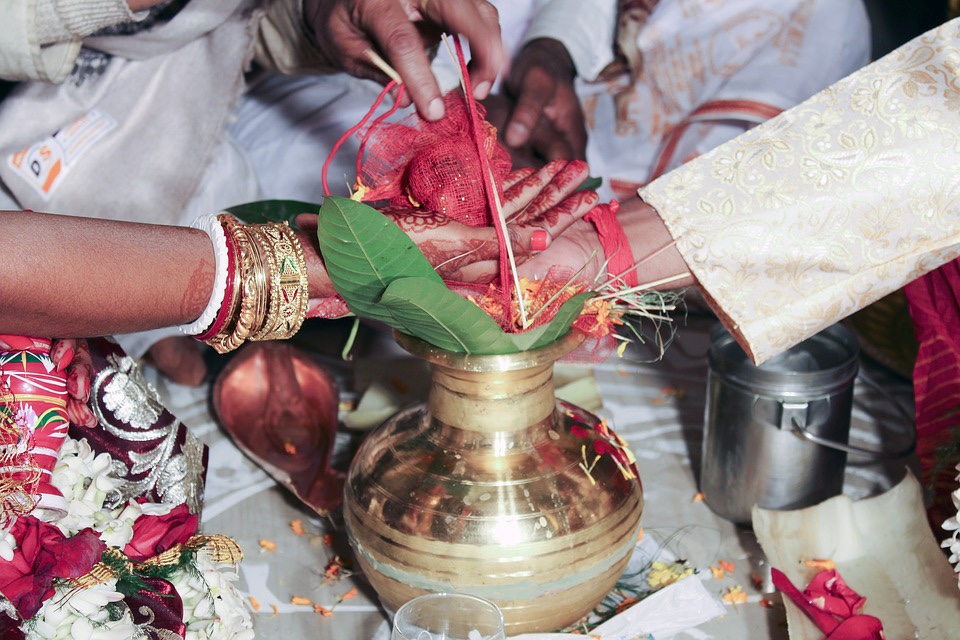
The RSS has to clarify whether it sees inter-caste marriages as part of Sanatana Dharma or Hindu tradition. Representative picture RSS is against inter-caste marriages; it promotes discriminatory practices when it comes to non-veg vs veg food; how can caste system end?
Of late, in the context of Shudra/OBCs becoming very conscious of their numbers by demanding caste census at the national level, and also their historical location in the Dwija hegemonic society, the Rastriya Swayamsevak Sangh (RSS) has been talking about eradication/ annihilation of caste from public platforms.
I have mentioned in an earlier article that Dattatreya Hosabale and other leaders were prescribing temple entry and water rights to Dalits/Shudras to eradicate caste. These two things are not only outdated but they have no potential to remove the social discrimination either.
I raised questions like priesthood rights for all Hindu castes that the RSS considers Hindu in Hindu temples, and also fighting against the graded indignity of labour that created a graded unequal caste system which will have serious implications for the eradication of the caste system.
In this piece let me look at the question of inter-caste marriages which the RSS does not want to promote, and also the egalitarian food culture, where the RSS itself is promoting meaterian-vegetarian-linked unequal and discriminatory practices in the society in general and at higher educational institutions in particular.
The meaterian vs vegetarian conflict just as casteist one. It does not help to eradicate caste but promotes casteist Brahminism in the civil society and public institutions like the civil society and public institutions like universities, leading to food-cultural conflicts. Such a divisive food culture between castes also comes in the way of inter-caste marriages. How? We will examine.
Power of two social institutions
These two social institutions, marriage and respectable inter-dining, have serious caste-abolition power. I deliberately call power because marriage and food cultural conditioning have tremendous power to unite or divide social groups. The caste marriage institution and socially segregated food cultural parampara (tradition) have sustained caste hierarchy for millennia. The caste-centered arranged marriage system is meant for caste-based separation of the DNA of people.
In the 100 years of existence of the RSS, there is no evidence, either in either leader’s speeches or writing, that it would encourage inter-caste marriages in order to eradicate caste. Dr BR Ambedkar suggested that inter-caste marriages will exchange blood relations between two segregated communities with different occupations. That will also advance the mental and physical abilities of the offspring, apart from weakening the caste of both partners.
Maybe with a view that such an inter-caste marriage of his own could prove that, he married Savita Ambedkar, woman from a Brahmin family. We do not have any information on how a Dalit, who normally eats meat and with western cultural exposure, and a Brahmin who grew up in an exclusively Indian environment, led their marital life. Either Savita or Ambedkar must have changed their food habits into pure vegetarian or mixed (meaterian and vegetarian) food. Or, they may have respected each other’s food choices.
As the Indian youth of all caste higher education, the scope for inter-caste^ marriages is expanding. They are happening as well. But because of caste cultural rules, the inter caste marriages are generally not accepted by parents, for it carries a social stigma. In many cases, particularly where one partner is Dalit and the other is non-Dalit, the killing of such persons is a very common problem now.
How does the RSS, as a guide to the ruling BJP and as the biggest social organisation of India, deal with it? Society has no idea.
The RSS leaders constantly speak about maintaining Sanatana Dharma or Hindu parampara. Is inter-caste marriage part of Sanatana Dharma or Hindu parampara? Let the RSS make it clear to the nation. The eradication of caste is a critical project to sustain democracy in India. It is good that the RSS now speaks about the eradication of caste but, at the same time, it has to spell out the ways and means.
Inter-dining issues
The caste system has made inter-dining a major problem in India. For centuries, different caste people could not sit side by side and eat food. In urban areas, modern restaurant systems have created a caste-free eating ecosystem. But, in villages, it is still a major problem. In several schools, food cooked by Dalits are not being eaten by non-Dalit children. This is a problem of parampara. The RSS has not taken the stand against this practice.
The veg-non-veg problem has become a serious one in many ITs and other central institutes Some Central ministers as nart of the RSS vegetarian culture, have asked institutions to adopt vegetarian-only menus. Smriti Irani was the first education minister to initiate steps, sending circulars saying only vegetarian food be served in central institutes and universities. Some heads of ITs, including IT-Bombay, ordered separate allotments for veg and non-veg eaters. All this is because of the RSS ideology of vegetarian food parampara or practice of Sanatana Dharma of vegetarianism.
The Shudra/Dalits/Adivasis – leave alone
Muslims and Christians – in India survive mainly by eating meat and veg food based on the availability. But their preferred food on festive occasions is meat. There is clear caste varna division in this food parampara. Does the RSS want to give away the pure veg food culture of its own organisation or not? What stand does it take about people eating their own preferred food in public and private places? What is Hindu or Hindutva food culture? Is it pure vegetarian or mixed (meat and veg) food based on individual choice?
Democratisation of food culture based on personal preferences is one of the caste eradication issues. The RSS leaders never spoke about the food freedom of individuals or families. But now mixed food or pure veg are caste segregational practices. In South India, for example, all Shudra/Dalit/Adivasis are meat and veg eaters. Brahmins and Baniyas are pure veg eaters. Children are trained to eat that way in those castes.
Eradicating caste step by step
Without addressing these practices, how does the RSS plan to eradicate or abolish caste?
Thus, I could locate four social instruments that could be deployed to eradicate caste step by step, about which the Roto smelt.
1) Priesthood rights to all castes, which RSS thinks are Hindus, in Hindu temples. For that. openina theoloaical schools and colleges with right to admission for all castes including Dalits/Adivasis and Shudras is a must.
2) Deploying massive teaching material about the dignity of labour of all occupations from tanning to pot making to barbering, tilling the land to teaching in schools and colleges.
3) Promoting inter-caste marriages by propagating that it is good in the interest of the nation, society, family and individual.
4) Inter-dining with choice and preference of individuals and with respect to others’ food choices.
The present propaganda, including in the G-
20 Summit in Delhi, that pure vegetarianism symbolises Hindu or Indian food culture, has to be stopped. The RSS must spell out its opinion on these issues if it is serious about the eradication/annihilation or abolition of caste.
(The writer is former director of the Centre for the Study of Social Exclusion and Inclusive Policy, Maulana Azad National Urdu University, Hyderabad)
-
Why I am not a Hindu by Prof Kancha Illaiah Shepherd
-
The RSS Plan to Eradicate Caste Is Outdated and Skirts the Real Issues of Today
If it is serious, it must work towards allowing all castes to become temple priests and change the education system.
Kancha Ilaiah Shepherd
Oct 20, 2023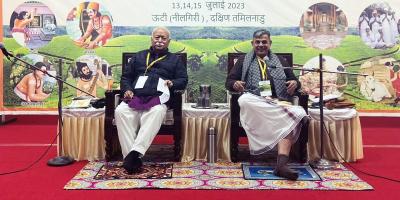
RSS leaders Mohan Bhagwat and Dattatreya Hosabale. Photo: X/RSSOrg
In the backdrop of the Indian National Congress taking a stand on the caste census, the Rashtriya Swayamsevak Sangh (RSS) has declared that it would work for the eradication of caste. Earlier, the sarsangchalak, Mohan Bhagwat, talked about God not creating caste but some pandits having created it. He also talked about the need for reservations remaining as long as caste discrimination remains. These are stray statements that the RSS leaders give to satisfy Shudra/OBCs and Dalits, as their votes are crucial for the Bharatiya Janata Party (BJP).
Dattatreya Hosabale, the general secretary of the RSS, declared that the organisation should work for the eradication of caste. On October 11, in a meeting with its workers, he said, “any person has the right to enter a temple anywhere”, and also urged RSS cadres to work for “eliminating caste-based discrimination which brings disrepute to Hinduism”. He was reported to have further said, “Any person can enter any temple, and everyone has the right to fetch water from any source of water. We must not tolerate such discrimination in the name of caste or untouchability, because it brings disrepute to the entire Hindu community.”
The media reported his statement on the next day as if it was the first programme to eradicate caste.
Dattatreya’s plan is quite outdated. His plan is built on Mahatma Gandhi’s programme, which did not have any value for caste eradication, then or now. Temple entry for Shudras, OBCs, Dalits and Adivasis is now more or less accepted. The restrictions placed on Dalits for fetching water are also fewer now, though sporadic incidents still happen.
However, the RSS’s plan may reduce caste-based discrimination in a few areas but will not result in the eradication or abolition of caste.
This kind of typical old Gandhian programme does not suit the present times and demands of Shudras, OBCs, Dalits, and Adivasis.
What the Shudra/OBCs are asking for now is a caste census. The Bihar government has already done it and released the results. The RSS seems to have advised the BJP-run Union government and also state governments run by the party not to do so. If the numbers of Shudras and Dwijas (Brahmin, Bania, Kayastha, Khatri and Ksatriyas) are revealed, the resource and power-sharing will have to be done on that basis – which will have huge implications for the Dwija control of the economy and power – spiritual and social – in the future.
The RSS historically has been concerned about maintaining Dwija control of the nation’s wealth, power and also the Hindu spiritual system.
Since the Modi government buckled down against the caste count, in spite of the fact that the prime minister claimed OBC status, the caste discourse among Shudra/OBCs has been scaled up. The critical question among them is how come a Brahmin – Rahul Gandhi – is calling for a caste census while an OBC – Modi – is against it. The RSS strategy of having an OBC PM to mobilise OBC voters seems to be in deep crisis.
Also read: Why the BJP Is Afraid of a Caste Census
The RSS, which never accepted caste as a category of electoral agenda, projected Modi as the first OBC prime ministerial candidate in 2013. The mainstream media, which was also averse to a discourse on caste, carried this propaganda to every nook and corner of India. Now the same RSS and media are opposed to the caste census, whereas they were in favour of the 10% EWS reservation for upper castes and women’s reservation – without an OBC quota – in the parliament and in assemblies. The Shudra/OBCs see through this game plan of the RSS/BJP and the big media.
If at all the RSS is for the abolition of caste, they should have declared an agenda for priesthood training to all castes by abolishing the Brahmin control over spiritual institutions like temples, mutts, gurukuls and so on. Another equally important spiritual reform they could address is whether Sanskrit should still continue as the language of prayer.
But leave that aside. Why do they not take the initiative to admit boys and girls of all castes for priesthood training? Why do they not talk about opening up schools and colleges for Hindu theological training, which would be open for competition cutting across the castes that consider themselves Hindu, to run the temples and other spiritual institutions?
The Gandhian agenda in the early 20th century did not go that far. It was confined to temple entry and water rights to Shudra/OBCs and Dalits. The Hindu spiritual agencies agreed to allow Shudra/OBCs into temples but not Dalits at that time. However, the constitution of India and some laws secured temple entry and water rights to Dalits to a large extent. Why is the RSS talking about these old issues but avoiding the question of caste census?
All big media houses play up small inconsequential statements by Mohan Bhagwat or Dattatreya Hosabale on the same level as the prime minister’s. The reason is that the RSS has expanded the base that sustains the Dwija control of all systems of India. Now they think that the Muslims and Christians have been “shown their place” in the past 10 years and that Shudra, OBC, Dalit and Adivasi assertion has to be tackled with tact but without giving them any substantial space.

Rahul Gandhi. Photo: Screengrab via X/@RahulGandhi
Similarly, the RSS does not talk about the present school and college education system where private, English medium schools are under the control of education business houses. The government school and college education in regional languages is of poor quality and has poor infrastructure. However, they directed the Union government to stress the importance of education in the ‘mother tongue’ (meaning regional language) in the government sector only. The RSS remains silent about providing the same medium and an equal standard school and college education to all – this will contribute to the eradication of caste. The RSS leadership knows this.
Nor does the RSS get into real issues that will weaken segregation based on caste in the agrarian sector. Caste is deeply rooted in the graded indignity of labour and production-related science. The graded inequality that B.R. Ambedkar talked about was institutionalised in the process of establishing graded indignity of labour and productive science. For example, leather-related scientific and technological work is treated as more undignified than tilling the land or making pots. Washing clothes and cutting hair were treated as more undignified than iron and gold smithy. Finally, temple priesthood and teaching in gurukuls were treated as more dignified than tilling the land and harvesting. Thus, the temple pujari and gurukul teacher, who were/are only Brahmins, treated all other tasks as beneath their body and soul. The RSS, in its 100 years of existence, never tried to take up a campaign against these indignities and anti-science belief systems that got entrenched into caste society’s belief systems.
If the RSS is serious about abolishing caste, it should push for courses about the dignity of labour and respect for science and technological knowledge that exists in tanning, cutting hair, washing clothes, making pots and tilling the land to be introduced in schools and colleges.
Until Rahul Gandhi, no political leader who claimed to be a Brahmin took a decisive stand on the basic task of counting castes and redistributing resources to the oppressed. Not even his own ancestors. Among upper caste leaders, after Mahatma Gandhi, a Bania, it is only Rahul who has taken a definite stand on caste. One has to wait and see if this genuine commitment remains in the future, but his stand must be appreciated.
Also read: Congress’s Push for Caste Census Is a Step Towards Ideological Unity in Opposition Ranks
The RSS, if it is serious about eradicating caste, should start a campaign about the dignity of labour, production and science and make it acceptable in the Hindu spiritual system. The course content in schools and colleges must have teach human equality and equal respect for every work and different food cultures. The RSS must ask for the same medium and equal quality of school and college education – whether the institute is government-run or private. Training for pujaris must be opened for all castes that claim to be Hindu.
But there is no evidence that the organisation’s top leadership, which mostly comprises people from the Brahmin caste, has the will for such a reform.
Kancha Ilaiah Shepherd is a political theorist, social activist and author.
-
Meeting with Akhilesh Yadam and Prof Kancha Ilaiah Shepherd

-
Modi’s ‘first OBC PM’ tag is making Rahul Gandhi aspire to be an OBC messiah now
Rahul Gandhi is Brahmin, however, he is now batting for a caste-wise census. What made the Congress go to this extreme? In my view, it is Modi who pushed it to take this stand.
11 October, 2023 12:56 pm IST
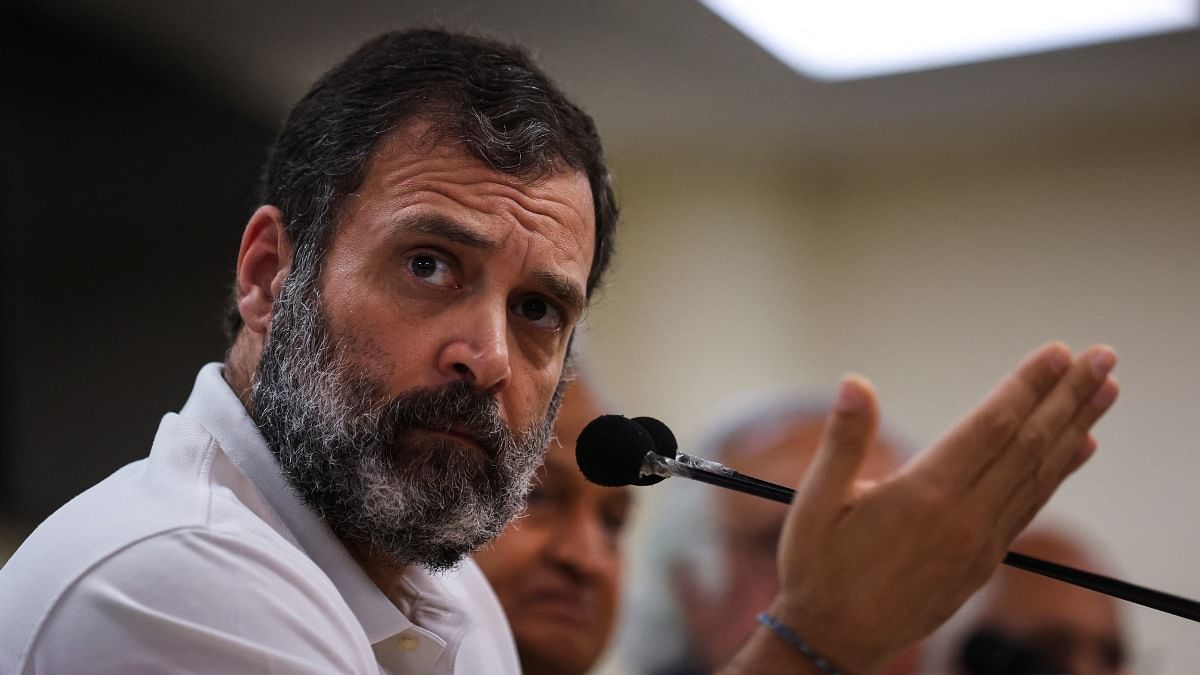
File photo of Congress party’s leader Rahul Gandhi at party’s headquarter in New Delhi, India | Reuters
In Chhattisgarh’s Bilaspur on 30 September, Prime Minister Narendra Modi asserted his caste identity and alleged that the Congress was targeting him because he belonged to an OBC community. Before that, in June, during an interactive session with BJP workers from across the country live-streamed from Bhopal, Modi had listed out several marginalised caste groups—among the backward and Scheduled Castes —across the country, and had alleged that they had lost out due to the “politics of Muslim appeasement”.
This was the essence of media reportage about PM Modi’s ownership of his OBC background and his love for marginalised communities just before 2 October. Then the Bihar Government released the findings of the state-wide caste survey. Modi immediately shifted gears and started saying that such a caste census would divide Hindu society. The question then is—without knowing the demographics of each caste, how does he remove their backwardness?
Modi’s assertion of his OBC identity, with an implication to the national polity, started in the run-up to the 2014 Lok Sabha elections. His lieutenant Amit Shah was election-in-charge of Uttar Pradesh during that time. The BJP under the guidance of Modi and Amit Shah focussed on the votes of non-Yadav OBCs and non-Jatav Dalits. Samajwadi Party—known as the Yadav-Muslim party— was in power in UP at this time. And Mayawati’s Bahujan Samaj Party, which was in power in the previous term, was known mainly as the Jatav party.
Modi repeatedly spoke about his OBC background in election rallies, well into 2019. In some meetings, he even said he belongs to the lower OBC community. This strategy worked. Most non-Yadav and non-Jatav votes shifted to BJP. Was that not the division of Hindu society in order to get votes? When Modi asserted his OBC-ness, did he do it as Hindu or anti-Hindu or Un-Hindu?
New dimension to caste
Bihar was always a caste electoral laboratory. Nitish and Tejashwi Yadav added a new dimension to it with the caste survey. The survey brings the laboratory’s experiment to a logical end. Now, the Congress Working Committee has approved a resolution to conduct a nationwide caste census and one in every Congress-ruled state if voted to power in 2024. It is a strategy to win over its OBC voter base. The Congress, no doubt, has taken a new direction by accepting the caste survey, after staying away from caste for a long time. The change came because Rahul Gandhi took a position on the caste survey. All the top ideologues of Congress, P Chidambaram, Jairam Ramesh, KC Venugopal were against such a stand on the caste census prior to this. In fact, such is the position of all educated upper caste intellectuals—whether they belong to Right-wing, Left-wing or liberals. Only OBC intellectuals and leaders were asking for a caste census in hopes that Modi as an OBC would do something about it. But he remained silent about it for the last ten years.
Rahul Gandhi is Brahmin, however, he is now batting for a caste-wise national count. What made the Congress go to this extreme caste question? In my view, it is Narendra Modi who pushed the Congress to take this stand.
Anti-OBC decisions
Once Modi announced his candidature and repeatedly spoke about him being the first OBC PM candidate in 2013, regional parties that were formed as representatives of OBCs went into a coma. The OBC masses saw Abki Bar Modi Sarkar as Abki Bar OBC Sarkar. The OBC regional parties did not know what to do. Their political existence was/is deeply related to the OBC ideology and improving their economic and social status.
Modi himself and the BJP projected Modi as a powerful decisive leader against the indecisive Manmohan Singh of the Congress. But after 10 years in power, the OBCs think that he has not done anything special for them. On the contrary, his 10 per cent EWS reservation, and 33 per cent women’s reservation, without resolving the quota within quota issue, were seen as anti-OBC. It didn’t help that the BJP projected these policy decisions as Modi’s decisions. Modi, too, gave the impression, in his speeches both inside Parliament and outside, that he was responsible for these decisions.
The OBCs of the nation expected that an OBC PM would take the lead on the issue of caste census. But now, he is speaking like an upper caste leader and an upper caste (Brahmin) Rahul Gandhi is speaking like an OBC leader. These unexpected positions are certainly worth the time of India’s psychologists.
Future messiah
Caste is an instrument of manipulation. In recent years, BJP Dalit intellectuals have argued that Valmiki, the author of Ramayana, was a Dalit, and that Vedavyasa, the author of Mahabharata, was also a Dalit. Of course, Srikrishna, the author of Bhagavad Gita was Yadav.
But none of those books assigned equal human status to Dalits or Yadavs. Why? Because claims are one thing and what one actually does for the oppressed masses is another. For votes or communitarian benefits, coopting happens on either side. But what one does for the uplift of the oppressed becomes the measuring tape.
Modi, an OBC, could be a PM face because VP Singh, a Kshatriya, took a strong stand in favour of social justice and OBC reservation. No doubt he lost support from Dwija upper castes of India for this move.
By not taking a stand in favour of caste census and OBC reservation in the legislative bodies, Modi is following the footsteps of the Nehru-Gandhi family—Nehru, Indira Gandhi and Rajiv Gandhi opposed OBC reservation, right from the Kaka Kalelkar Report days to the Mandal Commission days. This historical position was the reason why the OBCs moved away from the Congress. Now they are either with regional parties or with the BJP.
Rahul has taken a difficult step to convince CWC to come around to the OBC question quite decisively. This does not mean that there will be no opponents within the party, but he has proven to the BJP and RSS leaders that he is not a Pappu. Hereafter, the OBCs, who constitute the main force of our agrarian and artisanal production and also constitute the largest chunk of the national voting population, consider Rahul Gandhi as their future messiah. This stand is not just about an election but about the socio-economic transformation of India as a nation.
Kancha Ilaiah Shepherd is a political theorist, social activist, and writer. Views are personal.
-
Nitish’s caste census: Major game-changer in Indian politics

Prime Minister Narendra Modi and Bihar Chief Minister Nitish Kumar in a file photo: PTI While Bihar census will pressure Centre to release the caste data collected by the UPA government, it also exposes Modi’s inability to take any substantial mesures for the OBCs with whose help the BJP came to power.
Kancha Ilaiah Shepherd
4 Oct 2023 11:31 PM
Bihar Chief Minister Nitish Kumar and his deputy Tejashwi Yadav have hit the nail on the head by quickly conducting the caste ‘head count’ and releasing it even as the central government, in an affidavit before the Supreme Court, claimed that it alone can conduct census data mobilisation. After the Mandal reservation battle, this is the second major step that will change the democratic structure of India.
This kind of caste-based survey in our constitutional democratic set-up is going to make revolutionary changes in Ambedkar’s idea of ‘one vote one person’ irrespective of one’s caste or class. A person’s share in the national wealth and power now will be measured by the strength in terms of numbers of one’s caste and one’s ability. Whether one is created from (Hindu god) Brahma’s head or feet has no value in the future. This is a new way to annihilate caste first by equalising all human beings by reordering the status of caste-based on the principle of individual right to be equal. Caste census serves that critical historical purpose.
Implications for national polity
The Bihar Caste Census Report will have huge implications for national polity. It exposes Prime Minister Narendra Modi’s inability to take any substantial step that would do good to Other Backward Classes (OBCs). Conducting a nationwide caste census during his regime would have given him and the BJP government, as they rode to power on the back of OBC votes, an image of sticking to the promise. Nitish took away the credibility. He carried the legacy of BP Mandal from Bihar, who headed the OBC reservation commission and submitted a landmark report.
The Bihar survey will force, perhaps, the central government to release the caste data that the earlier UP government collected. The Modi government is quite tactfully sitting over it. It also enacted the women’s reservation law without giving reservation to OBC women. In that context, the Congress, which opposed reservation within the reservation in the OBC Bill, took a stand in favour of OBC reservation in Parliament and state legislatures. Rahul Gandhi is repeatedly talking about caste census and the share of OBCs in power and state finances. The BJP and RSS are cornered just before the 2024 elections.
Now, the pressure will mount to push for OBC reservations in Parliament and state legislatures.
Telangana, Karnataka keep caste count under wraps
Telangana and Karnataka will be pressurised to release the caste data that they have with them. Karnataka Chief Minister Siddaramaiah, in his earlier term, got a caste survey done through the state OBC commission. K Chandrashekar Rao did a household comprehensive survey in Telangana at the very beginning of his first term. He, too, did not release the data. They have provided an opportunity for Nitish to claim credit as the first chief minister ever to release caste-based numbers.
The BJP played various tricks to stop the Bihar census through legal and other means. But Nitish stood firm.
Bihar caste census
Look at caste data of Bihar. The backward (27.13 percent) and the most backward (36 percent) together constitute 63.13 percent. The general category castes that constitute Brahmins, Bhumihars, Kayasthas and Rajputs (Shatriyas) constitute just 15.52 percent of the population. Caste-wise, Yadavs, at 14.27 percent, constitute the single largest population. This one caste is as big as the general category in that state. But the general category consists of Muslim upper castes. The lower caste Muslims are part of the OBC category. The Muslim population, according to the same survey, constitutes 17. 70 per cent. What exactly is the caste break-up among Muslims is not known.
However, in all other states, Muslims do not have similar reservation facilities. In some states, converted Christians are on the OBC list.
Is 50% SC cap a legitimate benchmark?
How does this caste census play out in judicial decisions at the central level? The 50 percent cap on all reservations is imposed on moral as well as guess basis by the Supreme Court and has to go once the caste census is done at all-India level. Once data is available and the caste becomes the basis of positive discrimination, the 50 percent cap cannot stand as a sustainable benchmark.
This will be a challenge to political parties because so far, the non-reserved castes were controlling national political parties and, to a large extent, the regional parties too. In some states, though, the OBC leaders control some regional parties, which were dependent on the upper caste financial resources and could not push caste census even after 30 years of the Mandal movement.
The Modi factor
But OBC aspirations underwent a sea change with the BJP/RSS’s introduction of Narendra Modi as an OBC prime ministerial candidate in 2013 and his subsequent rise to power in 2014.
For the sake of power, the upper caste BJP leadership claimed that they, as against the dynasty rule of Congress, brought in an ordinary OBC activist to the prime minister’s office. They also projected him as a decisive leader as he faced huge criticism as Gujarat chief minister in the background of the 2002 communal riots in that state and remained unmoved.
However, Modi’s government has not changed the OBC status in the country in any sphere of life. His government mediated between the classical ideological stand of RSS and his OBC claim for power. Historically RSS was against caste discourse and political mobilisation on the basis of caste. But to defeat the Congress and UPA, it changed its position on the caste question and brought Modi with a proclamation that he was the first OBC prime ministerial candidate. This led the Dwija RSS leaders into an unresolvable contradiction. Since the BJP was winning with OBC votes, the Congress had to reposition on the issue.
To overcome its repeated defeat, the Congress had to change its anti-OBC position. It also now took a pro-OBC and pro-caste census stand.
Nitish’s caste headcount report and the numbers of OBCs in different states and the nation will lead to a new phase of Indian politics. Thus Nitish proved his political astuteness. Irrespective of the results of next elections, the Bihar caste census is the second major game changer after implementation of the Mandal Report.
The writer is former Director, Centre for the Study of Social Exclusion and Inclusive Policy, Maulana Azad National Urdu University, Hyderabad.)
-
Prof Kancha Ilaiah Shepherd’s Talk on English Day


You must be logged in to post a comment.