-
What rest of India can learn from Jagan’s Andhra Pradesh model
-
North-South: It’s southern welfare economy versus RSS highway economy Kancha Ilaiah Shepherd 12 Dec
-
What Telangana Congress’ 6 guarantees mean & why they will change welfarism in India
The six schemes will empower women, boost the rural economy, and improve the well-being of the agrarian poor.
KANCHA ILAIAH SHEPHERD
14 December, 2023 11:09 am ISTSoon after his swearing-in on 7 December 2023, Telangana Chief Minister Revanth Reddy gave his assent to the immediate implementation of the six guarantees promised by the Congress in its election manifesto. For the first time in Indian history, a national party will be transferring welfare scheme amounts directly into the bank accounts of the most poverty-ridden agrarian and artisanal masses.
What is the amount the people of Telangana will receive? The guarantees promised by the Congress include: First, the Mahalakshmi scheme, wherein the Congress government will give women a monthly sum of Rs 2,500, gas cylinders for Rs 500, and free travel in RTC buses. Second, Rythu Bharosa for farmers: Rs 15,000 per acre (both landowners and tenants), Rs 12,000 for agricultural labour, and a bonus of Rs 500 for paddy—all amounts paid annually. Third, the Gruha Jyothi scheme will provide 200 units of free electricity to every household. Fourth is Indiramma Indlu, under which the Congress will give a 250 sq yard plot for all Telangana movement fighters and a house site and Rs 5 lakh for those who do not own a home. Fifth, Yuha Vikasam will give students a Vidya Bharosa card worth Rs 5 lakh while the government will set up Telangana International Schools in every mandal. The last guarantee, Cheyutha, will provide senior citizens with a monthly pension of Rs 4,000 and Rs 10 lakh under the Rajiv Arogyasri insurance.
One clear implication of this agrarian and artisanal welfarism is that a lot of state budget capital will be diverted to rural markets. These schemes do not involve middlemen, nor do MLAs or bureaucrats control the disbursal of amounts. The relevant department will just have to oversee the regular monthly or seasonal transfer of money into the beneficiaries’ bank accounts, which the department will identify after verifying the economic status.
How the guarantees will benefit
Of course, this kind of money transfer to rich landowners needs to be reviewed in future. But right now, the welfare programmes for the poorest of the poor and working women are seen by economists wedded to the Sangh ideology as “revdis” or freebies. No matter that the Narendra Modi government is opposed to strengthening the country’s agrarian economy, since it is mostly in the hands of Shudra, Dalit, and Adivasi workforces.
Women, especially, will benefit greatly from the initiatives of the Telangana government. The Mahalakshmi scheme will help rural poor women and improve their position within the family through financial assistance. Free bus travel across the state will increase their social exposure, as now, they will be able to travel more to tour the state or simply visit their families and friends. Additionally, women will be able to spend more on themselves, their accommodation, their children’s well-being, food, and clothing. Overall health expenditure will likely come down.
The combined transfers under the Rythu Bharosa, Mahalakshmi, and Cheyutha schemes, including the provision of 10 gm of gold and Rs 1 lakh for women at the time of marriage, will make the Telangana Congress’ initiatives the largest welfare programme in the country.
Many neoliberal economists who support financial assistance to industries and oppose reservation in the private sector in the name of ‘merit’ oppose this kind of agrarian and artisanal welfarism. They argue that such schemes make the agrarian masses lazy. That is absurd. Farming doesn’t suffer due to welfare schemes—farmers don’t stop tilling and harvesting crops just because they are paid a small amount by the government. What will happen, though, is that their health and family well-being will improve, and their respect for and trust in a democratic system will increase.null
Improving the rural scene
The schemes will positively impact rural markets too, turning them more vibrant. Instead of the big-contract urban mall economy, it will be the rural economy that would be connected to the globalised world. The GST returns from monthly spending by rural families will increase severalfold, which will create a scenario where economic activities will begin to flow within the state. There is no scope for hoarding cash, keeping huge amounts in banks, or transferring money through hawala to foreign countries. From the state budget to rural people, and then from markets back to the state through GST, it will be a smooth process.null
Some critics have argued that transferring the money this way will increase alcohol consumption among men. There is no doubt that danger persists, which is why the money would be transferred to women’s bank accounts, thus reducing the control of men over the received money. Similarly, the agricultural labour getting Rs 12,000 per year under Rythu Bharosa must also be transferred to the account of the female family member. Secondly, better school and college education—under the Yuva Vikasam scheme—can also have an anti-alcohol effect. If every child could get an English-medium education up to 12th grade while staying in the village would be able to influence the family culture—including a drunkard father.
A democracy must work toward mass welfare in a focused way. The Congress has opened a new chapter with the Karnataka election and enhanced the welfare agenda in Telangana while competing with the Bharat Rashtra Samithi. The BJP opposes such welfare schemes, as it is more inclined toward supporting big businesses and highway economies under the influence of neoliberal Right-wing economists. With this approach, it cannot succeed in the South.null
The Congress Telangana package for rural agrarian masses will impact the national welfare discourse.
Kancha Ilaiah Shepherd is a political theorist, social activist, and writer.
-
तेलंगाना : धनबल और बाहुबल का जवाब दे रही भैंस वाली बहन बारेलक्का
दलित समुदाय की बारेलक्का साफगोई से अपनी बात कहती हैं और उनके संवाद कौशल से जनता और मीडिया दोनों ही प्रभावित हैं। उन्हें चुनाव मैदान से हटने के लिए धमकाया गया और उनके छोटे भाई, जो स्कूल में पढ़ते हैं, पर हमला भी हुआ। मगर उन्होंने मैदान नहीं छोड़ा। पढ़ें, प्रो. कांचा आइलैय्या शेपर्ड की टिप्पणी
कांचा आइलैय्या शेपर्ड November 29, 2023
Share on FacebookShare on Like on FacebookShare on X (Twitter)Share on WhatsAppShare on Telegram
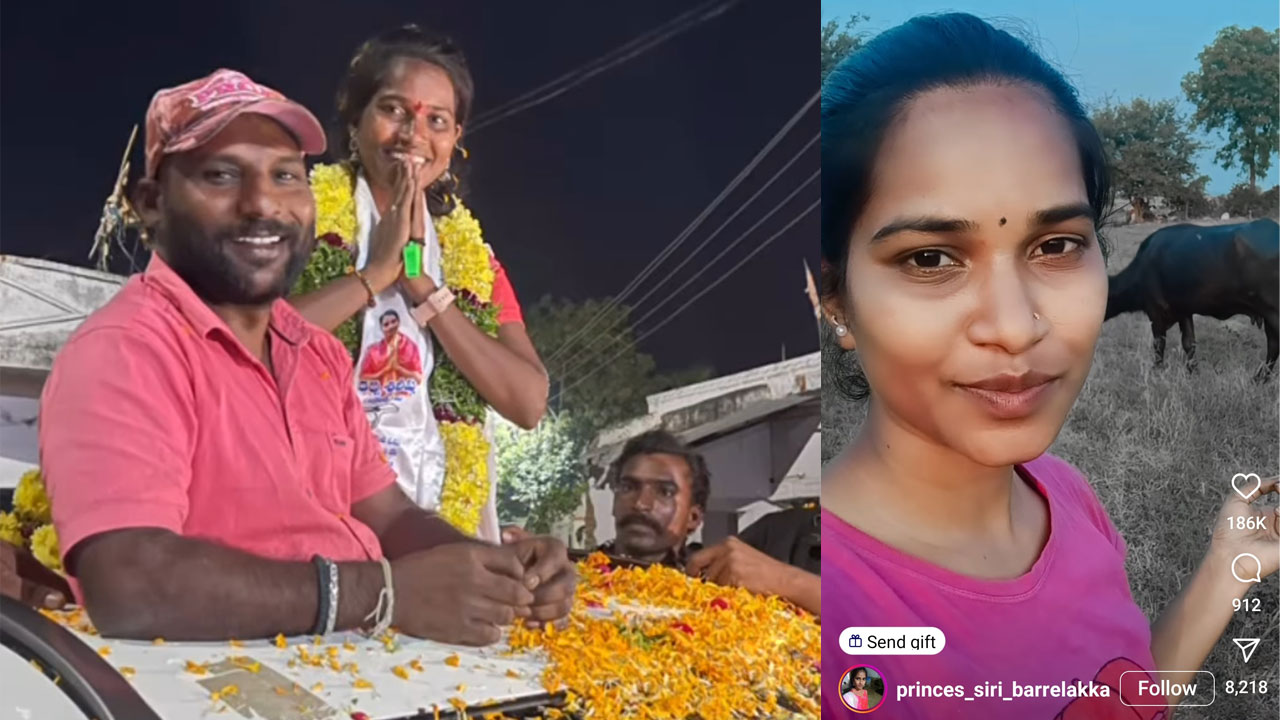
बारेलक्का (भैंस वाली बहन) का असली नाम कर्ने शिरिषा है। करीब पच्चीस साल की शिरिषा दक्षिण तेलंगाना के कोल्लापुर विधानसभा क्षेत्र में रहती हैं। वह बेरोजगार और निर्धन हैं और चुनाव लड़ रहीं हैं। वह बेरोजगार युवाओं की प्रतिनिधि के रूप में बतौर निर्दलीय उम्मीदवार कोल्लापुर विधानसभा क्षेत्र के चुनाव मैदान में हैं।
आंध्र प्रदेश से अलग होने के बाद से तेलंगाना में चुनावों के दौरान धनबल का महत्व बहुत बढ़ गया है। ऐसे में बारेलक्का एक नई चुनावी संस्कृति और एक नई नैतिकता का प्रकाश स्तंभ बन कर उभरी हैं। उन्हें सोशल मीडिया पर ज़बरदस्त समर्थन मिला और विभिन्न सामाजिक संगठनों के प्रतिनिधि, और तेलंगाना सहित कई राज्यों से बेरोजगार युवा बड़ी संख्या में उनका प्रचार करने के लिए कोल्लापुर पहुंचे। यहां तक कि बीआरएस, कांग्रेस और भाजपा के धनी उम्मीदवार उनसे खतरा महसूस कर रहे हैं।
वह साफगोई से अपनी बात कहती हैं और उनके संवाद कौशल से जनता और मीडिया दोनों ही प्रभावित हैं। उन्हें चुनाव मैदान से हटने के लिए धमकाया गया और उनके छोटे भाई, जो स्कूल में पढ़ते हैं, पर हमला भी हुआ। मगर उन्होंने मैदान नहीं छोड़ा। वे चुनाव लड़ने और मतदाताओं तक अपनी बात पहुंचाने के अपने अधिकार की रक्षा के प्रति दृढ़संकल्पित हैं। यह इस राज्य और शायद पूरे देश के लिए नया है। वह मानतीं हैं कि चुनावों में धनबल और बाहुबल का महत्व बढ़ते जाने से चुनावी प्रक्रिया गरीब और कमज़ोरों के खिलाफ होती जा रही है। नई पीढ़ी को इस प्रवृत्ति से मुकाबला करना होगा। खास बात यह कि यह युवा दलित महिला, जाति की सीमाओं से ऊपर उठकर, एक सामान्य निर्वाचन क्षेत्र से चुनाव लड़ रही है। उनके समर्थकों में सभी जातियों और समुदायों के लोग शामिल हैं और समाज के सभी क्षेत्रों से आने वाली महिलाएं भी।
एक नई आशा
सत्ताधारी बीआरएस (भारत राष्ट्र समिति), जो पहले टीआरएस (तेलंगाना राष्ट्र समिति) थी, यदि अपने किसी चुनावी वायदे को पूरा करने में नितांत असफल रही है तो वह है बेरोजगारों को काम दिलवाना। यह पार्टी केवल तेलंगाना के लिए बनी थी। दस साल सरकार चलाने के बाद टीआरएस की महत्वाकांक्षाएं अखिल भारतीय हो गईं हैं। अब वह बीआरएस है और इस छोटे से राज्य का धन अखिल भारतीय स्तर पर अपनी सरकार का प्रचार करने पर खर्च कर रही है। बारेलक्का ने इस पार्टी के सबसे कमज़ोर पक्ष को अपना चुनाव एजेंडा बनाया है। ऐसा लगता है कि इसके कारण पूरे प्रदेश के बेरोजगार युवा, सत्ताधारी दल के खिलाफ हो गए हैं। बारेलक्का के चुनाव लड़ने से इस क्षेत्र को छोड़कर अन्य 118 निर्वाचन क्षेत्रों में कांग्रेस को फायदा हो सकता है क्योंकि पूरे प्रदेश के बेरोजगार युवा इस महिला की सरकार के खिलाफ लड़ाई से जुड़ गए हैं। बीआरएस के नेताओं का दावा है कि उनकी सरकार ने कई जनकल्याण योजनाएं लागू की हैं। लेकिन यह तो घर-घर दिख रहा है कि बेरोजगार युवाओं के लिए कुछ भी नहीं हुआ है। चुनाव प्रचार के दौरान लोगों का अभिवादन करतीं व अपनी भैंस के साथ कर्ने शिरिषा ऊर्फ बारेलक्का
तेलंगाना के राज्य बनने की प्रक्रिया में करीब 1,500 युवाओं को आत्महत्या के अंधेरे में धकेल दिया गया था। बीआरएस के नेताओं, विशेषकर के. चंद्रशेखर राव (केसीआर) परिवार के सदस्यों, ने युवाओं से बार-बार आह्वान किया था कि अगर राज्य के दो टुकड़े नहीं किये गए तो वे आत्मदाह कर लें।
बारेलक्का अपने संघर्ष का ब्यौरा देते हुए बतातीं हैं कि किस तरह उन्होंने उधार लेकर कोचिंग सेंटरों पर पैसा लुटाया और कैसे उन्हें लंबे समय तक हैदराबाद में रहना पड़ा – एक ऐसे शहर में जो ग्रामीण युवाओं का बहुत स्वागत नहीं करता है। ग्रुप वन की नौकरियों के लिए प्रतियोगी परीक्षा की तैयारी करते समय वह निःशुल्क खाना बांटने वाली संस्थाओं और मंदिरों से मिलने वाले प्रसाद के आसरे थीं। इसके बाद भी उन्होंने पढ़ाई की और परीक्षाएं भी दीं, मगर किसी न किसी बहाने उन्हें नौकरी नहीं दी गई। वे बार-बार लोगों से कह रही हैं कि वो प्रदेश के उन 40 लाख बेरोजगार युवाओं के लिए लड़ेंगीं, जिनकी उम्र गुज़रती जा रही है और जिनकी ऊर्जा घटती जा रही है, मगर काम-धंधा न होने के कारण वे न तो शादी-ब्याह कर पा रहे हैं और ना ही उनकी जिंदगी में चैन है। वे कहतीं हैं कि इन बेरोजगार युवाओं के दुखों के लिए सरकार ज़िम्मेदार है।
गत 25 नवंबर, 2023, मतलब चुनाव प्रचार थमने के तीन दिन पहले, मैं उनके साथ था। उनका जुलूस सबसे धनी कांग्रेस उम्मीदवार जुपाली कृष्णा राव के गांव जुपाली से गुजर रहा था। कृष्णा राव पहले टीआरएस में थे और उसकी सरकार में मंत्री भी थे। अब वे कांग्रेस में हैं। बारेलक्का के जुलूस में बड़ी संख्या में बेरोजगार नौजवान शामिल थे। उनके जुलूस में दोनों तेलुगू राज्यों से आई दर्जनों कारें भी थीं। सैकड़ों युवा नारे लगा रहे थे– “बारेलक्का को वोट दो”, “सीटी [बारेलक्का को आवंटित चुनाव चिह्न] को वोट दो,” “युवा बेरोजगारों की जान बचाओ” आदि।
धरणी पोर्टल के कारण वे अपनी ज़मीन खो बैठीं
बारेलक्का ग्रेजुएट हैं। उनकी मां एक भोली-भाली मजदूर हैं। उनके दो छोटे भाई हैं। उनके पिता शराबखोर थे। उन्होंने परिवार की एकमात्र संपत्ति 10 गुंता (एक एकड़ की एक-चौथाई) खेती की ज़मीन अपनी पत्नी को बिना बताए बेच दी और घर छोड़ कर चले गए। धरणी पोर्टल पर कोई भी व्यक्ति अपने परिवार की सदस्यों की सहमति या उनके दस्तखत के बगैर अपनी ज़मीन बेच सकता था। बारेलक्का का कहना है कि उनके पिता ने बिना उन्हें या उनके मां को बताए ज़मीन किसी को बेच दी। अब उस ज़मीन को फिर से हासिल करने का कोई तरीका नहीं है। वह कहती हैं कि “मैंने लोगों से भीख मांगी, उनके पैर पड़े कि वे हमारी ज़मीन हमें वापस दिलवा दें, मगर कुछ नहीं हुआ।” एक टीवी इंटरव्यू में बारेलक्का ने कहा, “हमारी ज़मीन को धरणी पोर्टल और मेरा नशेड़ी बाप निगल गए।” यह सब सुनकर लोग सरकार के खिलाफ और भड़क रहे हैं। यह वास्तविकता भी है कि धरणी पोर्टल, छोटे किसानों के लिए मुसीबत बन गया है। वे धरणी पोर्टल के जमीन माफिया का मुकाबला नहीं कर पा रहे हैं।
बारेलक्का को उम्मीद थी कि नए तेलंगाना राज्य में उन्हें नौकरी मिलेगी। केसीआर की पार्टी ने लोगों से वायदा किया था कि प्रदेश के बंटवारे के बाद वे सबको काम दिलवाएंगे। जिस समय तेलंगाना बना, बारेलक्का 13 साल की थीं। वह एक स्कूल में पढ़ती थीं और उन्होंने तेलंगाना को अलग राज्य घोषित किये जाने के समर्थन में आंदोलन में हिस्सा लिया था। उन्हें उम्मीद थी कि नए राज्य में उन्हें सरकारी नौकरी मिल जाएगी और वह अपनी मां की मदद कर सकेंगीं।
उन्होंने राज्य प्रशासनिक सेवा में भर्ती के लिए कई परीक्षाएं दीं। उन्होंने ग्रुप वन से लेकर कनिष्ठ पदों तक की नियुक्ति के लिए योग्यता भी हासिल की। लेकिन हर बार या तो चयन की प्रक्रिया स्थगित कर दी गई या लिखित परीक्षाएं रद्द कर दी गईं। यह कभी इस बहाने से किया गया कि प्रश्नपत्र लीक हो गए हैं तो कभी किसी और बहाने से।
केसीआर सरकार बढ़ती बेरोज़गारी के प्रति उदासीन बनी रही और उसने राज्य की शिक्षा प्रणाली का नाश कर दिया। तेलंगाना आंदोलन के समय शिक्षा व्यवस्था ठप्प रही और पिछले दस साल से भी ठप्प पड़ी है। सरकार ने शिक्षा प्रणाली को ख़त्म कर दिया है। तेलंगाना की तुलना में आंध्र प्रदेश में शिक्षा और रोज़गार की दृष्टि से स्थिति काफी बेहतर है। बारेलक्का नए राज्य की नई सरकार के नए तरीकों की शिकार हैं।
भैंसें खरीद कर बनी बारेलक्का
बारेलक्का को पता नहीं था कि उनके परिवार का भविष्य क्या होगा। उन्होंने फ़ोन पर वीडियो बनाना सीख लिया और इन वीडियो को वे अपने इंस्टाग्राम पेज पर पोस्ट करने लगीं। एक वीडियो में वह कहती हैं, “नमस्कार दोस्तों, मैं आपकी बारेलक्का हूं। चाहे हम कितनी ही मेहनत से पढ़ाई क्यों न करें, चाहे हम कोई भी डिग्री हासिल क्यों न कर लें, यहां तेलंगाना में हमें कोई काम नहीं मिलेगा। यही कारण है कि मैंने अपनी मां के संघर्ष के बल पर चार भैंसें खरीद ली है। अब मैं अपनी भैंसों के साथ खेतों में हूं।” यह वीडियो वायरल हो गया। पुलिस ने अपने राजनैतिक आकाओं के इशारे पर बारेलक्का के खिलाफ मामला दर्ज किया। उन्हें भारतीय दंड संहिता की धारा 505(2) के तहत, सरकार को बदनाम करने का आरोपी बनाया गया। उन्हें अदालत के चक्कर काटने पड़े। इस तरह उनकी मुसीबतों में एक और इज़ाफा हो गया।
बारेलक्का संघर्षों के बीच अपने दिन काट रही थीं। इस बीच, 2023 के विधानसभा चुनाव की घोषणा हो गई। अपने जीवन संघर्ष में जीत की आखिरी उम्मीद में बारेलक्का ने कोल्लापुर क्षेत्र से नामांकन का पर्चा भर दिया। किसी स्थापित राजनेता को यह उम्मीद नहीं थी कि उनका नामांकन पत्र सही पाया जाएगा। उन्हें लग रहा था कि जिस तरह बारेलक्का द्वारा दी गईं परीक्षाएं बेनतीजा रहीं, उसी तरह उनका पर्चा भी बेनतीजा रहेगा। मगर उनका पर्चा ख़ारिज नहीं हुआ और उन्हें ‘सीटी’ चुनाव चिह्न आवंटित कर दिया गया।
उनके चुनाव प्रचार ने जल्दी ही जोर पकड़ लिया। उनके समर्थकों ने प्रचार अभियान पर खर्च करने के लिए उन्हें छोटी-छोटी धनराशि दी और उनके साथ फुटपाथ पर रात बिताने में उन्होंने कोई गुरेज़ नहीं किया। कई यूट्यूबर्स उन्हें फॉलो कर रहे हैं, कई गीतकारों ने उनके ऊपर गीत लिखे हैं और गायकों ने उनके वीडियो बनाकर इंटरनेट पर अपलोड किए हैं। उनके प्रचार वाहनों पर बैनर लगे हैं और उनके काफिले में कई कारें शामिल हैं। इस चुनाव में बारेलक्का एक नैतिक ताकत के रूप में उभरीं हैं। वह निश्चित तौर पर एक नैतिक राजनैतिक योद्धा हैं, जिन्होंने तेलंगाना चुनाव को नया आयाम दिया है। वह जीतें या हारें, इससे कोई फर्क नहीं पड़ता। लेकिन यह तो तय है कि उन्होंने युवाओं को आगे की राह दिखाई है।
कुछ वकीलों ने तेलंगाना उच्च न्यायालय से प्रार्थना की है कि सरकार को बारेलक्का और उनके परिवार की सुरक्षा का इंतजाम करने का निर्देश दिया जाए। सरकार और चुनाव आयोग दोनों उनके और उनके परिवार की सुरक्षा के प्रति गंभीर नहीं हैं। यह आशंका तो है ही कि धनी और प्रभावशाली राजनेता इस गरीब और कमज़ोर लड़की के विरुद्ध कुछ भी कर सकते हैं, विशेषकर इसलिए क्योंकि उसने असाधारण साहस और आत्मविश्वास का परिचय दिया है।
भारत के नागरिक समाज में जो भी नैतिक तत्त्व अब भी बचे हुए हैं, उन्हें बारेलक्का की रक्षा के लिए आगे आना चाहिए। वह भविष्य के लिए आशा है। वह देश को उसी तरह ताकत दे सकतीं हैं, जिस तरह उनकी बहन भैंसों ने सदियों से इस देश को ताकत दी है।
(अनुवाद : अमरीश हरदेनिया, संपादन : राजन/नवल/अनिल)
फारवर्ड प्रेस वेब पोर्टल के अतिरिक्त बहुजन मुद्दों की पुस्तकों का प्रकाशक भी है। एफपी बुक्स के नाम से जारी होने वाली ये किताबें बहुजन (दलित, ओबीसी, आदिवासी, घुमंतु, पसमांदा समुदाय) तबकों के साहित्य, संस्कृति व सामाजिक-राजनीति की व्यापक समस्याओं के साथ-साथ इसके सूक्ष्म पहलुओं को भी गहराई से उजागर करती हैं। एफपी बुक्स की सूची जानने अथवा किताबें मंगवाने के लिए संपर्क करें। मोबाइल : +917827427311, ईमेल : info@forwardmagazine.in
लेखक के बारे में
कांचा आइलैय्या शेपर्ड
राजनैतिक सिद्धांतकार, लेखक और सामाजिक कार्यकर्ता कांचा आइलैया शेपर्ड, हैदराबाद के उस्मानिया विश्वविद्यालय में राजनीति विज्ञान के प्राध्यापक और मौलाना आजाद राष्ट्रीय उर्दू विश्वविद्यालय, हैदराबाद के सामाजिक बहिष्कार एवं स्वीकार्य नीतियां अध्ययन केंद्र के निदेशक रहे हैं। वे ‘व्हाई आई एम नॉट ए हिन्दू’, ‘बफैलो नेशनलिज्म’ और ‘पोस्ट-हिन्दू इंडिया’ शीर्षक पुस्तकों के लेखक हैं।
-
Preface of New Edition of Post-Hindu India by Kancha Ilaiah Shepherd
in Book Review
27/11/2023
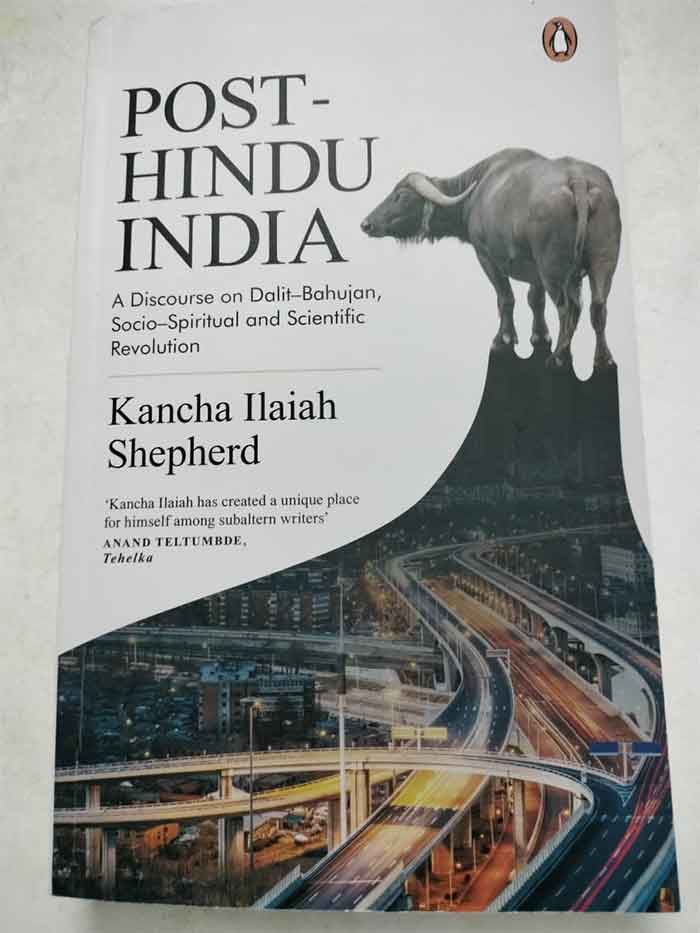
This excerpt is being published from the Preface of the book “Post-Hindu India” written for the new edition by the author published here with permission from publishers. The launch of the book is already advertised by the Penguin India website. The copies of the book will be available for sale both online and offline from 30 November, 2023.
Post-Hindu India was first published in 2009 by Sage. It was launched in a well-attended meeting in the India Habitat Centre, New Delhi, by an Adivasi woman from the Northeast. . Within a short time, it became a bestseller. Perhaps this is the first book to systematically study strenuously gathered information in a field work done about the Adivasi knowledge system to Brahmin knowledge system in known Indian history. It is a journey through a living civilization of castes and communities, basically foregrounding production and human relations and philosophical processes that governed Indian society.
We know that historically from the days of composition of the oldest book, Rig Veda, Indian society was divided into four human categories—Shudra, Vaisya, Kshatriya and Brahmin. The category Shudra at that time may have included in itself all the present Shudras/OBCs/Dalits and Adivasis. The name Shudra was used in ancient texts in a negative sense, something like unworthy people or slaves. Name: Email:
Since then, while Vaisya (Bania), Kshatriya (Rajput in North India) and Brahmin categories have existed and survived with the same titles with a social and philosophical higher status, the classical Shudras got fragmented into three further broad groups—Shudra/OBCs, Dalits and Adivasis. The written texts, whether in Sanskrit or in most regional languages or in English even after establishing a constitutional democracy, did not examine the contribution of these sections to Indian knowledge, economy, philosophy and culture. Since the idea of production is seen as polluting work in the Brahminic spiritual thought, the producers’ life, work and contribution to the nation were not given textual status and philosophical respectability.
Since the days of the freedom struggle, more particularly after the Rashtriya Swayamsevak Sangh (RSS) and the Bharatiya Janata Party (BJP) acquired hegemonic place in the Indian political system in the post-Mandal and post-Babri Masjid demolition years, brought the mobilization and counter-mobilization of masses, the Indian civilization and culture are being projected based on the book knowledge (mainly of Sanskrit) in which the life, work and philosophy of the productive masses—Shudras, Dalits and Adivasis—did not get recognition.
This book, for the first time, foregrounds the knowledge, philosophy and ideology of the Shudra/Dalit/Adivasis and encodes into a text and constructs an ideology of self-respect and national pride for them. Any nationalist project has to examine the life process, status and strengths and weaknesses of a vast number of the agrarian and the artisanal forces of this country, who are living in villages, forests, cities and so on. Though the leisure and the service castes of India are said to have contributed to the intellectual energy of the nation, their role in sustaining the nation is secondary. The backbone of the nation lies in the labour power and knowledge that emerged in the process of humans engaging in production. Mahatma Jotirao Phule in Gulamgiri also says that the Shudras and Ati-Shudra are the life and sinews of India.
The journey in this book starts from the Adivasi society—what I call Unpaid Teachers—and goes through various occupational caste communities, laboriously recording their knowledge and their socio-spiritual and philosophical systems. Two main occupational groups within the broad Dalit category, Subaltern Scientists (Chamar, Madiga, Matang and so on) and Productive Soldiers (Mahar, Jatav, Mala and so on), were studied as representative communities for their contribution mainly in leather technology and protection of villages and so on.
Thereafter the journey enters into the Shudra Samaj, the biggest social conglomerate which operated around agriculture and artisanal production in India and is still doing so. I went by the undivided Andhra Pradesh social division of the reserved castes into the Dalit and Shudra categories where the lowest Shudra communities, as per the reservation category called OBC, are Chakali (Dobhi or washer and so on) and Mangali (Nayee or barber) whom I called Subaltern Feminists and Social Doctors respectively.
From there on the journey goes into Meat and Milk Economists (broadly cattle grazers and shepherds), Unknown Engineers (iron and gold smiths, pot makers, toddy tappers and so on) and Food Producers in which many historical agrarian castes like Kapu, Reddy, Maratha, Patidar, Jat and so on could be enlisted based on their historical location in the Shudra category and also their relationship to agrarian production in different states of India.
Among the Dwija (which constitute Bania, Kayastha, Khatri, Kshatriya and Brahmin) castes, I studied Banias and Brahmins with careful observation and discussions with various people inside and their caste cultures, economy and philosophy. Lot of unknown things about these castes are brought into the discourse. There is also a chapter on Intellectuals.
The book was reviewed and discussed with equal passion of agreements and disagreements by activists and academicians. More importantly the book was taken to the Supreme Court of India with a petition to ban at least sections of the book.
Kancha Ilaiah Shepherd is a political theorist, social activist and author. His latest book is The Clash of Cultures—Productive Masses Vs Hindutva—Mullah Conflicting Ethics.
-
Barrelakka Is Setting A New Moral Trend In An Immoral Electoral System
26/11/2023
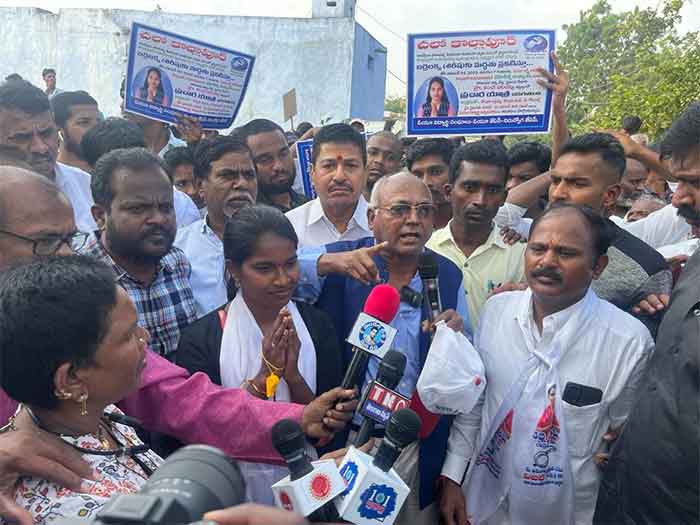
Barrelakka (Buffalo Sister), whose original name is Sirisha, is just 25 years old unemployed poorest of the poor girls from Kollapur constituency in South Telangana. She is an independent candidate as representative of unemployed youth and creating new electoral culture and morality in a state where money power has increased several fold after bifurcation. She, with a massive support of social media, and supporters from various social organizations, mainly from Telangana unemployed youth, reaching the constituency from Telangana and outside, in support of her, shaking three rich candidates contesting from BRS, Congress and BJP.
Her speeches, with clarity, have good communication abilities attracting masses and media. Though she was threatened to withdraw and her younger brother, a school going boy, was attacked, she is not deterred. Her commitment to the right to contest and tell the truth to voters is setting a new trend in the state, perhaps in the country itself. She tells a story of an election system giving a handle to harass the poor and vulnerable, as money and muscle power plays a critical role. Yes this needs to be fought by the future generation. This young Dalit girl fighting in a general constituency set aside the caste borders. Her supporters come from all castes, communities and more so women of different walks of life. Name: Email:
Barrelakka is a New hope.
The most unfulfilled promise of the Bharat Rashtra Samithi (earlier Telangana Rastra Samithi) partly controlled by one whole family is not providing jobs for millions of unemployed. The party that was said to have been formed only for Telangana now jumped that promise to become a BRS within ten years rule and spending a small state’s money for campaigns all over India. However, this young poor girl has put her weakest side on the election agenda. That seems to have turned the entire state’s unemployed youth against the ruling party. Except in that constituency in all other 118 constituencies, the fight may help the Congress because the unemployed youth in all over the state is glued to the anti-Government battle by this young girl. The BRC leaders, though, are claiming that they put many welfare schemes in place, but their record on keeping the youth unemployed is quite visible in every house. This statehood was achieved by pushing 1500 youth into suicide net by former TRS now BRS leader, particularly the family members of KCR by repeatedly telling them that they would self-immolate if the state was not bifurcated.
She narrates her struggles of spending loaned money on coaching centers, living in un-accommodative Hyderabad city for rural youth. Several days, while preparing for Group I examination, she ate food around some free feeding centers on the roads or temples that dole prasandam. Yet she studied and wrote exams only to be cancelled afterwards on one pretext or the other. She repeatedly tells the masses that she would fight for 40,00,000 unemployed whose age and energies are running out, without getting married and living a secure life. She explains their sorrows as victims of the negligence of the Government.
I was with her on 25 November 2023, just three days before the campaign ended on 27th. Scores of unemployed youth were in her campaign procession going through the richest Congress candidate, Jupalli Krishna Rao’s, former minister from earlier TRS Government and now shifted to the Congress, village Jupalli. Scores of cars reached there from all parts of two Telugu states, with hundreds of youth shouting slogans “Vote for Barrelakka, Vote for Whistle, Save the lives of Unemployed Youth” made me feel hopeful.
Dharani Took Away Her Small Piece of Land
She is a graduate, with an innocent labour mother and two younger brothers. Her father became a drunkard and went away from home, after selling away just 10 gunta (1/4 acre) land they had without informing his wife. The Dharani portal allowed any owner to sell land without involving the family’s consent or signatures. She said my father handed over that land without telling my mother or children to somebody. There is no way now to retrieve the land. I went round begging and touching the people’s feet to get our land back. “Our land is swallowed by Dharani and Drunken father” says Barrelakka in a TV interview. This story infuriates people more and more. The Dharni portal created huge problems for small farmers, who are unable to handle the software mafia.
She hoped for a job in the newly carved-out Telangana state. The KCR party promised jobs for youth once the state is bifurcated. When the state was formed Barrelakka was 15 and participated in the movement for statehood as a school student with a hope that she could help her mother with a Government job in the new state.
She wrote several state service examinations and got qualified from Group I, the top most state service, to other small job vacancies. But every time either selection was postponed or already written exams were cancelled, with a pretext of paper leakage and some other issue that state administration itself plotted.
The KCR Government remained indifferent to massively grown unemployment and totally collapsed the state education system. The education system remained dysfunctional during the T-state agitation and thereafter for the last ten years without any serious effort the Government killed the education system. When compared to the other bifurcated Andhra Pradesh, both in education and employment, Telangana remained the most unattended state. Barrelakka is a victim of the new method of administration of the new state administrators.
She Bought Buffalos and became Barrealakka
She was clueless about her family’s future. She learnt making videos on her phone and started posting them on her Instagram @ barrelakka “Hi friends I am your Barrelakka. However hard we study and whatever degrees we acquire we will not be given jobs in Telangana. That is the reason why I bought four buffaloes with the struggle of my mother. Now I am with my buffalos in the fields”. That video went viral. The police obviously with the eye-wink of the higher ups booked a case against her under the IPC section 505 (2) that she was defaming the Government. She was made to run around the court and her life became more miserable.
In this struggle came the election of 2023 for the State Assembly. As a last attempt in the struggle for survival, she filed for the nomination for Kollapur constituency. No major politician expected her nomination would survive the scrutiny. They thought that like her answer papers were rendered useless in the job examinations , her nomination would become useless. But it was not rejected. She was given a whistle symbol.
As I am writing this article her campaign began to shake with supporters with small amounts in their hands to donate and willing to stay with her sleeping on the roadside. Youtube channels follow her, songwriters and singers making quite powerful music videos and uploading on Youtube. The atmosphere around her campaign with several cars behind her bannered campaign vehicles showed a newborn moral force in this election. She is certainly a moral political fighter who created a new atmosphere in Telangana elections. Whether she wins or loses is a different issue. But she shows a direction to the youth which is the way forward.
Lawyers approached the Telangana high court asking for protection as the state and election commission were looking the other way about her and her family’s safety. There is fear all around that the rich can do anything against such a vulnerable young poor girl, as she has shown unusual courage and confidence.
The moral nation still surviving in the civil society of India must protect Barrelakka as she is a great hope for future life like her namesake the buffalo milk for this country for millennia.
Kancha Ilaiah Shepherd is a political theorist, social activist and author. His latest book is The Clash of Cultures—Productive Masses Vs Hindutva—Mullah Conflicting Ethics
-
The RSS-BJP Economic Development Model: Support the Upper Castes and Ignore Bahujans
Over the decades, Indian economists and politicians have completely ignored the agrarian classes but things are changing.
Kancha Ilaiah Shepherd
15 hours ago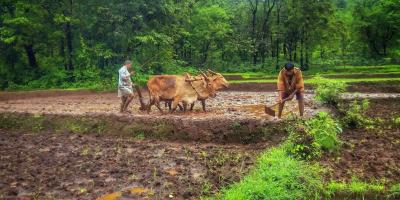
Representative image of farmers in Goa. Credit: Public Doman
After I wrote a piece titled ‘Rahul Gandhi is Reshaping Congress Welfare Agenda: I Call it the Shudra Development Model’, there has been quite a bit of curiosity about what the Shudra Development Model (SDM), Brahmin-Bania Development Model (BBDM) are.
So far there are broadly three development models that Indian economists, whether educated in India or abroad, talk and write about: 1. The liberal development model; 2. the neo-liberal development model; and 3. the socialist development model. The pro-Congress economists, till the globalisation and liberalisation of the 1990s, were bracketed as liberal economists and the pro-RSS/BJP economists were among the neo-liberals. Left-oriented economists were seen as backers of socialist development.
There was hardly any indigenous economic model that was developed in the post-colonial economic discourse of India. The only concept that I know of is that the Indian economists used the term ‘Hindu Rate of Growth’. This was used in the sense of a slow growth rate without any rational explanation.
If an economist does not deal with the role of caste in determining the financial allocations from the state budget with a caste benefit perspective, they, whatever their own caste location, will do a caste-blind economic analysis and that would help the Dwija economy. The Dwija methods of garnering state money without being involved in any productive work is part of their caste ideology and varna dharma heritage. The spiritual system of Sanatana Dharma is meant to keep the Dwijas well-fed and starve the food producers.
The varna dharma state allocation of finances goes against the entire agrarian and artisanal economy, which I call the Shudra economy. The Shudra economy is structurally opposite to the Dwija economy. The Shudra economy mainly survives on agrarian and artisanal production, not on profit. Investing in labour on the land and producing food and other commodities is central to the Shudra ideology. The money for the state budget mostly comes from their activities. If it is not reinvested in those fields of production, the economy would get depressed.
If the Shudra forces become industrialists, their relationship to the agrarian economy would be sympathetic and interactive with labour and land. The Dwija industrialist consciousness is anti-Shudra and anti-agrarian. In fact, the Dwija economy survived and prospered only by looting the Shudra, Dalit and Adivasi economic resources for millennia, both through market and state apparatus. The development of Indian industry on a massive scale when the RSS-BJP came to power is more because the Government in Delhi is pushing the contract economy into the hands of Dwija industrialists by starving the agrarian sector, as it is mainly in the hands of Shudra, Dalit and Adivasi communities. So far, no economic model has analysed and understood this systemic bias in the allocation of budget resources.
After the RSS-BJP came to power in 2014 with the slogan ‘Sab Ka Sath and Sab Ka Vikas’, where did the national state budget economy get spent in real terms? Whom did it develop? In caste-class terms, the agrarian and artisanal Shudra, Dalit and Adivasi masses hardly got any visible vikas(development) with the resources allocated by the Union government. Most of the central budget was spent on infrastructure like highways, big airports, Vande Bharat, etc. The RSS-BJP government is also spending money on building stadiums for global games.
Privatisation of most government industrial units at cheaper rates – mostly to Bania-Brahmin industrialists – has come at the cost of reducing the reserved jobs for Dalit, Adivasi and OBC communities. The salaried incomes of persons from SC, ST and OBC communities employed in these sectors are also a source of investment in the rural agrarian and artisanal communities. By cutting down such reserved jobs the BJP-RSS Union government is directly helping the Brahmin-Bania rich and providing more jobs to youth born and brought up in Dwija families and educated in private sector schools and colleges in English medium. The RSS/BJP is opposing English medium in government sector education, where the children of agrarian and artisanal masses study. India is not going through a national economic depression but is going through a caste economic depression. This depression does not bother anyone from the Indian school of economists now and there is no B.R. Ambedkar among the productive masses to understand this process.
The RSS-BJP government has close relationships with major industrialists. The Dwija industrialists have an ideological affinity with the political agenda of the RSS-BJP. The fact, however, is that there are no Dalits, Shudras and Adivasis among those major industrialists – except for the Shiv Nadar family. The presence of Gujarati Banias and Marwadis is so visible that no other caste can match them in manipulating Government resources to advance themselves. Ambani, Adani, Vedanta, Lakshmi Mittal and so on are known Bania industrialists. Infosys, the biggest software company, is run by a Brahmin family.
Since the Union government has control over banks, it has written off lakhs of crores of loans given to big industrialists. As I said, the big businesses and big industrialists come from the Brahmin, Bania, Kayastha, Khatri and Kshatriya castes. There are hardly any Shudras, Dalits and Adivasis in that economy. The government investments in that economy do not benefit the productive Shudra, Dalit and Adivasi communities. At the same time, the RSS-BJP government is against writing off small farm loans. Their economists keep arguing such a process will make the farmers lazy. But they never characterise industrialists as lazy or criminal.
The huge amounts that go into such an industrial contract economy do not plough back into markets to upscale the GST returns to the state. Only some of it gets re-invested, some remains in the banks and some goes to foreign countries through hawala transactions and asset purchases. They live a life that could be called half-Indian with one foot in India and another foot in London or New York. The RSS-BJP project them as better nationalists than the Shudras, Dalits and Adivasis who always live in India, that too in villages.
The RSS-BJP’s focus on spending more and more budget on big infrastructure like massive highways, airports and seaports within India through this contract economy, in which there are massive profit ratios, completely goes into the hands of the very same business castes. Even the rich agrarian Shudras have no share in that profit economy. Even the richest Shudra landed castes like Patels, Marathas, Jats, Reddys, Kammas, Lingayats, Vokkaligas, Mudaliyars, Nairs and so on do not get much share in this central contract economy.

Representative image of a highway. Photo: Matt Hardy/Pexels
The development that takes place in that economy is, in my view, a Brahmin-Bania Development Economy. It created an economic depression in the agrarian economy of India, because of under-growth in that sector, and also because of lack of enough investment. The Left’s economic analysis based on pure class methodology could never grasp this process. This caste blindness killed their ideology.
Wherever the BJP is in power in the states, the welfare dose from the state budget to the agrarian and artisanal masses is very minimal. In the current elections to five state assemblies — Madhya Pradesh, Telangana, Chhattisgarh, Rajasthan and Mizoram – the BJP’s welfare package offered in the manifesto vis-a-vis the Congress and regional parties is the lowest. In Telangana, as against the BRS (regional party) welfare package, the Congress party offered a far better agrarian welfare package. For the first time, a national party offered Rs 15,000 per acre investment and Rs 12,000 per person to agriculture labourers. There are promises of old age pension too, and subsidised gas cylinders. More importantly, the Congress is now promising to write off 2 lakh agriculture loans to which the BJP is very seriously opposed. Yet, it has been consistently writing off bank loans of Dwija industrialists on a massive scale.
The money pumped into the accounts of the agrarian masses will be ploughed back into the rural markets within a month or two, and thereby into the GST income of the state. What is the BJP offering in Telangana? One cow per family and scrapping the 4% reservation available for Muslims. Why does the RSS-BJP not want to send the budget money into the accounts of the Shudra, Dalit and Adiavasi people’s accounts but pump it into the rich industrialists’ accounts? What is the opinion of an OBC Prime Minister about agrarian welfare?
The BJP’s hatred for agrarian producers is in tune with what Prime Minister Modi called revdi culture (culture of freebies), terming it “dangerous for the development of the country.” Whose development is he so concerned about?
As against this view about the welfare schemes that are meant for the agrarian producers, Modi quite openly said that he was not among those who feared to “stand beside industrialists”.
He has never stood among the farmers and agrarian labour. Development for Modi is Brahmin-Bania development. Unlike Modi, Rahul Gandhi, who claimed to be Brahmin, goes and stands by labouring men and women in the fields. But the OBC prime minister never visits an agrarian field and stands with them. This approach of despising agriculture and the agrarian masses is learnt from the RSS.
The Shudra development model improves rural life. When the state spends money from its budget on it, there is all-round development. This was witnessed in Tamil Nadu in the late 1960s, when the DMK came to power – it spent money on food for school children, books, and improving school infrastructure. The rural Tamil medium schools were meant for the Shudra, Dalit and Adivasi agrarian masses, whereas the Dwijas were sending their children to private English medium schools. Now, the spending on welfare for the rural masses is massive in Tamil Nadu.
Andhra Pradesh chief minister Y.S. Jagan Mohan Reddy transferring substantial amounts of money to the mothers of school and college-going children, spending money on improving the school infrastructure by stopping the construction of the so-called Singapore-like capital city in Amaravati has provided a new impetus to the Shudra Development Model.
Now, after Rahul Gandhi’s Bharat Jodo Yatra and interaction with agrarian masses in the fields, in the villages, in the roadside tea shops, he pushed a reluctant Congress to adopt the Shudra Development Model in the states that are going to election. They have done that in Karnataka and have promised to do so in Telangana. Since the Congress, an experienced national party, is going in this direction, there is certainly some hope. The Southern states are now moving in this new direction and a national party has come around to support the SDM as against the BBDM, which it was earlier supporting to various degrees.
Kancha Ilaiah Shepherd is a political theorist, social activist and author. His latest book is The Clash of Cultures (Productive Masses Vs Hindutva-Mullah Conflicting Ethics).
-
Book Launch – The Clash of Cultures
Book Launch – The Clash of Cultures at Lamakaan, Hyderabad on 17 November 2023 -
Why the BJP should ensure gender and caste justice among all faiths before a Uniform Civil Code
An excerpt from ‘The Clash of Cultures: Productive Masses Vs Hindutva–Mullah Conflicting Ethics,’ by Kancha Ilaiah Shepherd.

A mass wedding in Surat. | Reuters 
Before the BJP came to power the discussion on the campus used to be around Muslim communities’ educational development, employment and the kind of poverty the people suffer from. That was also the period in which the Sachar Committee Report was in every Muslim intellectual’s – man or woman’s – mind. Now I see more fear and silence among them. Why?
Before the Bharatiya Janata Party came to power, there was no indication in the election campaign of the Prime Ministerial candidate – Narendra Modi – that the Muslim question that remained on its agenda for a long time would be brought into play in so many ways after coming to power. After the Party came to power, within no time Article 370, the resettlement of Kashmiri pundits back in Kashmir, and beef food bogey became major issues. The cow protection issue has haunted Muslims for decades. The beef ban in many BJP-ruled states put them not only in fear of food security, but many of them lost small businesses around cattle, meat, leather and bone sales and purchases. Unemployment among them has gone up to unknown heights. The lynching of Aklaq in Uttar Pradesh created a scary situation among Muslims all over India.
ADVERTISEMENT
I have been working at Maulana Azad National Urdu University, Hyderabad, for about six years. Here Muslim men and women constitute the main body of teaching faculty, non-teaching staff and student community, as the Urdu language has been only nurtured by Muslims after independence. Even in the Nizam-ruled region, where every other community people learnt Urdu, they no longer hold on to Urdu. The Reddy and Velama Zamindars who used to read and write in Urdu have given up. From this region, only Muslims sustained what they call the Urdu Zuban. So my interaction at this university is with Urdu Urdu-speaking Muslim community.
The Muslim men and women who work in this university live with diverse dress codes, lifestyles, and hairstyles. There are women who wear modern dress, maintain other modes of body style and drive their own cars. Even in a big university like Osmania University, I have not seen so many women driving their own cars, working till late in the night. But they do that in MANUU. A woman professor worked as a registrar. A burkha-clad woman professor worked as provost of the hostels of both boys and girls for quite some time. She has also contested for the presidency of MANUUTA. In Osmania where there are more women teachers mainly Hindu, never took up the provost job, as it involves, at times, late-night stays. In the neighbouring Hyderabad Central University, there are more women staff members (mainly from upper castes), even educated abroad. But nobody has taken up that job.
Some girl students even cover their whole face, except their eyes, but they study well. There are men who always live in traditional dress and have beards, wear sherwani, pyjama and so on. I know two very conservative-looking people – one woman and a man – but their expertise in computer operation is unmatched. There are men who wear more modern dresses than men of other communities. I tried to find out whether there were any polygamous men among teaching and non-teaching men. Hardly any. I know that there are divorced women but they are quite confident and professional. Before the BJP came to power the discussion on the campus used to be around Muslim communities’ educational development, employment, and the kind of poverty the people suffer from. That was also the period in which the Sachar Committee Report was in every Muslim intellectual’s – man or woman – mind. Now I see more fear and silence among them. Why?
The Kashmir crisis has deepened after the election. Blood is flowing on an everyday basis. After the Uri incident, every Muslim began to be suspected as if he or she were a Pakistani agent. After the surgical operation, the celebration appeared not because the terrorist dens on the border were attacked but seemed to be against every Indian Muslim. The mood was that of a lesson being taught. This message was sent quite consciously by the sweet-distributing squads.
The sudden discovery that every Muslim woman is facing Triple Talaq and the urgency to bring about a Uniform Civil Code to save Muslim women scare them more. One case of one Muslim woman in the Supreme Court is being projected as if every Muslim woman after the BJP came to power is facing the Tripple Talaq and the UCC is the solution.
ADVERTISEMENT
Now the discussion among them in small groups, lunch meetings, and “chai pe churcha” is not about their “vikas” but about their “fear”. The women teachers and non-teachers I talk to tell me that these are not our major problems. They say, “Our major problems are education in English and Urdu and jobs in the market. They further say “safety in the general society not just in the Muslim society”.
I see many of them feel lost in the present situation. They are lost because Lalitha Kumaramangalam, Chairperson of the National Women’s Commission and all other ruling Hindu women keep telling the nation that they are worried about the divorced Muslim women more than the Dalit women getting raped on a daily basis. They are also not at all worried about the young and old Hindu widows living a pre-Rajarammohan Roy life in the Varanasi rat hole called Vrindavan.
Every Muslim man feels that the Hindutva brigade treats them as if they are the soldiers on the other side of LOC fighting for Pakistan. Why did the situation change after the 2014 elections so drastically? In the leading TV shops, every Muslim man is buying – particularly in some English TV shops – bombs and guns. Every Muslim woman is selling a Talaq certificate and begging for protection from her cruel husband. Why wasn’t this also done before the 2014 elections? Do Muslim women of India need Hindu Vijaya Mallyas and Christian Donald Trumps to protect them from Triple Talaqs and bad husbands?
There is another campaign at large in the morning walks, lazy chai shops or yoga training centres where the Hindutva brigade’s old and young men talk about how Islam has destroyed Bharat. Many of them use the Muslim-designated name of the nation – “Hindustan” – in danger. Unfortunately in all Muslim meetings, this is the name they also use for this nation without knowing that this can be a source of the amendment to the constitution that its existing name India – Bharat, should be changed to Hindustan.
For decades Muslim politicians and intellectuals were self-destructive and now they lost all the courage to combat these forces who actually participate in “khoon pe charcha’’. The Muslim intellectuals for long were busy with secular “coffee pe churcha” when their community was facing the music of “khoon pe churcha”. They never even wanted to talk about the abolition of untouchability or permanent widowhood in Hindu society. They worried it would hurt the Hindu sentiments.
ADVERTISEMENT
It was actually the Muslim Irani hotels that initiated the common drink-and-eat culture in India. Hyderabad would provide you with any number of examples where the Brahmin Bhojan Coffee hotels did not allow anybody except the Brahmins to eat and drink inside. In the spiritual domain, the Muslim Durghas allowed all castes to touch and worship the shrine when no Hindu temple was allowing the Dalits and OBCs. They do not want to make a law that all spiritual places – Hindu, Christian, Muslim, Sikh – ban caste practices. Why do we not initiate a Uniform Religion Code (URC), that will ensure human justice, which is a pre-requisite of gender justice?
Excerpted with permission from The Clash of Cultures: Productive Masses Vs Hindutva – Mullah Conflicting Ethics, Kancha Ilaiah Shepherd, Telangana Publications.
-
Bihar Economic Data a Turning Point in Democracy
Kancha Ilaiah Shepherd | 15 Nov 2023
No political party, not even the BJP led by the RSS, can ignore the socio-economic findings of Bihar’s caste census.
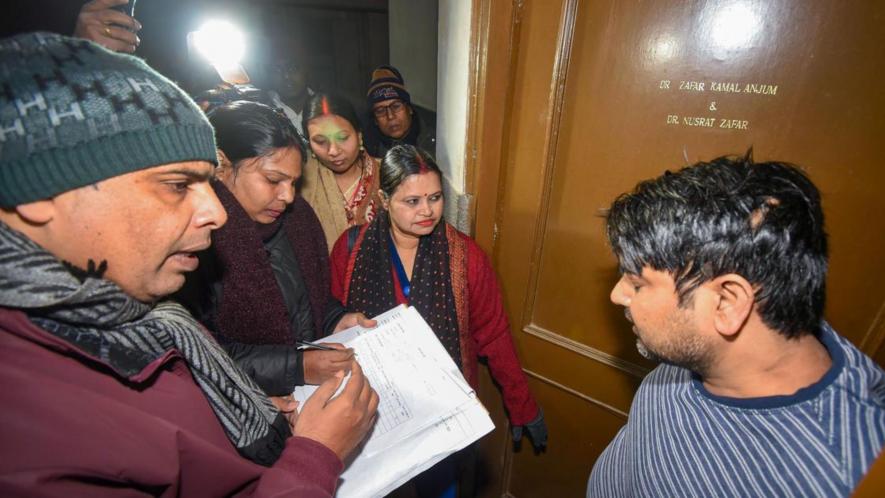
Enumerators receive information from a Patna resident during a caste-based survey in Bihar. Image Courtesy: PTI
After the Bihar government released a broad composition of the caste-wise population of the state in October, it recently released the statistical findings on the socio-economic status of the state’s population. The data shows that the Other Backward Classes of the state constitute 63.13% and the non-Muslim upper castes constitute just 10% of the population. As a single caste, the Yadavs constitute the largest number, 14.27%. The picture is as follows:
The castes that make up the backward (27.13%) and most backward communities (36%) together constitute 63.13% of the state’s population. The general category castes, which constitute the Brahmins, Bhumihars, Kayasthas and Rajputs, constitute just 15.52% of the population.
In other words, the Yadavs are virtually as large a social group as all the communities that make up the general category in that state.
If the Muslim population is excluded, the Hindu OBCs constitute 50% of the population and the upper caste (general) category constitutes just 10%.
Impact of Caste Census
An immediate question arises, how would the caste census play out in terms of judicial decisions at the Supreme Court level? The 50% cap imposed on all reservations is based on a moral premise raised by the court. Once such authentic data of caste composition is placed before the court the cap would have to go.
Once a caste census is conducted at the all-India level, the whole political structure will undergo a radical change.
This understanding of social composition was the reason why the Dwija caste leaders in all parties were afraid of collecting caste-wise Census data.
After the caste-wise socio-economic and educational data was tabled, the Bihar government decided to increase the OBC reservations to 65% in the state. Including the EWS reservation, the reservation in Bihar would now rise to 75%.
This decision of the Nitish Kumar and Tejashwi Yadav government will create an ideological crisis for the Bharatiya Janata Party. It will also force the judiciary to relook at its 50% cap on quotas, now that a solid database can be placed before it, at least from one numerically large state.
Poverty Indicators
Let us also look at the caste-wise poverty levels in Bihar. Those who earn less than Rs 6,000 per month are considered the ‘poorest of the poor’ in any state. That is, these families earn less than Rs 72,000 per year. In the 21st-century and in a globalised world, such a poor income can hardly sustain a wife and husband and their two children.
The poverty line defined by the erstwhile Planning Commission’s economic surveys and the existing Niti Aayog’s surveys establish that Bihar is the most poverty-ridden state in India, after which come Uttar Pradesh and Madhya Pradesh. For this reason, along with Rajasthan, these states are also clubbed together as the ‘BiMaRU states’.
Now, the Bihar caste census data shows the caste-wise poverty situation for the first time. It is seen quite clearly that 42.93% of the Scheduled Castes are living in absolute poverty. The Scheduled Tribes follow the Scheduled Castes in terms of having a poverty ridden life with 42.7% among them absolutely poor.
The Extremely Backward Classes constitute the largest grouping in population terms, but in terms of poverty they are worst-off among the OBCs—33.58% of them fall in the category of the poorest of the poor.
Further, 33.16% of the OBCs are in the most poverty-ridden category. The data shows that the Yadavs, though numerically dominant, have 35.87% in the most poverty-stricken category.
Indeed, a section of the Brahmins—25.32%— and 27.58% of the Bhumihars, followed by 24.89% of Rajputs suffer from poverty. The least poverty ridden caste is the Kayastha, among whom 13.38% are poor.
However, we must understand that even among the ‘poorest of the poor’, those who belong to the historically oppressed castes are more lacking in education and caste capital.
Therefore, when we examine caste as a unit, the Scheduled Castes, Scheduled Tribes and EBCs of Bihar need a lot of welfare push apart from mere reservations.
The agrarian productivity in Bihar needs to be upgraded because the state hardly has any industrial capital. In terms of economic vibrancy, its urban locations, including the state capital Patna, though known as ancient Pataliputra, is nowhere close to even a district headquarter in a South Indian state. Unless the state’s productivity is upgraded, pushing its vast population above the poverty line is impossible.
National Implication of Bihar Data
One major implication is that several states are now forced to collect caste-wise data. The Rajasthan and Andhra Pradesh governments have already started collecting caste-wise data.
After the Bihar caste data was released, the Congress party’s All-India Congress Committee met and decided that caste data will be collected wherever it is in power. When the Congress comes to power at the Centre, it would make the caste census part of the general census enumeration, done once in a decade.
This new development is a shocker to the Rashtriya Swayamsevak Sangh (RSS), which is ruling the nation through its brainchild, the BJP. The reason is simple. The RSS was for removing reservations and forbidding any discussion on caste identity. Their idea of social engineering was to convince the Dalit/Shudra masses that the Hindus must unite to fight Muslims and Christians, not to expand caste identities and create a crisis in the Dwija-controlled Sanatana Dharma.
With great reluctance, they allowed Prime Minister Narendra Modi to use his OBC identity in the 2014 election for vote-garnering purposes. They perhaps believed that he would manage the nation as he managed Gujarat by constantly using ‘Muslim appeasement’, ‘Muslim enmity’ and ‘Pakistan threat’ and so on, without allowing the caste question to enter the political discourse.
But India is not Gujarat. Modi’s caste identity and his vote mobilisation based on caste identities in North India, particularly in Uttar Pradesh, became the driving force for the Mandalites to push the caste identity issue towards its logical end.
Now the RSS/BJP will be forced to take a stand on the national caste census. If they avoid the issue, the entire Shudra/OBC masses will come to realise that their vote power was only used to consolidate Dwija power.
The Prime Minister has repeatedly said in his 2023 state election campaigns that his government has made 27 OBCs ministers. He has also been saying that the caste census will divide Hindu society.
Such arguments will only show that they do not want to uplift the historically oppressed OBCs at the ground level. A caste census is about allocating resources and planning for the welfare of each community, based on its actual status and led by scientific data. No party can avoid the question of caste census now.
The author is a political theorist, social activist and author. His latest book is The Clash of Cultures—Productive Masses Vs Hindutva—Mullah Conflicting Ethics. The views expressed are personal.
https://www.newsclick.in/bihar-economic-data-turning-point-democracy


You must be logged in to post a comment.