-
Beauty, Caste and ‘Miss India’ Contests
Leader of Opposition Rahul Gandhi has touched a raw nerve and has rocked the core cultural preserve of the casteist ‘parampara’ upheld by Hindutva forces.
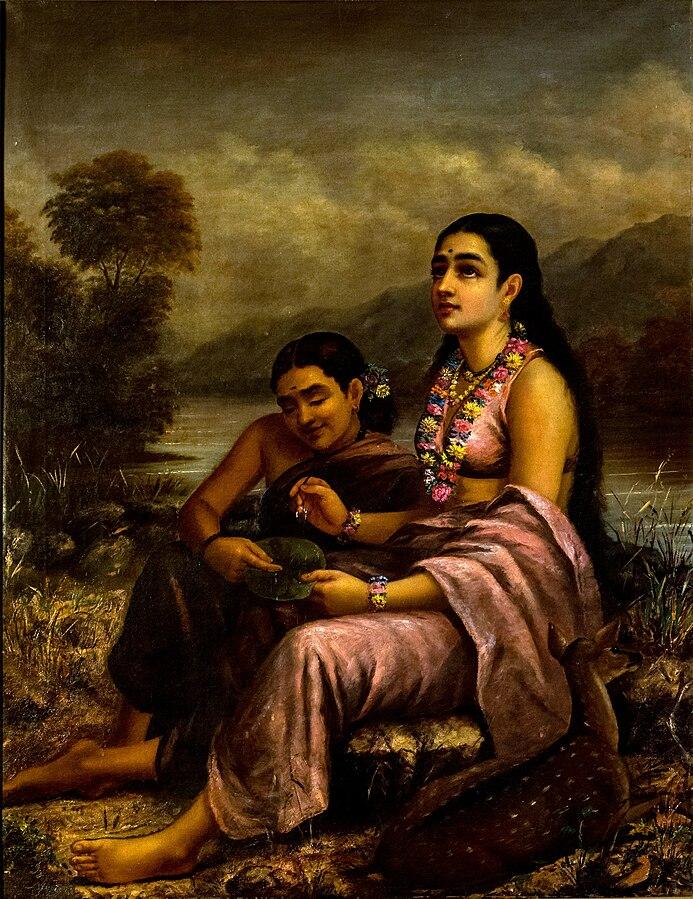
A Raja Ravi Verma painting. (Image credit: Wikimedia Commons)
Congress leader Rahul Gandhi in his Prayagraj meeting on August 24, 2024 said that “90% Indians do not figure even in the Miss Indiacontest”. As a response to this statement, the Parliamentary Affairs Minister Kiran Rijiju said Gandhi’s reflected only his “Balak Buddhi”(childish mentality). This phrase to target Rahul Gandhi was also used by Prime Minister Narendra Modi in Parliament debates earlier. The question, however, is: what is the truth about 90% Indian women and participation in Miss India contests and selection of Miss India, and then moving forward to the global pageant for Miss World?
This whole Miss India contest has set a standard for beauty of women. It has become a cause of huge celebration as well as social and cultural status. In the pre-Independence era, it was impossible to imagine a Brahmin or a Kshatriya woman participating in such a body display of ‘beauty’. But, in post-Independence India, it is the upper caste young women who train themselves for this achievement with some already winning the contest. But the idea of ‘that beauty’ lies in caste, colour and education stereotypes.
The very idea of beauty in India is constructed around a certain type of complexion and a woman’s social location in terms of caste and class. Those who judge and define which woman is ‘beautiful’, as well as participants who reach that platform, are all aligned in terms of caste, complexion and wealth.
Dalit/adivasi/OBC (Other Backward Classes) women cannot reach the beauty contest platforms because these are out of their reach. Both judges and participants draw heavily from the written and painted visual images of beauty from ancient Sanskrit books. The modern paintings of a model beauty also draw heavily from those textual narratives.
In India, the idea of woman’s beauty basically comes from mythological books, described by the writers in Sanskrit, as well as paintings that influenced the very same caste and class people. A writer as an influential intellectual narrativised the women of those castes and classes, and the painter enfigurated it as an art, either from those textual narratives or from their existential life. For example, the modern Indian woman’s beauty is governed by Raja Ravi Varma’s paintings of mythological women in multiple colours. The standard beautiful women in those paintings happen to be Saraswati, Lakshmi, Parvathi, Sita, Shakuntala and so on. Ravi Varma never painted Surpanakha as a beautiful woman. Nor did his paintings show any working woman as beautiful. In mythological texts, all Shudra women were supposed to be working women and were not supposed to be beautiful, Such women’s caste and their labouring life in the fields itself determined the definition of beauty. The beautiful goddess Saraswati never was meant to give them education and beautiful goddess Lakshmi was never meant to give them wealth. This long-lasting mythological relationship between beauty and caste did not disappear in Independent India. Text books that children read continue to inject the very same idea of beauty.
The description of Varudhini’s beauty and her love affair with Pravarakhya, in Markandeya Purana, is described in many school books. Let us remember that these narratives of beautiful women have been set in the caste background of Brahmins or Kshatriyas. The Shudra and Vaishya, ‘Mlecha’ women are never described as beautiful in what the Right-wing scholars and leaders now call “Hindu Books”.
The same idea of a woman’s beauty dominates our film industry, TV serials, anchors and presenters.
It is an undeniable fact that there are thousands of women from Shudra/Dalit and adivasi communities who were as beautiful as the mythological women, if not more. Where is a description of them in mythological books? Except some Gopika women narratives in a negative sense in Mahabharata around Krishna’s life, no women’s beauty narratives of Shudra/Dalit/adivasi women ever got written or painted.
The notion of a woman’s beauty runs through modern cinema, TV serials, TV anchors and also stage anchors. This notion gets extended to women’s beauty contests where fame, publicity, popularity, money and glamour are involved. From where do the Miss India selection committee members draw their notion of beauty? What castes do they come from? Most of them invariably are from the upper castes and draw their idea of beauty from mythological books, Ravi Varma paintings and daily discussions about the very same standards of beauty in their drawing rooms and dining tables. Framed paintings hang on their walls.
The cinema and TV industries select women of ‘that beauty’ plus modern English education and their adaptation to designer clothes. The Shudra/Dalit/adivasi women have no access to these things even now.
In the West, the idea of women’s beauty is consciously getting diversified with the inclusion of black, brown and other women, not just white. We can see this in their cinemas and on television. There are no ‘divine standards’ for beautiful women in the Western civilisation.
In India, such inclusiveness of women in all fields is not yet a norm. Rahul Gandhi is now talking about such unusual things as a changemaker. Certainly, in traditional and conservative discourse and political postures, changemakers are attacked as ‘childish’, what in Hindutva language is termed as ‘Balak Buddhi’.
Even in normal liberal discourse, issues such as which caste represents India as Miss India or Miss World, are considered immature and childish. But at least one politician, now Leader of the Opposition, is raising these questions. Should they dismiss him as childish?
If one looks at the list of women who won the Miss World representing India, one can see the connection between caste and English education.
The first Miss World in 1966 was Reita Faria, a converted Catholic Christian upper caste woman from Goa. The second was Aishwarya Rai, another well-educated upper caste woman from Karnataka’s Konkan region. The third, Diana Hayden, fourth Yukta Mookhey, fifth Priyanka Chopra and sixth Manushi Chhillar.
We all know how Aishwarya Rai and Priyanka Chopra became globally popular actresses by using the Miss World status. They all have caste-class status with good English medium education. All of them first became Miss India and moved on to become Miss World.
If such questions are raised by Shudra/Dalit/adivasi men or women intellectuals, the ‘others’, who represent the high moral, casteless, pretentious intellectuals, ignore or dismiss them as foolish. When a leader like Rahul Gandhi talks about these things, at least a section of the media notices while the ‘other’ (in this case, the ruling force) responds. That itself contributes to change- making.
The metaphor ‘Miss India’ is politically powerful. The absence of 90% Indians in all fields, including in the realm of representing ‘womenness’ by women themselves because they are born Shudra or Dalit or Adivasi, is very creative.
In an ideologically oppressive culture, the idea of parampara (tradition) that the Rashtriya Swayamsevak Sangh/Bharatiya Janata Party intellectuals and leaders term as nationalistic, that parampara in the cultural realm of beauty comes only from certain books, which transcends into paintings and practice in real life. That, in fact, is not nationalism.
Raising questions about that realm, therefore, touches a raw nerve that parampara, and exposes its mapping onto modern civil society and state.
Rahul Gandhi has rocked that core cultural preserve of the casteist parampara. One hopes that those who need change and want to be included in every sphere, including in the Miss India and Miss World pageant, understand this.
The writer is a political theorist, social activist and author. He is
former Director, Centre for the Study of Social Exclusion and Inclusive Policy, Maulana Azad National Urdu University, Hyderabad. The views are personal.
https://www.newsclick.in/beauty-caste-and-miss-india-contests
-
Why caste census is critical to implement SC’s quota-within-quota ruling
Kancha Ilaiah Shepherd
The judgment will have implications for all categories of reservations – SCs, STs, and OBCs. Across the country, various castes have sought their accurate due in their respective states and also in the central pool of reservations. Representational image: iStock
Centre can’t throw the ball in the states’ courts, for any data collected by states will not be accepted as credible and objective; only a national caste census will do
The recent Supreme Court judgment approving sub-classification within
Scheduled Castes (SCs) and Scheduled Tribes (STs) for reservation in jobs and education has produced conflicting opinions in many quarters.
Though the seven judge Constitution Bench was supposed to address the sub-classification demand among SCs for reservation in united Andhra Pradesh and Punjab, the judgment brought under its ambit all states and also the national reservation pool.
Hence, it will have far-reaching consequences at the level of implementation.
OBC classification
Though the Supreme Court was dealing w the issue of sub-classification within SCs, the judgment is equally applicable to ST and OBC categories to ensure justice. Currently, OBCs are sub-categorized in some states but not in others.
However, the division is not based on empirical data, and the demand for one is longstanding.
Among STs, too, various conflicts have arisen based on perceived injustice to some tribes. In the North East, it has sparked major clashes.
In Telug states, the conflict between Lambadas and forest tribes such as Koyas and Gonds is as serious as the Mala and Madiga conflict.
The apex court ruling
The Supreme Court’s 6:1 judgment, if put in simple language, is this: The demand for sub-classification of castes to ensure a proportionate share in the reservation pool to the marginalised among them is justified and constitutionally valid.
At the same time, it also said that such sub-classification in the reservation pool should be just and based on objective data of the caste with valid proof that the particular caste’s share in the given category is inadequate compared to its proportion in the caste population.
So far, all judgments about reservation share had been given on subjective reasoning. For example, the 50 per cent cap of the Supreme Court was a subjective limit in the absence of accurate caste census data.
The 10 per cent reservation to Economically Weaker Sections (EWS) was also a subjective decision, in the absence of any credible caste-based economic backwardness data. The Supreme Court assumed that 10 per cent of the general castes are poor, who cannot afford education for their children and compete with the rich among the upper castes.
Need for empirical data
But the Supreme Court, while allowing the sub-classification of castes, also mandated that credible data about the real strength of each caste and its position in the reservation quota – while adjusting the quota based on its total population in relation to other sub-castes, which are said to be benefitting more than its population share – must be collected.
In other words, the judgment directed the Union government to conduct a caste census, like the one done in 1931, as a pre-condition.
That is because even though the total population of SC/STs and their percentage in the total population is known through the national general census, the strength of each sub-caste in each state, or even in the country, is not known.
Even the total strength of OBCs vis-a-vis the general castes and SC/STs is not known. Only a caste census can reveal those figures.
Wide implications
And yet, the judgment will have implications for all categories of reservations – the SCs, the STs, and the OBCs – because across the country there are demands of each caste that it must get its due accurately in a given state and also in the central pool of reservation.
Such demands grow as more and more members of each caste, in all three reservation pools, get higher education degrees. It will come up in the general categories, too, in future.
The question of sub-caste share in the existing reservation pool is not restricted to SCs and STs only. It is a major problem in the OBC category, too, which has a 27 per cent reservation share.
Ball in Centre’s court
Several castes among OBCs have been seeking their just share within the category.
For example, the Dhangars of Maharashtra fought for their share and finally got 3.5 per cent in that state. But they have no share in the UPSC examination. This judgment must be implemented by the UPSC also.
The Marathas are fighting for a share of the reservation pie. When the Maharashtra government gave them 10 per cent over and above the 50 per cent cap, the courts struck it down. Now they are demanding Kunbi certificates and want to fit into the existing 27 per cent OBC quota of that state and Centre. Similarly, the Patels (Patidars) in Gujarat have been fighting for their share in reservations.
All these movements are based on subjective projections of their sub-caste population. What is more problematic is that the Supreme Court has decided on the 50 per cent cap on a subjective criterion. It also has decided on the 10 per cent EWS reservation without any national-level poverty data among the general castes.
Therefore, the Centre cannot merely throw the ball in the states’ courts. Any data collected by the states in any mode will not be accepted by the courts as credible and objective.
Centres reluctance
Yet, the Union government, while arguing for sub-caste reservation in Supreme Court, keeps dragging its feet on a caste census.
This despite Prime Minister Narendra Modis promise to do justice to several SC sub-castes in different states during Lok Sabha election rallies earlier this year.
For example, he addressed a public meeting of Madigas in Telangana and promised that his government would support their demand for sub-classification of SC reservation. The BUP wanted the votes of the Madigas – the biggest Dalit sub-caste in Telangana – both in the 2023 Assembly elections and the 2024 parliamentary elections.
The Centre’s reluctance to get a caste census done is understandable. The UPA government had also collected caste data in an additional schedule but refused to release it because of pressure from non-Shudra castes.
The main hurdle to a caste census comes from opposition from Brahmin, Bania, Kayastha, Khatri, and Kshatriya castes.
Earlier, the Shudra upper castes such as Jats, Patels, and Marathas had also opposed a caste census but they are no longer opposing at the Delhi level.
Rule of upper castes
After 1931, caste census was discontinued because the same five castes named above, colonial rule and in the early days after Independence, were against continuing the caste census.
In fact, intellectuals from the Dwija castes argued that the caste system itself was a colonial construct. The very same forces also argued that authentic Indian civilization could be seen only through the Vedas. Varna and caste were critical categories of social division in the Vedas, the Ramayana, and the Mahabharata.
Since the Shudras/OBCs, Dalits, and tribals were illiterate, this myth could be passed on as the truth. The blame on colonialists for ancient, medieval, and pre-colonial institutions was passed unopposed.
But now it does not work. There are enough intellectual forces among the Shudra/Dalit/Adivasi masses. In fact, they emerged from the existing reservation system across the nation, both in education and employment. This new intellectual environment has engendered new fears among the Dwijas, in whichever sphere they work.
CJI’s wisdom
CJI DY Chandrachud knows the implications of reservation or affirmative action in the process of social change. As it is well known, he has done his PhD on affirmative action with a comparative framework from Harvard University, US. He put that seal of wisdom on our Supreme Court, no doubt.
The Centre has to respect that judgment by ordering a caste census along with a general population census forthwith.
Since the very same Modi government has enacted a law by granting reservation based status data of each caste in the country.
(The Federal seeks to present views and opinions from all sides of the spectrum. The information, ideas or opinions in the articles are of the author and do not necessarily reflect the views of The Federal)
About the Author
Kancha llaiah Shepherd is a political theorist, social activist and author. His latest book is The Clash of Cultures – Hindutva – Mullah Conflicting Ethics.
-
How Labour Produced Philosophy, Not Books
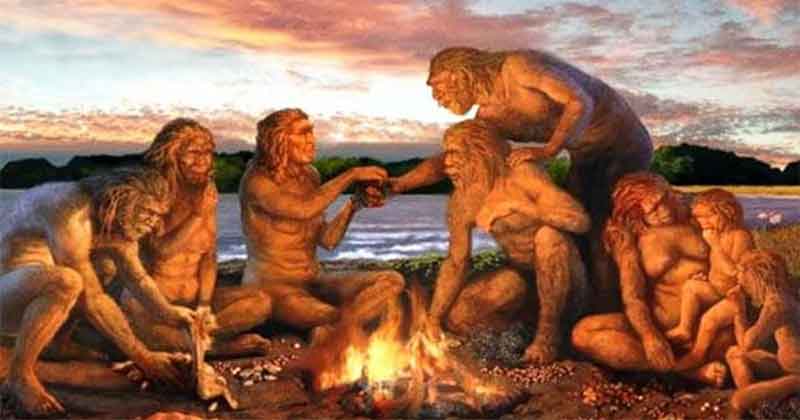
Historically there were two streams of philosophical discourses in the world, more particularly in India: The first one was the philosophy of people, who involved in production—agrarian, artisanal, animal economy and so on. The second one was the philosophy of saints, sadhus and sanyasis, who always remained outside production and lived for their own self- salvation. The idea of self -salvation was related to the post-life imagination of the well-being of a person in heaven. This heavenly life was/is totally imaginary. To continue to live here on this earth one has to eat on a daily basis. For that human beings have to labour. Both hunting and producing food from the earth involved labour. The saints, sadhus and sanyasis always remained away from labour, but continued to eat food that was a byproduct of labour. When both, while hunting and producing food, human beings had to create new ideas on a daily basis as well. The human philosophy of life took shape at this stage itself.
In India the idea of self- salvation has taken such a route that it moulded a self-salvational social group that has become a caste in itself. This is where the idea of Brahmin evolved. It also had an idea of re-birth in caste and family where they get good food without working on the land. They negated land and labour relationships as negative. This mode of thinking constructed a second mode of philosophical thinking. Unlike in the rest of the world anti-production and anti-labour philosophy took a deeper root in what they call the Vedic period.
The first type of philosophical idea of life remained mostly unwritten and carried through oral transmission from generation to generation. This we shall call the philosophy of production and reproduction. Unlike among animals among human beings production and reproduction of humans themselves were/are inter-related. The human factor of labour was/is an inherent process in production and reproduction. The first school always recognized how production is a source of life and how labour enhances human reproduction abilities so that life continues to exist.
Without the existence of the first school, there is no life in the second school. The people who lived in the realm of the second school of thought were/are parasites, totally dependent on the first school for improved food and housing. But unfortunately the second school had written and codified ideas and treated the philosophy of production as mean. Because of the life of leisure, anti-labour and anti-production the second school could construct a book based philosophy and started controlling the food producers. That thought was transferred through written texts, at least for a period of three thousand years or so, from one generation to another within their small community and treated the production force as unworthy of respect. This destroyed the country’s potential to advance by using its full potential of labour and knowledge. There is a total disconnect between the two schools now.
The food and goods producers were philosophically engaged with nature as a source of ideas, imagination and concepts. But the saints and sadhus were self-centered and their knowledge was purely perceptual without connecting itself to creative experiments. They never engaged with nature as a multiplier of resources. Nature constantly reproduces itself. As parts of it keep dying and its rebirth takes place at the same place. Those who are constantly engaged with nature understand birth, death and rebirth is a constant process in nature. They observed nature for millennia while living as part of it, without the ability to connect between nature and an unseen force, what later was called God. Abstraction of an idea from the material process was happening around human beings and this was a much later development.
The earliest philosophical imagination of God was formulated in the production fields only after domesticated plant and seed production—what was called agriculture- developed.
Understanding God and depending on the belief that God was with them here in this life and after life came into human belief in the process of struggle for food. After all, the basic human life sustains with food. A child needs food to survive and grow before the child thinks about the environment around it. The idea of God among children is a social construct but not an individual imagination. Child does not start its life praying to God but it starts life by drinking mother’s milk. Baby animals also start living in the same way that human babies start by drinking milk from their mother’s udder. A thinker who believes in an idea that God is first and the idea of food is later, would say that God created that early impulse among all babies to go to mother’s udder or breast and drink milk both among animals and humans. But the idea of God does not exist in the child’s mind in the same way that it does not exist in any animal, baby or adult. The idea of God came into human life when human consciousness had grown and became complicated.
Not only human beings, but animals also need food during their whole living period, which do not have the idea of God. The idea of God was/is a philosophical one, which also goes along with the idea of creation of the entire universe. Before any written text—Bible, Quran or Rig Veda about God —human beings who were engaged with nature encountered dangers, uncertainties, fear and anxiety. However, the fear of death, which was/is common to both humans and animals, was taking away many fellow beings living and working with others who were still alive. Such a complex idea of death forced them to believe that there was/is unknown and unseen power, which they thought, was responsible for the death. This search for an unknown power began a second major revolution in human existence after the first major revolution of producing food under their control from the land and seed relationship.
The living people talked about God as cause for all those things happening. The search for causation of happenings, when visible answer was not found, they concluded that there was an invisible force, operating to create all such conditions. Let us remember that the whole search for things started with their search for food in the beginning. Then they searched for causation of human death and sorrows as they began to grow more and more conscious about their being. They discovered the God who could not be seen and touched. All this happened before the Aryans arrived in this land, India.Name: Email:
They asked for God’s blessings much before the written books came into existence when they were ridden with fear, anxiety, disease and so on. They must have thought that support was needed for having a safe living, for living better and for continuing their labour as a source of life. If they cannot go to work with diseases because of fear or of hunger, not just one adult who fell sick, but the children around the working person—man or woman—would die. The strength to labour was far more important to procure or produce food. Fear of the future and the source of energy to labour in a powerful nature made them think and rethink for solace. To some extent such solace came from the idea of God.
That invisible support would give better results in the fields, at home (after humans built a house) and in the fields of production and food gathering. The idea of God is a civil societal idea, not an individual idea. Gradually that idea took the shape of religion. But religion was not the source of philosophy. Religion used philosophy for its hegemonic role in later years. In India the Vedic religion used the idea of God by those who never were willing to work in the fields of production for mobilization of food and life resources to constantly control and exploit people who worked and produced food. In other words it was labour that discovered God not the anti-labour saint or saadhu. Once the idea of God took root, philosophy grew around it in a much more complicated way. Religion is a by-product of this complication.
Kancha Ilaiah Shepherd is a political theorist, social activist and author.
https://countercurrents.org/2024/08/how-labour-produced-philosophy-not-books/
-
Kamala Harris’s political ascent is a sociological miracle
Kancha Ilaiah Shepherd 31 July 2024
If Kamala Harris becomes the US President with her African-American image, the Indian diaspora, which hardly engages with black Americans, will have a conflicting situation. Image: X/@KamalaHarris
Harris’s lifestyle and dress code spell equality; irrespective of whether she wins or not, she has become one of the most followed changemakers in US history
Way back in 1996, when I wrote in my book Why I am Not a Hindu, that India will change when a Brahmin Dalitises himself/herself, that idea was pooh-poohed by
Indologist pundits who critiqued my book saying that such a thing is not expected to happen. Their contention was that the process on course was Sanskritisation of Shudras/Dalits adopting the lifestyles of Brahmins.
I do not know what they will say about Marathas asking for Kunbi caste certificate to get OBC reservation and many Shudra/OBCs asking for the status of either Adivasi or Dalit to get into the reservation bracket.
What will they say about the North Indian Banias taking OBC certificates and claiming reservation? How can all this be called Sanskritisation? In my view, this is nothing but Dalitisation of caste society, not Sanskritization, as hardly any caste is asking for Brahmin certificate these days.
West-side story
While this is happening within India what is happening among the Indian diaspora in the West?
What happened in the US to Kamala Devi Harris, a Brahmin Indian-origin American woman, is a sociological miracle. She has claimed the status of an African- American, not just because of her black father.
Her mother, Shymala Gopalan Harris, a Tamil Brahmin migrant, looked like a black woman and lived most of her life in the black neighbourhood in the University of California Berkeley area even before her marriage. She actively participated in Martin Luther King Jr’s civil rights movement.
After her marriage to Donald Harris her two daughters, Kamala and Maya, were raised in black neighbourhoods and studied in black dominant schools. Her husband and Kamala’s father Donald Harris, a Jamaican-American economist, who now lives in Jamaica after divorcing Shyamala, was also a changemaker.
Black heritage
Kamala had a choice to claim her mother’s ancestral Brahmin brown conservative heritage or go by her parents’ radical Christianisation process, along the Black Life Matters route. She chose her black heritage and fought against the white racist narrative in her youth and thereafter.
Kamala has already made history by becoming the US’s first black woman Vice-President. That was an unthinkable sociological phenomenon just a few decades ago.
Now, the Africanised black-brown Brahmin woman, Kamala Harris, is poised to become the presidential nominee of the Democratic party.
Once nominated by the Democrats, she will fight against the purported white racist and anti-women Donald Trump. If she wins she will be the first woman as well as first black woman president of the US. That would be the biggest changemaker role in the world.
Radical change
The racial and patriarchal history of the US will undergo a radical change. In the 250 years history of its constitutional democracy, the US never allowed a woman, white or black, to occupy the White House. All women so far were First Ladies playing an assisting role to their president-husbands.
Kamala will be a man-like woman, making her husband a First Gentleman who will have to take care of his ‘most powerful wife on Earth’.
When Barack Obama became the first black president of the US, except a few white supremacists, the majority celebrated his victory and he proved to be a successful president, governing the US for eight years. But that has not changed the fundamental patriarchal nature of the White House.
What is interesting is that many Indian-origin men and women are trying to capture power in the West. Rishi Sunak has already ruled Britain as Prime Minister for more than a year, declaring himself a Hindu repeatedly.
Hindus in the West
The Christian world saw Sunak worship idols at 10, Downing Street, which in the past was seen as blasphemy.
However, Kamala is a Christian by faith. If she were not so she would not have got the Vice-President’s position in that country and would not have got a chance to be the presidential candidate. Of course, there are others who want to be Hindu and get into the White House.
Vivek Ramaswamy, a vegetarian Brahmin of Indian origin, tried his luck but failed. Now he hangs around Trump to get some plum post if the latter wins.
There is also Usha Chilukuri, a woman of Brahmin origin from Andhra Pradesh, as wife of JD Vance, the Vice-Presidential candidate, who calls ‘Kamala a childless cat’. Usha openly declared her Hindu vegetarian cultural values and yet an American in the conservative Republican Party. While her husband remains a conservative Christian she successfully converted him into vegetarianism.
American Christian evangelists think that some of these trends are dangerous. They think such trends threaten their Biblical evolution and anti-idol worship civilisation. Usha’s Hindu Brahminism, along with her husband’s conservative mentality, may cause Trump’s defeat and Kamala’s victory.
America’s spiritual bill
Unlike Britain, which allowed a Hindu idol-worshipping Sunak to be the PM, the US may not allow a person of a non-Christian faith to be the president. However, Kamala suits their spiritual bill as well.
If Kamala becomes the president with her African-American image, the Indian diaspora, which hardly engages with black Americans, will have a conflicting situation.
The rich Indians, particularly right-wing Hindu Indians, are Trump donors and voters. Trump was a Modi endorsed candidate earlier in 2020. That is the line of the RSS/BJP, perhaps even now. They see Democratic Party and Kamala Harris as leftliberal. She has not visited India as American Vice-President. That is where the catch is.
Indian-Americans try to avoid black and brown gender relationships and try to move with white folks. Unlike Shymala Gopalan and Kamala Devi, they like to live around white neighbourhoods or their own Indian (not even South Asian) neighbourhoods, with ‘pure vegetarian’ parties among themselves.
Kamala’s dress code
Of course, the men in the US wear suits at such parties and women in Indian sarees and half-body covering blouses like Hindu nari. Kamala Harris presents herself in a well-designed full suit like an American man.
Her dress code seems to have made even American women learn how to be man-like among American men and women, with blistering confidence. Her lifestyle is one of equality.
Whether she wins or loses, Kamala Harris has become one of the most followed changemakers in US history. I am a deep admirer of her Africanisation, changemaking role as a woman of Indian origin.
She will be a role model for millions of women all over the world for centuries in future. I hope she wins and makes her husband the First Gentleman in the White House.
(The Federal seeks to present views and opinions from all sides of the spectrum. The
information, ideas or opinions in the article are of the author and do not necessarily
reflect the views of The Federal.)
Kancha Ilaiah Shepherd is a political theorist, social activist and author. His latest book is The Clash of
Cultures — Hindutva — Mullah Conflicting Ethics.
-
Farmers’ Heroine Vs RSS’s Heroine
Kancha Ilaiah Shepherd | 13 Jun 2024
The attitude of the RSS/BJP leadership, terming protesting farmers as Khalistanis, is what has given courage to Ranaut, who, instead of asking for action against Kaur, has dragged entire Punjab into the controversy.
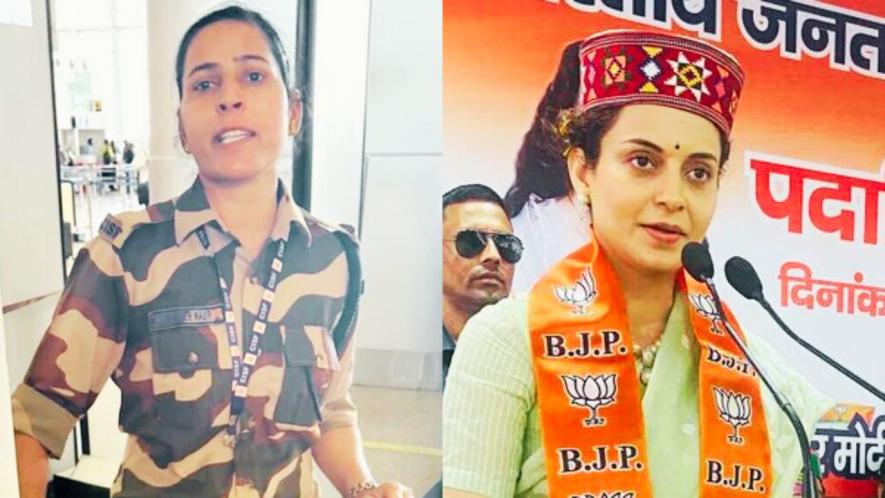
Image Courtesy: Twitter
Suddenly a young paramilitary woman in uniform by name Kulwinder Kaur became more popular than a well-known RSS/BJP newly elected MP, the rabble- rousing Bollywood actor, Kangana Ranaut. Kaur became a household name in Punjab as well as attracted attention globally. She has become the heroine of farmers, who fought and won a two-year battle against the very powerful Rashtriya Swayamsevak Sangh-Bharatiya Janata Party government, headed by Narendra Modi.
Ranaut contributed her might to keep the farmers’ anger boiling, in an unforgettable manner. Punjabiat, particularly farmer Punjabiat, is a very nationalist and self-respecting sentiment, with enormous will for self- sacrifice. Revolutionary freedom fighter Bhagat Singh did that. In the airport named after him, Kaur did another unusual thing in the history of women policing. She took revenge against Ranaut (for publicly demeaning the farmers’ struggle), who is now a BJP MP.
Kaur is daughter of a farmer in Punjab. Through hard work she got a job in the Central Industrial Security Force (CISF). She was on duty at Chandigarh’s Shahid Bhagat Singh Airport, which is located in Haryana state land. Her entire family, including her mother, Veer Kaur, were part of the historic farmers’ struggle against the RSS/BJP government that brought out three farm laws that were meant to hand over the entire agribusiness of India to the Adani and Ambani corporate monopoly houses in 2020.
Ranaut, a pro-RSS Hindi cinema actor, who was admitted into BJP, was given a ticket to contest from the Lok Sabha seat of Mandi, Himachal Pradesh, where her caste Rajput (Kshatriya) population is significant. She won the election.
On June 6, she was travelling to Delhi. At the airport there was reportedly a scuffle between Kaur and Ranaut, who, through a video message, alleged that Kaur slapped her at the security check. She did not reveal how that scuffle took place. Once the video went public, Kaur was suspended and a case was registered by the Haryana police against her.
But in the same video, Ranaut said that aatankwad (terrorism) is growing in Punjab, suggesting that Kaur’s action was part of ‘that Punjab terrorism’. The people of Punjab, particularly farmer organisations, took offence to her statement and protests erupted. On June 9, a massive rally was organised by the farmers in Mohali.
Veer Kaur, while defending her daughter’s rebellion against Ranaut at the airport, said that “Kangana must have instigated her (Kulwinder) by using inappropriate language, claiming that her daughter wouldn’t have done this otherwise”. The kisan (farmer) leaders also alleged that “when Kulwinder asked Kangana to deposit her phone and purse for security check, she was alleged to have called her “Khalistani” just by looking her name ‘Kaur’ on her uniform badge.
The facts of the case will have to be established only by an enquiry committee. The Haryana government has already constituted a SIT (Special Investigation Team) to go into the details of the ‘scuffle’.
Though Ranaut comes from a middle-class Rajput community, after turning into a film actor, she started speaking like a hardcore RSS activist. She has come to be identified as a ‘RSS heroine’. Since the RSS/BJP government at the Centre treated the protesting farmers, whose labour feeds the nation, as an un-Indian social force, Ranaut seems to echoed the same thought.
The actor went a step further and in 2020, had termed the farmers terrorists and the women, fighting for their rights, as “women available for Rs.100/”. Kaur was heard saying in the airport CCTV footage that her mother took part in the farmers’ protest and she had (Kangana) abused her with a slur that she was there in the protest having taken Rs 100. Kaur later said she was willing to forgo her job for what she did.
Ranaut has had quarrels with many within Bollywood. As a person, she seems to be individualist and freedom loving to the extreme. The RSS/BJP normally does not approve such female individualism, as they stand for classical conservative ‘Hindu Nari’ life. But in Ranaut’s case, they went out of the way and gave her a BJP ticket.
Though the RSS/BJP combine knows that Ranuat has a history of using abusive language against farmers of India when they were fighting against the dangerous farm laws, yet they admitted her into the party. The RSS/BJP Central government went on supporting her. In 2020, she fought with Sanjay Raut of Shiv Sena. She was given a Y-security by the Central government. Now, they have brought her into Parliament itself, and she has started her usual activity of creating conflict and controversy before even taking oath as MP.
Ranaut just did not allow the issue to die down by condemning the act of the alleged slap but went further and characterised the whole of Punjab as a terrorism breeder. This has widened the ground for conflict. No RSS/BJP leader tried to intervene to say that characterising the whole of Punjab as a breeding ground for terrorism is wrong. They know that Punjab is not Kashmir.
However, ever since the farmers’ movement was led by the Punjabi Jat and other Shudra/OBC/Dalits (both Sikhs and non-Sikhs) communities, the RSS/BJP forces have attacked them as Khalistanis. The farmers’ struggle against the farm laws was an all-India food producers’ problem. The RSS/BJP intellectuals, cultural leaders come from Dwija non-agrarian background. They began to attack them as if they too were Muslims. This attitude of the RSS/BJP leadership is what has given courage to Ranaut.
The actor kept tweeting against the protesting farmers, in which about 700 people were killed over a period of two years of historic struggle. Replying to a post on X by international celebrity Rihanna, Ranaut had called the singer a “fool” and said, “No one is talking about it (the farmers’ struggle) because they are not farmers they are terrorists who are trying to divide India, so that China can take over our vulnerable broken nation and make it a Chinese colony much like USA… Sit down you fool, we are not selling our nation like you dummies.”
The whole of Punjab is up in arms against Ranaut, who, instead of asking for action against Kaur, has dragged the entire state into the controversy.
The issue may come up in Parliament once the session starts (in June third week). The RSS/BJP combine has shown its unwillingness to treat farmers as respectable nationalists. Generally, there is a view that the RSS/BJP forces are not just against Muslims, but are against the Shudra/OBC food producers, who do not go along with their ideological agendas.
The writer is former Director, Centre for the Study of Social Exclusion and Inclusive Policy, Maulana Azad National Urdu University, Hyderabad. The views are personal.
-
Why India needs to restrict prime ministers to two-term rule
Three terms for any person in the prime ministerial post with a clear majority could lead to authoritarianism. During Nehru’s time itself, the Congress should have brought in a limit of two terms, writes Kancha Ilaiah Shepherd.
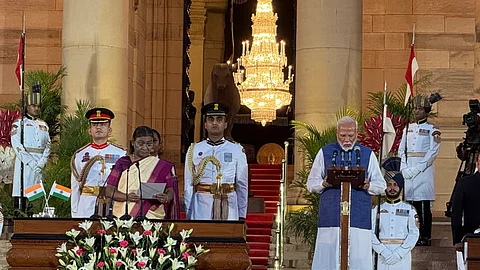
Narendra Modi taking oath as PM for third time
Written by: Kancha Ilaiah Shepherd
11 Jun 2024
Indian democracy is 75 years old now. The main framers of the constitutional democracy – Dr BR Ambedkar, Pandit Jawaharlal Nehru, and Sardar Vallabhbhai Patel – laid down an extraordinary foundation with a visionary written Constitution. Although it has faced some turbulent times, democracy in India has survived for more than seven decades.
During the Emergency, the forces outside the Congress fought collectively and ensured that the nation came out of the crisis in 1977. By 2024 and the 18th Lok Sabha election, a broad view outside the Bharatiya Janata Party (BJP) ranks was that the Constitution was in danger. The Congress took the lead and galvanised the political forces outside the BJP/Rashtriya Swayamsevak Sangh (RSS) and made ‘protection of the Constitution’ an election plank. The INDI Alliance also went with that view. The BJP tactic of allowing Narendra Modi an unusual individualised manifesto – ‘Modi Ki Guarantee’ – reckoning that he would win a third time, was to give way to full-blown authoritarianism.
The very title of the BJP manifesto indicated that the party structure was completely compromised due to an individual’s authoritarianism. No self-respecting electoral party has allowed an individual leader to give such a title to its manifesto. It not only showed the collapse of political collective authority of a party of that size, but also the collapse of the moral authority of the RSS, which repeatedly claimed that it trains its leaders outside politics as moral, selfless nationalists. The dictatorial underpinnings of the manifesto’s title hardly remained undisclosed.
Modi did not show this kind of visible grip over the party and the RSS till 2019, when he was re-elected. The moral authority of the RSS was decimated by the end of Modi’s second term. This became apparent not just by the ‘Modi Ki Guarantee’ title for the manifesto but also when Modi started proclaiming that he was not biological but a person sent by Paramatma “with a purpose”.
The INDIA bloc carried out a very risky election campaign, when the Congress party’s bank accounts were attached and alliance chief ministers, who alone could lead their regional party campaigns, were jailed. Yet INDIA checkmated the individual guarantee drive – they stopped Modi’s (not so much the BJP as a party) numbers at 240. This election also gave new hope to all the social categories that come under the reservation bracket. The Congress campaign declared that INDIA would not only protect reservation but also stop Modi’s privatisation plans. Additionally, it also promised a caste census.
If Modi had gotten 400 seats, we do not know what would have happened to the nation, democracy, and our Constitution.
Why more than two terms becomes a problem
Three terms for any person in the prime ministerial position with a clear majority could lead to authoritarianism. During Nehru’s time itself, the Congress should have brought in a limit of two terms. The Indo-China war in 1962 mellowed Nehru, though he had become authoritarian by then. However, midway through his third term he died. Also, there were serious challenges to him within the party.
Indira Gandhi, in her second term, imposed emergency, but the 1977 election saved the nation. She was brutally shot dead during her third term.
But in the case of Modi, the RSS-trained-BJP ensured that there was no challenger to him in the party during his tenure as PM. His status became like the ‘king who can do no wrong’. For 10 years the nation witnessed how anything that Modi said and did was projected by the RSS/BJP combine as right. The risk to the Constitution came from the Caesar-type authority wielded by Modi.
Like Nehru in 1962, Modi went into his third term with a tendency of authoritarianism. If the RSS-guided-BJP was a more moral party than the Congress, it should have suggested a two-term norm and introduced a constitutional amendment to that effect. The opposition would have no option but to support such a principled stand. But the RSS did not show any such principled moral authority after Modi became the PM.
If such a norm were also applied to the chief minister position, it would not be possible for individuals such as Naveen Patnaik or Nitish Kumar to rule for decades. In such a scenario, competing leadership would emerge from different families and communities even in regional parties. The party president position is a different issue. One may continue for a lifetime in that position. But PM and CM positions are constitutional governing positions. The entire state apparatus comes under their control. It could slowly breed authoritarianism, which is likely to lead to dictatorship and then to dismantling of the Constitution itself.
The American political system, for example, safeguarded its constitution by limiting the President to two terms (4+4 years). In fact, the first president, George Washington, himself refused to remain in office for more than two terms. Unlike Nehru, Nelson Mandela refused to work for more than one five-year term as the South African president. Mexico limits its president to just one term of six years. This norm recently sent a very popular president, Andrés Manuel López Obrador, out of office after one term, after which Claudia Sheinbaum from the same party became the president-elect.
India is not an RSS-like organisation
Modi’s intent to hold political power single-handedly became clear after he was re-elected in 2014 with a comfortable majority by reducing the Congress to just 40 seats. The people around him started talking about changing the Indian democracy into a presidential system. Just before his third term, he was able to get the party to adopt ‘Modi Ki Guarantee’ and ‘Ab ki baar 400 par’. Some people in his party started talking about changing the Constitution once they get 400 seats.
It is not as if no party had got 400 seats earlier. The Congress got 404 in 1984. But there was no talk of changing the Constitution or about the presidential system when a young leader like Rajiv Gandhi was in power. But now we have a leader like Modi, groomed by the RSS, who after winning just his first term was imagining becoming a powerful leader like the American president, which also requires dismantling the Constitution.
In my view, this was not just Modi’s fault, but the RSS’ inner aspiration to be a perpetual ruler. RSS as an organisation runs under one man’s command. If the same command structure is forced on the nation, our Constitution goes for a toss. That innate desire of the BJP’s mother organisation for an authoritarian structure is expressed by the persons it trained when one of them becomes an unchallenged leader.
But the nation is not an RSS-like organisation. It involves the life, liberty, and future of 1.4 billion people.
So if the RSS is really a responsible nation-building organisation, it should moot a two-term norm for Prime Ministers, even if the party gets elected for unlimited terms with a majority of its own.
If the RSS/BJP combine does not take that initiative, the INDI Alliance must put forth the idea to protect the present Constitution from impending danger from individual leaders pushing themselves and destroying the very fabric of our democracy.
Kancha Ilaiah Shepherd is a political theorist, social activist, and author. His latest book is The Clash of Cultures—Productive Masses Vs Hindutva-Mullah Conflicting Ethics.
-
Democracy is a gift from God. We must fight to preserve it

In the recent Indian election, prime minister Narendra Modi won a third consecutive term, but lost his majority government. It is a blow to those who wish to enshrine Hindu beliefs into Indian law, but a victory for democracy, says Bishop Joseph D’Souza
Source: Reuters
Narendra Modi might have won a third term as prime minister of India, but he also lost his majority in an election that was much tighter than most people expected. Now, he must decide how he will govern.
In my opinion, the prime minister would be wise to cast himself in the legacy of the late great Atal Bihari Vajpayee, the politician and poet who also served three terms as India’s prime minister.
THERE WILL BE NO MARCH, FOR NOW, TOWARD HINDU MAJORITARIAN RULE
As leader of the Bharatiya Janata Party (BJP), Vajpayee was a subscriber to Hindutva, but he worked intentionally to balance his religious beliefs with his commitment to India’s constitution as the world’s largest and most vibrant democracy.
A CLEAR REJECTION
In this election, the facts are clear: the prime minister and his colleagues campaigned for a supermajority of more than 370 seats (leading up to 400 seats along with their allies). Some of the BJP leaders had openly articulated that they needed this majority to literally change the constitution so that India’s laws would be dictated by the Hindu majority – to the exclusion of India’s hundreds of millions of minorities – including Christians.
Indians of all religions and parties rejected this vision, alarmed by a growing belief that aspects of India’s democracy were being eroded. With their votes, Indians made their commitment to democracy clear. There will be no march, for now, toward Hindu majoritarian rule and the rejuvenation of caste injustices.
Indians want their prime minister to be a head of state, not a religious figure, loosely appropriating the language of divine mandates.
LOSING THE STRONGHOLD
Even though Modi has done a number of objectively good things in his decade-long rule – building India’s infrastructure, technology, business, global stature and many other praiseworthy achievements – he has not been able to shirk off the demands and beliefs of a majoritarian Hindu State. This must now change.
INDIANS COMMITTED TO DEMOCRACY BREATHED A SIGH OF RELIEF AT THIS SURPRISE RESULT
Certainly, to his – and the BJP’s – chagrin, it was the Hindus, especially the backward castes and Dalits, along with other minorities, who deprived him of even a simple majority of 272 seats in parliament.
In this election, the BJP reached only 240 seats – and lost in a number of its strongholds, including the temple town of Ayodhya, where the BJP fulfilled a political promise by building a new temple with an eye on the forthcoming elections.
In the 2019 general election, the BJP achieved 303 seats. The results this time round are a catastrophic blow to their policy agenda. There is no other way to interpret it. Instead of facing 107 members of the opposition, there will now be at least 232 seats in parliament that they do not control.
PROTECTING DEMOCRACY
Indians who are committed to democracy – most of whom are Hindus – have breathed a sigh of great relief in light of this surprise result. Yet, it is only a single achievement in what will require an enduring commitment to preserve India’s democracy.
All over the world, democracy is under seige. I congratulate the prime minister and I congratulate the opposition. Each deserves, and will receive, my daily prayers. Those prayers will include my own gratitude to God for reminding us that democracy remains the best form of government ever imagined by mankind.
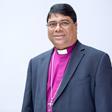
Joseph D’SouzaRt Rev Joseph D’Souza is bishop and moderator of the Good Shepherd Church of India. Dr D’Souza is also the founder and international president of Dignity Freedom Network, an inter-caste and inter-racial alliance that works on behalf of the Dalits and other marginalised groups. He also leads the ecumenical All India Christian Council.
-
How the Shudra-OBC issue became Modi-led
Kancha Ilaiah Shepherd
For the first time in Indian electoral history the OBC question and the protection of the Constitution played an important role in changing the RSS/BJP’s dictatorial direction in India.
As an OBC PM, Modi lost his party’s majority mainly because he failed the OBCs during his regime. The Shudra/OBC
masses did not benefit and they retaliated by changing the course of this election
The 2024 election results are out.
The radical manifesto of the Congress party that Tamil Nadu Chief Minister MK Stalin had described as the ‘hero’ of the election played a crucial role in stopping the Narendra Modi-led BJP at 240 seats.
In these elections, the Congress made Other Backward Classes (OBC) reservations and protection of the Constitution the main campaign issues. The BJP had no way but to respond to it quite desperately.
However, the Congress and its allies (INDIA alliance) pushed the BJP down below the 272 mark in the election. For the first time in Indian electoral history, the OBC question
and the protection of the Constitution played an important role in changing the RSS/BJP’s dictatorial direction in India.
Shudra OBCs
When I say ‘OBC’ it mainly concerns the Shudra OBCs, not the Dwija OBCs like the Baniyas of northern and western India.
Not many know that in North India, Baniyas also took the OBC certificates and got into the reservation category. However, they never were supporters of the movement for reservation since the 1990. They only used it to their advantage as another avenue for better life.
I focus on Shudra OBCs quite consciously because since the OBC category is constitutionally constructed, it does not have a sociological binding that the OBC reservation should be given to only people belonging to the fourth varna – shudra – who were denied the right to education by the other three varnas (Brahmin, Kshatriyas, Vaisya) ever since the Rigveda was written.
Denied education
Only during British rule did the Shudras get the right to go to properly established schools.
From ancient to post-Independence times, the Shudras were the food producers, tilling the land, advancing the cattle economy and artisanal technology. They were the
developers of entire agrarian technology and methods of production all through Indian history.
But the ancient Sanskrit books never recorded that agrarian production knowledge. In fact, Shudra labour does not exist in the Sanskrit books. Yet, they are shown as the mirrors of Indian civilization.
The Brahmins, Kshatriyas and Vaisyas kept themselves out of labour and production activity.
In the post-Independence period, the need for looking at the status of all Shudras has become very critical because they are the backbone of the nation.
In many parts of India, they were forced to be educationally backward because of their enslaved history. They were out of Sanskrit, Persian and now English language education, though some castes had landed property and regional language education.
Mandal Commission and Shudras
The Mandal Commission was mainly concerned about the historical Shudras.
During the Janata regime, BP Mandal was mandated to prepare a report and grant reservations to the historical Shudras.
The Commission report quotes the Mahabharata, in which the status of the Shudra was nothing but that of a slave. It says, “.
…The Shudra can have no absolute property, because his wealth can be
appropriated by his master”. Who was this master? The Mandal Commission report gave an indication that the ultimate master was the Brahmin.
The modern Shudra’s new status should take the society towards equality.
This is possible only when the Shudra agrarian civilisation gets respectable status in the spiritual system. Brahminism negated that status to agriculture. The Mandal movement was basically meant to take society towards that goal.
Transitional category
The OBC category was only a transitional one, the base identity of all agrarian masses of India is Shudra.
When the Mandal Commission was constituted by the Morarji Desai government there was a vague category called BC
(Backward Class) in some states and some kind of state-level reservation was also in existence.
By the 93rd amendment, two new clauses under Articles 15 and 16 of the Constitution enabled reservation for Shudras with new clauses 15(4) and 16(4) by empowering the state to make special provisions for any
‘socially and educationally backward class of citizens’.
Non-Shudra castes
Since the word class was used in the Constitution it was presumed that any other castes with economic backwardness could be brought into this category.
Also Read – Why Modi failed to sell his ‘panacea for every ill’ narrative in West Bengal
Using this definition of the Constitution several non-Shudra castes like historical
Vaisyas and also others managed the OBC certificates in north India from within Hindu religion. Since the four-fold varna or caste system later defined as part of Hindu Religious Social Order several arguments cropped up. Should non-Hindus like Muslims and Christians if they manage caste and economic backward certificate should get reservation in educational institutions and employment?
With a parallel definition to Hindu caste order, Shudra and Dalit converts to Christianity and Islam were also added in the OBC reservation category.
In Telangana and Andhra Pradesh those Shudras and Dalits who got converted to Christianity and Islam are also given a small percentage of reservation. For example, in
these states converted Christians would get 1 per cent reservation and Muslims 4 per cent reservation. But Brahmin or Vaisyas who convert to Christianity do not get this reservation.
BJP’s attack on Muslim-based reservation
The BJP attacked this caste, religion and economic backwardness leverage, given to Muslims as religion based reservation and accused the Congress as anti-OBC. During the election campaign, Modi promised the Hindu OBCs that the Muslim reservation will be cancelled once the BJP comes to power for a third term.
In certain media circles using the historical category ‘Shudra’ to refer to all those
agrarian artisanal communities, which are outside the frame of Dalit/Adivasis on the one hand, and Dwijas, on the other, is being negated.
There is a view that it is a derogatory category hence certain castes like Nairs in Kerala are against including them in that category. They have to define themselves where they would be historically. Are they part of Kerala Brahmins? Were they not agrarian food producers historically?
No doubt they are better educated than other Shudra upper communities in the country.
The OBCs of Kerala like Ezawas were arguing that they should not clubbed in the historical fourth Varana, Shudra. They are Avarnas. But the Avarna and Savarna categories do not make any sense. Avarna and Savarna concepts do not deal with labour and production issues.
Political compulsions Shudra is a labour related concept.
Historically, the Shudras were forced to do agrarian labour without any rights. But the labour itself is neither indignified nor unholy.
In any given society labour should be more respected than pooja. Without doing pooja, societies can survive but without labour societies cannot survive.
The Shudra/OBC castes are huge in number.
They constitute roughly about 52 per cent of the population of India. The Congress lost the ability to win the election on its own after
the 1990 Mandal movement because it was seen as anti-OBC. Nehru’s opposition to Kakakalelkar report, Indira Gandhi’s opposition to Mandal report and Rajiv Gandhi’s opposition to implementation of Mandal report by the VP Singh government made the Shudra/OBCs think that the Congress would not support their education and employment causes.
Though in 2006 it implemented the Mandal 27 reservation in the central universities and institutes, it bent to the Dwija pressures to add 27 per cent seats by taking the admissions to 127 per cent.
The RSS/BJP remained silent about such pro-Dwija adjustment of reservations then.
However, it realised that the only way to come to power in 2014 was to bring Modi, whose caste was included in the central
OBC list, as Prime Minister. They know that Modi was trained in Sanatana Dharma ideology, who would not own up the Shudra heritage. Anyone who accepts Sanatana Dharma would not like to de-castise the society, as the core structure of Sanatana Dharma is caste system.
In this election, the BJP lost the mandate and Modi should have resigned on moral grounds. As OBC Prime Minister he lost his party’s majority mainly because he failed the OBCs during the last ten years. During his regime the monopoly houses, where there is no single OBC, benefited but not the Shudra/OBC masses.
(The Federal seeks to present views and opinions from all sides of the spectrum. The
information, ideas or opinions in the articles are of the author and do not reflect the views of The Federal.)
About the Author
Kancha llaiah Shepherd is a political theorist, social activist and author. His latest book is The Clash of Cultures – Hindutva – Mullah Conflicting Ethics.
-
Win or Lose Lok Sabha Polls, the Congress Must Continue to Push Social Reform Agenda
Whatever could be the results of the election, Rahul Gandhi must pursue the socio-political reform standing by particularly SC/ST/OBCs. He has driven his reluctant party towards understanding the caste question.
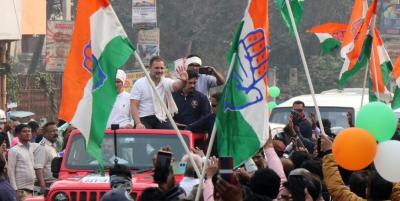
Rahul Gandhi’s Bharat Jodo Yatra in Bengal’s Birbhum. Photo: By arrangement.
Rahul Gandhi, while speaking at the Panchkula conclave on Samvidhan Samman Sammelan (Conference in Honour of the Constitution) on May 22, made an unusually bold statement about the Indian political system being aligned against the lower castes.
He gave a call to change that situation through systemic reform. He also promised the nation that the Congress party would work for that systemic reform hereafter.
He said, “Ninety per cent of the population representing Dalits, Adivasis, OBCs and minorities are unrepresented across different fields and there are two different sets of rules although the constitution is a document of equality.” The Congress leader said that the “system is aligned against lower castes”. Mentioning former Congress prime ministers Indira Gandhi, Rajiv Gandhi and Manmohan Singh, he said he “understands the system from inside” as he’s been “sitting inside the system since birth”.
Prime Minister Narendra Modi attacked this statement saying that Rahul accepted that his own governments were aligned against the SC/ST/OBCs, and not the BJP government.
Later on, the pro-BJP media went after Rahul Gandhi pointing out how can he now support the SC/ST/OBCs when his own party during his father and grandmother’s time was against the OBCs.
A political leader who changes his opinions and sees the shortcomings of the socio-political system intending to reform it from within is a progressive leader. That is how democracy as a system keeps moving closer to the exploited and oppressed masses. Even if Rahul Gandhi himself had been the prime minister but at some stage realised that the system was aligned against the poor and the exploited and then initiated a new policy framework for changing the system such a realisation must be welcomed.
Look at Rahul’s life in the system. When Indira Gandhi was the prime minister Rahul was a small kid. When Rajiv Gandhi was ruling, he was studying in school. When P.V. Narasimha Rao and Atal Bihari Vajpayee were prime ministers, he was abroad, studying in university. He entered public life only in 2004. As a young man, he has seen through the Congress system till 2014 from the inside.
During the 10 years of the United Progressive Alliance (UPA) government, he did not take up any ministerial position. In fact, he could have become the prime minister in 2009 if only he wanted to be in power at any cost. He did not do that. During that period, he worked as an opponent of traditional methods of administration. His tearing down of an ordinance at a press conference brought out by the Manmohan Singh government was an example of his unconventional mode of response to public morality and administration. We know that the ordinance that he tore off and got cancelled by the Manmohan Singh government was supposed to become law. If it were to become a law, he himself would have been saved from being disqualified from parliament after the two-year sentence by a court in Gujarat in 2023.
After the BJP formed the government in 2014, Rahul never compromised on the people’s issues. Both in parliament and outside, he fought sitting side by side with the victims of the Modi government. He did not go by the general practice of an opposition leader that he would criticise the government in parliament and rest of the time do normal politics with party meetings and organisational work. He was part of several youth struggles.
Take for example the student struggle of Pune film institute in 2015 against the appointment of an inexperienced director to that institute. The students were on strike for the removal of that unsuitable director. Rahul went to Pune and stood by them. The student leader at that time Payal Kapadia brought laurels to India by winning a Cannes film festival award. Take another example of Rohit Vemula’s systemic murder at Hyderabad University. The students’ struggles at that time shook the entire university campus system of India. Rahul went to Hyderabad and sat on a hunger strike for a day.
Rahul Gandhi did not choose a method of getting political power in the dynastic mode. For the last 10 years, he has been fighting for people’s rights and evolving. This is what the first generation great leaders B.R Ambedkar, Mahatma Gandhi, Jawaharlal Nehru and Sardar Vallabhai Patel did during the freedom struggle. While fighting for people’s rights, they organised the Congress and other political forums by gaining experience and knowledge over a period of time. They did not remain stagnant. They changed their views and methods as they gained new experience in people’s struggles.
Certainly, there is a fundamental difference in Rahul Gandhi’s understanding of the Indian socio-political system before his two yatras in 2023-24. He has a habit of listening to others’ opinions and experiences and changing his own opinions. One of the major changes in him after these two yatras was understanding the role of the caste system in India as of now and tracing its roots backwards.
This is where he seems to have realised his great grandfather perhaps was not right in rejecting Kaka Kalelkar’s report about the Shudra/OBC status in India. Indira Gandhi’s assessment of the Mandal Commission Report and his father Rajiv Gandhi’s opposition to the implementation of the Mandal Commission Report in 1990 were not based on the proper understanding of the caste system in India.
At the end of March 2013, when I met him for the first time in Delhi, the election campaign had already started. Rahul was the main campaigner of the Congress, and Narendra Modi the prime ministerial candidate of the BJP started his campaign. By then the RSS/BJP started campaigning across the country that their PM candidate was an OBC. The OBCs started looking up to Modi in many parts of India, particularly in North India. Rahul was a bit confused about this caste identity campaign by the RSS/BJP combine. The Congress by then was not willing to go to the election by raising OBC questions. Historically, the Congress was seen as an anti-OBC ruling party.
In this situation the Congress did not know how to handle the OBC question by then. Most leaders in his own party were not willing to study the new phase of the OBC question seriously, which was likely to play some role in tilting the OBC vote base to the BJP.
I found in Rahul a young man with a deep desire to learn. He was sure that Congress was losing in that election but willing to work to learn and reform his own party and take reformative steps necessary for the nation. But that task, given the collapsing situation of Congress apparatus was daunting.
The new avatar of RSS/BJP political forces by presenting Modi as an OBC made the system more aligned to a handful of Dwija monopolists in the last ten years. In the last ten years, Modi has destroyed the future of OBC/SC/STs by handing over the whole economy of the nation through a huge privatisation process of most government industrial and infrastructural assets. Gautam Adani’s wealth has grown at the cost of the future of OBC/SC/STs. The alienation of OBCs was more rapid under the OBC PM than under other PMs. But in North India, the OBCs hardly realised the future of their unemployed youth. This is when the Congress brought a path-breaking manifesto with a serious push by Rahul Gandhi in the 2024 election that gave new hope for OBC/SC/STs. Rahul could achieve such a path-breaking democratic manifesto, though there was opposition in his own party from traditional Dwija leaders by constantly learning and adapting to new ideas.
Mallikarjun Kharge, as a powerful Dalit president, and Rahul and Priyanka doing a co-ordinated campaign in this election brought new hope for the OBC/SC/STs and women.
Whatever could be the results of the election, Rahul must pursue the socio-political reform standing by the poor, particularly SC/ST/OBCs
https://thewire.in/politics/the-congress-must-continue-to-push-social-reform-agenda
-
Kancha Ilaiah address at Samuddha Bharat Foundation’s Samajik Nyay Sammelan 2024.


You must be logged in to post a comment.