In this episode, Swathi examines the Telangana SEEEPC Survey and the Independent Expert Working Group’s analysis of its findings. The survey goes far beyond simply counting caste populations. With 75 socioeconomic, political and asset-related parameters, it attempts to measure how different caste communities experience deprivation, wealth, education, employment and social mobility.
The conversation explores what the data reveals about backwardness across BC, SC, ST
and OC communities, how wealth and land remain concentrated, why some communities
have greater access to professional and private-sector employment, and how caste
continues to shape opportunity in contemporary Telangana.
The episode also examines Muslim communities within the caste framework, the
significance of the “No Caste” category, the role of political and institutional power, and the
larger question: if we now have the data, what should we do with it?
The central argument is simple: caste cannot be understood only as identity. It has to
be understood through the distribution of power, assets, opportunity and
deprivation.
Download the official SEEEPC Independent Expert Working Group Report:
Topics Covered
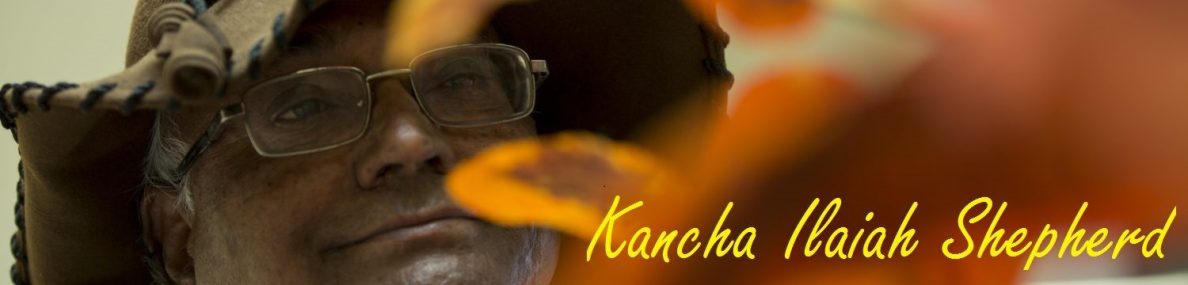
Introduction & IEWG Composition: The creation and scope of the 9-member Independent Expert Working Group led by Justice B. Sudershan Reddy and Prof. Kancha Ilaiah, with inputs from Thomas Piketty and Jean Drèze.
The Census Methodology: How over 1,00,000 state enumerators surveyed 1.12 crore households over two months, creating a new gold standard for national demographic exercises.
The Composite Backwardness Index (CBI) Architecture: A breakdown of the 42 parameters across Social Discrimination, Education, Occupation, Income, Land, Living Conditions, and Finance.
The Caste Hierarchy of Deprivation: Analysis of the extreme ends of the index—from SC Dakkal (CBI 116) and SC Beda (CBI 113) to the least backward OC Kapu (CBI 12).
The Land Ownership Paradox: Why high dry-land ownership among Scheduled Tribes (58.1%) fails to translate into developmental mobility, contrasted with the highly concentrated, irrigated land buffers of OC Reddys (13.5% of total land with a 4.8% population share).
The Gatekeeper of Mobility: The critical transition from land centrality to education centrality, highlighting English-medium and private schooling access as the modern “birth lottery” borders.
Socio-Economic Gaps of Pasmanda Muslims: Granular data exposing the intense marginalization of BC-E Muslim sub-groups (Dhobi, Shaik, Qureshi) and the compounding impact of gender constraints.
Deconstructing “No Caste”: Why the 1.2 million “casteless” cohort represents an urban elite, and the paradox of 43.3% of this group retaining official caste certificates.
The “Casteless Poverty” Refutation: Empirical proof that poverty does not equalize the caste experience; SC/ST poor remain significantly more deprived across living standards than General Caste poor.
The Rural-Urban Continuum: Proof that caste hierarchies remain statistically identical across rural and urban geographies, with extreme urban-rural backwardness gaps in pastoral and working groups.
Welfare Leakage & Precision Targeting: Analyzing why 30% of state welfare goes to castes less backward than the average, and the proposal to move to a “Social Justice Tap”.
Socio-Cultural Modernization: A closing call for scientific literacy, rationalism, sharing domestic labor, and an Ambedkarite approach to the annihilation of caste.
Timestamps
About The Conscious Republic
The Conscious Republic is a long-term political project exploring politics, religion, identity,
democracy, caste, nationalism, ethics, and public life through dialogue and reflective inquiry.
If these conversations matter to you, do consider:
Watching patiently
Reflecting critically
Participating respectfully
Sharing thoughtfully
Because democracy is sustained by deeper conversations and meaningful public action. Also, do
write to us at: adialoguewithswathi@gmail.com

