If we want to reform, we must acknowledge the barbaric acts our ancestors perpetrated against fellow human beings with a sense of historical guilt. We must appreciate what the Phules and Ambedkar have done to reform our society
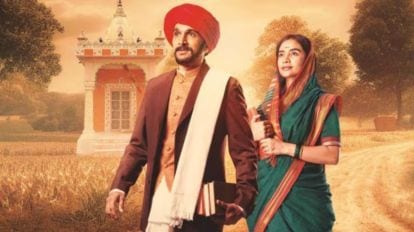
Though there are many small films on these social reformers, Phule is the first major Bollywood film.

Apr 19, 2025
The censoring of the Bollywood film Phule, based on the lives of Mahatma Jyotirao Phule and Savitribai Phule, played by Patrik Gandhi and Patralekha, and directed by Anant Mahadevan, has led to an unusual controversy. Though there are many small films on these social reformers, this is the first major Bollywood film. The scheduled release of the film on Mahatma Phule’s birth anniversary (April 11) — later postponed to March 25 — would have gone well with the unanimous resolution of the Maharashtra Assembly recommending the country’s highest award, Bharat Ratna, to the couple on March 24.
If the Central Government accepts the proposal and awards them with Bharat Ratna, it will be the first-ever award to the 19th-century reformers. Earlier, it was mostly given to freedom fighters, post-Independence leaders and artists.
The Central Board of Film Certification’s (CBFC) direction to postpone the release and to implement cuts — removing words like Mahar, Mang, Peshwai, phrases like Manu Dharmic Society; scenes where “untouchables” are with broom tied to their waist in order to clean the path that they walk through, as per the traditions under Peshwa rule — is itself strange. Though the film is a drama, those words and events mentioned are not fictional. They were part of history.
All of this happened after some Brahmin organisations protested against the trailer and filed a complaint with the CBFC. The CBFC’s response was quick. Mahadevan said that the suggestions for cuts were “innocuous”, and they were carried out. One concern flagged by the CBFC, it is believed, was a scene depicting a boy in traditional Brahmin attire throwing dung on Savitribai.
The listed objections of the CBFC stand against the historical facts about Phules. Why should Brahmin organisations object to caste names like Mahar and Mang when the communities themselves have no problem? Dalits use their caste names just as Brahmins use Sharma and Shastri, or Kshatriyas use Singh. Caste identities reflected in these end-names are historical identities. However, the problem starts when such end-names relate to hierarchical status. Phule started the anti-caste movement — forming Satyashodhak Samaj (truth seekers) – to give equal respect and status to every caste, occupation, and name: Bhatji (Brahmin), Shetji (Banya), Shudra (that includes several agrarian castes), and Ati-Shudras (includes many Dalit castes).
The brutal practice of “untouchability” has existed in India in many forms through the ages. For example: Punishing Shudras and Dalits by cutting off their tongue or pouring hot liquids into their ears if they read or listen to the recitation of Vedas; Shudra/Dalit women not being allowed to wear upper garments; or not letting Shudras and Dalits walk on temple roads. Why can such practices not be depicted in films?
If we want to reform, we must acknowledge the barbaric acts our ancestors perpetrated against fellow human beings with a sense of historical guilt. We must appreciate what the Phules and Ambedkar have done to reform our society. We cannot behave with the same medieval mentality and try to avoid the historical truth. History is a guide to change, not a tool to hide the sins of our ancestors.
As a Shudra, born and brought up in a shepherd family, I cannot condone my parents and grandparents’ bad treatment of Dalits in my village. I own the Phules and Ambedkar as the lights who can guide my family and caste through change. A Brahmin or Baniya should also do the same.
A forward-looking nation state cannot allow institutions to put historical truths under the carpet. It will make us complicit in these atrocities. It is our moral responsibility to face the evil, whether of the past or present. Reformers like the Phules suffered violence without retaliating. There is not a single recorded instance of Phule indulging in violence. Even while saving the life of their adopted son Yashwantrao’s widowed mother from a Brahmin crowd that was planning to kill her, Phule did not use violence. After Gautam Buddha, it was the Phule couple who made this land worth worshipping.
The CBFC and central government fall short of their nationalist responsibility by delaying the release of the film and by asking for cuts that would not have caused any violence. Rather, it would have pushed the audience to think and introspect.
The writer is former Director, Centre for the Study of Social Exclusion and Inclusive Policy, Maulana Azad National Urdu University, Hyderabad. His latest book is The Shudra Rebellion
 Kancha Ilaiah Shepherd